This site is supported by our readers. We may earn a commission, at no cost to you, if you purchase through links. This content is for general informational and educational purposes only and is not a substitute for professional medical, dermatological, or nutritional advice.
Your hair feels bone-dry an hour after you step out of the shower. You’ve deep conditioned, you’ve used a leave-in, and still it drinks moisture like sand in a desert. That’s high porosity hair talking, and its raised cuticles let hydration escape almost as fast as you apply it.
The fix isn’t more product. It’s technique. Sealing high porosity hair cuticles means flattening those lifted edges so moisture stays locked in instead of evaporating within the hour.
Get the order, the ingredients, and the pH right, and you’ll turn frizz-prone strands into hair that holds its moisture from morning to night.
Table Of Contents
- Key Takeaways
- Diagnose High Porosity Cuticle Damage
- Prepare Hair for Effective Sealing
- Seal High Porosity Hair Step-by-Step
- Top 3 Products for Cuticle Sealing
- Keep Hair Cuticles Sealed Longer
- Frequently Asked Questions (FAQs)
- How to seal cuticle high porosity hair?
- How do you seal high porosity hair?
- What can I use to seal my hair cuticles?
- What not to do with high porosity hair?
- How often should high porosity hair be washed?
- Can sealing methods work on color-treated hair?
- Whats the best sleeping method for sealed hair?
- Does hair porosity change permanently over time?
- Which water temperature works best for rinsing hair?
- Conclusion
Key Takeaways
- High porosity hair has raised cuticles that let moisture escape fast, so the real fix is sealing technique, not piling on more product.
- Acidic products (pH 4.5-5.5) and a cold water rinse close the cuticle, while alkaline products (pH 7-9) lift it open and worsen moisture loss.
- The LOC method—liquid, oil, then cream—works best for high porosity hair because the oil buffers the cuticle before the cream locks moisture in.
- Sealing wears off from washing, heat, and friction, so lasting results depend on weekly deep conditioning, protein treatments every two to three weeks, and nightly protection like a silk pillowcase or bonnet.
Diagnose High Porosity Cuticle Damage

High porosity hair sends clear signals once you know where to look. Your strands, your styling routine, even your hair’s history all hold clues. Here’s how to read them.
If you’re not sure what to look for, this guide to visual signs of hair porosity levels breaks down exactly how each clue shows up.
Spot Rapid Drying and Frizz
If your hair feels bone-dry within an hour of washing, that’s rapid moisture loss in action. High porosity hair grabs water fast but loses it just as fast, leaving strands stiff and straw-like.
Watch for early frizz signs too: flyaways at the ends, a fuzzy halo in humidity. Lifted cuticle edges scatter light instead of reflecting it, which is why smoothness stays out of reach.
Choosing products with silicones that shield hair from humidity can help keep lifted cuticles smoother for longer.
Check Tangles, Knots, and Roughness
Run a finger slide test: glide fingers down a strand. Snagging means raised cuticles, not smooth ones.
Quick checks:
- Detangling brush pulls resistance
- Knots form mid-shaft
- Breakage near ends
- Water spray absorbs instantly
- Strands feel straw-like when tangled
A silk pillowcase limits overnight friction, but rough cuticles still catch easily.
Review Heat and Chemical Damage
Snagging strands often trace back to heat or chemical history, not just texture.
Heat damage starts at 150°C, cracking fine strands by 160°C. Bleached hair loses its protective 18-MEA barrier and fractures further, even at lower temps.
| Hair Type | Damage Threshold |
|---|---|
| Fine | 160°C |
| Medium | 190°C |
| Color-treated | 160°C |
| Bleached | 150°C |
| Relaxed | 150°C |
Protectants rated to 270°F help. Recovery starts with protein-moisture balance.
Consider Naturally Porous Hair
Not every damage story starts with a flat iron or bleach bowl. Genetic porosity traits can leave cuticles naturally open from birth, no processing required.
Run the porosity test: strands sink fast in water, that’s your baseline. This natural cuticle structure still faces moisture retention challenges, so build a daily care routine around gentle, penetrating oil treatments even without chemical history.
Learn How PH Affects Cuticles
Think of pH as your cuticle’s mood ring. Acidic pH (4.5-5.5) triggers hair cuticle closure, sealing in shine and moisture. Alkaline pH (7-9) lifts cuticles open, the same mechanism behind color and protein penetration, but it spikes porosity fast.
That’s why acidic products matter for high porosity hair. Understanding this pH and moisture connection is your foundation for effective sealing.
If your strands stay damp too long after rinsing, you risk more than frizz—here’s why hair can start smelling like wet dog and how to prevent it.
Prepare Hair for Effective Sealing
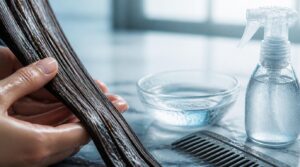
Sealing only works if your hair is ready for it. Skip the prep, and even the best products slide right off damaged cuticles. Here’s how to set your hair up for success before you seal in a single drop of moisture.
Pre-Poo With Penetrating Oils
Oil before shampoo, always. For high porosity hair, penetrating oils like coconut or castor fill cuticle gaps before cleansing strips moisture out.
- Apply to dry hair, section into 4-6 parts, massage scalp to ends
- Cover with a shower cap, leave 20-30 minutes (overnight for deeper penetration)
- Rinse lightly, then shampoo
Try OGX Argan Oil of Morocco for lighter penetration.
Shampoo Without Stripping Hair
Rinse the pre-poo oil, then reach for a sulfate-free shampoo. Sulfates strip cuticles wide open; gentle surfactants clean without disrupting your scalp’s acid mantle.
| Shampoo Type | pH Range | Cuticle Effect |
|---|---|---|
| Sulfate | 8.0-9.0 | Lifts, damages |
| pH-Balanced | 4.5-5.5 | Closes, protects |
| K18 | 4.5-5.5 | Preserves color |
| MDhair | 4.5-5.5 | Restores scalp |
Focus lather on scalp only for real moisture retention.
Deep Condition for Lasting Moisture
Deep conditioning is where moisture retention actually happens. Once a week, apply a hydrating mask for 15-30 minutes, adding a heat cap for 15-20 minutes to boost penetration.
- Choose shea butter or glycerin-based masks
- Alternate with protein weekly for balance
- Cap heat sessions at 30 minutes
- Watch for gummy strands, a sign of protein overload
Balance is non-negotiable for lasting cuticle closure.
Apply Diluted Acidic Rinse Safely
An acidic rinse snaps the cuticle shut, sealing in moisture before your leave-in goes on.
Dilute ACV 2-4 tbsp per 16 oz water; verify with pH test strips, targeting 4.0-4.5.
| Hair Type | ACV Ratio | Rinse Frequency |
|---|---|---|
| Normal | 2 tbsp/16oz | Weekly |
| Oily | 4 tbsp/16oz | 2-3x/week |
| Sensitive scalp | 1 tbsp/16oz | Weekly |
Store refrigerated, discard after 7 days.
Balance Protein With Moisture
Think of protein and moisture as a see-saw: too much of one tips your cuticle out of balance. High porosity hair thrives on a 60% protein to 40% moisture ratio.
Watch for moisture overload signs, gummy, limp strands, and adjust:
- Deep condition weekly
- Add hydrolyzed keratin biweekly
- Shift ratios seasonally
Seal High Porosity Hair Step-by-Step
Sealing isn’t a random splash of oil and hope. It’s a sequence, and each step locks in the one before it. Here’s exactly how to layer your products for maximum moisture retention.
Apply Leave-in to Wet Hair
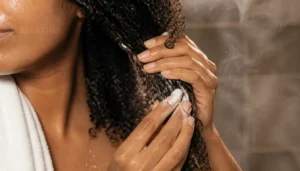
Towel-dry until hair stops dripping but still feels cool and damp, that’s your window.
Damp application technique helps leave-in conditioner distribute evenly instead of pooling in one spot. Apply a dime-sized amount (less for fine strands, more for thick), keeping product on mid-lengths and ends. Skip the roots. This step preps high porosity hair for proper cuticle sealing.
Choose LOC or LCO
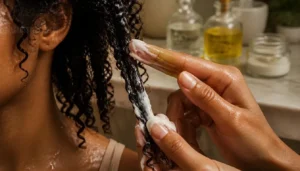
With leave-in in place, layering order decides whether moisture stays put. High porosity hair loses water fast, so LOC LiquidOilCream works best: oil buffers the cuticle before cream seals it. Low porosity strands favor LCO LiquidCreamOil.
- LOC: liquid, oil, cream
- LCO: liquid, cream, oil
- LOC limits moisture loss
- LCO prevents product buildup
Layer Cream Over Hydrated Strands
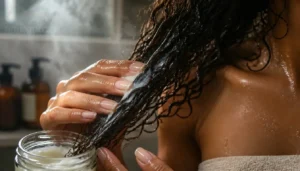
Cream goes on right after the oil, within 2-3 minutes, while strands are still damp.
Moisture barrier creams with pH 4.5-5.5 keep cuticles closed as they seal.
| Cream Type | Viscosity | Best For |
|---|---|---|
| Lightweight | 3,000 cP | Fine hair |
| Rich butter mix | 5,000 cP | Coily hair |
| Ceramide-based | Mid-range | Damaged cuticles |
Work ends to roots for even hair moisture retention.
Seal With Heavy Oil or Butter
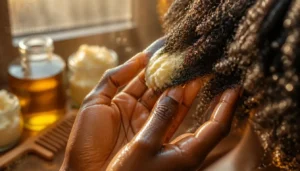
Once cream sets, add your heavy oil or butter, the final lock.
Oil application technique: warm castor oil or coconut oil between palms, smooth onto ends first.
Butter coating benefits: shea butter builds a thicker film for coily, high porosity hair.
Use light amounts, this hair sealing step traps moisture, not grease. It’s your sealant longevity insurance.
Finish With Cool Air
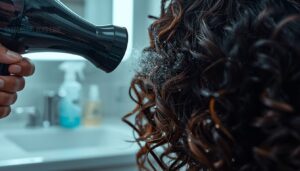
Flip the dryer to its cool shot button, or switch to a heat-free finish entirely, this locks cuticle closure fast.
- Cool Air Benefits: prevents heat-induced dulling
- Air Temperature Settings: cool over hot, always
- Blocks tacky product transfer
- Locks in your final seal on high porosity hair
A quick cold water rinse beforehand deepens that closure too.
Top 3 Products for Cuticle Sealing
The right products make sealing easier, not harder. Your cuticles respond best to formulas built for moisture retention and slip. Here are three worth adding to your routine.
1. Milk Shake Leave In Conditioner
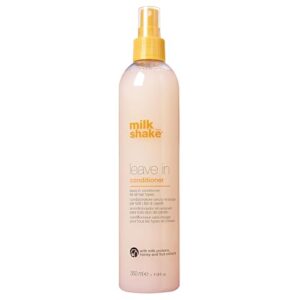
Milk protein is the closest thing to a repair kit for open cuticles. Milk Shake Leave In Conditioner uses hydrolyzed milk proteins to fill gaps along damaged strands while strawberry and honey extracts add slip and shine.
Spray it onto soaking wet hair right after your shower. It detangles fast, smooths rough cuticle edges, and won’t weigh curls down. One catch: the nozzle is flimsy and can leak in transit, so check the cap before you travel.
| Best For | Anyone with natural, relaxed, curly, or loc styles who wants a lightweight leave-in that detangles fast and keeps color-treated hair looking vibrant. |
|---|---|
| Volume | 11.8 fl oz (355 mL) |
| Hair Type | Natural, relaxed, curly, loc |
| Frizz Control | Reduces frizz |
| Shine Boost | Adds shine |
| Damage Protection | Color protection |
| Use Type | Leave-in detangler |
| Additional Features |
|
- Hydrolyzed milk proteins and fruit extracts help repair open cuticles while adding real shine
- Detangles wet hair quickly without weighing curls down
- Includes Integrity 41 to help protect and maintain color vibrancy
- The spray nozzle is flimsy and can leak during shipping or regular use
- The strong vanilla fragrance may be overwhelming for fragrance-sensitive users
- The watery formula and higher price point may mean you’re reapplying (and rebuying) more often
2. Loreal Dream Length Cream
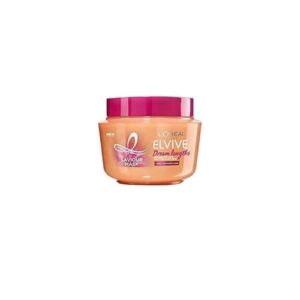
Length retention is the goal, and this formula was built for it. Loreal Dream Length Cream leans on castor oil and hydrolyzed wheat and soy proteins to strengthen weakened strands without the greasy weight finer hair hates.
Work a small amount through towel-dried lengths and ends, skipping the roots. Dimethicone adds slip for detangling, while panthenol keeps moisture locked in. It layers well under a sealing oil, though severely porous or curly hair may need something richer.
| Best For | People with fine to normal long hair dealing with breakage, dryness, or split ends who want a lightweight leave-in treatment rather than a heavy deep conditioner. |
|---|---|
| Volume | 200 ml (6.76 fl oz) |
| Hair Type | Long, fine, color-treated |
| Frizz Control | Frizz control |
| Shine Boost | Enhances shine |
| Damage Protection | Reduces breakage |
| Use Type | Leave-in detangler |
| Additional Features |
|
- Strengthens weakened strands with castor oil and hydrolyzed wheat and soy proteins
- Lightweight formula won’t weigh down finer hair
- Adds slip for easy detangling while locking in moisture
- May not offer enough repair for very curly or severely damaged hair
- Packaging isn’t sealed, so leakage or contamination is possible
- Too light for extremely dry or highly porous hair, which may need a richer treatment
3. Argan Oil Hair Repair Serum
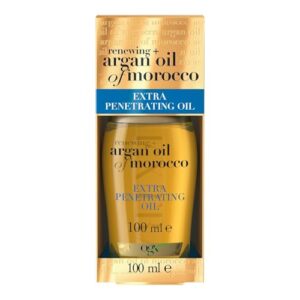
For the final seal, argan oil brings serious chemistry. This serum packs oleic and linoleic fatty acids that soften strands, plus vitamin E and polyphenols that guard against oxidative stress and UV exposure.
Squalene seals the cuticle lightly, no greasy buildup. Expect up to 80% less breakage, 24-hour frizz control, and heat protection to 450°F.
Apply to towel-dried or dry hair only. Daytime use on damp strands looks oily fast, and fine hair may feel weighed down.
| Best For | People with dry, damaged, or thick/coarse hair looking for a nightly repair treatment that restores shine and softness without a heavy daytime feel. |
|---|---|
| Volume | 100 ml (3.53 oz) |
| Hair Type | Dry, damaged, fine |
| Frizz Control | 24-hour frizz control |
| Shine Boost | Restores luster and shine |
| Damage Protection | Reduces split ends 80% |
| Use Type | Nightly serum treatment |
| Additional Features |
|
- Cuts split ends and breakage by up to 80% with regular use
- Delivers 24-hour frizz control plus heat protection up to 450°F and UV protection
- Nourishes with vitamin E, polyphenols, and fatty acids for lasting shine and softness
- Can leave hair looking oily if used during the day or on damp strands
- Not ideal for fine hair, which may end up weighed down
- Requires care around the eyes and needs to be kept away from high heat sources
Keep Hair Cuticles Sealed Longer
Sealing your hair isn’t a one-and-done fix. Cuticles open back up throughout the week from wind, pillow friction, and everyday moisture loss. Here’s what keeps that seal working longer.
Know Cuticle Sealing is Temporary
Sealing isn’t permanent. It’s more like an umbrella than a raincoat. Cuticle closure fades through washing, heat, friction, and humidity, all classic coating wear mechanisms. High porosity hair loses this protection faster.
Sealing is an umbrella, not a raincoat—it shields high porosity hair only until washing, heat, or friction wear it away
That’s why acidic products and a cold water rinse matter as maintenance tools, not one-time fixes. Watch for buildup effects, and keep protein-moisture balance in check to slow moisture loss.
Refresh Dry Ends Without Buildup
Dry ends by Wednesday? Don’t reach for more cream. Try lightweight oil application, just a drop or two of your sealing oil, massaged into ends only.
Skip full reapplication daily, it causes buildup on high porosity hair. Instead, do a weekly end treatment with shea butter, plus a moisture sealing spray for quick refreshes. A gentle scalp massage boosts circulation, and overnight hydration with a silk cap locks moisture in.
Schedule Protein Every Two-to-Three Weeks
Washing ends only goes so far. High porosity hair needs hydrolyzed keratin filling those cuticle gaps every two to three weeks, non-negotiable for lasting strength.
Bleached or heavily processed strands may need twice-monthly sessions. Watch for stiffness, that’s your cue to adjust protein intervals and add moisture. Reduced breakage means you’ve nailed the protein-moisture balance.
Protect Against Heat and Humidity
Protein keeps strands strong, but high porosity hair still needs a shield against the elements. Use a heat protectant spray before styling, then finish with a cool air finish to lock cuticles flat.
For humid days, apply a humidity resistant sealant to build a moisture barrier. At night, swap cotton for a silk bonnet, and try the microfiber drying method to limit frizz.
Frequently Asked Questions (FAQs)
How to seal cuticle high porosity hair?
Start with an oil pre-poo, then layer a leave-in, cream, and shea butter using LOC. Finish with a cold water rinse to manage cuticle pH, lock in moisture, and smooth every strand for lasting shine.
How do you seal high porosity hair?
An ounce of prevention is worth a pound of cure." Layer water, then cream, then oil, using olive oil or shea butter. This moisture locking method builds proper protein moisture balance, giving high porosity hair a real daily sealing routine.
What can I use to seal my hair cuticles?
Reach for a Coconut Oil Sealant, Shea Butter Barrier, or castor oil for high porosity hair. Layer a Silicone Serum Coat, follow with a pH Balanced Rinse, and finish with a Cold Water Rinse to lock cuticles flat.
What not to do with high porosity hair?
Think of an open door in a storm: that’s your cuticle under stress. Avoid hot water, harsh sulfates, and over-processing. Limit heat styling, reduce product buildup, and you’ll dodge hygral fatigue, dryness, and breakage.
How often should high porosity hair be washed?
Wash every 5 to 7 days with lukewarm water and a sulfatefree cleanser. Watch scalp sweat and product buildup, both signal earlier washing, protecting moisture retention balance and keeping high porosity hair cuticles calm between routine washes.
Can sealing methods work on color-treated hair?
Yes. Sealing after dye locks in shine and slows color fade prevention by coating cuticles. Pair an acidic rinse with sulfate-free cleansing and avocado oil for lasting protein-moisture balance on treated, high porosity hair.
Whats the best sleeping method for sealed hair?
Picture a knight sleeping in armor that snags with every turn. That’s untreated hair on cotton. A silk pillowcase, loose protective braid, and cold water rinse before bed keep cuticles closed and moisture locked in.
Does hair porosity change permanently over time?
Your genetic baseline porosity can shift permanently once environmental damage, chemical processing, or aging weakens cuticle integrity.
Hormonal changes cause temporary porosity shifts, but severe cuticle erosion often sticks around, making consistent protein-moisture balance and cuticle sealing essential for long-term hair health.
Which water temperature works best for rinsing hair?
Warm opens, cold closes: that’s the rule. Use lukewarm water to cleanse, then finish with a cold rinse around 60°F–70°F. That cold shot protects keratin bonds, boosts shine, and calms high porosity hair prone to humidity-driven frizz.
Conclusion
Yes, it takes more steps than a quick spritz and go. But sealing high porosity hair cuticles isn’t extra work, it’s the work that actually holds moisture in place.
Master the LOC method, respect your pH, and stay consistent with protein, and your strands stop leaking hydration by noon.
Porosity doesn’t change overnight. Your routine does. Give it three weeks, and dry, thirsty hair becomes hair that finally holds onto what you give it.