This site is supported by our readers. We may earn a commission, at no cost to you, if you purchase through links. This content is for general informational and educational purposes only and is not a substitute for professional medical, dermatological, or nutritional advice.
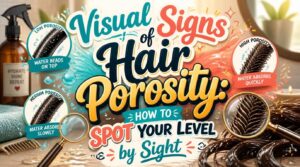
Spritz your hair with water and watch what happens. If droplets sit on top like rain on a freshly waxed car, your cuticles are clamped shut. If the water vanishes almost instantly, soaking in before you can blink, those same scales are lifted wide open.
That reaction tells you almost everything about how your hair controls moisture, product, and styling. Cosmetologists rely on these visual signs of hair porosity levels because the cuticle, the outer protective layer of your strand, behaves differently depending on how tightly it’s sealed.
Once you know what to look for, shine, frizz, drying speed, even split ends start making sense as clues rather than mysteries.
Table Of Contents
- Key Takeaways
- What Hair Porosity Reveals
- Visual Signs of Low Porosity Hair
- Visual Signs of Medium Porosity Hair
- Visual Signs of High Porosity Hair
- Compare Porosity Levels Side by Side
- Watch How Hair Reacts to Water
- Feel for Porosity Texture Differences
- Confirm Signs With At-Home Tests
- Why Porosity Signs Change Over Time
- Choose Care Based on Visible Signs
- Frequently Asked Questions (FAQs)
- How do I tell what level of porosity my hair is?
- What is the rarest type of hair porosity?
- What ethnicity has high porosity hair?
- What’s the worst hair porosity to have?
- Can hair have different porosity in one strand?
- Does porosity change between seasons or climates?
- How often should I retest my hairs porosity?
- Can two siblings have completely different porosity types?
- Does gray hair typically have higher porosity levels?
- Conclusion
Key Takeaways
- The simplest way to check your hair’s porosity is to spritz it with water: beading means low porosity, quick absorption means high porosity, and something in between means medium porosity.
- Your cuticle (the outer layer of each strand) controls how fast hair absorbs and loses moisture, so tightly closed cuticles keep water out while raised or damaged ones let it rush in and escape just as fast.
- Each porosity level needs different care—low porosity does best with lightweight, water-based products, medium porosity thrives with balanced hydration and occasional protein, and high porosity needs richer oils and butters to seal in moisture.
- Porosity isn’t permanent—heat styling, chemical treatments, sun exposure, and even rough brushing can raise your hair’s porosity over time, so it’s worth retesting periodically rather than assuming your hair type never changes.
What Hair Porosity Reveals

Your hair’s porosity tells you exactly how it controls moisture, and once you understand why, spotting the signs gets a lot easier. It all comes down to your cuticle, how it opens and closes, and where your hair falls on the porosity scale. Here’s what’s actually happening beneath the surface.
Once you know your porosity type, you can match it to the right products and techniques with this complete hair porosity treatment guide.
Hair Cuticle Structure
Picture roof shingles, each one overlapping the next, and you’ve got the hair cuticle. This protective outer layer guards the cortex beneath it using:
- Keratin-based scales arranged base to tip
- A thickness of just 0.3 to 0.5 micrometers
- Hydrophobic lipids that repel excess moisture
- Overlapping dead cells for mechanical strength
That microscopic cuticle health determines everything you’ll spot during hair strand analysis. The cuticle’s protective function and fiber integrity are essential for maintaining hair strength and resisting environmental damage. protective function and fiber integrity
Moisture Absorption and Retention
Those overlapping scales aren’t just armor, they control moisture absorption and retention by opening or staying shut. Tight cuticles slow water entry; damaged ones swell fast, then leak it back out.
| Cuticle State | Moisture Behavior |
|---|---|
| Tightly closed | Slow absorption, water beads |
| Slightly open | Balanced, steady uptake |
| Raised/gapped | Rapid absorption, quick loss |
| Damaged | Poor retention overall |
A simple float test hints at your barrier’s strength before you test further.
Three Porosity Levels
That float test result is your first clue toward proper porosity level identification, sorting your hair into one of three camps.
Low porosity traits: closed cuticle layer, water resistant.
Medium porosity traits: balanced absorption, holds styles well.
High porosity traits: open cuticles, fast soaking, faster drying.
Genetics sets your starting point, but heat and chemicals can shift it later.
Visual Signs of Low Porosity Hair
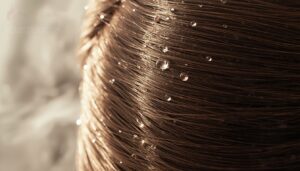
Low porosity hair has a look and feel all its own, once you know what to check for. Those tight, flat cuticles show up in small, everyday clues you can spot without any special tools. Here’s what to watch for when you’re sizing up your strands.
Water Beads on Strands
Mist your hair with water and watch closely: round, glossy beads that just sit there are your first clue to low porosity. Tight cuticles resist absorption, so surface tension holds droplets intact, often 2-3mm wide, for 30-60 seconds before slowly soaking in. That lingering bead persistence tells you far more than a quick glance ever could.
Smooth, Shiny Appearance
A mirror only works when its surface is flat, and your hair works the same way. Low porosity hair keeps cuticles tightly shingled, so light bounces off evenly instead of scattering. Natural oils spread smoothly across each strand, reinforcing that glassy look.
Four shine clues to check:
- Even light reflection down the shaft
- Minimal frizz or texture bumps
- Consistent color depth
- Smooth fiber uniformity strand to strand
Products Sit on Surface
Since tightly closed cuticles block absorption, conditioners and creams often can’t sink in. Instead, you get product layer residue sitting on top, sometimes tacky or slick to the touch.
This creates a water repellent coating and reduces surface shine over time. Buildup accumulates fast, so a clarifying wash every few weeks keeps low porosity hair from looking dull or heavy.
Hair Wets Very Slowly
Stand under the shower and count: low porosity hair can take several minutes of steady water flow before it actually feels saturated. That sluggish cuticle absorption rate comes straight from a tight moisture barrier strength.
Try the float test in a bowl of water; strands stay buoyant, confirming slow saturation time and real water resistance before the cuticle layer finally lets moisture in.
Buildup Appears Quickly
Here’s the frustrating part: closed cuticles that keep water out work just as hard keeping product sitting on top. Silicone buildup fast-tracks within days, joined by heavy oil residue, hard water minerals, and a pollutant layer forming overnight.
- Glossy, coated strands
- Flat, weighed-down roots
- Water beading off instead of soaking in
- Dull shine despite "moisturizing"
- Clarifying frequency needed weekly
Visual Signs of Medium Porosity Hair
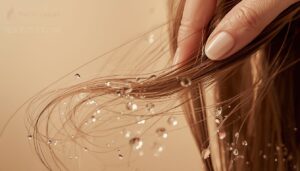
If your hair isn’t fighting you at every wash, chances are you’re working with medium porosity, the level most stylists consider the easiest to manage. This hair type sits comfortably between the other two extremes, giving you cuticles that open and close just enough to keep moisture balanced.
Here’s what to look for when you’re checking your strands for these telltale signs.
Even Moisture Absorption
Wet your hair and watch closely: medium porosity shows steady water uptake, with droplets soaking in within seconds rather than beading or vanishing instantly. This controlled absorption rate reaches roughly 75% saturation in about four minutes, giving you balanced moisture retention.
It’s a gradual wetting process that allows uniform product penetration, so conditioner spreads evenly through the cuticle layer instead of pooling or overwhelming it.
Healthy, Balanced Shine
Hold a strand up to the light and you’ll catch something special: an even glow instead of a harsh glare or a flat, lifeless look. That’s balanced light reflection, roughly 45-55% across every angle, the direct result of consistent cuticle spacing along the shaft.
You may even glimpse scalp through the strands at a 45-degree tilt. That’s healthy, not thinning, just proper cuticle alignment doing its job.
Minimal Frizz After Moisturizing
That same balanced shine carries into how your hair controls moisture, apply your leave-in and cuticles lie flat instead of lifting into flyaways.
This is cuticle smoothing at work: moisture coats evenly, so strands clump instead of separating.
Apply product to damp hair, use gentle drying practices, and you’ll notice minimal frizz, even in humidity.
Styles Hold Reliably
That cuticle smoothing also explains why medium porosity styles simply hold. Even moisture absorption means product layers set into a stable styling film instead of sliding off, extending hold time without stiffness.
Curl retention improves because strands stay evenly coated. That’s why medium porosity hair shows real humidity resistance styling, keeping curls defined instead of collapsing by afternoon.
Moderate Drying Speed
Timing tells you plenty during a hair porosity test. Medium porosity hair dries in 4 to 6 hours air-dried, proving genuine drying time balance between low and high extremes.
That moderate pace signals:
- Steady moisture retention rate
- Efficient product absorption speed
- Predictable hair drying patterns
- Longer styling hold duration
Humidity or heat can shift things by an hour or two, but the moderate range stays consistent.
Visual Signs of High Porosity Hair

High porosity hair tells on itself the moment you look closely, and once you know what to check for, you won’t miss it. The cuticle’s raised, gap-filled surface leaves behind clues you can spot in seconds, from how your strands catch light to how fast they dry. Here’s exactly what to look for.
Water Absorbs Almost Immediately
Spritz high porosity hair with water and watch: droplets vanish in seconds, not minutes. That’s instant water uptake in action.
| Test | High Porosity | Low Porosity |
|---|---|---|
| Spray bottle | Absorbs, 5 sec | Beads, 30+ sec |
| Glass of water | Sinks fast | Floats |
| Full saturation | Under 2 min | 8-10 min |
This rapid water absorption confirms raised cuticles on your hair porosity scale.
Dull or Rough Appearance
Hold a strand up to the light and high porosity hair just won’t shine back. Raised cuticle scales scatter light instead of reflecting it, creating light reflection deficiency and that lifeless, matte look.
Run your fingers down the shaft. You’ll feel:
- Bumpy, frayed cuticle edges
- Snagging during combing
- Hazy product film buildup
- Visible split ends
- Overall rough texture
Frizz Returns After Styling
Watch your style fall apart within minutes of walking outside, that’s humidity triggered frizz at work on high porosity hair. Raised cuticles reabsorb air moisture fast, undoing your work.
| Frizz Trigger | What Happens |
|---|---|
| Humidity | Cuticles reopen, absorb moisture |
| Heat damage | Cuticles won’t seal shut |
| Moisture loss | Style breaks down fast |
| Product buildup | Traps then releases moisture |
| No sealing oil | Barrier missing, frizz returns |
Visible Split Ends
Hold a strand up to the light and check the tip: a Y-shaped fork signals splitting. Severity ranges from a single fork to tree-like branching. Watch for a white dot at the tip, rough texture, or "candle split" tapering.
Left untreated, splits travel upward, causing breakage. Regular trims prevent worsening damage and protect elasticity.
Hair Dries Unusually Fast
Ever towel-dry your hair and find it "finished" way sooner than it should be? That’s fast drying hair, a classic hair porosity test in itself, since rapid water escape through raised cuticles means less moisture retention.
- Ends feeling straw-like within minutes
- Shine reduction fast after washing
- Dullness creeping in before you’ve even brushed out
These are real cuticle damage clues, and high porosity hair rarely hides them.
Compare Porosity Levels Side by Side
Once you’ve spotted the signs for each porosity level on its own, the real clarity comes from putting them side by side. Seeing how low, medium, and high porosity hair differ in the same categories makes the differences click faster than reading about them separately ever could. Here’s how they stack up against each other, feature by feature.
Water Beading Versus Soaking
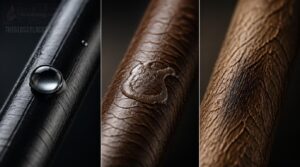
Picture rain on a waxed car versus rain on bare wood.
Low porosity hair beads water like rain on a waxed car, while high porosity soaks it up like bare wood
Low porosity hair beads water for 5+ minutes thanks to tight cuticles and strong surface tension.
High porosity absorbs it in under 30 seconds, cuticles wide open, no beading at all.
Medium porosity sits between: droplets flatten and merge over 1-3 minutes before soaking in evenly.
Shine Versus Dullness
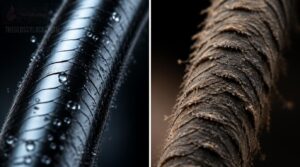
Shine comes down to physics: flat, tightly packed cuticles create a mirror-like surface, while raised or damaged scales scatter light into dullness.
Low porosity hair reflects light beautifully. High porosity hair, with cuticle layer damage, looks matte no matter the product.
Three factors affect this most:
- Sebum distribution across strands
- Product buildup coating the surface
- Environmental exposure roughening cuticles
Smooth Versus Rough Texture
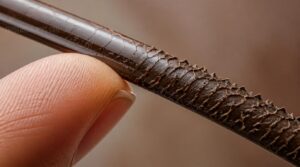
Run your fingers along a strand, root to tip. That’s your surface roughness test, and it tells you plenty.
| Porosity | Texture Feel |
|---|---|
| Low | Smooth, slick |
| Medium | Slightly textured |
| High | Rough, snags fingers |
Flat cuticles mean easy finger slip. Raised ones catch and grab, since the hair cuticle structure creates friction along the shaft.
Slow Versus Fast Drying

Set a timer next time you wash your hair, because drying speed tells on your porosity fast. Low porosity hair drags past 8 hours, sometimes 24 if it’s thick. Medium porosity wraps up in 4 to 6. High porosity finishes in 2 to 4, sometimes under 2.
- Humidity adds hours
- Thickness slows evaporation
- Products create barriers
- Damage speeds drying
- Fine strands dry quickest
Product Absorption Differences
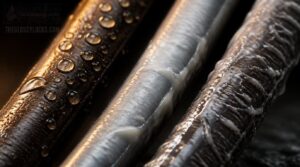
Drying speed tells you a lot, but what happens to product on your strands seals the deal.
Low porosity resists oil penetration without heat. Medium porosity controls creams and sprays evenly.
High porosity gulps down rich creams fast, though silicone primers create a barrier that slows absorption and invites product buildup.
Watch How Hair Reacts to Water
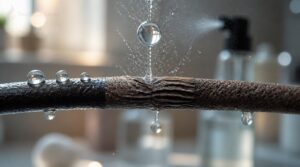
Water tells you the truth about your hair faster than any product label can. Grab a spray bottle and pay attention to what happens the moment droplets hit your strands. Here’s exactly what to watch for, step by step.
Misting Clean, Dry Hair
Want real answers? Start with a blank slate: freshly washed, fully dried hair, no products.
- Section hair into 2-4 clips
- Mist from consistent spray distance
- Use 68-72°F water per section
Keep your mist application technique light and even, this reveals true hair porosity, whether low, medium, or high, before cuticle behavior gets masked.
Observing Droplet Behavior
Once that mist lands, watch closely: does it bead up and sit on the surface, or vanish almost instantly? Low porosity strands hold spherical droplets 10-15 seconds before slowly spreading. High porosity hair flattens droplets within 2-3 seconds. Medium porosity falls in between, keeping partial beads for 5-8 seconds. That spreading pattern tells you everything about cuticle openness.
Timing Full Saturation
Because droplet behavior only tells half the story, you need to track when hair reaches full wetness all over, not just on the surface. Watch for patchy, matte sections turning uniformly shiny. Faster water penetration rate signals higher porosity.
- Small sections saturate quicker
- Low porosity needs more time
- High porosity finishes fast
- Check ends for interior saturation
Tracking Natural Drying Speed
Once hair’s saturated, the clock starts ticking, and how fast it dries tells you just as much as how fast it soaked. Natural drying speed tracks directly with porosity: high porosity hair finishes in 1-2 hours, low porosity can linger 4-6.
| Porosity | Typical Drying Time |
|---|---|
| High | 1-2 hours |
| Medium | 2-4 hours |
| Low | 4-6 hours |
Humidity, airflow, and product buildup all shift these numbers too.
Feel for Porosity Texture Differences
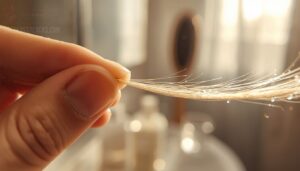
Your eyes can only tell you so much, so it’s time to bring your fingers into the picture. Running a clean strand between your fingertips reveals cuticle texture that sight alone often misses. Here’s what each porosity level actually feels like, and where on your head to check for the truest read.
Smooth Low Porosity Strands
Run your fingers down a strand and it glides like silk, that’s cuticle flatness at work. Tightly closed scales create real strand smoothness and strong light reflection, giving low porosity hair its shine.
- Slick, glassy feel tip to root
- Noticeable product resistance
- Even light reflection along the hair shaft
- Minimal snag or roughness
This smoothness explains the water beading you’ll notice during testing.
Balanced Medium Porosity Strands
Somewhere between silk and sandpaper, that’s what you’re feeling for. Medium porosity strands offer slightly raised cuticles, giving just enough grip for balanced hair moisture retention without the snag of damage.
This texture allows even color processing, flexible protein moisture balance, and steady product layering, since cuticles open and close on cue rather than staying stuck one way.
Rough High Porosity Strands
Now run your fingers along a strand and expect friction, not glide. That catch is cuticle lifting in action: raised edges create rough cuticle edge texture, speeding water absorption and moisture loss rate alike.
This texture pattern often triggers fast frizz development and visible split ends, both classic markers of high porosity among hair texture types.
Checking Roots and Ends
That roughness rarely shows up evenly. Check roots against ends separately, since Root End Disparity is common: roots stay lower porosity while ends run higher from cumulative heat and chemical exposure. Feel the Strand Progression Texture shifting.
- Roots: smoother, more protected
- Mid-shaft: gradual roughening
- Ends: roughest, most porous
- Damage concentrates distally
- Trims remove worst sections
Avoiding Product-Coated Hair
Before trusting any texture test, rule out product buildup on the hair shaft. Coated strands feel falsely smooth, mimicking low porosity.
Preventing buildup means avoiding heavy product layering and silicone avoidance where possible, choosing lightweight formulas instead.
Clarifying routines before hair porosity testing methods ensures accurate results, since coating skews hair porosity and product efficacy readings every time.
Confirm Signs With At-Home Tests

Once you’ve spotted the visual clues, it’s time to put them to the test, literally. A few simple at-home checks can confirm what your eyes and fingers have already picked up on. Here’s how to run each one and make sense of what you find.
Spray Bottle Test
When numbers matter more than guessing, the spray bottle test gives you hard visual proof. Mist clean, dry hair and watch closely:
- Beads and rolls off = low porosity
- Sits two minutes, then absorbs = medium porosity
- Vanishes in 10 seconds = high porosity
- Uneven spreading signals damage
- Time your observation for accuracy
Slip and Slide Test
Your fingers can tell you what your eyes might miss. Wash hair with a gentle shampoo, skip conditioner, and let it air dry completely before testing.
Slide from tip to root on three strands. Smooth means low porosity; occasional bumps signal medium; frequent snags mean high porosity cuticles. Bump counts map directly to open cuticle scales.
Float Test Results
A glass of room-temperature water tells a quick story. Drop in a clean, product-free strand and watch water sink speed: floating means low porosity, a slow middle drift signals medium, and a fast drop points to high porosity.
That’s the cuticle openness indicator at work, hair weight change from absorbed water overcoming surface tension. Oils or gels skew results, so rinse thoroughly first.
Interpreting Mixed Results
Since three tests rarely agree perfectly, don’t panic if your float, slip, and spray results seem contradictory.
Mixed texture signals often mean product buildup or heat and chemical history, not a testing error. Try again after a clarifying wash. If mixed results persist, your hair may genuinely sit between levels, so choose porosity-friendly products matching your dominant signs across the porosity spectrum.
Why Porosity Signs Change Over Time

Your porosity isn’t fixed in stone, even though genetics set the starting point. Daily habits and outside forces reshape your cuticles over time, sometimes without you noticing until the signs show up in the mirror. Here’s what actually drives that shift.
Heat-Damaged Raised Cuticles
Blow dryers and flat irons at high heat force cuticle lifting, chipping away layers until gaps form permanently.
Heat damage disrupts the cuticle’s natural structure, causing:
- Rough, raised edges
- Fast water absorption
- Quicker drying
- Increased frizz
This porosity progression rarely reverses. Protect strands with heat protectant spray and lower tool temperatures to prevent thermal stress before it starts.
Chemical Treatment Effects
Coloring, relaxing, and perming don’t just change your look, they rewrite your hair’s chemistry. Relaxers break disulfide bonds to straighten strands, while perms use reducing agents then oxidizers to reshape curls. Dye oxidizes melanin, weakening bonds further.
Result: higher porosity, faster color fade, and protein sensitivity. Bond-restructuring treatments and monthly protein care help rebuild what processing strips away.
Sun and Pollution Exposure
Sunlight and smog leave fingerprints on your strands. UV-A breaks down the lipids holding cuticle scales together, while UV-B degrades the natural oils giving hair its shine, so scales lift and roughen after just three hours outdoors.
Add city pollution and particles bind to the shaft, causing oxidative stress and permanent porosity changes you’ll feel as rough, thirsty texture.
Brushing and Styling Friction
Every brushstroke is a tiny negotiation with friction. Cuticle edges interlock when hair slides root-ward, so brushing force and direction gradually strip the protective 18-MEA layer, lifting scales and raising porosity.
Dry, tangled hair fights back hardest. Detangling brushes with wet hair, using conditioner to cut resistance, protects elasticity and keeps frizz control manageable instead of forcing tomorrow’s damage today.
Mixed Porosity Along Strands
That friction damage rarely spreads evenly, which brings up mixed porosity. Your roots stay tighter and less porous, mid-shaft shows intermediate absorption, and ends run 2-3 times more porous from accumulated wear.
One strand, three behaviors: water beads near the scalp, soaks steadily at mid-length, and vanishes almost instantly at damaged tips.
Choose Care Based on Visible Signs
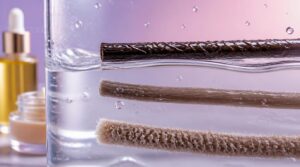
Once you know what your eyes and fingers are telling you, the next step is matching that evidence to the right routine. Every porosity level works with a different mix of products and techniques, and using the wrong one just wastes time and money.
Here’s how to turn those visible signs into a care plan that actually works.
Lightweight Low Porosity Products
Since your cuticles sit tight and closed, reach for water-based formulas first, glycerin, aloe, hydrolyzed proteins in light doses. Skip heavy silicones and butters; they’ll just sit on the surface.
Use lightweight oils sparingly during the LOC method, and always apply conditioner with heat activation to lift cuticles.
Weekly clarifying shampoos prevent buildup fast.
Balanced Medium Porosity Care
If low porosity means fighting closed cuticles, medium porosity is the reward: your hair just works with you.
Lean on balanced humectants, weekly leave-ins, and protein every 4-6 weeks.
- Deep hydration without heaviness
- Bounce that holds curl memory
- Softness that actually lasts
Layer light, cleanse regularly, and adjust seasonally. That’s true moisture balance.
Sealing High Porosity Moisture
Medium porosity hair cooperates. High porosity hair leaks moisture fast, so cuticle gap filling matters most.
Try oil layering: jojoba first, avocado oil to seal, then a butter like shea for occlusion. Apply to soaking wet strands, cold-rinse to close cuticles.
Choose porosity-friendly products with heavier butters. Prep with this method before protective styling to lock moisture in for days.
Clarifying Visible Product Buildup
Product buildup masks your true porosity signs, so clarify before judging shine or absorption.
- Clarifying shampoo with sodium C14-16 olefin sulfonate lifts residue in one wash
- Apple cider vinegar rinse (1:3 ratio) dissolves film within ten minutes
- Weekly for low porosity, monthly for high, protects moisture balance
Post-clarification care: follow immediately with lightweight conditioner to restore what buildup removal strips away.
Rechecking Signs After Damage
Once hair takes damage, run the tests again, don’t trust old results. Heat and chemical stress cause a real cuticle texture shift, so low porosity strands can suddenly wet faster and dry quicker.
| Before Damage | After Damage |
|---|---|
| Slow wetting | Faster absorption |
| Smooth shine | Dull, rough feel |
| Frizz-free | Frizz returns sooner |
| Even drying | Uneven, faster drying |
| Steady hold | Reduced elasticity |
Frequently Asked Questions (FAQs)
How do I tell what level of porosity my hair is?
Three quick clues tell the story: watch water reaction timing, feel cuticle texture, and try the float test. Together they reveal whether you’re low, medium, or high porosity in minutes.
What is the rarest type of hair porosity?
Extremely low porosity is the rarest type, with dense cuticle packing that creates strong water absorption resistance, visible beading, and slow moisture penetration, meaning longer air-drying time compared to medium or high porosity hair.
What ethnicity has high porosity hair?
Like a rotary phone struggling with modern wifi, tightly coiled strands struggle to seal moisture in.
African ancestry hair shows the highest porosity among ethnic groups, thanks to elliptical follicles and genetic cuticle traits that create natural gaps along each strand.
What’s the worst hair porosity to have?
Most stylists point to high porosity as the toughest to manage. It soaks up water fast but can’t hold onto it, leading to frizz, breakage, poor moisture balance, and stubborn split ends despite consistent care.
Can hair have different porosity in one strand?
Yes. Strand porosity variation is real, thanks to uneven cuticle lifting, mixed absorption zones, and moisture pathway differences from heat, chemicals, or brushing, creating visible wetting patterns where one section darkens faster than the rest.
Does porosity change between seasons or climates?
Weather genuinely shifts your porosity signs. Humidity lifts cuticles, boosting absorption and frizz, while cold air tightens them. Dry climates strip low porosity strands further, and humid regions swell high porosity hair, so your routine should flex with the seasons.
How often should I retest my hairs porosity?
Give your strands a check-in every so often, not just once. Seasonal retesting, post chemical service timing, and after heat styling all call for a fresh water glass method, spray test, or touch test to confirm changes.
Can two siblings have completely different porosity types?
Absolutely. Genetic inheritance variation means siblings can develop low, medium, or high porosity from the same gene pool. Add different cuticle condition, chemical exposure, and mechanical stress over time, and their hair porosity paths split further apart.
Does gray hair typically have higher porosity levels?
Studies on aging fibers link gray strands to cuticle lipid changes, often raising dryness. So gray hair can trend toward high porosity, but damage, not pigment loss alone, ultimately drives where your strands land on the porosity chart.
Conclusion
No, your hair isn’t secretly plotting against you every time it frizzes. That spray bottle in your bathroom holds more diagnostic power than half the products on your shelf.
Reading the visual signs of hair porosity levels turns guesswork into strategy, showing you exactly why water beads, sinks, or disappears on your strands. Cuticles tell the truth long before labels do.
Trust what you see, test what you suspect, and let your hair finally make sense.