This site is supported by our readers. We may earn a commission, at no cost to you, if you purchase through links. This content is for general informational and educational purposes only and is not a substitute for professional medical, dermatological, or nutritional advice.

Run your hand across your arm right now. If it feels rough or looks dull, dead skin cells are sitting on the surface, and your skin’s natural shedding cycle can’t keep up. That buildup clogs pores, blocks moisture, and steals the glow you already own.
The good news: you don’t need harsh chemicals or expensive treatments. Natural body exfoliation methods like sugar scrubs, oatmeal, and coffee grounds work with your skin’s own biology to lift away old cells gently. As an esthetician, I’ve watched these simple kitchen ingredients transform rough, tired skin.
Here’s exactly how to choose the right method for your skin type and use it safely, step by step.
Table Of Contents
- Key Takeaways
- How Natural Body Exfoliation Works
- Choose Exfoliants by Skin Type
- Best Natural Body Exfoliation Methods
- Exfoliate Your Body Step by Step
- Set Frequency and Prevent Irritation
- Moisturize and Protect Exfoliated Skin
- Frequently Asked Questions (FAQs)
- How can I exfoliate my body naturally?
- How do Koreans exfoliate their body?
- How can I exfoliate my skin naturally?
- What do dermatologists recommend to exfoliate the body?
- Can I exfoliate over tattoos or self-tanner?
- Are natural scrubs safe during pregnancy?
- Whats the shelf life of homemade scrubs?
- Can I use body scrubs on my face?
- Should I exfoliate before or after shaving?
- Conclusion
Key Takeaways
- Match your exfoliant to your skin type: fine sugar or oatmeal for dry and sensitive skin, coarser salt or coffee grounds for normal or oily skin.
- Technique matters more than ingredients—exfoliate on warm, wet skin with light circular motions, rinse completely, and limit sessions to 1–2 times per week.
- Follow every session with moisturizer applied to slightly damp skin (shea butter, glycerin, ceramides) and SPF, since freshly exfoliated skin is more vulnerable to dryness and UV damage.
- Natural options like sugar-oil scrubs, oatmeal pastes, coffee grounds, dry brushes, and the hammam kessa-glove ritual all work by loosening dead skin cells, but salt should never touch broken skin and body scrubs don’t belong on your face.
How Natural Body Exfoliation Works

Skin is always renewing itself. Every day, dead skin cells build up on the surface, dulling texture and slowing the natural cycle your body runs on its own. Natural exfoliation actively helps this process along by physically loosening that buildup, so the fresher cells underneath can finally show through.
If you’ve ever wondered what facial exfoliation actually does for your skin, it comes down to exactly this: clearing that dull layer so renewal can keep pace.
That outermost layer is called the stratum corneum, and its controlled removal is the goal. Mechanical scrubs use friction to strip away old cells faster than your skin sheds naturally. Some natural ingredients also trigger keratolysis and enzymatic degradation, softening the cellular bonds before any rubbing even begins.
Knowing this puts you in control. You’re not just scrubbing blindly; you’re supporting a biological process your skin already knows how to do.
Choose Exfoliants by Skin Type
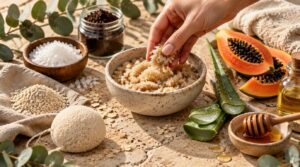
Not every exfoliant works for every skin type, and choosing the right match is what keeps your skin thriving instead of irritated. Your skin’s individual needs should guide what you reach for. Here’s how to find your fit.
Dry or Sensitive Skin
Because your barrier’s already working overtime, dry skin and sensitive skin need a lighter touch. Choose fine-grained natural exfoliants like soft sugar or colloidal oatmeal, which glide without grinding.
Keep pressure minimal and contact time short. Gentle exfoliation once or twice a week is enough. Always follow with postexfoliation hydration to lock in moisture while your skin is still receptive.
Normal or Oily Skin
Oily skin can handle more friction, so reach for grippier options. Salt and coffee grounds hold their particle shape throughout the scrub, which makes body exfoliation far more effective at clearing pore buildup.
If you’re unsure where to start, my roundup of the best natural physical exfoliating scrubs breaks down which textures suit each skin type.
For a fuller natural body exfoliation routine, pair your scrubs with chemical exfoliation using BHA Beta Hydroxy Acids to cut through sebum that surface scrubbing can’t reach.
Best Natural Body Exfoliation Methods

Your kitchen and bathroom likely hold everything you need to get started. From simple sugar and oil blends to traditional hammam rituals, each method offers a distinct texture, benefit, and experience. Choose the one that fits your skin, your lifestyle, and the results you’re after.
Sugar and Oil Scrubs
Most estheticians reach for sugar scrubs first, and there’s good reason for that. Sugar particles physically shear off loose dead skin cells, and mixing sugar with coconut oil spreads the scrub evenly for consistent body exfoliation.
Choose fine-grain sugar for gentler skin exfoliation on your arms and legs. Keep your pressure light and rinse thoroughly to prevent any oily residue.
Soothing Oatmeal Treatments
Oats offer sensitive skin care through natural exfoliation without scrubbing it raw.
- Stir ground oatmeal into warm water to form a soft paste
- Add carrier oil for slip and reduced friction
- Apply a thin, even layer over your damp skin
- Massage with light, circular pressure
- Rest one minute, then rinse and pat dry
Follow with moisturizer for soothing skincare results.
Coffee and Salt Scrubs
Combining coffee grounds with a carrier oil gives you control over your body exfoliation. Coarser grounds intensify abrasion; finer grounds offer gentle skin exfoliation and better overall skin texture improvement.
| Type | Best For |
|---|---|
| Coarse coffee | Normal or oily skin |
| Fine coffee | Sensitive or dry skin |
| Salt | Intact skin only |
They’re both powerful natural exfoliants, but avoid salt on broken skin.
Natural Fiber Exfoliating Tools
Loofahs and body brushes have been delivering gentle skin exfoliation for centuries. Natural fiber tools like these lift dead skin through physical friction, and they’re ideal for body exfoliation.
Always wet your tool first so the fibers soften and glide smoothly. Use coarser textures only on thicker areas like legs.
Dry tools completely after every session to prevent bacterial growth.
Hammam and Kessa Ritual
Picture warm steam rising around you, your skin growing soft and pliable. That’s the hammam ritual, a cornerstone of traditional bathing rituals. Apply savon beldi, then scrub with the kessa glove for deep natural exfoliation.
The hammam ritual softens skin with warm steam before a kessa glove scrub delivers deep natural exfoliation
- Soak in steam for ten minutes
- Apply savon beldi to damp skin
- Scrub with your kessa glove
- Rinse thoroughly with cool water
- Moisturize immediately after
Exfoliate Your Body Step by Step
Your technique matters more than your ingredients. Start with warm water and let it soak your skin for two to three minutes in the shower. Wet skin swells slightly, so you need far less force to lift away dead cells during your natural exfoliation routine.
Apply your scrub with light, circular motions, working in short passes rather than grinding back and forth. Keep the pressure gentle enough that you don’t see redness forming. Let the granules do the work.
Rinse completely. Leftover particles keep abrading your skin long after you stop, which quietly undoes your progress toward softer skin. Pat dry gently. That’s how you exfoliate skin naturally, step by step, for a stronger body exfoliation routine that actually works.
Set Frequency and Prevent Irritation
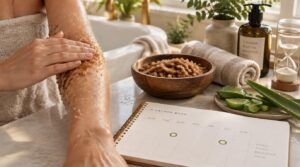
More isn’t always better with body exfoliation. Scrubbing too often shortens your skin’s natural recovery window and quickly raises your risk of skin irritation you simply didn’t need.
- Limit sessions to 1–2 times per week for most body skin types
- With dry skin or skin sensitivity, once a week or even less is smarter
- Stop if you notice persistent stinging, lingering redness, or rough texture afterward
Build your weekly skincare schedule around those signals. Press lightly and keep your motions circular to reduce shear stress on the surface. Wet your skin thoroughly before you begin, since drier skin creates far more friction and accelerates irritation. Rinse completely so no scrub residue stays behind to keep irritating your freshly treated skin.
Moisturize and Protect Exfoliated Skin
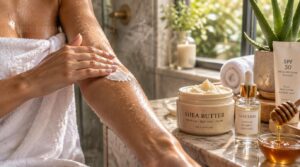
Once you’ve rinsed off completely, your skin barrier is temporarily more open. Apply moisturizer to slightly damp skin right away, while your outer layers can still absorb it. That window closes fast.
Reach for ingredients that do real work. Shea butter moisturizing properties include forming an occlusive film that slows water loss on freshly exfoliated skin. Add a formula with natural humectants like glycerin or honey to pull moisture deep into the surface. Ceramides help skin barrier repair and calm any residual micro-irritation. Moisturizer efficacy rises when you’re consistent after every exfoliation session, not just occasionally.
Postexfoliation care doesn’t stop at lotion. Apply SPF before going outside. Freshly exfoliated skin is more vulnerable to UV damage, so protect it now.
Frequently Asked Questions (FAQs)
How can I exfoliate my body naturally?
Last winter, my elbows stayed flaky until I switched to a sugar scrub. Start your natural body exfoliation on wet skin, using gentle circular motions to lift dead skin cells, then rinse thoroughly.
How do Koreans exfoliate their body?
Koreans exfoliate in bathhouses using a kessa mitt on warm, steam-softened skin. You scrub with repeated friction, lifting dead skin, then follow a structured wash-and-rinse flow that completes the body exfoliation ritual.
How can I exfoliate my skin naturally?
You can exfoliate naturally with sugar and oil scrubs, oatmeal rinses, or a soft washcloth. Apply after warm water, use gentle circular motions, rinse well, then moisturize to protect your barrier.
What do dermatologists recommend to exfoliate the body?
Like shedding an old coat, your skin renews itself when you help it along. Dermatologists recommend gentle body exfoliation: mild physical exfoliation with soft tools or natural exfoliants, occasional chemical exfoliation, moisturizing after, and never daily use.
Can I exfoliate over tattoos or self-tanner?
Irony at its finest: scrubbing away your fresh tattoo’s healing skin or your self-tanner in one patchy swoop. Skip mechanical exfoliation until tattoos fully heal and tans fade naturally. Prioritize microtears prevention and skin barrier protection.
Are natural scrubs safe during pregnancy?
Absolutely, with care! Natural scrubs are generally safe, but pregnancy skin gets more sensitive. Choose gentle sugar scrubs, skip fragrance and strong acids, avoid irritated areas, and consult your dermatologist if stinging appears.
Whats the shelf life of homemade scrubs?
Funny how the most natural skincare ingredients spoil faster than your moisturizer. Oil-only DIY scrubs last two to three weeks refrigerated; add yogurt or aloe, and you’re down to days. Toss anything moldy or rancid.
Can I use body scrubs on my face?
Think of your face as silk and your body as denim. You wouldn’t scrub silk with denim tools. Skip body scrubs on your face; their coarse granules can cause micro-injuries. Choose gentle facial exfoliants instead.
Should I exfoliate before or after shaving?
Exfoliate before shaving, ideally the day prior. Gentle physical exfoliation lifts dead skin, helps prevent ingrown hairs, and smooths razor glide. Scrubbing after shaving irritates freshly shaved skin, so save your natural exfoliation for another time.
Conclusion
Picture stepping out of the shower and running that same hand down your arm. Smooth. Soft. Alive. That’s what consistent natural body exfoliation methods give you, and your kitchen already holds the tools.
Start with the method that matches your skin type. Exfoliate gently, moisturize deeply, and stay consistent.
Your skin renews itself every month. Meet it halfway, and that glow you thought you lost was yours all along, waiting to resurface.