This site is supported by our readers. We may earn a commission, at no cost to you, if you purchase through links. This content is for general informational and educational purposes only and is not a substitute for professional medical, dermatological, or nutritional advice.
Hair loss that spreads evenly across your scalp, with no receding hairline or thinning crown, often points to something internal rather than genetic. For many people, the culprit turns out to be low iron stores, specifically ferritin levels that drop quietly before any other symptoms appear.
Iron doesn’t just carry oxygen through your blood. It powers the rapid cell division inside each hair follicle, and when your body runs short, follicles lose the energy they need to sustain growth. The result is diffuse shedding that can feel sudden and alarming.
Understanding the biology behind iron deficiency and hair thinning is the first step toward reversing it.
Table Of Contents
Key Takeaways
- Your ferritin level can drop and start damaging your hair follicles before any other symptoms of iron deficiency appear, making early blood testing essential.
- Iron deficiency causes hair loss through multiple pathways at once — disrupted DNA synthesis, reduced cellular energy, and premature follicle shutdown — which is why the shedding can feel so widespread and persistent.
- Unlike genetic hair loss, iron-related thinning spreads evenly across your whole scalp without a receding hairline, and it can improve once your iron stores are fully restored.
- Recovery takes time: expect shedding to continue for weeks after treatment begins, with meaningful regrowth typically taking six to twelve months to become visible.
How Iron Deficiency Causes Hair Thinning

Iron deficiency disrupts hair growth through several overlapping biological pathways, not just one. Understanding how these mechanisms work together helps explain why the effects on your hair can be so persistent. Here’s a closer look at each one.
Each of these disruptions connects to a broader picture of what can throw off your hair’s growth cycle, from nutrient gaps to hormonal shifts and beyond.
Impaired DNA Synthesis
Synthesis of DNA requires an enzyme called ribonucleotide reductase, which needs iron to function properly. Research highlights how iron deficiency affects follicle cells at a metabolic level, disrupting the rapid division that healthy hair growth depends on.
Your hair matrix cells divide faster than almost any other cell in your body, so they’re among the first to suffer when nutritional deficiency disrupts cellular metabolism. Even mild iron deficiency anemia may impair hair and follicle health before the hair follicle cycle visibly stalls.
Reduced Follicular Energy
Beyond disrupted DNA replication, your follicles can’t sustain growth without steady cellular energy. Iron drives mitochondrial ATP production, and when serum ferritin falls, output drops quickly.
Follicle cells in anagen may experience:
- Reduced ATP for keratinocyte division
- Lower follicle oxygenation from impaired hemoglobin
- Weakened iron metabolism limiting shaft production
Hair thinning from iron deficiency often reflects this cellular energy shortfall.
Premature Telogen Shift
That energy shortfall pushes follicles out of anagen earlier than normal. When iron drops, cells can’t sustain active growth, and the cycle shifts toward telogen prematurely.
Reduced iron compounds this disruption by cutting off the energy follicles need to sustain anagen, a pattern explored further in this breakdown of how stress and nutrient deficiencies affect beard growth.
Iron deficiency hair loss often manifests as telogen effluvium, where many follicles enter the resting phase together. Shedding may appear weeks after your serum ferritin falls, reflecting the delay built into the hair cycle.
Thinner Hair Shafts
Even follicles staying in anagen can produce thinner shafts. Low iron limits keratin output from the matrix cells. Supporting the follicle’s keratin production with a targeted hair thickening serum may help restore some of that lost shaft density while iron levels recover.
Watch for:
- Hair that suddenly feels thinner
- A noticeably smaller ponytail
- Strands snapping before reaching length
- Volume loss without visible shedding
- Texture that’s limp and flat
Iron deficiency hair loss isn’t only about shedding. Sometimes it’s the hair you keep that changes.
Diffuse Hair Shedding
Follicles across your entire scalp may shift toward shedding when iron deficiency disrupts normal hair-cycle regulation. Unlike patterned loss, diffuse hair shedding affects multiple scalp areas at once, making it harder to catch early.
| Feature | Iron Deficiency | Other Causes |
|---|---|---|
| Pattern | Diffuse | Variable |
| Timing | Delayed | Immediate |
| Ferritin levels | Low | Normal |
| Improves with iron supplementation | Yes | No |
| Associated hair thinning | Widespread | Localized |
What Iron Deficiency Hair Loss Looks Like

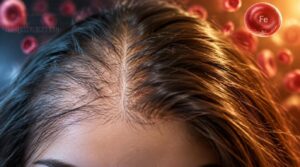
Hair loss from iron deficiency anemia doesn’t match the recession or crown-thinning pattern associated with genetics. You’ll notice diffuse hair thinning across the scalp, not a single localized patch or a retreating hairline.
If this widespread shedding pattern persists, hair restoration experts can identify whether iron deficiency is the true culprit rather than genetics or another underlying cause.
The earliest sign is usually increased shedding during washing or brushing, when noticeably more strands come away at once. Over time, your part may widen, and the scalp can look more visible under bright lighting. Hair may also feel finer. This reflects telogen effluvium, where iron depletion shifts more follicles into the resting phase at the same time.
Iron deficiency quietly shifts follicles into rest together, widening your part before you notice the cause
The scalp itself stays intact, with no scarring or visible skin change. That detail matters in hair loss diagnosis, especially when other anemia symptoms like fatigue are also present.
Blood Tests That Confirm Iron Deficiency
Confirming iron deficiency as the cause of your hair loss starts with the right blood tests. A few specific markers can tell you whether low iron is the problem and help rule out other conditions with similar patterns. Two key tests cover most of what you need to know.
Ferritin and Complete Blood Count
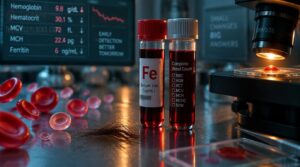
Two tests matter most here. A ferritin level blood test measures your stored iron directly and often drops before anemia symptoms develop, making it your earliest diagnostic signal. At-home options like a ferritin home blood test kit let you track your iron stores between doctor visits, catching drops early before symptoms take hold.
A Complete Blood Count may then show low hemoglobin, small red cells, or elevated RDW, confirming that iron deficiency has reached a stage affecting your blood. Together, they sharpen the diagnosis considerably.
Ruling Out Other Hair-loss Causes

When your ferritin level blood test is low but shedding doesn’t improve after treatment, suspect another cause.
Your blood tests can’t confirm the full picture. Also consider:
- Androgenetic alopecia (patterned thinning)
- Telogen effluvium from stress or illness
- Thyroid dysfunction
- Vitamin D or zinc deficiency
- Scalp inflammation
A complete iron deficiency diagnosis accounts for all of these, not just iron levels.
Treating Iron Deficiency for Hair Regrowth

Once iron deficiency is confirmed, restoring your iron stores is the most direct way to stop the shedding. Treatment options vary depending on how depleted your levels are and how well your body absorbs iron. Here’s what you need to know about the three main approaches.
Oral and Intravenous Iron
Treating iron deficiency anemia usually starts with oral iron supplements. They’re affordable but absorption varies, especially if your stomach acid is low or you take them alongside certain minerals.
Intravenous iron bypasses the gut entirely, delivering iron straight to your bloodstream. Your doctor might recommend iron injections if oral supplements fail or your deficiency is severe, potentially speeding hair regrowth.
Iron-rich Foods and Absorption
Heme iron, found in iron-rich foods like red meat and fish, absorbs far more readily than nonheme iron from legumes, leafy greens, and fortified cereals. For those who avoid red meat, heme iron supplement tablets offer a way to access that same highly bioavailable form of iron.
Pairing nonheme sources with vitamin C meaningfully improves iron absorption. A glass of orange juice with lentils may raise how much your gut actually takes in. Tea or coffee with meals may work against you.
Supplement Safety and Side Effects
If you switch to supplements, expect GI side effects like nausea, constipation, or abdominal pain. Taking iron on an empty stomach often makes these worse, so eating something small first may help. Formulations like gentle low-GI iron supplements tend to use ferrous bisglycinate, which is easier on the stomach than standard ferrous sulfate.
Higher elemental doses increase side effect risk. If you have hemochromatosis, don’t supplement without guidance. Iron can also reduce absorption of certain antibiotics, so spacing your doses matters.
Hair Regrowth Timeline and Persistent Thinning
Starting treatment is only half the picture. The hair regrowth timeline after addressing iron deficiency is often slower than most people expect, because follicles shed based on their state during the deficiency, not when your labs improve.
Here’s what the recovery window usually looks like:
- Weeks 1–4: Shedding may continue even as iron rises.
- Months 2–3: Ferritin optimization signals improved tissue availability.
- Months 4–6: Early density gains and reduced shedding become noticeable.
- Around month 12: A meaningful return to baseline thickness is assessable.
- Beyond 12 months: Persistent thinning suggests incomplete repletion or another cause.
If thinning continues despite normalized labs, your clinician will likely re-check your iron indices and consider other diagnoses that may be limiting your hair regrowth potential.
Frequently Asked Questions (FAQs)
Can hair loss from low iron grow back?
Yes, it can. Once your iron stores are restored, follicles can resume normal cycling and produce new hair. Regrowth usually takes several months and isn’t guaranteed if a root cause of iron loss still continues.
What are the signs of lack of iron?
Feeling persistently drained without any clear reason? Low iron often causes extreme fatigue, pale skin, and shortness of breath. You’ll likely also notice brittle nails and hair thinning, along with unusual cravings for non-food items.
What are the big 3 for thinning hair?
The three most common drivers of hair thinning are iron deficiency, hormonal changes like thyroid dysfunction or elevated androgens, and chronic stress. All three can slow your hair follicle activity and trigger significant diffuse shedding.
What does iron deficiency hair look like?
Studies suggest iron deficiency affects roughly one in five women with hair loss. You’ll notice diffuse thinning spread across the whole scalp, a wider part, and a thinning crown, but your hairline usually stays intact.
Can stress worsen iron deficiency hair loss?
Stress can worsen it. Elevated cortisol raises inflammatory signals that increase hepcidin, a hormone that blocks iron release into your bloodstream. Less available iron reaches your hair follicles, pushing more into telogen and amplifying shedding.
Does iron deficiency affect hair texture or color?
Iron deficiency doesn’t reliably change your hair’s color. Any hair brittleness or texture shifts you notice are most often secondary to reduced density, rather than any direct effect on pigment production or hair shaft integrity.
Are men also at risk for iron-related shedding?
Think men are immune? Gastrointestinal bleeding from ulcers can trigger iron deficiency that quietly depletes your iron stores. When your serum ferritin falls low enough, diffuse hair loss may appear right alongside male pattern baldness.
Conclusion
Think of your hair follicles as small engines running on iron. When the fuel runs low, they stall and shed. The link between iron deficiency and hair thinning is well-established, and it’s also reversible with the right diagnosis and treatment.
Getting your ferritin tested is the fastest way to know where you stand. Consistent supplementation, dietary changes, and patience give your follicles the time they need to restart. Results won’t come overnight, but growth will.