This site is supported by our readers. We may earn a commission, at no cost to you, if you purchase through links. This content is for general informational and educational purposes only and is not a substitute for professional medical, dermatological, or nutritional advice.
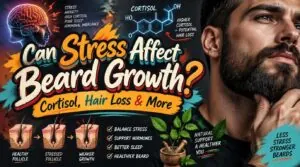
Your beard doesn’t lie. When cortisol floods your system during prolonged stress, it suppresses the hormonal signals your follicles depend on, and weeks later, you notice the thinning. That delay makes stress damage easy to misattribute.
Can stress affect beard growth? The research says yes, and more precisely than most men realize. Cortisol weakens androgen signaling, pushes follicles into resting phases, and triggers conditions like telogen effluvium, which can strip up to 50% of beard density during acute episodes.
Understanding the mechanism gives you real tools to fight back.
Table Of Contents
- Key Takeaways
- Can Stress Really Affect Beard Growth?
- How Cortisol and Stress Hormones Suppress Beard Growth
- Stress-Induced Beard Loss: Causes and Conditions
- How Sleep Deprivation Slows Beard Growth
- Nutrition and Lifestyle Habits for Beard Growth
- Frequently Asked Questions (FAQs)
- What is a depression beard?
- What could be causing a white patch in my beard?
- What could be causing a sudden bald patch in my beard?
- Why is my moustache hair falling out?
- Can anxiety medications influence beard growth patterns?
- Is stress-related beard loss reversible over time?
- How does stress impact beard growth in teenagers?
- Can mindfulness training reduce patchy beard symptoms?
- Can stress cause permanent beard follicle damage?
- Does meditation or yoga improve beard growth?
- Conclusion
Key Takeaways
- Chronic stress raises cortisol, which weakens the hormonal signals your beard follicles need to grow — but the damage shows up weeks or months later, making the connection easy to miss.
- Stress can trigger telogen effluvium, pushing up to 50% of beard hair into a resting phase, though nearly 95% of cases fully reverse once the stressor is resolved.
- Poor sleep keeps cortisol elevated and disrupts growth-factor signaling, compounding follicle suppression beyond what daytime stress alone causes.
- Addressing the root drivers — cortisol levels, sleep quality, and nutrient deficiencies in zinc, iron, and vitamin D — is more effective than treating beard thinning as a surface problem.
Can Stress Really Affect Beard Growth?

How much does stress actually affect your beard? It does, but not the way most people assume. Stress doesn’t directly slow beard growth rate; it disrupts the biological systems and hormonal balance your hair follicles depend on to function.
Chronic stress quietly erodes the hormonal foundation your follicles need, and understanding beard health and thickness solutions can help you address the root disruption rather than just the symptoms.
The clearest evidence points to shedding and patchiness rather than a blanket slowdown. When your body registers prolonged stress, it shifts follicles toward resting phases, causing visible thinning weeks or months after the triggering event. That delayed timeline is why many men miss the connection entirely.
Genetics, nutrition, and androgen levels shape your baseline, independent of stress. Stress acts as a disruptor layered on top of that foundation, which is why two men under identical pressure can experience completely different outcomes.
How Cortisol and Stress Hormones Suppress Beard Growth
Cortisol is the central driver. When stress hormones flood your system, cortisol suppresses the biological signals your beard follicles need to stay in active growth. Here’s the mechanism:
- Cortisol raises sharply, shifting cellular signaling away from growth promotion.
- Androgen signaling weakens, reducing the hormonal drive that thickens beard fibers.
- Follicle cycling shifts toward telogen, the resting phase, cutting anagen short.
- Immune modulation disrupts local skin signaling, destabilizing normal follicle function.
Chronic exposure matters more than a single bad week. A brief stress spike won’t reshape your beard, but sustained hormonal imbalance compounds over time. The result isn’t sudden beard loss; it’s a slow suppression that shows up as patchiness or stalled thickness weeks later.
Pairing stress management with a consistent beard grooming routine during growth phases can help you spot these subtle changes early before patchiness becomes harder to reverse.
Stress-Induced Beard Loss: Causes and Conditions
Chronic stress doesn’t just slow your beard growth — it can trigger specific conditions that cause visible, measurable loss. Two mechanisms stand out as the most clinically significant regarding stress and the beard. Understanding them puts you in control.
Telogen Effluvium and Beard Thinning
Think of your follicles like workers suddenly walking off the job. When stress hormones surge, elevated cortisol pushes follicles into an early resting phase, triggering telogen effluvium. That’s the mechanism behind diffuse beard thinning appearing two to three months after the stressor.
Identifying the root cause early is key, and this guide on fixing bald spots in your beard walks through how to distinguish stress-related shedding from genetic or autoimmune causes.
The numbers tell a reassuring story:
- Up to 50% of beard hair can shed during an acute episode
- Regrowth usually begins within 3 months once stress clears
- Full density usually returns in 6–12 months for most men
- Nearly 95% of cases resolve without permanent hair loss
Alopecia Areata and Beard Patches
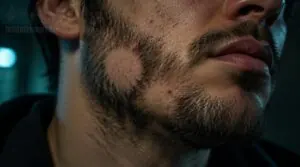
Where telogen effluvium thins your beard uniformly, alopecia areata strikes differently. Your immune system targets specific follicles, producing distinct, well-circumscribed patches instead of overall density loss.
Unlike the uniform thinning of telogen effluvium, these immune-driven patches can appear anywhere along the jawline or cheeks—a distinction worth understanding alongside cultural and genetic factors that shape beard growth across different populations.
Stress can trigger flares in susceptible men, but it’s not the root cause. The culprit is autoimmune follicle disruption, which is why patches can appear, clear up, and return without warning.
How Sleep Deprivation Slows Beard Growth

Underestimate sleep deprivation and you’re actively sabotaging your beard growth. During deep sleep, your body recalibrates stress hormones, restores hormonal rhythm, and creates the anabolic environment your hair follicles need to stay in the growth phase. When that window closes too early, cortisol stays elevated and follicle proliferation weakens. Tracking your nightly deep sleep cycles with a quality sleep tracker wearable can reveal exactly when cortisol-spiking disruptions are costing your follicles their recovery window.
Sleep deprivation keeps cortisol elevated, quietly strangling the follicle growth your beard depends on
The damage compounds. Poor sleep increases oxidative stress, which impairs keratinocyte activity inside each follicle. It also disrupts insulin sensitivity and growth-factor signaling, shrinking the biological conditions that drive beard growth forward.
Here’s what sleep deprivation actually disrupts:
- Hormone rhythm normalization, keeping cortisol high when it should be dropping
- Oxidative stress clearance, directly impairing hair matrix cell efficiency
- Growth-factor availability, reducing the anabolic signal your follicles depend on
Nutrition and Lifestyle Habits for Beard Growth

While stress management shapes the hormonal backdrop, your nutrition and daily habits determine whether beard growth actually happens. Deficiencies in zinc, iron, and vitamin D impair follicle function at the cellular level, producing thinner, weaker output. Chronically elevated cortisol narrows the path to a fuller beard, which is why many men turn to ashwagandha cortisol supplements to help bring stress hormones back within a healthier range.
| Factor | Follicle Impact | Action |
|---|---|---|
| Iron deficiency | Reduces oxygen delivery | Red meat, lentils |
| Zinc deficiency | Impairs keratinization | Shellfish, pumpkin seeds |
| Smoking | Damages microvasculature | Eliminate entirely |
| High-glycemic diet | Raises androgen sensitivity | Whole foods, fiber |
Lifestyle changes compound fast. Cutting alcohol restores nutrient absorption, giving your follicles the amino acids they need for keratin synthesis. Keep protein intake consistent, prioritize sleep, and your hair follicle health stops being the weakest link in your beard growth.
Frequently Asked Questions (FAQs)
What is a depression beard?
Depression beard" isn’t a clinical term. It’s informal shorthand for beard thinning or patchiness people attribute to chronic stress or depression, often driven by hormonal and immune disruption.
What could be causing a white patch in my beard?
Ironically, your beard’s white patch might be your body’s loudest confession yet. Missing melanocytes, autoimmune activity like alopecia areata, or stress-spiked cortisol actively disrupting your hair follicles can all cause localized depigmentation and noticeable patchiness.
What could be causing a sudden bald patch in my beard?
A sudden bald patch usually signals alopecia areata, an autoimmune attack on your hair follicles. Elevated cortisol can also trigger telogen effluvium, pushing follicles into early shedding and causing patchiness weeks after a stressful event.
Why is my moustache hair falling out?
Your moustache hair can fall out when elevated cortisol prematurely pushes your hair follicles into the resting phase.
Telogen effluvium, alopecia barbae, or deficiencies in iron and zinc are common culprits worth ruling out first.
Alopecia barbae is an autoimmune condition where the body attacks hair follicles, causing patchy circular beard loss that can spread along the jawline and beyond.
Can anxiety medications influence beard growth patterns?
Anxiety medications rarely act as a direct switch on beard growth. SSRIs can trigger telogen effluvium, nudging follicles toward premature shedding, though disrupted hormonal balance from root stress and cortisol is often the true culprit.
Is stress-related beard loss reversible over time?
Yes, and your recovery timeline depends on how quickly you address chronic stress. Once cortisol levels normalize and sleep improves, follicles gradually re-enter the active growth phase, slowly restoring your beard density over several months.
How does stress impact beard growth in teenagers?
Even though puberty drives androgen signaling, chronic stress in teenagers can substantially raise cortisol levels, disrupting the hormonal balance that governs beard growth and pushing your hair follicles into prolonged resting phases, slowing visible progress.
Can mindfulness training reduce patchy beard symptoms?
Mindfulness training won’t directly regrow your beard patches, but it can meaningfully lower cortisol, calm immune overactivity, and reduce the recurring stress signals that push your hair follicles right out of their normal growth cycle.
Can stress cause permanent beard follicle damage?
Permanent beard follicle damage from cortisol alone is rare. Chronic stress disrupts your hair cycling rather than destroying follicles. When the trigger resolves, thinning often reverses, unless stress has activated an autoimmune response targeting follicles.
Does meditation or yoga improve beard growth?
What if stress reduction through meditation could finally release your beard’s full growth potential? Yoga and consistent meditation lower cortisol by up to 25%, directly easing the hormonal pressure that’s actively suppressing your hair follicles.
Conclusion
Your follicles are a living mirror. They reflect what’s happening deep inside your body, often long before you consciously register the full damage. The answer to can stress affect beard growth is etched clearly into that reflection: yes, precisely and measurably so.
Cortisol is a silent saboteur, but it’s not invincible. Lower it through quality sleep, targeted nutrition, and deliberate recovery, and your follicles will actively respond. Control the stress, and you reclaim your growth.