This site is supported by our readers. We may earn a commission, at no cost to you, if you purchase through links. This content is for general informational and educational purposes only and is not a substitute for professional medical, dermatological, or nutritional advice.
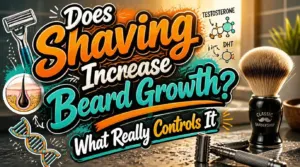
Your grandfather probably told you the same thing your barber still repeats today: shave early and often, and your beard will come in thicker. It’s one of the most persistent grooming myths out there, passed down like folklore because the visual evidence seems convincing. Stubble does look darker and denser after a fresh shave.
But that’s an optical illusion, not biology. Does shaving increase beard growth? No, and dermatologists have understood why since studies debunked this myth back in 1928.
What actually drives your beard’s thickness lives beneath the skin, in your follicles, your hormones, and your genetic code. Understanding those mechanisms gives you real control over your grooming results, instead of chasing a myth with a razor.
Table Of Contents
- Key Takeaways
- Why Shaving Seems to Thicken Beards
- No, Shaving Does Not Increase Beard Growth
- What Actually Controls Beard Growth?
- How Shaving Affects Beard Appearance
- What Can Support Healthy Beard Growth?
- Frequently Asked Questions (FAQs)
- Will shaving help me grow a beard?
- How do I increase my beard growth?
- Is it good to shave your beard?
- Is shaving good for beard growth?
- Will my beard grow faster if I don’t shave?
- Can supplements boost facial hair growth speed?
- Why doesnt beard grow on certain face areas?
- Does stress affect beard growth patterns significantly?
- How long before seeing noticeable beard changes?
- Can beard oils actually stimulate new growth?
- Conclusion
Key Takeaways
- Shaving doesn’t make your beard grow thicker or faster—that’s just an optical illusion caused by blunt-cut hairs looking darker and coarser than tapered, unshaven ones.
- Your beard’s real thickness and pattern come down to genetics, testosterone, and DHT working on your hair follicles, none of which a razor can touch or influence.
- Since shaving only cuts hair above the skin, it leaves your follicles, growth cycles, and hair diameter completely unchanged.
- If you want to actually support your beard’s growth, focus on good sleep, solid nutrition, and healthy skin care instead of wasting money on unproven supplements.
Why Shaving Seems to Thicken Beards
You’ve probably noticed your stubble looks thicker within days of shaving, and that observation isn’t wrong—it’s just misread. Your eyes and fingertips are picking up on real physical changes, but none of them involve your follicles producing more hair. Here’s what’s actually driving that illusion.
Cut hair simply loses its tapered tip, leaving a blunt edge that feels coarser—read this guide to beard growth for Black men to see what actually shapes thickness over time.
Blunt Stubble Feels Coarser
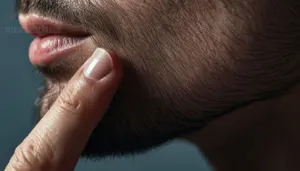
Run your palm across day-old stubble and you’ll swear it’s thicker. It isn’t. A razor cuts hair straight across, creating a flat cross-section instead of a natural taper, which raises bending stiffness and skin friction. That’s pure geometry, not genetic predisposition or hormonal regulation kicking in. Terminal hair remains terminal hair; it just feels blunter until regrowth softens the tip.
Controlled studies dating back to 1928 have consistently debunked the thicker regrowth after shaving myth, finding no change in hair width or growth rate.
Dark Regrowth Looks More Noticeable

That coarse feel is only half the illusion. The other half is color: fresh regrowth is terminal hair at its darkest, creating sharp color contrast against skin and older, lighter strands.
This visual density illusion peaks within days, then fades as the blunt tip softens and the growth pattern blends back into your natural beard line.
Short Hairs Appear More Uniform
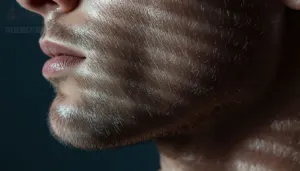
Length plays tricks too. Freshly shaved terminal hairs regrow at nearly identical stubble length, so the blunt tip on each shaft sits at the same height, creating an even shadow effect across your jawline.
That uniform alignment masks natural density gaps. Give those hairs a few more anagen-phase weeks, and hair shaft diameter stays constant, but variation returns as strands outgrow one another.
Puberty Can Coincide With Shaving

Timing fools plenty of guys. First facial hair often shows up between 13 and 16, right as testosterone surges convert vellus fuzz into terminal hair, and that’s exactly when shaving onset begins.
You start shaving because hormones activated the follicle, not the other way around. Puberty and grooming habits simply overlap, correlation isn’t causation.
No, Shaving Does Not Increase Beard Growth
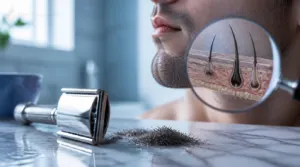
Let’s settle this once and for all: shaving doesn’t make your beard grow faster, thicker, or darker. The illusion comes down to basic biology, not some hidden growth switch you’ve activated with a razor. Here’s exactly what happens beneath the skin every time you shave.
Shaving never flips a hidden growth switch—your beard’s fate was already written in biology, not the blade
Shaving Cuts Hair Above Skin
A razor never touches the follicle. It only performs surface-level cutting on the hair shaft, leaving a blunt edge that feels coarser as it regrows, whether on terminal hairs or fine vellus hair.
Three things stay untouched:
- Follicle depth
- Growth cycle
- Hair diameter
That’s why shaving does not increase beard growth, no matter how thick it feels.
Real growth instead depends on androgen receptors switching on Wnt/β-catenin signaling in dormant follicles, which is why exploring science-backed supplements to encourage beard growth makes more sense than reaching for a razor.
Follicles Stay Structurally Unchanged
Zoom into the follicle and you’ll find nothing changed by a razor. The dermal papilla still feeds the bulb with blood and nutrients, bulge stem cells stay intact, and the outer root sheath keeps its full thickness. Genetics and androgen receptors, not surface cutting, dictate follicle behavior. Follicle integrity holds firm, no matter how often you shave.
Growth Cycles Continue Normally
Under the skin, your hair growth cycle ticks on undisturbed. Follicles cycle through anagen, catagen, and telogen exactly as genetics and hormones dictate, regardless of razor frequency. Anagen phase duration, catagen shift timing, and the telogen resting phase all stay fixed. Even exogen shedding continues normally. Shaving simply doesn’t touch the biological clock running each follicle.
Hair Diameter Does Not Increase
Grab a ruler and you’ll find no difference: microscopic studies confirm shaved hairs match unshaved diameter exactly. Genetics determine diameter, not your razor, by dictating dermal papilla output at each follicle.
Follicle function stays fixed, so terminal versus vellus hair distinction never shifts from shaving. It’s surface effect only, cosmetic and temporary, not structural.
Dormant Follicles Are Not Activated
Some follicles sit in telogen, a resting phase, waiting for renewed androgen sensitivity, not a nick from your blade. Reactivation depends on hormonal signals, genetics and testosterone timing, never on cut hair. A dormant follicle stays dormant regardless of shaving frequency because the trigger for growth lives in your endocrine system, not your bathroom mirror.
What Actually Controls Beard Growth?
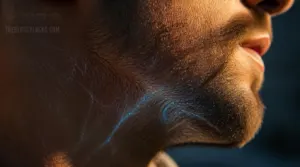
So if shaving isn’t calling the shots, what is? Your beard’s real growth engine runs on biology you can’t see: genetics, hormones, and follicle timing working together beneath the skin. Here’s what actually determines how thick, how fast, and how far your beard will go.
Genetics Set Density and Pattern
Your beard’s blueprint was written before you ever picked up a razor. Genetic density variants dictate how many facial hair follicles you carry across each zone, why cheeks stay patchy while your chin fills in solid.
Ethnic hair patterns and growth cycle genes shape that same genetic blueprint, meaning your uncle’s thick jawline predicts yours far better than any shaving habit.
Testosterone Activates Facial Follicles
That genetic blueprint stays dormant until testosterone flips the switch. Rising hormone levels bind androgen receptors in your dermal papilla, and receptor sensitivity (inherited, not earned) determines whether follicles respond.
This kicks off vellus to terminal conversion, where peach fuzz upgrades to pigmented, wiry hair through gene expression changes requiring months of sustained exposure.
DHT Supports Terminal Hair Growth
Testosterone opens the door, but DHT does the heavy lifting. Formed locally when 5-alpha reductase converts testosterone within the follicle, DHT binds androgen receptors with far greater potency, driving terminal hair induction. This shifts thin vellus strands into thick, pigmented terminal hair.
Follicle sensitivity dictates the outcome: identical DHT exposure produces dramatically different density depending on receptor responsiveness, which is why genetics still calls the shots.
Age Influences Beard Maturation
Receptor sensitivity is only half the equation. Hormonal maturation unfolds on its own schedule: pubertal development can trigger visible growth by 18, but regional maturation continues for years.
- Chin and lip hair often arrive first
- Cheeks and neck lag behind
- Genetics determine your specific timeline
- Full density often peaks in the late 20s or even 30
Growth Cycles Limit Beard Length
Timeline aside, your beard hits a hard ceiling because of the anagen phase duration, roughly 2 to 6 years of active growth per follicle. Then comes catagen, a brief shrinking phase, followed by telogen, a resting period lasting months.
Follicle growth cycles reset regionally, capping beard length long before you’d expect, regardless of genetics or patience.
How Shaving Affects Beard Appearance
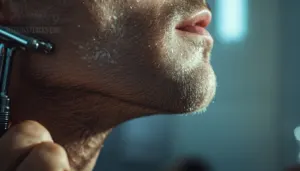
Knowing shaving won’t change your growth rate is one thing, but you still have to deal with what it does to your skin. Razors interact with your face in ways that affect comfort, texture, and appearance long before any follicle gets involved. Here’s what you’re actually up against once the blade hits your skin.
Regrowth Can Feel Rougher
Run your palm over regrowth and you’ll feel it: that sandpaper texture isn’t your imagination. A healthy hair shaft tapers to a fine soft point, but a razor creates a blunt-tip effect instead.
Combine that flat edge with beard hair’s naturally higher diameter and density versus scalp hair, and you get skin that feels genuinely coarse and stubbly for roughly one to two weeks.
Shaving May Cause Razor Burn
Redness and burning after a shave aren’t inevitable, they’re a friction problem. Razor burn stems from blade drag against a compromised skin barrier, worsened by dull blades, too much pressure, or repeated passes.
Reduce friction with sharp blades and proper lubrication. Watch for:
- Stinging or burning sensation
- Small red bumps
- Persistent redness
- Skin tightness
- Folliculitis-like irritation
Moisturizing afterward speeds recovery.
Ingrown Hairs Affect Skin Appearance
Curved or coarse regrowth curls back into the skin, sparking follicle inflammation and ingrown hair bumps. Expect redness, tenderness, sometimes folliculitis or pustules if bacteria join the irritation, raising infection risk.
Left alone, bumps can leave skin discoloration and texture changes, dark linear marks in the dermal layer. Skip popping; moisturizing the skin helps healing instead.
Trimming Shapes Without Boosting Growth
Trimming sculpts, it doesn’t stimulate. Guard selection controls length while facial contour shaping, cheek line symmetry, and neckline precision trimming define your silhouette, working with facial hair follicles already active in their growth phase.
- Facial contour: shorter sides, fuller chin
- Guard selection: progressive tapering
- Interior bulk: refined separately
- Cheek lines: symmetrical, contour-matched
Shaving your beard’s edges won’t accelerate follicle output.
Proper Technique Reduces Irritation
Irritation isn’t random, it’s technique-dependent. Warm water for three minutes softens hair; gentle exfoliation clears follicles; sharp blades (replaced every 5-7 shaves) cut cleanly.
| Step | Action | Why |
|---|---|---|
| Prep | Warm water soak | Softens hair |
| Cream | Even layer | Reduces friction |
| Aftercare | Moisturize, pat dry | Restores barrier |
Master this grooming routine and razor burn becomes rare.
What Can Support Healthy Beard Growth?
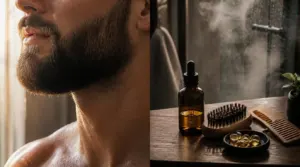
So if shaving won’t change your beard’s density or speed, what actually will? Your genetics set the ceiling, but daily habits still decide whether you reach it. Here’s what real, evidence-backed beard care looks like.
Supplements get plenty of hype, but the research on whether collagen helps beard growth shows scalp findings don’t carry over, because beard follicles run on androgens.
Small things like eating enough protein, managing stress, and staying consistent with a skincare routine can make a real difference, and this guide to growing a thicker beard faster breaks down exactly where to start.
For a deeper breakdown of the science behind this, this guide on whether shaving thickens beard growth debunks the myth with real dermatological evidence.
Let Beard Grow Four Weeks
Patience beats the razor. By week four, active follicles reveal true beard density, replacing vellus fuzz with terminal hairs shaped by genetics and hormones. Expect roughly half an inch, darker patches, and uneven coverage, that’s normal growth phase behavior, not a flaw.
Resist trimming impulses; let follicles finish their work before judging your beard’s real pattern.
Maintain Healthy Beard Skin
Genetics dictate growth, but skin quality determines whether that growth thrives. Follicles sit in skin, so skin irritation and buildup can hamper appearance even when biology’s on track.
- Wash with a fragrance-free beard wash daily
- Exfoliate once weekly with salicylic acid
- Apply beard conditioner or oil for hydration
- Comb through with a beard comb to distribute product
Healthy skin, healthy beard. They’re inseparable.
Meet Daily Nutritional Needs
What you eat shapes follicle output as much as any topical routine. Protein intake supplies keratin’s building blocks, while zinc and biotin support terminal hair structure.
| Nutrient | Role | Source |
|---|---|---|
| Protein | Keratin synthesis | Eggs, fish |
| Zinc | Follicle function | Legumes |
| Vitamin D | Receptor activity | Sunlight |
Sufficient sleep matters too, since androgen regulation happens overnight.
Avoid Unproven Growth Supplements
Once biotin and zinc needs are met through diet, extra supplementation rarely adds benefit; excess doesn’t boost DHT or follicle sensitivity.
Beard-growth pills marketed with "miracle" claims often rely on proprietary blends hiding actual doses.
Scientific evidence for these products stays thin, and testosterone levels aren’t meaningfully altered by oral supplements.
Save your money.
Discuss Minoxidil With a Dermatologist
If money spent on pills bothers you, minoxidil at least has data behind it, though it demands a real commitment.
A dermatologist assesses your pattern before recommending strength or form, then monitors side effects and sets a realistic timeline, since visible follicle stimulation usually takes months, not days, and stopping treatment often reverses gains.
Frequently Asked Questions (FAQs)
Will shaving help me grow a beard?
Short answer: no. Your beard’s fate was written before you ever touched a razor. Hormones trigger growth, not blades, and follicle sensitivity to DHT determines density. Shaving only trims what’s already there.
How do I increase my beard growth?
Real growth support means working with your genetic potential, not against it: prioritize sleep, protein intake, and stress control for the best testosterone and DHT levels, alongside gentle beard maintenance that protects follicle health rather than chasing shortcuts.
Is it good to shave your beard?
Yes, if your goal is neat, low-maintenance grooming. Shaving won’t change facial hair density or growth timing since those depend on genetics and hormones, but it does support skin health, cuts down beard itching, and keeps hair follicles clean when done correctly.
Is shaving good for beard growth?
Not for the reason you think. Shaving offers no growth benefit; genetics and hormones, testosterone, DHT, and follicle sensitivity dictate density. Its real value lies in grooming, revealing shape and skin health, not activating dormant follicles or the beard growth cycle.
Will my beard grow faster if I don’t shave?
Skipping the razor won’t speed anything up. Growth rate stays fixed by testosterone and DHT levels acting on follicle sensitivity, not by grooming habits. Abstaining just lets existing hair reach visible length, revealing your genetic pattern rather than accelerating it.
Can supplements boost facial hair growth speed?
Think of your follicles as an old dial-up modem: capped bandwidth, no upgrade path. Supplements only help if you’re nutrient deficient; biotin, zinc, and vitamin D support keratin and follicle health, but won’t override your genetic ceiling or testosterone-DHT signaling.
Why doesnt beard grow on certain face areas?
Patchy zones trace back to follicle density variation set before birth, where hormonal receptor sensitivity runs lower. Some follicles never mature past vellus hair, while scar tissue or ethnic growth differences further explain uneven jawline and cheek coverage.
Does stress affect beard growth patterns significantly?
Yes, and the mechanism runs through cortisol. Elevated stress hormones suppress testosterone and DHT, pushing follicles into premature shedding phases while inflammation disrupts the skin beneath, causing patchy, temporary thinning rather than permanent pattern change.
How long before seeing noticeable beard changes?
Stubble surfaces within 24 to 72 hours, but don’t judge density yet. Patchy zones need weeks to fill in, and a genuinely full beard takes 2 to 4 months of consistent terminal hair growth to assess accurately.
Can beard oils actually stimulate new growth?
Wish oil alone could rewrite your genetic code? It can’t. Beard oil won’t create new follicles, but it conditions existing hair and skin, giving strands a fuller, healthier look while your hormones and genetics still control actual growth.
Conclusion
Your grandfather shaved daily and your uncle skipped razors for months, yet both ended up with the same beard density genetics assigned them at puberty. That coincidence proves the point: does shaving increase beard growth? Never. Your razor only shapes what’s already there.
Real control comes from testosterone, DHT, and follicle biology, not blade frequency. Master those mechanisms, treat your skin well, and your beard reaches its genetic ceiling on its own timeline. Nothing else moves that needle.