This site is supported by our readers. We may earn a commission, at no cost to you, if you purchase through links. This content is for general informational and educational purposes only and is not a substitute for professional medical, dermatological, or nutritional advice.
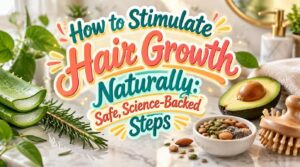
Your hairbrush catches a few more strands than it did last month, and now you notice every one. Here’s the part that rarely gets mentioned: stress can push follicles into a resting phase, and the shedding often shows up two to three months later.
That delay makes the cause hard to spot. It also means quick fixes rarely work. Learning how to stimulate hair growth naturally starts with understanding the growth cycle, then supporting it with steady habits.
Food, scalp care, and stress control each play a role. Start with what’s on your plate, then move to your fingertips.
Table Of Contents
- Key Takeaways
- How Can You Stimulate Hair Growth Naturally?
- Eat Nutrients That Support Healthy Hair Growth
- Use Scalp Massage and Natural Treatments Safely
- Reduce Stress and Prevent Hair Breakage
- Know When Hair Loss Needs Medical Care
- Frequently Asked Questions (FAQs)
- How do I make my hair grow faster naturally?
- Can I regrow lost hair naturally?
- What is the Chinese secret for hair growth?
- Does anything actually stimulate hair growth?
- How long does natural hair growth take to show?
- Does cutting your hair make it grow faster?
- Can wearing hats cause hair loss or thinning?
- Does washing hair daily affect hair growth?
- Is hair loss hereditary, and can it be reversed?
- Conclusion
Key Takeaways
- Stress can push your follicles into a resting phase, so shedding often shows up two to three months later, which is why you should give any new habit several months before judging it.
- You’ll support growth best by eating enough protein and iron-rich foods, and by taking supplements like biotin only when a blood test confirms you’re deficient.
- Gentle scalp massage and diluted rosemary oil show the most promise as natural treatments, while remedies like onion juice, aloe vera, and coconut oil still lack solid proof.
- You should see a dermatologist if shedding lasts beyond three months or comes with patches, scalp pain, or fatigue, because earlier diagnosis protects your follicles and natural steps can’t fix every cause.
How Can You Stimulate Hair Growth Naturally?

How does hair actually grow, and what can you influence? Your hair follows a hair growth cycle with growing, transitional, and resting phases. You can’t change your genetics, but you can support the conditions that keep follicles active.
If you’re curious how long each phase lasts and why shedding sometimes spikes, this breakdown of the stages of hair growth is a useful place to start.
Start with three habits. Regular scalp massages may improve blood circulation to scalp tissue, which delivers oxygen and nutrients to follicles. Research suggests that consistent massage can increase hair thickness by up to 8% after 24 weeks. A nutrient-rich hair diet gives follicles the building blocks they need. Stress reduction and cortisol balance matter too, since chronic stress may push follicles into the resting phase and increase shedding.
Protect the hair you already have. Avoid tight styles and limit heat.
Be patient. Hair grows slowly, so give each change several months before judging how well it truly works.
Eat Nutrients That Support Healthy Hair Growth

Your hair grows from what you eat, so your plate is a good place to start. Below, you’ll find the foods that support hair growth and a look at when supplements may help. Use both sections to decide what your hair needs and what you can safely skip.
Foods That Support Hair Growth
How do you build a nutrientrich hair diet? Start with protein, since hair is mostly keratin. Eggs supply protein and biotin. Add iron rich foods like lean chicken, lentils, and spinach.
Pair omega-3 rich salmon and zinc-packed pumpkin seeds with a gentle routine, and these hair product reviews for damaged hair can help you choose products that support repair from the outside.
Pair plant iron with citrus or peppers. Vitamin C and iron absorption go hand in hand, so this may help your follicles.
Zinc’s role in keratin production matters too.
When Supplements May Help
Food comes first, but gaps happen. Supplements may help when a blood test confirms a deficiency in iron, vitamin D, or biotin.
Skip biotin if you’re not deficient. It may not help your hair and can skew thyroid results. Zinc, omega fatty acids, and vitamin C may support results, but ask your doctor first. Give trials 3 to 6 months.
Use Scalp Massage and Natural Treatments Safely
You can support your scalp at home, but the method matters as much as the product. Below, you’ll find three parts: gentle massage techniques, natural oils with their evidence and safety notes, and home remedies that have limited proof. Read each one so you know what may help, what to expect, and where to be careful.
For fragile strands, a soft-bristled tool keeps pressure gentle, and this roundup of scalp massagers for thinning hair helps you compare options.
Gentle Scalp Massage Techniques

Think of scalp massage like watering a garden slowly: gentle effort helps, force doesn’t. Use your fingertip pads, never nails, and make small circles for 5 to 10 minutes. This may boost scalp blood circulation.
Try lift and release. Daily scalp massages are fine, but 3 to 4 sessions may suffice. Gentle scalp massage techniques deliver scalp massage benefits safely.
Natural Oils: Evidence and Safety

Rosemary oil may work about as well as 2% minoxidil, according to a six-month human trial, with less scalp irritation. It may act as one of the natural DHT blockers and support scalp health improvement.
Dilute it first. Essential oil dilution matters: mix 1 to 5 percent into coconut oil, which also reduces protein loss in hair. Always patch test.
Home Remedies With Limited Evidence
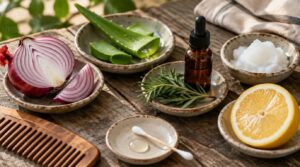
Many popular remedies have little human evidence behind them. Try these with caution:
- Onion juice may help patchy alopecia areata, but it can sting.
- Aloe vera soothes your scalp, though regrowth is unproven.
- Rosemary oil showed promise in one small study.
- Coconut oil and lemon oil lack solid proof.
Patch-test first, and stop if your skin burns, itches, or reddens.
Reduce Stress and Prevent Hair Breakage

Think of your hair as a garden under a heavy storm. The plants aren’t gone, but they bend and snap until the weather clears.
Hair under stress is like a garden in a storm: it bends and snaps, but it isn’t gone, and it can recover once the weather clears
Stress may push more follicles into rest, so shedding can show up two to three months later. Reduce stress levels with habits you can keep: a daily walk, slow breathing, and a steady bedtime. Better sleep may support follicle repair.
Hair breakage prevention starts with a gentle hair care routine. Skip tight ponytails. Don’t twist or tug your strands. Detangle gently from the ends up. Use a moisturizing conditioner after every wash, and try leavein conditioner use on damp lengths to cut friction. If you catch yourself pulling at your hair, pause. Occupy your hands instead.
Know When Hair Loss Needs Medical Care

Shedding feels normal, so you might wonder if a doctor visit is overreacting. It isn’t, if the signs below fit. Natural steps work best on mild, temporary shedding, not on every cause.
Book a dermatologist consultation if shedding lasts beyond three months, or if you notice patches, clumps, or a receding hairline. Scalp itching, burning, scaling, or pain also deserve attention.
Fatigue, weight changes, or irregular periods may point to root medical conditions, including thyroid disorders. A doctor can run blood tests and, if needed, an autoimmune disease assessment.
Don’t wait out three to six months of no improvement. Earlier diagnosis may protect follicles, and prescription treatments may work better when started sooner. Hair loss that hurts your confidence matters.
Frequently Asked Questions (FAQs)
How do I make my hair grow faster naturally?
You can’t speed up your hair’s biology much, but you can support it. Eat enough protein and iron, and massage your scalp daily. Rosemary oil may help. Skip biotin unless you’re deficient.
Can I regrow lost hair naturally?
Natural hair regrowth may happen if your follicles are dormant, not destroyed. Early thinning or stress-related shedding responds best. Pattern baldness often needs medical treatment. Fix deficiencies, massage your scalp, and see a doctor early.
What is the Chinese secret for hair growth?
Think of a root buried deep, quietly feeding a tree. That’s He Shou Wu, the Chinese herb said to nourish your kidney essence and blacken hair. It may support follicles, but liver risks exist, so see a licensed practitioner.
Does anything actually stimulate hair growth?
Think of your follicles as sleepy seeds, not dead soil. Some things may wake them. Rosemary oil, caffeine and scalp massage show promise for hair follicle stimulation. Aloe vera, coconut oil and onion juice need more research.
How long does natural hair growth take to show?
Hair growth is a slow-moving river, not a sprint. Your hair growth process runs about 1 cm monthly. Expect several months before hair regrowth or thickening shows, since each anagen phase follows its own pace.
Does cutting your hair make it grow faster?
Think a haircut speeds things up? It doesn’t. Hair grows from the follicle, so you can trim your hair ends without changing the hair growth process. Trims may simply prevent breakage, helping you keep length.
Can wearing hats cause hair loss or thinning?
No, hats don’t cause hair loss on their own. Genetics and hormones drive most thinning. Tight hats worn for hours may cause traction alopecia, so choose a comfortable fit, wash hats regularly, and avoid trauma to your hair.
Does washing hair daily affect hair growth?
Daily washing doesn’t speed up the hair growth process, but it may protect your hair follicles by clearing sebum and debris. Use a gentle alcoholfree shampoo, and try hair washing frequency reduction only if your scalp feels dry.
Is hair loss hereditary, and can it be reversed?
About 80 percent of men and 50 percent of women develop pattern hair loss. Yes, it’s hereditary, with genes from either parent. You can slow it, but you rarely reverse it fully. See a clinician.
Conclusion
Picture someone who started eating more protein, massaged her scalp each evening, and slept properly. Three months later, her shedding slowed and baby hairs appeared along her part.
That’s how to stimulate hair growth naturally: small, steady habits that give follicles what they need. Feed your body, handle your scalp gently, and manage stress. If shedding continues past six months, see a doctor. Your hair runs on patience, and consistent care is what pays off.