This site is supported by our readers. We may earn a commission, at no cost to you, if you purchase through links. This content is for general informational and educational purposes only and is not a substitute for professional medical, dermatological, or nutritional advice.
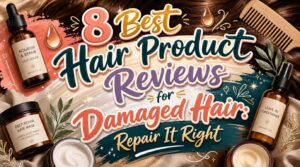
Damaged hair rarely announces itself all at once. It has a way of creeping up—a little more breakage in the shower, ends that snap instead of bend, a texture that feels more straw than silk. By the time most people start searching for help, they’ve already tried a handful of products that promised everything and delivered little. The problem isn’t effort; it’s knowing which treatments actually address the underlying damage versus which ones just coat the surface.
These hair product reviews for damaged hair cut through the noise, matching the right formulas to the real science behind what breaks hair down.
Table Of Contents
- Key Takeaways
- What Causes Damaged Hair in The First Place
- Surface Care Vs. Reparative Treatments Explained
- Top 8 Hair Products for Damaged Hair
- How Bond-Building and Protein Treatments Work
- Best Daily and Weekly Damaged Hair Practices
- When to See a Professional for Hair Repair
- Nutrition and Lifestyle Habits for Stronger Hair
- Frequently Asked Questions (FAQs)
- What is the best hair product to repair damaged hair?
- What’s the best product to fix damaged hair?
- What hair treatment is best for damaged hair?
- What is the best hair care routine for damaged hair?
- What is the hair product lawsuit for hair loss?
- How often should I trim damaged hair?
- Can damaged hair grow back to normal?
- Which hair mask ingredients cause allergic reactions?
- Do expensive products work better than drugstore?
- Should I stop coloring hair while repairing?
- Conclusion
Key Takeaways
- Bond-building treatments like Olaplex No. 3 and K18 work inside the hair shaft to reconnect broken bonds, making them fundamentally more effective than surface-level conditioners for chemically or heat-damaged hair.
- Matching the treatment to your damage type matters more than the price tag—protein therapy suits brittle, snapping strands, while deep conditioning masks are better for porous, moisture-starved hair.
- Daily habits like using a silk pillowcase, applying heat protectant before styling, and detangling gently do as much long-term work as any weekly mask or repair treatment.
- What you eat and drink directly feeds your follicles, so a diet rich in protein, iron, omega-3s, and zinc builds stronger hair from the inside out—no topical product can replace that foundation.
What Causes Damaged Hair in The First Place
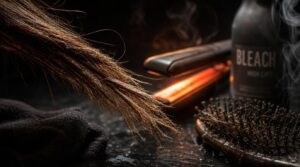
Damaged hair rarely happens overnight — it’s usually the result of everyday habits stacking up over time. Before you can fix it, it helps to understand what’s actually breaking it down.
Knowing the signs of damaged hair early makes it a lot easier to catch those habits before they do serious harm.
Here are the most common culprits.
Heat Styling and Cuticle Breakdown
Every time you press a hot tool to your hair, you’re testing its limits. Heat styling damage starts at the cuticle — those tiny overlapping scales that shield each strand. Above 365°F, cuticle lifting begins, compromising the hair’s protective layer.
Wet-to-dry stress further exacerbates this damage, essentially steaming your hair from the inside out. This dual assault weakens strands, making them more susceptible to breakage and frizz.
A quality heat protectant creates a thermal barrier, shielding hair from direct thermal harm. Pairing this with tools featuring even heat distribution minimizes localized damage, ensuring safer styling practices.
Chemical Treatments and Bond Damage
Chemical treatments — bleach, perms, relaxers — go deeper, attacking your hair’s internal architecture. Bleach-induced porosity and pH shifts weaken keratin lamellae, while ammonium thioglycolate damages natural lipids. Alkaline developers impact disulfide bonds, reducing elasticity.
Bond repair technology steps in to address this damage. Effective formulations, such as bond repair technologies, specifically rebuild disulfide bonds. Products like Olaplex No. 3 Hair Perfector and K18 Leave-In Molecular Hair Mask reconnect broken bonds, restoring real strength through targeted chemical processing damage repair.
Over-Washing and Moisture Loss
Chemical damage strips your hair’s inner bonds — but overwashing quietly drains what’s left. When shampoo frequency is too high, surfactants remove scalp oil balance faster than your sebaceous glands can restore it. Water temperature matters too; hot rinses accelerate moisture loss considerably.
- Skip residue buildup with thorough but gentle rinsing
- Watch conditioner timing — apply before moisture evaporates
- Use a deep conditioning mask weekly with hydrating ingredients for better moisture retention
Rough Handling and Breakage
Moisture loss weakens hair from within, but daily handling inflicts equal damage. Brushing through dry knots concentrates stress where strands are most vulnerable. Wide-Tooth Combing and Gentle Wet Detangling significantly reduce this tension.
Swap rough elastics for Slip-Resistant ones, rest hair on Low-Friction Surfaces, and adopt Mindful Styling Tension to further minimize strain. These adjustments complement bond-repairing products or protein treatments, fostering real hair breakage reduction.
Surface Care Vs. Reparative Treatments Explained
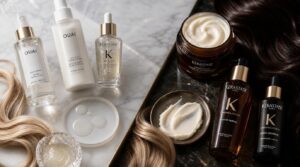
Not all hair products work the same way — and that difference matters more than most people realize. Some sit on the surface to smooth and soften, while others repair your hair from the inside out.
Understanding what disrupts the hair growth cycle can help you choose products that actually address the root cause, not just the surface.
Here’s what sets them apart and how to figure out which one your hair actually needs.
Bond-Building Molecular Repair
Bond-building goes deeper than any mask or serum sitting on the surface. This is molecular hair repair — technology that works inside the cortex to reconnect broken disulfide bonds caused by heat, bleach, or color.
| What It Does | How It Works |
|---|---|
| Peptide-Activation Pathways | Guide bond reformation at precise damage sites |
| Cortex-Targeted Delivery | Delivers actives directly into the hair’s core |
| Reformation Timing | K18 Leave-In Molecular Hair Mask works in four minutes |
| Longevity of Bonds | Consistent use preserves repaired strength long-term |
Products like the K18 Leave-In Molecular Hair Mask and Redken Acidic Bonding Concentrate Intensive Treatment Mask use bond repair technology to restore elasticity and reduce breakage. As a bond-building reparative treatment, this approach doesn’t just coat — it rebuilds.
Choosing The Right Approach for Your Damage
Knowing your damage level makes all the difference. Start with a quick Damage Assessment — check for snap, stretch, and texture — then move into Porosity Evaluation by wetting a strand and watching how fast it absorbs.
| Hair Signal | Best Approach |
|---|---|
| Dry, brittle, snapping | Protein therapy |
| Frizzy, porous, thirsty | Deep conditioning mask |
| Chemical or bleach damage | Bond repair technology |
| Heat-stressed, dull | Heat protection + surface care |
| Weak but elastic | Hair Type Matching with bond repair |
Your Repair Frequency, Product Layering Strategy, and damage repair plan all follow from what your hair actually tells you.
Top 8 Hair Products for Damaged Hair
Finding the right product can feel overwhelming when your hair is already struggling.
That’s why checking whether a product meets specific hair care standards—like knowing if Garnier Ultimate Blends is curly girl approved—can save you a lot of trial and error.
These eight options cover a range of damage types and routines, so there’s something here whether you’re dealing with heat stress, chemical breakage, or general dryness. Here’s what made the cut.
1. Olaplex No 3 Hair Repair Treatment
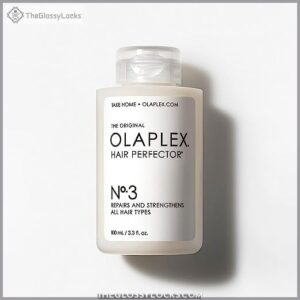
If your hair is crying out for real repair, Olaplex No. 3 Hair Perfector is worth the conversation. This pre-shampoo treatment works at the molecular level, rebuilding broken disulfide bonds rather than just masking damage.
Apply it to damp hair, leave it on for 10 minutes or longer, then rinse and wash as usual.
If your strands have already been through bleach, color, or relaxers, this guide to hair damage from chemical treatments explains how to rebuild moisture and avoid stacking more damage.
At $34 for 3.53 oz, it’s an investment — but consistent weekly use genuinely strengthens strands, reduces breakage, and makes detangling noticeably easier over time.
| Best For | Anyone with chemically or heat-damaged hair — especially if you bleach, dye, or heat-style regularly — who wants actual repair, not just a temporary fix. |
|---|---|
| Price | $34.00 |
| Product Type | Pre-Shampoo Treatment |
| Damage Repair | Bond rebuilding |
| Heat Protection | No |
| Color-Safe | Yes |
| Net Weight | 3.53 oz |
| Additional Features |
|
- Works at the molecular level, rebuilding disulfide, peptide, and salt bonds — not just coating the hair shaft
- Flexible application: use it on dry or damp hair and leave it on anywhere from 10 minutes to overnight
- Real, measurable results — less breakage, easier detangling, and noticeably softer, shinier strands over time
- At $34 for 3.53 oz, it’s pricier than most drugstore masks, which can add up with regular use
- Hair needs to stay damp during treatment — if it dries out, you lose some of the benefit
- It’s not a standalone product; you’ll get the best results pairing it with Olaplex No. 4 and No. 5, which means more spend
2. K18 Leave In Hair Repair Treatment
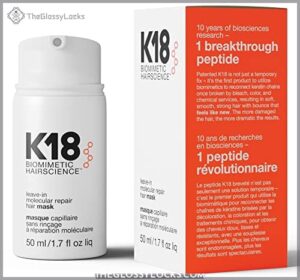
Four minutes. That’s all K18 claims it needs to start turning damaged hair around — and it’s hard to argue with the results. Unlike surface conditioners, the product delivers visible improvements by targeting structural damage.
The K18 Leave-In Molecular Repair Hair Mask uses a bioactive peptide (K18Peptide) to penetrate the hair shaft and reconnect broken keratin chains, addressing damage at its source. This science-backed approach distinguishes it from superficial treatments.
Application is straightforward: apply a pea-sized amount to damp, clean hair, wait four minutes, then style as usual — no rinsing required. The leave-in formula ensures convenience without compromising efficacy.
Priced at $75 for 3.2 oz, this premium treatment is best suited for chemically or heat-damaged hair, offering salon-level repair for those seeking intensive care.
| Best For | Anyone with chemically treated, bleached, or heat-damaged hair who wants real structural repair — not just a surface-level fix. |
|---|---|
| Price | $75.00 |
| Product Type | Leave-In Treatment |
| Damage Repair | Keratin chain repair |
| Heat Protection | No |
| Color-Safe | Yes |
| Net Weight | 3.2 oz |
| Additional Features |
|
- Repairs hair from the inside out using a patented peptide that reconnects broken keratin chains — not just a coating like regular conditioner.
- A little goes a long way. One pea-sized amount per wash means that $75 bottle lasts a surprisingly long time.
- Dead simple to use — apply to damp hair, wait four minutes, style. No rinsing, no extra steps.
- $75 for 3.2 oz is a tough sell upfront, especially if you’re not sure it’ll work for your hair type.
- Results can be underwhelming at first — if your damage is mild, don’t expect an overnight transformation.
- People with low-porosity or very straight, fine hair may not see the same payoff as those with coarser or more porous strands.
3. Davines Nourishing Shampoo for Dry Hair
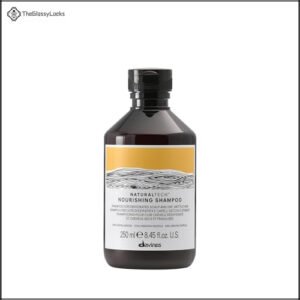
Sometimes the gentlest step makes the biggest difference. Davines Nourishing Shampoo for Dry Hair ($40 for 9.92 oz) is built around ultra-gentle surfactants that cleanse without stripping — a real concern when your hair is already fragile.
Its Biacidic Bond Complex and hydrolyzed rice protein work together to protect and reinforce each strand during washing, not just after.
A little goes a long way, too. Worth noting: the fragrance is earthy and polarizing, so sensitive noses should sample it first.
| Best For | Anyone with dry, damaged, or fragile hair who wants a gentle cleanse that strengthens without stripping. |
|---|---|
| Price | $40.00 |
| Product Type | Shampoo |
| Damage Repair | Strengthens & nourishes |
| Heat Protection | No |
| Color-Safe | Yes |
| Net Weight | 9.92 oz |
| Additional Features |
|
- Ultra-gentle formula cleans without robbing your hair of its natural oils
- A tiny amount goes a long way, so the bottle lasts longer than you’d expect
- Leaves hair noticeably softer, shinier, and more resilient over time
- At $40 for under 10 oz, it’s a tough sell compared to drugstore options
- The earthy, spice-cabinet scent is polarizing — worth sampling before committing
- Some users with sensitive scalps have reported irritation or increased breakage
4. Virtue Healing Hair Oil
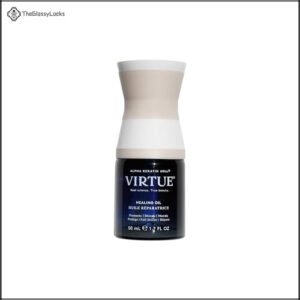
Virtue Healing Oil ($46 for 2 oz) justifies its price by delivering Alpha Keratin 60ku, a reparative protein that penetrates the hair shaft. This featherlight oil absorbs quickly and avoids greasiness, requiring only a few drops applied to mid-lengths.
The innovative shake-to-activate bottle ensures a fresh protein dose with every use. Ideal for fine or color-treated hair, it provides essential nourishment without weighing strands down.
However, thick, highly textured strands may require additional frizz management for optimal results.
| Best For | People with fine, color-treated, or chemically processed hair who want a lightweight oil that adds shine and moisture without the grease. |
|---|---|
| Price | $46.00 |
| Product Type | Hair Oil |
| Damage Repair | Moisturizes & protects |
| Heat Protection | No |
| Color-Safe | Yes |
| Net Weight | 2 oz |
| Additional Features |
|
- The shake-to-activate formula means you get a fresh dose of Alpha Keratin 60ku every single time — no settling, no guessing
- A few drops go a long way, so that $46 bottle actually lasts longer than you’d expect
- Works great on extensions too, keeping them soft and prolonging wear time
- $46 for 2 oz is a tough sell if you’re on a budget
- The fragrance runs strong — a few people compared it to sunscreen, which isn’t everyone’s thing
- If your hair is thick or heavily textured, this oil alone probably won’t fully tame frizz, especially at the crown
5. Oribe Alchemy Fortifying Hair Treatment
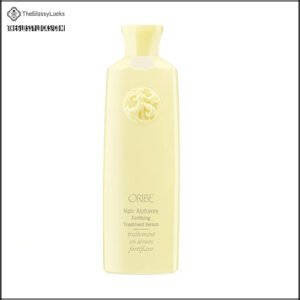
If Virtue’s healing oil gets your strands feeling smoother, the Oribe Alchemy Fortifying Hair Treatment takes that protection a step further. At $66 for 7.83 oz, this serum is designed to strengthen hair from the inside out.
Chia seed and bio-fermented bamboo leaf work deep into the cortex, while phytoceramides restore the moisture barrier. Argan and camellia oils deliver heat protection and shine, ensuring hair remains resilient against styling tools.
The formula absorbs without added weight, effectively controls frizz, and works seamlessly on damp or dry hair, offering versatile styling benefits.
| Best For | Anyone with weakened, damaged, or frizz-prone hair who wants a treatment that strengthens and hydrates without weighing strands down. |
|---|---|
| Price | $66.00 |
| Product Type | Conditioner |
| Damage Repair | Reinforces & hydrates |
| Heat Protection | No |
| Color-Safe | Yes |
| Net Weight | 7.83 oz |
| Additional Features |
|
- Strengthens hair from the inside out, so fragile or damaged strands actually feel more resilient over time.
- Locks in moisture and softens mid-lengths to ends, which makes detangling way easier.
- Controls frizz and works on both damp and dry hair, so it fits into pretty much any routine.
- At $66 for under 8 oz, it’s a splurge — and you’ll be restocking fairly often if you use it regularly.
- The price puts it out of reach for anyone on a tighter budget.
- The fragrance is strong, which is a dealbreaker if you’re sensitive to scent.
6. Briogeo Dont Despair Hair Mask
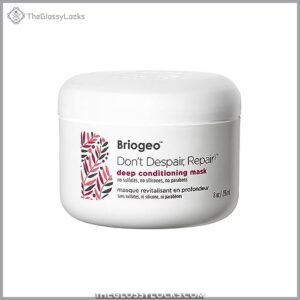
Where Oribe focuses on fortifying, the Briogeo Don’t Despair, Repair! Deep Conditioning Mask takes a nourishment-first approach.
Its NOVA Complex—biotin, rosehip oil, argan oil, and algae extract—works to restore moisture and reduce breakage with consistent weekly use.
At $39 for 10 oz, it’s a solid value for a 97% naturally derived clean-beauty formula, safe on color-treated hair.
Fine-haired users especially appreciate that it hydrates without weighing down strands.
| Best For | Anyone with color-treated, damaged, or frizz-prone hair who wants a clean, plant-based treatment that strengthens without heaviness. |
|---|---|
| Price | $39.00 |
| Product Type | Deep Conditioner |
| Damage Repair | Clinically reduces breakage |
| Heat Protection | No |
| Color-Safe | Yes |
| Net Weight | 10 oz |
| Additional Features |
|
- Clinically shown to cut breakage fast and double hair strength after just three weekly uses
- Plant-based oils and proteins deeply hydrate and make detangling way easier across all hair types
- 97% naturally derived, vegan, and free of the usual nasties—sulfates, parabens, silicones
- $39 for 10 oz feels steep, especially if you have thick or long hair that eats through it quickly
- Severely damaged hair may only see modest improvement—it’s restorative, not a miracle fix
- The jar packaging has been known to crack or break during shipping
7. Living Proof Triple Bond Hair Treatment
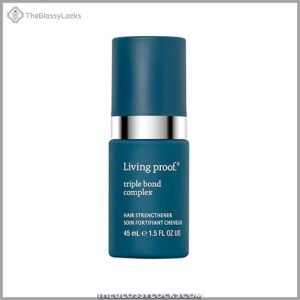
If Briogeo restores from the outside in, Living Proof Triple Bond Complex works deeper. Its 3D Fortifying Technology targets all three bond types—hydrogen, ionic, and covalent—rebuilding structure that heat and chemicals have broken down.
Clinically, it increases hair strength up to eight times. Apply it to damp hair, wait ten minutes, then style as usual. It even protects against heat up to 450°F.
At $45 for 1.7 oz, it’s pricey, but the results justify it for seriously damaged hair.
| Best For | People with seriously damaged, color-treated, or heat-styled hair who want deep structural repair and aren’t afraid to spend a little more to get it. |
|---|---|
| Price | $45.00 |
| Product Type | Bond Complex Mask |
| Damage Repair | Reverses year of damage |
| Heat Protection | Up to 450°F |
| Color-Safe | Yes |
| Net Weight | 1.7 oz |
| Additional Features |
|
- Targets all three hair bond types, so it’s actually rebuilding your hair—not just coating it
- Eight times stronger strands means less breakage when you brush or style
- Built-in heat protection up to 450°F means one less product to worry about
- $45 for 1.7 oz is steep, especially since results can take a few uses to show up
- Fine hair folks need to go easy—too much and it’ll weigh your hair down fast
- The 10-minute wait time and undisclosed ingredient list might be a dealbreaker for some
8. Fragrance Free Leave In Conditioner
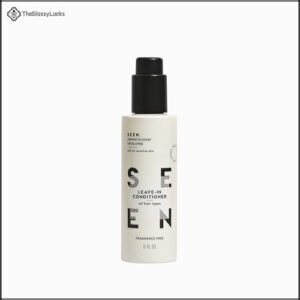
Not every damaged-hair fix needs to go deep. Sometimes your scalp and strands just need a clean, gentle layer of protection — without fragrance triggers or pore-clogging ingredients.
This leave-in conditioner detangles, hydrates, and shields hair from heat and UV exposure, all in one step. The hemisqualane base keeps it lightweight, so fine or curly hair won’t feel weighed down.
At $29, it’s a sensitive-skin-friendly daily option.
| Best For | Anyone with sensitive skin, fragrance allergies, or curly and fine hair that needs lightweight daily hydration and heat protection without harsh ingredients. |
|---|---|
| Price | $29.00 |
| Product Type | Leave-In Conditioner |
| Damage Repair | Hydrates & strengthens |
| Heat Protection | Up to 450°F |
| Color-Safe | Yes |
| Net Weight | 7.37 oz |
| Additional Features |
|
- Covers a lot of ground in one product — detangles, hydrates, and protects against heat up to 450°F, UV, and pollution all at once.
- Clean formula with no sulfates, silicones, parabens, or pore-clogging oils, and it’s NEA-certified, so it’s genuinely built for sensitive skin.
- Hemisqualane keeps it light enough for fine or curly hair without the greasy, weighed-down feeling you get from heavier conditioners.
- A few scent-sensitive users notice a faint salon-like smell, which is worth knowing if you’re highly fragrance-reactive.
- It leaves a light oily film on your hands after applying, so you’ll want to wash up before touching anything else.
- At $29 for 7.37 oz, it’s pricier than most drugstore leave-ins, and heavy users might find the bottle runs out faster than expected.
How Bond-Building and Protein Treatments Work
Understanding how these treatments actually work makes it easier to choose the right one for your hair. There is real science behind the repair, and knowing the basics helps you use these products more effectively.
Here’s a closer look at the three key mechanisms behind bond-building and protein treatments.
Disulfide Bond Repair Science

Think of your hair’s disulfide bonds as molecular zippers — when they break, everything unravels. Products like Olaplex No. 3 Hair Perfector and K18 Biomimetic Hairscience Leave-In Molecular Repair Hair Mask work through thiol-disulfide exchange, nudging broken bonds back into proper alignment.
When hair’s disulfide bonds break, bond-repair treatments reconnect them through thiol-disulfide exchange, rebuilding strength from within
Without the right redox environment, mispaired disulfide bonds form instead. This mispairing undermines structural integrity, as improper bonding fails to restore resilience.
That’s why disulfide pairing specificity and bond repair kinetics determine whether bond-rebuilding treatments actually restore strength — or just fake it.
Keratin and Peptide-Based Formulas

Keratin peptides aren’t just surface coating — they’re structural rebuilders. Hydrolyzed keratin penetrates the cortex, while peptide length determines whether repair happens at the surface or deeper inside the strand.
Products like the K18 Leave-In Molecular Hair Mask use pH optimization and peptide-protein synergy to augment results:
- Short peptides smooth the cuticle
- Longer peptides rebuild internal cortex structure
- Time-release microcapsules extend keratin penetration over days
Avoiding Protein Overload
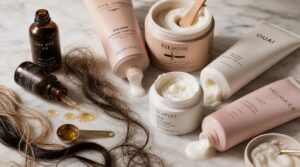
Too much of a good thing applies here. Protein treatments — even hydrolyzed protein formulas designed for damage repair — can cause stiffness, tangling, and breakage when used too often. Watch for texture warning signs like rough feel or reduced stretch.
Space treatments across several wash days, follow up with a deep conditioning mask for moisture restoration, and use clarifying shampoos periodically.
Hair type adjustments matter too — fine hair needs far less protein than coarser strands. Protein-moisture balance is everything.
Best Daily and Weekly Damaged Hair Practices
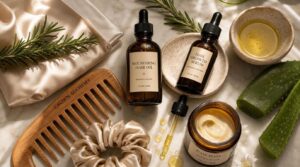
Good products only go so far if your daily habits are working against you. The way you wash, style, and even sleep can either support your hair’s recovery or quietly undo all that progress.
Here are the practices worth building into your routine.
Gentle Shampoo and Conditioner Choices
Your shampoo is the foundation of any damage repair routine, so getting it right matters.
Look for mild surfactants like decyl glucoside instead of harsh sulfates — they cleanse without stripping your scalp’s natural oils.
A pH balanced formula around 4.5 to 5.5 protects your cuticle.
Choose fragrance-free options for scalp barrier support.
Pair with lightweight conditioning to keep fine or damaged strands from feeling weighed down.
Deep Conditioning Mask Routine
A deep conditioning mask is your weekly reset button for damaged hair. Begin with pre-mask cleansing: always apply the product to clean, wet strands to ensure proper absorption.
Enhance effectiveness using heat-boost techniques, such as a warm towel or shower cap, to drive ingredients deeper into the hair.
Adhere strictly to mask timing guidelines, typically 10 to 30 minutes, for optimal results.
Heat Protectant Before Styling
Think of a heat protectant spray as your hair’s personal shield against thermal damage. Before any heat styling session, apply it evenly to damp strands using the right technique: comb through from mid-lengths to ends.
Once your hair is protected, a compact flat iron gives you the precision to section pieces cleanly, and this guide on how to curl medium length hair with a flat iron walks through the technique step by step.
Silicone barrier formulas work best here, and hair type matching matters: opt for lightweight sprays for fine hair or creams for thick textures.
Reapplication timing is crucial—reapply if you restyle mid-day to maintain protection.
Silk Pillowcases to Reduce Breakage
Your heat protectant guards hair during styling—but what about the eight hours you’re asleep? A silk pillowcase works quietly overnight through five key benefits:
- Reduced Friction keeps strands gliding instead of catching
- Moisture Retention prevents overnight dryness and brittleness
- Cuticle Preservation limits micro-abrasion that worsens hair damage
- Hypoallergenic Comfort soothes sensitive scalps
- Pillowcase Care is simple—gentle washing maintains performance
Small swap, real hair repair results.
When to See a Professional for Hair Repair
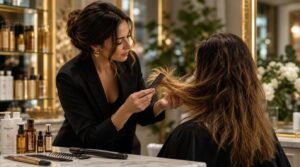
At-home products can do a lot, but they have their limits—and knowing when to hand things over to a professional can save your hair from further damage.
Some situations simply call for more than a mask and a good conditioner.
Here’s how to tell when it’s time to book that salon appointment.
Limits of At-Home Treatments
Even the best at-home treatments have real limits. Penetration barriers mean most formulas coat the outer shaft rather than rebuilding deep structural damage — so they’re short-term fixes, not permanent solutions. Frequency limits matter too; overuse creates buildup risk, leaving hair stiff or dull.
With limited bond reach, protein therapy and deep conditioning masks can’t fully reverse severe chemical damage. Mitigation needs require more advanced intervention.
In-Salon Bond and Keratin Services
Professional salon services offer real structural power when at-home options fall short. In-salon bond-building reparative treatments and keratin treatments utilize heat activation techniques to drive specialized polymers deep into each strand, ensuring intensive repair and smoothing.
Consultation protocols enable stylists to tailor services to individual damage levels, while transparent pricing structures and customizable add-ons simplify planning. This personalized approach ensures clients receive targeted solutions without unexpected costs.
Post-treatment care is critical for longevity. Adhering to aftercare guidelines—such as using sulfate-free shampoos and observing a 24-to-72-hour no-wash window—helps maintain results, protecting the investment in salon services.
Signs Your Hair Needs Expert Care
After salon treatment, monitor your hair’s response over time. If you notice severe split ends, frequent breakage, or hair that feels dry and crunchy despite consistent care, that’s your signal. These persistent issues indicate deeper damage requiring professional intervention.
Scalp health is equally critical. Scalp itching, persistent flaking, or a scalp that hurts are clear warnings. Discomfort or irritation suggests underlying problems a stylist should address.
Nutrition and Lifestyle Habits for Stronger Hair

What you put in your body matters just as much as what you put on your hair. The right habits—from staying hydrated to eating well—can significantly strengthen and enhance the resilience of your strands over time.
Just as important, understanding which ingredients you’re putting in your products matters too—many people are surprised to learn that not all alcohols are actually damaging to hair, and some can even support moisture retention.
Here’s what to focus on.
Hydration and Hair Resilience
Your body’s water balance shows up in your hair more than you’d think. Moisture retention starts at the cuticle level — when cuticle hydration is strong, strands stay flexible and resist breakage.
Porosity management matters here too: high porosity hair loses water fast, so humectants from hydrating products and a weekly deep conditioning mask help lock in that deep hydration for real hair strengthening.
Diet’s Role in Hair Strength
What you eat feeds your follicles just as much as what you apply. A nutrient-rich diet for hair strength starts with these four essentials:
- Protein-rich foods like quinoa and eggs supply keratin’s building blocks
- Iron-rich meals from spinach and lentils keep oxygen flowing to follicles
- Omega-3 sources like salmon improve moisture and elasticity
- Zinc-boosting diet staples — chickpeas, pumpkin seeds — support healthy follicle function
Vitamin D intake and collagen round out your internal repair toolkit.
Long-Term Hair Health Strategies
Sustainable hair health isn’t built on occasional effort — it’s built on consistency. A predictable routine beats any one-off treatment. Keep scalp care and scalp barrier maintenance at the center, adjust for seasonal hair care shifts, and space out protective styling to avoid chronic tension.
Low-tension styling, stress reduction hair habits, and nutrient-rich formulas all compound over time.
| Strategy | Why It Matters | How Often |
|---|---|---|
| Consistent routine scheduling | Reduces irritation and product confusion | Daily/Weekly |
| Low-tension styling | Aids damage mitigation and retention | Every style session |
| Scalp barrier maintenance | Anchors long-term hair health | Ongoing |
Frequently Asked Questions (FAQs)
What is the best hair product to repair damaged hair?
No single product works for everyone, but Olaplex No. 3 Hair Perfector and the K18 Leave-In Molecular Hair Mask consistently top the list as the best hair treatments for damaged hair.
What’s the best product to fix damaged hair?
The K18 Leave‑In Molecular Hair Mask and Olaplex No. 3 Hair Perfector top the list for repairing damaged hair.
These products offer proven bond-repairing results, ingredient transparency, and strong user reviews across hair types.
What hair treatment is best for damaged hair?
The best treatment depends on your type of damage. Bond-repairing products like Olaplex target internal breakage, while a deep conditioning mask restores moisture.
For severe cases, protein treatments and hair reconstruction offer the most reliable results.
What is the best hair care routine for damaged hair?
Think of your routine as a repair ladder — each step builds on the last.
Start with a pre-shampoo treatment, followed by gentle cleansing, a deep-conditioning mask, bond-repairing products, and heat protection before styling.
What is the hair product lawsuit for hair loss?
A class action lawsuit targets Mielle Organics, alleging their shampoo, conditioner, and hair oil cause hair loss.
Plaintiffs claim inadequate labeling disclosures violated consumer safety claims, citing injury allegations and defendants’ legal duty to warn.
How often should I trim damaged hair?
Damaged hair is like a fraying rope — the longer you wait, the higher it unravels. Trim regularly every 6–8 weeks. Severe damage? Move to every 4–6 weeks.
Can damaged hair grow back to normal?
The hair shaft itself is dead keratin — it can’t regenerate. New growth from a healthy scalp replaces it over time.
This crosslinking process is what makes hair so resilient to daily wear, though understanding why hair is technically dead tissue helps explain why damage can’t simply heal itself.
New growth from a healthy scalp gradually takes the place of old strands.
Split end trimming and consistent care prevent existing strands from further damage, maintaining their condition.
Which hair mask ingredients cause allergic reactions?
Fragrance allergens, formaldehyde releasers, dye sensitizers, botanical irritants, and surfactant reactions are the main culprits.
Even paraben-free, sulfate-free, or silicone-free formulas with protein infusion or plant extracts can trigger contact dermatitis in sensitive users.
Do expensive products work better than drugstore?
Ingredient potency and delivery systems matter more than price tags. Some at-home treatments and drugstore hair masks rival professional salon repair results.
Cost per use, user tolerance, and brand perception often skew your judgment more than actual performance.
Should I stop coloring hair while repairing?
Yes — a short color hiatus helps. Repeated chemical damage keeps the hair cuticle compromised. Let bond-repairing products and a deep conditioning mask rebuild strength first, then revisit coloring.
Conclusion
Damaged hair heals fastest when you stop chasing quick fixes and start choosing treatments that work at the structural level. These hair product reviews for damaged hair aren’t just buying guides—they’re a roadmap back to resilience. The right formula won’t just smooth what’s broken; it’ll strengthen what remains.
Pair that knowledge with consistent habits, and your hair won’t just recover. It’ll come back better than it was before the damage ever started.