This site is supported by our readers. We may earn a commission, at no cost to you, if you purchase through links. This content is for general informational and educational purposes only and is not a substitute for professional medical, dermatological, or nutritional advice.
My first shaving brush cost eight dollars and smelled faintly like a wet dog. It also shed bristles into my lather like it was getting paid per hair.
Here’s the thing: the brush is the business end of your whole routine. It decides whether your soap whips into dense, creamy foam or turns into sad bubbles, and it sets the tone for the next ten minutes of your face’s life. Badger, boar, horsehair and synthetic all behave differently, and size matters more than most people expect.
Knowing how to choose a shaving brush means matching bristle, knot and budget to your own habits, so let’s sort that out.
Table Of Contents
- Key Takeaways
- Compare Shaving Brush Bristles and Ethics
- Choose Comfortable Knot, Loft, and Handle Sizes
- Match Lather Performance to Your Shaving Budget
- Top 4 Shaving Brushes for Different Needs
- Consider Shaving Brush Maintenance and Longevity
- Frequently Asked Questions (FAQs)
- What type of shaving brush should I use?
- What is the best shaving brush for a beginner?
- What parts should you not shave?
- Which shaving brush is considered the best quality?
- Can I use a shaving brush with shaving cream?
- How do I break in a new brush?
- Do I need a brush stand?
- What is the best way to build lather?
- Can I take a shaving brush on airplanes?
- Conclusion
Key Takeaways
- Your bristle choice sets the tone: badger gives soft, water-rich lather at a higher price, boar is the cheap option but needs weeks of break-in, and synthetic is vegan, sheds nothing, and works from day one.
- A 20 to 24mm knot, a loft of about 50mm, and a handle that feels good in wet, soapy hands will do more for your comfort than most people expect.
- You don’t need to overspend, since the best value sits between $20 and $40, and anything above $60 mostly buys you softness and looks rather than better lather.
- Rinse your brush in lukewarm water, shake it out, and hang it bristle-down after every shave, and it’ll last for years instead of shedding and smelling like a wet dog.
Compare Shaving Brush Bristles and Ethics
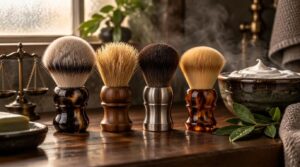
The bristles are the business end of your brush, so this is where your money and your conscience both get spent. Below, I’ll walk you through the three main options, from badger to boar and horsehair to synthetic. Each one lathers differently, costs differently, and comes with its own ethical trade-offs.
If you’re still weighing your options, this roundup of the best shaving brushes for a smooth, irritation-free shave compares badger, boar, horsehair, and synthetic picks across budgets.
Badger Hair Types and Grades
The four badger hair grades trace back to where the hair grew, and each one trades firmness for softness. Here’s the ladder:
- Pure badger hair: coarse, firm, cheapest.
- Best badger: finer, lighter, great value.
- Super badger hair: softer, banded, luxurious.
- Silvertip badger hair: neck only, softest, priciest.
- Color banding: stronger as you climb.
Pick among badger hair types by feel. Grading depends on bristle fineness, color, and texture, along with how well each grade retains water.
Boar and Horsehair Bristles
If badger hair feels too pricey or too soft, boar hair is the budget route. It’s stiff, a bit scratchy at first, and needs a few weeks of use to soften. Once it does, it loads hard soaps beautifully.
Horse hair sits in the middle, firmer than badger but gentler than boar, with almost no break-in. It’s also gathered without harming the animal.
Synthetic Fibers and Vegan Options
Synthetic hair is where I’d point you if animal products are a dealbreaker. Good ones are vegan, crueltyfree, and some are PETAapproved or PETA certified, so check the label.
Unlike boar, they need no break-in, dry fast, and don’t shed. The catch is less water retention, so load a bit more water. Skip cheap, straight nylon, which often feels scratchy.
If you’re just starting out, this guide to the best shaving brushes for beginners can help you pick a synthetic knot that forgives early mistakes.
Choose Comfortable Knot, Loft, and Handle Sizes
Once you’ve picked your bristles, the next question is how big the thing should be. Size shapes comfort more than most people expect.
Here’s what I’d check, in order:
- Knot size: 20 to 24mm suits most hands; go smaller for travel.
- Loft: Around 50mm is average. Shorter feels firmer, longer feels softer.
- Knot density: Packed hair gives backbone and holds more lather.
- Handle feel: Weight and texture matter when your hands are wet and soapy.
- Handle ergonomics: About 45mm at the thickest point fits comfortably.
Handle length won’t change your lather, only your grip and control. If you’re a face latherer, a rounded knot works well. Bowl people often like flatter ones. Try holding a few before buying, if you can.
Match Lather Performance to Your Shaving Budget
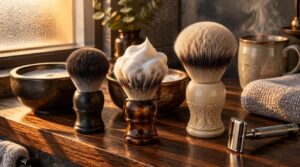
I used to think spending more on a brush meant better lather. It doesn’t, at least not past a point. Your price to performance ratio peaks between $20 and $40, where a mid-tier synthetic or a solid badger lands in the sweet spot. That’s your best shaving brush for the money, honestly.
I once believed a pricier brush meant better lather, but the sweet spot for value sits between twenty and forty dollars
Under $20, synthetics lather well from day one, while boar needs weeks of break-in and some soaking first.
Above $60, you’re mostly paying for softness and looks. Badger’s water retention is great, but it can oversaturate your lather if you’re sloppy. Synthetics use less soap and skip the shedding, so a decent brush maintenance routine keeps them going for years.
Skip the luxury tax and chase lather quality instead.
Top 4 Shaving Brushes for Different Needs
You’ve got the basics down, so now it’s time to put them to work. Below are four brushes I’d happily point you toward, each built for a different kind of shaver and a different kind of budget. Think of it as a short menu, and pick whichever one fits the way you lather.
1. MÜHLE Travel Silver Shaving Brush
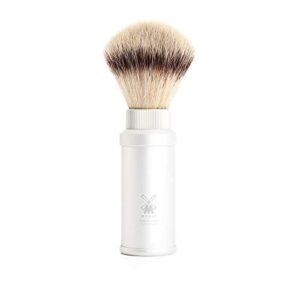
Ever tried packing a shaving brush without crushing it? It’s kind of a pain. This MÜHLE solves it by letting the head twist out and store inside the handle, so it slips into a toiletry bag.
The Silvertip Fibre has soft tips and builds a creamy lather with soap or cream. It dries faster than natural hair. The trade-offs: it holds less water than badger, the 19mm knot may feel less dense than you’d expect, and some report skin irritation.
| Best For | Travelers who want a soft, quick-drying shaving brush that packs neatly into a toiletry bag without getting crushed. |
|---|---|
| Bristle Material | Silvertip Fibre (synthetic) |
| Handle Material | Anodized aluminum, chrome accents |
| Model Number | WU-MHL-31-M-530 |
| Weight | N/A |
| Knot Size | 19mm diameter |
| Lather Quality | Rich, creamy |
| Additional Features |
|
- The brush head twists out and stores inside the handle, making it compact for packing
- Soft Silvertip Fibre tips build a rich, creamy lather with shaving soap or cream
- Dries faster than natural hair brushes
- Synthetic fibre holds less water than natural badger hair
- The 19mm knot may feel less dense than you’d expect from a name brand
- Some users report slight skin irritation from the bristles
2. MÜHLE Silvertip Fiber Shaving Brush
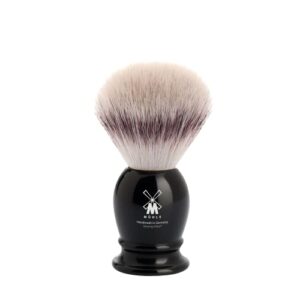
Think of this brush as a good pair of running shoes: soft where your skin touches it, firm where you need support. The Silvertip Fiber head has gentle tips and a stable middle, so it builds dense, rich lather from soap or cream without feeling floppy.
You can pick black resin, faux ivory resin, or olive wood grips, and it weighs 2.4 ounces. Some customers find it small, so check sizing. Rinse it well and hang it upside-down to dry.
| Best For | Wet shavers who want a soft, plastic-free brush that builds a rich lather with soap or cream and pairs with MÜHLE razors. |
|---|---|
| Bristle Material | Silvertip fiber (synthetic) |
| Handle Material | Resin or olive wood |
| Model Number | WU-MHL-39-K-256 |
| Weight | 2.4 ounces |
| Knot Size | N/A |
| Lather Quality | Dense, rich |
| Additional Features |
|
- Silvertip fiber head has soft tips and a stable middle for dense, rich lather
- Comes in black resin, faux ivory resin, or olive wood handles
- Plastic-free construction fits a sustainability-minded routine
- Some customers report the brush size is small
- Customer feedback on size suitability is mixed
- Needs thorough rinsing and upside-down drying to last
3. Omega Pro 48 Boar Bristle Shaving Brush
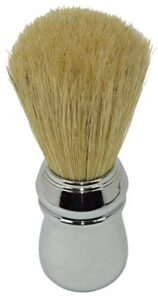
Think of the Omega Pro 48 as a stiff new pair of leather boots: a little rough at first, then surprisingly good once you’ve put in the miles.
It’s made with 100 percent natural boar bristles on a chrome-colored ABS handle, and it measures 1.5 x 1.5 x 5.25 inches at 1.6 ounces. It builds a rich lather quickly with creams and soaps.
Expect some odor early on, and the size runs larger than some of you will like, honestly.
| Best For | Shavers who want a natural boar bristle brush that builds a rich lather quickly with any shaving cream or soap, and who don’t mind a larger brush. |
|---|---|
| Bristle Material | 100% natural boar |
| Handle Material | Chrome-colored ABS |
| Model Number | OMG-10048 |
| Weight | 1.6 ounces |
| Knot Size | N/A |
| Lather Quality | Rich, quick |
| Additional Features |
|
- Made with 100 percent natural boar bristles
- Creates a rich lather quickly with shaving creams and soaps
- Chrome-colored ABS handle gives a comfortable grip and suits all skin types
- Some users report a strong or unpleasant odor
- Size may be larger than preferred for certain users
- Mixed customer feedback on overall dimensions and scent perception
4. Parker Silvertip Badger Shaving Brush
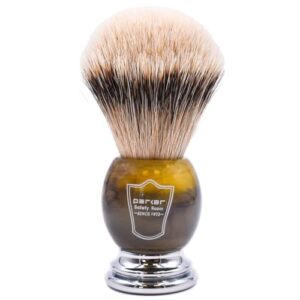
Want badger performance without the boutique price tag? The Parker is a solid place to start.
It uses 3-band silvertip badger hair in a 22 mm knot, and that long loft pulls a lot of water for rich, dense lather. Bowl, mug, or face, it controls all three. The faux horn handle with chrome base feels good in hand, and the resin stand is included.
Here’s the catch: some users report 3-4 hairs shed per use, and the stand runs short, so it can squash your bristles over time.
| Best For | Shavers who want a soft, water-rich silvertip badger brush for bowl, mug, or face lathering without paying boutique prices. |
|---|---|
| Bristle Material | 3-band silvertip badger |
| Handle Material | Faux horn, chrome base |
| Model Number | N/A |
| Weight | 7.05 ounces |
| Knot Size | 22mm |
| Lather Quality | Rich, dense |
| Additional Features |
|
- Premium 3-band silvertip badger bristles are soft and dense for a comfortable shave
- Long 22 mm loft holds water well for rich lather
- Works for bowl, mug, or face lathering, and comes with a resin stand
- Some users report bristle shedding of 3-4 hairs per use
- Mixed feedback on how well the bristles hold up over time
- The included stand may be too short, which can deform the bristles during storage
Consider Shaving Brush Maintenance and Longevity
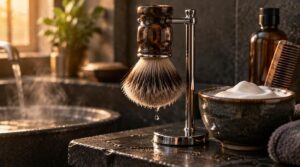
Here’s a hard truth: a great brush can die young if you treat it like a sponge. Good brush maintenance takes about thirty seconds a day, and it’s the cheapest upgrade you’ll ever make.
After every shave, rinse with lukewarm water, keeping it under 45°C so the knot glue doesn’t give up. Part the bristles and flush out the center. Shake it gently, no wringing or twisting, then hang it bristle-down on a stand. Give it a full day to dry before it goes anywhere near a closed case.
Once a month, wash it with a mild shampoo and comb out the gunk. Skip Dettol and borax.
Do this and your lather quality stays rich, your bristle softness holds, and your brush longevity stretches into years.
Frequently Asked Questions (FAQs)
What type of shaving brush should I use?
Start with bristle type. If you want softness and rich lather, go with the best badger hair your budget allows.
Prefer low fuss? Pick synthetic. Match knot loft and brush maintenance to your shaving routine.
What is the best shaving brush for a beginner?
Myth: only a badger hair shaving brush lathers well. False. For a beginner shaving brush, pick a synthetic shaving brush. It’s the best shaving brush for the money; boar hair shaving brush needs breaking in.
What parts should you not shave?
Your skin will file a formal complaint if you shave the bikini line with a dull blade. Coarse, curly hairs love curling under, so ingrown hairs and razor burn follow. Skip it, or try exfoliating first.
Which shaving brush is considered the best quality?
Wondering what tops the list? The Best Silvertip Badger Shaving Brush wins on shaving brush performance, thanks to its soft bristle type, solid brush construction quality, and strong lather building efficiency, plus truly impressive softness.
Can I use a shaving brush with shaving cream?
Picture a tube of shaving cream sitting next to a dusty brush you bought on a whim. Pair them. A shaving brush whips cream into thick lather with a little water, whatever the bristle type.
How do I break in a new brush?
Soak it in warm water with a pinch of salt overnight, then just shave with it. Your bristle breakin gets easier with regular soap usage and longer lathering time. Skip hot water, and don’t mash the brush flat.
Do I need a brush stand?
Not strictly, but a brush stand makes brush drying almost easy. Shake out the water, let air circulate, and you’re covered. Without one, ventilated brush storage matters most. Stands cost about $10 to $
What is the best way to build lather?
Lather is basically wizardry, but it’s really three steps.
Load your brush firmly with soap, then add water drop by drop, since water retention varies between bristle types.
Whip until glossy, yogurt-like lather forms quickly.
Can I take a shaving brush on airplanes?
Funny how razors get grounded while brushes stroll through security.
Pack a travelfriendly brush design or travel shaving brush in your carry-on. Synthetic fiber alternatives work. Follow brush drying tips for longterm brush durability.
Conclusion
Picture a guy who buys a pricey badger brush, then skips rinsing it and leaves it face-down in a damp mug. Six months later, it’s shedding and smelling like my old eight-dollar disaster.
Figuring out how to choose a shaving brush is only half the job. Pick the bristle that fits your soap and ethics, size the knot to your hand, and rinse, shake, hang it dry. Treat it right and it’ll outlast your razor.