This site is supported by our readers. We may earn a commission, at no cost to you, if you purchase through links. This content is for general informational and educational purposes only and is not a substitute for professional medical, dermatological, or nutritional advice.

Your nose already comes with a built-in air filter, and most grooming routines treat it like a hedge that needs a buzz cut. Those little hairs trap pollen, dust, and bacteria before they reach your lungs, which is a surprisingly heavy workload for something you’d probably rather not think about.
Still, a wayward tuft peeking past the nostril rim isn’t doing anyone favors. So how often should you use a nose hair trimmer? Most people land somewhere between every two and four weeks, though medications, allergies, and age can shift that.
Here’s how to find your rhythm, protect your filter, and pick a trimmer worth owning.
Table Of Contents
- Key Takeaways
- How Often Should You Trim Nose Hair?
- When to Adjust Your Nose Hair Routine
- How to Trim Nose Hair Safely
- Why Overtrimming, Plucking, and Waxing Are Risky
- Top 5 Nose Hair Trimmers for Regular Grooming
- How to Clean Your Nose Hair Trimmer
- Frequently Asked Questions (FAQs)
- How often should I trim nose hairs?
- Is there a downside to trimming nose hair?
- Does nose hair grow back thicker after trimming?
- I cut my nose hairs too short. What should I do?
- Can nose hair trimmers be shared between people?
- How long does a nose hair trimmer last?
- Should you trim nose hair wet or dry?
- Why does nose hair grow faster with age?
- Can trimming nose hair trigger sneezing or nosebleeds?
- Conclusion
Key Takeaways
- Trim your nose hair every 2 to 4 weeks, whenever strands peek past the nostril rim, and adjust that rhythm for age, medications, allergies, or a weakened immune system.
- Trim only what shows, using a clean trimmer on dry hair with short passes at the rim, because the hairs deeper inside filter out dust, pollen, and germs.
- Don’t overtrim, pluck, or wax, since removing the hair or its root can cause irritation, ingrown hairs, and infections like folliculitis or nasal vestibulitis, which in rare cases can become serious.
- Rinse your trimmer after every use, disinfect the blades with alcohol, never share it, and replace it when the blades feel dull, which is about every 5 to 7 years with good care.
How Often Should You Trim Nose Hair?

Usually, the answer comes down to one honest look in the mirror. So, how often should you trim nose hair? For most people, every 2 to 4 weeks keeps things tidy, though your own rate depends on genetics, age, and hormones.
If trimming ever leaves your skin irritated or bumpy, it helps to know whether nose and ear trimmers can cause ingrown hairs and how to avoid them.
Think of it as a grooming frequency guide you write yourself. Trim when hairs peek past the nostril rim or start to tickle, and stop there. Your nose hair trimmer should only tame what shows, not clear-cut the forest, since a few millimeters inside still filter dust and germs. Dermatologists note that nose hair acts as a first line of defense, trapping airborne particles like bacteria, pollen, and allergens before they enter the body.
Pick a rhythm you’ll actually keep. Many people fold it into a weekly shower or shave, which makes it automatic. Among your personal grooming tools, a small trimmer earns its drawer space precisely because quick, regular touch-ups beat a dramatic, irritating cleanup every few months.
Consistency wins. Irregular trimming means surprise hairs at the worst possible moment.
When to Adjust Your Nose Hair Routine

That two-to-four-week rhythm is a starting point, not a contract. Life nudges the schedule, and your grooming frequency should bend with it.
Picture these four moments:
- Seasonal considerations like allergy season mean going lighter, since extra hair catches more pollen.
- You’re recovering from a cold, so put the trimmer down until your nostrils heal.
- A medication like minoxidil sprouts extra growth, so check the mirror more often.
- Your blade feels tuggy, which means it’s dull and due for replacement.
Age matters too. Nose hair usually grow faster over the years, and men often see thicker growth, so don’t be surprised if your schedule shortens.
Personal preference counts here. On camera often? You might reasonably want tighter visible hair management. With diabetes or a weakened immune system, trim gently and less often to avoid skin breaks, and keep regular maintenance calm and unhurried.
How to Trim Nose Hair Safely
Once your schedule is set, the method matters just as much. Here’s how to trim nose hair safely, no flinching required.
Start by blowing your nose and washing your hands, then grab a mirror with good light. Use a rotary trimmer or blunt-nosed scissors, since personal grooming tools like these keep you from getting carried away.
These grooming safety tips keep things smooth:
- Trim only when the hair is completely dry.
- Make short passes at the rim, never deep inside.
- Stop once the visible hairs are gone.
That’s it. Seriously. You’re not sculpting a topiary, so resist the urge to chase every last strand. The hairs inside filter dust and allergens, which is why smart facial hair grooming leaves them alone.
If you’re curious why a good trimmer protects the hairs you leave alone, this breakdown of how nose and ear trimmers work explains the shielded blade design.
Finish by wiping your nostrils with a tissue, checking the mirror for strays, and rinsing the trimmer head. Next time, you’ll trim nose hair with confidence.
Why Overtrimming, Plucking, and Waxing Are Risky
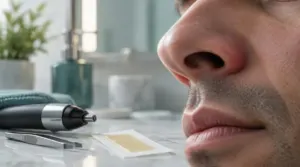
Trimming keeps things tidy, but going too far backfires. Overtrimming strips away the hairs that trap dust, allergens, and germs, so more irritants reach your airways. (Think of it as removing the bouncer and wondering why the party got rowdy.)
Overtrimming removes the bouncer from your nose, so dust, allergens, and germs crash the party and march straight into your airways
Plucking is the bigger offender. Yanking hairs out damages the follicle and leaves openings for bacteria, which can lead to folliculitis, nasal vestibulitis, or a boil called nasal furunculosis. Waxing does the same thing on a larger scale, pulling hair from the follicle and causing ingrown hairs that turn into inflamed, infected bumps.
Nasal vestibule sensitivity makes all of this riskier. The skin inside your nostrils is thin and delicate, and it sits close to blood vessels that drain toward the brain. In rare cases, a severe infection can spread to the cavernous sinus and cause clots or meningitis, which is why grooming safety tips matter.
Top 5 Nose Hair Trimmers for Regular Grooming
Now that you know how to trim without turning your nostrils into a crime scene, it’s time to pick the right tool for the job. Below are five trimmers that handle regular grooming well, from the MANSCAPED duo to the Panasonic, Norelco, and Wahl. Skim the list, match one to your routine, and you’ll be set.
1. MANSCAPED Weed Whacker 2.0 Trimmer
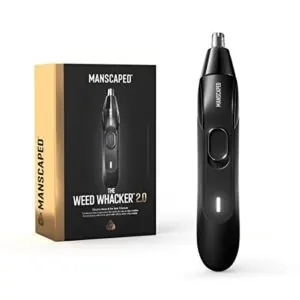
Think of the Weed Whacker 2.0 as your grooming kit’s no-fuss sidekick: not flashy, mostly reliable. (Mostly.)
Its improved stainless steel rotary blade spins at 7,000 RPM inside a 360° dual-blade system, trimming nose and ear hair wet or dry. Rinse it under the faucet, charge it over USB-C, and you get up to 45 minutes of cordless runtime. The matte rubberized grip helps, though opinions on comfort are split.
The catch: some users report weak trimming. Test yours immediately.
| Best For | Men who want a simple, rechargeable, rinseable trimmer for routine nose and ear hair grooming and are willing to test it right away to make sure it works well. |
|---|---|
| Product Type | Petroleum jelly |
| Dimensions | 3 x 4 x 4.25 in |
| Weight | N/A |
| Power Source | N/A |
| Model Number | 10305210045276 |
| Main Drawback | May feel greasy |
| Additional Features |
|
- Wet/dry use with a rinse-under-the-faucet design makes cleanup easy
- USB-C rechargeable battery delivers up to 45 minutes of cordless runtime
- 7,000 RPM motor with a 360° dual-blade system and an improved stainless steel rotary blade for closer cutting
- Mixed feedback on cutting performance, with some users reporting inadequate trimming
- Durability concerns, as some units reportedly fell apart before use
- Divided opinions on ergonomics and grip comfort despite the matte rubberized grip
2. MANSCAPED Weed Whacker 3.0 PRO
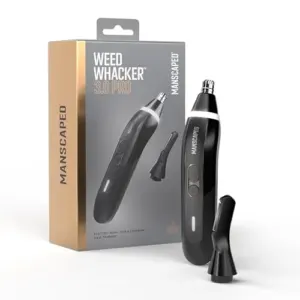
Spotlights aren’t just for stage stars, and the Weed Whacker 3.0 PRO brings one to your nostrils. Its built-in LED beam lights up the hard-to-see spots, so you’re not trimming blind. The interchangeable rotary and eyebrow blades use SkinSafe technology, though that’s no promise against nicks.
You get up to 60 minutes of runtime from the lithium-ion battery, and the IPX7 rating means you can rinse it clean. A travel lock keeps it from buzzing in your bag.
Some users say the trim isn’t as close as expected.
| Best For | Anyone who wants a waterproof, easy-to-rinse trimmer for nose, ear, and eyebrow hairs, especially in spots that are hard to see. |
|---|---|
| Product Type | Skin ointment |
| Dimensions | 3.07 x 1.97 x 8.03 in |
| Weight | N/A |
| Power Source | N/A |
| Model Number | N/A |
| Main Drawback | Greasy texture reported |
| Additional Features |
|
- Built-in LED spotlight lights up hard-to-see areas so you’re not trimming blind
- IPX7 waterproof rating makes cleaning as simple as rinsing it off
- Up to 60 minutes of runtime from the rechargeable battery, plus a travel lock for bag storage
- SkinSafe technology does not guarantee protection against nicks or cuts
- Customer feedback is mixed on cutting depth and closeness of the trim
- Some users report it doesn’t trim as close as expected despite its powerful performance
3. Panasonic ER-GN70-K Nose Ear Trimmer
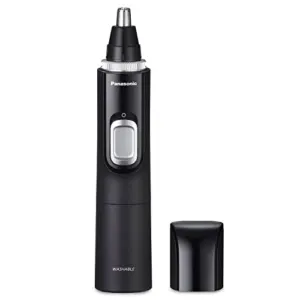
Imagine this: you’re mid-shower, shampoo in your eyes, and you spot a rogue nose hair waving hello in the mirror. With the Panasonic ER-GN70-K, you can handle it right there, since it’s fully waterproof.
Its dual-edge blades cut from the top and sides, powered by a 9400 CPM motor that won’t tug. A vacuum pulls clippings in, and you can rinse it clean. It runs on two AAA batteries (not included) for up to 40 minutes. Durability reviews are mixed, though.
| Best For | Anyone who wants a cordless trimmer for nose, ear, eyebrow, and facial hair that can be used wet or dry and cleaned with its built-in vacuum. |
|---|---|
| Product Type | Rotary nose trimmer |
| Dimensions | 8.03 x 5 x 2.13 in |
| Weight | 9.91 oz |
| Power Source | USB-C rechargeable |
| Model Number | N/A |
| Main Drawback | Inconsistent cutting, durability |
| Additional Features |
|
- Powerful 9400 CPM motor with dual-edge, hypo-allergenic blades and a safety cone design
- Micro-vacuum system pulls in clippings, making cleanup easier
- Cordless and works wet or dry, with up to 40 minutes of use
- Two AAA batteries are needed but not included
- Customer feedback on durability and lid fit is mixed
- Some reports of the trimmer head falling apart easily
4. Norelco Nose Trimmer 5000 Precision Kit
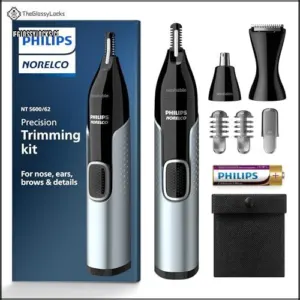
Imagine this: you’re ten minutes from leaving for a wedding, and one stubborn nostril hair is waving hello. The Norelco Nose Trimmer 5000 (model NT5600/62) experiences that moment fast, no fuss.
Its Protective Guard System keeps a barrier between skin and the dual-sided steel blades, so hairs get cut, not yanked. The kit adds eyebrow combs and a detail trimmer for sideburns and beard edges. It runs on one AA battery, weighs 6.75 ounces, and rinses clean under the faucet.
| Best For | People who want a simple, washable battery-powered trimmer for tidying nose, ear, and eyebrow hair, plus light edging around sideburns and beards. |
|---|---|
| Product Type | Nose/ear/eyebrow trimmer |
| Dimensions | 6.38 x 5.43 x 2.32 in |
| Weight | 5.61 oz |
| Power Source | Rechargeable lithium-ion |
| Model Number | 30-00062-NA |
| Main Drawback | Trim closeness mixed |
| Additional Features |
|
- The Protective Guard System keeps a barrier between skin and the dual-sided steel blades, so hair is cut without pulling.
- The kit includes eyebrow combs and a detail trimmer, so it handles sideburns and beard edges as well as nose and ear hair.
- The whole device is washable and rinses clean under the faucet.
- Some users report that it doesn’t cut as close as they would like.
- Some users say it stopped working within 2 months, which raises durability concerns.
- Feedback on battery life is mixed, and some users report discomfort during use.
5. Wahl Micro Groomsman Battery Trimmer
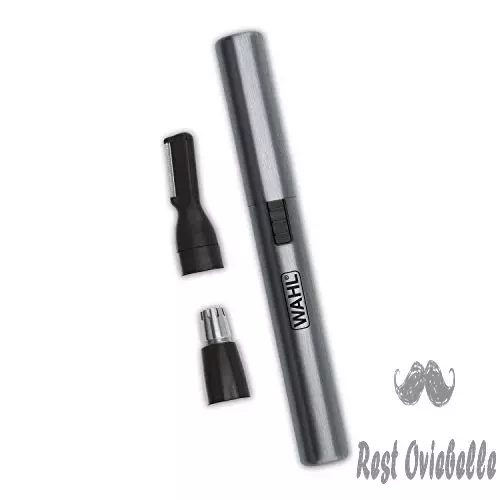
Think of the Wahl Micro Groomsman as the reliable utility player of nose hair trimmers: unflashy, but it shows up. This pen-sized, battery-powered trimmer (5640-600) weighs just 1.8 ounces, so it slips easily into a travel bag. Two detachable hygienic heads, detail and rotary, handle nose, ear, eyebrow, and facial hair, plus neckline and sideburn touch-ups.
The catch? Reviewers report mixed battery life and occasional breakage within weeks, and you’ll need to replace the AAA yourself. Keep spares close by.
| Best For | Travelers and casual groomers who want a lightweight, pocket-sized trimmer for quick nose, ear, and eyebrow touch-ups on the go. |
|---|---|
| Product Type | Nose/ear/facial trimmer |
| Dimensions | 5.2 x 1.4 x 1.3 in |
| Weight | 2.24 oz |
| Power Source | Two AAA batteries |
| Model Number | N/A |
| Main Drawback | Durability, lid fit concerns |
| Additional Features |
|
- Weighs just 1.8 ounces and is pen-sized, making it easy to pack for travel
- Comes with detachable hygienic detail and rotary heads for nose, ear, eyebrow, and facial hair
- Handles neckline and sideburn touch-ups, so it covers more than one grooming job
- Customers report mixed results on battery life
- Some users say it broke within weeks of purchase
- Needs a replaceable AAA battery to work, so you have to keep spares on hand
How to Clean Your Nose Hair Trimmer

Your nose trimmer spends its days in a dark, damp neighborhood, so a little housekeeping goes a long way. (Think of it as the toothbrush of your grooming kit.) Cleaning takes about a minute, and it keeps the blades sharp and sanitary.
Here’s the routine after every use:
- Rinse the head under running water, or detach it first if it comes off.
- Switch the trimmer on under the stream to flush out trapped hair.
- Rotate slowly so water reaches every edge of the blades.
- Turn it off, shake off the water, and let everything dry completely.
Once dry, spritz the blades with barber’s disinfectant or isopropyl alcohol and let it air dry. Skip the soap on non-waterproof models, and store the trimmer somewhere clean and dry. Once a month, soak removable blades in rubbing alcohol for 10 to 30 seconds. Run it briefly afterward to dislodge debris.
Frequently Asked Questions (FAQs)
How often should I trim nose hairs?
Nose hair trimming works best on a loose schedule: every 2 to 4 weeks suits most people. So how often should you trim nose hair? Whenever strands peek out. Regular maintenance beats flawlessness, and personal preference decides the rest.
Is there a downside to trimming nose hair?
Yes, though it’s a small one. Trimming can nick the delicate mucous membrane inside your nostril, causing irritation or a little bleeding. Keep your trimmer clean, since a dirty blade plus a cut invites infection.
Does nose hair grow back thicker after trimming?
Think your trimmer is making things worse? Nope. Trimming leaves the follicle and hair growth untouched. Regrowth only feels coarser because a blunt tip replaces the tapered one. Skip plucking, though, which actually removes the root.
I cut my nose hairs too short. What should I do?
Overtrimming happens, so put the trimmer down. For skin irritation prevention and ingrown hair prevention, skip nostril rim trimming until hairs regrow, about two to three weeks. Posttrimming care helps: dab some petroleum jelly inside.
Can nose hair trimmers be shared between people?
Skip the sharing. A trimmer head touches nasal lining, so it can carry mucus, microbes, and even blood, and tiny nostril cuts give bacteria a way in.
Buy your own dedicated trimmer for better hygiene.
How long does a nose hair trimmer last?
A well-kept nose hair trimmer lasts 5 to 7 years. Blades fade first, so blade sharpness retention depends on grooming tool maintenance. Replace dull ones for hair follicle safety. USBC dock charging helps batteries last.
Should you trim nose hair wet or dry?
Picture a guy rinsing his trimmer in the shower, only to find damp hairs sticking to the blade. Go dry instead.
Check the manual, since wetdry grooming tools with an enclosed head exist, but rinse the head afterward, use good light, and keep rotating slowly.
Why does nose hair grow faster with age?
Does nose hair grow faster with age? Nope.
Aging and hair changes make androgen-sensitive follicles produce thicker, longer vibrissae that linger longer, so they look faster. Trim them with a trimmer in your grooming routine.
Can trimming nose hair trigger sneezing or nosebleeds?
Yes, it can. When you trim nose hair, a nose hair trimmer can irritate the lining and set off a sneeze. Nick the skin, and you’ll get a nosebleed, especially with allergy symptoms flaring.
Conclusion
Two to four weeks is the window most people land in, and that’s your answer to how often should you use a nose hair trimmer. Treat it as a starting point, not a rule. Allergies, medications, and age can shift the schedule, so watch your own mirror.
Keep a trim, not a clear-cut. Your nostrils need those hairs on filter duty, and a clean, well-kept trimmer makes that job easy. Groom lightly, then move on.