This site is supported by our readers. We may earn a commission, at no cost to you, if you purchase through links. This content is for general informational and educational purposes only and is not a substitute for professional medical, dermatological, or nutritional advice.
That razor sitting in your shower isn’t just holding water spots. It’s holding onto skin cells, soap film, and bacteria that thrive in warm, damp environments, the exact conditions your bathroom offers every day. Nick your skin with a blade that’s never been disinfected, and you’re rolling the dice on razor burn or worse, folliculitis.
Here’s the fix, and it’s sitting in your medicine cabinet already. Learning how to clean and disinfect razor blades with alcohol takes less time than your actual shave, and it works because 70% isopropyl alcohol denatures bacterial proteins on contact.
Below, you’ll find the exact soak times, concentrations, and drying steps that keep your blades sharp, sanitary, and rust-free for every shave ahead.
Table Of Contents
- Key Takeaways
- Why Use Alcohol to Disinfect Razor Blades?
- How to Clean and Disinfect Razor Blades With Alcohol
- Which Alcohol Concentration Works Best?
- How Often Should Razor Blades Be Disinfected?
- Alcohol Safety, Drying, and Storage Tips
- Frequently Asked Questions (FAQs)
- Does rubbing alcohol sterilize razor blades?
- Can you use 70 isopropyl alcohol to clean after shaving?
- How do you sterilize razor blades?
- Will hydrogen peroxide sanitize a razor?
- What do I use to disinfect my razor?
- Does rubbing alcohol clean razor blades?
- Is rubbing alcohol good for cleaning blades?
- What is the best way to disinfect a shaver?
- Should I put alcohol on a razor cut?
- Can alcohol damage the razor blades over time?
- Conclusion
Key Takeaways
- Soak your razor blade in 70% isopropyl alcohol for 5-10 minutes each week—this specific concentration works best because its water content lets it penetrate crevices and denature bacterial proteins, unlike stronger 91% or 99% solutions that evaporate too fast to work.
- Rinse and scrub your razor with a soft toothbrush before soaking, since alcohol can’t do its job if soap scum and mineral deposits are still in the way.
- Always air-dry your blade completely after soaking instead of toweling it off, as cloth can reintroduce lint and bacteria right back onto the surface you just disinfected.
- Remember that alcohol disinfects but doesn’t sterilize, so you should still replace blades every 5-7 shaves, toss any with visible rust, and never share a razor with anyone else.
Why Use Alcohol to Disinfect Razor Blades?
Your razor sits in a warm, wet bathroom every day, which is basically a welcome mat for bacteria. Alcohol works fast against that buildup, but the payoff goes beyond just killing germs. Here’s what a quick alcohol soak actually does for you and your blade.
It kills germs instantly, dries fast without leaving residue, and even helps stave off rust—if you want more natural ways to clean your razor, hydrogen peroxide is another cabinet staple worth trying.
Removes Germs and Residue
Picture your blade under a microscope: dead skin, soap film, and bacteria clinging to every groove. Alcohol disinfection breaks that down fast.
- Kills germs and bacteria within 10 seconds
- Dissolves soap scum and mineral deposits
- Disrupts biofilm holding bacteria to metal
- Reduces pathogens over 99.9% in 30 seconds
- Clean, decontaminated surface in under 10 minutes
For best results, use 70% isopropyl alcohol concentration, since its water content helps it penetrate cell walls and denature proteins more effectively than higher-proof alcohol.
Reduces Irritation Risks
That germ-killing action doesn’t just protect you, it protects your skin too. Removing residue means less friction and tugging, which lowers irritation risk. Skip skin contact with wet alcohol; let the blade air-dry first.
| Habit | Skin Benefit |
|---|---|
| Rinse before soak | Prevents irritant buildup |
| Air-dry, don’t towel | Reduces drying/stinging |
| Weekly disinfection | Inhibits microbial growth |
Preserves Cutting Performance
A clean blade cuts smoother, plain and simple. Alcohol dissolves soap scum and mineral deposits before they etch the edge, which keeps blade sharpness retention intact. It won’t strip PTFE or chromium coatings either, so friction stays low and shave smoothness holds up shave after shave.
That’s how you get real blade longevity out of a cheap disposable.
Helps Prevent Corrosion
Sharp edges hold up, but only if rust doesn’t get there first. Isopropyl mixes with water on contact, so it displaces the moisture film that triggers oxidation.
That’s your water displacement advantage right there.
- Blocks chloride residue from sweat or tap water
- Speeds surface drying before storage
- Cuts corrosion risk at the edge and bevel
Skip the soak, and you’re inviting rust to set in fast.
A quick towel-dry after every use, paired with tips from this men’s razor blade selection guide, keeps your blades sharp and rust-free for longer.
How to Clean and Disinfect Razor Blades With Alcohol
Cleaning your razor properly takes more than a quick rinse under the tap. You need a clear process, done in the right order, to actually kill the germs hiding in those blade crevices. Here’s exactly how to break it down, step by step.
Disassemble and Rinse Razor
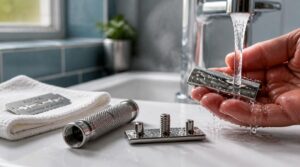
Twist the handle counterclockwise and lift the top cap to fully disassemble your razor, setting the blade aside on a clean surface.
Rinse the top cap and base plate under warm water for at least 10 seconds each, keeping the blade separate. Check threaded connections for buildup before proceeding. This step-by-step start makes every later cleaning session faster and more thorough.
Gently Scrub Stubborn Buildup
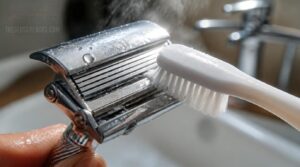
Grab a clean, soft-bristle toothbrush and work in gentle circular motions for 20 to 30 seconds per section. Nylon bristles lift soap scum and mineral deposits without scratching the edge. Focus on the cartridge pivot point, then rinse under hot water.
Check for white residue; repeat once if buildup remains before moving to the alcohol soak.
Soak Blade in Alcohol
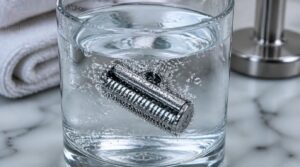
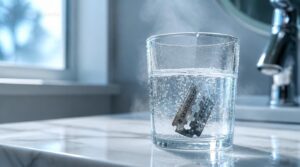
With buildup scrubbed away, submerge the razor head fully and soak the blade in 70% isopropyl alcohol for 5 to 10 minutes. Full submersion depth matters here; contact time lets alcohol reach crevices water skips.
This loosens leftover residue and knocks down bacteria, which prevents rust and corrosion while it improves blade life and performance.
Shake Off Excess Alcohol
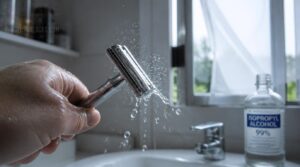
Once the timer hits zero, pull the razor out and shake it firmly for 5 to 10 seconds over a sink or container. Hold it at a slight angle, rotate the head, and keep shaking until no droplets cling to the blade. Do this near ventilation, since isopropyl fumes disperse fast in open air.
Air-Dry Without Rinsing
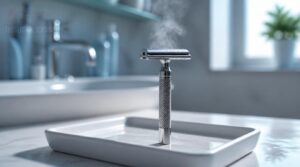
Skip the towel entirely. Wiping introduces lint and fresh bacteria right back onto a blade you just disinfected.
Set the razor upright on a lint-free surface in a ventilated spot, away from steam or sinks. Lift it slightly so air moves underneath. Air-dry completely for 5-10 minutes until no alcohol odor remains, don’t touch the blade while it dries.
Which Alcohol Concentration Works Best?
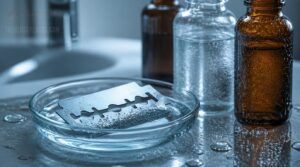
Not all alcohol works the same way on your razor. Concentration matters more than most people think, and picking the wrong one can leave germs behind. Here’s what you need to know before you reach for that bottle.
If you’ve recently had a transplant, hold off on shaving and dyeing alike, and check this guide on when it’s safe to dye your beard after a transplant.
Choose 70% Isopropyl Alcohol
Why does 70% isopropyl alcohol beat straight rubbing alcohol off the shelf? Water content balance. That extra 30% water slows evaporation, giving you real contact time to penetrate blade crevices instead of flashing off instantly.
Soak the blade in 70% isopropyl alcohol for consistent, reliable kill power. Disinfect weekly, and you’ll prevent rust and corrosion while airdrying completely afterward.
Avoid Fast-Evaporating Concentrations
That 91% bottle in your cabinet? It evaporates before it can work.
Higher purity means faster evaporation and less contact time, sometimes under a second on your blade.
- 99% flashes off almost instantly
- 91% still evaporates too fast for reliable kill power
- Anything above 85% struggles to denature bacterial proteins
Evaporation rate balance matters more than raw strength for real blade sanitation.
Skip Weak Alcohol Solutions
Weak alcohol won’t cut it, and that’s not a guess. Anything under 60% fails against Staphylococcus aureus, a common blade resident, while sub-50% solutions can actually spread bacteria instead of killing them.
Always soak the blade in 70% isopropyl alcohol, verify strength with test strips if you’re unsure, and never trust a bottle that’s expired or unlabeled.
Allow Adequate Contact Time
Getting the right percentage means nothing if you rush the soak.
Submerge the blade fully in 70% isopropyl alcohol for 5-10 minutes, keeping it wet the entire time. Evaporation control matters here: don’t set the container near a fan or heat source.
Consistent contact, not a quick dip, is what actually kills bacteria on the blade.
Know Alcohol’s Disinfection Limits
Alcohol isn’t a cure-all. It kills bacteria fast but can’t touch spore resistance, so it’s disinfection, not sterilization.
- Won’t destroy bacterial spores
- Causes material degradation over time
- Requires ventilation need during use
- Demands a quick sensitivity test
- Needs proper storage safety
Rubbing alcohol’s effectiveness has real limits. Respect them, and take precautions seriously.
How Often Should Razor Blades Be Disinfected?
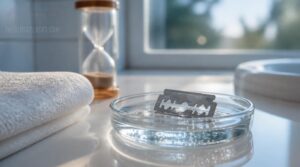
Knowing the right alcohol isn’t enough if you’re not using it on a schedule. Your razor picks up bacteria fast, so timing matters as much as technique. Here’s how often you should clean, disinfect, and check your blade to keep it safe and sharp.
Rinse After Every Shave
Your razor works hardest right after you shave, so rinse it under warm water immediately. Don’t let cream or hair dry on the metal.
Use a quick rinse technique: direct water at the edge to flush trapped debris. Handling with gloves cuts oil transfer. Once clean, air dry completely before storage, this simple habit prevents buildup between deeper weekly soaks.
Disinfect Blades Weekly
Once a week, give your razor a proper disinfection, not just a rinse. Soak the blade in 70% isopropyl alcohol for 5-10 minutes. That contact time lets alcohol penetrate crevices and kill bacteria fully.
Afterward, air-dry completely before storage. This weekly habit prevents rust and corrosion, keeping blades sharp and safe between deeper cleanings.
Clean Visible Buildup Immediately
Spot yellow film or cloudy residue on the blade? Don’t wait for your weekly soak. Scrub it now with a clean toothbrush dipped in alcohol, using circular motions on stained areas.
This targeted buildup scrubbing removes soap scum and mineral deposits before they harden. Wipe dry, then air-dry completely.
Quick action like this helps real blade buildup prevention between deeper cleanings.
Never Share Used Razors
Would you hand a stranger your toothbrush? A used razor carries the same risk. Bacteria from your skin cling to the blade, and sharing it spreads them straight to someone else, cuts and all.
Sharing a used razor is like sharing a toothbrush—bacteria and all
Never share used razors, even with family. No alcohol soak fully erases that risk. Give everyone their own labeled blade instead. That’s basic razor ownership ethics, and it protects both of you.
Replace Dull or Rusty Blades
No amount of alcohol saves a worn-out blade. If it’s tugging hair instead of slicing clean, that’s your cue.
- Replace after 5-7 shaves, sooner for daily use
- Toss blades with any visible rust
- Swap immediately if you feel drag
Rust means immediate replacement. Rinse and dry fully between shaves for real corrosion resistance and longer blade life.
Alcohol Safety, Drying, and Storage Tips
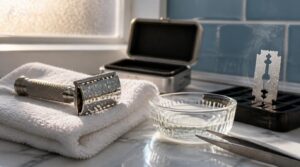
Alcohol gets your blade sanitized, but how you handle it after matters just as much. A few small habits protect your razor, your bathroom, and you. Here’s what to keep in mind once the disinfecting part is done.
Work in Ventilated Areas
Alcohol fumes build up fast in tight spaces. Open two opposite windows for cross ventilation, or run an exhaust fan venting outdoors. Point any fan away from your face, carrying vapors past the blade instead of toward you. If the room smells strongly of alcohol, airflow isn’t cutting it, so step back and reset before continuing.
Keep Alcohol Away From Heat
Rubbing alcohol has a low flash point, so keep it far from stoves, radiators, and hair dryers, at least 3 feet away. Heat speeds up evaporation, cutting your soak’s germ-killing time short.
Store containers at room temperature (68-72°F) in an insulated cabinet or lowest shelf, away from sunlight, to preserve that 70% concentration.
Avoid Prolonged Razor Soaking
Heat isn’t the only enemy here. Soak the blade in 70% isopropyl alcohol for 5-10 minutes, no longer. Extended soaking dilutes alcohol strength, degrades coatings, and traps loosened residue back onto the edge.
- Weakens alcohol strength through dilution
- Speeds up coating breakdown
- Redeposits residue on the blade
- Invites rust and pitting
Stick to the window. Your blade’s longevity depends on it.
Dry Razors Completely
Once the soak’s done, air dry the razor completely before it touches storage. Complete evaporation beats toweling every time, since cloth fibers can redeposit germs and trap moisture near the edge.
| Sign | Meaning |
|---|---|
| Shiny, droplets visible | Still wet |
| Evenly matte | Fully dry |
| Damp guard | Recheck later |
| No sheen | Ready to store |
Check the guard closely. That’s where moisture hides longest.
Store Outside Humid Showers
Where you keep the razor matters as much as how you dry it. Bathroom steam undoes your work fast, so pick a ventilated storage area away from the shower.
Bedroom blade storage or hallway closet storage both beat a humid alcove. A magnetic mirror hook or dry environment placement keeps blades exposed to air, not trapped moisture.
Frequently Asked Questions (FAQs)
Does rubbing alcohol sterilize razor blades?
It kills germs fast, but it doesn’t guarantee true blade sterilization. Rubbing alcohol does disinfection, not full sterility. At 60%-90% concentration, it wipes out E. coli and staph in seconds, yet spores survive.
Can you use 70 isopropyl alcohol to clean after shaving?
Yes, but apply it cautiously. 70 isopropyl alcohol removes leftover oils and residue for blade surface cleaning, though direct skin contact can trigger dryness or irritation. Dab lightly, avoid sensitive areas, and follow up with a moisturizer for proper post-shave skin care.
How do you sterilize razor blades?
Rinse under warm water, scrub gaps with a clean toothbrush, then soak the blade in 70% isopropyl alcohol for 5-10 minutes. Air-dry completely, and disinfect weekly to keep bacteria from building up between shaves.
Will hydrogen peroxide sanitize a razor?
Hydrogen peroxide can work through oxidation disinfection, but it evaporates fast, cutting contact time short. Rinse residue first for full contact. For razor material safety and reliable results, 70% isopropyl alcohol still beats peroxide for quick, thorough disinfecting.
What do I use to disinfect my razor?
The gentlest product on your shelf is also the toughest on germs: grab 70% isopropyl alcohol. Soak blades 5-10 minutes, scrub buildup with a clean toothbrush, then air-dry fully before storing somewhere dry.
Does rubbing alcohol clean razor blades?
Rubbing alcohol works as an effective razor blade sanitation method. Soak the blade in 70% isopropyl alcohol for 5-10 minutes and it dissolves residue while achieving strong microbial kill time against bacteria on the metal surface.
Is rubbing alcohol good for cleaning blades?
Yes. Soak the blade in 70% isopropyl alcohol for 5-10 minutes for real disinfection benefits, strong microbial reduction, and clean residue removal, always following basic safety precautions around ventilation and heat when handling alcohol.
What is the best way to disinfect a shaver?
Rinse the shaver head first, then soak the blade in 70 isopropyl alcohol for 5-10 minutes. Shake off excess, then air-dry completely before storage. This routine keeps razor sanitation consistent and blades corrosion-free.
Should I put alcohol on a razor cut?
Skip it, don’t soak it. Alcohol on a fresh cut brings intense stinging and tissue damage that slows healing. Wash gently with soap and water, then apply antibiotic ointment. Deep or infected cuts need medical attention.
Can alcohol damage the razor blades over time?
Over time, yes. Uncoated blades face micro-pitting and slow oxidation, while plated finishes can strip with repeated soaking. Stick to 70% alcohol, avoid prolonged immersion, and dry blades fully to protect coating and extend longevity.
Conclusion
Think of your razor like a knight’s blade after battle. A warrior never sheathes a sword caked in grime, and you shouldn’t store a blade coated in bacteria. That’s the heart of how to clean and disinfect razor blades with alcohol: treat every soak like armor maintenance.
Ninety seconds of care buys you weeks of protection. Skip it, and you’re inviting irritation onto your own skin. Make alcohol your bodyguard, and every shave stays a clean victory.