This site is supported by our readers. We may earn a commission, at no cost to you, if you purchase through links. This content is for general informational and educational purposes only and is not a substitute for professional medical, dermatological, or nutritional advice.

That splash of paint on your hand at the craft table? No big deal, wash it off and move on. But grab that same bottle for a full face design at a birthday party or festival gig, and you’re playing a different game entirely.
So, can you use acrylic paint on skin? Short answer: not the way you’re thinking. It wasn’t made for that job, and your skin knows it, even if it takes a few days to say so.
Let’s talk about why, and what actually works instead.
Table Of Contents
- Key Takeaways
- Can You Use Acrylic Paint on Skin? No
- Why is Acrylic Paint Unsafe for Skin?
- Why “Non-Toxic” Paint Still Isn’t Skin-Safe
- How to Remove Acrylic Paint From Skin Safely
- What Can You Use Instead?
- Frequently Asked Questions (FAQs)
- What kind of paint is safe on skin?
- What type of paint can you put on your body?
- Can I put acrylic paint on my lips?
- Is acrylic paint safe to lick?
- Can you use acrylic paint on skin?
- Can you use acrylic paint on hands?
- Is it safe to use acrylic paint on the face?
- Can you use acrylic paint on a canvas?
- Is it safe to use acrylic paint on your skin?
- What paint is safe to use on skin?
- Conclusion
Key Takeaways
- Acrylic paint isn’t made for skin, since craft pigments and chemical binders like formaldehyde can trigger irritation, allergic dermatitis, or clogged pores over time.
- The "non-toxic" label only covers inhalation and accidental contact, not prolonged skin wear, so it doesn’t actually guarantee your skin is safe.
- If you get acrylic paint on your skin, wash it off right away with warm water and mild soap, use oil to loosen any dried paint, and skip acetone or heavy scrubbing.
- For face and body art, stick with cosmetic-grade options like water-based paints, alcohol-activated FX paints, oil-based metallics, or henna, since they’re actually tested and safe for skin.
Can You Use Acrylic Paint on Skin? No

Short answer: no, and I say that as someone who’s mixed way too many paints on skin over the years. That splash on your hand while painting a canvas is a totally different story than smearing it on for a costume. Let’s break down where this gets risky so you know exactly what you’re dealing with.
Accidental Contact Versus Intentional Use
Since one brush graze isn’t the same as painting your whole face, let’s break it down. Accidental contact (a few seconds) usually means mild redness. Intentional use on skin lets acrylate levels build past safe exposure thresholds, sensitizing skin over time.
Repeated exposure can eventually trigger an immune response rather than just surface irritation, so it helps to know the difference—this guide on treating sensitive, irritated skin breaks down soothing steps for both.
- Onset: minutes vs. days later
- Recovery: about a week vs. lifelong avoidance
- Gloves help, but aren’t foolproof
Repeated exposure can also trigger skin reactions to paint like itchiness, swelling, and blistering. Cosmetic-grade paint exists for a reason, lol.
Face and Body Painting Risks
Full-face or body coverage is a different beast entirely. Craft acrylics were never made for prolonged wear on skin, and event settings raise the stakes: shared brushes, sponges reused between people, paint sitting near eyes and mouths for hours. That’s cross-contamination waiting to happen.
Chemical absorption climbs the longer paint stays put, especially once it dries into that stiff, pore-clogging film.
Children and Sensitive Skin
Kids’ skin isn’t just a smaller version of yours. It’s thinner, still developing, and way more porous, so acrylic paint on skin absorbs faster and hits harder.
Sensitive skin reacts quicker too, think redness, itching, breakouts.
Add in a shaky microbiome and weak moisture regulation, and you’ve got a recipe for irritation, even allergic dermatitis down the road.
Why is Acrylic Paint Unsafe for Skin?

So why exactly is this stuff off-limits for your skin? It’s not just one issue, it’s a handful of them stacking up together. Let’s break down what’s actually happening under the surface.
Toxic Pigments and Chemical Additives
Read the label on your acrylic tube. See cadmium, cobalt, or manganese? Those are heavy metals, and they don’t belong on skin. Chemical additives like formaldehyde and ammonia control the paint’s texture, but they irritate skin too.
Pigment safety matters here. Cadmium’s fat-soluble, so repeated dermal absorption is real risk. Toxic compounds build up in tissue over time, not overnight, which makes chemical sensitivity sneaky and easy to miss.
Contact Dermatitis and Allergic Reactions
Ever slap on paint and wake up itchy two days later? That’s allergic contact dermatitis, an immune response needing prior exposure. Irritant contact dermatitis hits faster, damaging skin cells directly, no immune system involved.
If your skin’s already prone to reactions, harsh razors and drying products can make things worse, so it’s worth exploring gentle hair removal tips for dry, sensitive skin before you shave.
Both wreck your skin barrier. Redness, blistering, eczema, it’s all possible. Patch testing methods exist for a reason. Toxic chemicals in acrylics turn casual painting into a real skin irritation gamble.
Clogged Pores and Folliculitis Risk
So what happens once acrylic paint dries on your skin? It forms a plasticky film that seals pores shut, trapping oil, sweat, and dead skin cells underneath. That’s textbook pore blockage.
Trapped debris irritates hair follicles, and irritated follicles get inflamed or infected. That’s folliculitis, showing up as itchy, sore bumps that mimic acne but hit harder.
Eyes, Lips, and Broken Skin
Get paint in your eye and you’ll know it instantly, that sting means business. Lips absorb chemicals fast, risking a chemical burn or worse.
Broken skin? Paint bypasses your barrier entirely, letting pigments enter your bloodstream.
Protect yourself: goggles while spraying, petroleum jelly on lips, and always cover cuts before you paint. Small habits, big protection.
Repeated Exposure and Sensitization
One bad reaction is annoying. Years of it? That’s a whole different problem.
Your skin remembers every exposure. Painters working 6-8 hours daily see way more contact dermatitis than weekend hobbyists, and it usually takes 15-20 exposures before symptoms even show up. Once you’re sensitized, though, reactions can fire from almost nothing, and they don’t go away.
Your skin remembers every exposure, and once sensitized after 15-20 exposures, reactions can fire from almost nothing
Why “Non-Toxic” Paint Still Isn’t Skin-Safe
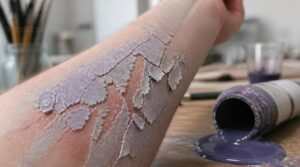
That "non-toxic" label on your paint bottle feels reassuring, right? Turns out it’s not telling you what you think it’s telling you. Let’s break down what that label actually covers, and where it leaves your skin hanging.
ASTM Art Material Labeling
That "Conforms to ASTM D4236" line on your paint bottle? It just means a toxicologist reviewed it and listed hazard components, with safe handling instructions for art use, not skin contact. Non-toxic labeling covers inhalation and accidental contact only.
Nothing here certifies dermal safety, no matter how gentle the paint feels going on.
Art-Safe Versus Cosmetic-Grade
Here’s the real split: cosmetic-grade paints use FDA-approved pigments tested for skin, while art acrylics use craft pigments never evaluated that way.
Formulas differ too, glycerin or silicone bases versus acrylic polymer.
That’s why cosmetic paint wears 4-8 hours and washes off in minutes, but craft paint fades fast and fights you on removal, sometimes leaving skin irritated.
Prolonged Skin Contact Remains Untested
Even cosmetic-grade paints get sensitization checks under EU rules. Craft acrylics never do.
Nobody’s tested what happens after 6+ hours of skin absorption with these chemical mixtures. That’s the real regulatory gap.
Some people react on exposure ten, not exposure one. A dermatologist warning: sensitization risk stays unknown until it isn’t, and no barrier cream fixes an untested formula.
Why Mixing With Lotion Fails
So people try thinning acrylic with lotion, hoping it’ll behave. It doesn’t. Lotion is an oil-in-water emulsion, and paint’s chemical binders wreck that balance fast.
Result? Separation, grainy residue buildup, uneven application.
Why it backfires:
- Emulsion instability causes patchy coverage
- Friction irritation spikes as it dries stiff
- Your skin barrier loses moisture, not gains it
Patch Tests Cannot Guarantee Safety
Some artists swear by patch testing acrylic paint first. Bad idea.
Patch tests have poor sensitivity, around 11-38%, meaning false negatives happen often. They also miss allergens outside the tested panel, and vehicle concentration changes everything.
Reactions can show up late, sometimes days after exposure. A clear patch test isn’t a universal safety check. Stick with cosmetic grade paint instead.
How to Remove Acrylic Paint From Skin Safely
So you got paint on your skin anyway. It happens to the best of us, lol. Here’s exactly how to get it off without wrecking your skin in the process.
Wash Wet Paint Immediately

Got paint on you? Move fast. Acting within the first minute stops it from sinking into pores. Grab warm water (100-110°F) and mild soap, work in gentle circles for 30-60 seconds, then check for residue. Warm water effectiveness beats cold every time. Skip the scrubbing, that just causes skin irritation.
Loosen Dried Paint With Oil

Once paint dries, it turns into a stubborn plastic film. That’s when oil becomes your best friend.
- Baby oil or vegetable oil, massaged in circles
- Let it sit a minute to soften the film
- Wipe gently, don’t scrape or peel
- Wash with soap after, oil leaves residue
Sensitive skin? Patch test first, lol.
Avoid Acetone and Harsh Scrubbing

Reaching for nail polish remover? Don’t. Acetone is way too harsh for skin and strips natural oils fast, leaving you dry and more irritated than before.
Skip the scrubbing too. Friction-free removal beats aggressive rubbing every time.
Stick with mild soap and a warm water rinse. Gentle cleansing protects sensitive skin and keeps your barrier intact.
Moisturize After Paint Removal

Bare skin after a mild soap wash and warm water rinse feels tight, right? That’s your barrier waving a white flag.
Grab a fragrance-free moisturizer and work it in while skin’s still damp, locking in hydration before it evaporates.
Skin recovery takes consistency, not a one-time slap of lotion. Keep moisturizing daily until:
- Redness fades
- Tightness disappears
- Skin feels normal again
When to Seek Medical Help
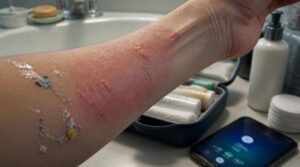
Most paint reactions calm down with soap, oil, and moisturizer. But watch for swelling, blistering, or a spreading rash, that’s contact dermatitis or an allergic reaction needing medical consultation.
Real emergencies? Trouble breathing, chest pressure lasting two minutes or more, sudden confusion, or fever above 103°F. Any of those, don’t wait around. Call 911.
What Can You Use Instead?
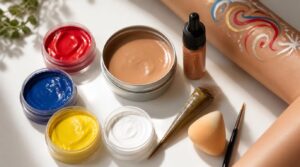
Okay, so acrylic’s off the table. Good news? You’ve got way better options built for actual skin. Let’s break down what pros grab instead, and why each one earns its spot in your kit.
Water-Based Face and Body Paints
Water-based face paint is your safest bet, hands down. Brands like TAG and Kraze are cosmetic-grade, hypoallergenic, and nontoxic by real safety testing standards, not just art-label loopholes.
Removal is a breeze, just soap and water, no oil-loosening needed. Color longevity is solid for a few hours, though it may need touch-ups if you’re sweating it out at a festival.
Alcohol-Activated Special Effects Paints
Want durability that laughs at sweat and water? Alcohol-activated paints (think EBA, Encore) use isopropyl alcohol to dissolve pigment into a flexible, waterproof film.
- Long-lasting wear for events
- Strong pigment payoff
- Quick-drying finish
They’re cosmetic-grade for skin, but alcohol vapors can irritate eyes, so work in ventilated spaces and always patch-test first.
Oil-Based and Metallic Body Paints
Craving that liquid-metal shimmer? Oil-based MetallicPaint blends alkyd resin binders with aluminum flakes sized 100-625 microns, oriented parallel during application for max sparkle. They’re creamy, flexible, and cure in 24-72 hours.
Skip loose aluminum powder though, fine dust under 100 microns is a combustible hazard. Stick to cosmetic-grade brands like Wolfe FX or Kryolan for real SkinSensitivity safety.
Natural Henna and Patch Testing
Metallics not your vibe? Try henna instead. It’s ground from Lawsonia inermis leaves, staining skin naturally without synthetic chemicals.
Always patch test first: dab paste on your inner elbow, wait 48 hours, watch for redness or itching.
- Check for swelling or blistering
- Wait a full 48 hours minimum
- Test inner wrist or behind ear
- Skip "black henna" (PPD risk)
- Retest even if previously safe
Choosing Cosmetic-Grade Skin Paints
Henna’s great, but if you want reliable color every time, go cosmetic-grade for face painting. Check labels for FDA-compliant, non-toxic claims, real pigment quality, and easy removal. Compare brands like Wolfe FX or Kryolan against cheap costume kits.
Your skin sensitivity matters more than price. When in doubt, ask a dermatologist recommended option first.
Frequently Asked Questions (FAQs)
What kind of paint is safe on skin?
Stick with cosmetic-grade, water-based paints. They’re FDA-approved, use natural pigments and hypoallergenic binders, and rinse off easily. Always do a quick patch test first, since even nontoxic labels don’t guarantee your skin will love it.
What type of paint can you put on your body?
Forget the craft aisle, your skin deserves better than a hardware-store shortcut.
Go cosmetic-grade: water-based face paints, alcohol-activated body paints, oil-based metallics, or natural henna. All nontoxic, skin-tested, and worlds safer than acrylic paint.
Can I put acrylic paint on my lips?
Please don’t. Lips are thin and sensitive, so acrylic paint risks dryness, peeling, and contact dermatitis fast. Swallowing flakes is a real ingestion danger too. Grab FDA-approved cosmetic-grade lip-safe paint instead, and always patch test first.
Is acrylic paint safe to lick?
Old-school VHS warnings had it right: don’t swallow this stuff. Ingestion risks include vomiting, throat swelling, and heavy metal absorption from cadmium or lead. Even "non-toxic" labels don’t cover licking. Stick with FDA-approved cosmetic paints instead.
Can you use acrylic paint on skin?
Short answer: no. Acrylic paint isn’t cosmetic-grade, skips FDA cosmetic rules, and can trigger skin sensitization. Even "non-toxic" labels won’t protect your skin barrier, so save the acrylics for canvas and grab real face paint instead.
Can you use acrylic paint on hands?
Painting your hands with acrylic is like dipping them in liquid plastic wrap. Skin absorbs chemicals fast, causing allergic contact dermatitis and long-term damage.
Wash immediately, wear gloves, and switch to cosmetic-grade paints made for real skin contact.
Is it safe to use acrylic paint on the face?
Nope. Your face isn’t canvas. Acrylic clogs pores, irritates sensitive skin, and can’t be removed without pain. Skip it entirely and grab cosmetic-grade face paint instead, it’s FDA-compliant, gentler, and made for actual skin contact.
Can you use acrylic paint on a canvas?
Canvas and acrylic are like old dance partners who already know each other’s steps. With proper priming, stretching, and layering, acrylic paint adhesion is excellent, unlike skin, where the same chemistry turns risky fast.
Is it safe to use acrylic paint on your skin?
Straight up, no. Dermal absorption of pigments, chronic skin barrier disruption, and allergic contact dermatitis are real risks. That "non-toxic" label is misleading, it covers ingestion, not skin. Stick to FDA-approved, cosmetic-grade paints for face and body.
What paint is safe to use on skin?
Your skin’s a barrier, not a canvas. Go cosmetic-grade, FDA-approved picks like Mehron, Ben Nye, or Wolfe FX. They’re water-based, patch-test friendly, gentle on sensitive skin, and rinse off easy with soap and water.
Conclusion
Your skin isn’t just a canvas, it’s a living, breathing organ that remembers every chemical you press into it, practically forever. So, can you use acrylic paint on skin? Not if you value comfort over convenience.
Grab formulas built for bodies, not walls, and your next design becomes pure joy instead of itchy regret. Real artists know the swap costs nothing but saves everything. Paint smart, wear it proud, and let your skin thank you later.