This site is supported by our readers. We may earn a commission, at no cost to you, if you purchase through links. This content is for general informational and educational purposes only and is not a substitute for professional medical, dermatological, or nutritional advice.
Vinegar can wreck a good set of clippers in under two minutes. Leave carbon steel or plated blades in acid, and corrosion starts before you’ve finished rinsing.
Yet vinegar earns its reputation. It dissolves hair oils and mineral film that clog teeth and drag on your cut. Cleaning clipper blades with vinegar solution tips start with one rule: control the contact. A 50:50 mix, 60 seconds, and a thorough rinse protect stainless steel. Skip any of those, and you’ll trade buildup for pitting.
Here’s how to check your blades, mix the solution, dry them right, and know where vinegar stops working.
Table Of Contents
- Key Takeaways
- Check Blade Compatibility Before Using Vinegar
- Mix Vinegar Cleaning Solution Without Overconcentrating
- Clean Clipper Blades With Vinegar Safely
- Dry and Oil Blades After Vinegar Cleaning
- Vinegar Cleaning Does Not Replace Blade Disinfection
- Frequently Asked Questions (FAQs)
- How often should clipper blades be cleaned with vinegar?
- Can apple cider vinegar replace distilled white vinegar for cleaning?
- What should I do if blades show rust spots?
- How do I know when blades need replacing?
- What liquid do barbers use to clean clippers?
- Is hydrogen peroxide good for cleaning clippers?
- Conclusion
Key Takeaways
- Check your blade material before anything else, because stainless steel handles brief vinegar contact while carbon steel and coated blades corrode, so test a spare or skip the vinegar if the manual doesn’t say.
- Mix distilled white vinegar and distilled water 1:1 at most, soak the bare blades for no more than 60 seconds, and rinse until the smell is gone, or you’ll trade buildup for pitting.
- Dry the blades fully, let them air dry for 60 to 90 minutes, and only then add a drop of clipper oil at each end and one in the center, because any trapped moisture means rust.
- Never treat vinegar as a disinfectant, since it only dissolves oil and mineral film, so use an EPA-registered disinfectant or 70% isopropyl alcohol on your blades after every client.
Check Blade Compatibility Before Using Vinegar
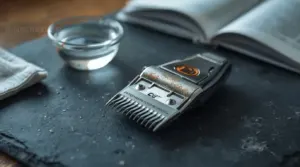
Before you commit to a vinegar soak, find out what your blades are made of. Acid doesn’t care how much you paid for the clipper, and it will eat through the wrong finish fast.
Start with the manufacturer’s manual or website. Check model compatibility for any warning about acidic cleaners. Plenty of clippers ship with specialty alloys or platings, and some of those coatings strip off in minutes.
If you’re buying a first trimmer, a beard trimming kit for teenagers often bundles a cleaning brush and care guidance suited to the blades.
Stainless steel tolerates brief exposure well. Carbon steel and coated blades don’t. They corrode, dull and lose their protective finish.
If the manual is silent, test a spare blade or skip vinegar entirely. Never gamble on your best set. Good blade maintenance starts with knowing what you’re putting on the metal itself.
Whichever cleaner you use, dry the blades thoroughly afterward, since preventing rust after cleaning depends on removing all moisture before you oil and store them.
Mix Vinegar Cleaning Solution Without Overconcentrating
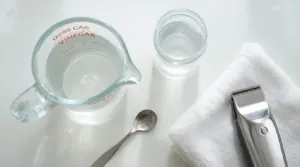
Once you’ve confirmed your blades can take it, mix the solution before anything touches the metal. Pour equal parts distilled white vinegar and water into a clean container. That 1:1 dilution ratio is your ceiling. Go stronger and you invite pitting and rust, because acidic residue holds moisture against the steel.
Use distilled or filtered water. Hard tap water reacts with acid and leaves mineral deposits on the teeth, which ruins the point of cleaning.
Never pour undiluted vinegar straight onto a blade. Undiluted vinegar can pit the metal within minutes.
A 1:4 vinegar-to-water mix is much gentler, and this DIY razor blade cleaning solution recipe covers the safe soaking details.
Mix a fresh batch every session. Old solution drifts in pH and cleans worse. A properly mixed vinegar solution looks clear, and your blades should show no discoloration or etching after brief contact.
Clean Clipper Blades With Vinegar Safely
You’ve mixed your solution, so now the cleaning starts. Two steps keep your blades safe: cutting the power and clearing hair first, then controlling how long the vinegar touches the metal. Work through both in order, because skipping either one costs you blade life.
Disconnect Power and Remove Trapped Hair
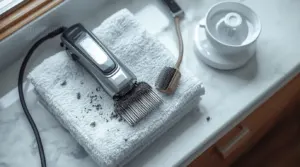
Unplug the clipper, switch it off, and set it on a dry towel. Cordless? Disconnect from the charger too. Never skip this, because one accidental start with fingers near the blades ends badly.
Next, detach the guard and blade head. Dump hair out of the housing, then use a cleaning brush to brush loose hair from between the blade teeth.
Limit Contact and Follow Rinsing Instructions

Now the vinegar soak. Dunk the bare blades in your 50:50 mix for 60 seconds maximum. Set a timer. Acid keeps eating metal whether you’re watching or not.
Then rinse under running water until the vinegar smell is gone. Skip that, and:
- Pitted teeth
- Rust spots
- Dull, snagging cuts
- Ruined blades
Never submerge the motor housing.
Dry and Oil Blades After Vinegar Cleaning
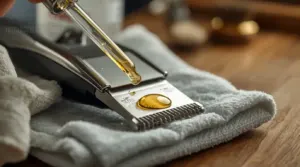
Vinegar leaves your blades clean, but it also leaves them wet and acidic. Two steps finish the job, and skipping either one invites rust and drag. Here’s what to do, in order.
Remove Moisture Before Reassembly
Vinegar leaves a damp film, and that film is where trouble starts. Shake off the bulk water, then pat every surface with a lint-free cloth.
Set the blades on a clean rack in a warm, dry spot and let them air dry for 60 to 90 minutes. Check the crevices and screws. Never reassemble a damp blade, or rust will follow.
Lubricate Blades With Clipper Oil
Apply clipper oil only after the blades are fully dry. Oil won’t push out leftover water, and moisture under the film invites rust.
Put one drop at each end of the blade teeth and one in the center. Run the clippers for a few seconds to spread it, then wipe off the excess. Never overdo it. Extra oil collects hair and debris. If you’re stocking up, a light mineral-based clipper blade oil spreads thinly, so a single drop goes a long way.
Use only the oil your manufacturer approves.
Vinegar Cleaning Does Not Replace Blade Disinfection
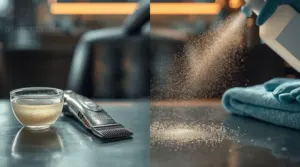
But vinegar smells sharp and feels harsh, so it must kill germs, right? It doesn’t. Vinegar cleaning dissolves hair oils and mineral film, nothing more. At roughly 5% acetic acid, it can’t reliably destroy bacteria, viruses, or fungi.
A sour smell and a harsh feel might suggest strength, but vinegar only strips grime and never kills the germs that matter
Use an EPA-registered disinfectant after every client. Spray or dip the blades, then respect the label’s contact time, which varies by product. Isopropyl alcohol at 70% also works on clean metal.
Skip it and you risk:
- Ringworm spreading from one scalp to the next
- Staph infections that turn a simple fade into a clinic visit
- A client’s trust, gone after one bad rash
- Your shop’s reputation, ruined by a single complaint
Regulations demand blade disinfection between clients. Vinegar never satisfies that rule.
Frequently Asked Questions (FAQs)
How often should clipper blades be cleaned with vinegar?
Clean blades are a quiet promise of precision, and buildup breaks it. Do a vinegar soak weekly, or after every 10 to 15 cuts. Always rinse, dry, and oil. Never skip rinsing or rust follows.
Can apple cider vinegar replace distilled white vinegar for cleaning?
Apple cider vinegar will clean your blades, though it brings sugar and color to a job that needs neither. Strain it, dilute it, and rinse thoroughly. White vinegar is stronger and cleaner, so choose it first.
What should I do if blades show rust spots?
Rust is a slow confession of neglect. Stop using the clippers now. Dab diluted white distilled vinegar on spots only, five minutes max, then scrub softly, rinse, dry fully and oil. Deep pitting? Replace blades.
How do I know when blades need replacing?
Replace blades when cleaning, oiling, and sharpening don’t fix the problem. Watch for snagging, repeated passes, track marks, chipped teeth, or deep rust. Rough running and heat mean wear. Expect 4-6 months with regular use.
What liquid do barbers use to clean clippers?
Barbers use Barbicide, diluted 2 oz per 32 oz of water, as their blade disinfectant. Ten minutes submerged.
Cleaning hair clippers quickly? A vinegar soak works briefly. Rinse, finish drying it fully, add clipper oil.
Is hydrogen peroxide good for cleaning clippers?
A single 3% peroxide soak can leave a faint orange bloom on steel within a day. Hydrogen peroxide disinfects, but it corrodes blades and strips coatings. Use alcohol instead, and never soak your clippers.
Conclusion
Check the metal. Mix the solution. Time the soak. Rinse, dry, and oil every blade. Each step protects the steel, and skipping one costs you the edge.
Use these cleaning clipper blades with vinegar solution tips as a routine, not a rescue. Fifty-fifty, sixty seconds, and a rinse remove oil and mineral film without pitting the metal. Vinegar cleans, but it never disinfects. Finish with blade disinfectant, and your clippers will cut clean for years.