This site is supported by our readers. We may earn a commission, at no cost to you, if you purchase through links. This content is for general informational and educational purposes only and is not a substitute for professional medical, dermatological, or nutritional advice.

A shaving brush spends its life in the wettest corner of your house. Every morning it gets soaked, shaken, and parked beside a sink where steam never fully clears.
That’s why shaving brush handle materials explained properly matter more than looks. Wood can swell and crack without the right finish. Resin shrugs off water but yellows in direct sun. Metal adds heft that changes how the brush moves across your face. Size and shape decide whether your wrist feels fresh or tired by the tenth stroke.
Here’s how each material behaves, how to pick a handle that fits your hand, and how to keep it looking sharp.
Table Of Contents
Key Takeaways
- Wood feels warm and grippy, but it only survives a wet bathroom if it’s a water-resistant species or sealed with a penetrating oil finish, and it needs a fresh coat of food-safe oil every few months.
- Resin and acrylic handles never absorb water, so they need almost no upkeep, but you’ll want to keep them away from direct sunlight and hot water, which can yellow or damage them.
- Metal adds weight that steadies your control while lathering, though heavy or polished handles can tire your hand or turn slippery when wet.
- Pick your handle by fit, not looks: aim for a diameter of 20 to 25mm and a length that matches your grip, then rinse, shake out, and store the brush upside down on a stand whatever the material.
Wood Shaving Brush Handles: Finishes and Properties
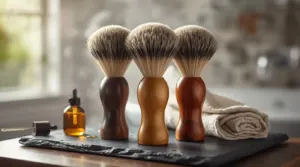
Wood grips give a brush warmth, grip, and a natural feel that few other materials match. Species differ in how they handle water, though. African Blackwood resists moisture on its own, so it copes well with a damp bathroom. Thuja wood gets a unique sealing process that makes it thoroughly water resistant.
If you’re picking your first brush, this beginner’s guide to shaving brushes shows how handle materials like wood, metal, and resin compare.
Briar burl is another favorite. Pipe makers use it, and brush makers borrow it for the reddish-brown color and vivid grain.
Finish matters as much as species. Penetrating finishes like tung oil, linseed oil, and Danish oil soak into the wood. They protect the fibers and keep the wood looking natural. If your brush lives near the sink, sealed hardwood or oil sealed wood is the safer bet.
Resin and Acrylic Handles: Water-Resistant Options
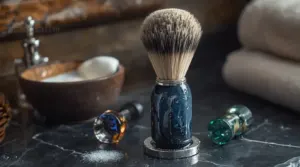
If you’d rather skip the finish question altogether, look at resin grips. They don’t absorb water, so they never swell, crack, or warp the way wood can. An acrylic grip behaves the same way. Rinse it quickly after use, wipe it down every now and then, and that’s the whole routine. No oiling, no sealing.
Resin and acrylic handles repel moisture entirely, so they stay stable for years with nothing more than a rinse
That low upkeep is why premium brushes often use both materials. They hold bold colors and fine detail well, and they feel lightweight and balanced in your hand. Unlike metal, they never turn cold on a chilly morning. Plastic grips are also affordable and come in a wide range of colours and styles, which makes them easy to match to your taste.
One thing to watch is sunlight. Direct UV exposure can turn the material brittle and yellow over time, so store your brush well away from any window.
Metal Shaving Brush Handles: Weight and Durability
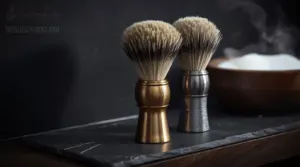
If resin feels too light for your taste, metal grips sit at the other end of the scale. They bring heft, and that weight shifts the brush’s balance toward your palm, which can give you steadier control while you build lather.
Weight varies by metal:
- A stainless steel grip is usually the heaviest and shrugs off moisture without a thin coating.
- A plated brass grip weighs around 100 grams and gains character as it ages.
- An aluminum grip is anodized, light, and scratch resistant.
- Chrome plating resists tarnish, while nickel looks warmer.
- Polished metal gets slippery when wet, so choose texture if you grip loosely.
Heavy brushes can tire your hand over a long session, so match weight to your habits.
If you’re often traveling, compare the brush size and weight in these beard grooming kits for men on the go before choosing.
Choosing Handle Size, Shape, and Grip
Weight is only half the story. Once you know how heavy you like your brush, fit comes down to length, thickness, and shape.
Start with length. Brushes over 70mm give larger hands more reach, while anything under 50mm suits detailed, precise work. A handy rule is to aim for 80 to 100 percent of your grip circumference.
Once you’ve settled on a size, this wet shaving guide helps you compare badger and synthetic bristles and handle styles.
Diameter matters just as much. Most hands do well with 20 to 25mm. Go thicker and your hand tires. Go thinner and the brush feels unstable.
Three quick checks before you buy:
- Measure the thickest point of the handle and compare it to your grip.
- Look for tapered or contoured shapes, which ease wrist strain.
- Pick the center of mass near the knot for easy pivoting.
Looks come last. Comfort wins over time.
Shaving Brush Handle Care by Material

You don’t need a special routine, but cleaning and maintenance should always fit the material.
Wood grips like a little oil. Rub in food-safe mineral oil every few months, let it soak in for hours, then wipe off the excess. After each shave, rinse with lukewarm water, shake the brush, and pat the handle dry so water doesn’t pool.
Resin grips shrug off water, but not heat. Use warm water, never hot, and squeeze gently from base to tip. Don’t twist or wring, because that can loosen the knot.
Metal grips need a quick wipe with a soft cloth to catch limescale before it hardens. A drop of Ballistol keeps corrosion away.
Whatever the material, always stand it upside down.
Frequently Asked Questions (FAQs)
Can a shaving brush handle be replaced or customized?
Is a brush handle really fixed for life? Not quite. Many brushes let you swap the knot, since it’s usually glued in. Resin grips can also be custom-made, so customization is easy.
How do handle materials compare for travel use?
You might think wood looks too fragile to pack. Fair, but treated woods like blackwood hold up well. Still, resin grips win for travel: light, water-resistant, and easy to rinse. Metal grips add weight and need drying.
Are handmade handles worth paying more for?
Sometimes, yes. Pay more if you want better grip and balance, sturdier finishes, and a handle shaped for your hand. Skip the premium if you only want function. Fancy materials add looks, not performance.
Conclusion
Wood warms the hand, resin wards off water, and metal gives the brush a steady, confident weight. Each one earns its place, and shaving brush handle materials explained simply come down to how you shave and what your bathroom puts them through.
Pick the one that truly suits your grip. Rinse it, shake it out, and let it dry on a stand. Do that, and your brush won’t just last. It’ll feel like it’s yours.