This site is supported by our readers. We may earn a commission, at no cost to you, if you purchase through links. This content is for general informational and educational purposes only and is not a substitute for professional medical, dermatological, or nutritional advice.
Your grooming routine isn’t just about looking sharp—it directly affects your skin’s health, comfort, and how long your results last. Men spend an average of 11 minutes per shaving session, yet many struggle with razor burn, irritation, or styles that don’t match their face shape or lifestyle.
The shaving vs trimming debate centers on a fundamental tradeoff: do you want the ultra-smooth finish that comes with a blade against skin, or the versatility and gentler approach of cutting hair to a controlled length? Your skin type, the area you’re grooming, and your tolerance for maintenance all factor into which method delivers better results.
Understanding how each technique works—and what it costs in time, money, and potential irritation—helps you choose the approach that fits your skin and style goals.
Table Of Contents
- Key Takeaways
- Shaving Vs Trimming: Key Differences
- Benefits of Shaving
- Benefits of Trimming
- Drawbacks of Shaving
- Drawbacks of Trimming
- Choosing Based on Skin Type
- Grooming for Different Body Parts
- Tools and Product Recommendations
- Cost and Maintenance Comparison
- Frequently Asked Questions (FAQs)
- Does trimming facial hair make it grow quicker?
- Is it better to trim or shave?
- Is shaving or trimming better for beard growth?
- What is the difference between trimmed and shaved?
- When should you trim or shave a beard neckline?
- Is it best to trim or shave the pubic hair male?
- Can trimming cause ingrown hairs like shaving does?
- Which method is better for coarse hair?
- How often should I replace trimmer blades?
- Does shaving make hair grow back thicker?
- Conclusion
Key Takeaways
- Shaving cuts hair at skin level for a smooth finish but requires daily maintenance and increases risks of razor burn, ingrown hairs, and irritation—especially on sensitive skin or coarse hair.
- Trimming uses guarded blades to cut hair to a controlled length above the skin, offering versatile styling with significantly less irritation and longer-lasting results between sessions.
- Your skin type determines which method works best: sensitive skin responds better to trimming’s reduced friction, while those prioritizing smoothness over comfort may prefer shaving despite higher maintenance demands.
- Long-term costs favor trimming over cartridge razors—electric trimmers cost $60–$420 over three years compared to $514 for disposable cartridges, while also saving 4–34 hours annually in grooming time.
Shaving Vs Trimming: Key Differences
Before you pick up a razor or trimmer, it helps to know what sets them apart. Shaving and trimming work in fundamentally different ways, and understanding the basics can save you from unnecessary irritation or disappointment.
Let’s break down what each method actually does and how it achieves its results.
Definition of Shaving

Shaving removes your hair right at the skin surface using a razor or blade—it’s the go-to method for that clean-shaven look. The blade makes direct contact with your skin, cutting each strand flush, which means you’ll see regrowth within days. It’s different from trimming because it targets smoothness, not length control.
Shaving is a temporary solution, but many prefer it due to its accessibility and the ability to achieve a smooth result. However, it’s important to follow best practices to avoid potential side effects.
| Aspect | Shaving |
|---|---|
| Method | Blade cuts hair at skin level |
| Result | Smooth, hair-free surface |
| Tool | Razor with sharp blade contact |
| Regrowth | Visible within 1–3 days |
Definition of Trimming
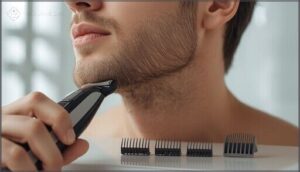
While shaving aims for bare skin, trimming is about controlled cutting to a shorter, uniform length without complete removal. You’ll use guards or adjustable settings—usually ranging from 0.4 to 20 millimeters—to keep visible hair on the surface. Think of beard trimming like a haircut for your facial hair: you’re reducing bulk and shaping outlines while maintaining stubble or length. A neatly trimmed beard helps improve your facial features and overall personality.
| Aspect | Trimming |
|---|---|
| Method | Blade cuts to preset length |
| Result | Visible hair remains above skin |
| Tool | Trimmer with guard attachment |
| Regrowth | Maintained every 3–21 days |
How Each Method Works

Behind the finish lies the blade’s journey. A razor glides directly across your skin, pulling and cutting each hair at or just below the surface through multiple passes—often with foam to reduce friction. Electric trimmer vs razor motion differs: trimmers use oscillating blades behind guards that lift and shear hair at a set distance, so you move slowly with the grain.
| Feature | Shaving Techniques | Trimming Techniques |
|---|---|---|
| Blade Mechanics | Fixed edge cuts at follicle | Oscillating blades behind guard |
| Cutting Action | Pulls hair, severs below surface | Scissors hair at preset length |
| Skin Contact | Direct blade-to-skin glide | Guard shields epidermis |
| Motion Patterns | Linear strokes, multiple angles | Slow passes with grain |
| Guard Systems | None (bare blade exposure) | Adjustable combs control length |
Benefits of Shaving

Shaving has earned its place in grooming routines for good reason—it offers benefits that go beyond just removing hair. From the silky-smooth finish to the way it brightens your complexion, there’s a lot to appreciate about this classic method.
Let’s break down what makes shaving stand out and why so many people stick with it.
Achieving a Smooth Finish
When you want skin that feels completely smooth to the touch, shaving is your go-to method. Here’s what makes it so effective:
- Removes hair right at skin level for maximum smoothness
- Takes about 11 minutes for a thorough session
- Works best on moist, softened skin
- Manual razors deliver closer results than electric versions
- Proper shaving technique prevents razor burn while maximizing smoothness longevity
You’ll notice the difference immediately, though your skin sensitivity matters when choosing your approach.
Skin Exfoliation and Brightness
When your blade glides across skin, it removes not just hair but also the outermost layer of dead cells, delivering exfoliation that trimming can’t match. Shaving produces brightness by revealing fresher skin underneath, though this exfoliation intensity comes with trade-offs. Your skin becomes more receptive to product absorption after each pass, but UV sensitivity increases, and tone risks like post-inflammatory hyperpigmentation may emerge if you’re not careful with technique and sun protection.
| Shaving Effect | Immediate Result | Caution Needed |
|---|---|---|
| Exfoliation intensity | Removes surface layer | May disrupt barrier |
| Radiance perception | Brighter, smoother look | Requires proper technique |
| Product absorption | Enhanced skincare uptake | Can increase sensitivity |
| Tone risks | Potential pigmentation | Demands sunscreen use |
Enhancing Facial Features
Without hair to hide behind, your bone structure becomes the focal point. Shaving vs trimming becomes a strategic choice when you consider how facial hair affects feature perception. Research shows clean-shaven faces make symmetry and cheekbone prominence more visible, while bearded styles reshape jawline definition. Here’s what changes:
- Facial symmetry becomes fully exposed, amplifying or revealing underlying balance
- Perceived masculinity shifts based on whether hair masks or enhances jaw angles
- Age perception drops by 5–10 years when you remove a full beard
- Cheekbone prominence stands out more clearly without lower-face coverage
Benefits of Trimming

Trimming gives you a different set of advantages that make it the go-to choice for many who want control without the commitment of a bare finish.
It’s especially useful if you’re working with sensitive skin or prefer a grooming routine that doesn’t eat up your morning.
Let’s look at what makes trimming stand out.
Customizing Hair Lengths
Trimming lets you dial in exactly the beard length you want. Guard systems on trimmers start around 0.5 mm for a shadow of stubble and climb past 20 mm for fuller growth. Precision adjustment dials deliver increments as fine as 0.1 mm, so you can fine-tune aesthetic outcomes for different face shapes.
Market trends show devices now bundle multiple guards, giving you real control over your look.
Versatility in Beard Styles
Beard style trends enable expression in ways shaving can’t match. Trimming lets you shift from 3 mm stubble to a 12 mm boxed beard—each length creates a different impression. Professional barber techniques like under-shaved lines and angular fades shape jawlines and emphasize face shape matching.
You can rock hybrid hair-beards that blend seamlessly, maintain designer stubble, or go full. Data shows 46.3% of women prefer natural beards with trimmed lines, proving beard length preferences favor maintained styles over bare skin.
Nearly half of women prefer natural beards with clean trimmed lines over bare skin, making maintained styles the clear favorite
Reduced Skin Irritation
Your skin faces less trauma when you keep hair slightly above the surface. Clinical studies show shaving technique with direct blade contact raises dryness and inflammation markers, while device impact matters—electric trimmers with guards minimize friction and razor burn.
For sensitive skin prone to ingrown hairs, trimming beats close shaving vs. trimming debates. Post-care routine becomes simpler, and product choice shifts from healing irritation to maintaining comfort.
Drawbacks of Shaving

Shaving delivers that clean, polished look many people want, but it’s not without its trade-offs. The method can be tough on your skin and requires more upkeep than you might expect.
Here are the main drawbacks you’ll want to think about before reaching for that razor.
Shaving can offer temporary relief by removing flakes, but as this guide on whether shaving your head gets rid of dandruff explains, the underlying scalp condition often returns once hair grows back.
Risk of Razor Burn and Irritation
Ever notice that sting after a fresh shave? Razor burn and skin irritation are common pitfalls, especially when shaving technique slips or product irritation creeps in. Compared to trimming benefits, shaving vs trimming often means more redness, bumps, and discomfort. Mitigation strategies, like better razor design and gentle products, can help—but the risk is always lurking.
- Red, burning sensation
- Itchy bumps or razor burn
- Painful nicks and cuts
- Allergic reactions to shaving products
- Lingering discomfort after shaving
Frequent Maintenance Needs
That raw sting after shaving isn’t the only hassle—quick regrowth means you’re right back in front of the mirror, sometimes daily. Stubble shows up fast, no matter your beard length or growth rate.
Compared to trimming, shaving demands a bigger time commitment and constant tool upkeep. Routine frequency is high, making beard maintenance feel like a never-ending grooming routine.
Potential for Cuts and Nicks
That constant upkeep isn’t the only headache—shaving with a blade brings the real risk of nicks and cuts, especially around the neck or throat. If your technique slips or the blade dulls, you’re more likely to break skin. Consider these factors:
- Blade Sharpness
- Shaving Technique
- Skin Sensitivity
- Anatomical Location
- Infection Risks
Drawbacks of Trimming

Trimming has its own set of challenges you’ll want to keep in mind. While it’s convenient, it doesn’t always deliver the same results as shaving.
Here’s what you might notice when you choose trimming over a close shave.
Less Smooth Finish
Although trimming gives you control over your beard style, it leaves stubble visible and the hair texture more pronounced. Tactile smoothness simply can’t match shaving—visual assessment shows increased roughness, and most users notice lingering stubble. If user satisfaction means a “baby butt smooth” finish, trimming falls short.
Shaving vs trimming comes down to how much stubble visibility you’re willing to accept.
Potential for Uneven Hair Length
Stubble’s roughness is one thing, but uneven beard length is another beast. Technique consistency matters—skip a pass, and you’ll spot patches where hair sits longer.
Device precision, guard size, and blade quality all play a part. Jawline contours and hair patterns can trip up even seasoned hands, making trimming techniques and benefits a balancing act in Shaving vs Trimming.
Limitations for Certain Styles
When your grooming goals involve high-detail work—think Van Dyke beards or chin straps—trimming hits a wall. You need skin-level precision for sharp edges and clean necklines, something trimmers can’t deliver.
Texture limitations show up fast with coarse hair, and professional standards in formal settings often demand that razor-sharp contrast.
Style precision suffers when maintenance constraints prevent the definition shaving provides in beard styles requiring exact beard length control.
Choosing Based on Skin Type

Your skin type isn’t just a minor detail—it’s the deciding factor in whether shaving or trimming will work with you or against you. If you’ve dealt with irritation, redness, or those stubborn ingrown hairs, you already know that one size doesn’t fit all for grooming.
Let’s break down how to match your method to your skin’s specific needs so you can avoid the common pitfalls and get consistently clean results.
Sensitive Skin Considerations
If you’re dealing with sensitive skin, trimming usually wins the grooming battle. Nearly 60% of men experience skin irritation in sensitive areas after shaving, while trimming reduces razor burn risk considerably. Here’s why dermatologist recommendations often favor trimming for sensitive skin:
- Product ingredient sensitivity matters less—you’re skipping direct blade contact and harsh shaving creams that compromise your skin barrier health
- Irritation prevention tips become simpler with electric trimmers, which cause fewer cuts than safety razors
- Post-grooming recovery time drops dramatically since blade non-contact minimizes micro-trauma
For grooming sensitive skin, trimming offers gentler maintenance.
Managing Ingrown Hairs
When you’re battling ingrown hairs, trimming beats shaving—60% of people who shave pubic hair deal with this painful problem. If you must shave, razor selection matters: single-blade options reduce irritation by half compared to multi-blade cartridges that cut below the surface.
Exfoliation techniques twice weekly help free trapped hairs, while adjusting your trimming frequency to every few days prevents hair from curling back into skin.
Hypoallergenic Tool Options
If you have sensitive skin or a nickel allergy, hypoallergenic grooming tools make all the difference. Look for electric trimmers with titanium-coated or ceramic blades—these material innovations cut irritation by up to 67%. Nickel alternatives and specialized foil design further protect reactive skin.
Rounded blade tips reduce micro-abrasions by 72%, while dermatological claims backed by testing guarantee your razor or trimmer won’t trigger unwanted skin reactions.
Grooming for Different Body Parts

Your face isn’t the same as your chest, and your chest definitely isn’t the same as more sensitive areas down below. Each body part has different skin thickness, hair texture, and sensitivity levels that matter when you’re deciding between shaving and trimming.
Let’s break down how to approach grooming for your face, body, and pubic area so you can match the right method to each zone.
Facial Hair Maintenance
Your facial hair sets the tone for your entire look, so choosing between shaving and trimming matters more than you might think. If you’re after a clean-shaven appearance, shaving delivers that smoothness but demands daily grooming frequency and proper skin hydration to avoid irritation.
Trimming, on the other hand, lets you dial in beard style and length while keeping beard maintenance minimal—perfect for experimenting with hairstyle trends without the razor burn hassle.
Body and Pubic Hair Grooming
Regarding body grooming and the pubic area, manscaping has become mainstream—around three-quarters of U.S. adults now groom pubic hair. Understanding grooming prevalence, injury patterns, and STI associations helps you weigh shaving vs trimming for pubic hair smartly:
- Shaving razors account for roughly 83% of grooming-related injuries
- About 26% of groomers experience cuts, burns, or rashes
- Extreme groomers show higher self-reported STI rates in observational data
- Trimming causes less skin disruption than close shaving
- Method choice affects both injury risk and behavioral patterns
Behavioral patterns show high-frequency groomers maintain daily or weekly routines, while trimming offers a gentler alternative that reduces microscopic skin breaks without sacrificing neatness.
Matching Method to Area
Beyond the pubic area, every zone has its sweet spot. For facial hair, 44.79% of men stay clean-shaven, while 25.93% prefer a heavily trimmed stubble. When it comes to body grooming, it’s essential to match your approach to the sensitivity of each area. Trimmers are ideal for armpits and back, where irritation is more likely, whereas head hair and chest can tolerate razors well. A quality body groomer offers versatility, allowing you to customize your manscaping routine for different body parts without constantly switching tools.
| Body Part | Best Method |
|---|---|
| Facial hair | Shaving or trimming |
| Chest | Trimming preferred |
| Armpit hair | Trimming weekly |
| Back | Trimming only |
Tools and Product Recommendations

The tools you choose make all the difference in whether you’re happy with your grooming routine or fighting irritation every time. Electric trimmers and traditional razors each bring their own strengths to the table, and knowing what features matter most will save you time, money, and frustration.
Let’s break down what works, what to look for, and how to keep your gear in top shape.
Electric Trimmers Vs Razors
Choosing between an electric trimmer and a razor boils down to your routine and priorities. Electric trimmers offer flexibility—think Foil vs. Rotary heads, Corded or Cordless options, Wet/Dry Usage, and motor power for quick touch-ups.
Razors, on the other hand, excel at shaving techniques and benefits, delivering a closer finish but demanding more precision and care. Ergonomic design matters for both.
Features to Look For
If you’re weighing shaving vs trimming, pay close attention to blade material—ceramic blades cut down on irritation, while titanium lasts longer and feels lighter.
Battery life matters for cordless electric trimmers, especially if you travel. Length settings and guard size help you tailor your style.
Waterproofing lets you groom in the shower. Ergonomics keeps your grip steady, whatever your skin type.
Maintenance and Hygiene Tips
After picking the right blade and grip, don’t skip tool disinfection—clean razors every five to seven shaves, and soak trimmer blades after each use. Store everything dry and ventilated to prevent bacteria and rust.
Good hygiene compliance isn’t just about skin care; it’s infection prevention. Regular blade replacement and sharpness checks keep your grooming routine safe and effective.
Cost and Maintenance Comparison

When you’re weighing shaving against trimming, the costs and upkeep can make a real difference. Each method brings its own set of expenses and time commitments.
Here’s what you’ll want to think about before choosing your routine.
Upfront and Ongoing Expenses
Ever wondered how much your grooming routine really costs over time? Razor Cartridges Cost can quietly stack up, while Trimmer Blade Replacement is less frequent. Electric Shaver Costs vary upfront, but Long-Term Savings favor trimmers. For practical Grooming Budgeting, compare these figures:
| Method | Upfront Cost | Annual Cost | 3-Year Total |
|---|---|---|---|
| Cartridge Razor | $10 | $182 | $514 |
| Electric Shaver | $50–$150 | $28 | $235 |
| Trimmer | $19–$400 | $0–$20 | $60–$420 |
| Safety Razor | $30 | $83 | $280 |
Time Investment for Each Method
Your grooming routine demands different time commitments depending on your method. Manual shaving usually takes 5–10.9 minutes per session and requires near-daily touch-ups, while trimming sessions last 15–30 minutes but only need weekly attention. Electric efficiency shifts the balance—electric shavers cut prep time considerably, and trimmers handle body grooming in under an hour monthly.
| Method | Session Duration | Frequency | Annual Hours |
|---|---|---|---|
| Manual Shaving | 5–11 minutes | 4–7×/week | 17–60 |
| Electric Shaving | 3–5 minutes | 4–7×/week | 10–30 |
| Beard Trimming | 15–30 minutes | Weekly | 13–26 |
| Body Trimming | 30–60 minutes | Monthly | 6–12 |
| Full Grooming | 60+ minutes | Quarterly | 4–8 |
Longevity of Results
When you factor in regrowth visibility, shaving delivers smoothness that fades within 1–3 days—facial stubble reappears at 0.3–0.5 millimeters daily. Tactile vs visual differences matter—shaving feels smooth briefly, while trimming preserves a groomed look longer between sessions.
Trimming style maintenance stretches further: short beards hold their shape for 2–3 weeks, long beards 6–8 weeks.
| Hair Removal Method | Maintenance Frequency | Visible Regrowth | Result Longevity |
|---|---|---|---|
| Shaving | 1–2 days | 24–48 hours | 1–3 days |
| Short Trimming | 2–4 days | 2–4 days | Several days |
| Medium Beard Trim | 2–3 weeks | 1–2 weeks | 2–3 weeks |
| Long Beard Trim | 6–8 weeks | 3–4 weeks | 6–8 weeks |
Frequently Asked Questions (FAQs)
Does trimming facial hair make it grow quicker?
No, trimming doesn’t speed up facial hair growth. Your follicles follow androgen-driven cycles set by hormones, not scissors. The stubble perception and blunt tips create a growth rate myth—trimming benefits appearance, not follicle health.
Is it better to trim or shave?
Your skin sensitivity and desired style should guide the choice. If you have sensitive skin, trimming reduces irritation by 50% compared to shaving.
For smoothness, shaving wins—but trimming offers versatility with less maintenance.
Is shaving or trimming better for beard growth?
Neither method actually speeds up your beard growth—that’s purely genetic. Shaving creates the illusion of thickness by leaving blunt ends, while trimming prevents hair shaft damage and keeps follicles healthier for ideal beard style maintenance.
What is the difference between trimmed and shaved?
Shaving removes hair at or very close to the skin surface, leaving a smooth, hairless finish.
Trimming shortens hair to a controlled length above the skin using guarded blades, maintaining visible hair that defines your style.
When should you trim or shave a beard neckline?
Picture the clean edge where beard meets neck—that crisp boundary defining your entire look.
Your neckline growth rate and skin sensitivity levels determine whether you trim for softer definition or shave below for sharp, polished grooming tool hygiene.
Is it best to trim or shave the pubic hair male?
Trimming pubic hair proves safer for most men, with scissors showing lower injury odds compared to shaving. Though 49% of men shave, trimming reduces cuts and irritation while maintaining cleanliness—a key concern for 75% of shavers.
Can trimming cause ingrown hairs like shaving does?
Here’s something that surprises most guys: trimming can cause ingrown hairs, though it happens far less often than with shaving.
The key difference? Trimmers don’t cut below your skin’s surface, which reduces irritation and curling risks.
Which method is better for coarse hair?
For coarse hair, trimming with an electric trimmer wins. It prevents ingrown hairs, reduces irritation, and manages hair texture without daily maintenance.
Razors struggle with coarse growth, causing razor bumps and skin sensitivity issues.
How often should I replace trimmer blades?
You should replace electric trimmer blades every 6 to 12 months for home use. Professional barbers doing daily haircuts need blade replacement every 3 to 6 months because heavy use accelerates wear.
Does shaving make hair grow back thicker?
No, shaving doesn’t make hair grow back thicker—that’s a hair regrowth myth refuted by dermatological evidence.
Stubble feels coarser because razors create blunt tips, but shaving has zero hair follicle impact on actual thickness or growth rate.
Conclusion
The grooming method you choose today sets the foundation for how your skin responds tomorrow—and the year after that. Whether the shaving vs trimming debate leads you toward blade-smooth results or controlled versatility, your decision should account for skin sensitivity, maintenance commitment, and the styles you want to achieve.
There’s no universal winner here. Match your tools to your tolerance, your routine to your skin type, and you’ll find the approach that actually works.