This site is supported by our readers. We may earn a commission, at no cost to you, if you purchase through links. This content is for general informational and educational purposes only and is not a substitute for professional medical, dermatological, or nutritional advice.
That half-empty bottle of shampoo lurking in your shower caddy might be older than you think. Most people assume hair products last indefinitely, tossing them only when the pump stops working or they finally commit to a new brand.
In reality, most formulas break down long before the bottle looks empty, which is why knowing how long shampoo actually stays effective can save your hair from expired ingredients.
The truth is, these formulations have a chemical shelf life that affects both their performance and safety. Preservatives break down, oils turn rancid, and water-based products become breeding grounds for bacteria when stored in steamy bathrooms.
Understanding expiration timelines isn’t about obsessive label-checking—it’s about getting the results you paid for and keeping your scalp healthy in the process.
Table Of Contents
- Key Takeaways
- How Long Do Hair Products Last?
- How to Read Hair Product Expiration Codes
- Factors Affecting Hair Product Shelf Life
- Tips for Extending Hair Product Longevity
- Can You Still Use Old Hair Products?
- Top 5 Popular Hair Products and Their Shelf Life
- Frequently Asked Questions (FAQs)
- When should you throw out hair products?
- How do you know when hair products expire?
- How long does hair product last in hair?
- How long do natural hair products last?
- What are some signs that a hair product has expired?
- How does storage affect my products?
- Do unopened hair products expire faster than opened?
- Can freezing hair products extend their shelf life?
- Are expired hair products safe for childrens use?
- Do salon products last longer than drugstore brands?
- Conclusion
Key Takeaways
- Most hair products stay effective for 6 to 24 months after opening, depending on their formulation—shampoos and conditioners typically last 12-24 months, while natural or preservative-free products expire faster at 6-12 months.
- Heat, humidity, and light exposure accelerate ingredient breakdown and microbial growth, so store your products in cool, dark, dry spaces away from steamy bathrooms to maximize their shelf life.
- The Period After Opening (PAO) symbol—that little open jar icon on packaging—tells you exactly how many months a product stays safe after you break the seal, and batch codes on the bottom reveal manufacturing dates to help you calculate remaining freshness.
- Trust your senses over arbitrary dates: if your product shows separation, smells rancid, changes texture or color, or develops mold, toss it immediately regardless of the PAO timeline, since degraded preservatives create real contamination risks.
How Long Do Hair Products Last?
Most hair products don’t come with a clear expiration date stamped on the bottle, which leaves you guessing about when to toss them. The reality is that shelf life varies depending on what you’re using and how you store it.
Let’s break down how long your products usually last once opened and why different formulas behave differently over time.
Shelf Life After Opening
Once you crack open your shampoo or conditioner, the clock starts ticking on its shelf life. Most opened hair products stay fresh for 6 to 24 months, depending on their formulation—that’s your Period After Opening (PAO) duration. You’ll usually find a PAO mark on the packaging, showing how many months you can safely use the product after breaking the seal.
Storage impact matters here: heat and humidity accelerate ingredient degradation, while contamination risks increase every time wet hands dip into a jar. Watch for practical indicators like odd smells or texture changes—they signal trouble.
Expired products are generally safe to use, but may lead to scalp irritation concerns.
Differences Between Product Types (shampoo, Conditioner, Styling, Oils, Gels)
Not all hair products age the same way. Shampoo and conditioner, which are water-based emulsions, generally carry PAO variance from 12 to 24 months—their preservative needs are higher because water content encourages microbial growth. Gels and styling products mirror shampoo timelines, usually around two years unopened.
Hair oils face a different challenge: oil rancidity becomes the limiting factor, though they often last 30 to 36 months unopened since they don’t support bacteria.
Aerosols? Aerosol stability gives them an edge—sealed packaging and low moisture extend their usable life, often matching or exceeding other product types. Because they’re water-based, shampoo can breed harmful germs.
How to Read Hair Product Expiration Codes
Most hair products don’t come with a traditional expiration date stamped on the bottle, which can leave you guessing about how long they’re actually good for. Instead, brands use symbols and codes that reveal how long your product stays fresh after you crack it open.
Here’s what to look for and how to decode the cryptic markings on your favorite bottles and jars.
Understanding The Period After Opening (PAO) Symbol
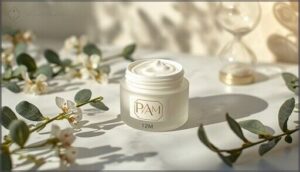
That little open jar icon you’ve spotted isn’t just decoration—it’s the Period After Opening (PAO) symbol, your post-opening safety clock. Understanding PAO marks means knowing how many months your product stays safe and effective once you break that seal. Here’s what the PAO mark tells you:
- 12M or 24M indicates months of reliable use after opening
- EU regulations require this symbol for consumer safety
- Testing methods validate each product’s specific PAO timeframe
Where to Find Expiration Indicators on Packaging
Now that you know what the PAO mark means, finding it takes a quick scan of your product’s packaging. Expiration dates and batch codes don’t hide in random spots—brands follow industry-standard placement rules. You’ll generally spot them in five key locations:
| Location | What to Look For |
|---|---|
| Primary Containers | PAO symbol near ingredients list on bottles, tubes; batch code on crimped ends or bottle bases |
| Outer Cartons | Expiration date on side panels or bottom flaps; EU requires marking on both box and inner container |
| Barcode Regions | “EXP” or “BBE” dates beside or under barcode; alphanumeric strings for tracking |
| Bottom Surfaces | Laser-etched codes on jar/bottle bottoms; ink-jetted lines on aerosol cans |
| Inserts Leaflets | “Refer to insert” book symbol on tiny packages; detailed durability info on enclosed cards |
Reading expiration codes gets easier when you check the bottom first—that’s where most manufacturers stamp production details and shelf-life indicators.
Decoding Batch Numbers and Manufacturing Dates
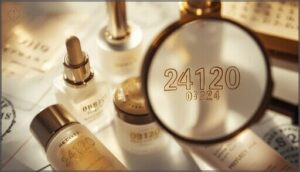
Batch codes look cryptic, but they reveal precise manufacturing dates when you crack their format. You’ll see numeric-only strings (24120 = day 120 of 2024), alphanumeric blends (factory letter + year + sequence), or straight date stamps (0324 = March 2024). Decoding tools online convert thousands of brands’ lot codes into production dates, helping you:
- Verify products weren’t manufactured 2–3 years before purchase
- Detect counterfeits when batch formats don’t match brand patterns
- Support stock rotation by prioritizing older inventory
- Enable complaint tracking by linking issues to specific production runs
Use batch decoders to calculate remaining shelf life and confirm your hair product hasn’t sat too long.
Factors Affecting Hair Product Shelf Life
Not all hair products age at the same rate, and understanding what speeds up or slows down that process can save you from tossing out perfectly good bottles—or worse, using something that’s already turned. The culprits usually fall into two categories: what’s inside the bottle and where you’re keeping it.
Let’s break down how ingredients and storage conditions play a major role in how long your products stay fresh.
Impact of Ingredients and Preservatives
Think of preservatives as your product’s defense system against invisible invaders. Synthetic preservatives like phenoxyethanol keep bacteria and fungi at bay for years, which is why conventional shampoos can sit unopened for so long. Natural alternatives sound appealing, but they offer weaker protection—organic products generally expire faster because plant extracts can’t match the preservative efficacy of their synthetic counterparts.
Regulatory limits cap preservative concentrations, balancing safety with effectiveness. Ingredient interactions matter too: your product formula’s oils, surfactants, and pH all influence how well preservatives work, directly affecting ingredient stability and shelf life.
| Preservative Type | Typical Shelf Life | Key Considerations |
|---|---|---|
| Synthetic (phenoxyethanol) | 2–3 years unopened | Broad-spectrum, stable across pH ranges |
| Natural (essential oils) | 6–12 months | Weaker antimicrobial coverage |
| Minimal/None | 3–6 months | High contamination risk |
Effects of Storage Conditions (light, Heat, Humidity)
Where you stash your bottles matters more than you’d think. Light degradation hits hard—UV rays alter lipid structures and cause blond hair to lose double the protein after extended exposure.
Heat exposure above 45°C accelerates preservative breakdown, and humidity at 80-90% breeds mold while reversing heat styling in just two hours. Temperature fluctuations between your steamy shower and cold countertop stress formulas further.
Combined risks multiply when bathroom storage exposes products to all three enemies simultaneously, shrinking that 12-24 month shelf life considerably. Your best move? Cool, dark, dry spaces away from water.
Bathroom storage hits hair products with heat, light, and humidity all at once—store them somewhere cool, dark, and dry instead
Tips for Extending Hair Product Longevity
You don’t have to watch your hair products expire before their time. A few smart habits can keep them fresh and effective much longer than you’d expect.
Here’s how to protect your products from the elements, contamination, and the slow march of time.
Proper Storage Practices
Temperature control and humidity impact are the cornerstones of proper hair product storage. Keep your bottles in a cool, dry cabinet—around 25 °C—away from bathroom steam and direct sunlight. Light exposure degrades active ingredients, while moisture invites microbial growth.
Maintaining packaging integrity by keeping lids tightly sealed protects your hair products from air and environmental contaminants, extending hair product shelf life considerably.
Avoiding Contamination During Use
Hand hygiene before each use is your first line of defense against contamination—washing with soap reduces bacterial growth in containers. Never share eye-area or scalp products; microorganisms from skin and mucous membranes transfer quickly.
Avoid direct contact by using pumps instead of dipping fingers into jars, and skip water dilution, which invites mold growth by weakening preservatives. Clean applicators regularly to prevent fungal growth.
Tracking Opening Dates and Usage
Manual recording wins when digital applications feel like overwork—83% of skincare users skip tracking entirely, and consumer habits mirror this with hair products.
Grab a Sharpie and mark your opened hair products’ expiration date directly on the label, or jot down opening dates in your phone’s notes. The Period After Opening (PAO) symbol gives you the countdown, but only if you remember when you cracked the seal.
Can You Still Use Old Hair Products?
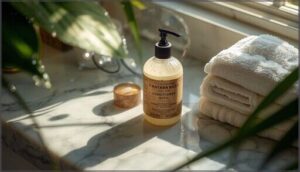
You’ve found an old bottle of conditioner in the back of your cabinet, and now you’re wondering if it’s still safe to use. The answer isn’t always straightforward—it depends on the product’s condition and how it’s been stored.
Here’s how to assess whether that forgotten hair product deserves a second chance or needs to go straight in the trash.
Assessing Product Quality and Safety
How do you know if that forgotten bottle deserves a second chance or a trip to the trash? Start by checking for telltale signs of expired products: texture changes like separation or clumping, odor alterations that smell rancid or sour, and visible color shifts all signal chemical degradation.
Product quality and product safety go hand-in-hand here because microbial contamination poses real safety risks, especially if you spot mold or notice unusual cloudiness.
Here’s your quick assessment checklist:
- Sniff test: Rancid or off smells mean breakdown products have formed
- Visual scan: Separation, discoloration, or mold growth
- Texture check: Clumping, thinning, or unusual consistency
- Time factor: Products beyond PAO recommendations carry higher contamination risk
When to Discard Vs. When It’s Safe
So when exactly should you toss that bottle? Discard immediately if you notice product separation, mold growth, or rancid odors—these sensory changes signal microbial risks that can cause scalp irritation or infection. Regulatory guidelines suggest eye-area products need replacement within 2-4 months, but hair products offer more flexibility.
Safe indicators include unchanged smell, consistent texture, and no cloudiness, especially if you’re within the PAO window and stored properly. Here’s the straightforward rule: expired products showing any physical or olfactory changes get binned, while stable formulas under 12-24 months opened can continue working safely for you.
Top 5 Popular Hair Products and Their Shelf Life
Not all hair products age at the same rate, and knowing what to expect from your go-to products can save you from using something past its prime. The formulation matters—treatments packed with proteins behave differently than oil-based serums or creamy leave-ins.
Here’s a breakdown of five popular products and how long they’ll actually stay fresh on your shelf.
1. Nexxus Amino Bond Intense Treatment
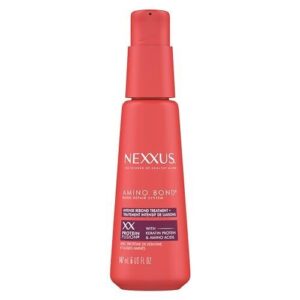
This leave-in treatment uses bond-building technology and a ProteinFusion blend to deliver damage repair in about three minutes. You’ll find a PAO symbol on the packaging, generally indicating a 12-month shelf life after opening.
The formula contains phenoxyethanol and iodopropynyl butylcarbamate as preservatives, which maintain stability across temperature fluctuations and pH ranges.
For routine integration, apply it to damp hair after shampooing, leave it in without rinsing, and store it away from humidity. Exceeding expiration dates risks preservative breakdown and microbial growth, even if you don’t see visible changes.
Best For: People with damaged hair from heat styling, chemical treatments, or breakage who want a quick leave-in treatment that repairs protein bonds without adding a lot of extra steps to their routine.
- Repairs multiple damage types in just three minutes with a patented bond-building system that targets protein loss at the molecular level
- Works as both a treatment and styling base, so you can leave it in and go without rinsing or waiting around
- Contains five specific amino acids plus keratin that replace what damaged hair actually loses, not just a surface coating
- Can weigh down finer hair types or make some people feel like they need to wash more often
- Might be overkill if you’re already getting good results from just the shampoo and conditioner in the line
- Preservatives break down after the expiration date even if the product looks fine, so you need to track when you opened it
2. Oribe Gold Lust Repair Shampoo
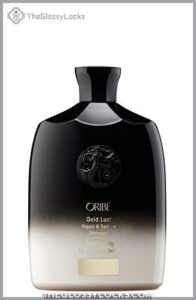
Oribe Gold Lust Repair Shampoo gives you a 12-month PAO duration once you crack the seal, though unopened bottles hold their quality for three years. The formula relies on BHT and caprylyl glycol to maintain ingredient stability, protecting botanical extracts like watermelon and edelweiss from breaking down.
Store this luxury shampoo away from sunlight and heat—humid bathrooms accelerate degradation. Tight closure after each use prevents microbial growth, and keeping water out of the bottle extends shelf life.
Most hair products follow similar patterns, but premium formulations deserve careful usage practices to justify their price.
Best For: Anyone with damaged, processed, or aging hair who wants a luxurious repair shampoo that gently cleanses while restoring moisture and shine.
- Balances the scalp and reinforces hair strength with a Bio-Restorative Complex that includes plant collagen, caffeine, and biotin
- Free from parabens, sulfates, and gluten, making it suitable for frequent use on various hair types
- Lasts 12 months after opening with proper storage, and the concentrated formula means you need only a small amount per wash
- Significantly more expensive than drugstore shampoos, which may not fit every budget
- Small 8.5 oz bottle size relative to the premium price point
- Results vary by user, and some people may not notice dramatic improvements in their hair condition
3. L’Oreal Elvive Total Repair Balm
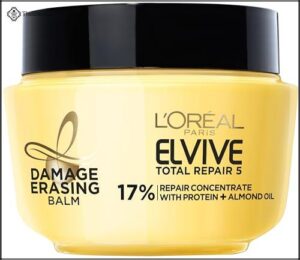
L’Oreal Elvive Total Repair Balm boasts a 12-month shelf life after opening, supported by a preservative system of phenoxyethanol, sorbic acid, and chlorhexidine that effectively controls microbial growth in its water-rich formula. The PAO symbol is located on the jar’s base, though the product is typically used within six months under normal usage patterns.
A 2024 repair claim lawsuit challenged the marketing claim of “one year of damage in one use,” but the ingredient safety remains solid. The preservative efficacy meets regulatory standards for rinse-out treatments, provided the product is stored properly and water contamination is avoided.
Best For: People with damaged, overworked hair from heat styling, color treatments, or chemical processing who want an intensive weekly mask that delivers immediate smoothness and shine.
- Delivers noticeable softness and shine in one use, with a 17% protein repair concentrate and almond oil that coat the hair shaft to reduce frizz and improve texture
- Strong preservative system ensures the product stays fresh and safe throughout its 12-month shelf life, even with repeated opening and bathroom humidity
- Works across different hair types and damage levels, from mildly dry to severely compromised strands, making it versatile for household sharing
- Some units arrive without safety seals, raising concerns about tampering or product integrity before first use
- Can feel heavy or greasy on fine or thin hair if too much product is applied, leading to limp or weighed-down results
- The “repairs one year of damage” claim is under legal scrutiny, as the formula provides cosmetic conditioning rather than biological repair of broken keratin bonds
4. Keratin Hair Serum Heat Protectant Oil
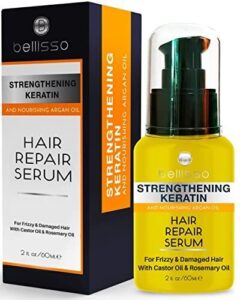
Your keratin hair serum heat protectant oil generally lasts 12 months after opening, though unopened bottles remain stable for 24 to 36 months when stored properly. The PAO symbol on the bottle indicates this timeframe, but hair oils face a real challenge: oxidation.
Heat exposure cuts oil stability in half within six months, while direct sunlight accelerates breakdown in three to six months. Cool, dark storage extends shelf life considerably, protecting those hair serums from premature product expiration.
Watch for rancid odors or reduced heat protection after nine months—these signal degradation.
Best For: Anyone with frizzy, damaged, or unmanageable hair looking for a multi-purpose treatment that smooths, protects from heat, and adds shine without weighing hair down.
- Works across multiple hair types and can be used three different ways—as heat protection before styling, a leave-in treatment for frizz control, or a deep conditioning pre-shampoo mask
- Sulfate-free and cruelty-free formula enriched with botanicals and keratin delivers noticeable softness and shine without that greasy, heavy feeling
- Helps reduce breakage and supports healthier hair growth over time, with many users reporting thicker, longer hair after consistent use
- The keratin scent doesn’t work for everyone—some find it unpleasant or too strong during application
- Results vary widely depending on hair condition, with less dramatic improvements for severe damage, extreme static, or very coarse textures
- Can leave oily residue on pillowcases or clothes if you apply too much or don’t let it fully absorb before bed
5. L’Oreal Elvive Total Repair Leave In
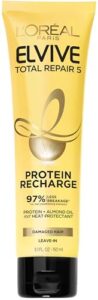
Your L’Oreal Elvive Total Repair Leave In stays effective for 18 months after opening—that PAO duration reflects solid formula stability from preservatives like phenoxyethanol and sorbic acid. Unopened bottles hold quality for roughly 30 months, though heat and humidity shorten that window fast.
Watch for degradation signs: off odors from oxidized fragrance, texture separation, or color shifts. Store this cream-based haircare in a cool, dark spot to lengthen shelf life.
Daily usage patterns mean most people finish the 5.1-ounce tube well before product expiration becomes a concern.
Best For: Anyone with damaged, dry, or heat-styled hair looking for an affordable daily leave-in that repairs split ends and protects up to 450 degrees.
- Lightweight protein and almond oil formula strengthens hair without weighing it down, leaving strands soft and easy to style
- High heat protection up to 450 degrees makes it perfect for frequent blow-drying, flat-ironing, or curling
- Long 18-month shelf life after opening means you’ll likely finish the bottle before it expires, even with occasional use
- Some users report it makes hair feel fluffy or stiff instead of smooth, so results vary by hair type
- The scent fades quickly and doesn’t last throughout the day
- May not provide enough moisture for extremely dry or coarse hair textures
Frequently Asked Questions (FAQs)
When should you throw out hair products?
Toss products showing spoilage indicators like texture changes, odor alterations, or separation signs. Mold growth means immediate disposal.
Most expired products lose efficacy after their shelf life, risking scalp irritation when product expiration occurs.
How do you know when hair products expire?
You can identify expired hair products through visual changes like separation or cloudiness, off smells signaling bacterial growth, texture shifts, color changes, and checking PAO indicators—though age matters most after three years.
How long does hair product last in hair?
Think your styling gel vanishes the moment you rinse? Product absorption varies wildly. Leave-in conditioners persist until your next wash, while gels hold 12+ hours.
Retention factors include hair type, humidity, and porosity—all affecting shelf life performance.
How long do natural hair products last?
Natural shelf life depends on preservatives—organic hair products with natural ones last 6-12 months opened, while preservative-free formulas spoil faster.
Synthetic comparison? Conventional products endure 18-24 months thanks to stronger product preservatives, and storage effects matter too.
What are some signs that a hair product has expired?
You’ve probably heard that expired hair products won’t harm you—but that’s only half true.
Visual changes like separation, odor shifts, texture breakdown, performance decline, and scalp reactions all signal spoilage, so don’t ignore them.
How does storage affect my products?
Storage conditions directly control how fast your hair products degrade. Temperature, humidity, light exposure, and packaging all influence contamination risk. Keep bottles sealed, away from direct sunlight and moisture for maximum longevity.
Do unopened hair products expire faster than opened?
Unopened hair products are practically immortal compared to opened ones—they last considerably longer, often 2–3 years.
Once exposed to air and handling, microbial risk skyrockets and chemical stability plummets, dramatically shortening shelf life.
Can freezing hair products extend their shelf life?
Freezing won’t reliably extend shelf life for hair products. Water-rich formulas like shampoos and conditioners can separate or lose texture when frozen and thawed, while cool (not freezing) storage slows degradation safely.
Are expired hair products safe for childrens use?
No—expired products carry heightened microbial contamination and allergic reaction risks. Pediatric skin absorbs irritants more readily, and regulatory guidelines plus expert recommendations emphasize consumer safety, advising immediate disposal to prevent bacterial infection.
Do salon products last longer than drugstore brands?
Concentration matters more than price tag. Professional hair care products pack higher active levels, so you’ll squeeze less per wash—cutting cost per use despite upfront sticker shock, while ingredient quality shapes product longevity.
Conclusion
Your bathroom shelf won’t police itself, but you can. Knowing how long hair products last gives you leverage—better results, fewer scalp surprises, and a routine that actually works.
The chemistry doesn’t care if you paid premium prices or snagged a bargain; once those preservatives degrade, performance follows.
Check the PAO symbol, trust your senses when something’s off, and rotate products like you mean it. Your hair will notice the difference before you do.