This site is supported by our readers. We may earn a commission, at no cost to you, if you purchase through links. This content is for general informational and educational purposes only and is not a substitute for professional medical, dermatological, or nutritional advice.
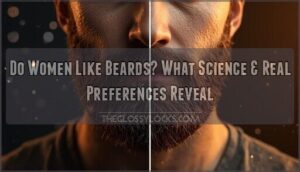
You’ve probably noticed the mixed signals. One woman swipes right on your bearded selfie while another ghosts you entirely. Your girlfriend hints at how hot stubble looks on celebrities, but your mom keeps asking when you’ll finally shave.
The truth? About 44% of women prefer clean-shaven faces, but that leaves more than half who don’t—and those preferences shift based on everything from hormones to relationship goals.
What science reveals about beards and attraction isn’t as simple as “yes” or “no.” It turns out that the style, grooming, and even the context of when women are asked all play surprising roles in whether facial hair wins them over or turns them off.
Understanding what drives these preferences can help you make smarter grooming choices that align with your own goals.
Table Of Contents
- Key Takeaways
- Do Women Like Beards?
- What Facial Hair Styles Do Women Prefer?
- How Facial Hair Affects Attractiveness
- Does Beard Grooming Matter to Women?
- What Does Research Say About Women and Beards?
- How Relationship Goals Affect Beard Preferences
- Frequently Asked Questions (FAQs)
- Do women like men with beards?
- Why do women like beards?
- Are full beards more attractive?
- Do beards make a man look more intimidating?
- Is your beard sexy to a woman?
- Do beards make a man look more mature?
- Can facial hair cause skin irritation during kissing?
- Do womens beard preferences change with age?
- How do beards affect workplace professional perception?
- Are there seasonal trends in beard preferences?
- Conclusion
Key Takeaways
- Women’s beard preferences split nearly down the middle—around 44% prefer clean-shaven faces while the rest favor some facial hair—with heavy stubble (about 10 days of growth) consistently ranking as the most attractive style for short-term attraction.
- Grooming matters more than the beard itself, as 46% of women prefer neatly trimmed beards with clean lines over natural growth, and unkempt facial hair can signal poor hygiene while well-maintained beards boost attractiveness across all age groups.
- Your relationship goals flip the script on what’s attractive—heavy stubble wins for casual dating while full beards score highest for long-term partnerships because they signal maturity, stability, and perceived parenting ability.
- Beards dramatically change how women read your emotions and personality, making you appear more masculine and dominant but also angrier and less approachable, which means your facial hair is shaping first impressions before you even speak.
That confidence boost isn’t just in your head, either—how a beard shapes perceived masculinity plays a real role in why partners respond so differently to various styles.
Do Women Like Beards?
The answer to whether women like beards isn’t a simple yes or no—it’s more like “it depends.” Some women find facial hair incredibly attractive, while others prefer the clean-shaven look, and plenty fall somewhere in between.
Let’s break down what really shapes these preferences and clear up some myths along the way.
Overview of Women’s Facial Hair Preferences
Women’s facial hair preferences aren’t one-size-fits-all—they’re all over the map. A 2020 study found 43.6% of women preferred clean-shaven men, while the rest split between stubble styles. Another survey showed nearly equal camps: about 39% liked smooth faces, 31% favored beards, and 31% went for stubble.
Bottom line? There’s no universal winner here. Studies show that beards can increase a man’s perceived masculinity.
Factors Influencing Attraction to Beards
What drives attraction to facial hair? Several factors shape your preferences for beards. Hormonal cues play a role—some women link beards to perceived health and genetic fitness. Masculinity perceptions matter too; you might associate facial hair with strength and maturity.
Age influence comes into play, as older women often favor clean-shaven faces. Grooming habits can’t be ignored—a well-kept beard signals care.
Common Misconceptions About Women and Beards
Forget the idea that all women share a universal preference for beards—it’s just not true. A 2024 survey showed that nearly 39% preferred clean-shaven faces, debunking the myth that beards always boost attractiveness.
Hygiene stereotypes miss the mark too; grooming matters far more than the beard itself.
Cultural contexts and generational uniformity shape women’s preferences for beards in ways dating preferences often overlook.
What Facial Hair Styles Do Women Prefer?
Not all facial hair is created equal in the eyes of women. Some styles get consistent thumbs up, while others are basically dating deal-breakers.
Let’s break down which beard styles women actually prefer and which ones you might want to reconsider.
Popular Beard Styles Among Women
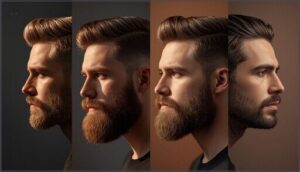
Regarding beard styles and women’s preferences for beards, the data reveals a clear pattern. Here’s how different facial hair preferences of women shake out in ranking of facial hair styles:
- Stubble Length wins consistently – Short to heavy stubble topped attractiveness rankings, with one survey placing it ahead of all other looks
- Groomed Beards matter more than you’d think – Nearly half of women who like facial hair specifically prefer trimmed, defined edges over wild growth
- Full Beards hold steady appeal – Over 50% ranked them in their top three for long-term relationships, valuing the maturity they signal
- Least Favorites include goatees and mustaches – These styles landed at the bottom, with goatees making only 22% of top-three lists
Clean-shaven faces still compete well, tying with stubble in some studies at around 62 points on attractiveness scales. The takeaway? Your style matters, but so does how you maintain it.
The Appeal of Heavy Stubble
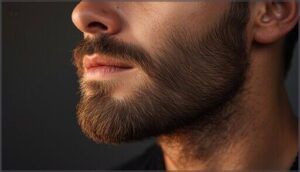
If you’re aiming for peak attractiveness of facial hair, science points to one sweet spot: heavy stubble at about 10 days of growth. Women’s preferences for facial hair consistently favor this ideal length—roughly 4-5 mm—over lighter stubble or full beards. It hits masculinity signals without going overboard, and grooming factors matter: you’ll want even coverage and clean lines to heighten its short-term appeal across most cultural variations.
Least Preferred Styles (Goatees, Patchy Beards)

On the flip side, patchy beards and goatees usually tank your odds. Women consistently rank these styles at the bottom—here’s why:
- Chinstraps and thin goatees look outdated and fail to signal the masculinity of fuller beards.
- Patchy coverage signals poor grooming and lower attractiveness.
- Irregular density breaks facial symmetry, undermining visual appeal.
- Minimal styles can’t compete with heavy stubble or well-maintained full beards.
- Cultural exceptions exist—some Indian women favor styled goatees—but Western preferences for facial hair clearly favor density and balance.
Cultural Differences in Style Preferences

Where you live shapes what you find hot. Women in cities with higher incomes and more men competing for dates tend to prefer beards and stubble—urbanization effects drive facial hair preferences up when mate competition intensifies.
Meanwhile, media influence and social status meanings vary: New Zealand and Samoan women both see beards as high-status, but they don’t always find them most attractive, showing how dating and attraction rules shift across cultures.
How Facial Hair Affects Attractiveness
Facial hair doesn’t just change how you look—it actually shifts how women perceive your entire personality and presence. From snap judgments about your masculinity to deeper reads on your emotional vibe, your beard (or lack of one) is doing a lot of talking before you even open your mouth.
Here’s what’s really happening when she sees your face for the first time.
Beards and Perceived Masculinity
Think of beards as masculinity amplifiers. Research shows facial hair adds major points to how masculine you appear, with some surprising evolutionary advantages baked in:
- Beard dominance signals make you look more socially mature and higher status
- Facial hair formidability increases perceived fighting ability and aggression
- Beard age perception automatically makes you seem older and more confident
- Heavy stubble hits the sweet spot—masculine without going overboard
- Full beards can balance softer facial features
Women consistently rate bearded faces as more masculine across all relationship contexts.
Facial Hair and Emotional Perception
Your beard changes how women read your emotions—and not always for the better. Research shows bearded faces are judged as angrier and less warm, even when you’re feeling friendly. Facial hair speeds up anger recognition but slows down happiness detection, creating an unintended emotional barrier.
| Emotional Signal | Bearded Face | Clean-Shaven Face |
|---|---|---|
| Anger Recognition | Faster, more intense | Slower detection |
| Perceived Warmth | Lower ratings | Higher approachability |
| Trustworthiness Cues | Reduced in some styles | Generally higher |
| Status Signals | Increased dominance | Less authoritative |
Women’s preferences for beards get complicated when attraction and facial hair intersect with these emotional perception shifts. Age perception and status signals work in your favor, but that anger bias? It’s real.
Facial Hair’s Role in First Impressions
You get about seven seconds to make a first impression—and your facial hair is front and center in that snap judgment. Women’s preferences for beards shift dramatically depending on context.
The same holds true beyond your beard—how your hairstyle affects interview success shows that grooming choices from the neck up can shape hiring decisions just as much as facial hair does.
In dating contexts, heavy stubble wins for initial attraction, while professionalism judgments favor either clean-shaven or neatly trimmed styles. Age cues, grooming perception, and cultural variations all play into whether your beard helps or hurts attractiveness in those important first moments.
Does Beard Grooming Matter to Women?
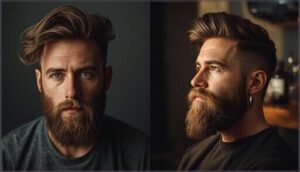
Here’s the thing: a beard isn’t just about having one—it’s about how you take care of it. Women notice the difference between a well-maintained beard and one that looks like it’s been through a windstorm.
Let’s break down why grooming matters and what actually makes a beard appealing.
Importance of Maintenance and Cleanliness
Regarding women’s preferences for beards, hygiene perceptions matter more than you might think. Regular grooming practices directly address hygiene concerns that could otherwise derail attraction. Here’s what actually impacts beard grooming and attractiveness:
- Bacterial risks – Unwashed beards harbor more bacteria than dog fur, including potentially harmful species
- Skin health – Poor beard care leads to folliculitis and partner “beard burn” during kissing
- Maintenance routines – Wash 2-3 times weekly with mild cleanser
- Daily conditioning – Softens hair, reducing scratching during close contact
- Trim every 1-2 weeks – Sharp lines signal you care about grooming and beard care
Well-Groomed Vs. Unkempt Beards
When you’re choosing between well-groomed beards and unkempt ones, you’re making a bigger statement than you realize. In a 2025 survey, 46% of women preferred neatly trimmed beards with clean lines, while only 7% liked completely natural growth.
Grooming indicators like defined edges and consistent length boost attractiveness ratings across all age groups. Heavy stubble with sharp cheek lines consistently outperforms scraggly beards in women’s preferences for beards.
Beard Care Tips That Appeal to Women
So what should you actually do? Here’s what women notice most about men’s grooming:
- Cleanliness wins everything – Wash regularly and keep it food-free. Women in 2024 surveys rated clean, well-groomed beards 10x more attractive than natural ones.
- Softness matters – Use beard oil or beard balm daily to avoid the dreaded “prickly kiss.”
- Fragrance counts – Citrus and woodsy scents beat synthetic smells.
- Shape those edges – Sharp lines signal effort and care.
What Does Research Say About Women and Beards?

Scientists have been studying the beard question for years, and the findings might surprise you. Research reveals patterns in how women respond to facial hair—from what styles get the most attention to why we’re wired to notice beards in the first place.
Let’s look at what the data actually shows about beards and attraction.
Key Study Findings on Facial Hair Attraction
Research on facial hair and male attractiveness reveals surprising patterns. In a 2013 study of 351 women, heavy stubble topped attractiveness ratings, while 2016 data from 8,520 women showed beards soften extreme facial features.
Intermediate growth—think stubble to moderate beards—consistently wins for sexual attraction.
Cultural patterns matter too: Hispanic women rated bearded faces higher than Iranian participants, showing preferences aren’t universal.
Statistics on Women’s Preferences
The numbers paint a clearer picture than you’d expect. Across multiple studies, women’s reactions to facial hair reveal consistent patterns—though with notable twists:
- 57% of women find beards attractive, edging out clean-shaven faces at 50%—but beards also trigger “unattractive” ratings three times more often
- Short stubble ranks first in dating and relationships appeal, followed closely by clean-shaven looks
- Heavy stubble peaked at 26% preference, while full beards lagged at just 2.7%
- Women aged 25-34 favor beards most, while 18-24 and 35-44 groups lean toward skepticism
- 46% prefer natural beards with trimmed lines, showing grooming impact matters more than style alone
What jumps out? Attractiveness hinges on context—relationship preferences and age differences shift the beard equation dramatically.
Evolutionary and Biological Perspectives
Regarding evolutionary biology research, beards aren’t just fashion—they’re billboards. Sexual selection and female choice drove their development, signaling testosterone levels, immune signaling strength, and genetic factors tied to mate selection.
Beards also play into male competition, advertising dominance and fertility cues. Think of them as nature’s resume: dense, even facial hair suggests strong health and parenting potential, while patchy growth? Less compelling to our ancestral wiring.
How Relationship Goals Affect Beard Preferences

Here’s the thing: what you’re looking for in a relationship can actually shape whether you find facial hair attractive or not. Whether you’re swiping for something casual or sizing up long-term potential, your brain might be reading beards differently than you realize.
Let’s look at how your relationship goals play into your facial hair preferences.
Facial Hair in Long-Term Vs. Short-Term Attraction
Your relationship goals actually flip what women find hot. In a 2013 study, heavy stubble won for flings—that ten-day scruff screams sex appeal and raw masculinity.
For casual flings, heavy stubble wins hands down—it signals raw masculinity and immediate sexual appeal
But when women sized up longterm relationships, full beards took the lead. Why? Evolutionary context matters: beards signal maturity and stability, traits sexual selection favors in committed partners. Stubble’s great for short-term attraction, but beards hint you’re dad material.
Beards and Perceived Parenting Ability
Here’s the thing: women see beards as paternal investment cues, especially in long-term relationships. Studies show full beards score highest for perceived parenting ability—mothers rate bearded men as better fathers.
It’s context-dependent perceptions at work: facial hair signals you’re stable and protective. Heavy stubble may win for hookups, but when women’s preferences for beards involve raising kids, grooming intentions and masculinity trade-offs favor fuller facial hair.
Social Status, Dominance, and Relationship Choices
You might think beards just look good—but they’re also power moves. Research shows beard dominance signals boost status perceptions: bearded men are rated higher in social authority and leadership.
Yet lab results don’t always translate to real-world chemistry, which is why it’s worth exploring whether mustaches carry the same attraction appeal before settling on a signature look.
Here’s where relationship context matters: women prefer facial hair and masculinity for long-term partners, where dominance means protection. Cultural variation and intrasexual competition shape these preferences—women’s preferences for beards depend on what they’re seeking in facial hair and relationships.
Frequently Asked Questions (FAQs)
Do women like men with beards?
Women’s preferences for beards vary widely—some find facial hair attractive, while others prefer clean-shaven faces.
Research shows a slight majority favors some beard growth, usually stubble or short beards, over completely smooth skin.
Why do women like beards?
Beards soften faces yet signal strength—that’s the paradox. Women’s preferences for beards stem from evolutionary advantages: masculinity perception, health signals, and mate selection cues.
Cultural influences shape attractiveness standards, linking beard styles and masculinity across contexts.
Are full beards more attractive?
Full beards don’t top attractiveness rankings—most studies show heavy stubble wins. But beards score high for masculinity and long-term appeal, making them attractive when you’re after commitment over casual flings.
Do beards make a man look more intimidating?
Yes, research confirms beards boost perceived dominance and aggression. Studies show bearded men appear more formidable and threatening, especially when angry. This masculine trait signals fighting ability but can intimidate depending on context.
Is your beard sexy to a woman?
It depends. Heavy stubble often wins for attractiveness, while full beards signal masculinity and commitment potential.
Grooming matters more than style—women consistently prefer well-maintained facial hair over patchy or unkempt growth.
Do beards make a man look more mature?
Want to guess someone’s age? Just look at their facial hair. Studies show bearded men appear roughly 8 years older than clean-shaven ones, instantly signaling maturity, masculinity, and social dominance to observers.
Can facial hair cause skin irritation during kissing?
Absolutely. Stubble burn happens when coarse beard hair creates friction dermatitis—redness, itching, and irritation on your face or lips.
If you’ve ever wondered why it keeps happening after a close shave, this guide to what causes beard burn breaks down the science behind those tiny abrasions.
Women with skin sensitivity notice kissing discomfort more. Beard hygiene and trimming help prevent it.
Do womens beard preferences change with age?
Like shifting seasons, women’s preferences for beards transform over time. Younger women (18-29) favor heavy stubble and groomed beards, while women 45-60 increasingly prefer clean-shaven looks, influenced by reproductive status and partner influence.
How do beards affect workplace professional perception?
Beards can boost perceptions of trustworthiness and expertise, especially in customer-facing roles. Studies show bearded men are more often chosen for hiring decisions requiring integrity, though grooming quality matters as much as the beard itself.
Are there seasonal trends in beard preferences?
Growth rate peaks in summer with higher testosterone levels, but women’s preferences for beards stay stable year-round.
Menstrual cycle effects and partners’ beard influence matter more than seasons when shaping dating app choices.
Conclusion
Here’s the irony: asking whether women like beards assumes there’s one answer. There isn’t. Your grooming choices should reflect who you are, not what you think every woman wants.
Some will love your stubble; others won’t give it a second glance. What matters more than the beard itself? How you wear it. Confidence, cleanliness, and authenticity beat any style guide.
Grow what feels right—you’ll attract people who appreciate the real you.