This site is supported by our readers. We may earn a commission, at no cost to you, if you purchase through links. This content is for general informational and educational purposes only and is not a substitute for professional medical, dermatological, or nutritional advice.
The idea that Native Americans can’t grow beards is one of those myths that refuses to die, despite plenty of photographic and historical evidence to the contrary. Yes, Native Americans can grow beards, though genetic factors often result in less facial hair density compared to populations of European or Middle Eastern descent.
The EDAR gene variant, common in many Indigenous populations, affects hair follicle structure and can reduce beard thickness. However, genetics don’t tell the whole story. Testosterone levels, age, health, and mixed ancestry all play significant roles in determining whether someone sprouts a full beard or just a few wisps.
Understanding the biological and cultural dimensions of facial hair in Native communities means looking beyond stereotypes and recognizing the wide variation that exists among individuals and tribes.
Table Of Contents
- Key Takeaways
- Can Native Americans Grow Beards?
- Genetic Factors Affecting Native American Facial Hair
- Hormonal and Biological Influences on Beard Growth
- Cultural Significance of Facial Hair in Native Tribes
- Comparing Native American Facial Hair to Other Ethnicities
- Addressing Stereotypes and Promoting Accurate Understanding
- Frequently Asked Questions (FAQs)
- Why Do Native Americans Have Facial Hair That is Sparser Than Usual?
- Did Native Americans Ever Shave?
- Why Don’t I Ever See Any Bald Native Americans?
- Can Full Blooded Native Americans Grow Beards?
- Do Native Americans Go Bald?
- Why Do Native Americans Have Curly Hair?
- Why Are Native Americans Called American Indians?
- What is the Native Americans’ Culture Known for?
- What grooming products work best for sparse beards?
- Are beard transplants safe for Native American men?
- Conclusion
Key Takeaways
- Native Americans can grow beards, though genetic factors like the EDAR gene variant—inherited from East Asian ancestry—often result in finer, less dense facial hair compared to European or Middle Eastern populations.
- Historical evidence shows that many Native American men chose to pluck or remove facial hair as part of cultural grooming practices, not because they were biologically unable to grow it, which created the false impression of hairlessness.
- Individual beard growth among Native Americans varies widely based on genetics, testosterone levels, age, health, and mixed ancestry, meaning some men grow full beards while others have sparse or patchy growth.
- The stereotype that Native Americans can’t grow beards stems from colonial narratives, racial pseudoscience, and Hollywood portrayals that ignored tribal diversity and mistook cultural practices for genetic absence.
Can Native Americans Grow Beards?
Yes, Native Americans can grow beards, though the common belief that they can’t has persisted for generations. This misconception stems from a mix of cultural practices, genetic factors, and old stereotypes that don’t tell the whole story.
Let’s clear up the myths, look at what science and history actually show, and explore how beard growth varies from person to person.
Common Myths and Misconceptions
When you picture a Native American warrior, you probably imagine a clean-shaven face—but that’s a misconception rooted in old stereotypes. Media portrayals and European observations created myths about facial hair that don’t match reality. Here’s what you should know about these common misconceptions:
- Stereotype claims Native Americans can’t grow beards genetically
- Historical art deliberately avoided showing facial hair on warriors
- European writers spread false ideas about universal inability
- Cultural practices of plucking were mistaken for genetic absence
- Modern memes keep perpetuating this debunked facial hair myth
However, the reality is that genetic factors play a significant role. The truth reveals much more diversity than stereotypes suggest.
Scientific and Historical Evidence
Science tells a different story than the stereotypes. Historical accounts show Cherokee men wore long chin beards until around 1750, while Powhatan priests kept facial hair as a mark of status.
Genetic markers, particularly EDAR gene variants from Northeast Asian ancestry, explain why Native Americans generally have finer, less dense facial hair—not an inability to grow it. Androgen influence and follicle science reveal lower receptor sensitivity rather than complete absence across tribal variations.
Climate influences physical characteristics, potentially explaining less facial hair.
Individual Variation in Beard Growth
Even with similar genetic backgrounds, you’ll see dramatic differences between Native American men. Some grow full beards, others patchy stubble, and some barely any facial hair at all.
Genetic diversity, hormonal influence, age factors, health impacts, and grooming choices all play roles. These individual differences prove there’s no single pattern—just like any population, diversity in Native American communities means facial hair growth varies person to person.
Genetic Factors Affecting Native American Facial Hair

Your genes hold the blueprint for your facial hair, and for Native Americans, that blueprint comes with some unique features. Ancestral genetics, follicle patterns, and mixed heritage all play a role in whether you can grow a full beard or just a few scattered patches.
Let’s break down the three main genetic factors that shape facial hair growth in Native American populations.
Role of Ancestral Genetics
Your ancestral genetics hold the blueprint for whether you can grow a thick beard or just a few sparse patches. Native Americans inherited about 25–50% of their ancestry from ancient East Asian populations, carrying the EDAR variant at frequencies above 70–90%. This ancestral selection shaped facial hair traits through genome-wide loci, AR polymorphism, and admixture effects that vary widely between individuals today.
Key genetic factors include:
- EDAR variants that alter hair follicle characteristics
- Androgen receptor differences affecting hormone sensitivity
- Mixed heritage patterns creating diverse beard-growth potential
Hair Follicle Density and Distribution
Your facial hair follicle density determines how full your beard can look. Native Americans generally show lower follicle density than Mediterranean populations, with hair concentrated around your chin and upper lip rather than spreading across cheeks. Regional variation means you’ll likely see sparser coverage on lateral areas.
Hair caliber also plays a role—finer individual shafts create a lighter appearance even when follicle morphology is present. Ethnic comparisons reveal these patterns emerge from genetic factors, not absence of follicles, and age distribution remains relatively stable after your early twenties.
Influence of Mixed Heritage
When genetic mixing occurs, Native Americans with European or African ancestry often see fuller facial hair patterns emerge. Admixture effects work through ancestry proportions—the more hair-dense heritage you carry, the thicker your potential beard. Gene flow introduces variants that boost hormonal sensitivity in follicles:
- European admixture generally increases beard density noticeably
- African ancestry can improve androgen receptor activity
- Mixed heritage creates outcomes indistinguishable from non-Native men
Social perceptions haven’t caught up with these genetic realities yet.
Hormonal and Biological Influences on Beard Growth

Genetics lay the groundwork for facial hair, but they don’t tell the whole story. Your body’s internal chemistry, especially hormones, plays a major role in whether you can grow a thick beard or just a few scattered hairs.
Let’s look at three biological factors that directly influence beard growth in Native Americans and everyone else.
Testosterone and Hair Growth
You might wonder why some men sport thick beards while others struggle with patchy growth. Testosterone levels and DHT conversion play key roles in facial hair development. Your beard follicles convert testosterone into dihydrotestosterone, which directly stimulates hair growth.
Receptor sensitivity and genetic influence determine how your follicles respond to these hormones. Testosterone deficiency can limit beard density, though hormone replacement may help when medically appropriate.
Age and Developmental Factors
Your beard potential unfolds over years, not overnight. Puberty and beard growth begins around ages 14–16 with patchy upper lip hair, but full beard maturation often doesn’t arrive until your early 20s.
Adolescent development shows that age variability among Native Americans follows genetic predisposition patterns, where testosterone levels and hormones gradually transform fine “peach fuzz” into terminal hair through age-related changes.
Health and Nutritional Impacts
What you eat matters more than you might think. Micronutrient deficiencies—especially iron, zinc, and B vitamins—can slow hair growth or trigger shedding, while protein intake fuels the keratin your follicles need.
Diet quality affects metabolic health, and insulin resistance has been linked to hair loss patterns.
Supplement evidence remains mixed; traditional diets rich in whole foods often outperform hair supplements without proven deficiency.
Cultural Significance of Facial Hair in Native Tribes
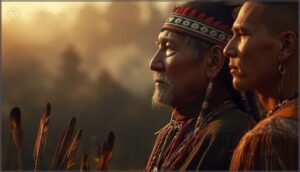
Facial hair wasn’t just about grooming in Native American communities—it carried cultural weight that varied dramatically from one tribe to the next. Some groups saw it as a mark of wisdom or spiritual power, while others preferred clean-shaven faces as part of their identity.
Understanding these traditions helps clear up misconceptions and shows how diverse Native cultures really were.
Traditional Grooming Practices
Before European contact, many Native Americans routinely removed facial hair using shell or obsidian tools, not because they couldn’t grow it, but because cultural practices valued smooth faces. Daily grooming included plucking individual hairs as they appeared, creating the impression of hairlessness.
These traditions varied widely across tribes. Some Plains groups viewed visible facial hair as undesirable, while certain Navajo communities accepted mustaches among leaders.
Symbolism and Status in Different Tribes
Across tribes, facial hair carried meanings far beyond grooming. Warrior grooming practices often favored smooth faces to signal discipline, while elder beards marked accumulated wisdom in Cherokee and Pueblo communities.
Ceremonial hair traditions, like the Long Beard kachina invoking rain, connected whiskers to spiritual abundance. Social identity and masculinity norms varied dramatically:
- Warriors plucked faces before battle
- Elders grew beards as status symbols
- Ceremonies used beard imagery for blessings
Modern Cultural Perspectives
Today, Native American men choose facial hair on their own terms, blending beard fashion trends with personal identity expression. A 2024 survey found 38% of urban Native men wear beards regularly, challenging stereotypes that once dominated media representation.
Generational attitude shifts mean younger individuals see no conflict between facial hair and cultural identity, while modern styling preferences reflect comfort over ceremony—reframing cultural perceptions of facial hair entirely.
Comparing Native American Facial Hair to Other Ethnicities
Facial hair growth isn’t the same across all populations, and genetics play a major role in these differences. Native Americans often have less facial hair compared to some other ethnic groups, but this pattern varies widely depending on ancestry and individual biology.
Understanding how different populations compare can help you see the bigger picture of human diversity and evolution.
Genetic Variation Across Populations
When you compare Native Americans with other population groups, you’ll notice that genetic variations shape facial hair differently. Ancestral genetic factors like the EDAR gene—common in East Asian and Indigenous populations—influence hair follicle traits and explain much of the difference.
- Polygenic Traits: Beard density relies on many genes, not just one, creating wide regional diversity even within groups.
- Heritability Estimates: Studies show over 60% of facial features are inherited, meaning your genes matter more than lifestyle.
- Admixture Effects: Mixed heritage introduces new genetic traits, sometimes increasing beard thickness in descendants.
Environmental Adaptations and Evolution
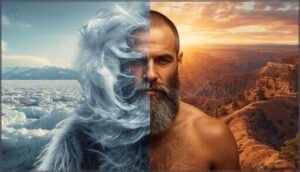
Beyond genetics, environmental factors shaped how facial hair evolved across populations. Climatic influences matter—beards provided insulation in Arctic cold, while hair thermoregulation drove body hair loss in hot climates. Localized retention of facial hair offered protection where needed.
Population variation reflects these climate adaptation pressures. For Native Americans, diverse Native environments across the Americas meant weaker, more variable selection on facial hair than populations facing extreme cold for thousands of years.
Addressing Stereotypes and Promoting Accurate Understanding
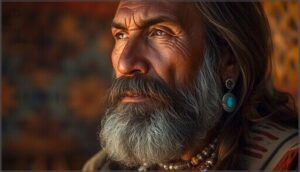
The stereotype that Native Americans can’t grow beards has deep roots, but it doesn’t reflect reality.
These misconceptions have real consequences for how people understand Native identity and diversity.
Let’s look at where these ideas came from, how they affect Native communities today, and why celebrating the full range of beard growth matters.
Origins of Facial Hair Stereotypes
You’ve probably heard the stereotype that Native Americans can’t grow facial hair—but where did this misconception come from? The roots run deep through history:
- Colonial narratives described Indigenous men as mostly beardless, framing sparse facial hair as racial inferiority rather than recognizing cultural removal practices like plucking.
- Racial science in the 1800s used lower beard density as supposed biological proof that Native peoples were fundamentally different from Europeans.
- Visual media—from frontier photographs to Hollywood Westerns—standardized the clean-shaven “Indian” image, ignoring tribal diversity and reinforcing facial hair myths that persist in online discourse today.
Impact on Native American Identity
Stereotype impact cuts deeper than jokes about beard growth. A 2022 survey found 47% of Native American respondents faced comments linking facial hair to authenticity narratives, as if sparse beards made someone “less Native.”
These identity expressions trigger real cultural negotiation—young men feeling pressured to stay clean-shaven to fit historical images, while others reclaim facial hair as Indigenous pride, rejecting narrow definitions of what Native Americans should look like.
Facial hair has become a site of cultural negotiation, where some Native men challenge narrow definitions of Indigenous authenticity by proudly growing beards
Embracing Diversity in Beard Growth
Beard growth acceptance means recognizing that Native Americans, like all populations, show wide individual variation in facial hair—from sparse to full—shaped by genetics, cultural practices, and personal choice. You can challenge stereotypes by:
- Acknowledging that Native American facial hair patterns range from minimal to dense, reflecting ancestry and mixed heritage
- Supporting individual grooming choices without linking beard density to cultural authenticity
- Celebrating heritage through redefining masculinity beyond outdated physical expectations
Real diversity lives in the details.
Frequently Asked Questions (FAQs)
Why Do Native Americans Have Facial Hair That is Sparser Than Usual?
Your ancestral genetics link to East Asian populations, where specific gene variants like EDAR affect follicle density and hair texture.
These genetic variations naturally produce finer, lighter facial hair with lower androgen sensitivity compared to other ancestries.
Did Native Americans Ever Shave?
Long before steel razors existed, many Native Americans used obsidian blades and shell tweezers for facial hair removal.
These cultural grooming practices reflected spiritual beliefs, warrior identity, and tribal standards rather than biological inability to grow beards.
Why Don’t I Ever See Any Bald Native Americans?
You rarely see bald Native Americans because their genetic traits offer natural protection against male pattern baldness. Androgenetic alopecia affects them far less than other populations, though data representation remains limited and baldness perception varies by tribal genetic diversity.
Can Full Blooded Native Americans Grow Beards?
Think full-blooded Native Americans can’t grow beards at all? That’s a myth. Facial hair genetics among Native Americans varies widely—some grow finer, sparser beards, while others, like the Chumash, develop denser growth naturally.
Do Native Americans Go Bald?
Yes, Native Americans can experience hair loss, though androgenetic alopecia affects them less frequently than Caucasian populations.
Genetics, modern diets, environmental factors, and conditions like alopecia areata still influence clinical evaluation outcomes.
Why Do Native Americans Have Curly Hair?
Like a river shaped by many tributaries, Native American hair characteristics reflect complex genetic variation. Curly hair results from ancestral genetics, admixture influence, and environmental factors—not a single uniform trait.
Historical misconceptions about physical characteristics oversimplify this diversity.
Why Are Native Americans Called American Indians?
The term stems from Columbus’s misidentification in 1492, believing he’d reached Asia’s Indies. Legal definitions and historical context embedded “American Indian” in federal law, though evolving terminology reflects cultural identity and regional differences today.
What is the Native Americans’ Culture Known for?
Native American culture is known for Tribal Sovereignty, vibrant Artistic Expression, deeply rooted Spiritual Beliefs, strong Community Values, and Oral Traditions that preserve cultural heritage across hundreds of tribes, each maintaining distinct cultural practices and identity.
What grooming products work best for sparse beards?
For patchy facial hair growth, minoxidil effectiveness stands out—clinical studies show 3% solutions boost hair count markedly.
Nourishing oils like jojoba and argan improve thickness, while consistent cleansing routines and styling techniques improve appearance.
Are beard transplants safe for Native American men?
Yes, beard transplants are generally safe for Native American men when performed by experienced surgeons. However, individual assessment is essential, as scarring risks and keloid formation may vary based on skin type and genetics affecting graft success.
Conclusion
Think of facial hair like a forest—no two grow the same way, shaped by soil, climate, and seed. The question “can Native Americans grow beards” doesn’t have a one-size-fits-all answer.
Genetics, hormones, health, and ancestry all weave together differently for each person. Stereotypes crumble when you look at real individuals and their stories.
What matters isn’t fitting a mold, but recognizing the rich diversity that exists within every community, beard or no beard.