This site is supported by our readers. We may earn a commission, at no cost to you, if you purchase through links. This content is for general informational and educational purposes only and is not a substitute for professional medical, dermatological, or nutritional advice.

Most people shampoo, condition, and move on—treating their hair like it’s fine when it’s quietly crying out for more. Split ends, frizz, and that stubborn dullness that won’t quit?
Those are signs your strands are running on empty.
A regular rinse-out conditioner coats the surface, but a deep conditioning treatment goes further, pushing moisture and nutrients past the cuticle and into the cortex where damage actually lives.
Think of it as the difference between drinking a glass of water and getting an IV drip. Whether your hair is color-treated, curly, or just perpetually thirsty, right treatment can completely change how it looks and feels.
Table Of Contents
- Key Takeaways
- What is Deep-Conditioning?
- How to Deep-Condition Hair?
- Homemade Deep-Conditioners
- Benefits of a Deep-Conditioning Treatment
- Dos and Don’ts of Deep-Conditioning
- How Long Should You Leave Your Product on For?
- How Often Should You Deep-Condition Your Hair?
- Should You Condition Your Hair After Deep-Conditioning It?
- What Happens to Your Hair if You Deep-Condition It Everyday?
- Recommended Deep-Conditioning Treatments
- Frequently Asked Questions (FAQs)
- Can you deep condition permed hair?
- Does Camille Rose have a deep conditioner?
- How does deep conditioning work?
- How to apply the deep conditioning treatment?
- How do you use a deep conditioner?
- How do you choose a deep conditioning product?
- How long does it take to deep condition hair?
- Can you use normal conditioner for deep conditioning?
- How many times do you deep condition your hair?
- Are deep conditioning treatments at salons worth it?
- Conclusion
Key Takeaways
- Deep conditioners work differently than regular conditioners because they push moisture and proteins past the hair’s surface and into the cortex, where real damage lives.
- Applying your treatment to damp hair in sections, from mid-lengths to ends, and rinsing with cool water makes a bigger difference than the product you choose.
- How often you deep condition depends on your hair type — curly, coily, or color-treated hair usually needs it weekly, while fine hair does better every two to three weeks.
- Daily deep conditioning can backfire, leading to buildup, limpness, and protein overload, so consistency beats intensity every time.
What is Deep-Conditioning?

Think of deep conditioning as the reset button your hair has been waiting for. Unlike your everyday rinse-out conditioner, a deep conditioning treatment uses a richer, more concentrated formula packed with emollients, humectants, and proteins to actually work past the hair’s surface.
Pairing your treatment with the best oils for 4C hair seals in all those proteins and humectants, giving your strands lasting strength and moisture.
We’re talking about a real penetration mechanism — ingredients like glycerin, fatty acids, and bond repair compounds reach into the cortex to restore what heat styling, chemical processing, and sun exposure strip away.
Some treatments even use thermal activation to help those nutrients absorb more effectively. The result? Hair that feels softer, detangles more easily, and holds onto moisture longer.
Whether your goal is scalp health, strength, or shine, this is where real change starts.
How to Deep-Condition Hair?
Deep conditioning doesn’t have to be complicated — it really just comes down to a few simple steps done in the right order.
Once you get the process down, it’ll feel like second nature.
Here’s exactly what to do.
Step 1: Choose Your Product
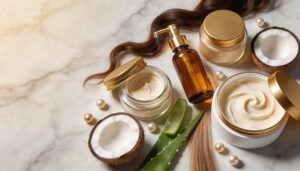
Your deep conditioner choice really comes down to three things: Hair Type Matching, Ingredient Focus, and Formulation Texture. Fine hair needs lightweight, sulfate‑free options that won’t drag strands down, while thick or curly hair craves richer deep conditioning masks with shea butter or coconut oil. Budget‑friendly choices like drugstore deep conditioning treatments work surprisingly well too.
- Dry or damaged hair: Look for humectants like glycerin or hyaluronic acid.
- Weak or thinning strands: Choose storebought deep conditioning masks with keratin or amino acids.
- Color-treated hair: Reach for a sulfate‑free DIY deep conditioning mask or Olaplex.
Step 2: Wash Your Hair

Once you’ve picked your product, it’s time for a proper hair wash.
Start with pre-wash detangling — run a wide-tooth comb through from ends to roots so knots don’t tighten under water.
Then shampoo with a sulfate-free shampoo using lukewarm water, which cleanses without stripping your natural oils. A quarter-sized amount works for most hair lengths.
Use your scalp massage technique — fingertips, small circles, about 30 to 60 seconds.
Finish with thorough rinsing tips in mind: rinse until the water runs clear before you shampoo and deep condition.
Step 3: Apply Your Deep Conditioner
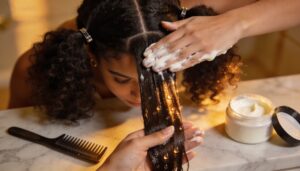
Now that your hair is freshly washed and still damp, it’s time to apply your deep conditioning treatment — and how you do it matters as much as which product you use.
Start by dividing your hair into sections. This sectioning technique ensures every strand gets coated, not just the top layer. Use a wide-tooth comb or your fingers as distribution tools, working the product from mid-lengths down to your ends — that’s where damage lives. A palmful works for medium hair; thick or long hair usually needs more.
Keep your scalp focus minimal. Most deep conditioners belong on your lengths; not your roots. Once you’re done, seal each section under a plastic cap to lock in that moisture and prep for the next step.
Step 4: Let The Conditioner Set In

Once the conditioner is applied, patience becomes your best tool. Most formulas need 10 to 30 minutes for proper product saturation — check your label and stick to it.
Cover your hair with a plastic cap to boost moisture retention by trapping warmth close to the strands. That simple covering method keeps the conditioner from drying out before it finishes working.
Step 5: Use Heat if Required

Heat isn’t always necessary, but it can take your results to the next level. When you steam hair or wrap it in a warm towel, the gentle warmth helps lift the cuticle just enough for the conditioner to sink deeper into each strand. That’s the sweet spot — better absorption without the risk of overdoing it.
For Hooded Dryer Timing, aim for 10 to 20 minutes at a low setting. A hooded steamer works beautifully too, since steam heat benefits are gentler than a blow dryer’s direct heat. Always respect your Scalp Temperature Limits — if it stings, pull back immediately.
Homemade Deep-Conditioners
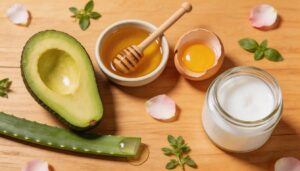
You don’t always need a fancy product to give your hair a serious boost — sometimes the best ingredients are already in your kitchen. Homemade deep conditioners can be surprisingly effective, especially when you know which combinations actually work.
Here are three simple recipes worth trying.
Honey and Coconut Oil
Few DIY deep conditioning masks nail ingredient synergy quite like this one. Honey is naturally hygroscopic — it pulls moisture into your strands and holds it there — while coconut oil’s lauric acid-rich fatty acids coat the hair shaft to lock that softness in.
Warm the oil first for better application temperature and blending, then stir in honey until smooth. Leave it on for 30 minutes, focusing on mid-lengths to ends.
Fine hair or sensitive scalps should use it sparingly.
Banana Hair Mask
Bananas aren’t just a great snack — they’re a surprisingly powerful hair treatment.
Mash one ripe banana with a tablespoon of olive oil or yogurt until completely smooth, because chunks will get stuck in your strands.
The potassium moisture boost helps your hair hold onto hydration, vitamin B6 strength keeps strands resilient, and natural sugar shine seals the cuticle for that glossy finish.
Apply mid-shaft to ends, enjoy the scalp massage benefits while working it through, then rinse after 20 minutes with cool water.
Store any leftovers in the fridge and use within a day.
Olive Oil and Egg Hair Mask
Eggs and olive oil might sound like breakfast, but together they make one of the best DIY deep conditioning mask recipes around. Whisk one egg with two tablespoons of extra virgin olive oil until creamy — mask consistency matters for even coverage. That protein fat balance conditions and softens in one step. Apply mid-shaft to ends at room temperature for ideal application temperature, leave on 20–30 minutes, then rinse with cool water.
- Targets split ends without weighing roots down
- Natural ingredients for hair conditioning at their simplest
- Patch-test first — allergy precautions matter with egg
- Avoid scalp sensitivity flare-ups by keeping it off your roots
Benefits of a Deep-Conditioning Treatment
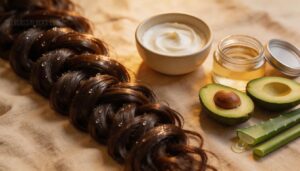
Deep conditioning does a lot more than just make your hair feel soft for a day. Done consistently, it can genuinely change the health and look of your hair over time.
Here are five benefits worth knowing about.
Hydrates Your Hair
Think of deep conditioning as a long drink of water for thirsty strands. Your hair loses moisture constantly — from heat, washing, and everyday friction — and a regular rinse-out conditioner just can’t replenish it fully.
Deep conditioning is the long drink of water your thirsty strands can’t get from ordinary conditioner
That’s where deep conditioning masks step in. They’re loaded with hydrating ingredients like glycerin and aloe vera, which work as humectants, drawing water directly into each strand through humectant action. Oils like shea butter and coconut oil then lock that moisture in through cuticle sealing, slowing evaporation.
The result? Better hair moisture retention, softer texture, and less frizz. With consistent use, these hydration boosters and water-binding moisturizing ingredients restore your hair’s natural flexibility from the inside out.
Reduces Damage
Staying hydrated is just the beginning — your hair also needs to rebuild. Deep conditioning doesn’t just soften strands; it actively helps repair damage through cuticle smoothing, friction reduction, and elasticity boost. Protein treatment ingredients reinforce weakened spots, making split end prevention much more realistic with consistent use.
- Smoothing the cuticle lowers daily friction, so detangling causes less breakage
- Improved elasticity means strands bend before they snap
- Pre-conditioning helps prevent heat damage during blow-drying or flat ironing
- Regular use aids moisture retention, keeping ends flexible and resilient
Improves Shine
Rebuilding your hair’s structure naturally leads to something you can actually see — and that’s shine. When deep conditioning smooths the cuticle layer, it improves light reflection across each strand, giving you that luminous, healthy-looking hair instead of a dull, matte finish.
Moisture retention plays a big role here too. Well-hydrated hair simply catches light better.
Add in the anti-frizz control that comes from better styling slip and aligned strands, and you’re looking at real hair gloss — not just surface shine. That soft and silky, silky hair texture isn’t a coincidence; it’s cuticle smoothing doing its job.
Strengthens Your Hair
All that shine you just gained? It holds up a lot longer when your hair is actually strong underneath.
A deep conditioning treatment works from the inside out — protein infusion fills in weak spots along the strand, while bond repair reconnects what heat and styling have broken down. Here’s what that means for your hair:
- Elasticity boost helps strands stretch without snapping
- Cuticle smoothing reduces everyday friction and breakage
- Scalp fortification promotes healthier growth at the root
Regular protein treatments and strengthening agents keep brittleness from creeping back in.
Nourishes Colour-Treated Hair
Strong hair is just the starting point — color-treated hair needs a whole other layer of care. Dyeing lifts the cuticle and leaves strands more porous, which speeds up fading fast.
That’s where protecting color-treated hair with deep conditioning makes a real difference.
A good hair mask delivers:
- Deep hydration to combat dryness caused by color processing
- UV Protection to slow sun-related fading
- Anti-Fade Ingredients like cationic polymers for Color Lock
- Scalp Comfort through gentle, sulfate-free formulas
- Heat Buffering agents that reduce styling stress on dyed strands
Dos and Don’ts of Deep-Conditioning
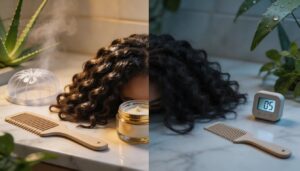
Even the best deep conditioner won’t do much if you’re not using it the right way. A few simple habits can make the difference between hair that thrives and hair that just gets by.
Here’s what to keep in mind before you get started.
For the full process—plus tips on getting the cleanest results—check out this guide on removing facial hair with egg white at home.
DOs
Think of these as your golden rules — follow them consistently, and your results will speak for themselves.
Always apply to damp hair, not soaking wet, so the product spreads evenly without dilution. Work from mid-lengths down to your ends, since that’s where dryness and damage tend to hide. If brassiness is your main concern, let it sit a little longer — this guide on how long to leave toner on brassy hair helps you dial in the timing so you get even, lasting results.
Use a wide-tooth comb to distribute the mask evenly and work out tangles without snapping strands.
Avoid scalp overload — too much product at the roots leads to greasiness and buildup over time.
If your hair feels especially parched, use a warm cap to boost absorption.
Always finish with a cool water rinse to seal the cuticle and lock in every bit of moisture you just added.
This cold-water seal works especially well when you’ve tailored your routine using glycerin guidelines for low porosity hair, where moisture absorption depends heavily on the right technique and timing.
DON’Ts
Even with the best intentions, a few common mistakes in deep conditioning can quietly undo all your hard work.
Scalp over-application is a big one — thick masks weren’t made for your roots, and going heavy there leads to product buildup and a greasy feel fast. Long contact time is another trap; leaving your treatment on well past the recommended window doesn’t mean better results, it usually means weighed-down, limp strands.
Here’s what else to avoid:
- Wrong water temperature: Hot water roughens the cuticle and works against everything you just did — always rinse cool.
- Protein overload: Layering bond builders and protein masks together can leave hair stiff and straw-like.
- Excessive heat: Without a timer, heat can over-soften strands and accelerate buildup over time.
Frequency guidelines for deep conditioning exist for a reason — consistency beats intensity every time.
How Long Should You Leave Your Product on For?

Timing your deep conditioning treatment comes down to your hair’s needs. Most deep conditioning masks work best with a 20–30 minute window — long enough to hydrate without causing product build-up. Porosity timing matters too: low porosity hair needs more time, while highly porous strands absorb quickly.
- Check the label first — always.
- Use heat-assisted methods to boost absorption faster.
- Keep scalp-safe duration in mind for sensitive roots.
- Overnight treatments suit extremely dry or damaged hair.
- Rinse with cool water to seal everything in.
How Often Should You Deep-Condition Your Hair?
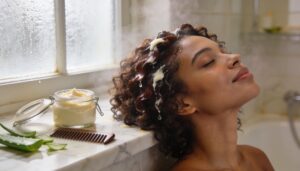
Your deep conditioning frequency isn’t one-size-fits-all — hair type, porosity, and scalp sensitivity all play a role. Curly and coily textures lose moisture faster, so weekly treatments make sense. Color-treated or heat-damaged strands benefit from that same rhythm to stay soft and strong.
- Hair Type Frequency: Fine hair needs deep conditioning every 2–3 weeks to avoid product buildup and limpness.
- Porosity Impact: High-porosity hair drinks up moisture quickly and dries out fast — weekly works well.
- Seasonal Adjustments: Winter dryness and summer sun often call for more frequent deep conditioning treatment sessions.
Watch for limpness — that’s your sign to pull back.
Should You Condition Your Hair After Deep-Conditioning It?

Here’s the honest answer: it depends on your hair. After a deep conditioning treatment, most hair types don’t need a follow-up regular conditioner — your deep conditioner already handled the heavy lifting. But if your strands feel stiff or tangled after rinsing, a lightweight conditioner adds slip without overloading your hair.
Conditioner timing matters more than people realize. Fine hair risks product residue management issues fast, so skip the extra step. Coarse or curly textures, though, benefit from that added smoothness.
| Hair Type | Use Regular Conditioner After? | Best Approach |
|---|---|---|
| Fine/Straight | No | Rinse well, skip extra step |
| Coarse/Curly | Yes | Light conditioner, ends only |
| Color-Treated | Sometimes | Only if hair feels dry |
| High Porosity | Optional | Focus on thorough rinsing first |
| Protein-Treated | Yes | Balances texture and softness |
Hair porosity considerations also affect your scalp health impact — heavy layering invites buildup near roots. If you’re using a protein-rich mask, a moisturizing conditioner helps restore protein balance without leaving hair limp. A leave-in serum works well as a lighter alternative to a full rinse-out conditioner.
What Happens to Your Hair if You Deep-Condition It Everyday?

Daily deep conditioning sounds like a hair dream — but it can quietly work against you.
Too much of a good thing leads to weighty residue that coats the cuticle and flattens your natural bounce. Over time, cuticle coating builds up, and scalp buildup becomes a real issue, especially if you’re skipping clarifying shampoos.
Protein overload can shift hair elasticity, leaving strands that feel mushy or oddly stiff.
For most people, once a week balances damage repair and porosity management without tipping into too much.
Recommended Deep-Conditioning Treatments
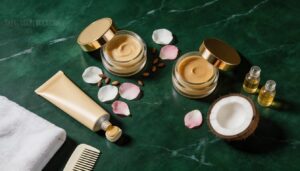
If you’re not sure where to start, a few tried-and-true products make the whole process a lot easier. Whether your hair needs a moisture boost, some serious repair, or a bit of both, there’s something on this list for you.
Here are three worth trying.
Kristin Ess Hair Mask: Hydrate, Soothe, Rebalance
If you’re dealing with dry, irritated strands and a cranky scalp, the Kristin Ess Hair Mask: Hydrate, Soothe, Rebalance might be exactly what your routine’s been missing. The brand recently announced an exclusive partnership with Universal Pictures for the Wicked: For Good film.
This hydrating hair treatment uses a lightweight formula that layers moisture into the cuticle without any heaviness — great news if fine hair has always made deep conditioning feel risky.
- pH optimized to support a healthy scalp balance treatment
- Heat-activated absorption means a warm towel boosts results fast
- Compact travel size makes it easy to keep your routine consistent
Apply mid-length to ends, leave on for 5–15 minutes, and rinse cool to lock in that moisture barrier.
Strengthen Hair Length, Proteins, All Types
When your strands feel like they’re snapping more than stretching, that’s your signal to reach for a protein-based treatment.
Protein Infusion formulas work by supporting Bond Repair within the hair fiber, filling gaps in weakened strands to improve elasticity and support Length Retention. Pair that with Cuticle Sealing and Scalp Nutrition, and you’re building a full defense against breakage.
The best part? Deep conditioning with protein repair treatments for damaged hair works across deep conditioning for different hair types — no exceptions.
Olaplex Hair Perfector No3
Protein treatments do a great job fortifying the surface, but sometimes damage runs deeper. That’s where Olaplex No3 Hair Perfector earns its reputation.
Unlike standard deep conditioning treatments, No3 works through Disulfide Bond Rebuilding — targeting the Bond Repair Molecule inside the hair shaft itself. It’s not cosmetic coverage; it’s structural repair.
Here’s what makes it stand out:
- Patented bond repair technology reconnects broken disulfide bonds from within
- Cumulative Strengthening builds resilience across multiple weekly uses
- System Compatibility means it pairs seamlessly with No0 or No4 for enhanced results
- Heat Enhanced Absorption improves uptake when paired with a warm towel
Apply Olaplex to damp hair, leave it 10–30 minutes, then rinse. Simple routine, real results. The key active ingredient is the disulfide bond-rebuilding polymer.
Frequently Asked Questions (FAQs)
Can you deep condition permed hair?
Yes, absolutely.
Permed hair craves moisture after the chemical process reshapes its bonds. Deep conditioning treatments restore softness, support curl retention, and help balance protein levels without reversing your perm’s results.
Does Camille Rose have a deep conditioner?
Camille Rose does offer a deep conditioner — the Strength Restorative Deep Conditioner.
Packed with ucubauba butter and ghee butter, it’s a solid mid-range pick for dry, damaged, or chemically treated hair.
How does deep conditioning work?
Think of deep conditioning like a long drink of water for thirsty hair.
Nutrient-rich formulas use humectants, hydrolyzed protein, and emollients to support cuticle penetration, moisture retention, cuticle smoothing, bond rebuilding, and heat-enhanced absorption — restoring softness from the inside out.
How to apply the deep conditioning treatment?
Start at your mid-lengths and ends — that’s where your hair needs it most. Work the product through in sections, keep your scalp clear, cap it, and rinse cool.
How do you use a deep conditioner?
After shampooing, apply the deep conditioner from mid-shaft to ends for proper scalp protection and product distribution.
Leave it on 10–30 minutes, use gentle heat if needed, then rinse with cool water.
How do you choose a deep conditioning product?
Your hair type is the best starting point.
High porosity hair drinks up moisture fast but loses it just as quickly — so look for rich emollients and humectants like glycerin or shea butter.
How long does it take to deep condition hair?
Most deep conditioners work best with 10 to 20 minutes of contact time. Fine hair often needs less; coarse or damaged strands benefit from the full window.
Always follow your product’s label first.
Can you use normal conditioner for deep conditioning?
In a pinch, yes — but your regular conditioner is doing a totally different job.
It lacks the ingredient concentration, richer emollients, and extended contact time that make a true deep conditioner work.
How many times do you deep condition your hair?
Most people do well deep conditioning once or twice a week. Your hair type, season, and styling habits all shape the right schedule — there’s no single answer that fits everyone.
Are deep conditioning treatments at salons worth it?
Salon visits do cost more upfront, but the professional application, premium ingredients, and individualized hair-type assessment often deliver noticeably better results — especially if your hair needs serious repair and hydration.
Conclusion
Whether your hair battles dryness, damage, or dullness, a deep conditioning treatment transforms struggling strands into vibrant, resilient locks. By delivering nutrients where regular conditioners can’t reach, it hydrates, repairs, and shields against future stress.
Follow the steps we’ve shared—choosing the right product, applying heat wisely, and timing it perfectly—to reveal hair that shines with health.
Consistency matters, but so does balance: overdoing it risks overload. Embrace this ritual weekly or bi-weekly, and watch your hair thrive. Your hair deserves this care—give it the love it’s been craving.