This site is supported by our readers. We may earn a commission, at no cost to you, if you purchase through links. This content is for general informational and educational purposes only and is not a substitute for professional medical, dermatological, or nutritional advice.
Dry, brittle strands don’t need a salon visit or a pricey bottle from the drugstore. Your kitchen already holds everything your hair craves: healthy fats, natural sugars, and proteins that sink into each strand and rebuild it from within. Coconut oil, honey, avocado, olive oil, and egg yolk aren’t just breakfast staples, they’re a hydration powerhouse waiting in your cabinet.
Dry hair happens when the cuticle loses its grip on moisture, leaving strands rough and prone to breakage. These five homemade hair mask recipes for dry hair fix that problem using ingredients your grandmother probably swore by. Grab a bowl, and get ready to give your hair the treatment it’s been begging for.
Table Of Contents
- Key Takeaways
- Best Ingredients for Homemade Hair Masks for Dry Hair
- 5 Homemade Hair Mask Recipes for Dry Hair
- How to Apply DIY Hair Masks Step by Step
- Top 5 Hair Mask Essentials
- Frequently Asked Questions (FAQs)
- What’s the best homemade hair mask for dry hair?
- Which hair mask is best for dry hair at home?
- What is the 10 miracle hair mask?
- What is a home remedy for extremely dry hair?
- Can diet affect how dry your hair gets?
- How does hard water contribute to hair dryness?
- Are hair masks safe for color-treated hair?
- How do you store leftover homemade mask mixture?
- Does hair porosity change how masks absorb?
- How often should you use a hair mask?
- Conclusion
Key Takeaways
- Coconut oil, honey, avocado, olive oil, and egg yolk each target dry hair differently—penetrating the shaft, drawing in moisture, adding shine, softening strands, or rebuilding strength with protein.
- Proper application matters as much as ingredients: start with damp, detangled hair, focus extra product on the ends, cover with a shower cap for heat retention, and rinse with lukewarm water.
- Popular combinations like coconut oil with honey, avocado with egg yolk, or banana with yogurt and honey pair complementary benefits for deeper hydration and conditioning.
- How often you mask depends on your hair’s needs—dry or damaged strands benefit from masking 2-3 times weekly, while fine or oily hair should stick to once a week or less.
Best Ingredients for Homemade Hair Masks for Dry Hair
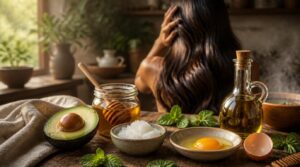
Dry, damaged hair needs more than a quick fix from a bottle. The real power often sits right in your kitchen, packed with nutrients your strands are craving. Here are five ingredients worth knowing before you mix up your first mask.
If you’re ready to go beyond store-bought fixes, these DIY hair repair mask recipes show you exactly how to turn these ingredients into treatments that actually work.
Coconut Oil for Deep Moisture
Reach for coconut oil first—it’s the powerhouse of any homemade hair mask for dry hair. Thanks to lauric acid and its medium-chain fatty acids, it actually achieves real hair shaft penetration instead of just coating strands.
That deep reach means genuine deep hydration, plus protein loss prevention that keeps brittle hair stronger. It also builds a moisture locking barrier, sealing everything in. Try swapping in coconut milk occasionally for extra moisturising properties and softness. Using it as a pre-wash application can further help reduce cuticle swelling.
Honey for Hydration
Once coconut oil locks moisture in, honey’s job is pulling water toward your strands in the first place. As a natural humectant, it draws hydration in and helps hair hold onto it longer after rinsing.
Raw, unfiltered honey works best here, keeping more of its natural sugars and antioxidants intact. Just use it in moderation—too much, and you’re left managing sticky, tacky strands instead of soft ones.
Olive Oil for Shine
Olive oil for shine works by coating each strand with a thin lipid film that smooths the cuticle, so light reflects evenly instead of scattering off rough edges. Its oleic acid and antioxidants offer surface protection while limiting heat damage too.
- Smooths rough cuticles for reflective shine
- Delivers vitamin E and polyphenols
- Works as a leave-in or rinse-off treatment
- Forms a heat styling barrier
- Use sparingly to avoid greasy buildup
Avocado for Softness
Where olive oil brings shine, avocado brings pure softness. Its monounsaturated fats act as natural emollients, coating dry ends so hair feels smoother and less brittle after rinsing.
Ripe avocado mashes into a creamy paste that spreads evenly, gripping strands instead of dripping off. That thick texture means even coarse, dry hair gets real conditioning contact, no added oils required.
Egg Yolk for Strength
Crack open an egg yolk and you’re tapping into a genuine hair strength powerhouse. Here’s what it delivers:
- Yolk protein benefits rebuild weak strands
- Lipid coating effects lock in moisture
- Phospholipid hair softness for creamy texture
- Egg yolk vitamins (A, D, E) plus zinc for micronutrient scalp health
Pair yolk with honey for a moisturizing, conditioning homemade hair mask dry hair truly craves.
5 Homemade Hair Mask Recipes for Dry Hair
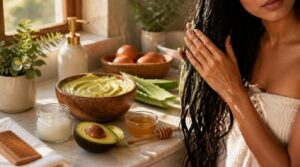
Now that you know which ingredients work best, let’s put them to use. These five recipes mix and match those powerhouse ingredients for different hair needs, from deep hydration to added shine. Grab your mixing bowl, because your hair is about to get the treatment it deserves.
If dry, thirsty strands are your main concern, start with this rich avocado hair mask for deep moisture that leaves hair soft for days.
Coconut Oil Honey Mask
Two ingredients, one powerhouse duo. Mix a few teaspoons of coconut oil with honey until smooth—warm the oil slightly if it’s solid. Honey’s moisturising properties pull water into strands, while coconut oil seals it in. Apply to damp hair, focusing on ends. Leave 20-30 minutes, then rinse with warm water to avoid sticky residue. Simple, effective, dry-hair relief.
Avocado Egg Yolk Mask
Half a mashed avocado plus one egg yolk creates a rich, moisturizing and conditioning paste. Mash until lump-free, then stir in the yolk for perfect mash consistency.
- Avocado fatty acids soften brittle strands
- Nutrient-rich yolk adds B vitamins
- Cool water rinsing prevents cooked egg
Apply root to ends, wait 20 minutes, then rinse cool—easy, nourishing relief for thirsty hair.
Banana Yogurt Honey Mask
Got an overripe banana sitting around? Mash half of it smooth, then mix in 2 tablespoons plain yogurt and a teaspoon of raw honey until creamy. This trio fights frizz and dryness beautifully.
Apply scalp to ends, wait 15-20 minutes, then rinse with cool water—work it through thoroughly so no banana residue lingers behind, leaving hair soft and manageable.
Olive Oil Honey Mask
Olive oil and honey make an easy shine duo for dry strands. Warm the honey about 10 seconds so it loosens, then mix two tablespoons with equal parts olive oil until smooth and glossy.
Work through hair evenly, focusing on dry areas. Leave on 10-15 minutes, then rinse thoroughly with warm water—honey’s humectant properties lock in moisture without leaving hair coated.
Coconut Yogurt Egg Mask
Think of this as a smoothie for your scalp—thick, tangy, and packed with deep conditioning power. Whisk 1/2 cup plain yogurt, one egg yolk, and a teaspoon of coconut oil (coconut milk works too) until smooth.
Try this ratio:
- 1/2 cup yogurt
- 1 egg yolk
- 1 tsp coconut oil
- Optional splash of lemon
Apply to damp hair, leave 30 minutes, then rinse cool to keep yolk from cooking.
How to Apply DIY Hair Masks Step by Step
Mixing up the perfect mask is only half the job, though. How you apply it makes just as much difference in the results you’ll see. Here’s exactly how to do it right, step by step.
Start with damp, towel-dried hair and work full-fat mayo generously through the mid-lengths and ends, keeping it off your scalp, then check how long to leave mayonnaise in your hair before rinsing thoroughly with lukewarm water.
Start With Damp Hair

Grab a towel and blot your hair until it’s damp, not dripping—this is the sweet spot for your homemade hair mask. Damp strands have higher porosity, so natural ingredients absorb deeply instead of sliding off.
Skipping this step risks diluting your mix and messing with moisture balance. A little patience here means better product adhesion, smoother distribution, and real deep hydration for dry hair.
Detangle Before Applying
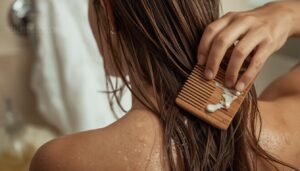
Once your hair’s damp, work in a little conditioner or detangling spray for essential slip—it lets strands glide instead of snag.
Section your hair and use a wide-tooth comb, starting at the ends and easing upward. Skip the roots for now; that avoiding root tension keeps breakage low while your DIY hair mask spreads smoothly through smooth, tangle-free lengths.
Focus on Dry Ends
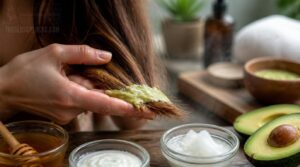
Ends are where the real damage lives. Nutrition often struggles to travel from root to tip, leaving strands dry, brittle, and prone to splitting.
Ends bear the brunt of damage, since nourishment rarely travels far enough from root to tip
Scoop extra mask onto the last few inches for deep hydration where it counts.
- Split ends: prevented from traveling upward
- Dry ends: get concentrated moisture
- Damaged strands: rebuilt with nutrients
This targeted approach delivers deep conditioning benefits exactly where dryness starts.
Cover With Shower Cap
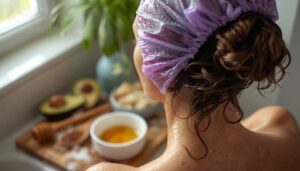
Once every strand is coated, twist your hair up and tuck it under a shower cap. The heat retention from that seal opens the cuticle so nutrients absorb deeper instead of sliding off.
Look for a cap with a snug elastic edge and breathable, waterproof fabric — durable enough for repeated DIY mask sessions, and handy for makeup or kitchen use too.
Rinse Without Stripping Moisture

Rinsing might feel simple, but the temperature matters more than you’d think. Go for lukewarm water — hot water strips those precious conditioning oils, while cold barely budges honey or coconut oil residue.
Rinse until water runs clear, keeping a light oil film for slip. Then press hair gently with a towel instead of rubbing, letting it air-dry to lock in moisture without stripping what you just worked to build.
Top 5 Hair Mask Essentials
Ready to gather your supplies? Having the right products on hand makes these masks easier to mix, apply, and enjoy. Here are five essentials worth adding to your hair care shelf.
1. Natures Way Organic Extra Virgin Coconut Oil
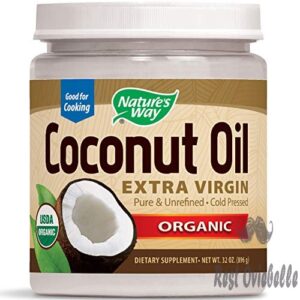
Not all coconut oils are created equal, and this one earns its spot in your mask arsenal. Nature’s Way keeps things cold-pressed and unrefined, so the fatty acids stay intact instead of getting stripped away during processing.
That matters more than you’d think. You’re getting roughly 8.69 grams of medium-chain triglycerides per tablespoon, including 6.65 grams of lauric acid, both of which work their way into the hair shaft to fight dryness from within rather than just coating the surface.
At 32 ounces for around $20, a single jar covers dozens of masks, plus everyday cooking. The USDA Organic and Non-GMO certifications confirm no pesticides or shortcuts, just clean, natural coconut oil doing what it does best on damaged, thirsty strands.
| Best For | Anyone looking for a versatile, organic coconut oil that works equally well as a DIY hair mask ingredient and a kitchen staple for cooking and baking. |
|---|---|
| Cold-pressed | Yes |
| Natural ingredients | Yes |
| Multipurpose use | Yes |
| Large container | 32 oz jar |
| Moisture boosting | Yes |
| Certified quality | USDA Organic, Non-GMO |
| Additional Features |
|
- Cold-pressed and unrefined, preserving natural MCTs and lauric acid for deep nourishment
- USDA Organic and Non-GMO certified, ensuring a clean, pesticide-free product
- Large 32-ounce jar offers great value for both beauty and culinary uses
- Solidifies in cooler temperatures, requiring melting before use in some applications
- High in total fat and saturated fat, so portion control matters
- Strong coconut aroma may not suit those wanting a neutral-scented oil
2. Fashion Design Reusable Pink Polka Dot Shower Cap
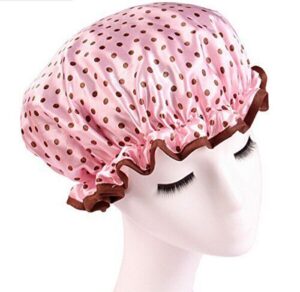
Two things make a mask actually work: good ingredients, and something to hold them in place while they soak in. This pink polka-dot cap brings retro charm to that job, but the design is functional first. The elastic edge grips comfortably across most head sizes, sealing in warmth so moisturizing properties in your DIY hair masks penetrate deeper instead of dripping down your neck.
Built from a water-resistant fabric, it keeps homemade hair masks off your clothes and floor while protecting your style between treatments. It’s washable and reusable, so one cap covers weeks of natural hair treatments for dry hair.
- Retro polka-dot design adds a fun, personal touch to routine care
- Elastic seam fits snugly without pinching
- Water-resistant exterior locks moisture in, mess out
- Reusable construction helps sustainable habits
- Soft lining shields fragile strands from friction
| Cold-pressed | Unknown |
|---|---|
| Natural ingredients | Unknown |
| Multipurpose use | Unknown |
| Large container | Unknown |
| Moisture boosting | Unknown |
| Certified quality | Unknown |
| Additional Features |
|
3. Zoe Spanish Extra Virgin Olive Oil
Good olive oil isn’t just a pantry staple — it’s a hair-softening tool hiding in plain sight. ZOE’s extra virgin oil comes from Cornicabra olives, cold-pressed and blended with Picual and Hojiblanca varieties for a consistent, buttery flavor batch after batch.
That same richness translates to your strands. The oleic acid and vitamin E in this oil help smooth rough cuticles and lock moisture into the scalp, so dry, brittle hair feels softer after just one treatment.
You’ll get 2.31 pounds packed into a reusable metal tin, protecting the oil from light so it stays fresh longer. One tablespoon stirred into any mask recipe adds real shine without weighing hair down. Once you’re finished, rinse the tin and repurpose it as a small vase.
| Best For | Home cooks who want a rich, restaurant-quality Spanish olive oil for dressings, dips, and finishing dishes without the hassle of high-heat cooking. |
|---|---|
| Cold-pressed | Yes |
| Natural ingredients | Yes |
| Multipurpose use | Yes |
| Large container | 2.31 lbs tin |
| Moisture boosting | Yes |
| Certified quality | Unknown |
| Additional Features |
|
- Cold-pressed from Cornicabra and blended olive varieties for a smooth, buttery, fruity flavor
- Light-blocking metal tin keeps the oil fresher for longer
- Versatile for vinaigrettes, pastas, flatbreads, and as a butter substitute over vegetables
- Delicate flavor isn’t suited for high-heat or heavy frying
- Requires careful storage to keep the tin in good condition
- Metal tin makes it harder to gauge remaining oil compared to a clear bottle
4. YS Eco Bee Raw Unfiltered Honey
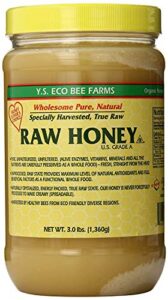
Ever wonder why raw honey feels different than the bear-shaped stuff at the grocery store? Y.S. Eco Bee Farms skips pasteurization and filtering entirely, so the live enzymes and antioxidants stay intact instead of getting cooked out.
That’s exactly what your hair wants. Honey works as a natural humectant, pulling moisture into each strand and sealing it under the cuticle for lasting softness.
The texture is thick and paste-like, so it blends into masks without turning your mixing bowl into a sticky mess. You get 3 pounds in a kosher-certified glass jar, sourced from eco-friendly hives across diverse regions.
One heads-up: raw honey can carry trace pollen, so skip it for infants and patch-test first if you’re prone to allergies.
| Best For | Anyone looking to add a natural, nutrient-rich humectant to their hair care routine or wants a raw, minimally processed honey for everyday use. |
|---|---|
| Cold-pressed | No |
| Natural ingredients | Yes |
| Multipurpose use | Yes |
| Large container | 3 lbs jar |
| Moisture boosting | Yes |
| Certified quality | Kosher Certified |
| Additional Features |
|
- Unpasteurized and unfiltered, so live enzymes, vitamins, and minerals stay intact
- Thick, paste-like texture blends easily into hair masks without a sticky mess
- Kosher certified and sourced from eco-friendly, diverse hive regions
- Raw honey may contain trace pollen, which isn’t ideal for allergy-prone users without a patch test
- Not suitable for infants due to the unpasteurized content
- Thick consistency may require extra mixing or dilution depending on the recipe
5. Viva Naturals Organic Coconut Oil
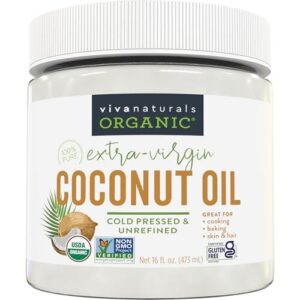
Rounding out your kit, Viva Naturals Organic Coconut Oil earns its keep as a true multitasker. It’s cold-pressed from fresh organic coconuts, unrefined, and carries USDA Organic and Non-GMO Project Verified status, so you know exactly what’s going into your mask.
That 40-50% lauric acid content is the real workhorse here. It’s what lets this oil actually penetrate the hair shaft instead of sitting on top, locking in moisture and cutting down on protein loss strand by strand.
Beyond hair care, it doubles as a body moisturizer, makeup remover, or even a butter swap in the kitchen (smoke point tops out at 350°F, so keep that in mind for cooking). Pick your size, 16, 32, or 54 ounces, and it stores easily in a cool, dark spot for months without losing potency.
| Best For | This oil is best for anyone wanting a natural, multi-purpose staple for hair care, skin care, and cooking all in one jar. |
|---|
- USDA-Certified Organic and Non-GMO Project Verified for clean, trustworthy sourcing
- Versatile enough to use as a hair mask, moisturizer, makeup remover, or cooking oil
- Available in multiple sizes (16, 32, or 54 oz) to fit different needs and budgets
- Limited 350°F smoke point makes it unsuitable for high-heat cooking methods
- Solid at room temperature, which may require melting before use in some applications
- Single-ingredient formula means it lacks added actives found in specialized beauty products
Frequently Asked Questions (FAQs)
What’s the best homemade hair mask for dry hair?
Your best bet combines avocado, coconut oil, and honey for deep hydration. This trio delivers healthy fats, lauric acid, and natural humectant properties, softening brittle strands while sealing moisture into the cuticle for lasting softness.
Which hair mask is best for dry hair at home?
Grandma’s old remedy still wins: the avocado and egg yolk mask is your best bet. It combines rich fats with protein-support, softening strands while reinforcing structure—perfect for hair that feels dry, brittle, and desperate for a comeback.
What is the 10 miracle hair mask?
It’s a 10 Miracle Hair Mask, a conditioning treatment with glycerin, hydrolyzed collagen, and keratin amino acids. Apricot kernel and almond oils add shine, while dimethicone smooths strands—store-bought convenience for those short on DIY time.
What is a home remedy for extremely dry hair?
Think of thirsty straw plunging into a coconut — that’s your hair right now. Warm coconut oil melted with honey works like a drink of water, coating strands to lock in moisture while soothing dryness from root to end.
Can diet affect how dry your hair gets?
Yes—what you eat shows up on your strands. Low protein, iron, zinc, or omega-3 intake weakens hair structure and dries out the scalp. Skimping on water doesn’t help either. Feed your body well, and your hair mask works even better.
How does hard water contribute to hair dryness?
Hard water coats hair in mineral residue that blocks moisture, roughens cuticles, and weakens strands. This buildup leaves hair looking dull, feeling stiff, and more prone to breakage—so a clarifying rinse becomes essential for restoring softness and shine.
Are hair masks safe for color-treated hair?
Like a rotary-phone rinse era, color care needs gentle handling now. Your color’s safe with sulfate-free, pH-balanced masks. Skip harsh acids, patch test first, and rinse with cool water to lock in pigment and shine.
How do you store leftover homemade mask mixture?
Got extra mixture? Pop it in an airtight container in the fridge for 1–3 days, labeled with the date. Scoop with clean utensils only, and toss it if it smells off or changes color.
Does hair porosity change how masks absorb?
Think of porosity as a door: some hair barely cracks open, some stays wide open. Low porosity needs warmth to coax cuticles apart. High porosity soaks up moisture fast but loses it just as quick without sealing oils afterward.
How often should you use a hair mask?
Dry, thirsty strands do best with masking 2 to 3 times a week, while damaged or color-treated hair usually needs just 1 to 2 sessions. Fine or oily hair? Stick to once weekly or less, so you don’t weigh things down.
Conclusion
Expensive salon treatments promise miracles; your kitchen delivers real results. That’s the quiet truth behind every one of these homemade hair mask recipes for dry hair. Coconut oil, honey, avocado, they don’t just coat your strands, they rebuild them.
Give your hair one consistent week, and you’ll notice the difference: softer ends, calmer frizz, real shine. Your bathroom cabinet was never the problem. Your hair just needed what was already there, used the right way, applied with patience.