This site is supported by our readers. We may earn a commission, at no cost to you, if you purchase through links. This content is for general informational and educational purposes only and is not a substitute for professional medical, dermatological, or nutritional advice.

Your upper lip didn’t get the memo. You’ve been waiting, patient as a farmer watching a dry field, and the mustache still comes in patchy, thin, or just… reluctant. It’s frustrating, especially when you know what you’re going for.
Here’s the thing: genetics sets the ceiling, but most guys never come close to hitting it. Poor follicle care, skipping the awkward grow-out phase, and using the wrong products all quietly sabotage your progress.
Knowing how to get a thicker mustache means working with your biology, not against it. That’s exactly what this breakdown covers.
Table Of Contents
- Key Takeaways
- What Determines How Thick Your Mustache Can Grow?
- How Do You Grow and Care for a Thicker Mustache?
- How Can You Make a Patchy Mustache Look Fuller?
- Do Mustache Growth Products and Supplements Work?
- When Should You See a Dermatologist About a Thin Mustache?
- Frequently Asked Questions (FAQs)
- How can I make my moustache thick?
- Why is my moustache so thin?
- How do I stimulate mustache growth?
- Why can’t I grow a full mustache?
- When does a mustache start to grow?
- How fast does facial hair grow?
- How can I make my mustache thicker?
- Is it okay to use castor oil for my mustache?
- Can shaving more frequently make mustache thicker?
- Do mustache growth serums actually work?
- Conclusion
Key Takeaways
- Your genetics set the ceiling for mustache thickness, but most guys never reach it because they skip proper follicle care, quit during the awkward grow-out phase, or use the wrong products.
- DHT sensitivity — not raw testosterone levels — is the real driver of whether your vellus hairs mature into thick terminal ones, which is why two guys with identical hormones can end up with very different mustaches.
- Combining 5% minoxidil with a 0.5mm derma roller is the strongest evidence-backed approach for real growth, since microneedling deepens minoxidil absorption while extending the follicle’s active growth phase.
- A sudden or patchy mustache with smooth bare spots, itching, or accompanying fatigue warrants a dermatologist visit, as these signs can point to scarred follicles or hormonal imbalances rather than ordinary genetics.
What Determines How Thick Your Mustache Can Grow?

Genetics sets your ceiling. Your DNA determines how many hair follicles sit on your upper lip, and no grooming trick in the world can add more. Think of it as your mustache’s speed limit.
Pairing smart grooming habits with targeted lifestyle changes—like the ones in this guide to proven techniques for growing a thicker mustache—helps you push right up against that genetic ceiling.
Your DNA sets your mustache’s ceiling—no grooming trick in the world can raise it
The real driver of thickness, though, is DHT sensitivity. DHT is an androgen hormone that converts soft vellus hairs into thick terminal ones. Your follicles’ response to it’s genetically programmed, so even average testosterone levels can produce a full, dense mustache if they’re highly sensitive to DHT.
Ethnic background matters too. Follicle density and distribution vary widely across populations, which explains why some guys sport a full, thick mustache at 18 while others are still waiting at 25. Age really helps. Follicles mature over time. It’s notable that beard growth traits are polygenic, meaning multiple gene combinations work together to shape your mustache’s full potential.
How Do You Grow and Care for a Thicker Mustache?

Knowing your ceiling is step one. Working toward it is step two, and that part is all you.
Your follicles perform best in a calm environment. Wash the skin under your mustache regularly and keep it lightly moisturized. Dryness and flaking irritate follicles, and irritated follicles stall. A few drops of beard oil or growth oil massaged in daily keeps things balanced without clogging pores.
For a deeper look at keeping skin balanced through every stage of growth, beard care and skin health routines can help you build habits that support both your follicles and the skin beneath.
Here’s what actually moves the needle:
- Resist early trimming so hairs pass the scratchy phase and gain real length
- Apply beard oil daily to reduce the skin inflammation that can slow follicles
- Use consistent mustache styling to train hairs into position as they grow
Patience carries most of the weight. Give your follicles a shot.
How Can You Make a Patchy Mustache Look Fuller?
Growth takes time, but a patchy mustache doesn’t have to wait for biology to catch up. You control how yours looks right now.
Length helps more than people realize. Longer hairs cover gaps better than stubble because they lay across sparse areas instead of exposing them. Apply a mustache growth balm to soften and direct hair toward thin spots, locking coverage in place.
For a balm that works with the hair’s natural texture and weight, a natural beard balm made without beeswax often offers a lighter hold that lets longer hairs drape more freely over sparse patches.
Five ways to look fuller today:
- Let hairs grow past the patchy stage before trimming the shape
- Brush in one direction to lay hairs over gaps
- Use a tinted beard oil to reduce contrast in lighter patches
- Apply cosmetic fiber sprays to add visual density
- Define clean edges so sparse zones look deliberate
Intentional styling beats waiting.
Do Mustache Growth Products and Supplements Work?
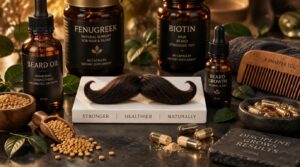
The market is flooded with products promising a fuller mustache, so knowing what’s actually worth your time matters. Some options have real science behind them, others are mostly hype. Here’s what you need to know about the ones people actually use.
For those starting from scratch, understanding how beard oil softens and conditions mustache hair can help you separate genuinely useful products from the noise.
Oils and Biotin Supplements
Say you’ve been using a beard oil every morning for a month and your mustache looks slightly fuller. That’s conditioning at work, not new follicles firing up. Oils soften each strand, reducing breakage and improving light reflection.
Biotin and beard growth vitamins get hyped hard. But unless you’re actually deficient, the evidence that biotin thickens facial hair is pretty thin.
Minoxidil and Microneedling
For maximum mustache gains, combine 5% minoxidil with microneedling. Minoxidil improves blood circulation to face follicles, extending their growth phase. A derma roller triggers collagen production and opens micro-channels, letting minoxidil absorb deeper. A 0.5mm derma roller for beard growth creates the precise micro-channels needed to maximize minoxidil penetration without causing unnecessary skin irritation.
Here’s the protocol:
- Microneedle with a 0.5mm derma roller one to two times weekly.
- Wait 24 hours, then apply minoxidil.
- Use minoxidil twice daily.
When Should You See a Dermatologist About a Thin Mustache?

Hair follicle health is the first thing a dermatologist examines when mustache thinning seems unusual. If your thin mustache came on suddenly, spread quickly, shows up as smooth bare patches, or comes with itching or scalp involvement, book an appointment. That’s not typical genetics doing its thing.
Your doctor can use dermoscopy to check whether your follicles are scarred or just temporarily dormant. Scarred ones don’t regrow, and catching that early matters.
Androgen levels are another piece of the puzzle. Fatigue, weight shifts, or changes in libido alongside upper-lip thinning? That’s worth a hormonal workup.
Nutritional deficiencies usually cause broader hair and skin changes all over. If the rest of your hair looks fine, diet probably isn’t the main driver.
Frequently Asked Questions (FAQs)
How can I make my moustache thick?
Think your genetics already called it? Not quite. Mustache thickness does have a real genetic ceiling, but consistent daily hair follicle stimulation through simple massage genuinely helps push your facial hair growth toward that ceiling.
Why is my moustache so thin?
Your genetics drew the blueprint, but androgen levels and follicle maturity actually shape your mustache thickness. Facial hair growth often evolves for years well after puberty, so thin hairs now don’t tell the whole story.
How do I stimulate mustache growth?
Your follicles are like sleeping workers. Give them a good nudge. Daily massage boosts blood flow, a weekly derma roller awakens the skin, and minoxidil remains the strongest evidence-backed option for real facial hair growth.
Why can’t I grow a full mustache?
Blame your parents, but only partly. Your facial hair follicles and hormonal influence on hair are genetically pre-set. Lower DHT sensitivity lands you squarely in patchy mustache territory, and no amount of wishing changes that.
When does a mustache start to grow?
Most guys spot their first upper lip hair somewhere between ages 12 and That’s exactly when testosterone surges and starts activating those dormant follicles, turning soft peach fuzz into the beginning of your mustache.
How fast does facial hair grow?
Think of your mustache like a slow river. Your facial hair growth rate sits at 3 to 5 mm daily, roughly 6 to 13 mm monthly, driven by testosterone and your active anagen phase length.
How can I make my mustache thicker?
Like tending a fire, your mustache needs the right fuel. Beard balm, biotin, and growth oil lay the groundwork. Don’t skip minoxidil, a derma roller, or mustache wax for fuller control. Patience does the rest.
Is it okay to use castor oil for my mustache?
Castor oil is a wish cast into the wind. Ricinoleic acid conditions and softens hair nicely, but evidence it stimulates facial hair follicles is thin. Patch test first, use sparingly, and expect conditioning, not growth.
Can shaving more frequently make mustache thicker?
Shaving more often won’t change your hair follicles or actually boost thickness. What it does is create blunt ends that can temporarily look denser. Your mustache growth is driven by genetics, not your razor schedule.
Do mustache growth serums actually work?
Serums promise a lush lip forest, but most mustache growth serums are cosmetic at best. Minoxidil has the strongest evidence, though irritation is common. Biotin only works if you’re deficient. Genetics still runs the show.
Conclusion
Most guys quit during the awkward first month and never find out what their upper lip was actually capable of.
Learning how to get a thicker mustache isn’t about waiting and hoping. It’s about nutrition, routine, smart product choices, and knowing when to call a professional. Your genetics set a limit, sure, but you’re probably not there yet. Stay consistent, give it real time, and let your mustache show you what it’s got.