This site is supported by our readers. We may earn a commission, at no cost to you, if you purchase through links. This content is for general informational and educational purposes only and is not a substitute for professional medical, dermatological, or nutritional advice.
Two jars sit on your bathroom shelf. One is thick enough to stand a spoon in. The other turns to liquid the moment it touches your palm. Both promise softer hair, yet they behave nothing alike once they hit your strands.
That gap matters because shea butter vs coconut oil for hair isn’t a popularity contest. One cushions the outside of each strand, while the other slips inside it. Pick wrong, and you’ll get stiff, greasy waves instead of shine.
Your curl pattern and porosity decide the winner, and the fit is easier to spot than you’d think.
Table Of Contents
- Key Takeaways
- Shea Butter Vs Coconut Oil: Key Differences
- Shea Butter and Coconut Oil: Benefits and Drawbacks
- Choosing Between Both for Your Hair Type
- Using Shea Butter and Coconut Oil Effectively
- Comparing Shea Butter and Coconut Oil Products
- Frequently Asked Questions (FAQs)
- Is coconut oil better than shea butter for hair?
- Which oil is the healthiest for hair?
- What is the disadvantage of shea butter on hair?
- When should you not use coconut oil on your hair?
- Is shea butter better than coconut oil?
- Does shea butter dry out hair?
- What are the health benefits of shea butter and coconut oil?
- Should I use coconut oil or shea butter for my hair?
- Does shea butter grow hair?
- Is coconut oil good for your hair?
- Conclusion
Key Takeaways
- Shea butter coats and seals your strands, so it suits thick, coarse, curly, or coily hair, while coconut oil slips inside the shaft, so it suits fine or damaged hair.
- Your hair type and porosity decide the winner, because neither oil is better for everyone.
- Too much of either oil causes buildup or stiffness, especially on low-porosity hair, so use a pea-sized amount and clarify now and then.
- Use coconut oil about 30 minutes before shampooing to cut protein loss, and use shea butter on damp hair after washing to seal in moisture.
Shea Butter Vs Coconut Oil: Key Differences
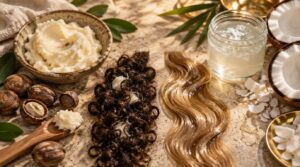
Texture tells you most of what you need to know. Shea butter is thick, semi-solid at room temperature, and slow to spread. It cushions your strands and leaves a longer-lasting film, which is why it suits dry, coarse hair. Its unsaponifiable fraction, rich in triterpenes and tocopherols, helps seal moisture without fully smothering the hair shaft. Shea butter also shields hair from environmental impacts like sun, wind, and pollutants, which is why it works well for curly and coily hair.
Coconut oil is the opposite. It spreads fast, feels lighter, and absorbs quicker. Its lauric acid is small enough to slip inside the strand, which helps cut protein loss during washing. Its moisturizing properties are weaker, though, since it works more as a solvent than a sealant.
For best results, apply it about 30 minutes before shampooing, and see how coconut oil benefits your hair depending on whether it’s damaged, color-treated, or healthy.
So which one matters for you? Your hair type and hair porosity decide that. Keep reading.
Shea Butter and Coconut Oil: Benefits and Drawbacks
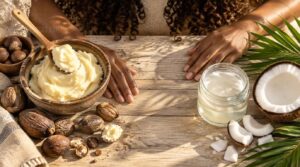
Both oils have fans, and both have quirks you should know about before you scoop anything into your hair. Below, we’ll look at what each one does well and where it can let you down. Think of it as a fair fight, so you can decide which oil earns a spot in your routine.
Shea Butter: Conditioning, Frizz, and Buildup
A rich moisturizer like shea butter seals in hydration and softens dry strands, so your conditioning routine works harder. It also smooths the cuticle, which calms frizz and helps curls clump.
Go easy, though. Shea butter is thick and waxy, so too much causes buildup, especially on fine or low-porosity hair. Use it once or twice weekly, and clarify occasionally.
Coconut Oil: Penetration, Breakage, and Stiffness
Coconut oil works differently. Its lauric acid is small and straight-chained, so it slips into the hair shaft instead of just coating it. That hair penetration helps cut protein loss, which means less hair breakage when you wash.
Because almond oil is heavier and tends to sit on the surface, this almond oil vs coconut oil comparison for hair helps you pick the better match for your hair type.
Coconut oil’s small, straight-chained lauric acid slips inside the hair shaft instead of just coating it, cutting protein loss and breakage when you wash
The catch? Too much leaves hair stiff, especially if your hair porosity is low. Warm it first, use a little, and keep it mid-length to ends.
Choosing Between Both for Your Hair Type
So, which oil is yours? It mostly comes down to your hair type and hair porosity.
If your hair is coarse, curly, or coily, shea butter is usually the better pick. It’s a rich moisturizer that seals in water and fights dryness. On low porosity hair, use a pea-sized amount on damp, warm strands. Anything more will sit there.
If your hair is fine, straight, or wavy, go light. A little coconut oil goes a long way, and it can help if your strands are damaged and breaking.
Here’s how the right choice might feel:
- Soft curls that finally hold their moisture all day
- Fewer snapped strands in your brush
- Zero stiff, greasy buildup weighing you down
Not sure? Start small and watch how your hair responds.
If you’d like gentler options to use alongside it, these natural remedies for bikini line bumps can help calm irritation between treatments.
Using Shea Butter and Coconut Oil Effectively
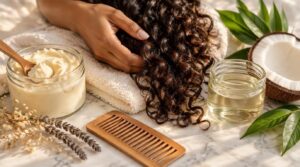
You don’t need a complicated routine to get good results from either one. Start by matching the product to your hair type, then match the timing to the job.
Apply coconut oil before shampooing, since it helps protect your hair from protein loss during washing. Use shea butter after washing, on damp hair, to seal in your moisturizer. Fine hair? Go light, because a little shea butter goes a long way.
| Step | What to Do |
|---|---|
| Pre-wash | Smooth coconut oil through dry lengths 30 minutes before shampooing |
| Wash | Shampoo and condition as usual |
| Seal | Add pea-sized shea butter to damp ends |
| Maintain | Reduce amounts if hair feels heavy |
That layered approach gives you protection and softness without piling on any buildup.
Comparing Shea Butter and Coconut Oil Products
Ready to shop? Raw shea butter and coconut oil are only part of the story, since plenty of hair masks mix them with other ingredients. Here’s a quick look at pure ingredients versus formulated masks, plus two popular picks, so you can see which one suits your hair.
Pure Ingredients Vs Formulated Hair Masks
Is a jar of pure shea butter really better than a hair mask? Not always.
Pure ingredients give you control over dosage and cost. Formulated masks give you easier rinsing and balanced textures.
- Pure shea butter and coconut oil: cheaper, but harder to spread
- Hair mask: consistent results, simpler washout
- Either one: watch for product buildup
Maui Moisture Shea Butter Hair Mask
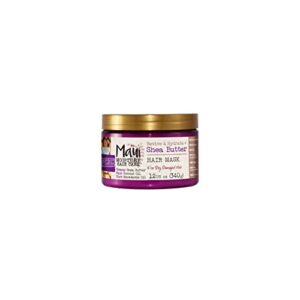
Think of this mask as a smoothie for thirsty hair: a mix of good stuff, poured over in one go.
It pairs aloe vera and shea butter with coconut water, coconut oil, and macadamia oil. The formula is vegan and silicone-free, and it comes in a 340 gram tub.
Use it weekly, either rinsed out or left in. The brand says hair can be up to 80% stronger after two uses, but results vary.
One catch? Leave-in use can feel heavy, so start small.
- Repairs dry, damaged hair with aloe vera and shea butter, plus coconut water, coconut oil, and macadamia oil
- Vegan and silicone-free formula in a generous 340 gram tub
- Flexible use as a rinse-off mask or an intensive leave-in, with claims of up to 80% stronger hair after two uses
- The 80% strength claim comes from the brand’s own testing, so results may vary
- Leave-in use can feel heavy and may not suit all hair types or preferences
- Works only as a conditioning treatment, so it cannot replace a shampoo or cleanser
Garnier Hair Food Banana Mask
Think of this mask as a smoothie for thirsty hair. It blends shea butter, banana juice, and glycerin into a lightweight, slightly runny formula that still clings like a proper mask.
It’s a handy pick for dry hair type concerns. Use it three ways: a quick conditioner, a 3-5 minute mask, or a leave-in on damp ends. Expect softer strands and better moisture retention.
Frequently Asked Questions (FAQs)
Is coconut oil better than shea butter for hair?
Honestly, one jar won’t save your hair forever. Coconut oil is better for moisture retention and strength if your hair type is fine or low porosity, since it absorbs easily. Coily hair? Shea butter wins.
Which oil is the healthiest for hair?
Wondering which oil is truly the healthiest? It depends on your hair type. Coconut oil suits fine hair and cuts breakage. Shea butter suits thick, curly hair and locks in moisture retention. Match the oil to your needs.
What is the disadvantage of shea butter on hair?
Ever wonder why your hair feels greasy and dull? Shea butter’s heavy texture causes hair product buildup, blocks hair shaft penetration, especially on low porosity hair, and can upset your hair protein balance over time.
When should you not use coconut oil on your hair?
Skip coconut oil if you get greasy hair or stiff, brittle strands. Low porosity hair often gets product buildup, and you’ll need clarifying shampoo.
Stop if your scalp itches or burns, or if you’re allergic.
Is shea butter better than coconut oil?
The idea that one wins outright doesn’t hold up. Shea butter and coconut oil use different fatty acids, so your hair type decides. Fine hair usually prefers coconut oil; thick, dry hair prefers shea butter.
Does shea butter dry out hair?
Think of shea butter as a raincoat, not a drink. It seals moisture in, but only if your hair already has some. On dry hair, or with low porosity, it can leave strands drier.
What are the health benefits of shea butter and coconut oil?
Shea butter seals in hair moisture retention, calms an irritated scalp, and delivers vitamins A and E. Coconut oil slips inside the strand, helping nourishment and reducing breakage, which helps hair growth. Together, they cover comfort and strength.
Should I use coconut oil or shea butter for my hair?
Picking one oil can feel like a life-or-death decision, but it’s simpler than you think. Fine or low-porosity hair? Try coconut oil sparingly. Thick, curly, or dry hair? Shea butter’s moisturizing properties usually win.
Does shea butter grow hair?
Shea butter is a shield, not a spark plug. It won’t trigger hair growth stimulation at the root. But with better scalp moisturization and hair hydration, your strands snap less, so you keep more length.
Is coconut oil good for your hair?
Coconut oil is the miracle product that can leave your hair greasy. It’s great for high porosity hair, supporting your hair moisture barrier, but low porosity hair? Go light.
Apply it sparingly, just before washing.
Conclusion
One jar seals, the other seeps in. Neither is the hero for everyone. Once you’ve weighed shea butter vs coconut oil for hair, the choice comes down to your curl pattern and porosity.
Thick, dry, high-porosity strands usually love shea’s weight. Fine or low-porosity hair often prefers a light touch of coconut oil, used sparingly. Start small, watch how your hair responds, and adjust.
Your strands will always tell you the answer. Listen to them.