This site is supported by our readers. We may earn a commission, at no cost to you, if you purchase through links. This content is for general informational and educational purposes only and is not a substitute for professional medical, dermatological, or nutritional advice.
Your hair has a moisture problem, and the solution might already be sitting in your kitchen pantry. Sunflower oil contains linoleic acid and vitamin E, two compounds that create a protective barrier around each hair strand while delivering hydration deep into the cuticle.
Unlike heavier oils that weigh hair down or lighter ones that evaporate too quickly, sunflower oil strikes a balance that works for most hair types. It reduces breakage, smooths frizz, and soothes irritated scalps without leaving behind a greasy film.
Whether you’re dealing with dryness, thinning, or stubborn flyaways, this lightweight oil offers a practical approach to healthier hair—and you don’t need an expensive salon treatment to see results.
Table Of Contents
Key Takeaways
- Sunflower oil’s 60–70% linoleic acid and high vitamin E content create a protective barrier that locks in moisture, reduces breakage by 34% in clinical trials, and boosts shine by 330% without the heavy residue of other oils.
- Cold-pressed sunflower oil retains up to 80% more antioxidants than refined versions, making it the better choice for deep conditioning treatments, while its comedogenic rating of 0 means it won’t clog scalp pores or trigger acne.
- You can apply sunflower oil as a pre-shampoo treatment for 30 minutes to overnight, use it as a leave-in conditioner on damp hair, or mix it 1:1 with coconut oil for balanced hydration that addresses dryness and frizz.
- Sunflower oil’s anti-inflammatory properties reduce scalp inflammation by 65% in eight weeks and match steroid cream results for dandruff control, making it effective for irritated or flaky scalps without harsh chemicals.
Key Benefits of Sunflower Oil for Hair
Sunflower oil works wonders for your hair because it’s packed with nutrients that address everything from dryness to scalp irritation. Whether you’re dealing with frizz, breakage, or simply want shinier hair, this natural oil delivers real results.
Here’s how sunflower oil can transform your hair from root to tip.
Enhances Softness, Shine, and Smoothness
Sunflower oil’s lightweight structure penetrates your hair shaft, repairing the cuticle and reinforcing the lipid layer for immediate softness. Clinical trials show 330% increased shine and 96% improved smoothness after 12 weeks.
Sunflower oil’s lightweight structure repairs hair cuticles for immediate softness, boosting shine by 330% and smoothing by 96% in 12 weeks
Its rapid oil absorption reduces frizz without residue, while reflectivity metrics confirm measurably glossier results. You’ll notice hair conditioning benefits that make strands feel smoother and look healthier with consistent use.
Sunflower oil can also help address dandruff and irritations on the scalp.
Rich in Vitamins and Essential Fatty Acids
That softness comes from sunflower oil’s nutrient density—it delivers about 5.6 mg of vitamin E per tablespoon, giving you 37% of your daily value. You’re also getting 60–70% linoleic acid and oleic acid, essential fatty acids that protect hair lipids from oxidative stress.
These antioxidant properties shield your scalp and strands, supplying the building blocks for resilient, glossy hair. It can also be used for deep conditioning treatments.
Moisturizes and Hydrates Dry Hair
When your strands feel parched, that linoleic acid goes to work—it normalizes TEWL and aids lipid replenishment around each fiber, locking in moisture you’d otherwise lose. You’re giving your scalp hydration while the oil smooths cuticles, so hair feels soft instead of brittle.
Here’s what you can expect:
- Reduced water loss within two weeks of regular use
- Enhanced barrier function on dry, flaky scalps
- A lightweight film that doesn’t weigh hair down
- Measurable softness enhancement and easier combing
Reduces Frizz, Split Ends, and Breakage
Beyond locking in hydration, you’ll see fewer broken strands because Cuticle Lipid Restoration rebuilds the hair fiber’s outer shield. This boosts Hair Fiber Flexibility and lowers surface friction control during combing—key to Mechanical Stress Reduction.
In one 12‑week trial, shine jumped 330% and hair breakage dropped noticeably.
Just remember: sunflower’s Limited Penetration means benefits stay surface‑level, tackling frizz and split ends by coating rather than repairing internal proteins.
Soothes Scalp Inflammation and Dandruff
When dandruff or scalp inflammation makes your head feel like it’s under siege, sunflower oil steps in as a gentle steroid alternative. Its anti-inflammatory properties calm redness and provide itch relief, while linoleic acid boosts barrier function and fungal control for better scalp health.
- Reduces TNF-alpha to ease scalp inflammation and soothe an itchy scalp
- Cuts inflammation by 65% in eight weeks
- Controls dandruff-causing fungi naturally
- Matches steroid cream results in mild cases
Supports Hair Growth and Thickness
Although sunflower oil won’t magically transform thinning hair overnight, it strengthens what you’ve got by protecting follicle nourishment and reducing hair breakage. Here’s what the research shows:
| Benefit | Mechanism |
|---|---|
| Follicle nourishment | Linoleic acid (60%) bolsters scalp microcirculation and hair follicles |
| UV protection | Vitamin E shields against structural damage |
| Elasticity improvement | Reduced breakage maintains hair health and thickness |
| Hair growth support | Antioxidants improve conditions for hair elasticity |
How to Use Sunflower Oil in Hair Care
Sunflower oil works in several different ways depending on how you apply it to your hair. You can use it before shampooing, as a leave-in treatment, or even as a finishing touch after styling.
Here are the most effective methods to get the best results from sunflower oil.
Pre-Shampoo Treatments for Deep Nourishment
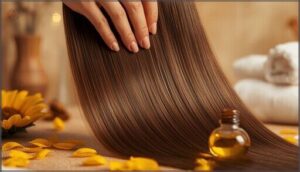
Your best defense against hair dryness starts before you even reach for shampoo. Apply sunflower oil to dry hair 30 minutes to overnight before washing—this application timing creates barrier support that shields strands from mechanical damage during cleansing.
Focus the deep conditioning treatment on mid-lengths and ends, where hair nourishment matters most. Massage gently into your scalp for scalp comfort, then shampoo as usual to reveal softer, more hydrated hair.
Leave-in Conditioner to Lock in Moisture

After washing, trap water inside the strand by smoothing a pea-sized amount of sunflower oil through damp hair—this application technique forms an occlusive film that slows moisture loss by up to 30%.
Focus on mid-lengths and ends, adjusting the frequency of use based on your hair type. Fine hair benefits from occasional use; high-porosity strands tolerate daily leave-in hair treatments without the potential drawbacks of heavy buildup.
DIY Hair Masks for Intense Hydration
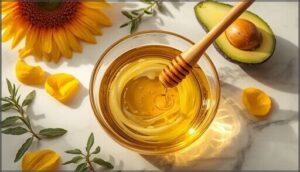
For intense hydration, blend 2 tablespoons of warmed sunflower oil with honey or avocado to create a DIY deep conditioning treatment that locks moisture into your hair shaft. Apply the hair mask ingredients from mid-lengths to ends, leaving this emollient blend on damp strands for 30–60 minutes.
These oil-only masks and humectant additions deliver measurable improvements in softness while supporting scalp comfort through application parameters suited to your hair’s density.
Smoothing Serum for Frizz and Flyaways

When dry hair catches every gust of wind, a lightweight sunflower oil hair serum gives you frizz control without weighing down your strands. Clinical trials documented an 88% reduction in hair frizz over 12 weeks, with consumer reviews confirming easier styling and improved hair smoothness.
- Warm a pea-sized amount between your palms before applying to lengths and ends
- Use serum ingredients like linoleic acid to seal cuticles and lock moisture
- Apply as your final styling step for taming frizz and flyaways
- Stick to small doses—buildup prevention matters for light, manageable results
Mixing Sunflower Oil With Other Oils
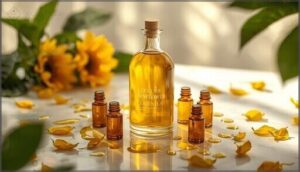
You can boost sunflower oil’s moisture effectiveness by blending it with complementary oils at proven ratios. Mix it 1:1 with coconut oil for balanced hydration, or add 10–20% castor oil to support hair growth outcomes.
Jojoba and argan blends improve softness in hair care products, while avocado combinations create nourishing hair masks. Keep essential oils under 1% to minimize adverse reactions during treatment.
Choosing The Right Sunflower Oil for Hair

Not all sunflower oils are created equal, and the type you choose can make a real difference in how your hair responds. The oil’s processing method, purity, and quality all affect how well it moisturizes and protects your strands.
Here’s what you need to know to pick the right one for your hair.
Cold-Pressed Vs. Refined Sunflower Oil
When choosing sunflower oil for hair care, you’ll find two main types: cold-pressed and refined. Cold-pressed oil retains up to 80% more antioxidants and preserves essential fatty acids that nourish your hair. Refined oil undergoes high-heat processing, which reduces nutrient retention but offers a lighter texture.
Consider these differences:
- Nutrient Retention: Cold-pressed preserves more Vitamin E and phytosterols
- Processing Methods: Cold-pressed uses mechanical extraction; refined involves chemical solvents
- Hair Suitability: Cold-pressed suits deep treatments; refined works for leave-in products
- Fatty Acids: Cold-pressed maintains higher linoleic acid (up to 68%)
- Health Considerations: Cold-pressed avoids chemical residues, better for sensitive scalps
For maximum hair health benefits, cold-pressed sunflower oil delivers enhanced moisturization and antioxidant protection.
Organic and Pure Options
Organic certification ensures your sunflower oil meets rigorous purity standards. USDA and COSMOS labels guarantee at least 95% organically produced ingredients without synthetic pesticides. Look for cold-pressed, GMO-free options with comedogenic ratings of 0, which won’t clog scalp pores.
Market trends show organic sunflower oil now represents 17.7% of the global market, driven by cultivation impacts that reduce pesticide residues by nearly 40% compared to conventional hair products.
Checking Quality and Ingredient Purity
Beyond organic labels, you need to verify what’s actually in the bottle. Testing methods like Gas Chromatography-Mass Spectrometry confirm purity standards and catch adulteration detection issues—studies found five of seven “pure” sunflower oils failed label accuracy checks.
Look for:
- GC-MS verification certificates on request
- Palmitic acid levels between 5–7.6% (higher suggests contamination)
- Regulatory compliance with EU or FDA cosmetic guidelines
Real purity protects your hair investment.
Comedogenic Rating and Suitability for Hair Type
Unlike face care, comedogenic ratings matter for your scalp too. High-linoleic sunflower oil scores 0—completely noncomedogenic—so it won’t trigger scalp acne or clog follicles on oily scalps. High-oleic variants rate around 2, better for dry hair types. Match oil comedogenicity to your porosity considerations and hair textures through patch testing.
Product formulation—leave-in versus rinse-off—also affects suitability across hair types.
| Hair Type | Recommended Variant |
|---|---|
| Oily scalp / acne-prone | High-linoleic (rating 0) |
| Normal / combination | Either variant works |
| Dry / low-porosity | High-oleic (rating 2) |
| Thick / high-porosity | High-oleic for moisture seal |
Potential Side Effects and Precautions
Although sunflower oil is generally safe, you can still experience allergic reactions—up to 56% of people sensitive to related plants test positive for sunflower allergens. Always perform patch testing on your inner arm 24 hours before scalp use.
Watch for scalp irritation, redness, or product buildup, especially if you have an oily scalp or scalp acne. Oil quality matters for minimizing sunflower oil side effects.
Top Sunflower Oil Hair Products
Finding the right sunflower oil product for your hair can feel overwhelming with so many options on the market. The good news is that several trusted brands incorporate sunflower oil into formulas designed to nourish, strengthen, and hydrate your strands.
Here are five products worth considering if you want to give your hair the benefits of sunflower oil.
1. Pura D’Or Anti Thinning Set
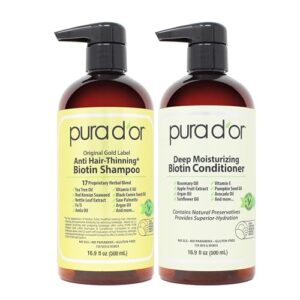
If you’re struggling with hair thinning or breakage, Pura D’Or’s Anti Thinning Set delivers clinical efficacy worth your attention. This duo combines sunflower extract with 17 DHT-blocking ingredients—including argan oil and saw palmetto—to target hair loss at the root.
In an eight-week study, users saw a 34% reduction in breakage and improved scalp hydration. Consumer reviews consistently praise better hair thickness and strength.
The sulfate-free formula aids hair growth while nourishing your scalp, making it a complete choice for hair care and hair health maintenance.
Best For: Anyone dealing with thinning hair or breakage who wants a clinically tested, sulfate-free system that strengthens hair and improves scalp health over time.
- Backed by clinical results showing 34% reduction in breakage and measurable improvements in hair volume, thickness, and scalp hydration after eight weeks
- Contains 17 DHT-blocking ingredients plus premium botanicals like argan oil, saw palmetto, and sunflower extract in a gentle, sulfate-free formula
- Works for all hair types including color-treated, curly, and damaged hair with visible improvements often seen within a few weeks
- Some users find the price point higher than comparable drugstore options
- Results vary by individual and may not address severe hair loss or advanced thinning conditions
- Requires consistent daily use over several weeks to see the full clinical benefits
2. Cosrx Ceramide Comfort Cream Balm
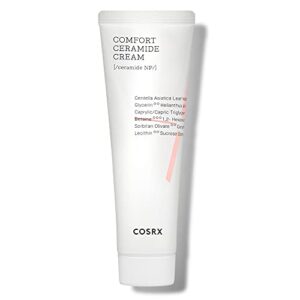
Though this balm is marketed for sensitive skin, its ceramide benefits translate beautifully to hair care. The 10,000 ppm ceramide NP repairs damaged cuticles and locks in moisture, while Centella asiatica leaf water soothes scalp irritation.
You’ll notice the rich balm texture feels occlusive at first—apply sparingly to your ends before bedtime to avoid greasiness. The ingredient analysis reveals vitamin E and barrier-supportive lipids that reduce frizz without weighing down strands.
For usage tips: patch-test if you’re sensitive to bergamot oil, and allow absorption time before styling.
Best For: People with dry, sensitive, or compromised skin barriers who need intensive overnight hydration and repair, especially those dealing with eczema, psoriasis, or post-treatment irritation.
- Contains 10,000 ppm ceramide NP that clinically strengthens the skin barrier and locks in moisture for hours, with studies showing measurable improvements in hydration within 2-4 weeks
- Formulated with 50% Centella asiatica leaf water and madecassic acid to calm redness, itching, and inflammation—ideal for reactive or atopic skin
- Free from common irritants like parabens, sulfates, and synthetic fragrance, making it suitable for sensitive skin with a low risk of allergic reactions
- The rich balm texture absorbs slowly and can feel oily or occlusive on the skin, making it tricky to layer with sunscreen or makeup in morning routines
- May cause comedonal breakouts if over-applied, particularly for oily or acne-prone skin types who use too much product
- Contains bergamot fruit oil, which can cause slight stinging in some users and may increase photosensitivity if applied during the day
3. Jason Vitamin E Moisturizing Body Oil
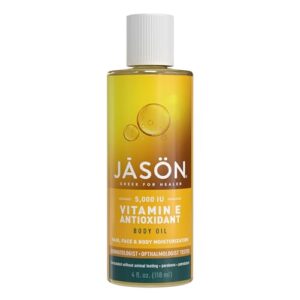
Jason’s 5,000 IU Vitamin E Moisturizing Body Oil doubles as a multiuse hair treatment, blending sunflower seed oil with almond, avocado, and wheat germ oils. High in linoleic acid, the lightweight oil composition moisturizes without heavy buildup.
Customer reviews confirm its effectiveness on dry ends and frizzy strands, though some note leakage issues in the 4-ounce packaging. The formula meets clean safety standards (paraben-free, cruelty-free) and delivers antioxidant-rich hair care.
Apply sparingly post-wash to seal moisture and boost shine, especially if your hair tends toward dryness.
Best For: People looking for a lightweight, multipurpose oil to moisturize dry hair ends, tame frizz, and add shine without heavy buildup.
- High linoleic acid content from sunflower seed oil makes it lightweight and less greasy than heavier oils
- Clean formulation that’s paraben-free, sulfate-free, and cruelty-free with antioxidant-rich vitamin E blend
- Versatile enough to use on hair, face, and body for all-over moisture
- Packaging has reported leakage issues that can waste product during storage or travel
- Small 4-ounce bottle size may require frequent repurchasing for regular users
- Strong scent may be off-putting for some people sensitive to fragrance
4. Weleda Skin Food Hydrating Body Butter
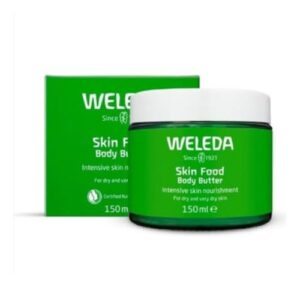
Weleda Skin Food Hydrating Body Butter lists sunflower seed oil as its second ingredient, partnered with shea and cocoa butters to create intensive hair hydration for extremely dry ends and brittle strands.
The formula’s high linoleic acid content aids barrier recovery, while the rich texture absorbs quickly without greasiness.
NATRUE-certified and packaged in recyclable glass, this vegan body butter doubles as a pre-shampoo treatment or overnight mask.
User feedback praises lasting moisture, though the premium price point doesn’t suit every budget.
Best For: People with very dry skin looking for a rich, natural body moisturizer that absorbs quickly and provides long-lasting hydration without synthetic additives.
- High concentration of nourishing plant oils (sunflower, shea, cocoa butter) that support skin barrier recovery and deliver intensive moisture
- NATRUE-certified natural formula that’s vegan, cruelty-free, and free from parabens, synthetic fragrances, and other harsh chemicals
- Rich texture that absorbs fast without leaving a greasy film, so you can get dressed right away
- Higher price point compared to conventional body butters, which may not fit every budget
- Very rich formula might feel too heavy for those who prefer lightweight lotions or have normal to oily skin
- Some customers have reported receiving damaged glass jars during shipping
5. Medicube Zero Pore Exfoliating Toner Pads
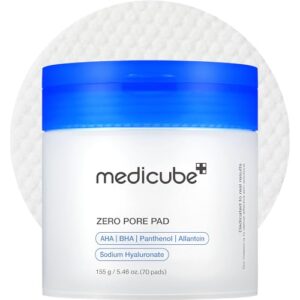
Though Medicube Zero Pore Exfoliating Toner Pads target facial skin, they contain sunflower oil along with lactic and salicylic acids that work through a dual-textured exfoliation mechanism. The pore pad ingredients include humectants like glycerin and sodium hyaluronate to offset the skin barrier impact of alcohol and acids.
User experience reports note a 47.1% sebum reduction, yet safety considerations matter—essential oils and fragrance allergens can trigger irritation.
For hair care and hair health, stick to gentler sunflower oil hair treatment formulas instead.
Best For: People with oily or combination skin looking to reduce excess sebum, refine pores, and improve skin texture through a convenient chemical and physical exfoliation routine.
- Clinically measured 47.1% reduction in sebum and 87.3% decrease in pore waste, making it effective for controlling oil and clearing out blackheads
- Dual-textured pads combine chemical exfoliants (lactic and salicylic acids) with physical exfoliation for thorough pore care in one step
- Includes hydrating ingredients like glycerin, sodium hyaluronate, and panthenol to help maintain moisture balance during exfoliation
- Contains denatured alcohol and fragrance components (essential oils with limonene and linalool) that can irritate sensitive skin or trigger allergic reactions
- May cause redness, dryness, or stickiness with overuse, and isn’t recommended for daily use—especially when combined with other active ingredients like retinoids
- Results vary widely among users, with some experiencing minimal improvement in pore size or texture even after weeks of consistent use
Frequently Asked Questions (FAQs)
Can sunflower oil lighten or darken hair color?
Many people hope oils can transform their shade, yet sunflower oil doesn’t chemically lighten or darken hair pigment.
Instead, it boosts shine and smoothness, making your existing color look richer and more vibrant through improved light reflection.
How long does sunflower oil last once opened?
Once opened, sunflower oil generally lasts six to twelve months at room temperature. Refrigeration extends shelf life to one to two years by slowing nutrient degradation.
Watch for rancid odors or cloudiness—spoilage signs indicating compromised hair care quality.
Can you use sunflower oil on your scalp overnight?
You can safely apply sunflower oil to your scalp overnight—think of it as a “beauty sleep” treatment. Patch testing first prevents reactions, and proper rinsing avoids buildup while delivering deep hydration and soothing scalp conditions.
Does sunflower oil help with heat styling protection?
Sunflower oil offers moderate heat protection, but its effectiveness depends on the type you use. High-oleic varieties handle temperatures up to 450°F better than standard versions, which break down more easily under heat.
Conclusion
The theory that kitchen staples can rival salon treatments? Sunflower oil for hair proves it’s not just wishful thinking.
This lightweight ingredient delivers measurable results—stronger strands, calmer scalps, and noticeable shine—without complicated routines or steep price tags.
Your hair doesn’t need a miracle product; it needs consistent nourishment from ingredients that actually work. Start with what you’ve learned here, and let your hair show you the difference between hype and real improvement.