This site is supported by our readers. We may earn a commission, at no cost to you, if you purchase through links. This content is for general informational and educational purposes only and is not a substitute for professional medical, dermatological, or nutritional advice.
A trichology clinic study documented something striking: two patients with identical genetic profiles and hair growth rates retained dramatically different lengths over six months. The patient wearing braids preserved 92% of new growth, while her counterpart’s loose hair routine left her with only 68%.
Braiding doesn’t accelerate the biological process happening inside your follicles—your hair grows at the same genetically predetermined rate whether it’s braided, loose, or styled in any other configuration. What braiding does accomplish is retention. Your strands remain anchored in place, shielded from the mechanical stress that snaps them before they reach their full potential.
The distinction between growth and retention explains why protective styling transforms length outcomes without altering follicle activity, and why understanding this difference determines whether your braids become a preservation tool or a pathway to traction alopecia.
Table Of Contents
- Key Takeaways
- How Braiding Affects Hair Growth
- Protective Benefits of Braiding
- Risks of Braiding for Hair Health
- Braiding Techniques for Length Retention
- Scalp Care While Wearing Braids
- Maintaining Healthy Hair With Braids
- Braids for Thinning and Fragile Hair
- Top 4 Products for Braided Hair Growth
- Expert Tips to Prevent Braiding Damage
- Frequently Asked Questions (FAQs)
- Conclusion
Key Takeaways
- Braiding doesn’t accelerate your hair’s genetically predetermined growth rate—it protects length by minimizing breakage, friction, and tangling that would otherwise snap strands before they reach visible length.
- The difference between a patient retaining 92% versus 68% of new growth comes down to mechanical protection, not follicle activity, which is why understanding retention versus growth determines whether your braids preserve or damage your hair.
- Tight braids destroy hair follicle stem cells and cause irreversible traction alopecia, especially when worn beyond 4–6 weeks or installed with excessive tension that triggers scalp pain, bumps, or visible thinning at your hairline.
- Low-tension techniques like knotless braids combined with consistent scalp care—regular cleansing, moisturizing, and nighttime protection—let you keep more of the length your follicles produce without strangling the roots or inviting permanent damage.
How Braiding Affects Hair Growth
You’ve probably heard someone swear that braids made their hair grow overnight, but the reality is far more nuanced. Your hair’s growth rate is locked in by genetics and overall health, not by the style you choose.
What braiding actually does—and where the confusion comes from—hinges on three essential factors we need to break down.
Hair Growth Basics and Genetic Factors
Your hair’s destiny lies in your genes, not your braiding technique. Hair follicles cycle through growth (anagen), shift (catagen), and rest (telogen) phases over years—about 80–90% of your scalp hairs are actively growing right now.
Genetics control your growth rate, which averages 1.2 centimeters monthly for Caucasian individuals and 0.9 centimeters for those of African descent, plus your hair density and thickness patterns. Understanding the hair growth cycle is essential for managing hair loss and promoting healthy hair.
Common Myths About Braiding and Growth
Despite popular hair mythology, several braiding illusions distort your growth expectations. Clinical evidence debunks three persistent myths:
- Braiding activates dormant follicles – Controlled trials show protective styling doesn’t alter your hair fiber’s genetically determined rate
- Frequent braiding guarantees length – Studies link repeated installations to weaker strands and traction alopecia risk
- All braids protect automatically – Improper braid maintenance can increase hair breakage rather than prevent it
Proper hair care techniques are essential for maximizing the benefits of braiding.
Visible New Growth Vs. Actual Growth Rate
You might think braids accelerate growth, but your follicles produce the same 0.5 to 1.7 centimeters monthly whether styled or loose. The illusion stems from visible roots emerging against static braid lengths—two months can reveal roughly two centimeters of new growth at partings, making normal hair growth cycle output seem remarkable.
| Growth Rate Factors | Monthly Output |
|---|---|
| Average scalp production | 0.5–1.7 cm |
| Upper documented range | Up to 3.36 cm |
| Typical visible root line | 0.5–1 cm (3–4 weeks) |
When you wear protective styling for eight weeks, that accumulated length retention becomes dramatically apparent once removed. Your hair fiber strength and scalp health benefits remain unchanged, but reduced hair breakage from braiding techniques means more of your genetically programmed growth survives to visible length.
Protective Benefits of Braiding
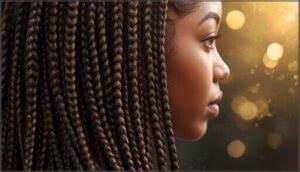
Braiding won’t accelerate your biological hair growth rate, but it can protect the length you’re already growing. When installed correctly, braids act as a shield against the daily wear and tear that leads to breakage and split ends.
Here’s how protective styling helps you retain more of the hair your follicles produce.
Minimizing Breakage and Split Ends
Think of your strands as fragile threads that snap under daily combing and brushing—especially if your hair is tightly curled. Well-executed protective styling for length retention shields those threads by limiting manipulation.
Low-tension braiding techniques reduce mechanical wear that causes up to half of all hair breakage, while gentle handling and moisture retention keep ends supple.
Split end prevention starts with avoiding aggressive tension and maintaining hydration throughout wear.
Reducing Friction and Tangling
Loose hair wraps around itself every time you move, escalating tangling issues and fiber damage with each pass of your comb. Low manipulation through protective styling for length retention cuts that cycle:
- Grouped strands limit spontaneous knotting that loose hair encounters throughout the day
- Tucked ends reduce snagging on clothing and surfaces, minimizing hair breakage and shedding
- Controlled braid tension decreases inter-fiber friction compared to constant free movement
- Fewer detangling sessions mean less mechanical stress from undoing knots and hair growth and breakage
Locking in Moisture for Healthier Hair
Sealed braids trap internal water that would otherwise evaporate into air. You’ll want to apply a water-based leave-in before installation, then follow with lightweight oils like jojoba or argan to form a protective film on each strand.
Braid maintenance includes re-moisturizing one to two times per week—prioritizing mid-lengths and ends where natural hair sits most vulnerable to brittleness and snapping.
Risks of Braiding for Hair Health
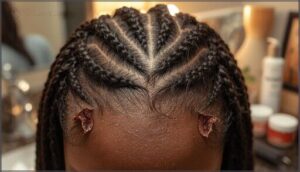
While braids can protect your hair, they’re not without risk. Tension applied during installation and wear can cause significant harm to both your follicles and scalp.
Here’s what you need to watch for to keep your hair safe.
Dangers of Tight Braids and Tension
When braids trigger scalp pain or headaches, your body is warning you about Traction Injury before Hair Follicle Damage becomes visible. Dermatologists have documented cases where excessive tension led to Scalp Necrosis—where tissue actually dies from compromised blood flow.
Braid-Induced Pain signals Tension-Related Disorders developing beneath the surface, threatening your Scalp Health and ultimately causing Hair Loss if ignored.
Traction Alopecia and Hair Loss
Persistent tension from tight Protective Hairstyles destroys your Hair Follicle’s stem cells, triggering irreversible Traction Alopecia that steals your hairline permanently. Research reveals the stark reality of Traction Damage:
Tight protective hairstyles can destroy hair follicle stem cells, causing permanent traction alopecia that steals your hairline forever
- One-third of African-descent women experience this Hair Loss from tension styles
- Early-stage Alopecia Treatment offers complete regrowth if you act fast
- Chronic pulling causes scarring and permanent Hair Thinning
- Scalp Injuries progress silently until Hair Growth stops entirely
Signs of Damage From Improper Braiding
Your scalp’s distress signals demand immediate attention—Scalp Inflammation with red, tender bumps and persistent pain indicates Follicle Damage underway.
Watch for Traction Symptoms like multiple short broken hairs showing Hair Fracture rather than clean shedding.
These Braid Complications—itching, scaling, and progressive Hair Breakage along your margins—warn that Traction Alopecia is advancing toward permanent Scalp Damage if you don’t intervene now.
Braiding Techniques for Length Retention
If you want braids to help you keep the length you’ve worked hard for, the technique matters as much as the style itself. Not all braiding methods offer the same level of protection, and some can actually set you back if they’re too tight or left in too long.
Here’s what you need to know to make braids work in your favor.
Low-tension Braiding Methods
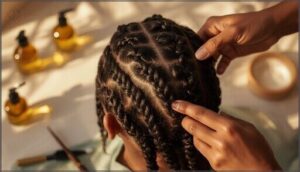
You’ll know your braids are truly protective when you can gently move each section at the root without discomfort—that’s the hallmark of proper braid tension.
Gentle braiding techniques like knotless methods and feed-in styles distribute weight evenly, allowing hair flexibility while keeping scalp comfort front and center.
These low-manipulation protective braids support braids and hair growth by shielding strands from daily wear without strangling your follicles.
Protective Styles That Reduce Manipulation
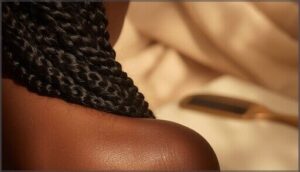
Once you’ve mastered low tension, choosing protective hairstyles that require minimal handling becomes your next power move. Styles like box braids, twists, and cornrows slash your daily combing sessions by 50–60%, dropping manipulation from five times weekly to just once or twice.
Less friction, fewer tangles, and reduced breakage—that’s how gentle styling and low manipulation protective styles drive real length retention without forcing follicles to grow faster.
Recommended Duration for Wearing Braids
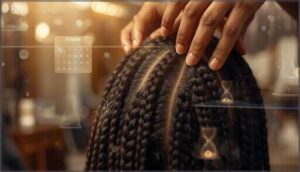
Even protective hairstyles need a retirement date. Board-certified dermatologists from Baylor College of Medicine recommend keeping braids in for 4–6 weeks maximum—8 weeks pushes your scalp health and braid longevity into the red zone. Beyond that window, tension risks escalate, buildup chokes your follicles, and hair breakage spikes during takedown.
For ideal length retention and hair maintenance, follow these wear limits:
- Box braids: 6–8 weeks maximum
- Cornrows: 2–8 weeks depending on size
- Jumbo braids: 4–6 weeks to minimize traction
- Micro braids: 6–8 weeks, no longer
Climate and your hair’s condition matter. Dry environments demand shorter cycles—around 2 weeks—while humid climates may allow the full 4–6 week range. If you’ve got fragile strands, err on the conservative side.
Leaving braids past their expiration invites traction alopecia, matting at the roots, and scalp infections from sebum and dead cell accumulation. That’s not hair growth and braids working in harmony—that’s self-sabotage.
After removal, give your scalp a breather. Rest periods of 2–4 weeks between protective hairstyles let follicles recover from cumulative tension. Back-to-back tight braiding without breaks? You’re writing a prescription for permanent hairline thinning.
Braiding techniques for hair growth only work when you respect biology’s timelines—not your convenience.
Scalp Care While Wearing Braids
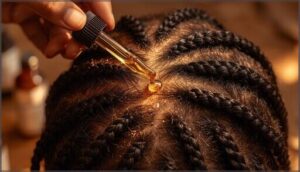
Your scalp doesn’t take a vacation just because your hair is braided. Neglecting scalp care during extended braid wear can undermine all the protective benefits you’re trying to achieve.
The following sections address three essential aspects of maintaining a healthy scalp environment while your hair is in braids.
Importance of Scalp Hygiene
While you’re wrapped up in your protective style, don’t let your scalp health fall by the wayside. Sebum regulation, when unchecked, can lead to a shift in your scalp microbiome toward dysbiosis. Dandruff scalps, for instance, harbor roughly 25% Malassezia versus 14% in healthy scalps.
Regular scalp care and scalp exfoliation are essential to clear buildup around each hair follicle. This supports healthy scalp conditions, which in turn reduce breakage and even lower your traction alopecia prevention risk through consistent scalp maintenance.
Benefits of Scalp Massage for Hair Growth
Scalp massage offers real, measurable hair follicle stimulation—beyond basic hygiene. Controlled studies show that just 4 minutes daily over 24 weeks thickens hair shafts through mechanotransduction effects, while stretching forces activate stem cells and boost blood flow enhancement by up to 69%.
You’re applying mechanical stress to stimulate dermal papilla cells, improving scalp health and promoting visible density without changing your biological growth rate.
Moisturizing and Nourishing The Scalp
Hydration creates the foundation your hair follicles need to produce resilient strands. Apply lightweight, non-comedogenic moisturizers two to three times weekly to maintain moisture balance and reduce dryness by up to 40%.
Before installing braids, perform a scalp detox to eliminate buildup—this prepares follicles for sustained nourishment.
During wear, use targeted serums containing niacinamide or salicylic acid to support scalp health without clogging pores.
Maintaining Healthy Hair With Braids

Braids won’t maintain themselves—your hair still needs consistent care to stay healthy and strong. Without the right routine, you risk dryness, breakage, and scalp buildup that can undo all the protective benefits.
Here’s how to care for your braids properly so your hair thrives underneath.
Gentle Cleansing Routines
Think of your braided scalp like soil: it needs regular, gentle shampooing to stay fertile. You’ll want low pH cleansers every 7–14 days depending on your scalp type—dilute them and apply through a nozzle along your parts to control buildup without destroying your protective hairstyles.
This moisture balance maintains both scalp health and hair growth, while daily hydration between washes keeps everything thriving.
Moisturizing and Sealing Ends
Brittleness destroys your length goals faster than any other factor. Your ends need targeted hair oil treatment twice weekly because they receive zero scalp sebum, making consistent hair hydration your best defense against breakage in protective hairstyles.
Apply a water-based leave-in conditioner from mid-shaft to tips, then seal with coconut or castor oil—this moisture lock method reduces protein loss by up to 50% and prevents split end formation.
Nighttime Protection for Braids
Pillow friction undoes your protective hairstyles faster than anything else—but silk bonnets and satin pillowcases slash mechanical breakage by up to 43% overnight. Your nighttime hair care routine determines whether braids protect or damage your strands:
- Cover braids with a satin bonnet for friction reduction
- Use satin pillowcases as backup edge protection
- Apply light oil before bed for moisture retention
- Secure loose ends to prevent tangling
- Replace cotton bedding that strips hair growth-supporting hydration
Braids for Thinning and Fragile Hair
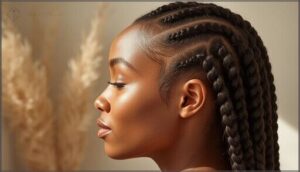
If your hair is already thinning or fragile, braiding isn’t automatically off the table—but you can’t approach it the same way you’d with stronger strands. The wrong technique or tension can accelerate loss, while the right approach can give your hair the breathing room it needs to recover.
Let’s look at how to choose styles that won’t push vulnerable follicles past their breaking point.
Choosing Safe Styles for Thinning Hair
When your hair’s thinning, you need braids that work with your scalp, not against it. Choose low-tension protective hairstyles that distribute weight evenly—think loose twists over tight box braids. Braid placement matters: keep rows away from fragile hairlines and temples.
Match hair density to what’s actually there, using fewer, larger sections in sparse zones. Gentle styling preserves scalp health while supporting hair length retention with braids across different hair texture types.
Preventing Further Hair Loss
Once you spot scalp tension relief signs—tenderness, bumps, or breakage—stop tight braids immediately. Hair loss prevention demands action: switch to gentle braiding techniques that eliminate pulling, give follicles rest periods between protective hairstyles, and avoid heavy extensions.
Early intervention for traction alopecia reverses non-scarring damage, but continuing high-tension styles guarantees permanent loss. Your hair follicle care starts with recognizing when breakage reduction strategies matter most.
Professional Recommendations for Fragile Hair
Beyond avoiding tension, fragile hair tips from dermatologists emphasize gentle hair care fundamentals: use moisturizing shampoos, apply leave-in conditioners to reduce breakage prevention needs, and limit hot tools entirely.
Low manipulation styles like loose protective hairstyles shield weakened strands from friction, while scalp health management through proper cleansing fosters hair growth.
If braiding adjustments don’t improve hair health within weeks, seek professional evaluation—early treatment reverses damage before permanent loss occurs.
Top 4 Products for Braided Hair Growth
You can’t force your follicles to grow faster, but you can create the healthiest possible environment for length retention while your hair is braided.
The right products won’t magically accelerate growth—they’ll reduce breakage, maintain scalp health, and keep your strands conditioned during extended protective styling.
Here are four formulations that support hair health throughout the braiding period.
1. Natural Hair Growth Oil Treatment
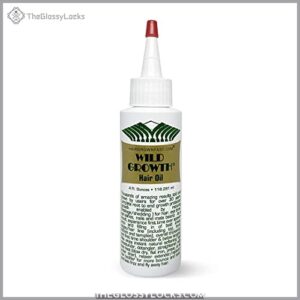
Wild Growth Hair Oil gives you a concentrated blend of natural oils—eucalyptus and lavender—that work together to hydrate your scalp and soften every strand.
This formula promotes scalp health by improving circulation, which creates an environment where your hair can thrive without breakage. You’ll notice less tangling and reduced split ends when you apply it consistently, whether as a pre-wash treatment or leave-in conditioner.
The oil benefits extend beyond simple moisture: it’s designed to protect your hair’s integrity while you’re rocking those braids.
Best For: Anyone with natural, relaxed, or protective-styled hair looking to reduce breakage, improve scalp health, and support thicker, longer hair growth over time.
- Concentrated natural formula with eucalyptus and lavender helps hydrate your scalp, soften strands, and create better conditions for hair growth with less breakage and fewer split ends.
- Works multiple ways—use it as a pre-wash treatment, leave-in conditioner, or daily styling aid to protect your hair during heat styling and maintain moisture in braids or other protective styles.
- Saves time by cutting down blow-drying and detangling, while the plant-based ingredients support scalp circulation without harsh chemicals.
- The natural scent from eucalyptus and lavender isn’t for everyone, and some people find it too strong or unusual compared to typical hair products.
- Easy to over-apply and end up with greasy hair, so you need to start with a small amount and add more only if needed.
- Results vary widely from person to person—while clinical studies show natural oils can improve hair density and growth rate over several months, you might not see dramatic changes, and counterfeit products are a real risk when shopping online.
2. African Pride Black Castor Hair Oil
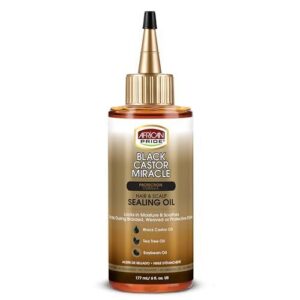
Another proven option locks in moisture during protective styles: African Pride Black Castor Hair Oil delivers ricinoleic acid—up to 90% of its fatty acid content—directly to your scalp and hair shaft. This Black Castor Usage combines tea tree oil and soybean oil to calm itching while strengthening each strand from root to tip.
The Oil Treatment Tips start simple: apply this Hair Growth Serum to your edges and under-weave areas for Scalp Nourishment that promotes length retention without compromising your Hair Health during extended braid wear.
Best For: People with curly hair who wear protective styles like braids or weaves and want to lock in moisture while supporting healthy growth and soothing their scalp.
- Strengthens hair and supports growth with black castor oil that’s packed with ricinoleic acid
- Soothes itchy, flaky scalps with tea tree oil while keeping hair hydrated during protective styles
- Free from harsh ingredients like parabens, sulfates, and mineral oil
- The scent can be pretty strong because of the black castor oil
- Some people find the formula too thick for their liking
- May not work for every hair type even though users claim it’s versatile
3. African Pride Hair Strengthening Oil
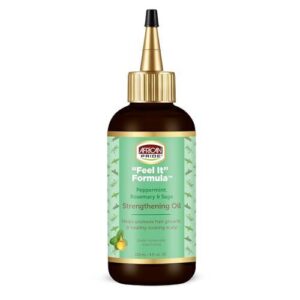
African Pride Feel It Formula Strengthening Oil brings peppermint, rosemary, and sage oils to your scalp—three Product Ingredients backed by preliminary clinical data showing improved follicular blood flow and potential support for the anagen phase.
This Hair Strengthening formula targets the exact breakage that undermines Protective Styles, combining Hair Restoration with Growth Stimulation through scalp massage.
Apply a small amount along your braid parts twice weekly to boost Scalp Health, lock in moisture, and reduce mid‑shaft snapping that sabotages length retention during extended Hair Care regimens.
Best For: Anyone wearing braids, twists, or other protective styles who wants to keep their scalp comfortable and reduce breakage from dryness or tension.
- Peppermint and rosemary oils increase scalp circulation and may support healthier hair growth over time
- Works as both a daily moisturizer and a hot oil treatment, so you can adjust how you use it based on your routine
- Free from parabens, sulfates, and mineral oil, which matters if you’re avoiding those ingredients
- The 4 oz bottle is on the smaller side, so frequent users may run out quickly
- Peppermint creates a strong tingling sensation that can feel too intense if you have a sensitive scalp
- Can leave hair feeling greasy if you apply too much, so you need to start with a small amount
4. Natural Hair Growth Serum Spray
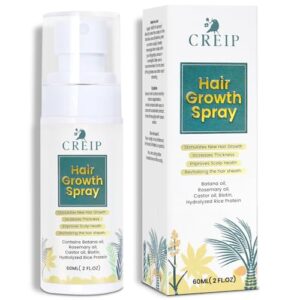
Precision matters when you reach for a lightweight spray to fortify braids from root to tip. Creip’s 2‑FL OZ Natural Hair Growth Serum delivers Serum Ingredients—Batana Oil, rosemary, biotin, and caffeine—proven in trials to increase Hair Regrowth by 17.36% in 90 days and reduce hair fall by 80%.
Natural Formulas like this complement Protective hairstyles by targeting follicular activity without weighing down your style. Daily Growth Promotion through Serum Efficacy translates to measurable gains in Hair Health, strengthening every strand you’ve worked to protect.
Best For: Anyone dealing with thinning edges, bald spots, or hair loss who wants a clean, research-backed serum that won’t leave braids or protective styles feeling greasy.
- Clinical results show 17.36% better growth in 90 days and an 80% drop in hair fall—numbers that actually back up the claims.
- Clean ingredient list with Batana Oil, rosemary, biotin, and caffeine, all alcohol-free and fragrance-free so it won’t irritate sensitive scalps.
- Lightweight spray format makes it easy to apply daily without disrupting protective hairstyles or leaving buildup.
- The 2 FL OZ bottle is pretty small, so if you’re using it daily on a full head of hair, you’ll burn through it fast.
- Price-per-ounce can feel steep, especially if you need multiple bottles to see the full 90-day results.
- Hair growth is slow by nature—some users may not notice dramatic changes right away, and results vary from person to person.
Expert Tips to Prevent Braiding Damage
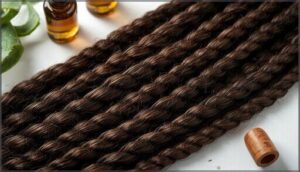
Braiding doesn’t have to damage your hair—when you understand what triggers breakage, you can keep your protective style truly protective.
The difference between healthy length retention and traction alopecia often comes down to a few critical practices that anyone can implement.
Let’s walk through the expert-backed strategies that’ll help you avoid the most common pitfalls while maximizing the benefits of braided styles.
Avoiding Excessive Tension
Your scalp will tell you when braid tension crosses the line—pain, headaches, and tight facial muscles are your body’s red flags. Here’s how to protect your hair follicles from traction damage and keep scalp health in check:
- Avoid the “shiny scalp” trap: If your skin looks stretched or glossy, that braid tension is already threatening your hair protection and inviting traction alopecia.
- Try the eyebrow test: Gently raise your brows after braiding—any pulling sensation means you need gentle styling adjustments now.
- Rotate your anchor points: Repeatedly targeting the same hairline spots accelerates hair loss, especially on already fragile hair texture.
How Often to Redo Braids
Most people wear box braids for 6–8 weeks before takedown and redo—but that maximum isn’t universal. Your braid frequency and redo intervals should flex with your hair tension tolerance and scalp health.
If you notice matting, persistent itch, or loosening before week six, prioritize braid maintenance over calendar dates.
Extended wear beyond eight weeks invites buildup and follicle strain, undermining the protective hairstyles meant to support length retention. Listen to your hair growth cues, not arbitrary timelines.
Recognizing and Addressing Early Signs of Damage
Catching damage before it turns permanent starts with scanning your hairline for telltale red flags. Persistent scalp inflammation, tender bumps, or wispy hairs replacing thick strands signal follicle damage that requires immediate action.
- Redness, soreness, or pus-filled bumps around braid bases indicate early traction alopecia
- Thinning temples or visible short broken hairs reveal hair breakage from excessive tension
- Darker patches or roughened scalp texture suggest prolonged strain compromising scalp health
Loosen or remove styles at the first warning sign.
Frequently Asked Questions (FAQs)
Do braids help hair grow?
Braiding doesn’t accelerate your follicular growth rate—your genetics control that. What braids actually do is protect hair from breakage, friction, and tangling, letting you retain length you’d otherwise lose to damage.
What is the science behind hair growth & braiding?
Your strands follow their own genetic blueprint—hair follicles cycle through growth patterns independent of styling.
Trichology confirms braiding won’t accelerate hair biology, but proper braid tension preserves hair texture, supporting scalp health and minimizing hair loss through reduced manipulation.
Do braids increase growth speed?
No, braids don’t accelerate your follicles’ growth rate beyond the genetic 1 to 5 centimeters monthly. They protect length retention by reducing breakage, not by speeding up the hair growth cycle itself.
Can braiding work on all hair types?
A woman with fine, straight hair hesitated for years, fearing braids would snap her delicate strands—but with low-tension techniques, her hair thrived.
Yes, braiding can suit all hair textures when you match braid compatibility and techniques to your hair’s porosity and fragility.
Protective hairstyles and proper weaving shield every strand type from breakage, supporting hair growth by reducing mechanical damage.
Do braids affect hair color or dye?
Yes—chemical dyes weaken your hair shaft, and tight braids compound that stress, accelerating breakage at the color line.
UV exposure and chlorine fade dyed braids faster, so you’ll need color-protective products and gentle tension.
Should you braid wet or dry hair?
You’ll get the best results braiding damp—not soaking—hair. Wet strands stretch up to 30% more before breaking, making them fragile under tension.
Blot with a microfiber towel, then braid gently to minimize damage.
Can children safely wear braids long-term?
Sure, slap tight cornrows on a six-year-old and leave them for months—what could go wrong? Children’s developing scalps are vulnerable to traction alopecia.
Pediatric styling demands low-tension braiding, braid maintenance every 2-3 weeks, and vigilant monitoring for braiding safety and hair loss prevention.
Do extensions in braids damage natural hair?
Extensions can damage natural hair when installed too tightly or left in too long. Heavy synthetic fibers increase tension on follicles, weakening hair shafts and raising your risk of breakage, scalp irritation, and traction alopecia if tension isn’t carefully controlled.
Conclusion
Braiding won’t reprogram your follicles, won’t rewrite your genetic blueprint, and won’t accelerate the cellular machinery determining your growth rate. But it will preserve what emerges. The question “does braiding help hair growth” dissolves once you recognize retention as the genuine mechanism—protecting length you’ve already produced from fracturing before it reaches visibility.
Your follicles establish the pace; your protective styling determines whether that progress survives contact with pillowcases, combs, and daily manipulation long enough to measure.