This site is supported by our readers. We may earn a commission, at no cost to you, if you purchase through links.
Flip over your conditioner and there’s a good chance "cetyl alcohol" or "cetearyl alcohol" is sitting in the top five ingredients. Most people see that word and assume the worst, but not all alcohols are bad for hair. Some are the reason your conditioner works at all.
The short-chain types, like ethanol and isopropyl alcohol, strip moisture and roughen the cuticle over time. Fatty alcohols do the opposite, sealing in hydration and making detangling feel easy. The difference comes down to molecular structure, not the name on the label. That distinction changes what you shop for and what you can stop worrying about.
Table Of Contents
- Key Takeaways
- Is Alcohol Bad for Hair?
- No—Not All Alcohols Are Bad for Hair
- Which Alcohols Can Dry and Damage Hair?
- Which Alcohols Are Good for Hair?
- Does Drinking Alcohol Affect Hair Health?
- Frequently Asked Questions (FAQs)
- Does quitting alcohol improve hair?
- What drink causes thinning hair?
- Why do barbers spray alcohol on your hair?
- Is hair loss from alcohol reversible?
- Is alcohol bad for hair & scalp?
- What are the effects of alcohol on the eyes?
- What happens if you use alcohol in hair products?
- Is alcohol in hair care good or bad?
- Does alcohol cause hair loss?
- Is drying alcohol good or bad for your hair?
- Conclusion
Key Takeaways
- Fatty alcohols like cetyl and cetearyl actually seal moisture into your hair, while short-chain types like isopropyl and ethanol strip it away — so the word "alcohol" on a label tells you almost nothing on its own.
- Your hair type changes how much any alcohol affects you: coily and curly hair lose moisture fastest, making it especially important to avoid short-chain alcohols in leave-in products.
- Concentration matters as much as type — a short-chain alcohol sitting low on an ingredient list does far less damage than one near the top, especially when offset by emollients like shea butter.
- Drinking heavily can quietly thin your hair from the inside by depleting zinc, biotin, and iron, but cutting back gives follicles a real chance to recover within three to six months.
Is Alcohol Bad for Hair?
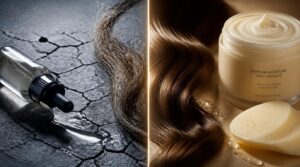
Alcohol in hair care is one of those topics where the answer depends entirely on which kind you’re talking about. There’s a real difference between what’s sitting in your conditioner and what’s in your cocktail — and your hair type plays a role too. Here’s what actually matters.
What you put in your body matters just as much as what you put on it — a diet rich in cancer-fighting antioxidants can support scalp health from the inside out.
The Myth Versus Reality
Why does "alcohol" on a hair product label make so many people put it straight back on the shelf? The myth that all alcohols are harmful is one of the biggest hair care misconceptions around.
In reality, type is what matters. Short-chain alcohols like alcohol denat. damage hair, while fatty alcohols like cetyl and cetearyl alcohol do the opposite. It’s also worth noting that drinking heavily can trigger alcohol-related hair shedding by causing nutritional deficiencies that disrupt normal hair growth cycles.
Hair Products Versus Drinking
What you put on your hair and what you drink work on very different levels.
- Topical ethanol or alcohol denat. evaporates fast, keeping effects temporary and surface-level
- Cetyl, cetearyl, and stearyl alcohol condition externally without entering your body
- Drinking dehydrates from the inside out, disrupting nutrient delivery to follicles
- Product damage is quickly reversible; drinking-related hair loss takes much longer
Hair Type Affects Results
Not every hair type reacts to alcohol the same way. Curly hair needs moisture to stay defined, and short-chain alcohols can strip it surprisingly fast. Coily hair retains dryness longest of all, which is why fatty alcohols make such a difference in curl care. Straight hair reacts faster to buildup, and fine hair shows buildup even from conditioning ingredients.
| Hair Type | Alcohol Impact |
|---|---|
| Coily | Retains dryness; bad alcohols worsen this fast |
| Curly | Moisture-dependent; good alcohols like fatty types help most |
| Wavy | Wavy hair balances effects; moderate sensitivity |
| Straight | Straight hair reacts faster to product buildup |
No—Not All Alcohols Are Bad for Hair
Here’s the thing — not every alcohol on that ingredient label is out to wreck your hair. The difference comes down to type, concentration, and how the product is used. Here’s what actually separates the harmful from the helpful.
Short-Chain Alcohols Explained
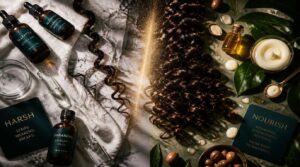
Short-chain alcohols like ethanol alcohol and isopropyl alcohol have a small molecular structure, which is why they evaporate so fast.
This rapid evaporation can leave hair feeling dry and brittle, which is why understanding how different alcohols affect hair health helps you make smarter choices about the products you use.
- Ethanol strips moisture from the hair surface quickly
- Isopropyl causes dryness and brittleness over time
- Benzyl alcohol can irritate a sensitive scalp
That volatile behavior depletes hair hydration fast. Check your ingredient labels carefully to spot them.
Fatty Alcohols Explained
Fatty alcohols work differently from short-chain types. Sourced from natural fats and oils, they carry a longer molecular chain that stops them from evaporating off your hair shaft.
Cetyl and cetearyl alcohol are the most common examples you’ll see. They act as emollients, building a soft conditioning layer that improves slip, locks in moisture retention, and stabilizes your conditioner’s emulsion.
Formula Strength Matters
The concentration on the label tells you more than the name does. A product with short-chain alcohol below 5% rarely causes noticeable drying for most hair types. What really seals the deal is balance. When emollients like shea butter appear at two to three times the alcohol level, they cancel out moisture loss.
Curly hair stays sensitive even above 3%.
Rinse-Out Versus Leave-in Products
Where a product stays matters as much as what’s in it. Rinse-out conditioners wash away in minutes, so a trace of alcohol denat. causes less harm than it would in a leave-in.
Leave-in products sit on your hair all day, making fatty alcohols the smarter choice. Apply both types from mid-lengths to ends to keep weight down and reduce buildup risk.
Which Alcohols Can Dry and Damage Hair?
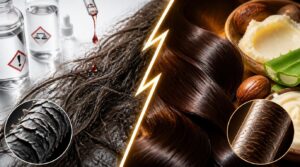
Not all alcohols earn a spot in your hair care routine — some are genuinely worth avoiding. The ones that cause the most trouble are short-chain alcohols, and they show up in more products than you’d think. Here are the main offenders to know about.
Alcohol Denat. And Ethanol
Alcohol denat. is ethanol, also called ethyl alcohol. It’s made undrinkable by adding chemicals like methanol. Its industrial solvent roots mean it was never designed for hair.
Here’s how it damages your strands:
- Evaporates fast, pulling moisture out
- Strips natural oils
- Roughens the cuticle
- Triggers dryness and frizz
- Weakens hair over time
Isopropyl and Propanol Alcohol
Isopropyl alcohol is a highly volatile solvent that evaporates fast, pulling moisture from your hair as it dries. That rapid evaporation can trigger real dehydration along the shaft.
Propanol works similarly. Both are bad alcohols for hair, their solvent properties stripping natural oils and leaving strands rough. Textured hair is especially vulnerable, since it already struggles to retain enough moisture.
Dryness, Frizz, and Breakage
Strip enough moisture from your hair and the cuticle lifts, creating that telltale frizz halo. Dry hair loses flexibility fast, and breakage becomes almost inevitable.
Bad alcohols disrupt your hair’s hydration balance by pulling water out before strands can hold onto it. Without moisture, the cuticle can’t stay smooth. A rough cuticle means frizz, split ends, and eventually snapping.
Risks for Textured Hair
Curly and coily hair already feels this more acutely. Hair porosity runs naturally higher in textured strands, so moisture slips out almost as fast as it enters.
Unlike fatty alcohols, short-chain alcohols push that process along, leaving curls brittle and frizzy.
Less slip means more detangling stress, more breakage, and product buildup that compounds scalp irritation over time.
Which Alcohols Are Good for Hair?
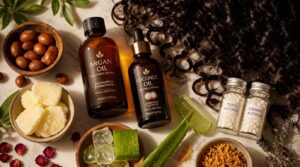
Not all alcohols deserve the bad reputation — some are actually your hair’s best friend. Fatty alcohols are the ones worth looking for on an ingredient label, and they do quite a lot of good. Here’s a closer look at the ones that matter most.
Cetyl and Cetearyl Alcohol
Think of cetyl and cetearyl alcohol as the waxy, solid cousins of drying alcohols. Derived from natural fats and oils, these fatty alcohols serve as emulsion stabilizers, keeping your conditioner’s oil and water from separating cleanly.
They also trap moisture against the hair shaft, which is exactly why you’ll find them listed as key moisturizing ingredients in most good conditioners.
Stearyl and Lauryl Alcohol
Cetyl and cetearyl get a lot of attention, but stearyl and lauryl alcohol earn their place in good formulas too. Stearyl, labeled 1-octadecanol on ingredient lists, has an 18-carbon chain. Lauryl, sometimes listed as 1-dodecanol, brings a 12-carbon structure.
Both are waxy, water-insoluble emollients that stabilize emulsions and form a light layer on the hair cuticle to support moisture retention.
Softness, Slip, and Detangling
These ingredients cut friction between strands by up to 60%. You’ll feel the difference immediately: less tugging, fewer knots, and real detangling efficiency.
Fatty alcohols act as emollients in haircare, supporting moisture retention and leaving hair genuinely soft.
Key benefits:
- Detangling efficiency with much less breakage
- Improved strand separation
- Better moisture retention
- Reduced static and flyaway
- Softer hair texture overall
Cuticle Smoothing and Protection
When your cuticle scales lift or chip, hair loses moisture fast and starts to look and feel dull. Fatty alcohol smoothing fills those tiny gaps, creating a surface that reflects light and cuts friction.
Cetyl, stearyl, and cetearyl alcohol all contribute, forming a cuticle barrier protection that locks in moisture and shields your hair from heat damage throughout the day.
Avoiding Fine-Hair Buildup
Fine hair is unforgiving for buildup. Even fatty alcohols like cetyl and cetearyl, as beneficial as they are, can leave residue if products start stacking up.
Apply conditioner to mid-lengths and ends only, and rinse thoroughly after every wash. A weekly clarifying shampoo helps clear what quietly accumulates.
Less is genuinely more when your hair is fine.
Does Drinking Alcohol Affect Hair Health?
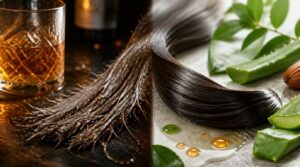
What you put in your body matters just as much as what you put on your hair. Heavy or chronic drinking can quietly work against your hair health in ways you might not connect at first. Here’s what’s actually happening beneath the surface.
Dehydration and Brittle Hair
Drinking alcohol is a diuretic, which means your body loses water faster than you can replace it. That loss shows up in your hair as reduced elasticity, making strands stiff and prone to snapping.
Brittle hair from dehydration often frizzes, tangles, and splits more easily, because without enough water inside the shaft, the cuticle lifts and friction takes over.
Nutrient Absorption and Growth
Alcohol damages the intestinal lining, which means nutrient absorption takes a serious hit even with an otherwise healthy diet. Biotin, folate, zinc, and iron, all key to hair follicle health and protein metabolism, are blocked or reduced. Zinc drops by around 40% in heavy drinkers, slowing keratin production and cutting off the fuel your follicles need for healthy hair growth.
Heavy drinking slashes zinc by 40%, starving your follicles of the nutrients they need to grow
Hair Shedding and Thinning
Heavy shedding often starts quietly, then compounds fast. Chronic drinking triggers telogen effluvium by stressing follicles through four pathways:
- Hormonal disruption raises cortisol, pushing more follicles into the resting phase
- Nutrient deficiency depletes zinc and biotin, slowing regrowth
- Poor blood circulation starves scalp follicles of oxygen
- Dehydration worsens hair thinning and breakage
Reducing intake starts the recovery reversibility within months.
Hydration and Balanced Nutrition
Recovery starts in your glass. Aim for pale yellow urine as your daily hydration check, and try to drink before thirst even hits. Water-rich foods like watermelon and cucumbers count toward your intake, too.
Pair those with biotin and zinc-rich foods like eggs and pumpkin seeds to replenish what chronic drinking depletes. Your scalp and strands will notice the difference.
When to Seek Help
Good nutrition helps, but sometimes the body sends louder signals.
If you’re shedding more than 100 hairs daily, or noticing thinning that has lasted over three months, do see a doctor.
Patchy or sudden hair loss warrants a GP or dermatologist visit.
And if cutting back feels harder than expected, that’s worth addressing too, for your hair and your health.
Frequently Asked Questions (FAQs)
Does quitting alcohol improve hair?
Think of your hair like a garden slowly waking after a long drought. Quitting alcohol can improve hair, but visible regrowth takes months as dehydration eases, nutrient absorption recovers, and follicle repair gradually reduces shedding.
What drink causes thinning hair?
Both sugary drinks and alcohol are linked to hair thinning. A review of 61,000+ people connected excessive soda intake and alcoholic beverages with increased hair loss risk.
Why do barbers spray alcohol on your hair?
Barbers spray alcohol mainly to disinfect your skin after cuts or shaving. Even tiny nicks let bacteria in. It also delivers a cooling sensation, tightens pores, and controls oil along your hairline.
Is hair loss from alcohol reversible?
Often, yes. When alcohol-driven dehydration or nutrient deficiencies are the root cause, reducing your intake gives your follicles a real chance to recover. Visible regrowth can take three to six months, though.
Is alcohol bad for hair & scalp?
Short-chain alcohols like isopropanol and denatured alcohol evaporate fast, stripping moisture from your scalp and hair shaft. Fatty alcohols like cetyl do the opposite, protecting the scalp barrier and locking hydration in. Big difference.
What are the effects of alcohol on the eyes?
Alcohol can trigger blurred and double vision, pupil response changes, and dry eye irritation, much as it affects your hair through dehydration. Nutrient deficiencies and oxidative stress also raise your risk of long-term eye disease.
What happens if you use alcohol in hair products?
What lands on your hair depends entirely on the type of alcohol in the formula. Isopropanol alcohol causes rapid moisture loss and cuticle damage, raising your hair breakage risk. Cetyl alcohol does the opposite.
Is alcohol in hair care good or bad?
It’s a tale of two alcohols. Short-chain types like isopropyl alcohol strip moisture fast, while fatty alcohols like cetyl condition and protect. Your formula, and whether you rinse it out, decides which side wins.
Does alcohol cause hair loss?
Heavy, chronic drinking doesn’t directly cause hair loss, but the risks are real. Depleted biotin, iron, and zinc weaken follicles, while dehydration pushes more hairs into the shedding phase, causing noticeable thinning over time.
Is drying alcohol good or bad for your hair?
Drying alcohols are bad for your hair over time. They evaporate fast and pull moisture from the cuticle as they go, raising porosity and setting off a cycle of frizz, brittleness, and gradual strand damage.
Short-chain alcohols like ethanol, isopropyl, and SD alcohol 40 are the ones to watch. They’re volatile alcohols, meaning they evaporate quickly and take moisture with them when they do. Research suggests these alcohols can strip up to 25% of your hair’s natural moisture in just minutes of contact.
That moisture loss raises hair porosity. When porosity increases, the cuticle lifts rather than lying flat, and an open cuticle simply can’t hold water. The result is dehydrated hair prone to frizz, rough texture, and eventually breakage. Think of a sponge left in the sun repeatedly. The structure weakens a little more each time.
These alcohols aren’t entirely useless, though. In sprays and styling products, they’re added for quick-drying effects, helping formulas set fast without a wet, heavy finish. One application isn’t the problem. Cumulative exposure is, especially in leave-in products that sit on your hair without enough moisture balance ingredients to compensate.
Your ingredient label is your best tool here. When you see ethanol, alcohol denat., or isopropyl alcohol near the top of the list, that formula leans heavily on drying agents. High placement means high concentration. For healthier choices, look for those names sitting lower, well beneath fatty alcohols or humectants.
Conclusion
Two bottles sit side by side on the very same shelf. Same single word printed on each label: alcohol. But one leaves your hair brittle and rough by morning. The other makes it softer than when you started.
Is alcohol bad for hair? Not if you know which type you’re actually using.
Short-chain alcohols strip moisture from the cuticle. Fatty alcohols, like cetyl and cetearyl, seal it in.
The name is never the whole story.
- https://www.silverridgerecovery.com/what-does-alcohol-do-to-your-hair/
- https://www.medicalnewstoday.com/articles/is-alcohol-bad-for-your-hair
- https://pure-elements-salon.com/blog/understanding-the-impact-of-chemicals-on-your-hair-and-scalp/
- https://hairgp.co.uk/alcohol-smoking-the-hair-loss-science-in-2025/
- https://miamihair.com/blog/alcohol-consumption-and-hair-loss/