This site is supported by our readers. We may earn a commission, at no cost to you, if you purchase through links. This content is for general informational and educational purposes only and is not a substitute for professional medical, dermatological, or nutritional advice.
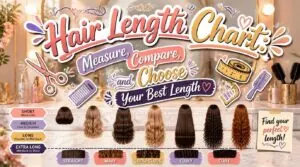
Ask three different salons to define "medium length" and you’ll get three different answers, sometimes three inches apart. That’s not sloppy work; it’s the nature of measuring something that grows, curls, and shrinks depending on the day. Your curly hair might stretch to 18 inches when you tug it straight, then bounce back to a finished look closer to 13.
That gap between stretched and finished length trips up more clients than any other part of a haircut consultation. A hair length chart solves this by giving you fixed reference points, crown to ear, shoulder to armpit, so you and your stylist speak the same language regardless of texture. Once you know where your hair actually falls on that scale, choosing your next cut gets a lot less like guesswork.
Table Of Contents
- Key Takeaways
- Hair Length Chart Basics
- Hair Length by Inches
- How to Measure Hair Length
- How Texture Changes Length Appearance
- Choose Your Best Hair Length
- Use Charts for Hair Goals
- Frequently Asked Questions (FAQs)
- What hair length is most flattering?
- What is the 2 inch hair rule?
- How to tell what hair length looks best on you?
- What is the most attractive hair length?
- What hair length makes you look younger?
- What length of hair is considered long?
- How does hair density impact hair length choice?
- Are specific hair lengths better for aging hair?
- Can hair length affect hair growth rate?
- Do seasonal changes influence optimal hair length?
- Conclusion
Key Takeaways
- Body landmarks like your shoulder and armpit give you a steadier way to talk about hair length than vague labels like "medium," since those category boundaries shift depending on the brand or stylist.
- Your true length (hair stretched straight) and your finished length (how it looks day-to-day) can differ by several inches, especially with curly or coily textures that shrink 25-85% depending on curl pattern.
- Bringing specific numbers to your salon consultation, like "10 inches, stretched" instead of "shoulder length," helps you avoid walking out with a cut shorter than you pictured.
- Choosing your best length comes down to matching face shape, texture, and density together, since the same haircut can look completely different depending on how your hair naturally falls.
Hair Length Chart Basics

Before you can compare lengths or set a goal, you need a shared language for talking about hair. That means knowing the basic terms, measurements, and quirks that make one person’s "medium" another person’s "long." Here’s what actually shapes a hair length chart, piece by piece.
A hair length chart that measures by body reference points turns those vague labels into consistent, easy-to-compare benchmarks.
Standard Hair Length Categories
When you ask five stylists to define "short," you’ll get five different answers. Charts often split into short, medium, and long, but the inch ranges shift by brand and texture. Category boundaries aren’t fixed — one company’s medium is another’s long.
Curly hair especially blurs lines, since its true length often lands a category higher than its shrunken, finished appearance suggests. Understanding these hair length categories helps clarify styling expectations across different hair types.
Body Landmark Reference Points
Since inch ranges shift by brand, your body gives a steadier map. Every measurement starts at the crown of your head, running straight down.
| Point | Crown Distance |
|---|---|
| Ear | 8–10" |
| Shoulder | 13–14" |
| Armpit | 18" |
The shoulder point splits short from medium, while the armpit long hair boundary signals long hair’s start — no guesswork required.
Inches and Centimeters
Your stylist might say 14 inches while a chart shows centimeters, so knowing both saves confusion. Multiply inches by 2.54 for cm.
| Inches | Centimeters | Reference point |
|---|---|---|
| 6" | 15.24 cm | Chin |
| 14" | 35.56 cm | Shoulder |
| 18" | 45.72 cm | Armpit |
Track growth with a flexible measuring tape, recording both units for precise hair length measurement.
True Versus Finished Length
Numbers only tell half the story. True length means hair stretched straight, root to tip. Finished length is what shows day-to-day, after curls spring back.
| Hair Type | Stretched (True) | Finished (Dry) |
|---|---|---|
| Wavy | 18" | 16-17" |
| Curly | 18" | 13-14" |
| Coily | 18" | 9-11" |
Measuring stretched length tracks real growth; comparing wet and dry results predicts your actual look.
Why Hair Charts Vary
A handful of inches can separate two "20-inch" wigs. Measurement methods differ by brand, and texture affects appearance too.
| Brand | Method | Result |
|---|---|---|
| UniWigs | Stretched | True length |
| Others | Natural curl | 1-3" shorter |
Trust stretched measurements for real hair length assessment—it’s the stylist’s universal reference for setting genuine hair length goals.
Hair Length by Inches

Once you know the basics, it helps to see exactly what those inches look like in real life. Every length range, from a buzz cut to floor-sweeping strands, comes with its own look, feel, and upkeep. Here’s a breakdown you can use to match numbers to actual style.
If your texture leans coily or coarse, understanding the difference between curly and kinky hair patterns makes it much easier to pick a length that actually works with your curl.
Buzz to Ear Length
Growing out a buzz cut? Your ear becomes the built-in ruler. A guard number 2 leaves hair too short for ear coverage, while guard number 4 hits the ear opening—roughly 4 inches, the true ear length marker.
Curly texture shrinks 25-50%, so use a hair length chart and consistent measuring for accurate growth timeline tracking toward that ear-length pixie goal.
Chin Length
The jaw-skimming bob sits at that sweet spot on any hair length chart—6 to 8 inches, right where confidence meets convenience.
- Blunt ends grazing your jawline
- Soft layers bouncing near your chin
- Waves kissing your collarbone
- A sleek line framing your face
Chin length hair suits oval and heart face shapes, offers real styling versatility, and needs trims every 4-6 weeks. Bring this range to your salon consultation.
Shoulder to Armpit Length
Somewhere between a bob and real length, shoulder-to-armpit hair (12-14 inches straight, 16-18 curly) sits.
| Texture | Stretched Length |
|---|---|
| Straight | 12 inches |
| Curly | 16-18 inches |
| Coily | 18+ inches |
At 0.5 inch monthly growth, expect 24-28 months. Trim every 6-8 weeks. Bring these numbers to your haircut consultation for accurate results.
Mid-Back to Waist Length
Once hair passes your bra strap, you’ve hit waist-length territory: 22-26 inches straight, 26-30 curly. This length rewards patience—expect 5-6 years of growth.
Protective styles like buns and braided updos cut down on manipulation and breakage. Keep ends tucked weekdays, worn down weekends.
Deep condition twice weekly, and trim every 8-10 weeks to retain length while growing.
Tailbone to Floor Length
Past waist, you’re in rare territory: tailbone length hits 31-35 inches, floor length exceeds 54. Verify tailbone by measuring crown to coccyx; floor length means standing on hard ground until strands touch.
Growth from waist takes 2-3 more years. Clarify twice monthly, sleep in satin bonnets, and trim every 8-12 weeks—maintenance jumps well beyond waist-length hair demands.
How to Measure Hair Length
Knowing the categories is one thing, but getting an accurate number on your own head is another skill entirely. A few small mistakes, like measuring wet hair or skipping the stretch on curls, can throw your results off by inches. Here’s exactly how to get a measurement you can actually trust.
Prepare Dry, Detangled Hair

Grab your tape only after hair is fully dry and detangled — wet strands stretch, skewing results.
Moisturize first, add slip product, then finger-detangle before combing section by section. This prep step keeps your Hair Length Chart readings accurate and sets up a smoother Hair Measurement process, so numbers actually reflect your real hair care routine progress.
Measure Crown to Tip
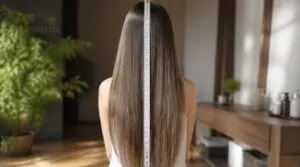
Once your hair’s dry and tangle-free, find your vertex (the highest point of your head) and anchor the tape there. Run it straight down, following your hair’s natural fall, to the tip of your longest strand.
Keep tension light: too tight compresses hair, too loose inflates numbers. Track layers separately for honest Hair Length Chart results.
Stretch Curls Before Measuring

If your curls shrink 15-20% when dry, measuring untouched gives you fiction, not facts. Try banding or a loose overnight pineapple first.
Stretched hair reveals true length, often 4-5 inches more. Note your shrinkage ratio (stretched minus natural) once, and every future Hair Length Chart reading gets sharper.
Use Flexible Measuring Tape

Once your hair sits stretched and ready, the right tool matters. A flexible measuring tape (fiberglass or cloth, non-stretch) beats a rigid ruler for following your head’s curve.
For measurement accuracy, seat the hook firmly at your crown, avoid pulling too tight, and read the nearest 1/8-inch mark. Proper hook placement prevents skewed results on your hair length chart.
Track Growth Consistently

One measurement means nothing without ten more beside it. Build a consistent measurement protocol: same day monthly, same reference point, recorded to 0.1 inch.
- Monthly photo documentation from four angles
- Digital growth journal entries
- Growth checkpoint calendar at Week 12, 16
- Automated tracking apps for trends
- Stretched versus natural length notes
Since hair growth averages half an inch monthly, patience beats guesswork.
How Texture Changes Length Appearance
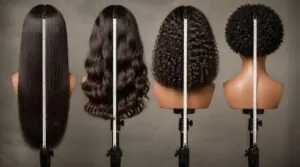
Here’s something that trips up a lot of people: two heads of hair can measure exactly the same on the tape, yet look completely different lengths once you step back.
Two heads of hair can measure the same on the tape yet look completely different in length
That gap comes down to texture, and how much your curl pattern pulls length upward when it’s dry.
Let’s break down what each texture type actually does to your finished look.
Straight Hair Appearance
What you measure is what you get. Straight hair shows true length with almost no visual shrinkage, so ear, chin, shoulder, armpit, or midback marks land right where your tape says.
The flat cuticle gives mirror-like shine for days, while sebum glides down the shaft fast, boosting shine but also showing oil sooner.
Wavy Hair Appearance
Where straight hair tells the truth, waves fudge it a little. Root volume and spring eat up length, so your tape might read 14 inches while your S-shaped waves (2A through 2C) show closer to 12.
Humidity swells the cuticle fast, sparking frizz around each curve. That uneven surface also scatters light, trading straight hair’s glossy sheen for a softer, dimensional shimmer.
Curly Hair Shrinkage
Ever pull a curl straight and watch it "grow" three inches before your eyes? That’s curl pattern compression at work.
- Loose curls (3A): mild pull-up
- Classic curls (3B): noticeable shrinkage
- Tight corkscrews (3C): dramatic shortening
- Low-porosity strands: gradual, uneven shrink
Elasticity and porosity both drive how far hair "bounces" when moisture leaves the shaft.
Coily Hair Shrinkage
Coily hair plays the biggest disappearing act on any hair length chart.
Well-hydrated coils shrink 50-75%, while dehydrated strands shrink less but turn brittle. Porosity matters too: Type 4C often hits 70-85% shrinkage versus 4A’s 50-60%. Hydrogen bonds contract as coils dry, and coarser diameters coil tighter, amplifying the shrink you see.
Comparing Stretched and Natural Length
A 14-inch stretched strand can look like a 9-inch natural one—same hair, wildly different numbers.
That gap is why your hair length chart needs both figures side by side.
- Stretched length: your true measurement, growth-tracking gold
- Natural length: what everyone actually sees
- Shrinkage percentage: the math connecting them
Track stretched length every four weeks for accuracy; natural length keeps your styling expectations honest.
Choose Your Best Hair Length

A number on a chart only tells part of the story, since the right length for you depends on more than inches. Your face shape, texture, density, and lifestyle all play a role in what actually looks and feels best. Here’s what to weigh before you commit to a length.
Match Length to Face Shape
Before picking a number off a hair length chart, hold it up to your face shape.
Round faces benefit from lengths past the chin for elongation; square faces soften with shoulder-length cuts; heart faces balance at collarbone; diamond faces gain width at mid-back; oval faces? Nearly anything works, from an ear-length pixie to a chin-length bob.
Consider Hair Texture
Face shape gets you close, but texture decides the real fit. That chin-length bob reads totally different on Type 2 waves versus 4C coils, since curl pattern drives shrinkage — 5-15% for waves, 75%+ for tight coils.
Cut "12 inches" on coily hair and it may sit at ear-length once dry. Always measure stretched, then picture the shrunk-down, everyday version.
Account for Hair Density
Texture isn’t the whole story — hair density (how many strands per scalp inch) shifts everything too. High density hides scalp at the part and dries slower; low density shows more scalp and dries fast but flattens.
- More strands, more dry time
- Low density = flatter styling
- Density affects part visibility
- Higher density needs more product
- Density changes breakage risk
Compare Styling and Upkeep
Length dictates your calendar, not just your mirror. An ear length pixie needs shaping every 4-6 weeks, while a chin length bob stretches to 6-8. Midback and tailbone length demand less cutting but more daily product and detangling time — often 15-20 minutes just conditioning. Shorter styles cost less yearly; longer ones trade cash for time.
Preview Length Before Cutting
Before scissors touch a single strand, let a virtual try-on tool show you the outcome. Upload a clear, front-facing photo, and AI maps hairstyles onto your actual face shape in seconds.
- Real-time adjustments let you test lengths instantly
- Compare 9 styles side by side
- Face shape matching flags flattering cuts
- Save favorites to show your stylist
That preview solves salon regret before it starts.
Use Charts for Hair Goals

Once you know how to measure and compare lengths, that chart becomes a real tool instead of just a reference. You can use it for more than picking a cut, it helps with everything from ordering extensions to knowing when your next trim should happen. Here’s how to put those numbers to work in practical, everyday ways.
Explain Length to Stylists
Ever left a salon consultation with hair shorter than you pictured? Skip vague words. Bring numbers.
| You Say | Stylist Hears | Better Phrase |
|---|---|---|
| "A little off" | Half inch | "One inch, please" |
| "Shoulder length" | Varies by texture | "10 inches, stretched" |
| "Not too short" | Guesswork | "Chin length, 7 inches" |
State true length, not finished length, for accurate cuts.
Choose Extensions and Wigs
Once you know your hair length in inches, extension and wig shopping gets simple. Match cap construction to your goals: lace front wigs give natural hairlines, tape-ins merge seamlessly.
| Method | Longevity |
|---|---|
| Clip-ins | 3–6 months |
| Tape-ins | 6–10 weeks |
| Bonding | 3–6 months |
| Wigs | 6 months–2 years |
Choose Remy human hair for styling flexibility, or heat-resistant synthetics for low-maintenance days.
Estimate Hair Growth Timelines
Half an inch a month is the average, roughly six inches a year, but your anagen phase (2–7 years) sets your true ceiling.
| Factor | Growth Rate |
|---|---|
| Healthy adult | 0.5 in/month |
| Post-30 or stressed | Slower |
| Minoxidil-responsive | Up to 0.75 in |
Track your own rate: measure monthly from root to tip using your hair length chart for realistic goal timelines.
Plan Trims for Retention
Trims shouldn’t fight your growth, they should work with it. Track growth monthly, then trim only what you’ve gained since last cut for true net growth.
| Hair Type | Trim Frequency |
|---|---|
| Short/Fine | 4-6 weeks |
| Medium | 6-8 weeks |
| Long/Curly | 8-20 weeks |
Wearing protective styles? Schedule removal the day before your appointment so your stylist assesses accurately.
Prevent Breakage at Every Length
Breakage prevention shifts by length. Short styles need protein-infused shampoos and gentle detangling; long hair demands weekly deep conditioning for elasticity.
| Length | Priority | Method |
|---|---|---|
| Short | Protein | Weekly treatments |
| Medium | Moisture | Leave-in conditioner |
| Long | Elasticity | Monthly deep mask |
Detangle damp hair only, wide-tooth comb, ends first. Limit protective styles to 8 weeks max, and always apply heat protectant before styling.
Frequently Asked Questions (FAQs)
What hair length is most flattering?
There’s no single answer, since it depends on face shape balance and texture. Oval faces suit nearly any length, round faces benefit from shoulder-length or longer, and square faces soften with hair past the jawline.
What is the 2 inch hair rule?
Picture a Marine at boot camp: hair measured with a pencil under the chin, ruler at the earlobe. That’s the 2-inch rule, capping hair bulk for a neat, regulation-ready professional appearance standard.
How to tell what hair length looks best on you?
Grab a mirror: check your face shape, then test how your hair texture actually falls (curls shrink!). Match length to your jaw, compare styling upkeep, and preview options with clip-ins before committing to real hair goals.
What is the most attractive hair length?
Studies consistently show long hair signals health and grooming, from ShoulderLength to MidBackLength and even TailboneLength. Texture and face shape matter too, but across cultures, long, well-maintained hair reads as timeless, not trendy.
What hair length makes you look younger?
Think of length as a dial, not a switch: short cuts and pixie styles lift focus to your cheekbones, while chin bobs and shoulder length frame your face, softening angles better than midback or tailbone length ever could.
What length of hair is considered long?
Most stylists mark armpit-length, around 16 inches, as the true starting point for long hair, with mid-back and waist-length falling further along the spectrum. Curl pattern and culture shift that line, so your own eyes matter too.
How does hair density impact hair length choice?
Ever wonder why the same length looks fuller on one head and thinner on another? Hair density decides that: it governs volume versus weight, scalp visibility, and breakage-driven retention, so your length choice should match your strand count, not just texture.
Are specific hair lengths better for aging hair?
Yes—shoulder-grazing lengths offer the best face-framing benefits, adding lift for thinning density while a lob or layered cut cuts styling time, protects ends from breakage, and flatters most face shapes across hair texture types.
Can hair length affect hair growth rate?
Length itself doesn’t speed things up, but neglect does. Untrimmed ends split upward, stalling retention even as follicles keep working. Skipping trims won’t boost your growth cycle—it just lets damage erase the gains your scalp already made.
Do seasonal changes influence optimal hair length?
Weather absolutely plays a role: summer humidity swells curls, making ArmpitLength or MidBackLength hair look shorter, while winter dryness demands protective styles and gentler seasonal trimming strategies to protect TailboneLength growth from breakage.
Conclusion
Picture your hair pooling past your shoulders like water finding its own level, curls springing back the second you let go. That’s the honest truth a hair length chart reveals: not what the tape says stretched taut, but what actually moves when you walk into a room.
Numbers guide you, but your mirror confirms it. Measure with patience, choose with clarity, and trust that your best length is simply the one that feels like yours.