This site is supported by our readers. We may earn a commission, at no cost to you, if you purchase through links. This content is for general informational and educational purposes only and is not a substitute for professional medical, dermatological, or nutritional advice.
Fine hair shows every root shadow, every flat patch, every spot where light just skips right over. The wrong shade can flatten your whole look before you even pick up a curling iron. The right one does the opposite: it tricks the eye into seeing thickness that isn’t really there.
That’s the real power of smart hair color for thin fine hair. Tone, placement, and technique work together to build depth your strands can’t create on their own. Colorists lean on this trick constantly, using warmth and dimension to fake volume instead of flatness.
Ready to find the shade that makes your hair look fuller by tomorrow morning? These five colors, plus the techniques behind them, will get you there.
Table Of Contents
- Key Takeaways
- 5 Best Hair Colors for Thin Fine Hair
- 5 Hair Color Techniques That Add Volume
- How to Choose a Fuller-Looking Shade
- Protect Fine Hair and Avoid Color Mistakes
- Top 3 Products for Colored Fine Hair
- Frequently Asked Questions (FAQs)
- What color is best for thin, fine hair?
- Should you color fine, thin hair?
- What color makes thin hair look thicker?
- What is the best hair color for thin hair?
- How to get a good hair color for thinning hair?
- How to color thin hair to make it look fuller?
- How to hide hair color for thinning hair on scalp?
- Is purple a good color for thinning hair?
- What hair color hides thinning hair best?
- How to make thin hair look fuller with color?
- Conclusion
Key Takeaways
- The right shade, think warm honey blonde, golden beige, or mushroom brown, can trick the eye into seeing thickness your fine hair doesn’t actually have.
- Placement matters as much as color, so techniques like balayage, babylights, and shadow roots build depth by softening the contrast between your scalp and your strands.
- Picking a shade close to your natural base and skin undertone keeps regrowth blended and avoids the harsh lines that make thin hair look thinner.
- Protecting your color with gentle, sulfate-free products and spaced-out touch-ups (every 6-12 weeks) keeps fine hair looking full without overprocessing it.
5 Best Hair Colors for Thin Fine Hair
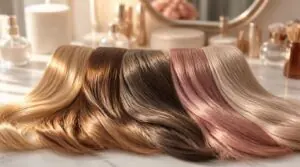
Fine hair thrives on the right shade, not just any shade. The wrong color can flatten your look, while the right one adds instant depth and body. Here are five shades that work with your hair, not against it.
If you want color that stays effortless between salon visits, these best low-maintenance hair color ideas pair beautifully with fine hair’s natural texture.
Warm Honey Blonde
Think honey drizzled over toast, that’s warm honey blonde. Golden amber tones and light brown mix for a sun-kissed glow that flatters warm and neutral skin. In fact, warm blondes now outrank cool blondes in salon popularity, thanks to their broad skin tone compatibility.
A cool toner mix keeps brass away, so your color stays rich. Regrowth stays soft, meaning low-maintenance upkeep. Pair it with volumizing shampoo and lightweight mousse for fuller-looking strands.
Golden Beige Blonde
If honey blonde feels too warm, meet its balanced cousin. Golden beige blonde blends warm gold with soft neutral beige, sitting right between honey and beige on the wheel.
- Flatters fair to medium skin with peachy or olive undertones
- Uses balayage for dimensional shades and natural movement
- Blends regrowth smoothly, boosting perceived hair volume and thickness
Gloss regularly to keep warm cool tones balanced and brass-free.
Soft Champagne Blonde
Where golden beige leans warm, champagne turns up the shine. This shade sits at a pale level 9-10, blending soft pink and peach for a luminous glow.
| Feature | Effect | Note |
|---|---|---|
| Champagne base | Reflective, airy | Balayage placement |
| Facial highlights | Frames features | Adds brightness |
| Gloss treatment | Boosts shine | Prevents dullness |
Gloss monthly to keep tones fresh and dimensional.
Mushroom Brown
Not every fine-hair shade has to be light. Mushroom brown brings ash undertones and taupe highlights for cool, neutral tone blending that pairs beautifully with cool skin.
Strategic color placement and balayage add real hair dimension, while soft root grow-out care keeps regrowth blended, not blocky.
Cool without going flat, this one’s a keeper.
Honey Brunette
A warm brown base with coppery caramel highlights, honey brunette gives thin hair real depth.
- Golden honey glow brightens your whole face
- Custom honey tones stop brassiness before it starts
- Strategic placement builds dimensional hair color fast
Best hair color for fine hair that still feels rich. Gloss every 6-8 weeks and you’re set.
5 Hair Color Techniques That Add Volume
Color alone isn’t what makes fine hair look fuller, it’s how that color gets placed. The right technique can trick the eye into seeing more thickness and depth than you actually have. Here are five placement methods that pull real volume out of thin strands.
Pair these coloring tricks with a solid at-home hair care and maintenance routine so your strands stay healthy enough to actually show off that added dimension.
It’s not the color itself but where it’s placed that tricks the eye into seeing thicker, fuller hair
Dimensional Balayage
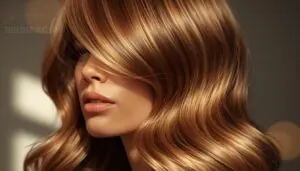
Think of dimensional balayage as painting light where the sun would naturally hit. Freehand strokes place caramel and blonde away from roots, skipping harsh regrowth lines completely.
A glaze afterward adds that glossy finish and settles any brassy tones. Fewer foils mean gentler processing, so your fine strands stay strong while catching light from every angle.
Fine Babylights
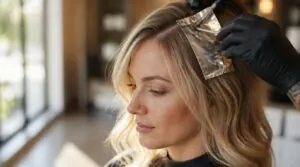
When regular highlights feel like too much, babylights give thin fine hair a gentler lift. This hair color technique uses 1-2mm foiling width for a soft, sunlit look.
- Placement targets the crown and hairline
- Low-volume lightener protects strands
- Root blending keeps regrowth smooth
- Tone refresh every 1-2 weeks
- Touch-ups every 8-12 weeks
Shadow Roots
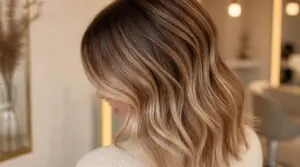
Ever wonder why your roots look darker the second week after coloring? Shadow roots turn that into a feature, not a flaw.
This technique deposits a shade 1-3 levels darker at the crown, then blends into lighter lengths for a soft gradient effect. Root blending creates scalp framing that adds visual depth, while touch-ups every 6-12 weeks keep the natural mix looking fresh.
Highlights and Lowlights
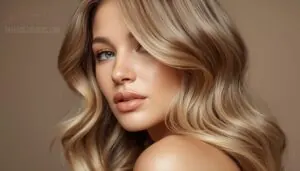
Depth isn’t just for dark hair. Pairing highlights and lowlights builds real dimension that fools the eye into seeing thickness.
- Lighter pieces catch light, darker ones add shadow
- Mix both for natural tone shift
- Place lowlights near your crown for subtle contrast
- Skip heavy chunks, go fine
- Choose shades matching your base
This mix flatters thin, fine hair beautifully.
Face-Framing Money Pieces

Nothing brightens a tired part line like light near your face. Money piece placement puts lighter strands two to four inches back from your hairline, two to four shades up, for instant glow.
| Feature | Detail | Effect |
|---|---|---|
| Placement | Hairline, symmetrical | Bright face framing |
| Lift | 2-4 levels | Sun-kissed look |
| Mix | Balayage edges | Volume, no harsh lines |
How to Choose a Fuller-Looking Shade
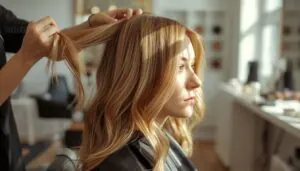
Picking the right shade takes more than just liking a color on someone else. Your natural base, your skin tone, and even your regrowth pattern all play a part in how full your hair looks. Here’s what to think about before you sit down in that colorist’s chair.
If you lean cool-toned, shades like Cool Ash Brown or Platinum Blonde tend to blend seamlessly, and this guide on choosing the best hair color for brown eyes breaks down how to match your undertone with confidence.
Match Your Natural Base
Your natural root shade is your cheat sheet. Picking a color close to that level keeps things looking real, not painted on.
Base level balance softens regrowth and skin-scalp contrast. Test shades in natural light before committing.
Stick close to your base, and midlengths mix smoothly, giving fine hair a fuller, healthier look without regrowth headaches.
Balance Your Skin Undertone
Base level matters, but undertone seals the deal. Warm skin glows next to warm honey blonde, while cool tones love cool beige blonde or soft champagne blonde.
Not sure which you are? Check your jewelry drawer. Gold lovers usually run warm, silver fans run cool, and if you mix both freely, you’re neutral, so play it flexible.
Reduce Hair-Scalp Contrast
Once your undertone’s settled, look at scalp contrast next. Dark roots against light lengths scream "thin," so pick shades close to your natural base.
Soft root smudging blends color gently, no harsh lines. Pair it with low-contrast foiling for scalp tone matching, smoother transitions, and better scalp coverage that keeps thinning hair looking fuller, longer.
Blend Warm and Cool Tones
Once scalp contrast is handled, tonal blending ties everything together. Mixing warm honey blonde with cool beige blonde mimics balayage’s natural sun effect, avoiding flat, one-note color.
Warm-cool contrast works best when soft:
- Place warm tones through mid-lengths and ends
- Keep cooler shades near the crown
- Use soft mix tones between sections
- Layer pigments for balanced depth
This is smart hair color for thin hair seeking real volume.
Plan for Softer Regrowth
Growing out color shouldn’t mean bracing for a harsh line. Soft regrowth techniques, like root shadow and color melting, keep gradual root shift smooth. Pick low commitment shades close to your natural base for tonal symmetry.
Gentle base blending softens contrast, so hair color regrowth looks intentional, not overdue. Book touch-ups every 6-8 weeks and enjoy the soft contrast this balayage-inspired approach gives you.
Protect Fine Hair and Avoid Color Mistakes
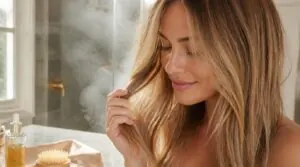
Getting the right shade is only half the job, protecting it is what keeps fine hair looking full. A few common mistakes can undo all that hard work fast, leaving strands weaker and color duller than you want. Here’s what to watch for, and what to do instead.
If you’re unsure where your hair falls on that spectrum, this guide on how long to wait before washing permed hair breaks down the timing by texture so you don’t rinse away your color too soon.
Skip Flat Single-Process Color
One flat shade can flatten your whole look. Single-process color lays down uniform pigment, and thin strands show every bit of that sameness.
Skip it, and you dodge scalp contrast, heavy processing, and a dull, one-dimensional finish. Dimensional placement blends naturally, softens regrowth, and builds real hair color for volume.
Why it works:
- Less chemical load
- Softer regrowth
- Illusion of thickness
Avoid Overly Dark Shades
Jet black or deep espresso might look sleek in the bottle, but on fine strands it does the opposite. Dark pigment sits dense and opaque, spotlighting every sparse patch instead of hiding it.
Skip pure ash browns too. They flatten light reflection and add scalp contrast, killing your volume illusion and natural glow.
Limit Bleach and Chunky Highlights
Bleach and thin fine hair don’t mix well in big doses. Limit bleach and skip chunky highlights, they overprocess strands and weaken elasticity.
Ask your colorist about section size strategy using narrow foils, plus gentle lightening boundaries with lower volume developer. A soft champagne blonde or rooted blonde look comes easier through toner alternatives to bleach.
Use Lightweight Color-Safe Care
Fine hair shows every product choice, good or bad. That’s why a sulfate-free shampoo and pH balanced formula matter so much for color retention.
Use lightweight conditioner on mid-lengths only, and try bond-building treatments weekly. Gentle cleansing formulas plus cool water rinses keep your gentle hair color vibrant without buildup weighing strands down.
Space Out Root Touch-Ups
Why rush your roots every four weeks? Root touch spacing every 6 to 12 weeks protects your scalp and keeps regrowth blending soft.
Techniques like balayage, babylights, or a root shadow ease the shift. Pair with root-lifting spray for lift, plus color fade prevention. It’s natural shift maintenance that flatters hair color for thinning hair.
Top 3 Products for Colored Fine Hair
Great color deserves great care, and the right products make all the difference for fine strands. You don’t need a huge routine, just a few smart picks that actually work for your hair type. Here are three worth adding to your shelf.
1. Loreal Paris Purple Shampoo for Blonde Hair
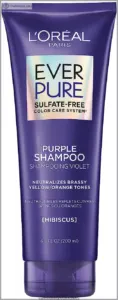
Brassiness is the enemy of a fresh blonde, and this drugstore find combats it for under ten bucks. The purple pigments cancel out yellow and orange tones using basic color theory, while hibiscus extract keeps strands from feeling stripped or straw-like.
Work it through wet hair two to three times a week, let it sit for two minutes, then rinse. Always follow with conditioner, since skipping that step is where the dryness creeps in fast.
| Best For | Blonde, bleached, highlighted, or silver hair needing brass control on a budget |
| Price | $9.97 |
| Key Ingredient | Hibiscus extract |
| Patch Test | Not required |
| Overuse Risk | Dryness without conditioner |
| Extras | Purple pigment toning, sulfate & paraben-free, 2-minute application |
Best For: This purple shampoo is best for anyone with blonde, bleached, highlighted, or silver hair who wants to fight brassy yellow and orange tones without spending a lot.
| Key Ingredient | Hibiscus Extract |
|---|---|
| Best For | Blonde, Bleached Hair |
| Usage Frequency | 2-3 Times Weekly |
| Price | $9.97 |
| Sensitivity Risk | Dryness Without Conditioner |
| Formula Type | Sulfate & Paraben-Free |
| Additional Features |
|
- Sulfate-free, vegan, and paraben-free formula that’s gentle on color-treated hair
- Hibiscus extract helps keep strands feeling soft and silky rather than stripped
- Affordable at under $10, with just 2-3 weekly uses needed for noticeable toning
- Some users report dryness or greasiness, so results depend on your hair type and routine
- The fragrance is strong and has been compared to men’s cologne, which won’t suit everyone
- Effectiveness can vary based on water hardness and how often you use it
2. Schwarzkopf Dark Chocolate Brown Hair Color
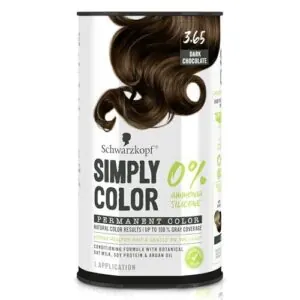
Once your purple shampoo has brass under control, gray coverage is the next thing to tackle, and that’s where Schwarzkopf’s Dark Chocolate Brown (shade 3.65) earns its spot. The ammonia-free cream leans on oat milk, soy protein, and argan oil, so fine strands get color without that stripped, straw-like feeling.
It spreads smoothly and delivers 100% gray coverage in a single application, which matters when you’re working with hair that shows every missed patch. Skin stays comfortable too, since there’s no PPD or PTD to trigger irritation.
At $12.59, it’s an easy addition to your routine, though longer or thicker hair might need a second box for full saturation.
| Best For | Gray hair, sensitive scalp |
| Price | $12.59 |
| Key Ingredient | Oat milk & argan oil |
| Patch Test | Recommended |
Best For: People with gray hair and sensitive skin who want an ammonia-free, at-home color that’s gentle enough for regular touch-ups.
| Key Ingredient | Oat Milk & Argan Oil |
|---|---|
| Best For | Gray Hair, Sensitive Scalp |
| Usage Frequency | As Needed for Touch-Ups |
| Price | $12.59 |
| Sensitivity Risk | Itching, Irritation |
| Formula Type | Ammonia & PPD-Free |
| Additional Features |
|
- Delivers up to 100% gray coverage in one easy application
- Ammonia-free, PPD-free formula with oat milk, soy protein, and argan oil helps condition hair while coloring
- Suitable for all hair textures, including straight, wavy, curly, and coily hair
- Some users report the cream feels watery, which can make even application tricky
- Color may fade faster on gray hair than on non-gray hair for some users
- A few customers have experienced itching or scalp irritation despite the gentle formula
3. Medicube Pore Exfoliating Toner Pads
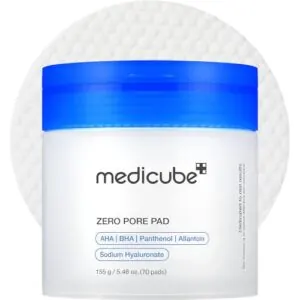
Your color’s covered, so let’s talk about what’s underneath it, your scalp.
Once dye sits on fine hair, oil and buildup show faster, and that’s where Medicube’s Pore Exfoliating Toner Pads ($14.90) come in. White willow bark and citric acid work as gentle chemical exfoliants, while lavender keeps things calm instead of stinging.
One side is embossed for buffing away debris, the other stays smooth for soothing and hydration. Swipe, flip, pat, done. Used consistently, they’re shown to cut sebum by 47.1% and clear pore waste by 87.3%, which means a lighter, cleaner base for whatever color treatment comes next.
Start with once or twice a week, especially if your scalp runs sensitive or you’ve had a lot of sun.
| Best For | Oily, color-treated scalps |
| Price | $14.90 |
| Key Ingredient | White willow bark & citric acid |
| Patch Test | Recommended |
Best For: Anyone with an oily, color-treated scalp who wants a gentle exfoliating routine to cut down on buildup between color sessions.
| Key Ingredient | White Willow Bark |
|---|---|
| Best For | Oily, Congested Skin |
| Usage Frequency | 1-2 Times Weekly |
| Price | Not Listed |
| Sensitivity Risk | Stinging, Breakouts |
| Formula Type | Dual-Textured Pad |
- Chemical exfoliants (white willow bark and citric acid) help reduce sebum and clear pore-clogging buildup
- Lavender helps calm the skin so exfoliation feels soothing rather than harsh
- Dual-textured design makes application simple: buff with one side, soothe with the other
- May cause stinging, irritation, or breakouts for some users, especially with frequent use
- Can leave a sticky residue on skin for certain people
- Best limited to 1–2 uses per week at first, which means patience before seeing full results
Frequently Asked Questions (FAQs)
What color is best for thin, fine hair?
Think of sunlight through thin curtains, soft and glowing, never blocked. That’s your hair goal. Warm honey blonde and ash brown work like that light, reflecting brightness, easing scalp contrast, and skipping harsh regrowth lines darker shades can’t hide.
Should you color fine, thin hair?
Yes, coloring fine hair is totally safe with the right game plan. Pick gentle, low-damage formulas, use techniques like babylights or balayage, and choose shades that add dimension, so your hair looks fuller, not flatter.
What color makes thin hair look thicker?
Warm honey blonde and honey brunette win here. Both shades bounce light off each strand, building dimension that fools the eye into seeing fuller hair, while keeping tones soft enough that your scalp never peeks through underneath.
What is the best hair color for thin hair?
Light honey blonde and mushroom brown win here. Both reflect light evenly, soften scalp contrast, and widen the look of each strand, giving you fuller, denser color without harsh regrowth lines or flat, one-dimensional buildup.
How to get a good hair color for thinning hair?
Good color is a balancing act, not a gamble. Pick a shade near your natural base, layer in soft babylights or balayage, and use bond-building treatments before and after to keep strands strong and full.
How to color thin hair to make it look fuller?
Pick dimensional techniques like babylights or a soft shadow root instead of flat, single-process color. These build depth, soften scalp contrast, and add movement, tricking the eye into seeing thicker, fuller strands with every turn of your head.
How to hide hair color for thinning hair on scalp?
Ever notice how the wrong shade can make thin spots look brighter, not better? Soft blondes and ash browns match your scalp tone, while shadow roots and balayage keep contrast low so sparse areas fade quietly into the rest.
Is purple a good color for thinning hair?
Purple can absolutely work, but choose your shade carefully. Soft lilac or lavender tones add cool dimension without harsh scalp contrast, while deeply saturated violets tend to emphasize thinning instead of disguising it.
What hair color hides thinning hair best?
Light blonde and honey brunette shades win out here. Both reflect light and soften scalp contrast, blurring sparse spots. Skip jet black entirely, its opacity makes every thin patch stand out under normal light.
How to make thin hair look fuller with color?
Think of it as smoke and mirrors, the old illusionist’s trick. Color can’t grow strands, but strategic contrast and depth placement fool the eye instantly, making thin hair read as full, dimensional, and healthy from every angle.
Conclusion
Colorists estimate that just three tones of dimension can make hair look 30% fuller under normal light. That’s the quiet magic behind every shade on this list.
Getting hair color for thin fine hair right isn’t about going darker or bolder. It’s about layering warmth where your scalp usually peeks through.
Soft babylights for fine hair add delicate, sun-kissed dimension in your base shade, which makes strands look fuller without harsh lines or heavy color.
Pick your shade, talk technique with your colorist, and let contrast do the heavy lifting. Thin strands, meet your fullest look yet.