This site is supported by our readers. We may earn a commission, at no cost to you, if you purchase through links. This content is for general informational and educational purposes only and is not a substitute for professional medical, dermatological, or nutritional advice.
The biggest mistake first-time colorists make isn’t picking the wrong shade. It’s walking into the process blind, rushing through prep, and wondering why their results look nothing like the box.
Easy hair coloring for beginners gets a bad reputation because most people skip the steps that actually matter, like patch testing, proper sectioning, and timing a strand check mid-process. Skip those, and even a one-shade lift can go sideways.
This guide gives you a cosmetologist’s approach, broken into steps you can actually follow without a salon chair or a second pair of hands.
Table Of Contents
- Key Takeaways
- Choose a Beginner-Friendly Hair Color and Technique
- Pick The Right At-Home Hair Dye for Your Hair
- Prepare Your Hair, Test The Dye, and Gather Supplies
- How to Color Your Hair at Home: Step-by-Step
- Care for Colored Hair and Prevent Fading
- Frequently Asked Questions (FAQs)
- What is the easiest way to color my hair at home?
- What is the easiest hair dye to apply at home?
- What hair color is best for a beginner?
- Can I color wet or damp hair?
- How long should I wait between coloring sessions?
- What happens if Im allergic to hair dye?
- Can I swim after coloring my hair?
- How do I fix patchy color results?
- Can I dye hair while pregnant or breastfeeding?
- How do I fix a hair color mistake?
- Conclusion
Key Takeaways
- Skipping the patch test and strand check—not the shade you pick—is what causes most first-time color disasters.
- A demi-permanent cream formula applied one to two shades from your natural color gives beginners the most forgiving, even results.
- Dry, day-old hair grips dye better than freshly washed hair, and running out of product mid-application will ruin your coverage.
- Switching to sulfate-free shampoo, washing less often, and using a UV spray after coloring are what keep your color from fading fast. Since not every product in a line is color-safe, check whether Herbal Essences is good for colored hair before buying a bottle.
Choose a Beginner-Friendly Hair Color and Technique
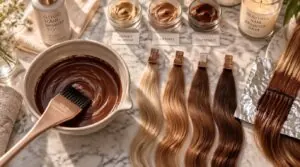
Two smart choices decide how well your first DIY color turns out: the shade and the method. A beginner-friendly hair dye one to two shades lighter than your natural color is your safest bet. That slight difference means forgiving lift and blending that looks intentional even if your timing isn’t perfect.
For deeper inspiration before you commit to a shade, browsing a curated guide to blue-black hair dye results can help you visualize how dramatic-to-subtle shifts actually look on real hair.
For technique, keep it simple. Global color with minimal parting eliminates stress. Use hair sectioning techniques to break hair into four to six even parts, then apply with a proper hair dye brush technique for smooth, consistent coverage. Pick a hair dye bowl size wide enough to mix and dip without making a mess.
Do your strand test and patch test 48 hours before anything else. Both are non-negotiable.
Pick The Right At-Home Hair Dye for Your Hair
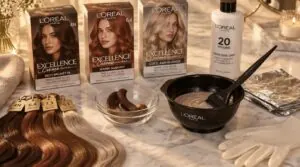
Now that you’ve locked in your shade and technique, the next call is picking the dye. The box dye vs professional products debate doesn’t have one right answer. It depends on your hair’s history and what you want.
Box dyes are a solid beginner-friendly hair dye pick for untreated hair. If you’ve had prior chemical services, a professional formula gives you better control. Your strand test and patch test results will guide your final pick.
Here’s what to think about before you buy:
- Demi-permanent formulas are gentler, fading after 24-28 washes, and great for first-timers.
- Grey coverage needs a 20-30 vol developer for full, even results.
- Color-safe hair care products extend hair color vibrancy longevity, so plan your maintenance routine now.
Prepare Your Hair, Test The Dye, and Gather Supplies
With your dye picked, prep is what separates a clean result from a patchy mess. Start with the hair dye patch test: your allergy test 48 hours before coloring. Dab a small amount behind your ear or on your inner elbow and wait the full period. Redness, itching, or swelling means stop.
If you’re unsure which formula to choose before running your patch test, browsing top-rated beard dye options can help you narrow it down with confidence.
Shampoo your hair the day before, not the morning of. Dry hair grips color better, and skipping the fresh wash helps. Detangle completely.
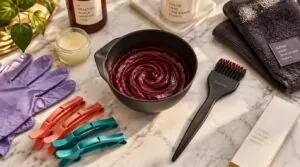
Now set up your workspace. You’ll need a non-metal mixing bowl, a quality tint brush, nitrile gloves, and sectioning clips for even application. Add petroleum jelly along your hairline, keep a towel nearby, and make sure you have enough dye. Running out mid-application ruins coverage.
How to Color Your Hair at Home: Step-by-Step
You’ve prepped, you’ve tested, and now it’s time to actually do the thing. The process breaks down into three straightforward steps that keep you organized and in control from start to finish. Follow these in order and you’ll get even, beautiful results without the guesswork.
For guidance on keeping every section properly hydrated, a step-by-step sectioning method for moisturizing hair makes it easy to work through each part systematically.
Mix Dye and Section Hair
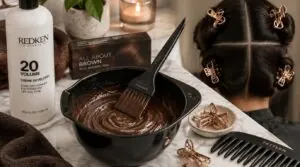
Picture a painter who grabs their brush before properly mixing paint. Smart, right? Don’t. Pour developer into your hair dye bowl, add color, and stir to a smooth hair dye mixing consistency. Load your hair dye application brush.
Sectioning hair for even application protects you from patchy results. Clip four sections front-to-back, crown first. Mix dye well and you’re unstoppable.
Apply Color to Virgin Hair or Roots
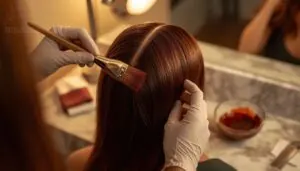
Grab your hair dye brush and start at the crown. Working section by section, apply color to the root zone first, then smooth toward the mid-shaft using the push-back technique. Your hair dye gloves are non-negotiable here.
Roots on virgin hair absorb fast, so use a light hand and saturate evenly. Steady, methodical strokes always give you that salon finish.
Check Coverage, Time, and Rinse
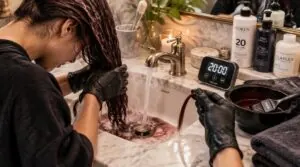
After applying color, start your timer. Hair dye timing accuracy isn’t negotiable.
- At the halfway mark, pull a quick strand test on roots
- Extend time by 5 minutes if color looks uneven
- Use a proper hair dye rinse technique: lukewarm water, gentle massage
- Seal with 30 seconds of cool water for cuticle sealing
That final cool rinse completes color development.
Care for Colored Hair and Prevent Fading
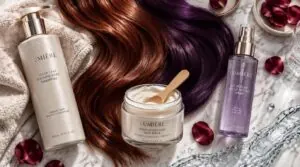
Studies show colored hair can fade up to 40% faster without a consistent care routine. Don’t let that happen.
Colored hair fades up to 40% faster without a consistent care routine—don’t let that happen
Switch to sulfate-free shampoos immediately. They clean without stripping pigment, unlike harsh detergents. Wash fewer days per week and always use cool water to keep the cuticle sealed.
| Habit | Why It Helps | Frequency |
|---|---|---|
| Hydrating masks weekly | Smooths cuticles, locks pigment | Once weekly |
| UV protection spray | Blocks light-driven fading | Before sun exposure |
| Colorsafe shampoo | Gentle cleanse, less bleed | Every wash |
UV protection is non-negotiable. Sunlight steadily breaks down dye molecules, and heat speeds that up fast. Spritz it on before heading outside. Do hydrating masks weekly to smooth lifted cuticles, and your hair color maintenance routine will keep results vivid much longer. A lightweight UV protection hair spray shields your color from both sun and heat damage in one quick step.
Frequently Asked Questions (FAQs)
What is the easiest way to color my hair at home?
Start with a one-step box dye kit. It skips mixing, keeps at-home hair coloring simple, and cuts timing errors. Pick a shade one level from your natural color and always follow the hair dye instructions.
What is the easiest hair dye to apply at home?
Cream-based, ammonia-free box dye is the most beginner-friendly hair dye you’ll find. It blends evenly, resists streaking, and brush-on or squeeze-tube single-process kits with a built-in conditioner make your at-home hair coloring simple and stress-free.
What hair color is best for a beginner?
Think of your first hair color like planting a seed: start with what grows most naturally. Neutral brown or dark blonde is the ideal beginner-friendly hair dye. Low contrast hides regrowth beautifully and forgives mistakes.
Can I color wet or damp hair?
Skip the damp hair hack. Water dilutes permanent dye formulas, causing patchy, uneven results during hair dye processing time. Dry hair gives dye molecules proper contact with the shaft for consistent color penetration and coverage.
How long should I wait between coloring sessions?
Wait 4-6 weeks between sessions so your hair can fully recover from chemical processing. Recoloring too soon weakens strands, causes breakage, and makes your next hair dye application patchy, uneven, and much harder to correct.
What happens if Im allergic to hair dye?
Imagine your scalp starts itching mid-application. Stop using the dye, rinse thoroughly with cool water, and apply a gentle moisturizer.
A hair dye allergy test beforehand can prevent this. See a dermatologist if symptoms worsen.
Can I swim after coloring my hair?
Most dye directions recommend waiting 24 to 48 hours before swimming. Chlorine strips hair color fast on a fresh dye job, making your new shade bleed and fade quickly. So hold off before diving in.
How do I fix patchy color results?
Patchy color results usually mean missed sections or uneven saturation. Re-saturate those light areas with fresh dye, work under good lighting, and let it fully process before rinsing. A second pass achieves even color application.
Can I dye hair while pregnant or breastfeeding?
Most doctors consider it generally safe, but extra caution still matters most during the first trimester.
Choose highlights or a root touch-up to minimize scalp contact, always do a patch test first, and ventilate well.
How do I fix a hair color mistake?
Color mistakes happen to everyone. To fix patchy color results, re-saturate missed sections while the dye’s still processing. For unwanted tone issues, a color remover clears deposit cleanly. Always run a strand test next time.
Conclusion
Your first box of color isn’t a gamble, it’s a project, and projects reward preparation. Patch test, section carefully, and check your strand before the timer decides for you.
That’s the real secret behind easy hair coloring for beginners: patience beats talent every single time.
If shade one comes out slightly off, don’t panic, hair grows and color corrects. You’ve got the steps, the supplies list, and a cosmetologist’s playbook.
Now go mix it up.