This site is supported by our readers. We may earn a commission, at no cost to you, if you purchase through links. This content is for general informational and educational purposes only and is not a substitute for professional medical, dermatological, or nutritional advice.
Your hair is almost entirely protein. When your body runs short on amino acids, it redirects them away from hair follicles first, since hair isn’t survival-critical. That’s why low protein intake shows up as shedding weeks before you notice anything else.
Keratin, the protein that forms each strand, depends on a steady amino acid supply from what you eat. The right foods deliver protein and the specific nutrients follicles need to cycle through growth phases efficiently.
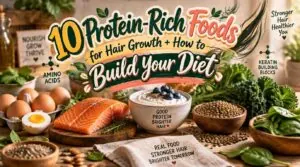
A protein-rich diet for hair doesn’t require a complete overhaul. Ten specific foods can meaningfully shift what your follicles have to work with.
Table Of Contents
- Key Takeaways
- Why Protein Matters for Healthy Hair
- Daily Protein Needs for Hair Growth
- Best Protein-Rich Foods for Hair
- Build a Balanced Hair-Healthy Meal Plan
- Low Protein Signs and Medical Help
- Frequently Asked Questions (FAQs)
- Which food has the highest protein for hair?
- What are the big 3 for thinning hair?
- How to tell if hair is lacking protein?
- What foods thicken hair fast?
- Can too much protein cause hair loss?
- Does protein timing throughout the day matter?
- Are protein supplements safe for hair growth?
- Can protein-rich diets reverse hair thinning?
- Do protein needs change with age or activity?
- Conclusion
Key Takeaways
- Your body treats hair as expendable — when protein runs low, amino acids get rerouted to critical organs first, which is why shedding shows up weeks after a dietary dip, not immediately.
- Keratin production depends on sulfur-containing amino acids like cysteine and methionine, so the most effective foods for hair aren’t just high in protein — they’re high in the right amino acids, found in eggs, salmon, lean beef, and fermented soy.
- Spreading your protein intake across three or four meals does more for follicle health than one large serving, because amino acids only circulate for a limited window and hair follicles need a steady supply to sustain their growth cycle.
- A protein-rich diet can only reverse hair thinning caused by deficiency — if the root cause is hormonal, genetic, or thyroid-related, food alone won’t restore density and medical evaluation is the necessary first step.
Why Protein Matters for Healthy Hair
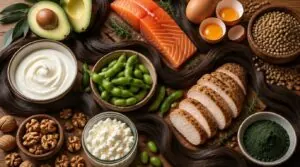
Think of your hair as a protein structure from root to tip. Each strand is built almost entirely from keratin, a fibrous protein your body assembles using amino acids from food. When those building blocks run short, the body redirects resources to more critical functions, and hair takes the hit.
The good news is that eating the right foods for hair growth can restock those amino acid reserves and get strands back on track.
Your hair is built almost entirely of keratin, so when protein runs short, hair is the first to suffer
Your hair follicles are among the most metabolically active tissues you have. They cycle through growth and rest phases continuously, demanding a steady protein supply to fuel that turnover. Without enough, follicle output slows, strands thin, and shedding increases.
That’s precisely where protein-rich foods for hair growth come in. Prioritizing high-quality protein sources daily gives your follicles the amino acids they need for sustained keratin production and structurally sound strands.
Daily Protein Needs for Hair Growth
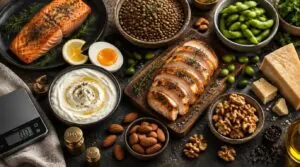
So how much do you actually need? Daily protein needs for hair growth aren’t a single fixed number. Your requirement depends on body weight, activity level, age, and health status.
A practical starting point is 0.8 grams per kilogram of body weight daily for sedentary adults. Active individuals, pregnant women, and those recovering from illness need more.
If you’re building meals around that target, this list of protein-rich ingredients includes meat and plant options so you can reach your daily goal.
Key factors shaping your protein intake:
- Body weight: heavier individuals usually need more total grams
- Activity level: exercise raises amino acid turnover and repair demands
- Life stage: pregnancy and lactation increase requirements a lot
- Medical status: kidney disease may require supervised, adjusted targets
Building your diet around protein-rich foods helps guarantee consistent amino acid availability for both hair growth and broader nutritional hair care goals.
Best Protein-Rich Foods for Hair
Not all protein sources support hair the same way. The foods below are chosen for their sulfur amino acid content, bioavailability, and complementary nutrients that directly feed follicle function. Whether you eat animal products, follow a plant-based diet, or do both, there’s a practical option here for you.
For a fuller breakdown of how protein timing and variety affect male hair growth, this guide on how fast hair grows for men is worth a look. It also explains why shedding happens in the first place, covering the hair growth cycle, ferritin levels, and follicle miniaturization in plain terms.
Eggs
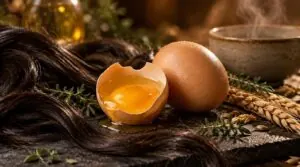
are the blueprint your hair follicles follow for growth. They deliver complete amino acid profiles, including cysteine, the sulfur-containing building block keratin needs for strong disulfide bonds.
Among protein rich foods, eggs give you macronutrient density and micronutrient depth for nutritional hair care.
The yolk matters just as much, offering vitamin D and selenium to support healthy follicle cycling.
Greek Yogurt
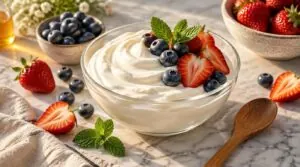
rounds out that amino acid picture with real protein density. One cup delivers up to 20 grams of complete protein, supporting follicle health and keratin production each day.
Among protein rich foods, it’s one of the most practical for sustaining hair growth. It’s portable, prep-free, and fits into any meal, keeping your protein intake consistent without extra effort.
Salmon and Mackerel
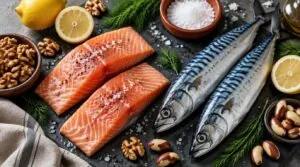
Because salmon and mackerel deliver complete amino acids alongside omega-3 fatty acids, they’re two of the most effective protein-rich foods for hair growth you can add to your diet. Both actively support hair density improvement through several distinct pathways:
- Keratin synthesis via amino acid supply
- Scalp inflammation reduction
- Selenium for antioxidant defense
- Vitamin D for follicle cycling
- Fat-soluble nutrient absorption
Chicken and Turkey
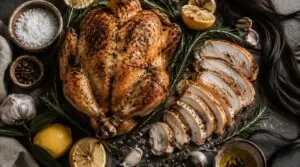
rank among the most practical protein-rich foods for daily use. Both supply complete amino acid profiles, including sulfur-containing methionine your follicles need for keratin synthesis.
Consistent protein intake from skinless cuts keeps hair strength by keeping your amino acid pool steady. White-meat options offer the highest protein density per calorie, making them efficient tools for hair growth.
Lean Beef
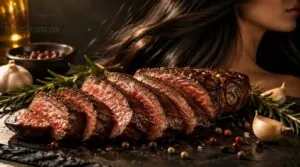
Like a well-stocked toolbox, lean beef delivers everything your hair follicles need in a single serving. It’s a lean protein source packed with heme iron and zinc, both critical for keratin production.
Your protein intake from a 3-oz cooked serving fuels the rapid cell division driving hair growth. Include lean beef among your protein-rich foods two to three times weekly.
Tofu and Tempeh
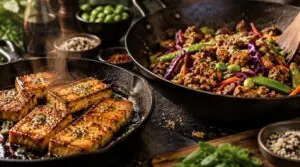
Firm tofu sizzling in a pan, tempeh crumbled into a stir-fry: they’re both excellent plant-based protein sources. Each supplies all essential amino acids, making them complete fuels for keratin synthesis.
Tempeh’s fermentation improves protein absorption, so your body extracts more from each gram you eat. Choose either consistently, and your hair follicles get the raw materials they need to grow.
Lentils With Whole Grains
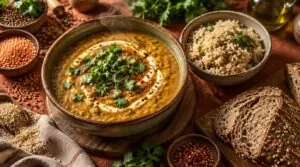
Here’s a pairing that works: lentils with whole grains. Lentils deliver iron, zinc, and folate, nutrients your follicles need for cell division. Whole grains complete the amino acid profile, so you absorb more usable dietary protein per meal.
Try dal with brown rice or lentil soup with whole-grain bread. A protein-rich diet doesn’t require meat.
Quinoa
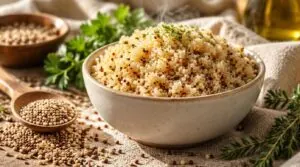
Here’s a grain that works harder than most. One cup of cooked Quinoa delivers about 8 grams of protein, and it’s one of the few plant-based complete proteins, containing all nine essential amino acids your hair follicles use to build keratin. You also get zinc, iron, and magnesium, plus fiber that keeps blood sugar steadier. Rinse it well, then boil until tender for a protein-rich diet staple.
Paneer and Cottage Cheese
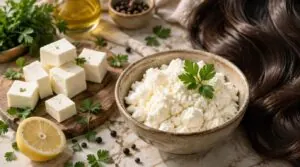
Quinoa isn’the only complete protein on your side. Paneer and cottage cheese bring casein and whey, delivering methionine and cysteine your follicles need for keratin. Half a cup of cottage cheese offers about 12 grams of protein; choose low-fat versions for better protein density. Spread your Dietary Protein across meals, and you’ll support steady Hair Growth and Healthy Hair.
Brazil Nuts and Sesame Seeds
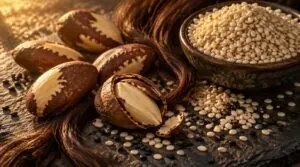
Beyond dairy, micronutrient-dense foods like Brazil nuts and sesame seeds round out your hair-health strategy. Just one or two Brazil nuts daily delivers your selenium target for selenoprotein synthesis, but don’t overdo it since selenium toxicity is a real risk.
Sprinkle sesame seeds over meals for zinc, iron, and calcium that support follicle cell function without displacing larger protein sources.
Build a Balanced Hair-Healthy Meal Plan
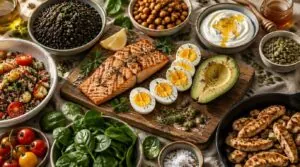
Knowing your protein-rich foods is one piece of the puzzle. A protein-rich meal plan puts those choices into a daily structure that backs up dietary protein intake and keeps protein synthesis in hair running consistently.
Build a balanced hair-healthy meal plan around these five habits:
- Anchor every meal with a quality protein source
- Spread your protein intake across three or four meals instead of one large serving
- Pair plant proteins with complementary grains or legumes to complete the amino acid profile
- Include iron and zinc-rich foods alongside your protein to support follicle function
- Keep total daily calories sufficient so protein isn’t redirected away from hair growth
Without enough calories, your body won’t prioritize hair. Structure your plate thoughtfully and stay consistent.
Low Protein Signs and Medical Help
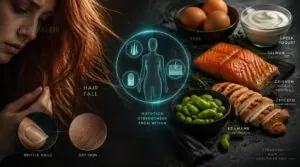
Even with a solid meal plan in place, your body sends clear signals when protein intake falls short. Watch for generalized hair shedding that seems heavier than usual, brittle nails, or persistent dry skin. These signs often appear weeks after a dietary dip, because hair cycling lags behind nutritional shifts.
If you notice persistent hair fall alongside fatigue, unexpected weight loss, or swelling, don’t self-diagnose. A clinician can run labs checking albumin and micronutrient levels to assess whether nutritional deficiencies are contributing. A Medical Hair Assessment also rules out thyroid issues, malabsorption, or hormonal conditions that mimic protein-related loss.
Hair Loss Treatment works best when the root cause is confirmed, not guessed. Get checked before making changes to your diet.
Frequently Asked Questions (FAQs)
Which food has the highest protein for hair?
My client swapped toast for two eggs at breakfast, and within months her shedding eased. Here’s your answer: chicken breast and lean fish top the list, though eggs remain the top choice for highquality protein.
What are the big 3 for thinning hair?
You’ll want to watch the big 3: genetics, hormonal shifts, and nutritional deficiencies. Each shrinks hair follicles, disrupts keratin production, and drives hair thinning.
Fix what you can control, starting with dietary protein.
Beyond diet, certain health conditions causing hair loss like thyroid disorders and diabetes can also contribute to thinning.
How to tell if hair is lacking protein?
Watch for diffuse thinning, increased hair breakage, and low energy or fatigue. Protein deficiency hair loss usually appears weeks after low dietary protein. Confirm with labs like albumin; see a clinician if shedding persists.
What foods thicken hair fast?
No food thickens hair fast. Hair grows slowly, so protein-rich foods like eggs, salmon, and Greek yogurt support hair growth over weeks and months. If thinning persists, see your doctor.
Can too much protein cause hair loss?
Think of your follicles as engines: protein is fuel, but flooding the tank doesn’t add horsepower. Excess protein alone rarely causes hair loss.
Shedding usually traces to calorie deficits, low iron, zinc, vitamin D, thyroid issues, or rapid weight loss. Your protein metabolism experiences surplus nitrogen fine when your overall diet stays balanced. If you notice shedding, evaluate the whole picture, not just protein.
Does protein timing throughout the day matter?
Like a steady drip filling a bucket, your hair cares about total protein intake more than clock time. Amino acids circulate for hours, so spreading proteinrich meals helps, but hitting your daily target matters most.
Are protein supplements safe for hair growth?
Ironically, the fastest route to stronger hair isn’t a tub of powder. Protein supplements are safe for most healthy people, but they won’t outperform Protein-Rich Foods. If your protein-rich diet already covers what you need, extra won’t boost hair growth.
Can protein-rich diets reverse hair thinning?
Here’s the straight answer: a protein-rich diet can turn the ship around only when deficiency causes your hair thinning. It won’t reverse hormonal pattern loss; that needs medical treatment for real hair density improvement.
Do protein needs change with age or activity?
Research suggests adults over 65 need roughly 0–2 grams per kilogram daily. Your needs rise with age and activity. Training demands more protein for repair; lower intake can slow hair follicles.
Conclusion
Consider someone eating toast and coffee for breakfast, skipping lunch, then grazing at dinner. Their hair sheds months later, and they blame stress. The real issue is supply.
A protein rich diet for hair fixes that at the source: eggs at breakfast, lentils at lunch, salmon at dinner. You don’t need to get it exactly right. You need consistency, because follicles build keratin from what you deliver today.
Stock your kitchen accordingly, and your hair gets the raw materials it’s been waiting for.