This site is supported by our readers. We may earn a commission, at no cost to you, if you purchase through links. This content is for general informational and educational purposes only and is not a substitute for professional medical, dermatological, or nutritional advice.
You might grab a toner because a salesperson recommended it, then spend months wondering if it’s doing anything. That uncertainty makes sense. Facial toner looks like expensive water and comes with vague promises about "reviving" and "balancing" your skin.
But how facial toner works comes down to real chemistry. Cleansing disrupts your skin’s acid mantle, barrier enzymes slow down, and leftover residue blocks serums from absorbing properly. Toner restores pH, pulls water into the outer skin layer, and preps everything that comes after it.
Knowing what your toner does changes how you shop for one and how your whole routine performs.
Table Of Contents
Key Takeaways
- Cleansing raises your skin’s pH, and toner restores it to the optimal 4.5–5.5 range, reactivating the barrier enzymes that protect your skin.
- Not all toners do the same thing — hydrating formulas draw moisture in, exfoliating ones (AHA/BHA) clear dead cells and pores, and astringents reduce oiliness, so matching type to your skin concern is what makes the step worthwhile.
- Toner removes leftover residue that cleansing misses, which means your serums and moisturizers can actually absorb instead of sitting on top of your skin.
- Results vary by formula — hydrating toners work within days, while AHAs take one to two weeks and BHAs about three, so consistency and correct product choice matter more than frequency alone.
What is Facial Toner?
Place facial toner in your skin care routine right where cleansing ends and targeted treatment begins. It’s a lightweight, water-based liquid you apply directly to freshly washed skin, before layering on your serum or moisturizer.
For best results, work it into a consistent morning skincare routine so your skin gets that hydration boost every day before anything else goes on.
Not all toners work the same way. Some are hydrating toners packed with humectants, while others are formulated to support skin pH balance or deliver gentle exfoliation. Knowing which type you’re actually using matters, because each one acts as a different kind of postcleansing treatment.
How Facial Toner Works

Toner does more than just prep your skin — it works on several levels at once. Knowing what’s actually happening when you apply it helps you make smarter choices for your routine. Here are the five key ways toner works on your skin.
PH and Acid Mantle Restoration
Out of every cleanse, your pH balance shifts upward. Cleansers disrupt acid mantle restoration by alkalizing the surface. An alcohol-free formulation pulls skin pH regulation back toward the 4.5-5.5 range.
Here’s what restoring skin acidity does:
- Reactivates barrier enzymes
- Tightens the stratum corneum
- Reinforces your natural defenses
- Stabilizes surface chemistry
That effect is temporary, so apply toner right after cleansing.
Hydration Through Humectants
Beyond pH support, a good facial toner delivers skin hydration through humectants like hyaluronic acid and glycerin. These ingredients draw water into the stratum corneum, so your skin feels smoother right after you apply it.
Layering these humectants under a moisturizer amplifies their effect, as explored in this gentle skin hydration methods comparison that breaks down which techniques work best together.
A waterbased, moisturizing toner works best here. Apply it before a heavier serum or cream so those steps lock the moisture in before it evaporates.
AHA and BHA Exfoliation
Some toners go a step further by offering chemical exfoliation. Exfoliating toners with glycolic acid (an AHA) work right at the surface, loosening the bonds between dead skin cells for a more gentle exfoliation.
Salicylic acid (a BHA) is oil-soluble, so it penetrates deeper into your pores to clear buildup. Concentration and pH both shape how intense the effect feels.
Residue Removal and Product Priming
After cleansing, a thin film of makeup, sunscreen, or surfactant residue often clings to your skin. That leftover layer disrupts product absorption and causes serums to bead instead of spreading evenly.
Applying toner as part of your daily postcleansing care while skin’s still slightly damp dissolves that residue and wets the surface, so active ingredients can actually make direct contact.
Temporary Pore-Tightening Effects
Skin feeling tight after toner isn’t a sign of actual pore size change. Astringent ingredients temporarily dry the surface, which visually improves pore refinement by smoothing texture around follicle openings. Some toners also use film-forming compounds or mattifying agents to cut shine and reduce visible contrast around pores. Witch hazel-based formulas are a classic example, and browsing astringent toner pore minimizing options can help you compare ingredients like niacinamide or salicylic acid that extend that smoothing effect.
Once oil returns and your skin fully rehydrates, any pore minimization fades.
Toner Types and Key Ingredients

Think of the toner aisle as a toolbox. Each bottle solves a different problem.
Hydrating toners pack humectants like glycerin and hyaluronic acid to pull moisture into your skin. Exfoliating toners use AHAs or BHAs to dissolve dead cells and unclog pores. Astringent toners often contain alcohol or witch hazel to reduce oiliness. Soothing toners lean on calming ingredients like centella or allantoin to quiet irritation.
Every facial toner has a job. Knowing which one matches your concern is everything.
Every toner has a purpose; match it to your concern and your skin wins
Choosing Toner for Your Skin
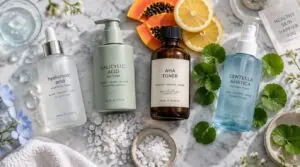
The right facial toner helps your skin, but the wrong one fights it. Your skin type isn’t just a label, it’s your selection guide.
- Dry or sensitive skin: Use hydrating toners with glycerin or hyaluronic acid
- Oily or acne-prone skin: Try exfoliating toners with salicylic acid for pore clearing
- Dull or uneven texture: AHA formulas resurface the top skin layer
- Compromised or reactive skin: Choose skin barrier repair formulas without active acids
When in doubt, always start with something mild.
How to Use Facial Toner Safely
More isn’t always better in the case of toner. Layering too many actives in your skin care routine turns it into a stress test your barrier didn’t sign up for.
- Patch test first, especially with alcohol-based or exfoliating formulas, before applying to your full face.
- Apply toner after cleansing to support skin prep and restore a healthy skin pH.
- Alternate exfoliating toners every other day to cut irritation risk.
- Follow hydrating toners with moisturizer immediately to seal in absorbed water.
Top 3 Facial Toners
Finding the right toner doesn’t have to mean testing dozens of options. These three stand out for their clinically-backed formulas and ability to address real skin concerns. Each one targets a different need, so there’s likely one that fits exactly where you are in your routine.
If you’re unsure where to start, browsing a curated list of dermatologist recommended facial toners can help you narrow down what your skin actually needs.
1. Paulas Choice Advanced Replenishing Face Toner
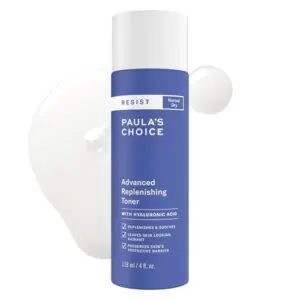
If you’re looking for a toner that goes beyond basic hydration, this one delivers. Paula’s Choice packs omega fatty acids and antioxidants, including Vitamins C and E, plus plant oils into a milky, thicker texture that some find richer than expected.
It’s fragrance-free and works well across all skin types. At $29 for 4 ounces, it preps your skin beautifully for serums and moisturizers while fighting free radicals. A small number of real users report mild irritation, so patch-test first.
| Best For | Anyone with sensitive, dry, oily, or combination skin who wants a fragrance-free toner that preps skin for better absorption of serums and moisturizers while targeting fine lines and uneven tone. |
|---|---|
| Volume | 4 fl oz |
| Key Ingredients | Vitamins C & E, Plant Oils |
| Skin Type | Sensitive, Dry, Oily, Combo |
| Price | $29.00 |
| Primary Benefit | Hydration & Anti-Aging |
| Fragrance-Free | Yes |
| Additional Features |
|
- Packed with omega fatty acids, plant oils, and antioxidants (Vitamins C and E) that protect against environmental damage and free radicals
- Fragrance-free formula works across all skin types, including sensitive skin
- Primes skin for serums and moisturizers, making your full routine more effective
- Thicker, milky texture is noticeably heavier than a standard toner, which won’t suit everyone
- Some users report mild skin irritation, making a patch test a smart first step
- At $29 for 4 ounces, the price is on the higher end for a toner
2. La Roche-Posay Effaclar Salicylic Acid Toner
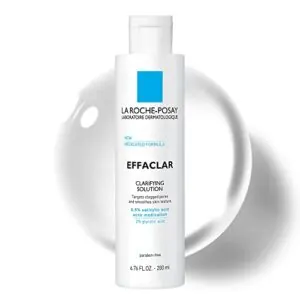
If Paula’s Choice suits drier skin, this La Roche-Posay toner is built for oily and acne-prone types. It combines 0.5% salicylic acid with glycolic acid to clear clogged pores, tackle blackheads, and smooth uneven texture by lifting dead skin cells after you cleanse.
At 6.7 ounces, you get solid value for an exfoliating toner. Some users note mild dryness or redness, so ease into it. A few also report a slightly sticky finish. Patch-test first if your skin runs sensitive.
| Best For | Oily, acne-prone, and combination skin types looking to clear clogged pores, reduce blackheads, and smooth uneven texture. |
|---|---|
| Volume | 6.7 oz |
| Key Ingredients | Salicylic & Glycolic Acid |
| Skin Type | Sensitive, Oily, Combo |
| Price | N/A |
| Primary Benefit | Exfoliation & Acne Control |
| Fragrance-Free | N/A |
| Additional Features |
|
- Combines 0.5% salicylic acid and glycolic acid for effective chemical exfoliation
- Removes residual impurities and controls excess oil after cleansing
- Solid 6.7 oz size offers good value for an exfoliating toner
- Can cause dryness or redness, especially for sensitive skin
- May leave a slightly sticky residue on the skin
- Pore-minimizing results vary and can be slow to appear
3. Murad Essential-C Vitamin C Toner
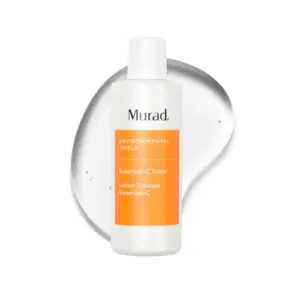
If your skin leans dry or dull rather than oily, the Murad Essential-C Toner takes a different angle. It uses vitamin C as an ascorbic acid derivative to reduce melanin production and even skin tone over 4-8 weeks. Grapefruit extract and botanical oils help absorption, while glycerin draws moisture into the skin within minutes.
At 6 fl oz, it refreshes and hydrates after cleansing, prepping your skin for serums. The fragrance gets mixed reviews, so patch-test first if you’re sensitive.
| Best For | People with dry or dull skin looking to brighten their complexion and even out skin tone over time. |
|---|---|
| Volume | 6 fl oz |
| Key Ingredients | Vitamin C, Antioxidants |
| Skin Type | Dry, Acne-Prone |
| Price | N/A |
| Primary Benefit | Moisture & Brightening |
| Fragrance-Free | No |
| Additional Features |
|
- Alcohol-free and hydrating, making it a good fit for dry or dehydrated skin
- Vitamin C helps reduce melanin production and even skin tone with consistent use
- Works well as a prep step after cleansing to boost absorption of serums and moisturizers
- Fragrance has drawn mixed reactions, so those with sensitive skin should patch-test first
- Not suitable for makeup removal, so you’ll need a separate product for that step
- Some customers feel it’s overpriced for what it delivers
Frequently Asked Questions (FAQs)
Can toner cause skin purging or breakouts?
Think of it like clearing a clogged drain. Yes, toner can trigger skin purging in acne-prone skin.
Alcohol-based formulas, though, may disrupt your skin barrier function and skin microbiome health, causing entirely new breakouts instead.
How long does toner take to show results?
Your face toner can deliver immediate facial hydration, but lasting skin radiance takes a bit longer. Hydrating toners work within days, AHAs show results in one to two weeks, and BHAs need about three weeks.
In particular, hydrating toners restore skin barrier function by replenishing moisture lost during cleansing and helping reduce transepidermal water loss.
Is facial toner safe to use during pregnancy?
Wondering if your current skin care routine needs adjusting right now? Hydrating toners are generally fine, but skip AHA and BHA exfoliants altogether. Your sensitive skin’s barrier function matters more than ever during your pregnancy.
Does toner expire or lose effectiveness over time?
Yes, your face toner definitely expires. Active ingredient efficacy drops as vitamin C oxidizes and AHAs gradually lose their potency when your skin pH shifts. Always check the expiration date and PAO symbol before applying.
Can toner replace micellar water or makeup remover?
Skipping micellar water and reaching for face toner instead? It won’t do the job. Toner isn’t formulated to lift makeup; it’s skin prep, meant to restore your skin pH after cleansing, not replace your cleanser.
Conclusion
Toner still feels like an optional step to a lot of people, and that’s completely fair if you’re currently working with a gentle cleanser.
But understanding how facial toner works shifts it from a mystery product into a targeted tool. It restores what cleansing disrupts, pulls hydration into your outer skin layer, and preps everything that follows. Match the right ingredient to your actual skin concern, and your whole routine will quietly click into place.