This site is supported by our readers. We may earn a commission, at no cost to you, if you purchase through links. This content is for general informational and educational purposes only and is not a substitute for professional medical, dermatological, or nutritional advice.
A fade that looks clean costs anywhere from $30 to $50 at the barbershop—every two to three weeks, which adds up fast. Plenty of people assume the cut itself is too technical to replicate at home, but the gap between a professional result and a DIY disaster usually comes down to sequence, not skill. Get the steps right, and the clippers do most of the work.
The core challenge with learning how to fade hair with clippers at home isn’t the blending—it’s knowing where to start, how to move, and when to switch guards. Most first-timers either go too short too fast or leave harsh lines they can’t fix. Both problems are avoidable.
What follows breaks the entire process down: tool setup, hair prep, the cut itself, blending, and finishing edges.
Table Of Contents
Key Takeaways
- Getting the sequence right—starting with the longest guard, moving in a C‑motion, and stepping down one guard size at a time—matters more than raw skill when cutting a fade at home.
- Blending is where most DIY fades fall apart, so use flick‑out strokes, the 3‑2‑1 guard rule, and lever micro‑adjustments to soften harsh lines between guard sizes.
- Prep work sets you up to win: wash, lightly dampen your hair, section it with a horseshoe part, and mark your fade line before the clippers ever turn on.
- Clean tools aren’t optional—brush debris, oil the blades after every cut, and your clippers will stay sharp enough to give you consistent results every two to three weeks.
Choose The Right Clippers and Guards
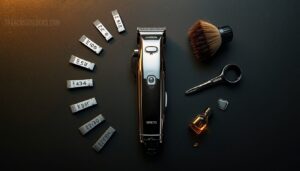
The tools you start with will make or break your fade—no shortcuts here. Getting the right clippers, guards, and accessories before you touch anyone’s hair sets you up to work cleanly and cut with confidence.
If you’re not sure where to start, this guide on choosing the right hair clipper for fades and trims breaks down exactly what to look for before you buy.
Here’s what you actually need.
Adjustable Clipper Lever and Motor Power
The clipper lever is your secret weapon for micro-adjustments during a fade. Lever open gives you about 1.5 mm of cutting length; lever closed drops it to almost nothing—perfect for skin-tight blending.
Pair that with strong motor torque (look for two speeds and smart power indicator models), and you’ll glide through thick hair without stalling or overheating mid‑cut.
The taper lever adjustment range(https://bestbomg.com/blogs/news/clipper-lever-explained) generally spans about 0.5–1 mm per position, allowing fine control of cut length.
Best Guard Sizes for Fading Hair
Once you’ve got your lever dialed in, the Guard Size Ladder is where real fade control begins. Think of clipper guard lengths as your roadmap: 0 for skin, 1 (3 mm), 2 (6 mm), 3 (9 mm), 4 (12 mm).
Half Guard Blending fills the gaps, softening harsh lines. Match your Fade Height Pairing and Hair Type Guard to your texture for a smooth gradient every time.
When to Use a Trimmer or Detailer
Guards do the heavy lifting, but a trimmer takes over when precision matters. Use it for hairline detailing, edge crispness control, and micro blend cleanup around the ears.
detailer manages cowlicks and fine taper adjustments where guards create blunt edges. Precision sideburn shaping and weaving around tight curves stay cleaner with shorter strokes.
Switch tools when clippers can’t get close enough.
Must-have Mirrors, Combs, and Cape
Your tools don’t stop at clippers. A solid adjustable wall mirror or foldable 3-way mirror setup lets you see every angle without guessing. Add a handheld mirror and a second mirror for the nape. Use fine-tooth comb selection to lift hair and spot uneven lines. A cape or towel with cape closure options catches the mess. Lighting for fade work matters too—bright, even light shows every blend.
- Adjustable wall mirror – no blind spots
- Foldable 3-way mirror setup – full 360° view
- Fine-tooth comb selection – lift and check lines
- Cape closure options – keeps hair off your clothes
Choosing Tools for Thick or Coarse Hair
Thick or coarse hair demands more from your equipment. A high-torque motor keeps blade speed steady through dense strands, while a corded power supply holds consistent torque longer than cordless options.
Stainless steel blades with a wide cutting width cover more hair per pass without tugging. Pair those with rigid guard construction and multiple guards with adjustable blades — that combination manages most hair types without skipping.
Prep Hair Before Fading

Before you ever turn on the clippers, what you do to your hair matters more than most people think. A little prep work makes the difference between a clean fade and a choppy mess.
Getting your hair damp and combed out beforehand helps you see the natural growth patterns you’ll need to work with, especially when choosing the right starting guard—check out this guide to fade clipper guard sizes to nail that first pass.
Here’s how to set yourself up right before a single guard touches your head.
Wash, Condition, and Detangle First
Start with a clean scalp rinse using shampoo and conditioner before you touch a clipper. Conditioner slip benefits are real — it coats each strand so you can detangle it with a comb without snagging.
Detangle from ends upward, working in small sections. Section with clips to stay organized, then use a wide-tooth comb to confirm everything’s smooth and ready.
Lightly Dampen Hair for Smoother Clipping
Once you’ve washed and detangled, don’t let your hair dry out completely. Towel-drying first removes excess water, then the Spritzing Technique kicks in — use Lukewarm Water in a spray bottle for Even Dampness across every section.
This Moisture Retention approach keeps damp hair manageable without soaking it.
Spritzing it with a spray bottle mid-fade also helps if sections dry between passes.
Trim The Top to Your Target Length
Before touching the sides, sort out your top. Target Length Planning starts here — pick a guard that’s 2–3mm longer than your actual goal to avoid overcutting on the first pass.
Guard Increment Steps, dropping one size at a time, and use Length Verification Angles from both sides before going shorter. Adjust the clipper lever for finer control between passes.
Section The Hair With a Horseshoe Part
Now section the hair before you cut a single line. Run a curved part from temple to temple across the crown — that’s your horseshoe shape.
This Horseshoe Section Placement aligns with the Parietal Ridge, giving you clean Working Bottom Sections on each side.
Clip the top panel up for Top Panel Securing.
It’s simple hair sectioning, but it keeps your Symmetry Control locked in from the start.
Mark The Fade Line on Both Sides
Before you touch the clippers, mark your fade line on both sides. Use a marking pencil or chalk line so your symmetry guide placement stays consistent across both sides.
- Follow head contour alignment, not a flat line
- Set dual-side reference points at matching heights
- Check alignment in a mirror before cutting
Visible lines beat guesswork every time.
How to Cut The Fade
This is where the real work begins.
Cutting a fade comes down to following a clear sequence — get that wrong, and you’ll end up with harsh lines that are tough to fix.
Here’s how to work through it the right way.
Start With The Longest Guard First
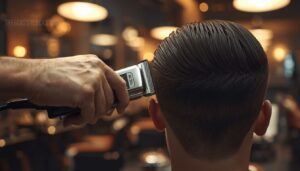
Before you drop to shorter guards, do your Longest Guard Sweep first. Pick the clipper guard size that matches the top of your fade zone, then make an Even Coverage Pass across the entire section.
This sets your Upper Zone Definition and gives you a clean reference for Guard Change Planning. Consistent Height Marking now saves you from patchy gaps later.
Create The Baseline Near The Nape
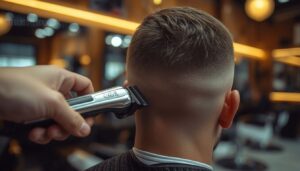
Now that your longest guard has set the upper zone, it’s time to anchor the fade at the back of the neck. Hold the skin taut for proper scalp tension, then keep the clipper flat against the scalp using your guard glide technique.
This reference edge marking locks in your baseline height control.
Always finish with a mirror angle check to confirm both sides sit even.
Move Clippers Upward in a C Motion
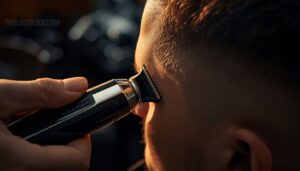
With your baseline locked in, sweep the clippers upward using a C-shaped trajectory, curving away from the scalp as you rise. That scalp clearance is everything — it controls how aggressively the blade bites.
Use fluid strokes and a steady rocking motion through the changeover area, keeping pressure control consistent. Don’t rush; deliberate clipper speed control keeps the blend smooth and even.
Lower Guard Sizes Step by Step
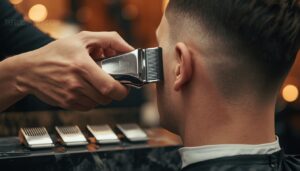
Once your guard size sequencing takes over. Drop one increment at a time — 12mm to 9mm to 6mm to 3mm — never skip. Each incremental blade adjustment layers the fade without harsh bands.
- Use your longest guard on the upper zone
- Shift to mid guards through the changeover zone blending area
- Run low guards only near the neckline
Pressure control tips matter here: lighter contact, smoother results.
Keep The Head Tilted for Better Angles
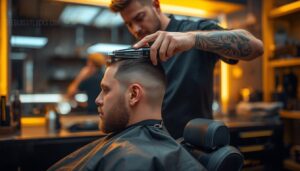
Head position controls everything. Tilt the head forward to open up neckline access, then sideways for ear visibility — both moves let you keep the clipper flat against scalp without awkward angles.
Use a mirror for proper mirror positioning, check posture stability so your strokes stay even, and manage skin tension by not forcing the tilt.
Let the upward C motion and rocking motion do the work.
Blend Lines for a Smooth Fade

Cutting the fade is only half the job — blending is where it actually comes together. Harsh lines between guard sizes are the number one thing that makes a home cut look amateur, but they’re easy to fix once you know the right moves.
Cutting a fade is easy; blending the harsh lines is where amateurs and pros part ways
Here’s what to do to get those transitions looking smooth.
Use The 3-2-1 Guard Rule
Think of your fade as three distinct zones stacked on the head.
Guard Zone Mapping keeps each pass in its lane: the 3 guard manages the upper Gradient Zone Length, the 2 guard softens the middle, and the 1 guard tightens the lower edge.
This Guard Step Sequencing, with proper guard size selection for fades, prevents harsh lines through controlled blending techniques and consistent Evenness Line Checks.
Adjust The Lever for Finer Blending
Once your guards handle the big jumps, the lever takes over for the fine work. Lever Position Timing matters here — adjust it only in the Shift Zone Lever area where two guard lengths meet.
Use Incremental Lever Steps, moving from lever open to lever closed gradually across that boundary. These Micro Lever Adjustments on your adjustable blades give you Lever Pressure Control without cutting too deep.
Use Flick-out Strokes to Soften Lines
Flick-out strokes are your secret weapon for edge blending. Position the clippers at the fade boundary line, then flick outward in tiny increments using light pressure — that’s Pressure Management in action.
Keep a consistent head angle throughout, and let each short stroke fan away from the boundary.
Repeat in small passes rather than one long scooping motion, and the line dissolves naturally.
Rock The Clippers to Remove Weight
Rocking pressure is what separates a choppy blend from a clean fade. Keep your clippers flat against the scalp, then gently press and release as you move upward — that’s your rocking motion doing the heavy lifting.
Adjust clipper angle slightly on each pass for density equalization across thicker spots.
Use empty passes with smooth timing in mind, and proper clipper lubrication keeps every stroke consistent.
Check Both Sides for Even Blending
Both sides should look like a mirror image — and that only happens if you pause and actually compare them.
- Do Mirror Symmetry Checks after every 2–3 passes.
- Confirm Baseline Consistency by lining a comb tooth along your guidelines on each side.
- Use Lever Alignment — same lever position, same side, every time.
- Apply Head Tilt Matching to keep angles identical.
- Finish with Stroke Uniformity for an even fade.
Finish, Edge, and Maintain
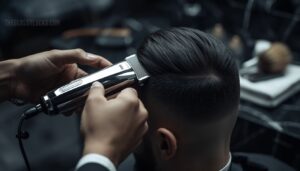
The fade is cut and blended — now it’s time to make it look finished. This last stage is where a good haircut becomes a clean one.
Here’s what to do to lock it in and keep it looking sharp.
Clean Around The Ears and Neckline
Cleaning up around the ears and neckline is where the whole fade either holds together or falls apart. Comb away loose hair first, then use your detail trimmer for Ear Edge Detailing along the curve and tight corners.
For Neckline Lining, keep the skin dry, use light Curved Area Passes, and make Micro Lever Tweaks to avoid harsh drops. Follow Skin Comfort Practices — reposition often, wipe clippings, keep blades clean.
| Area | Key Technique |
|---|---|
| Ear curve | Short curved strokes |
| Behind the ear | Controlled corner passes |
| Neckline center | Gradual light passes |
| Neckline sides | Check asymmetry both sides |
| Skin contact | Reposition tool frequently |
Shape The Hairline With a Trimmer
Once the neckline is clean, shift focus to hairline shaping. Map the curve first — picture that dotted guideline before your trimmer touches skin.
Use light Pressure Control and keep your Blade Angle flat for straight edges, adjusting slightly around corners. Alternate sides for Symmetry Matching, and finish with short upward strokes to feather the edge into a natural, clean Feathered Edge.
Fix Uneven Spots With a Smaller Guard
Even a clean hairline can’t save a patchy blend. That’s where Dark Spot Targeting comes in — go straight to the problem, not the whole side.
- Spot the uneven fade in natural light or a photo.
- Use Incremental Guard Change: drop from a 2 guard to a 1 guard only.
- Make Short Controlled Passes over the dark band.
- Run Visual Light Checks after each pass to avoid Overcutting.
- Guard size selection for fades matters — a guard size chart keeps your steps tight.
Style The Top After The Fade
Once the fade is sharp, blend the top to match. For a Pomade Slick Back or Side Parting, work a small amount of styling product through damp hair and comb it through for a clean hair length change.
A Textured Crop needs a texturizing spray instead. Finish with a Blow Dry Finish to lock in shape, using Product Layering to build hold without weighing hair down.
Clean and Oil Clippers After Use
Your clippers work hard, so treat them right.
Start with Blade Debris Removal — brush loose hair from the teeth before anything else. Then use a proper clipper spray for Cleaning Solutions Choice that won’t damage the blade.
Dry fully before storage. Apply your Oil Application Technique: a drop at each corner and center.
Follow a consistent Maintenance Schedule — clean after each use, oil blades regularly, and your tools stay sharp.
Frequently Asked Questions (FAQs)
What fade style suits my face shape best?
Your face shape drives everything.
Round faces need a high fade or skin fade for height.
Square faces suit a mid fade.
Heart shapes do better with a low fade.
Oblong or diamond? Go taper fade or mid fade.
How do I fade around natural or curly hair?
Curly hair shrinks when dry, so what looks blended wet may gap once it dries.
Work with slightly damp hair, choose texture-sensitive guards, and blend slowly to match the curl pattern.
Can I fade hair on a wet or dry head?
Dry is the safer bet. Dry hair holds its position, shows true contrast between guards, and gives you cleaner blend lines. Damp is fine — just towel-dry first, never soaking wet.
How do I fix a fade that went too short?
Blend upward from the too-short area using incremental guard stepping — don’t jump lengths. Feathering with flicks softens harsh lines fast.
If it’s already skin-tight, let controlled hair regrowth do the rest.
At what age can someone start self-fading at home?
Most beginners are ready around 18. That’s when physical coordination and patience tend to catch up with the skill readiness fading demands. Younger teens can try with adult supervision nearby.
Conclusion
The first time everything clicks—guard sequence, C‑motion, flick‑out strokes—it feels less like a coincidence and more like the skill was always there, waiting. That’s what learning how to fade hair with clippers at home actually delivers: not just a clean cut, but the confidence to repeat it.
Keep blades oiled, your mirrors positioned, and your guards organized. The barbershop isn’t going anywhere, but neither is the money you’ll stop spending on it.