This site is supported by our readers. We may earn a commission, at no cost to you, if you purchase through links. This content is for general informational and educational purposes only and is not a substitute for professional medical, dermatological, or nutritional advice.

Drop a shed strand into a glass of water. If it sinks right away, your hair is telling you something important about its condition.
That sinking strand, the snap you feel when a wet hair stretches too far, the missing root bulb on a fallen hair: each one points to damage you can’t style away. The best haircuts for damaged hair don’t just trim length. They remove weak ends, rebuild fullness, and give your strands a fighting chance.
You’ll learn to read your damage level, match a cut to your texture, and keep your hair strong long after you leave the chair.
Table Of Contents
- Key Takeaways
- How to Choose The Best Haircut for Your Hair Damage
- Best Short Haircuts for Damaged Hair
- Best Medium and Long Haircuts for Damaged Hair
- Haircut Techniques That Remove Damage Without Overcutting
- How to Minimize Breakage After Your Haircut
- Frequently Asked Questions (FAQs)
- What haircut is best for damaged hair?
- Can a haircut fix damaged hair?
- What is the best hairstyle to avoid damaging my hair?
- How do I fix my extremely damaged hair?
- Can heat styling tools be used on damaged hair?
- Does hair texture affect damage repair strategies?
- How does diet impact damaged hair recovery?
- Are salon treatments better than at-home remedies?
- How often should damaged hair be trimmed?
- Can a haircut repair split ends permanently?
- Conclusion
Key Takeaways
- You can read your hair’s damage level by checking whether strands sink in water, snap when wet, lack root bulbs, or have rough, split ends, and the more signs you see, the more your cut should prioritize removing weak hair.
- You’ll get the best results by matching the cut to your texture and density, such as a blunt bob or lob to make fine, thin ends look fuller, or a layered bob or textured shag to release bulk in thick or curly hair.
- You can remove damage without losing much length by asking for dusting, point cutting, or hot scissors, and by booking trims every 6 to 8 weeks (or every 10 to 12 weeks with minimal layers) so split ends can’t travel up the strand.
- You should know that a haircut can’t repair damaged hair, only remove the damaged part, so lasting results depend on cutting back on heat styling, using heat protectant, conditioning weekly, and detangling gently.
How to Choose The Best Haircut for Your Hair Damage

Wondering which cut will truly transform your damaged hair? You’ll find the answer by working through five simple steps, each one designed to give you more control over your final haircut choice. Let’s walk through them together so you can book your next appointment with total confidence!
Once your hair is prepped, a few smart hair dryer techniques for damage-free blow drying will help you protect those fragile ends and keep your new cut looking healthy.
Assess Damage Severity
The best haircut starts with knowing your damage, so what does your hair tell you? Check these signs:
- Strands sink instantly in water
- Wet strands snap when stretched
- Shed hairs lack root bulbs
- Ends split like frayed rope
- Last inches feel rough, crispy
The more boxes checked, the more your cut should prioritize hair damage recovery and hair breakage prevention. Heat styling can boil internal moisture and fracture the cuticle, so frequent flat-iron or blow-dryer use is a common cause of thermal styling damage and split ends.
Consider Texture And Density
Once you know your damage, how do you match the cut to your hair? Start with hair density.
Fine strands look thin when over-layered, so a short bob haircut keeps ends full. Thick hair loves a layered bob haircut to release bulk.
Curly or wavy? A textured shag haircut works with hair texture improvement, and cutting dry shows your true shrinkage.
Set Your Length Goals
Now that your texture is mapped, how long do you really want to go? Set Your Length Goals around hair length retention, since hair grows about ½ inch monthly.
If you’re growing out a relaxer, transitioning to natural hair without the big chop lets you track real progress while keeping your length.
- Three months: a collarbone haircut with fresh ends.
- Six months: a layered lob haircut that keeps weight.
- One year: add split end treatment and trims.
Small wins keep you in control.
Choose Damage-Removing Techniques
Want to keep your length? Match your goals to the right technique.
Dusting removes only split ends and flyaways, so you lose almost nothing. Point cutting softens bulk while clearing damage. Book microtrims between regular trims, and pair them with split end treatment for smoother, shinier ends.
Ask for sharp shears, because dull blades fray hair and create fresh damage.
Prioritize Low-Maintenance Styling
A truly low-maintenance cut gives your damaged strands the rest they desperately need. Prioritize Low-Maintenance Styling by booking microtrims or dusting every six to eight weeks, so frays never travel up the shaft. Love gorgeous, easy looks? Try protective styles like braids and buns.
Between washes, air drying hair is your simplest, healthiest habit! You’ll love the soft, smooth results.
Best Short Haircuts for Damaged Hair
Ready for a fresh start that leaves damage behind?
If dryness is your main struggle, browsing honest hair product reviews for dry hair can help you pick leave-ins and masks that actually restore moisture.
Short cuts are some of the most powerful, life-changing, confidence-boosting choices you can make, because they cut away the weakest hair and give you healthier, fuller-looking ends.
Here are three gorgeous options to help you pick the one that fits your hair and your life.
Cropped Cuts for Extensive Damage

Ready for a fresh start? A Cropped Cut For Hair Loss And Damage removes weak lengths fast.
- Choose a buzz cut for maximum reset.
- Try a cropped pixie cut to keep shape.
- Cut past the damage line.
- Support scalp health with gentle care.
- Let hair regeneration happen naturally.
You’re choosing control, and your healthiest hair will grow in so beautifully.
Blunt Bobs for Thin Ends

Think of a blunt bob as a clean horizon line, one crisp edge where your hair stops fraying and starts looking strong.
A blunt bob is a clean horizon line, one crisp edge where fraying hair ends and strength begins
Why does it work so well? A Blunt Bob For Split Ends removes ragged tips and makes thinning ends look wonderfully full.
Trim every 6-8 weeks and use heat protection to keep hair breakage and split ends away.
Layered Bobs for Natural Volume

Picture your hair swinging at chin length, bouncing with every step instead of hanging flat and tired. That’s what a layered bob haircut can do for you.
Here’s how to get a real hair volume boost without stressing fragile strands:
- Ask for invisible internal layers underneath.
- Request dry cutting, so you see how your natural hair texture falls.
- Book trims every 6-8 weeks.
Best Medium and Long Haircuts for Damaged Hair

Want to keep your length without keeping the damage? You’ll love how medium and long cuts can give you fuller, healthier, stunning results. Here are two great options that put you in total control of your hair’s future.
Blunt Lobs for Fuller Ends
Want fuller ends without growing more hair? A blunt lob haircut delivers exactly that.
By cutting above your split ends, you remove the wispy, see-through tips and leave a dense, solid line. It’s especially flattering on fine hair. Pair it with hair repair and hair strengthening habits, and you’ll protect your hair elasticity while enjoying a perimeter that looks thick.
Minimal Layers to Preserve Length
Want to keep every precious inch? Minimal layers are your answer! They clear away damaged ends while saving up to 95% of your length, which is a huge win for hair health.
Ask your stylist to start at the jawline and point cut the ends. Then book regular trims every 10-12 weeks, and you’ll support hair repair and hair strengthening.
Haircut Techniques That Remove Damage Without Overcutting
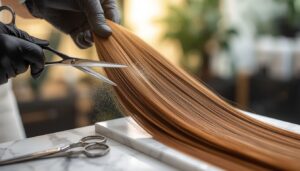
Ready to lose the damage but not your length? Smart technique makes that possible, and it’s easier than you think.
Start with dusting. Your stylist trims just 1-2mm, which clears split ends before they travel up the strand. Pair it with point cutting, where the scissors cut vertically into your ends for a soft, textured finish that never looks blunt.
Want extra protection? Ask for hot scissors, which seal the cuticle as they cut and cut down on fraying.
Here’s what these techniques can give you:
- The joy of running your fingers through smooth, healthy ends
- The relief of keeping every inch you’ve worked so hard to grow
- The confidence of walking out of the salon feeling completely in control
Add regular trims and heat styling reduction, and your results will last.
How to Minimize Breakage After Your Haircut

Ready to keep that fresh, healthy cut looking wonderful? Your haircut gave you a wonderful clean slate, and the right habits keep it that way.
Start with these three steps:
- Commit to heat styling reduction. Use a protectant spray, choose lower settings, and let your hair air dry whenever you can.
- Make hair conditioning a weekly ritual. A deep mask boosts hair moisture retention, while a monthly hair protein treatment rebuilds strength.
- Book regular trims every 8 to 10 weeks to catch split ends early.
Sleep on silk, detangle gently from the ends up, and you’ll protect every smooth, strong strand. Small, steady choices add up to remarkably lasting results, so keep going. You’re in control now!
Frequently Asked Questions (FAQs)
What haircut is best for damaged hair?
Every client’s damage story differs. Match yours: blunt bob for split ends, layered lob for heat damaged hair, buzz cut for severely damaged hair, French bob for over processed hair, shag haircut for dry hair.
Can a haircut fix damaged hair?
Can a trim truly cure damaged hair? Partly! A haircut removes split ends instantly, but it can’t repair the shaft above it.
Real hair recovery needs smart hair styling and care for hair health.
What is the best hairstyle to avoid damaging my hair?
Think of your hair as silk thread: the less you tug it, the longer it lasts. Choose protective styles like loose braids or low buns. They’re low manipulation haircuts that lock in hair hydration and keep tension off your edges.
How do I fix my extremely damaged hair?
Wondering how to fix extremely damaged hair? Here’s the truth: hair damage repair isn’t possible, so a targeted trim is your best split ends treatment. Then protect hair recovery by detangling gently and limiting heat.
Can heat styling tools be used on damaged hair?
Picture a brittle strand sizzling under a scorching iron. Heat styling is possible on damaged hair. Stay under 300°F, apply heat protectant, and style dry hair.
Choose ceramic tools and hydrate for hair recovery.
Does hair texture affect damage repair strategies?
Yes, your hair texture shapes everything. Curly, damaged hair absorbs moisture slowly and breaks easily, so hair porosity guides your products. Choose richer creams, protect from heat, and support hair cuticle repair for hair recovery.
How does diet impact damaged hair recovery?
Your hair health starts on your plate. Enough protein for keratin fuels hair growth, while iron, zinc and vitamin D support hair follicle health. Skip crash diets, and add omega-3s and antioxidants for hair strength.
Are salon treatments better than at-home remedies?
Think of damage as a cracked wall: paint hides it, repair fixes it. Salon hair restoration rebuilds deeply, while at-home deep conditioning offers brief hair nourishment. Get a salon haircut consultation for professional hairstylist advice.
How often should damaged hair be trimmed?
Every 6 to 8 weeks, or every four weeks if severe. That protects hair growth, stops split ends traveling, and aids your hair recovery journey and hair vitality.
Can a haircut repair split ends permanently?
Think a cut just hides damage? Not quite. It can’t repair split ends, but it permanently removes them and stops hair breakage climbing higher.
Trim regularly on your hair recovery journey, and hair health follows.
Conclusion
Picture Maya, whose bleached ends snapped every time she brushed. One blunt lob later, her hair looked thicker, felt softer, and finally moved like it was alive again.
That’s the power of the best haircuts for damaged hair. You read the damage, match the cut to your texture, and let smart techniques remove only what’s weak. Gentle brushing, heat control, and regular trims keep every strand strong. Your hair can bounce back. You know how.