This site is supported by our readers. We may earn a commission, at no cost to you, if you purchase through links. This content is for general informational and educational purposes only and is not a substitute for professional medical, dermatological, or nutritional advice.
Your hair holds stories your ancestors would recognize. Braids once mapped escape routes through fields, and knots carried meaning long before anyone called them "protective styles." That history lives in every twist, coil, and cornrow you wear today.
African hair styles for women stretch far past trends. They’re rooted in identity, strength, and pure creativity, built to protect your strands while making a statement nobody can ignore.
Whether you crave the drama of beaded Fulani braids or the low-key freedom of a wash-and-go, there’s a style waiting to match your mood, your schedule, and your hair’s own rhythm.
Table Of Contents
- Key Takeaways
- Protective Braided African Hairstyles for Women
- African Twist and Loc Hairstyles
- Natural African Hairstyles for Afro-Textured Hair
- Short African Haircuts for Women
- Elegant African Hairstyles for Special Occasions
- Frequently Asked Questions (FAQs)
- What are popular African hair styles?
- What are some traditional African hairstyles for ladies?
- What are some popular African hair cut styles?
- What are the trendy black hairstyles for women in 2026?
- Can a 60 year old woman wear braids?
- What is the best African hair style?
- What is the hottest hairstyle right now?
- Which hair cut makes you look younger?
- How often should I wash African hair?
- What products work best for dry scalp?
- Conclusion
Key Takeaways
- Braids, twists, and locs aren’t just styles, they’re protective techniques rooted in cultural history that guard your hair while making a statement.
- Your hair texture and lifestyle should guide your choice, from low-maintenance wash-and-gos to long-lasting box braids that hold for weeks.
- Maintenance matters as much as the style itself, since scalp care, moisture, and satin protection keep every look thriving longer.
- Short cuts, bold color, and elegant updos prove you don’t need length or a special event to wear your hair with confidence.
Protective Braided African Hairstyles for Women
Braids are more than a style, they’re your armor and your crown. Protective braiding keeps your hair safe while you live boldly, out loud, unapologetic. Here are five braided looks ready to carry your strength and your story.
For a look that pairs bold stitch patterns with clean, laid edges, these creative feed-in braid designs turn everyday protection into a statement.
Classic Box and Knotless Braids
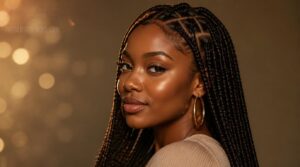
Freedom starts at the root, and box braids give you exactly that. Classic box braids use synthetic hair woven into square-shaped cornrow bases, lasting six to eight weeks strong.
Knotless braids skip the bulky knot, easing braid tension and protecting scalp health. Less pulling, more comfort. Both styles run micro to large, bold and totally yours to command. When choosing between the two, keep in mind the knotless vs box braids comparison shows knotless styles usually cost a bit more due to longer installation time.
Sleek Cornrows and Ghana Braids
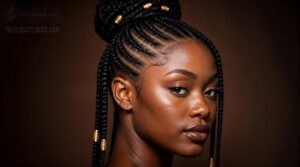
Some days you want your hair to feel like power, laid flat and moving with you, not against you. Sleek cornrows deliver that, tight rows hugging your scalp in bold geometric lines. Ghana braids step it up thicker, sleeker, built for buns or ponytails.
- Edge care: light gel keeps hairlines smooth
- Installation runs 3-6 hours
- Symmetry matters, mind your part
- Beads land at braid ends
Beaded Fulani Braids
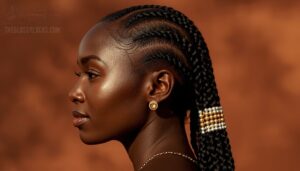
Cornrows lay the foundation, but beaded Fulani braids turn that foundation into a statement. One long center braid runs back like a crown, flanked by symmetrical side braids.
Beads cluster at the ends, gold and silver tones honoring beauty and status. Fulani beading marks milestones, so pick colors with meaning. Protect your scalp with light oil, secure beads with clear elastics, and refresh every four to six weeks.
Goddess and Micro Braids
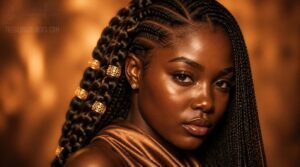
Beads catch the light, but goddess braids own the crown. Thick, sculpted braids sweep from the scalp like royalty on the move.
Micro braids flip the script, tiny and intricate, built for versatility. Both demand scalp care, light oils, and satin coverage nightly.
Expect four to twelve weeks of freedom, no daily fuss, just bold protective styling that lasts.
Braided Ponytails and Buns
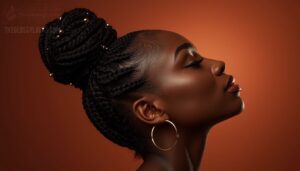
Power lives at the crown, and a braided ponytail proves it. Sweep Box Braids into a high bun for boldness, or low for elegance. Try a Fulani Ponytail, side swept braids, or a wrapped Braided Updo.
- High bun
- Low ponytail
- Side swept style
- Beaded accents
- Wrapped base
Refresh every two weeks, oil your scalp, and wear it fearlessly.
African Twist and Loc Hairstyles

Twists and locs bring a whole different energy to your protective style game. You get texture, movement, and that free-spirited flow braids don’t always give. Here are five twist and loc looks worth putting on your list.
If you’re weighing your options, it helps to first understand the real difference between dreads and dreadlocks before picking your next look.
Senegalese and Marley Twists
Ready to feel that rope-like swing with every step you take? Senegalese twists give you sleek, long-lasting texture, while Marley twists bring a fluffier, natural vibe. Both use synthetic extensions, lasting four to twelve weeks.
Wrap edges with satin at night, cleanse your scalp biweekly, and watch your protective hairstyle hold strong.
Passion and Kinky Twists
Something bohemian happens when you wrap curly extensions into two-strand twists. Passion twists feel light, bouncy, and free, lasting four to eight weeks with the right care.
Kinky twists bring more texture and volume for a fuller, natural look. Both styles thrive on moisture, so keep edges soft and scalp refreshed weekly.
Flat-Twist Updos
Ever notice how a sleek, twisted crown just screams confidence? Flat-twist updos lie close to your scalp, sectioned in even rows and twisted root to tip for a smooth, sculpted look.
Pin ends at the crown or nape, finish with edge control and light oil. This protective style guards your ends, cuts breakage, and stays fresh for days with minimal effort.
Bohemian Faux Locs
Free-spirited and undone, faux locs bring that "just got back from the desert" energy to protective hairstyles. Bohemian Faux Locs installation uses curly synthetic extensions for a loose, distressed finish, crochet or braid in methods, two to four hours to complete.
Style with beads, cuffs, or wrapped ends. Bohemian Faux Locs maintenance stays simple: moisturize, sleep in satin, rewrap every four to six weeks.
Traditional Locs and Sisterlocks
Locs are your hair’s top freedom move, permanent, powerful, and rooted in heritage. Traditional locs form through palm rolling with medium to large sections, sizes ranging from pencil-thin to bold and thick.
Sisterlocks use a specialized tool and micro-thin partings for a sleek, uniform grid, installed only by certified consultants.
Retighten every 4-8 weeks, sleep in silk, and style freely, both honor natural hair’s untamed spirit.
Natural African Hairstyles for Afro-Textured Hair
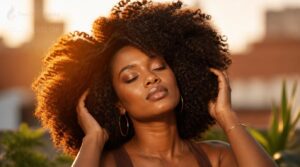
Your natural texture is a crown, not something to tame. Wearing it out lets your curl pattern shine in its truest form. Here are five ways to let your afro-textured hair speak for itself.
Full Afros and Afro Puffs
Round, proud, and unapologetic, your Afro is a crown you grow on purpose. Whether it’s a full Natural Afro or a tight TWA, moisture keeps frizz down and sheen up.
Detangle gently with wide-tooth combs. Add root lift at the crown for balance, then shape your Afro Puff for head-turning volume that says you’re not hiding.
Defined Twist-Outs and Braid-Outs
That big Afro can shift shape too. Twist damp hair into two-strand sections, add a moisture setting product, and let them set fully before unraveling into a Defined Twist-Out. Prefer braids? A Braid-Out stretches curls even more. Both boost curl pattern retention, cut frizz, and last three to five days with real staying power.
Wash-and-Go Curls
Twist-outs stretch your curls, but wash-and-go lets them spring free just as nature made them.
Start with a lightweight water based moisturizer, apply on soaking wet strands so the cuticle stays open and product sinks deep. Scrunch upward, don’t rake through.
This look rewards moisture retention techniques and fights humidity frizz, giving your natural afro real, bouncy freedom.
Finger Coils and Bantu Knots
Some styles skip products altogether, letting your fingers do the work. Finger coils twist small sections around your finger for springy, defined curls, no heat needed.
Bantu knots wrap hair into neat little buns, protecting your ends while you sleep. Both styles last about a week with a satin scarf and light oil for shine.
Layered Kinky Curls
Freedom lives in the layers. Shorter curls crown your head while longer ones flow beneath, cutting bulk without losing your natural curl pattern.
- Bounce that springs back after every twist-out
- A silhouette that frames your face like a halo
- Less frizz, more definition around the crown
- Volume that moves instead of sitting flat
Trim every 6-8 weeks. Curl definition stays sharp that way.
Short African Haircuts for Women
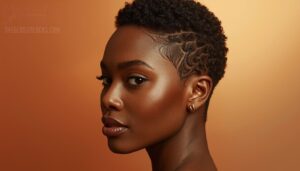
Short hair speaks its own kind of bold. You don’t need length to make a statement, just the right cut and the confidence to wear it. Here are five short styles worth trying.
Tapered Natural Cuts
Ready to cut the weight without cutting your power? The Tapered Cut blends longer curls on top with a close fade at the nape, working beautifully with coily texture. Top length runs 2 to 4 inches, sides taper to 0.5.
| Zone | Length | Tip |
|---|---|---|
| Top | 2-4 in | Volume |
| Sides | 0.5-1.25 in | Sleek |
| Nape | Close | Clean |
Trim every 2-4 weeks to keep your hairline shaping crisp.
Curly Pixie Cuts
Chop it off and watch your curls take center stage. Curly Pixie Cuts use textured layering to cut bulk while keeping tight curl definition intact, with pixie cut shrinkage shrinking length up to 50 percent when dry.
- Oval faces suit fringe between 1.5-2.5 inches
- Square and round faces need higher crown volume
- Daily curl maintenance: water spritz plus curl cream
Classic and Asymmetrical Bobs
Sharp lines, bold statement. The Bob Cut stays a go-to for African hair styling, ending at the chin for a clean jawline.
| Bob Type | Best For |
|---|---|
| Blunt bob | Sharp, contemporary looks |
| Layered bob | Movement, textured volume |
| Asymmetrical bob | Bold, edgy face-framing |
| Symmetrical bob | Classic, polished symmetry |
Try asymmetrical braiding for extra flair. Minimal styling, maximum freedom.
Frohawks and Mohawks
Bold down the middle, tapered on the sides, this cut says you answer to no one.
Frohawk styling tips: part with a rat-tail comb, gel the sides flat, fluff the center with a pick.
- Great for round faces, adding height and edge
- Low daily upkeep once secured
- Works on tight 4c coils beautifully
Try asymmetrical braiding or bantu knots down the middle for a wilder, one-of-a-kind look.
Bold Color Accents
Color turns your hair into a canvas, no rules attached. Try electric blue tips or copper underlayers peeking through Lemonade Braids or Passion Twist styles.
Semi-permanent dye fades in 6-8 weeks, so experiment freely. Pair color with Goddess Braids or a Braided Updo to lock in vibrance.
Add beads or cuffs where the color shows. Use color-safe shampoo to protect your shine.
Elegant African Hairstyles for Special Occasions
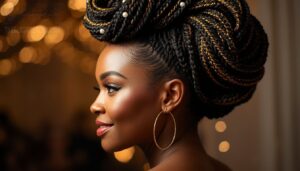
Special occasions call for hairstyles that turn heads. Your everyday braids and twists can transform into showstopping looks with the right technique. Here are five elegant styles worth trying for your next big event.
Braided Wedding Updos
Wedding day braids turn your crown into a statement piece. A Bridal Braid Crown wraps the head in regal texture, while a Waterfall Braid Updo sweeps thin cornrows into a low bun with bead accents for sparkle.
- Braided Veil Connection anchors veils without loosening strands
- Interlaced Nape Bun adds a lattice look with padding for volume
- Edge control smooths hairlines for photos
- Style holds through the full reception, no rebraiding needed
Halo Braids and Crowns
Not every bride wants an updo. Some want a halo braid, a crown wrapping the hairline in pure texture.
Two braids weave around your head, ends tucked in for a soft, rounded finish. Loosen a few strands for boho flair, or add beads for shine.
Best part? Your scalp stays accessible, so light oiling keeps it fresh for weeks.
High Buns and Topknots
Want your crown to feel literal? Pile your strands into a high bun sitting right at the crown for instant lift.
Wrap it smooth for a topknot, pin secure, add beads or cuffs without losing shape. Silk scarves guard it overnight, and light serum tames flyaways before you step out bold.
Formal Braided Ponytails
A high bun says power. A formal braided ponytail says power with movement.
Start with a smooth base at the crown, then let Fulani or Ghana braids sweep back into a sleek, high ponytail. Side swept braids soften the look for galas.
Wrap the base clean, add cuffs for shine. Bold, adventurous, unapologetically yours.
Beads, Cuffs, and Headwraps
Beyond the braid itself lives a whole language of adornment. Beads mark lineage, cuffs add shine, and headwraps carry meaning through color and fold.
Try these:
- Glass beads at braid ends
- Adjustable metal cuffs
- Wax print headwraps
- Magnetic bead accessories
- Fringe-edge wraps
Each choice speaks. Wear your story boldly.
Every bead, cuff, and wrap you choose tells a piece of your story, so wear it boldly
Frequently Asked Questions (FAQs)
What are popular African hair styles?
Your options run deep and bold. Box braids, cornrows, and Bantu knots bring trending patterns and freedom. Twist outs and dreadlocks add texture and rebellion. Each style celebrates your natural curl and lets your hair speak first.
What are some traditional African hairstyles for ladies?
Rooted in heritage, tied to identity, worn with pride: Cornrows, Fulani Braids, Ghana Braids, and Bantu Knots trace back generations, each style once signaling tribe, status, or age within West African communities.
What are some popular African hair cut styles?
Cutting it short means owning your shape. Tapered cuts and the curly pixie frame your face boldly. A classic bob, edgy frohawk, or mohawk brings attitude, while bold accents and layered curls add fearless flair.
What are the trendy black hairstyles for women in 2026?
Knotless braids 2026 own the salon scene, light and scalp friendly. Passion twists trend on for bohemian flair, while curly pixie cuts, halo braid crowns, and bold color accents bring rebellious energy to Fulani, Goddess, and Box Braids alike.
Can a 60 year old woman wear braids?
Yes, and there’s no expiration date on gorgeous braids. Women 60 and up rock box braids and Fulani styles daily. Ask for looser tension near your edges, protect mature hair, and wear your crown proudly.
What is the best African hair style?
Honestly, it depends on your hair texture and lifestyle. Box Braids and Fulani Braids offer serious longevity, while a Twist Out or Afro Puff keeps things low-maintenance and rooted in culture. Your best style is whatever feels like freedom.
What is the hottest hairstyle right now?
Right now, everyone’s chasing knotless braids. They feed hair in gradually, so there’s zero tension on your scalp, just a soft, natural base that moves freely and lasts six to eight weeks.
Which hair cut makes you look younger?
Turn back the clock without a time machine: face-framing layers, textured pixie cuts, or curtain bang styles instantly lift your look.
Asymmetrical crops and layered curls soften angles too, giving you that bold, ageless glow you’re chasing.
How often should I wash African hair?
Every 7 to 14 days works for most curl patterns. Protective styles stretch further, going 2 to 3 weeks, while sweat and scalp buildup push loose natural hair toward weekly washes with deep conditioning after.
What products work best for dry scalp?
Reach for moisture rich shampoos with ceramides, jojoba oil serums, and gentle exfoliating treatments for buildup.
Add scalp barrier boosters and glycerin leave-ins between wash days.
These scalpfriendly picks calm dryness, fuel hair growth promotion, and keep your crown thriving.
Conclusion
Your crown is never finished, it just changes shape with the seasons of your life. Every braid, twist, and curl you choose becomes a chapter in a story only you can tell. African hair styles for women aren’t rules to follow, they’re tools for self-expression. Try one, love it, then try another. Your hair grows back, and your confidence doesn’t have to wait. Wear your roots boldly. This crown is yours, styled your way, always.