
This site is supported by our readers. We may earn a commission, at no cost to you, if you purchase through links.
Your scalp produces up to 75 active compounds that protect hair follicles—and aloe vera gel mirrors nearly all of them. This isn’t coincidence. For over 6,000 years, cultures from Egypt to India have turned to Aloe barbadensis when hair feels brittle, scalps itch, or strands refuse to grow.
What they knew instinctively, dermatology now confirms: aloe vera’s polysaccharides lock moisture into your hair shaft while its salicylic acids dissolve the buildup that triggers flaking.
You don’t need expensive treatments to calm irritation or rebuild damaged keratin. The solutions grow in a succulent that thrives on neglect—and transforms hair with the same biochemical precision your body uses naturally.
Table Of Contents
- Key Takeaways
- What is Aloe Vera and How It Benefits Hair
- Top Benefits of Aloe Vera for Hair Health
- How to Use Aloe Vera for Hair Care
- Safety Tips and Precautions When Using Aloe Vera
- Aloe Vera Hair Care for Different Hair Types
- Frequently Asked Questions (FAQs)
- Can aloe vera cure baldness and regrow hair?
- Can aloe vera be used as a natural hair dye?
- Can aloe vera be used on children’s hair?
- Can aloe vera be used as a leave-in conditioner for hair?
- Can aloe vera treat hair loss permanently?
- Is aloe vera safe for color-treated hair?
- How long does fresh aloe vera gel last?
- Can you leave aloe vera in overnight?
- Does aloe vera help with split ends?
- Conclusion
Key Takeaways
- Aloe vera gel contains over 75 active compounds, including vitamins A, C, E, B-complex, minerals, and polysaccharides that mirror your scalp’s natural protective substances and deliver measurable hydration with 96% water content.
- Clinical evidence supports aloe vera’s effectiveness for dandruff and scalp irritation through salicylic acid exfoliation and anti-inflammatory action, though rigorous studies proving actual hair regrowth or baldness reversal remain limited.
- You’ll get optimal results by applying 2 tablespoons of fresh gel directly to damp roots for 15-30 minutes before rinsing, adjusting frequency based on your hair type—weekly for dry hair, shorter rinse-only applications for oily scalps.
- Fresh aloe vera gel degrades rapidly at room temperature (one-day shelf life) and requires refrigeration in airtight containers to extend usability to five days, making consistent sourcing essential for regular treatments.
What is Aloe Vera and How It Benefits Hair
Aloe vera isn’t just another trendy plant—it’s scientifically known as Aloe barbadensis and has been used for centuries to heal skin and hair.
The clear gel inside its leaves contains over 75 active ingredients, including vitamins, enzymes, and amino acids that work together to nourish your scalp and strands.
Aloe vera’s gel contains over 75 active ingredients that nourish your scalp and strengthen your hair
Understanding what makes this plant so powerful starts with knowing its key components and how they actually benefit your hair.
Key Nutrients and Compounds
Aloe vera gel packs a powerful punch of nutrients that support your hair’s health. You’ll find vitamins A, C, and E working as antioxidants to protect your scalp and follicles, while B vitamins fuel cellular energy. The mineral content—calcium, magnesium, and zinc—helps build strong keratin.
Bioactive compounds like acemannan lock in moisture, and anti-inflammatory enzymes soothe irritation, making aloe vera benefits truly all-encompassing. Understanding the main topic details can help in organizing information about aloe vera’s various benefits.
Hydrating and Healing Properties
With 96% water content, aloe vera gel delivers serious hair hydration and locks in moisture through a protective film on each strand. Here’s how its healing properties support scalp health:
- Polysaccharides reduce water loss after washing, keeping your hair supple longer
- Natural humectants pull moisture from the air into your strands
- Anti-inflammatory compounds calm irritation and redness on contact
These aloe vera benefits make it a standout among natural hair remedies. Understanding the dictionary subtopics can help in exploring more about aloe vera’s properties and uses.
Traditional and Modern Uses in Hair Care
For centuries, people have turned to aloe vera gel as one of the most trusted natural hair remedies—and modern research backs up why. You’ll find it in everything from DIY scalp treatments to commercial conditioners, delivering aloe gel benefits like moisture retention and hair follicle protection.
Today’s hair care routines blend traditional wisdom with clinical understanding of how natural remedies support scalp health and promote hair growth.
Top Benefits of Aloe Vera for Hair Health
Aloe vera delivers real results for your hair and scalp, backed by both traditional use and modern research. From calming irritation to improving texture, this plant addresses multiple hair concerns at once.
Here’s what aloe vera can do for your hair health.
Dandruff and Itchy Scalp Relief
Struggling with flaky skin and scalp irritation? Aloe vera offers proven itchy scalp relief through its salicylic acids, which exfoliate dandruff flakes, and anti-inflammatory compounds that reduce itchiness.
For dandruff treatment, apply fresh gel directly to your scalp for 15–20 minutes before rinsing. This scalp soothing approach tackles dandruff causes naturally, though you should patch-test first to avoid rare allergic reactions.
Frizz Control and Shine Enhancement
Polyphenols in aloe vera gel seal your hair cuticle, locking in moisture balance and taming frizzy hair—even on humid days. You’ll notice improved hair shine enhancement as the gel’s natural pH (around 4.5–5.5) closes each strand’s outer layer, reflecting more light.
For best frizz reduction, apply 2–4 tablespoons of fresh aloe vera to damp hair before styling, giving your cuticle care a natural boost.
Strengthening and Damage Repair
Amino acids and polyphenols in aloe vera gel reinforce your hair’s keratin structure, reducing hair breakage and supporting damage control. Proteolytic enzymes clear dead cells from your scalp, improving scalp health and creating better conditions for hair follicles.
You’ll see stronger strands when you apply aloe vera consistently—pair it with conditioning oils for enhanced hair strengthening and keratin repair.
Potential Hair Growth Promotion
Your scalp’s environment determines how well hair follicles function—aloe vera may create better conditions through inflammation reduction and improved scalp health. Laboratory studies show compounds like acemannan can boost keratin production and support growth stimulation, though clinical trials measuring actual hair growth remain limited.
Natural remedies for hair growth work best when combined with consistent care. Test aloe vera for hair follicle stimulation over several weeks to assess your individual response.
How to Use Aloe Vera for Hair Care
You can use aloe vera on your hair in several ways, from quick applications to targeted treatments. The method you choose depends on your hair type and what you’re trying to fix.
Here’s how to work aloe vera into your routine.
Direct Application of Fresh Gel
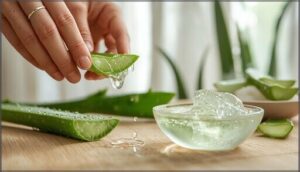
Fresh aloe vera gel offers over 90 percent water content, delivering immediate cooling relief to your scalp. Simply extract the clear gel from a mature leaf, massage it directly onto your scalp and through your hair for 15–30 minutes, then rinse with lukewarm water.
This straightforward application lets bioactive compounds like polysaccharides work their anti-inflammatory magic without added chemicals.
Aloe Vera Hair Masks and DIY Recipes

Combining aloe vera gel with complementary ingredients amplifies its benefits and lets you customize treatments for your specific needs.
Mix two tablespoons of fresh aloe gel with one tablespoon of honey and a beaten egg for deep conditioning; apply this DIY hair treat for 15 minutes before rinsing.
You can also blend aloe vera gel with yogurt or coconut milk for moisture-rich natural hair remedies that strengthen strands.
Mixing Aloe Vera With Oils
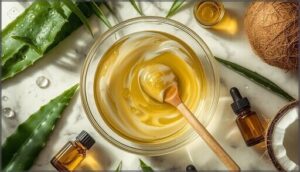
Blending aloe vera gel with oils like coconut oil or castor oil enhances moisture and manageability. Use a 1:1 or 1:2 aloe vera gel-to-oil ratio for hair mask recipes, adjusting for your hair type.
Mix at room temperature in clean containers to guarantee blend stability.
Always patch-test aloe vera ratios on your wrist first to prevent scalp irritation, and store your oil blending tips creation in the fridge for up to two weeks.
Aloe Vera Rinses for Oily Hair
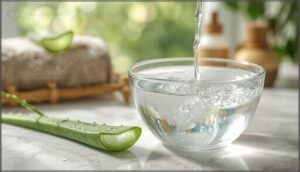
If your scalp produces excess oil, an aloe vera rinse can help balance sebum without stripping moisture.
Dilute one part fresh aloe vera gel with two to four parts lukewarm water, then apply to roots and scalp after shampooing. Leave it on for 2–3 minutes, rinse thoroughly, and air-dry for a lightweight, non-greasy finish that promotes scalp health.
Safety Tips and Precautions When Using Aloe Vera

Aloe vera is generally safe for your hair and scalp, but you still need to know a few important warnings before you start using it. Some people can have allergic reactions, and aloe vera can interact with certain medications or topical treatments you’re already using.
Here’s what you need to watch out for to use aloe vera safely and effectively.
Interactions With Medications and Creams
Before adding aloe vera to your hair care routine, check your current medications and creams. Topical corticosteroids can interact with aloe vera gel, altering absorption on your scalp.
If you’re managing skin conditions or taking anticoagulants, consult your doctor first. Even gentle aloe can trigger skin sensitivity or topical reactions in some people, especially when combined with other active treatments.
Proper Use and Dosage Guidelines
Beyond checking medication interactions, you need clear dosage and application rules. Start with a pea-sized amount of aloe vera gel for short hair, diluting it 1:1 with water or coconut oil to reduce irritation. Patch test 24 hours before full scalp massage techniques.
Apply hair mask recipes weekly for 15–30 minutes, using no more than 1–2 tablespoons per session to prevent hair weakening from excessive moisture.
Aloe Vera Hair Care for Different Hair Types
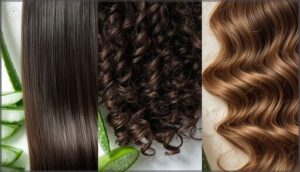
Your hair type determines how you should use aloe vera to get the best results. Different textures and conditions respond to aloe vera in unique ways, so you’ll need to adjust your approach based on whether your hair is dry, oily, or curly.
Here’s how to customize aloe vera treatments for your specific hair needs.
Dry and Damaged Hair
Dry and damaged hair responds well to aloe vera’s moisture-rich composition. The gel penetrates your hair cuticle to deliver hydration where breakage and split ends usually occur.
Apply aloe vera gel directly to dry ends or use it in hair masks twice weekly.
This routine improves hair moisture retention, aids damage repair, and reduces breakage while soothing any itchy scalp concerns you may have.
Oily and Greasy Hair
Oily and greasy hair thrives when you apply aloe vera gel directly to your scalp—not your hair shaft. The lightweight, water-rich composition breaks down excess sebum without clogging pores, supporting scalp balance and sebum regulation.
Use aloe vera rinses after shampooing to manage grease and improve hair porosity. Limit application to 10–15 minutes, focusing on oil control at the roots for effective natural hair care and long-term hair health.
Curly, Coily, and African-American Hair
Curly, coily, and African-American hair demands moisture-rich care. Aloe vera’s slip during detangling aids curl definition and reduces breakage.
Apply lightweight gel to damp strands, sealing with natural oils to improve hair porosity and lock in hydration. This combination soothes your scalp, fights frizz, and enhances elasticity without buildup.
Use weekly as a pre-wash treatment for ideal hair texture management and long-term hair health.
Frequency and Routine Customization
Tailored routines depend on your hair type and scalp condition. Apply aloe vera weekly to boost scalp moisture by up to 20 percent if you have dry hair. For oily hair, use rinse-only applications lasting 5–10 minutes to control sebum without buildup.
Patch test for 24–48 hours before starting any maintenance schedules. Adjust product concentration (0.5–2.0 percent) and application frequency based on your hair care routine and hair growth tips.
Frequently Asked Questions (FAQs)
Can aloe vera cure baldness and regrow hair?
No solid evidence shows aloe vera cures baldness or regrows hair. Studies lack rigorous design.
Aloe vera gel promotes scalp health benefits and reduces dandruff, but don’t rely on it for hair regrowth alone.
Can aloe vera be used as a natural hair dye?
Despite countless claims online, aloe vera won’t dye your hair—it lacks the pigments needed for true color deposition methods. For actual natural dye alternatives, consider henna or indigo instead.
Can aloe vera be used on children’s hair?
Yes, you can use aloe vera on children’s hair with proper precautions. Always patch test first, choose pure formulations, and consult your pediatrician before applying it on kids under two years old.
Can aloe vera be used as a leave-in conditioner for hair?
While it seems counterintuitive, aloe vera gel works as a hair moisturizer despite its lightweight texture. You’ll get conditioning effects and scalp health benefits, though pairing it with oils enhances hair moisture retention between washes.
Can aloe vera treat hair loss permanently?
Aloe vera gel can’t permanently reverse hair loss. Limited research shows it may temporarily improve scalp health and mild shedding, but large clinical trials haven’t proven lasting hair regrowth for androgenetic alopecia or other permanent hair loss causes.
Is aloe vera safe for color-treated hair?
Generally, aloe vera gel won’t strip color-treated hair when applied topically. Its pH-balanced nature aids color protection, but always perform a strand test first.
Space applications away from chemical treatments, and discontinue if fading occurs.
How long does fresh aloe vera gel last?
Think of fresh aloe vera gel like cut avocado—it browns fast. At room temperature, your gel lasts just one day. Refrigerate it in an airtight container, and you’ll extend shelf life to five days.
Can you leave aloe vera in overnight?
You can leave aloe vera in overnight for deep conditioning, especially if your hair is very dry or damaged. Just patch-test first to avoid irritation, and don’t do it nightly.
Does aloe vera help with split ends?
Split ends can’t truly be repaired—you need to trim them. However, aloe gel treatment may smooth hair breakage temporarily and help with split end prevention by moisturizing ends, reducing future damage through natural remedy conditioning.
Conclusion
A 34-year-old patient eliminated seborrheic dermatitis in three weeks by applying fresh aloe vera gel twice weekly—her scalp stopped flaking without steroids. Your follicles recognize aloe vera for hair the way they recognize your body’s natural defenses.
Start with 2 tablespoons of pure gel massaged into damp roots. Leave it for 30 minutes, then rinse. You don’t need permission to reclaim what pharmaceutical companies can’t patent: a plant that heals exactly how evolution designed it.