This site is supported by our readers. We may earn a commission, at no cost to you, if you purchase through links. This content is for general informational and educational purposes only and is not a substitute for professional medical, dermatological, or nutritional advice.
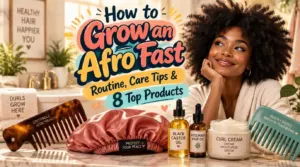
Your hair grows about 0.32 inches a month. That’s it. No shortcut, no secret serum, no overnight miracle. After all, six months of patience only gets you around three inches.
But here’s the good news. Most afro hair doesn’t stall because it grows slowly. It stalls because it breaks faster than it grows. Dry ends snap, tangled sections tear, and all that hard-won length quietly ends up on the bathroom floor.
So how to grow afro fast really comes down to keeping what you’ve already grown. Luckily, a few small habits do the heavy lifting. Here’s the routine, the care tips, and the products worth your shelf space.
Table Of Contents
- Key Takeaways
- How Long Does It Take to Grow an Afro?
- Build an Afro Hair Care Routine That Retains Length
- Moisturize and Protect Afro Hair to Prevent Breakage
- Support Healthy Afro Growth With Nutrition and Scalp Care
- Top 8 Products to Consider When Growing an Afro
- Frequently Asked Questions (FAQs)
- How do I make my afro grow faster?
- How long will it take to grow an afro?
- Can I grow 2 inches of hair in a month?
- How to grow fast hair in 7 days?
- Can certain hairstyles slow down afro growth?
- Does hair porosity affect afro growth speed?
- How does weather impact afro hair health?
- Should I use protein treatments for growth?
- Can stress or sleep affect hair growth?
- Can you grow an afro with thin hair?
- Conclusion
Key Takeaways
- Your hair only grows about 0.32 to 0.5 inches a month, so you can’t speed it up, and the real goal is keeping the length you’ve already grown.
- Most afro hair stalls because dry, tangled strands break faster than they grow, so moisturizing with the LOC method, detangling gently, trimming every 8 to 12 weeks, and sleeping in satin protects your progress.
- Eating enough protein, iron, zinc, and vitamin D and massaging your scalp daily supports growth from the inside, while loose protective styles prevent breakage without hurting your hairline.
- Expect about 3 inches in six months and a full afro in roughly 12, because small, steady habits will do more for your length than any single product or oil.
How Long Does It Take to Grow an Afro?
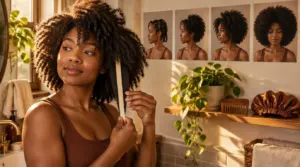
How fast can you expect your afro to show up? Honestly, it depends. Your hair growth rate averages about 0.32 inches a month, so patience is part of the deal. After all, Afro hair grows a little slower than other hair types, and that’s normal. Research shows that Afro hair grows more slowly, at roughly 256 µm per day compared with 396 µm per day for Caucasian hair.
Here’s a realistic hair growth timeline. At two to three months, you’ll see 1 to 1.5 inches. By six months, you’ll have roughly 3 inches, and your shape starts to appear. A full, voluminous afro takes about 12 months and up to 6 inches.
If your hair is thinning and growth feels slower than this timeline, these proven hair loss solutions that actually work include foams that rival minoxidil with less irritation.
Luckily, you can stay on track. Set hair growth goals and build a hair growth plan. Then use hair growth tracking: measure monthly on dry, stretched hair, since shrinkage hides progress.
Build an Afro Hair Care Routine That Retains Length
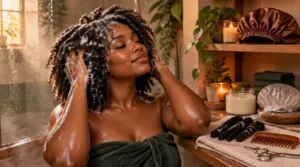
Tracking your growth is great, but length only counts if you keep it. After all, hair retention is the real goal. Luckily, a simple hair care routine does most of the work.
Growing length means little unless you keep it, and a simple, consistent hair care routine does most of the work
Here’s what a good week can look like:
- Fingers gliding through soaked, slippery coils on wash day
- A soft satin bonnet hugging your curls at night
- Warm conditioner sitting under a shower cap for deep conditioning
- Plump twists tucked away during a month of protective styling
- Gentle fingertips massaging your scalp while the shampoo lathers
Detangle only on wash day, starting at the ends. Trim damaged ends every 8 to 12 weeks, about a quarter inch. Keep it simple and stay consistent. Moisturize often, too. You’ve got this.
Moisturize and Protect Afro Hair to Prevent Breakage
Now let’s talk about that moisturizing tip. Afro hair runs dry, since scalp oils struggle to travel down tight curls. Luckily, the fix is easy.
After washing, layer your products with the LOC method: liquid, oil, then cream. It seals moisture in. Between washes, moisturize with a light cream, and tuck your hair away at night under a satin bonnet.
| Step | Product | Why |
|---|---|---|
| Liquid | Water or leave-in | Hydrates |
| Oil | Jojoba or castor | Seals |
| Cream | Shea-based | Softens |
Pick hair oils that suit your porosity, and skip product overload. Protective styling and gentle handling cut hair breakage, too. Think of it as a little spa night for your coils, minus the fancy robe. Your curls will thank you later. You’ve got this!
Support Healthy Afro Growth With Nutrition and Scalp Care

Moisture from the outside is only half the story. After all, your strands grow from the inside, so what you eat matters too.
Pairing nutrient-rich meals with a smart high porosity hair moisturizing routine helps your strands hold onto hydration longer, so each wash day builds on the last.
Aim for enough protein, iron, zinc, and vitamin D. Eggs, nuts, seeds, leafy greens, and oily fish cover most of that nutrition. Drink plenty of water. It’s an easy habit to build.
Your scalp needs love as well. Massage it for five to ten minutes daily, ideally with a few drops of rosemary oil mixed into jojoba. It boosts circulation and keeps scalp health on track. Cleanse gently every one to two weeks, and exfoliate to clear buildup.
Add these steps to your hair growth routine, and your hair growth care gets stronger from root to tip.
Top 8 Products to Consider When Growing an Afro
You’ve got the routine down, so now let’s talk products. Luckily, the right tools and oils can make your growth journey easier. Here are eight picks worth a look as you grow your afro.
Shea Moisture Castor Oil Hair Growth
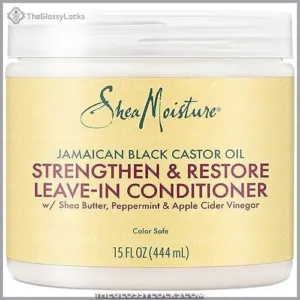
Ever wish your Afro could hold onto moisture for more than a day? This one’s built for that.
Shea Moisture’s Jamaican Black Castor Oil mixture works as a leave-in conditioner, and it’s loaded with vitamin E to keep strands soft. Apple cider vinegar helps lower scalp pH and calm itchiness, while peppermint oil gives your scalp a little tingle of stimulation. Organic shea butter controls the deep conditioning.
Use it to detangle, define curls, or add slip when you twist. It even works as a light-hold styling gel. Less breakage means more length, after all.
Just go easy, since too much leaves hair sticky. The scent divides people, so sniff it first.
| Best For | People with curly, coily, or textured hair who want a leave-in conditioner that also detangles, defines curls, and doubles as a light-hold styling gel. |
|---|---|
| Product Type | Leave-in conditioner |
| Key Ingredients | Jamaican Black Castor Oil, shea butter |
| Hair Type | Curly, coily, textured |
| Main Benefit | Moisture and detangling |
| Usage Method | Leave-in, gel, or twist lubricant |
| Main Drawback | Can feel sticky |
| Additional Features |
|
- Contains Jamaican Black Castor Oil with vitamin E, plus organic shea butter, to moisturize and deeply condition hair.
- Apple cider vinegar helps lower scalp pH and reduce itchiness, while peppermint oil stimulates the scalp.
- Works as a leave-in conditioner, styling gel, or twist lubricant, giving slip and light hold while reducing breakage during detangling.
- Can leave hair feeling sticky, especially when you apply a large amount.
- The scent gets mixed reactions, so some people may not like it.
- Isn’t a heavy cream for very dry ends, and the jar has no pump dispenser for hygienic use.
Leven Rose Jojoba Oil
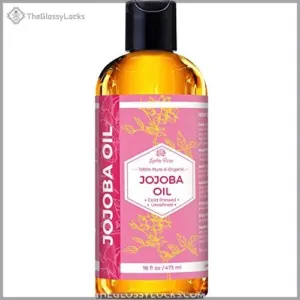
The sebum your scalp makes naturally is a lot like jojoba oil. After all, that’s why this stuff feels so familiar on your head. Leven Rose Jojoba Oil is 100% pure, non-GMO, and fragrance-free.
The 4 oz dark glass bottle comes with a dropper. Luckily, that means you can dab it where you need it, like dry ends or your scalp.
Apply it after towel-drying, because it can look greasy on wet hair. Use it as your first layer since other moisturizers can block absorption. Massage it in, and your afro will feel softer and less frizzy. Some folks notice a lingering scent, though, so test a little first.
| Best For | People with dry, frizz-prone hair or textured hair, like afros, who want a simple, fragrance-free oil to soften their ends and scalp. |
|---|---|
| Product Type | Jojoba oil |
| Key Ingredients | 100% pure jojoba oil |
| Hair Type | Dry, frizz-prone, textured |
| Main Benefit | Softens ends, reduces frizz |
| Usage Method | Apply to towel-dried hair first |
| Main Drawback | Looks greasy on wet hair |
| Additional Features |
|
- Made of 100% pure, non-GMO, fragrance-free jojoba oil that closely resembles the natural sebum your scalp makes.
- The dark glass bottle comes with a dropper, so you can dab it exactly where you need it, like dry ends or your scalp.
- Softens hair, reduces frizz, and also works on skin, nails, and beard care, or as a makeup remover.
- It can look greasy on wet hair, so you need to apply it after towel-drying.
- Other moisturizers can block its absorption, so it works best as your first layer.
- Some users notice a lingering scent on their skin or clothing, even though it is fragrance-free.
Hollywood Beauty Castor Oil Hair Treatment Mink Oil
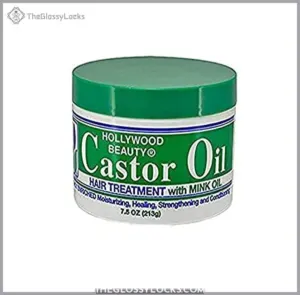
Imagine this: it’s Sunday night, your twist-out is fading, and your ends feel like straw. You scoop a dime-sized bit of this grease, seal it over damp hair, and wake up with softer coils.
Hollywood Beauty’s 7.5-ounce jar blends castor oil and mink oil with petrolatum, mineral oil, and lanolin. Luckily, that mix seals in moisture, adds sheen, and helps cut down on split ends and breakage. Don’t expect miracle growth, since solid research on that is thin.
Go easy, though. Too much turns greasy and won’t wash out. Skip it if you avoid petrolatum or lanolin, and check the jar’s ingredients, since they differ from the online description.
| Best For | People with natural, pressed, relaxed, or color-treated hair who want a rich daily sealant to add sheen, soften dry ends, and cut down on breakage. |
|---|---|
| Product Type | Hair grease sealant |
| Key Ingredients | Castor oil, mink oil, petrolatum |
| Hair Type | Natural, pressed, relaxed, color-treated |
| Main Benefit | Seals moisture, adds sheen |
| Usage Method | Dime-sized amount on damp hair |
| Main Drawback | Can feel greasy |
| Additional Features |
|
- Seals in moisture and restores natural sheen while conditioning hair and scalp.
- Helps prevent split ends and breakage, and works on many hair types, including natural, pressed, relaxed, and color-treated.
- Can double as a gentle conditioner for babies’ hair and skin, and can be applied to eyebrows for thickness.
- Too much can leave hair greasy and hard to wash out. If humidity keeps turning your hair frizzy, try one of the best leave-in conditioners for humid climates, which seal the cuticle without weighing strands down.
- Contains petrolatum, mineral oil, and lanolin, which may not suit people avoiding those ingredients.
- The ingredient list on the jar differs from the online description, which can cause confusion.
Cantu Shea Butter Masque
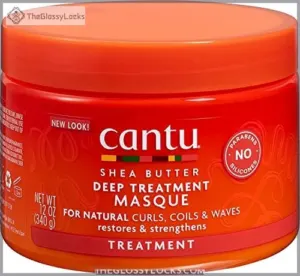
Picture dry, brittle coils soaking up butter-rich moisture like parched soil after rain. That’s the Cantu Shea Butter Masque at work. It’s free of sulfates, silicones, parabens, and mineral oil, so it restores dry, damaged strands without the harsh stuff. After all, less breakage means more length. Luckily, it also defines 4a/4b curls.
Apply it to clean, damp hair, then leave it on 30 minutes. Prefer overnight? That works too. You can even use it as a leave-in.
Heads up: it lacks slip, so mix it with conditioner. Some people get buildup that weighs hair down, and the fragrance is strong, so test it first.
| Best For | People with dry, brittle, or damaged 4a/4b curls who want a rich, sulfate-free and silicone-free treatment they can use overnight or as a leave-in substitute. |
|---|---|
| Product Type | Deep conditioning masque |
| Key Ingredients | Shea butter |
| Hair Type | Dry, brittle 4a/4b curls |
| Main Benefit | Restores moisture, defines curls |
| Usage Method | 30 minutes or overnight |
| Main Drawback | Lacks slip |
| Additional Features |
|
- Deeply moisturizes dry, brittle hair and helps restore and strengthen damaged strands
- Defines 4a/4b curls
- Free of sulfates, silicones, parabens, and mineral oil, and works as an overnight treatment or leave-in substitute
- Lacks slip, so it may need to be mixed with conditioner
- Can cause buildup and weigh hair down for some users
- Strong fragrance may be too intense for some people
Cliganic Organic Jojoba Oil
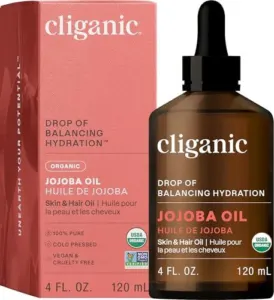
Ever wish your scalp could tell your hair what it needs? Luckily, jojoba oil kind of does that.
Its wax esters mimic your sebum, so your scalp recognizes it right away. Cliganic’s certified-organic formula adds moisture to afro hair without synthetic extras. After all, balanced oil means a calmer, healthier scalp.
Here’s how to use it:
- Warm one to three teaspoons and massage into your scalp before washing.
- Mix it with castor oil for extra nourishment.
- Smooth a little over your strands to seal in moisture.
- Stay consistent, because every hair growth routine thrives on patience.
Many people notice smoother strands within eight weeks. It suits any natural hair care plan.
| Product Type | N/A |
|---|---|
| Key Ingredients | N/A |
| Hair Type | N/A |
| Main Benefit | N/A |
| Usage Method | N/A |
| Main Drawback | N/A |
| Additional Features |
|
Healthy Hair Natural Oils
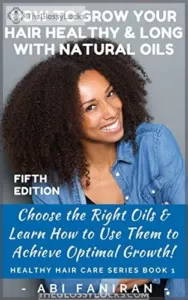
Tired of hunting down bottle after bottle? Luckily, this kit saves you the trouble. Healthy Hair Natural Oils hands you coconut, castor, argan, and jojoba in one box.
Each oil has a job. Coconut oil penetrates the strand and cuts protein loss, so use it before you wash. Castor oil nourishes the scalp and strengthens roots, which helps thicken your strands over time. Jojoba mimics your natural sebum, so it moisturizes without clogging follicles. Argan adds antioxidant support and a soft finish.
Rotate them in a hair mask, or massage one into your scalp between wash days. After all, a simple rotation beats a cluttered shelf. No guesswork needed. Stay consistent, and you’ll likely notice less breakage within a couple of months.
| Best For | People with natural hair who want to fix dryness, breakage, frizz, or thinning edges with simple oil-based routines. |
|---|---|
| Product Type | Natural oil kit |
| Key Ingredients | Coconut, castor, argan, jojoba oils |
| Hair Type | Natural hair |
| Main Benefit | Fights dryness and breakage |
| Usage Method | Hair mask or scalp massage |
| Main Drawback | Requires mixing and diluting |
| Additional Features |
|
- Explains what each oil does, such as coconut for protein loss, castor for the scalp, jojoba for moisture, and argan for softness.
- Covers a wide range of concerns, including dryness, breakage, frizz, thinning edges, and scalp irritation.
- Adds guidance on diet, stress, and supplements, plus bonus resources to support your routine.
- Focuses mainly on natural hair, so it offers limited help for chemically treated or relaxed hair.
- Requires you to mix your own treatments, which can take time.
- Essential oils must be diluted correctly to avoid skin irritation.
Molefi Brazilian Funmi Hair Loose Wave Short Curly
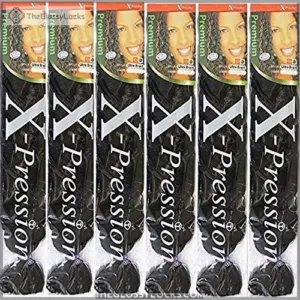
Oils keep your scalp happy, but protective styles give your hair a real break. That’s where this weave comes in.
Molefi’s bundles are 100% unprocessed Brazilian virgin Funmi hair with the cuticles intact. You get four 50-gram bundles, 200 grams total, in an 8-inch length. That’s plenty for full coverage. The double machine weft stays tight and neat, so it won’t shed on you. Luckily, the loose wave blends well with most Afro textures.
Check your hair porosity before installing. Low-porosity strands trap moisture under tight braids, so ease up on the tension. Then enjoy the freedom of less daily styling.
| Best For | People with Afro-textured hair who want a short, low-maintenance protective style with a loose wave and full coverage. |
|---|---|
| Product Type | Hair extensions |
| Key Ingredients | Unprocessed Brazilian virgin Funmi hair |
| Hair Type | Afro-textured |
| Main Benefit | Low-maintenance protective style |
| Usage Method | Machine weft installation |
| Main Drawback | Short 8-inch length |
| Additional Features |
|
- Made from 100% unprocessed Brazilian virgin Funmi hair with the cuticles intact.
- Four 50-gram bundles (200 grams total) give plenty of hair for full coverage.
- The double machine weft stays tight and neat, so it won’t shed.
- The 8-inch length is short, so it won’t suit anyone wanting longer styles.
- Low-porosity hair can trap moisture under tight braids, so you’ll need to loosen the tension.
- You have to check your hair porosity before installing, which adds a step.
Extra Dark Jamaican Castor Oil Coconut Oil
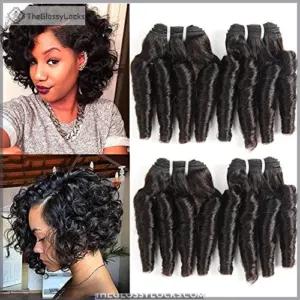
Protective styles give your hair a rest. Now let’s feed your scalp. After all, a healthy scalp grows healthy hair.
Extra Dark Jamaican Black Castor Oil is rich in ricinoleic acid, which calms inflammation and fights dandruff-causing germs. Mixed with coconut oil, it absorbs better and rinses out easier. Luckily, that means less heaviness.
Massage it into your scalp two to three times weekly. Skip daily use, since buildup can irritate. Smooth a tiny bit onto dry ends, too.
Expect softer, less brittle hair in two to three weeks. It won’t create new follicles, but it helps you keep length.
| Best For | Anyone who wants natural-looking, curly human hair extensions for everyday wear, work, weddings, or parties and is willing to care for them properly, including keeping the scalp healthy underneath a protective style. |
|---|
- Unprocessed Brazilian virgin hair with healthy cuticles gives softness and shine.
- Double-weft construction makes it more durable and reduces shedding.
- The natural color can be dyed or heat-bleached, and the Funmi curls move naturally.
- Curl retention varies from person to person.
- Some users report an inconsistent odor, ranging from none to unpleasant.
- It needs proper care to keep the cuticles healthy and prevent damage.
Frequently Asked Questions (FAQs)
How do I make my afro grow faster?
Think of your afro as a garden, not a race. You can’t speed up hair growth, but a steady hair care routine, protective styles, and gentle hair growth products help you keep every single inch.
How long will it take to grow an afro?
Afro hair grows about 32 to 50 inches a month, so your hair growth rate is steady, just slow. Luckily, six months gives you roughly three inches, and a full afro takes about twelve.
Can I grow 2 inches of hair in a month?
Not quite. Afro hair grows about half an inch monthly, so 2 inches isn’t realistic.
Hair growth tips and hair products can’t speed follicles, but a steady hair growth routine helps you keep your length.
How to grow fast hair in 7 days?
Think of seven days as a snapshot, not a transformation. Your afro grows only a sliver in a week, so focus on length retention. Deep conditioning, gentle detangling, and protective styles keep your hair growth routine working.
Can certain hairstyles slow down afro growth?
Think of your hairline as a fence: pull too hard and it snaps. Tight styles won’t change Afro hair growth, but they cause breakage that hides length. Keep your protective styles loose, gentle, and comfortable.
Does hair porosity affect afro growth speed?
Ever wonder why your afro seems stuck? Luckily, hair porosity doesn’t change your hair growth speed. It just affects what you keep. High porosity loses moisture fast, so try deep conditioning weekly.
How does weather impact afro hair health?
Your hair is a weather vane, always pointing to the climate.
Humid air swells strands, dry air steals hydration.
Know your hair porosity, favor protective styles for moisture retention, and sleep in a satin bonnet.
Should I use protein treatments for growth?
Think of protein as scaffolding on a house you’re still building.
Protein treatments support hair growth by cutting breakage. Try a protein conditioner every 4 to 8 weeks, then moisturize. Follow these hair growth tips.
Can stress or sleep affect hair growth?
Stress can disrupt your hair follicles, pushing more strands into a shedding phase a few months later. Poor sleep may add to that stress. Still, it’s not the only cause, so see a clinician if shedding persists.
Can you grow an afro with thin hair?
Yes, you can. Thin hair just means your afro may look less full. After all, density and strand thickness shape the result, so protect your length with gentle hair growth care and expect a softer shape.
Conclusion
Three inches in six months isn’t much, but it adds up when none of it breaks off. After all, that’s the real secret behind how to grow afro fast: protect every strand you’ve earned.
Moisturize often, handle gently, sleep in satin, and feed your scalp well. Luckily, small daily habits beat any miracle product. Pick one or two oils from the list, stay consistent, and let time do its quiet work.
Then wear it proud.