This site is supported by our readers. We may earn a commission, at no cost to you, if you purchase through links. This content is for general informational and educational purposes only and is not a substitute for professional medical, dermatological, or nutritional advice.
A plant sitting on your windowsill holds a pH of 4.2 to 5.1, almost identical to your scalp’s own acid mantle. That match matters more than most people realize. When aloe gel touches your hair, it flattens the cuticle instead of fighting it, which is why one clinical trial recorded 2.66 cm of monthly growth after eight weeks of use.
Aloe vera for hair works through mechanisms you can measure: amino acids rebuilding keratin, enzymes clearing follicle blockages, polysaccharides locking in moisture. Here’s how to prepare it, apply it correctly, and know what results to expect.
Table Of Contents
- Key Takeaways
- Aloe Vera Benefits for Hair
- Why Aloe Vera Works
- Fresh Leaf Vs Bottled Gel
- How to Prepare Aloe Gel
- How to Apply Aloe Vera
- DIY Aloe Vera Hair Recipes
- Aloe Vera for Scalp Issues
- Routines by Hair Type
- Safety, Results, and Mistakes
- Frequently Asked Questions (FAQs)
- Can I directly apply aloe vera on hair?
- Is aloe vera good for your hair growth?
- Can I leave aloe vera gel in my hair overnight?
- Can you leave aloe vera in your hair without washing it out?
- Can aloe vera cure baldness and regrow hair?
- Can aloe vera be used as a natural hair dye?
- Can aloe vera be used on children’s hair?
- Can aloe vera be used as a leave-in conditioner for hair?
- Can aloe vera treat hair loss permanently?
- Is aloe vera safe for color-treated hair?
- Conclusion
Key Takeaways
- Aloe vera’s pH (4.2–5.1) closely matches your scalp’s natural acidity, which lets it seal the hair cuticle instead of irritating it, boosting shine and cutting frizz.
- Aloe’s mix of amino acids, enzymes, and moisture-binding polysaccharides works together to rebuild keratin, clear clogged follicles, and lock in hydration for stronger, softer hair.
- For best results, apply gel to damp, sectioned hair, massage it into your scalp for several minutes, leave it on for about twenty minutes, then rinse with cool water to seal in the benefits.
- Aloe vera supports a healthier scalp and stronger strands over time, but it works best as a supportive habit alongside proven treatments rather than a standalone cure for hair loss or baldness.
Aloe Vera Benefits for Hair
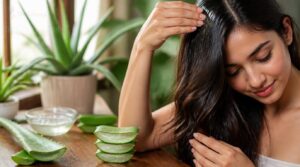
Your hair reacts to what you put on your scalp, and aloe vera brings more to the table than most people realize. Its gel works on your strands and follicles in ways that show up fast, from texture to comfort. Here’s what you can expect when you start using it regularly.
If you’re looking to switch things up, aloe vera is also one of several natural alternatives to hair gel worth trying for hold without the buildup.
Hydration and Softness
When your hair feels dry, aloe vera gel goes to work fast. Fresh gel is nearly all water, so it delivers instant moisture without weight. Its polysaccharides bind water into the hair shaft, boosting elasticity and softening texture. Cuticle smoothing follows, letting a mask absorb quickly thanks to the gel’s light viscosity. Ten minutes in, strands already feel softer.
The polysaccharide content varies based on plant age, season, and geographic location, affecting gel consistency and performance polysaccharide content variation.
Shine and Frizz Control
That soft, hydrated strand now needs polish. Cuticle sealing from aloe’s acidic pH (around 5.5) flattens rough edges, boosting light reflection for real shine.
This creates a frizz prevention film:
- Blocks humidity from swelling the cuticle
- Locks moisture in without weight
- Smooths strands for even light
- Adds elasticity, cutting frizz-causing damage
Results show fast, no silicone needed.
Breakage Reduction
Shine only matters if the strand survives daily handling. Breakage prevention comes down to amino acid reinforcement—aloe supplies 20 of 22 amino acids that rebuild keratin from within.
| Mechanism | Action | Result |
|---|---|---|
| Amino acids | Penetrate cortex | Elasticity gains |
| Acemannan | Binds moisture | Fewer snaps |
| Enzymes | Clear buildup | Stronger roots |
Scalp Comfort
A strong strand still lives on skin that can be red, tight, or itchy. Cooling gel application offers immediate relief, spreading easily over irritated patches.
Comfort routines matter:
- Soothes dry scalp after washing
- Builds a light moisture barrier
- Reduces redness from heat or hard water
- Helps gentle cleansing without stripping
Less inflammation means a calmer scalp, ready for what comes next: growth.
Hair Growth Support
Once follicles clear, growth becomes possible. Enzymes lift blockages while circulation improves, delivering vitamin B12 and folic acid straight to hair follicles for faster cell division.
One trial recorded 2.66 cm of monthly growth, well above average. Zinc aids DNA synthesis in the hair matrix, and regular use over eight weeks often produces visibly thicker, fuller strands.
Why Aloe Vera Works
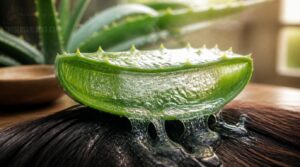
Aloe vera isn’t just old folk wisdom, it’s backed by real biology. Your scalp and hair respond to specific compounds inside the gel, each doing its own job. Here’s what’s actually at work beneath the surface.
Vitamins and Minerals
That gel isn’t just water. Aloe vera packs vitamins A, B12, C, and E, each doing distinct work: A speeds follicle cell turnover, C builds collagen for hair strength, E boosts scalp microcirculation. B-complex vitamins support red blood cell production, feeding oxygen to follicles.
Minerals like zinc and copper regulate sebum and pH, keeping scalp hydration balanced for steady hair growth.
Amino Acids
Building blocks matter most here. Aloe supplies 7 of 8 essential amino acids, small enough (110–204 Daltons) for hair cortex penetration.
- Cysteine and methionine fuel keratin synthesis via sulfur cross-links
- Arginine boosts scalp circulation
- Glycine and proline add flexibility
- Combined, they cut breakage roughly 40% while restoring elasticity
Moisture-binding Polysaccharides
Water is aloe’s real trick. Acemannan, its main polysaccharide, uses acetyl groups and hydroxyl sites to grab water molecules and hold them, forming a thin film on the hair shaft that limits moisture loss during washing.
| Property | Function | Effect |
|---|---|---|
| Acemannan | Binds water | Hydration |
| Film layer | Seals shaft | Retention |
| Hydroxyl groups | Hydrogen bonds | Elasticity |
Proteolytic Enzymes
Think of aloe as carrying its own cleanup crew.
Proteolytic enzymes like bradykinase, lipase, and carboxypeptidase drive the sebum breakdown mechanism, breaking oils and dead cells into particles that rinse away. This fuels the scalp exfoliation process and follicle cleansing action, clearing debris from the hair shaft and cuticle layer.
With consistent enzyme activity levels, you’ll notice real hair growth stimulation.
If your strands feel unusually brittle despite this activity, it’s worth exploring common causes of stiff, unyielding hair before adjusting your routine.
Scalp-friendly PH
Your scalp likes things slightly acidic, and aloe delivers exactly that. With a natural pH of 4.2 to 5.1, it matches your scalp’s acid mantle almost perfectly.
This cuticle sealing effect flattens hair strands, locking in moisture and cutting water loss by up to 30%. That acidity also discourages Malassezia yeast, supporting scalp pH balance and a healthier microbiome overall.
Fresh Leaf Vs Bottled Gel
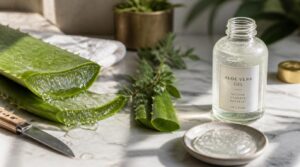
Not all aloe is created equal, and the source matters more than you’d think. Fresh leaves and bottled gels each bring something different to the table, from potency to convenience. Here’s what sets them apart, so you can choose what actually fits your routine.
Fresh Aloe Pros
A live leaf holds more than any bottle can promise. Nutrient rich profile and deep hydration power stay intact right at the source, before processing strips anything away.
| Benefit | What It Does | Why It Matters |
|---|---|---|
| Enzymes | Exfoliates scalp | Clears buildup |
| Polysaccharides | Binds moisture | Softens hair |
| Antioxidants | UV shield | Protects color |
Bottled Gel Pros
Not everyone has time to peel a leaf before washing their hair. That’s where bottled gel earns its keep: easy application, no cutting or draining required.
| Bottled Gel Offers | Why It Helps |
|---|---|
| Ready-to-use formula | No preparation needed |
| Long shelf life | Lasts months, not days |
| Leave-in treatment | Immediate effects on scalp health |
| Pharmacy access | Simple to restock |
Ingredients to Avoid
Convenience has a cost if you’re not reading labels. Many bottled gels lean on sulfates and silicones for lather and shine, plus parabens or formaldehyde-releasing preservatives like DMDM hydantoin.
| Avoid | Choose Instead |
|---|---|
| Sulfates | Sulfate-free cleansers |
| Silicones | Silicone-free formulas |
| Parabens | Paraben alternatives |
| Formaldehyde releasers | Potassium sorbate |
| Whole leaf extracts | Decolorized gel |
Whole leaf extracts contain aloe vera latex, linked to abdominal cramps, diarrhea, and kidney problems if ingested.
Best Purity Level
Purity comes down to numbers, not marketing claims. Look for acemannan content above 5% by dry weight, the IASC standard for real potency, plus aloin under 10 ppm so the anthraquinone won’t irritate your scalp.
| Standard | Why It Matters |
|---|---|
| Acemannan 5%+ | Deeper hair shaft penetration |
| Aloin under 10 ppm | Prevents scalp irritation |
| USDA Organic | No synthetic residues |
| 12-hour processing | Locks in freshness |
Storage and Shelf Life
Since aloe vera gel breaks down fast, storage decides whether it helps your hair or just sits there useless. Fresh gel lasts 24–48 hours at room temperature, 5–7 days refrigerated.
| Method | Shelf Life | Best For |
|---|---|---|
| Refrigeration | 5–7 days | Weekly hair mask |
| Freezing | 6 months | Batch prep |
| Bottled | 2–3 years | Leavein treatment |
Keep gel away from light and heat above 30°C.
How to Prepare Aloe Gel
Getting from raw leaf to usable gel takes a few careful steps. Skip any of them, and you risk irritation or a weaker product. Here’s exactly how to do it, start to finish.
Wash The Aloe Leaf
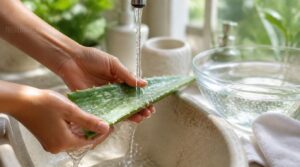
Grab a clean leaf and rinse it under filtered water first. This clears dust, soil, and surface bacteria before you cut into it.
Soak the leaf 15–20 minutes in room-temperature water. Cold water protects heat-sensitive enzymes like acemannan, keeping your future hair mask potent. Skip warm water here; it breaks down active compounds fast.
Drain Yellow Latex
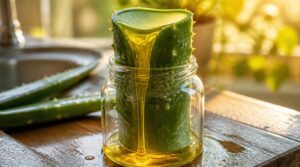
Stand the cut leaf upright in a jar for 10 minutes. That yellow sap oozing out is aloin, a bitter latex sitting between the skin and gel.
Speed things up:
- Gravity drainage (10 minutes upright)
- Water soaking (30+ minutes)
- Both, for stubborn leaves
Aloin is water-soluble, so it rinses out easily. Discard the runoff before touching the gel.
Peel The Green Skin
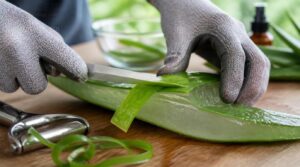
Two tools work here: a knife or a vegetable peeler.
Knife peeling method: slice just under the rind, cut from both edges, saw gently to free the skin in one strip.
Peeler technique: slide under the rind base-to-tip, light pressure, both sides.
Wear cut-resistant gloves, use a stable cutting board, and keep your blade alcohol-cleaned.
Scoop Clear Inner Gel
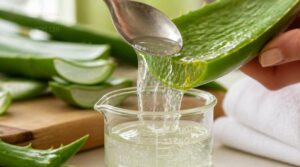
What sits beneath the peeled rind is the real prize: a clear, slightly watery gel packed with moisture for your hair and scalp.
Use a sterilized spoon for the gel extraction technique, scraping gently to avoid rind fragments. This inner leaf isolation step helps hair grow and stay elastic.
- Scoop into a graduated container
- Measure gel volume accurately
- Rinse away latex residue
- Discard any yellow-tinged portions
Blend Until Smooth
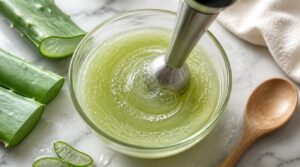
Chunks of gel won’t spread evenly, so mix until smooth. A food processor or immersion blender works in 5–10 seconds; hand mixing suits small batches.
| Equipment | Time | Result |
|---|---|---|
| Blender | 5-10 sec | Smooth |
| Immersion | 10-15 sec | Even |
| By hand | 20-30 sec | Thick |
Stop once no clumps remain. Over-blending breaks down polysaccharides, so aim for spreadable, not watery.
How to Apply Aloe Vera
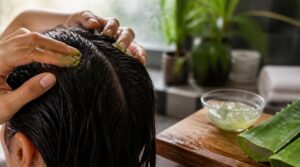
Once your gel is ready, application technique matters just as much as the gel itself. A haphazard rub-in won’t get you the results you’re after. Follow these five steps, in order, for the best contact between the gel and your scalp.
Section Damp Hair
Before aloe touches your strands, sectioning matters. Divide towel-dried hair (about 70% moisture) into four quadrants, clipping each up separately.
Even sectioning improves gel distribution and helps hair moisture retention:
- Use a fine-tooth comb for clean, tear-free parts
- Keep 2–3 inch sections for medium-length hair
- Choose plastic clips with rubber grips
- Work crown to nape systematically
This groundwork sets up proper cuticle sealing later.
Massage Into Scalp
With sections clipped, work aloe vera gel into the scalp using circular motion technique at medium pressure. Spend 30 seconds each on temples, forehead, and nape.
| Tool | Pressure | Duration |
|---|---|---|
| Fingertips | Light-medium | 5+ min |
| Wooden comb | Medium | 5-10 min |
| Electric massager | Gentle | 5 min |
This boosts circulation, supporting hair growth and elasticity.
Coat Hair Lengths
Once your scalp’s covered, pull the gel down through the lengths. Aloe gel coating works best applied strand by strand, not dumped on top.
Use 2-3 tablespoons for medium hair, working tip to root. This length hydration method seals moisture, adds shine, and reinforces elasticity, keeping fibers flexible and less prone to breakage during styling or brushing.
Leave Twenty Minutes
Set a timer for twenty minutes and let the aloe vera gel sit. This window matches your scalp’s natural absorption rate: enzymes clear buildup first, then vitamins and amino acids reach the hair shaft. Body heat warms the gel slightly, improving penetration.
Whether you have fine, curly, or color-treated hair, twenty minutes delivers the best benefit without soaking strands too long.
Rinse With Cool Water
Your last step matters more than it seems. Cool water triggers cuticle sealing, closing the hair shaft for shine and frizz reduction. Benefits include:
- Residue-free rinsing (no sticky gel buildup)
- Scalp soothing after treatment
- Color protection for dyed strands
- Balanced hair pH
Thirty seconds of cool water rinsing locks in aloe’s natural conditioning, giving strands a smoother, glossier finish that lasts until your next wash.
DIY Aloe Vera Hair Recipes
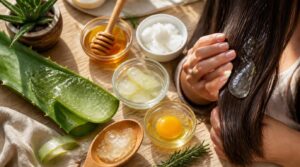
Plain aloe gel works well on its own, but pairing it with other ingredients can target your hair’s specific needs. Dry strands, an itchy scalp, or oily roots each respond better to a slightly different mix. Here are five simple recipes you can try at home.
Aloe and Coconut Oil
Pair aloe with coconut oil and you get hydration plus a sealant. Mix 2 tablespoons aloe gel with 1 tablespoon coconut oil for normal hair, or drop to 1 teaspoon oil if your scalp runs oily.
Massage into your scalp, then coat lengths. Leave on 30–60 minutes under a shower cap, which traps heat and boosts absorption. Repeat 2–3 times weekly for lasting moisture retention.
Aloe and Yogurt Mask
Combine 3 tablespoons aloe gel with 2 tablespoons yogurt. Greek yogurt works best, its protein and thickness outperform regular varieties. Aloe’s polysaccharides bind yogurt proteins into a stable mix that won’t separate on hair.
Massage into scalp for 8-10 minutes, feeling aloe’s cooling effect offset yogurt’s warmth. Leave on 20-30 minutes. Lactic acid exfoliates gently, letting nutrients reach your scalp for real hair growth support.
Aloe and Honey Treatment
Honey turns aloe gel into a true moisturizing hair mask. Mix 2 tablespoons aloe vera gel with 1 tablespoon honey, a ratio balancing hydration without stickiness. Honey’s sugars pull moisture in; aloe’s water content delivers it fast.
Apply to damp hair, cover with a shower cap, and leave on 20-30 minutes. Rinse with cool water to seal cuticles and support scalp healing.
Aloe and Lemon Rinse
Oily scalp? Lemon juice is your reset button. Mix 1-2 tablespoons aloe vera gel with 1 tablespoon lemon juice and a cup of water for a scalp cleansing action that cuts grease.
Lemon’s low pH tightens the cuticle; aloe’s polysaccharides buffer excess acidity. This pH balance effect helps oil control, boosting nutrient absorption. Use fresh batches only—oxidation reduces potency within 24 hours.
Aloe Vera Hair Spray
Not every treatment needs a sit-down session. A DIY aloe vera hair spray—aloe juice, water, and a splash of glycerin—works as a leave-in mist for scalp hydration therapy on busy days.
Why it earns a spot in your routine:
- Refreshes strands between washes
- Soothes an itchy scalp fast
- Improves hair elasticity over time
- Helps with hair growth stimulation
Shake before spraying. Store in the fridge, use within a week.
Aloe Vera for Scalp Issues
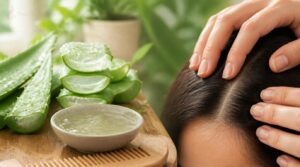
Your scalp tells you a lot about what’s going on beneath the surface. Itching, flaking, and excess oil each point to a different imbalance, and aloe vera helps with them in different ways. Here’s how it helps with five common scalp concerns.
Itchy Scalp Relief
When your scalp won’t stop itching, aloe vera gel goes to work fast. The cooling effect hits within minutes, easing irritation as water content draws heat away.
Behind that relief sits real chemistry: bradykinase and salicylic acid deliver anti-inflammatory action, calming scalp inflammation at its source.
This isn’t just comfort, it’s scalp hydration therapy addressing why the itchy scalp started in the first place.
Dandruff Control
Relief is one thing, but flakes take more work. Dandruff forms when Malassezia yeast overgrows, feeding on excess sebum and disrupting your scalp pH balance. Aloe vera’s natural antifungal action curbs that overgrowth while enzymes handle follicle buildup removal.
- Loosens dead skin without harsh scrubbing
- Restores moisture barrier support
- Calms scalp inflammation between washes
Consistent use over several weeks, not days, brings visible change.
Oily Scalp Balance
Too much oil doesn’t mean you skip aloe—it means you use it smarter. Zinc acts as a natural astringent, tightening pores and slowing oil output within three to four weeks of steady use. Pair it with light scalp exfoliation and a balancing hair wash routine. Your scalp gets oil absorption without dryness, calming that itchy, overworked feeling.
Sebum Buildup Removal
Balance is one thing—actual buildup is another. Aloe’s proteolytic enzymes act as a natural sebum extraction method, breaking down fats trapped around follicles.
- Enzyme scalp treatment loosens dried oil layers
- Softens crust without stripping natural moisture
- Helps gentle scalp exfoliation as you rinse
- Works as follow-up to oily scalp cleansing
For greasy hair, that’s real follicle deep cleaning and lasting sebum regulation.
Flake Prevention Routine
Once flakes clear up, prevention becomes the goal. Weekly application schedule works for most: oily scalps benefit from 2-3 sessions, dry scalps do better with once weekly. Apply post-wash for quick absorption.
Adjust seasonally, more in summer heat, less in winter dryness. This consistency keeps dandruff treatment effective long-term, turning your flaky scalp treatment routine into simple, lasting scalp maintenance.
Routines by Hair Type
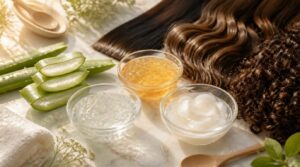
Not all hair reacts to aloe vera the same way. Your hair type determines how much you apply, how often, and what you mix it with. Here’s how to adjust your routine based on what your hair actually needs.
Dry Damaged Hair
Snapping at 30% stretch instead of 50% tells you the cuticle’s compromised. Moisture restoration starts with aloe’s 99% water content, followed by coconut oil to seal the cuticle shut.
Apply twice weekly. The acemannan gel helps cuticle repair and hair elasticity improvement, while coconut oil adds heat protection before styling. Within 2-3 weeks, split ends soften—full recovery from brittle strands averages 3-4 months.
Oily Greasy Hair
When glands overproduce, washing daily feels tempting, but that strips oils and triggers rebound sebum. Use aloe vera gel as a scalp detox rinse two to three times weekly.
Apply to roots only, skip the lengths, leave 15 minutes, rinse cool. The pH-balancing effect curbs oil control for scalp without dehydrating strands. Skip heavy styling products; they trap grease and worsen buildup fast.
Curly and Coily Hair
Curls and coils crave water, yet cuticles often resist it. High porosity curls absorb fast but dry out within hours, so moisture retention matters more than product amount.
Layer aloe gel under a leave-in, then seal with oil. This helps curl definition, eases porosity management, and helps you embrace natural shrinkage as healthy elasticity, not damage.
Fine Thin Hair
Weight is the enemy of fine hair. Lightweight styling with aloe vera gel hydrates strands without collapsing them flat.
Massage gel into roots for scalp circulation stimulation, then work excess through lengths for gentle strand strengthening. Rinse cool for root lift techniques that preserve volume, since heavy residue causes faster scalp oil control issues and same-day flatness in thin strands.
Color-treated Hair
Color fade isn’t random, it’s chemistry: dyed cuticles sit lifted, letting pigment leak with every wash. Aloe vera gel helps fade prevention through moisture sealing, closing gaps that cause color loss.
- Apply as a hair mask weekly for color retention
- Add UV protection before sun exposure
- Pair with heat protection during styling
A consistent hair care routine keeps color-treated hair shiny longer.
Safety, Results, and Mistakes
Aloe vera works well for hair, but only with the right precautions and reasonable expectations. Knowing what to watch for helps you avoid setbacks and judge your progress accurately. Here’s what you need to know before and after you start using it.
For a deeper dive into scalp care, this guide on applying hair serum to the scalp covers similar do’s and don’ts worth knowing.
Patch Test First
Before aloe touches your hair, test it. Dab a pea-sized amount behind your ear, wait 48 hours, and watch for redness or itching.
Repeat this every new batch—sensitivities can develop even if you’ve used aloe before. It’s a small step that prevents real scalp irritation later.
Avoid Aloe Latex
That patch test protects your skin. Your ingredients need the same scrutiny.
Latex is the yellow sap under aloe’s rind, loaded with aloin, an irritant tied to allergic reactions and, per IARC, listed as a possible carcinogen. Check labels for "purified" or "inner leaf only." Skip anything listing "whole leaf extract." The FDA pulled latex from OTC laxatives in 2002—your scalp deserves that same caution.
Aloe latex, the bitter yellow sap under the rind, carries aloin and deserves the same caution the FDA gave it when banning it from laxatives
Don’t Overuse It
More isn’t better here. Twice weekly is plenty for oily hair; dry hair tolerates three sessions max.
Watch for overuse signs: greasy hair, dulled shine, or scalp irritation. These signal disrupted scalp oil balance.
Aloe strips natural oils with repeated use, weakening hair elasticity over time. Rinse thoroughly to prevent residue buildup, and if redness lingers, cut back.
Expected Results Timeline
Knowing when to expect change keeps you from quitting too soon or overdoing it.
- Initial moisture timeline: softer strands within 15-20 minutes
- Shine development period: visible gloss by week two to three
- Scalp comfort progress: less itching within 24-48 hours
- Growth acceleration phase: reduced breakage by week three, visible growth by week six to eight
Long-term maintenance effects build with consistency, supporting elasticity and thinning prevention over months, not days.
When to Stop Using
Your scalp will tell you when to quit. Stop at burning, stinging, or new bumps—signs of allergic reaction, not adjustment.
Coated, dull, or tangled hair signals product mismatch, not detox.
| Warning Sign | Action |
|---|---|
| Itchy scalp worsens | Stop, rinse |
| No change after 3 weeks | Discontinue |
| Open sores present | Avoid entirely |
| Diabetes drugs, anticoagulants | Ask doctor |
| Reaction spreads | Seek care |
Always allergy test first.
Frequently Asked Questions (FAQs)
Can I directly apply aloe vera on hair?
Going straight to the source is perfectly fine. Fresh gel from aloe vera leaves works well for topical application, but do a 24-48 hour patch test first, and skip broken or eczema-affected scalp skin entirely.
Is aloe vera good for your hair growth?
Yes, but with realistic limits. Enzymes clear follicular buildup and antioxidants support the scalp environment, aiding hair follicle stimulation. It won’t force new regrowth alone—think supportive care, not a miracle drug for promoting hair growth.
Can I leave aloe vera gel in my hair overnight?
Worried it’ll dry stiff on your pillow? It won’t, if wrapped properly. Overnight gel duration (6-8 hours) deepens gel absorption overnight, boosting hair elasticity, shine, and breakage prevention—just follow with a proper morning rinse routine.
Can you leave aloe vera in your hair without washing it out?
Pure gel makes a fine leave-in treatment: it’s a lightweight coating, works as a humectant for lasting moisture, and soothes irritation. Apply to damp hair and skip rinsing when the formula stays plain, without oils or butters mixed in.
Can aloe vera cure baldness and regrow hair?
No, it can’t reverse hereditary baldness or wake up dormant follicles. What it does offer: hair follicle activation support through aloenin’s effect on dermal papilla cells, reducing scalp inflammation, and strengthening hair follicles already producing hair.
Can aloe vera be used as a natural hair dye?
Its anthraquinone compounds offer mild natural pigment extraction, tinting light hair yellow to brown.
Blended with henna, aloe vera boosts adhesion and softness, mimicking commercial aloe-based dyes.
It also works as a mordant, helping other natural dyes bind longer.
Can aloe vera be used on children’s hair?
A six-month-old’s scalp is as delicate as tissue paper. Yes, kids can use aloe, but only past six months, patch-tested first, using fragrance-free pure gel for gentle hydration and dandruff relief without irritating young skin.
Can aloe vera be used as a leave-in conditioner for hair?
Yes. As a humectant, it draws moisture into hair, matching your scalp’s natural pH for smoother cuticles. Apply a thin layer to damp strands, then seal with oil, extending hydration up to 24 hours.
Can aloe vera treat hair loss permanently?
Permanent regrowth isn’t realistic on its own. Aloe vera helps strengthening hair and scalp health, but studies show benefits fade 2-4 months after stopping. Lasting results need combined therapy with proven treatments like minoxidil, plus consistent maintenance.
Is aloe vera safe for color-treated hair?
Picture strands drinking in moisture without a hint of dye washing away. Your color stays vibrant longer since aloe adds no pigment, just hydration and shine, while soothing your scalp during those sensitive post-color weeks.
Conclusion
What does your scalp actually need to thrive? Not a fight against buildup, but balance. Aloe vera for hair delivers exactly that: enzymes clear follicles, polysaccharides hold moisture, amino acids rebuild what heat and color strip away.
Results build slowly, over weeks, not overnight. Stay consistent, watch for irritation signs, and adjust frequency to your scalp’s response. Mastery here isn’t about more product. It’s about reading your scalp and answering it correctly.