
This site is supported by our readers. We may earn a commission, at no cost to you, if you purchase through links.
That white dust on your shoulders isn’t just embarrassing—it’s your scalp sending an SOS signal. Dandruff affects nearly half of adults worldwide, yet most people approach treatment like they’re guessing a password: random shampoos, crossed fingers, repeat.
The truth is, controlling those persistent flakes requires a strategic anti-dandruff scalp care routine that tackles the root causes, not just the visible symptoms. Your scalp operates on a delicate balance of oil production, fungal activity, and skin cell turnover, and when any of these factors go rogue, flaking follows.
The good news? You don’t need expensive salon treatments or a dermatology degree to reclaim a healthy, flake-free scalp—just the right combination of products, techniques, and consistency.
Table Of Contents
Key Takeaways
- Dandruff control requires a strategic routine targeting oil production, fungal activity, and skin cell turnover—washing 2-3 times weekly with medicated shampoos containing ketoconazole, zinc pyrithione, or selenium sulfide addresses root causes more effectively than random product switching.
- Proper technique matters as much as product choice: use warm water (38-40°C), massage gently with fingertip pads for 2-3 minutes without scratching, and exfoliate 1-3 times weekly to remove buildup while avoiding the scalp irritation that over-washing or harsh scrubbing triggers.
- Natural remedies like 5-10% tea tree oil, prebiotic scalp serums, and DIY masks with jojoba oil or aloe vera can complement medicated treatments by calming inflammation and restoring scalp microbiome balance without harsh chemicals.
- Lifestyle factors including omega-3-rich foods, stress management through mindfulness and exercise, adequate hydration, and reducing heavy styling product buildup strengthen your scalp’s defenses against flaking—seek professional help if symptoms persist after 4-6 weeks of treatment.
Key Steps for an Effective Anti-Dandruff Routine
Your scalp deserves the same thoughtful attention you give the rest of your skin. An effective anti-dandruff routine isn’t about harsh scrubbing or daily washing—it’s about understanding what your scalp needs and responding with precision.
Let’s walk through the foundational steps that’ll help you take control of those flakes for good.
How Often to Wash Your Hair

Adjust your washing schedule based on your scalp’s oil production and hair type to maintain scalp balance and support hair growth. For most people managing dandruff, washing 2-3 times weekly works well, though oily scalps may need daily attention while dry or curly hair thrives with less frequent cleansing.
Match your dandruff hair care routine to your specific needs:
- Track your scalp’s oiliness level over several days to find your ideal washing frequency.
- Start with every-other-day washing, then adjust based on flake reduction and comfort.
- Use medicated shampoos 2-3 times weekly as your foundation for oil control.
- Fill non-medicated days with gentle cleansing to maintain scalp health without stripping.
- Monitor itch intensity and visible flakes to fine-tune your hair care schedule.
Choosing Water Temperature

Water temperature plays a bigger role in your dandruff treatment than you might think. Aim for warm water around 38–40°C (100–104°F) during hair rinsing to loosen oils without triggering scalp irritation. This temperature range also helps prepare your scalp for gentle exfoliation techniques that clear flakes without causing additional dryness or sensitivity.
Hot water above 43°C strips protective moisture and worsens dryness, while lukewarm rinses maintain thermal balance and close the hair cuticle. For color-treated hair specifically, maintaining water temperature between 36–38°C helps preserve vibrancy by preventing premature fading from excessive heat exposure.
Consistent temperatures in your hair care routine produce more predictable scalp health outcomes.
Proper Scalp Massage Techniques
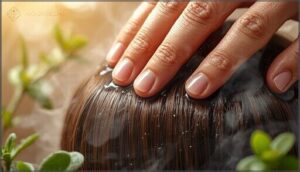
Once your water temperature is right, your fingertips become your best allies. Gentle circular motions boost scalp blood flow by 20–40%, loosening flakes without triggering scalp irritation—you’re not scrubbing a pan here. If you’re dealing with stubborn flakes, tea tree oil’s antifungal properties can target the root cause while you massage, making each session work double duty.
Scalp Massage Benefits for your hair care routine:
- Use fingertip pads with coin-weight pressure, never nails
- Cover your entire scalp in 2–3 minutes, 2–3 times weekly
- Stop immediately if redness or burning appears
Avoiding Common Mistakes (e.g., Scratching, Over-washing)

Even a perfect scalp massage won’t help if you’re scratching like a lottery ticket. Your nails create micro-tears that invite bacteria—switch to fingertip pressure when the itch strikes.
Scratching with your nails creates micro-tears that invite bacteria—use fingertip pressure instead when the itch strikes
Over-washing strips oils, triggering rebound sebum that feeds dandruff treatment cycles. Stick to 2–3 weekly washes, use lukewarm water, and let a gentle touch guide your flake removal.
True scalp care means knowing when to back off. Over-scrubbing or using harsh formulas can strip natural oils, so choosing a keratin shampoo for damaged hair helps balance cleansing with protection.
Selecting The Right Anti-Dandruff Shampoo

The shampoo you choose becomes your first line of defense against flakes and irritation. Your scalp’s unique needs will determine whether you need a medicated formula with active ingredients or a gentler option that won’t strip natural oils.
Let’s break down what actually works, which ingredients deliver results, and how to use these products correctly for lasting relief.
Medicated Vs. Gentle Shampoos
Medicated shampoos contain antifungal agents like ketoconazole or zinc pyrithione that directly target the yeast responsible for dandruff, making them your first-line dandruff treatment for persistent flaking. If you’re dealing with mild symptoms or scalp sensitivity, gentle formulas with mild surfactants offer relief without irritation.
Consider product interactions with hair color treatments when choosing medicated options, and remember that alternating between both types can balance efficacy with comfort for ideal scalp health.
When evaluating the effectiveness of these treatments, it’s crucial to review the role of scientific study summaries in informing evidence-based practices.
Key Ingredients to Look For
Look for proven actives that tackle the root cause: Ketoconazole and Pyrithione Zinc fight the fungus driving your flakes, while Selenium Sulfide slows that rapid skin turnover. Salicylic Acid lifts stubborn scales, and Tea Tree Oil brings natural antifungal power to your antidandruff shampoo.
Combining these ingredients in your dandruff shampoo targets multiple pathways, giving you better control over persistent symptoms. When selecting a shampoo, consider the benefits of medicated shampoo options that target the root cause of dandruff.
How to Use Shampoo for Best Results
Apply a dime-sized amount of your dandruff shampoo directly to your wet scalp—not the hair ends—and work it into a gentle lather for one to two minutes.
This scalp treatment needs contact time for medicated rinses to penetrate. Rinse thoroughly with lukewarm water, repeat only if the label directs, then pat dry to minimize irritation and boost your antidandruff shampoo’s effectiveness.
Scalp Exfoliation and Moisturizing Tips

Think of your scalp like any other part of your skin—it needs regular exfoliation to clear away the buildup that fuels dandruff, and it needs moisture to stay balanced and calm. When you combine these two steps strategically, you create an environment where flakes can’t thrive.
Here’s how to exfoliate and moisturize your scalp the right way.
Benefits of Scalp Exfoliation
Scalp exfoliation physically sweeps away dead skin cells and sebum buildup that can fuel Malassezia overgrowth, directly supporting a balanced scalp microbiome.
When you incorporate gentle exfoliating techniques with scalp massage, you’ll boost microcirculation benefits and improve flake removal while promoting scalp health.
Regular exfoliation also improves treatment absorption, providing scalp irritation relief and strengthening your dandruff prevention strategy over time.
Using Scalp Brushes and Exfoliants
Gentle exfoliation with the right tools transforms your scalp health without triggering scalp irritation relief needs. Choose soft-bristle scalp brush types or silicone scalp massagers that won’t tear delicate skin, and pair them with chemical exfoliant formulas containing salicylic acid for effective dandruff removal.
Follow these steps for safe results:
- Limit use to 1–3 times weekly
- Apply light pressure during scalp scrub sessions
- Rinse your exfoliating scalp brush thoroughly after each use
- Practice proper brush sanitizing by air-drying completely
Lightweight Scalp Moisturizers
Moisturizer Ingredients like niacinamide and panthenol work wonders when you’re battling dandruff without adding heaviness to your hair care routine.
Choose Non Greasy Products with water-based or Oil Free Solutions that deliver Scalp Hydration through humectants such as glycerin.
These Gentle Formulas absorb quickly, supporting scalp health and dandruff treatment while keeping your strands light and free from buildup.
How and When to Exfoliate
Exfoliation Frequency matters more than you think—aim for once or twice weekly to support scalp health and dandruff removal without overdoing it.
Use gentle exfoliants or an exfoliating scalp brush with circular motions for 30–60 seconds before shampooing.
This scalp scrub approach lifts flakes and preps your skin for treatment, giving medicated products a clearer path to work.
Natural Remedies and Supportive Treatments

You don’t need to rely on medicated shampoos alone—natural remedies can work alongside your routine to calm inflammation and restore balance to your scalp.
These treatments utilize ingredients like essential oils, prebiotics, and hydrating compounds that address the root causes of flaking without harsh chemicals.
Here’s how to incorporate supportive, evidence-backed options into your anti-dandruff regimen.
Tea Tree Oil and Essential Oils
Tea tree oil stands out as a reliable dandruff treatment because it contains terpinene-4-ol, which targets Malassezia—the fungus behind those flakes.
Studies show 5% to 10% tea tree oil concentration in your hair care routine can reduce dandruff as effectively as prescription options.
Always dilute it with a carrier oil first to protect against scalp sensitivity and support scalp health.
DIY Scalp Masks and Serums
You can create your own scalp serum or hair mask using natural ingredients that support scalp health without harsh chemicals. Mix jojoba oil with diluted peppermint or eucalyptus essential oils for a lightweight dandruff treatment that won’t weigh down your hair.
Homemade remedies combining yogurt, aloe vera, or oatmeal soothe irritation while keeping your hair care routine budget-friendly and effective.
Incorporating Prebiotics and Hydrating Treatments
Beyond homemade masks, you can upgrade your hair care routine with prebiotic scalp serums that restore microbiome balance and fight dandruff at its source. These gentle formulas support beneficial bacteria on your scalp while hydrating masks replenish moisture without weighing hair down.
Apply scalp serums nightly between wash days to maintain scalp health, reduce flaking, and keep irritation under control long-term.
Lifestyle Changes for Long-Term Dandruff Control

Your scalp doesn’t exist in a vacuum—it reacts to everything from what you eat to how you handle stress. The good news is that a few targeted lifestyle shifts can strengthen your defenses against flaking and irritation over the long haul.
Let’s look at the key areas where small changes make a measurable difference.
Diet and Nutritional Support
What you eat shapes your scalp health from the inside out, helping your dandruff treatment work more effectively. A balanced hair care routine paired with smart nutrition can reduce flaking and support long-term scalp health.
- Omega-3 benefits: Fish oil and flaxseed calm inflammation that triggers flakes
- Zinc supplements: Restore barrier function when deficiency fuels dermatitis-like symptoms
- Probiotic foods: Shift scalp microbiota balance to reduce itch and irritation
- Vitamin D role: Support immune defenses that protect against seborrheic conditions
- Hydration tips: Drink enough water daily to maintain skin integrity and prevent dryness
Managing Stress for Scalp Health
Chronic tension floods your system with cortisol, triggering inflammation that worsens dandruff and itchy scalp flare-ups. Your hair care routine won’t succeed without emotional balance—stress disrupts your scalp’s defenses and fuels persistent scalp conditions.
Build integrated wellness into your daily plan with these proven stress reduction strategies that support scalp health through mindful massage and scalp relaxation techniques.
| Strategy | How It Helps Your Scalp | Simple Daily Action |
|---|---|---|
| Mindfulness practice | Lowers inflammatory markers linked to flaking | 10-minute breathing session before shampooing |
| Regular exercise | Reduces resting cortisol that triggers itch | 30-minute walk 3× weekly |
| Quality sleep | Restores barrier function overnight | Consistent 8-hour sleep schedule |
| Stress journaling | Identifies flare triggers for better control | Track symptoms and stress events |
| Professional support | Tackles root causes of chronic stress | Therapy when overwhelm persists |
Reducing Product Build-Up
Heavy styling gels and silicones choke your scalp, trapping oils and dead cells that fuel dandruff. Swap aggressive daily washing for a strategic scalp detox—clarifying shampoo every 1–2 weeks slashes residue by 40%, while lukewarm rinses dissolve stubborn buildup without stripping protective oils.
- Product removal: Pre-wash oil cleansing lifts silicones before shampooing
- Buildup prevention: Limit heavy polymers in daily hair care products
- Residue control: Rinse 60–90 seconds with lukewarm water
- Gentle cleansing: Non-medicated formulas reduce cumulative residue by 25%
When to Seek Professional Help
When over-the-counter medicated shampoos fail after 4–6 weeks, or you notice severe symptoms like scalp lesions, oozing, or hair loss, it’s time for professional guidance.
A dermatologist can distinguish simple dandruff from seborrheic dermatitis or psoriasis, providing accurate dandruff diagnosis and prescription-strength treatment.
Don’t wait if standard scalp health tips aren’t delivering results—early intervention prevents worsening.
Frequently Asked Questions (FAQs)
Can dandruff spread to other body parts?
Dandruff usually stays put on your scalp, but seborrheic dermatitis can trigger flaking around eyebrows, ears, and chest.
If body flakes appear, fungal infections or systemic skin conditions might be at play.
Does hair color or dye worsen dandruff?
Hair dye won’t directly worsen dandruff for most people, but dye ingredients like ammonia can trigger scalp irritation in sensitive individuals.
Patch-test before coloring, especially if you’re prone to itchy scalp or existing dandruff.
Are certain hair types more prone to dandruff?
Yes—oily scalps and straight hair textures tend to trap more sebum, creating environments where Malassezia yeast thrives.
Hair porosity and ethnic variations in sebum production also influence your dandruff treatment needs and scalp health outcomes.
Can wearing hats or helmets trigger dandruff?
While headgear won’t cause dandruff from scratch, prolonged wear can turn your scalp into a humid trap.
Sweat buildup, friction, and dirty hat linings may worsen existing flaking—but proper hat hygiene and breathable headgear materials help minimize scalp irritation considerably.
Is dandruff contagious between people sharing combs?
No—you can’t “catch” dandruff from someone else’s comb. While shared tools can transfer skin flora, dandruff develops from internal factors like oily scalps or sensitivity, not contagious fungal transmission between people.
Conclusion
Think of your scalp like soil—neglected, it produces nothing but dust. A well-executed anti-dandruff scalp care routine transforms that barren landscape into balanced, resilient territory.
You’ve learned the ingredients that matter, the techniques that work, and the mistakes that sabotage progress. Now consistency becomes your strongest weapon.
Flakes won’t vanish overnight, but with strategic treatment targeting fungal overgrowth and inflammation, your scalp will finally stop staging its rebellion. The white dust stops here.