This site is supported by our readers. We may earn a commission, at no cost to you, if you purchase through links. This content is for general informational and educational purposes only and is not a substitute for professional medical, dermatological, or nutritional advice.
Every week, clients sit in my chair convinced that extensions ruined their hair—and half the time, they’re wrong. The damage they’re pointing to came from a rushed installation, a stylist who skipped the consultation, or six months of skipping deep conditioning. Hair extensions themselves aren’t the villain here.
Technique, weight distribution, and maintenance are the real factors. Done correctly, extensions can coexist with healthy hair for years. Done carelessly, even a single bad application leaves your follicles fighting tension they were never designed to handle.
Knowing the difference starts with understanding exactly what causes damage—and what doesn’t.
Table Of Contents
- Key Takeaways
- Are Hair Extensions Bad for Hair?
- Why Extensions Can Damage Hair
- Least Damaging Extension Types
- Most Common Damage Warning Signs
- Do Extensions Cause Hair Loss?
- Who Should Avoid Hair Extensions
- Safe Installation and Removal Tips
- Healthy Hair Care With Extensions
- Top 3 Safer Extension Options
- How to Prevent Extension Damage
- Frequently Asked Questions (FAQs)
- Can hair extensions cause folliculitis?
- Are hair extensions bad for your hair?
- Do hair extensions damage follicles?
- Should you wear your hair extensions for too long?
- Do keratin hair extensions damage your hair?
- Do hair extensions damage your natural locks?
- Are hair extensions a fear?
- Can hair extensions ruin your hair?
- What is the least damaging hair extension?
- Is there a downside to hair extensions?
- Conclusion
Key Takeaways
- Extensions don’t damage hair on their own — technique, weight distribution, and how well you maintain your hair between installs are what actually determine the outcome.
- Tension is the real threat: when bonds are too tight or extensions are left in too long, follicles experience cumulative stress that can lead to traction alopecia, which becomes permanent once scarring sets in.
- Clip-ins and halo extensions carry the least risk because they require no adhesive or heat, let your scalp rest daily, and can be removed before sleeping — making them the safest starting point for most people.
- Fine, chemically damaged, or actively shedding hair needs to stabilize before extensions are even considered, since adding weight and tension to already-compromised strands accelerates damage faster than most people expect.
Are Hair Extensions Bad for Hair?

Hair extensions aren’t automatically bad for your hair — but the answer depends on a few key factors. Done right, they can be completely safe; done wrong, they can cause real damage.
The key is in the details — things like the method used, how long you wear them, and how well you care for your hair in between, especially if you ever need to repair hair after extensions.
Here’s what you actually need to know.
Myth Versus Reality
Most hair extension myths fall into predictable patterns — clip-in damage myths, heat safety myths, adhesive strength myths — and they all share one thing: half-truths dressed as facts. Extensions don’t automatically cause hair loss, but they can if you ignore extension safety guidelines.
Oil application reality, sleep routine facts, and professional vs DIY hair extensions all shape your actual risk more than the method itself.
When Extensions Are Safe
Clean Scalp Installation and Even Weft Distribution are foundational for preventing tension hotspots and ensuring adhesives bond correctly. Maintaining a Hair Weight Ratio—keeping extensions under roughly 10% of your natural hair’s weight—significantly reduces strain. These practices collectively safeguard hair health during wear.
Professional installation, paired with Allergy‑Safe Materials, ensures safety and comfort. Consistent extension tension management throughout the wear period further protects natural hair. Together, these measures maintain scalp and hair integrity without compromising style.
When Damage Happens
But when things go wrong, they tend to build quietly. Damage rarely announces itself overnight — it’s cumulative stress that does the real work. Extension tension triggers an inflammatory response around the follicle, and mechanical stress causes micro-fracture formation along the hair shaft.
Extension damage rarely announces itself — it builds quietly through cumulative stress, inflaming follicles and fracturing strands over time
That steady pull disrupts your hair cycle, accelerating shedding and thinning. Tension alopecia and hair follicle stress follow when warning signs are ignored.
Healthy Hair Expectations
Knowing what healthy looks like is your best defense against damage creeping in unnoticed. Key indicators include:
- Scalp comfort baseline — No throbbing, tightness, or pressure at the hairline
- Natural shedding norms — Trapped shed hairs look alarming but shouldn’t increase week over week
- Moisture retention — Hair elasticity test: a strand should stretch slightly, not snap
- Product buildup awareness — Bonds stay clean, never waxy or odorous
- Hair damage prevention — Comfort during washing, tying up, and styling confirms proper extension application
Understanding that hair is composed of about 80% keratin protein aids in recognizing its resilience, as explained in the article on hair keratin composition.
Why Extensions Can Damage Hair
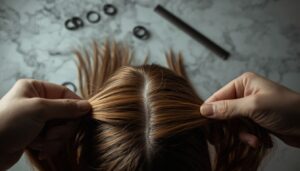
Extensions don’t damage hair on their own — the real culprits are the conditions around how they’re worn, installed, and handled.
Most problems trace back to a handful of specific habits and mistakes that put unnecessary stress on your natural hair and scalp. Here’s what actually causes the damage.
Excessive Scalp Tension
Your scalp wasn’t designed to stay under constant pull. When extensions create ongoing tension on roots, the muscles tighten, reducing blood flow to follicles and triggering trichodynia sensation—that burning, tender feeling that’s easy to dismiss at first.
Stress-induced tension compounds the problem, further limiting scalp mobility. Poor weight distribution makes every zone worse, exacerbating discomfort across the entire scalp.
Scalp health depends on keeping that pull minimal.
Heavy Extension Weight
Weight adds up faster than most people realize. When your total extension weight pushes past 200 grams, the attachment load spread across your roots creates a constant downward pull that follicles were not designed to handle.
Crown weight load intensifies this, especially on curly hair, where curl pattern strain already stresses the root. The added pressure overwhelms follicles, accelerating potential damage.
Lifestyle movement—like tugging during workouts or daily activity—worsens scalp pressure impact throughout the day. This constant tension compounds the strain from excess weight, creating a cycle of stress on the hair and scalp.
Poor Installation Technique
Even a perfect set of extensions can wreak havoc if the installation goes wrong. Uneven Track Placement, Inadequate Sectioning, and Improper Bond Application are the silent culprits behind most damage cases I see in the salon — usually from inexperienced stylists or DIY disasters.
Poor extension installation techniques create real consequences:
- Misaligned Attachment Rows force hair to pull sideways, creating uneven tension zones.
- Blending Mistakes leave rigid edges that snag and snap strands daily.
- Incorrect and poor fusion methods trap clumped hair under bonds, accelerating breakage.
Rough Daily Styling
Daily habits quietly do more damage than the extensions themselves. Heat Tool Friction from styling too close to bonds overheats nearby strands, while Aggressive Brushing starting at the roots strains every attachment point.
Tight hairstyles concentrate tension stress on the scalp repeatedly, and Product Buildup reduces slip, forcing harder detangling.
Sleep matting without protection turns overnight friction into morning breakage.
Improper Removal Methods
Rushing through extension removal is one of the fastest ways to undo healthy hair progress. Excessive pulling before bonds fully loosen yanks out active-growth strands, while solvent misuse spreads adhesive residue across surrounding hair and creates stubborn tangles. Heat overexposure softens bonds unevenly, increasing root tension during extraction.
Three removal mistakes that raise your risk of hair follicle damage:
- Pulling extensions before the solvent fully breaks down the bond
- Skipping proper tools, forcing metal picks near the scalp
- Rushing heat application, leaving adhesive residue that snags clean hair
Least Damaging Extension Types
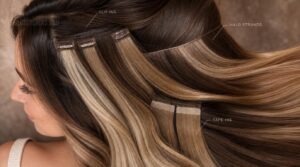
Not all extensions carry the same level of risk, and the type you choose makes a significant difference in how your natural hair holds up over time. Some methods are far gentler on your scalp and strands, especially when installed and maintained correctly.
Here’s a breakdown of the least damaging options worth knowing about.
Clip-in Hair Extensions
Clip-ins are the top choice for low-risk wear — and for good reason. Because there’s no adhesive or heat involved, hair breakage risk stays minimal when you follow proper clip placement and remove them nightly.
Weft construction also matters; classic fabric wefts and invisible polyurethane bases each affect comfort and blendability differently.
| What to Look For | Why It Matters |
|---|---|
| Metal clip types with silicone grip | Reduces slipping and scalp tension |
| Heat-friendly options in human hair | Allows safe styling flexibility |
Smart storage solutions and consistent extension maintenance keep clip-in extensions performing longer.
Halo Wire Extensions
If clip-ins feel like too much daily effort, halo wire extensions are your next-best option for minimizing hair breakage. A flexible, coated wire band—often transparent nylon—sits around your crown, hidden under your natural hair. This design requires no glue, no heat, and no bonds pulling at your follicles, making it a gentle alternative.
Here’s what makes halos stand out for hair health:
- Wire Material Safety — The coated wire rests gently against your scalp without direct attachment, eliminating follicle stress entirely.
- Adjustable Fit Mechanics — A built-in micro-bead stopper lets you fine-tune tension, ensuring balanced weight management that never feels too tight.
- Concealment Techniques — You section hair temple-to-temple, place the weft, then release your top layer to cover everything seamlessly.
- Length & Density Options — Weights range from about 80g to 220g across 14–24 inch lengths, allowing you to match volume to your natural hair without overloading it.
- Replacement Wire Options — When the wire wears out, you replace just that piece, not the entire set, protecting your investment and your hair health.
Hair extension risks here are minimal—provided you select a weight appropriate for your hair type and remove the halo before sleeping.
Tape-in Hair Extensions
Tape-in hair extensions represent a step up in commitment compared to halos but remain one of the gentler semi-permanent options when done right. The adhesive system relies on medical-grade strips that sandwich the natural hair between two weft panels, ensuring even weight distribution and reducing stress on individual strands. This method minimizes strain compared to point-focused alternatives.
Proper blend trimming and adherence to a consistent reapplication schedule every 6–8 weeks are critical for maintaining safety. These practices keep risks low, preserving both the extensions’ integrity and the health of the natural hair.
Micro-link Extensions
Micro-link extensions offer a glue- and heat-free alternative to traditional methods, relying on bead clamping with a silicone lining to secure natural hair and extensions without permanent fusion.
Key factors influencing outcomes include:
- Installation Time: 1.5–2 hours
- Strand Density: 100–200 micro links
- Reuse Limits: Dependent on bead integrity
- Breakage Risks: Increased by over-tightening beads
Micro loops and micro beads promote hair health by distributing weight evenly when properly sized, minimizing strain at attachment points.
Keratin Bond Extensions
Unlike micro-links, keratin bond extensions use heat-melted keratin adhesive — a protein-based compound designed to mirror your hair’s natural structure. Bond temperature settings matter here: too hot, and you risk hair shaft damage; correctly calibrated, the bond holds for months.
Professional vs. DIY installation is non-negotiable. A trained stylist controls keratin adhesive composition, placement distance, and extension longevity—factors that directly affect hair health.
Most Common Damage Warning Signs
Your hair is usually pretty good at signaling when something’s wrong — you just need to know what to look for. Extensions can stress your strands and scalp in ways that show up as clear, physical warning signs before real damage sets in.
Here are the most common ones worth paying attention to.
Understanding what causes skin sensitivity and barrier breakdown can help you spot which triggers are quietly working against you.
Scalp Pain or Tenderness
Scalp pain or tenderness after an extension installation isn’t something to push through. That soreness often signals nerve compression from bonds, chemical allergens in adhesives, or poor extension weight management.
Even helmet pressure or seasonal dryness can exacerbate existing irritation.
If you’re developing headaches or scalp irritation, a gentle scalp massage can offer short-term relief — but the extensions need re-evaluating.
Thinning Near Attachment Points
Thinning near attachment points doesn’t appear overnight — it builds gradually as tension, friction, and grow-out strain accumulate in the same small zones. Glue line friction, lifted weft stress, and attachment edge wear all concentrate mechanical force on the same root area repeatedly.
Watch for these five warning signs:
- Breakage around attachment points where short, snapped hairs appear
- Hair thinning along former bond lines as root growth strain increases
- Localized hair shedding at weft edges from repeated friction
- Patchy thinning signaling risk of hair loss from extensions
- Hair breakage worsening after each removal due to extraction breakage
Increased Daily Shedding
Most people shed 80–100 hairs daily without noticing — but extensions can push that number higher by adding tension and scalp stress to your follicles. When this stress triggers Telogen Effluvium, the Shedding Timeline typically shifts 2–3 months after installation, making the connection easier to miss.
| Scalp Health Indicators | Possible Cause | Action |
|---|---|---|
| Excessive shedding at roots | Stress Triggers or tension | Loosen or remove extensions |
| Diffuse thinning overall | Nutrient Deficiencies | Check iron, B12, and zinc |
| Breakage around attachment points | Mechanical friction | Adjust hair care while wearing extensions |
The risk of hair loss from extensions rises when underlying nutritional gaps or stress already compromise your follicles before installation.
Short Broken Hairs
Short broken hairs are one of the clearest signs your extensions are working against you. Unlike shedding, breakage removes length from the shaft—not the root—resulting in uneven strand length and frayed split ends clustered near attachment points.
Watch for these clues:
- Dry texture and rough feel along shorter strands
- Edge friction zones causing repeated breakage in the same spots
- Growth confusion when choppy pieces mimic new growth but reveal damaged tips
Itching or Irritation
Persistent itching isn’t just annoying — it’s your scalp sending a distress signal. It can stem from allergen contact with adhesive strips, chemical irritants in glue for extensions, or mechanical friction from poor application creating constant stress on scalp tissue. Inflammatory mediators then trigger that relentless itch cycle.
| Trigger | Warning Sign |
|---|---|
| Chemical Irritants | Burning or redness |
| Mechanical Friction | Localized tender spots |
| Allergen Contact | Delayed itchy rash |
Persistent symptoms warrant medical evaluation.
Do Extensions Cause Hair Loss?
Extensions can absolutely cause hair loss — but the details matter more than the yes or no answer. The type of loss, where it shows up, and whether it’s reversible all depend on how your extensions were installed and how long you’ve been wearing them.
Here’s what you actually need to know.
Traction Alopecia Explained
Traction alopecia is basically what happens when constant tension from extensions triggers a follicle inflammation cascade, slowly pushing hairs out of their growth cycle. This mechanical stress pathway is the real culprit behind hair loss and hair breakage near attachment points.
Early warning signs include scalp soreness and visible thinning. Caught early, the recovery timeline is promising — but continued stress on the scalp makes damage harder to reverse.
Hairline Thinning Risks
Your hairline is especially vulnerable — the hair there’s finer and the follicles sit closer to the surface. Tight attachment creates real tension stress on hair right at the front edge, where bond residue buildup and frictional styling compound the problem.
Here’s what raises your hairline trauma risk most:
- Heavy extension weight distribution pulling the frontal strands downward
- Bonds placed too close to the hairline, concentrating pressure
- Chemical irritation from adhesives disrupting scalp pH
- Repeated styling friction along the edges
- Skipping scalp irritation checks between appointments
Catching these early is your best hair thinning prevention strategy.
Crown Breakage Concerns
The crown follows a similar pattern to the hairline but compounds faster.
Crown Friction from attachment rows creates snag points that weaken strands with every brush stroke. Weight Accumulation and high Attachment Density concentrate tension on hair that’s often finer at the top.
Residue Buildup after removal worsens the problem.
Poor Detangling Technique turns minor breakage into visible thinning fast.
Temporary Versus Permanent Loss
Not all loss is created equal. Hair Cycle Disruption from tension can trigger Temporary Shedding Indicators — increased daily shed, short regrowth, and thinning at attachment zones — that often resolve once you remove the source.
- Scalp Stress Markers like pain that clears up quickly usually signal temporary hair loss
- Permanent Alopecia Signs include progressive thinning that continues months after removal
- Full regrowth after stopping suggests a healthy regrowth recovery timeline
Traction alopecia becomes permanent when follicle scarring sets in.
When to Remove Extensions
Knowing when to remove extensions is just as important as how you install them. If you’re feeling scalp irritation, noticing slippage, or your bonds have grown beyond an inch from the root, don’t wait.
Respecting Growth Cycle Alignment and Weight Threshold Limits — and scheduling a Professional Checkup — keeps Extension Free Recovery on track and promotes long-term hair health maintenance.
Who Should Avoid Hair Extensions
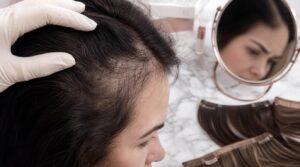
Extensions aren’t a one-size-fits-all solution, and for some people, the risks genuinely outweigh the benefits. Certain hair and scalp conditions make you more vulnerable to damage, even with careful installation.
If any of the following situations sound familiar, it’s worth pausing before booking that appointment.
Very Fine Hair
Fine hair, with a diameter of around 50 microns, has shaft fragility that limits its ability to handle the same load as thicker hair. Its silky cuticle provides beautiful lightweight volume but lacks the grip needed to anchor heavy bonds.
Extension weight should remain well under 200 grams, as poor hair tension distribution accelerates breakage fast.
Gentle detangling and heat sensitivity awareness matter here more than anywhere else.
Chemically Damaged Hair
Chemically damaged hair is already fighting an uphill battle — reduced elasticity, cuticle roughness, and increased porosity make every strand more vulnerable before extensions even enter the picture.
Adding bonded or taped extensions amplifies brittle breakage and accelerates color fading. Chemical bonding risks run high here because compromised strands simply can’t withstand additional tension.
Prioritizing damage prevention techniques before any extension bonding methods is non-negotiable.
Active Scalp Irritation
If your scalp is already itching, burning, or showing redness, extensions will only make things worse. Adhesives and bonding agents are common contact allergy triggers, and chemical damage to hair follicles compounds quickly when irritation is active.
Yeast overgrowth management, barrier repair strategies, and soothing anti-itch treatments need to come first. Contact allergy testing helps with chemical trigger identification before you consider any extension method.
Severe Shedding Issues
If you’re already losing more than 100 strands daily, extensions aren’t the answer right now. Added attachment overload and weight stress push follicles past their limits, turning cumulative shedding into something harder to reverse.
Traction alopecia can develop faster on compromised roots, and reinstallation trauma from repeated wear cycles worsens the causes of hair breakage.
Stabilize your shedding first, then revisit extensions.
Safe Installation and Removal Tips
How extensions are installed and removed matters just as much as which type you choose. A few straightforward practices can be the difference between healthy hair and avoidable damage.
Before your next appointment, here’s what to keep in mind.
Choose a Trained Stylist

Not every stylist who offers extensions has the training to do them safely. Before committing, verify their certification, review their portfolio for results on hair similar to yours, and ask detailed consultation questions about sanitation practices and ongoing education.
A skilled professional installation isn’t just about aesthetics — it’s the foundation of damage prevention and long-term hair health.
Avoid Tight Placement
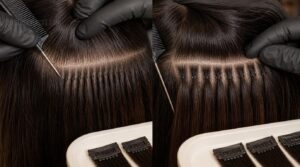
Tight placement is one of the most preventable causes of scalp irritation and breakage. If your extensions feel like they’re pinching, that concentrated pressure is already stressing your follicles.
Proper track spacing tips and comb tension balance maintain even weight distribution on the scalp, preventing localized strain. Think of it as wear schedule management — extensions that start tight only get worse throughout the day.
Keep Bonds Scalp-free
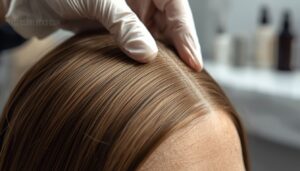
Beyond placement tension, where you put the bond matters just as much. Bonding adhesives and keratin bond extensions should sit at least 1 cm from your scalp — that gap is your scalp barrier layer, keeping chemicals off sensitive skin.
Good scalp ventilation reduces trapped moisture, so regular edge lift checks and moisture management prevent the irritation that can start silently but spread quickly.
Use Proper Solvents
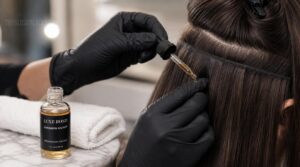
Solvent compatibility isn’t optional — the remover you use must match your specific bond type, whether it’s bonding adhesives, keratin bonding, or the cold fusion technique. Always patch test on a hidden section first. Use a focused applicator for controlled saturation, and work in a ventilated space.
Thorough rinsing follows every removal, because leftover residue coats strands and invites buildup. Professional application keeps this process predictable.
Never Pull Extensions Out

Pulling extensions out is one of the top hair breakage causes — even when the solvent soak is done correctly. If you feel resistance, stop. Work through Section Loosening instead, addressing each attachment individually using proper Release Technique.
Knot Prevention starts at the root area, so gentle Scalp Monitoring during removal keeps tension low and enhances real hair loss prevention.
Healthy Hair Care With Extensions

Keeping your natural hair healthy while wearing extensions comes down to a few consistent habits. The way you cleanse, condition, and handle your hair daily makes a bigger difference than most people realize.
Here are the key practices to build into your routine.
Gentle Sulfate-free Shampoo
The shampoo you choose matters more than most people realize. Sulfate-free gentle shampoos offer scalp barrier protection by avoiding harsh detergents like SLS, which strip natural oils. Their low foam cleansing action is gentler on attachment points, while ingredient transparency minimizes hidden irritants.
For sensitive scalp suitability, prioritize formulas with:
- No SLS or SLES
- Plant-derived cleansing agents
- Fragrance-free formula
- Dye-free ingredients
- Mild preservatives only
Making sulfate-free shampoos central to your extension maintenance routine genuinely safeguards hair health and reduces long-term hair-stripping damage.
Weekly Deep Conditioning
A deep conditioning treatment once a week is the most effective way to protect hair health and prevent damage while wearing extensions. This routine is non-negotiable for extension maintenance, as moisture retention improves significantly when applied evenly to every strand.
For low porosity hair, treatments should be performed every 10–14 days and paired with heat enhancement to ensure deeper absorption. Prioritize ingredients like shea butter or keratin to address specific hair needs effectively.
Consistent application technique—ensuring full strand coverage—is critical to maximizing the benefits of any conditioning regimen.
Detangle From Ends Upward
Always start detangling at the ends — that is where knots build up first. An ends-first approach using sectioned detangling prevents dragging tangles up the shaft and snapping strands.
Apply a leave-in for slip-enhanced combing, then work through each section with a wide-tooth tool using light pressure.
This simple habit is essential for breakage prevention and smart hair care after extensions.
Avoid Sleeping in Clip-ins
Clip-in extensions weren’t designed for overnight wear — and your hair pays the price when you skip removal. Overnight clip pressure stresses roots at each attachment point, while pillow friction affects cause nighttime tangling risks that make morning detangling brutal.
Sleep position shifts worsen things further, loosening clips and creating new pressure spots. This combination of factors amplifies damage and discomfort.
Removing clip-ins before bed is one of the simplest hair extension safety guidelines you can follow.
Schedule Regular Trims
Extensions put real stress on your ends — and split ends don’t wait. Regular trims are crucial to prevent damage from traveling up the hair shaft before it becomes noticeable.
Aim for a trim every 6–8 weeks as your core Maintenance Checkpoint, adjusting the frequency based on your hair texture and heat styling habits. Incorporate these essential practices into your routine:
- Appointment Frequency: Book every 6–8 weeks, adjusting for your texture and heat use
- Post-Extension Trim: Schedule one trim after any semi-permanent set is removed to reset your ends
- Growth Monitoring: Track new growth at checkups so your stylist can spot tension or thinning early
- Seasonal Adjustments: Dry winter months often call for tighter trim intervals to prevent brittleness
- Maintenance Checkpoints: Pair each trim with a conditioning treatment to support your full hair care routine
Top 3 Safer Extension Options
Not all extensions are created equal, and some are genuinely easier on your hair than others.
If you’re not sure where to start, having a shortlist of tried-and-true options takes the guesswork out of it. Here are three worth knowing about.
1. Goo Goo Clip In Human Hair Extensions
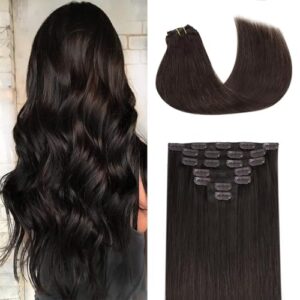
If you want a clip-in set that’s genuinely gentle on your hair, Goo Goo’s 7-piece set is worth a close look. At 120 g total, it stays well under the tension threshold that stresses follicles.
The 100% Remy human hair blends naturally, and the silicone-backed clips grip without digging into your scalp.
You can have it on in about 10 minutes — and off just as fast.
| Best For | Anyone with thin or thinning hair who wants added volume and length without the commitment — great for everyday wear or special occasions. |
|---|---|
| Hair Type | 100% Remy Human Hair |
| Clip Style | Silicone-backed PU clips |
| Heat Tolerance | Up to 250°F |
| Reusability | Washable and reusable |
| Install Method | Clip-in |
| Color Options | Wide shade range with balayage |
| Additional Features |
|
- 100% Remy human hair that blends naturally and holds up to heat styling, curling irons, and straighteners
- Lightweight at 120 g, so you can wear it all day without your scalp feeling the strain
- Clips in and out fast, making it easy to switch looks or take them out before bed
- Color can vary slightly between batches, so the shade you get might not match the photos perfectly
- The ends tend to run a little thinner, which may mean a trim to get them looking seamless
- Takes some practice to clip all seven pieces in correctly — beginners might need a few tries to nail the placement
2. Urbbeauty Kinky Curly Clip In Extensions
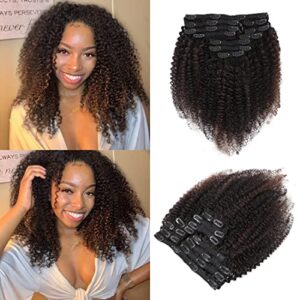
Urbeauty’s kinky curly clip-ins are designed specifically for 3C/4A curl patterns, offering extensions tailored to textured hair. The triple lace weft provides volume without weighing heavily on the scalp, while the silicone-lined steel clips ensure a secure grip without damaging roots.
One important consideration: some buyers report synthetic fibers mixed in, so it’s advisable to wash the extensions two or three times before first use to optimize texture and performance.
| Best For | People with 3C/4A curl patterns who want quick volume and length for special occasions or everyday wear without a salon visit. |
|---|---|
| Hair Type | Virgin Human Hair |
| Clip Style | 9-tooth silicone-lined steel clips |
| Heat Tolerance | Heat styling compatible |
| Reusability | Reusable clip-in design |
| Install Method | Clip-in |
| Color Options | Natural black, dyeable |
| Additional Features |
|
- Triple lace weft adds real volume without feeling heavy on your scalp
- Silicone-lined clips grip well and won’t tear up your natural hair
- Easy to pop in and out yourself — no stylist needed
- Some bundles have synthetic fibers mixed in, so wash them a few times before wearing
- One bundle won’t cut it for a full look — you’ll likely need two or three, which adds up fast
- Curl pattern can be inconsistent root to end, making it tricky to blend seamlessly with your own hair
3. WENNALIFE Remy Wire Hair Extensions
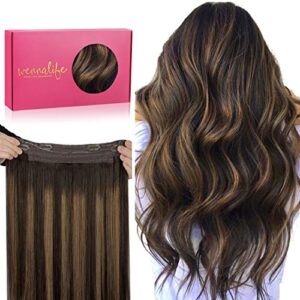
For straight or wavy hair, the WENNALIFE Remy Wire extension is worth a close look. Its halo-style design — no bonds, no adhesives, no heat required — ensures your natural hair remains completely untouched during wear.
The 100% virgin Remy hair blends seamlessly and can be curled or colored for versatile styling.
Weighing 95–110 grams for longer lengths, it’s lightweight enough for daily wear without stressing your follicles.
| Best For | Anyone with fine or regular hair who wants to add length and volume fast — no damage, no commitment, just clip and go. |
|---|---|
| Hair Type | 100% Virgin Remy Human Hair |
| Clip Style | Stainless-steel clips |
| Heat Tolerance | Up to 250°F |
| Reusability | Washable and reusable |
| Install Method | Halo wire + clips |
| Color Options | Balayage dark brown to chestnut |
| Additional Features |
|
- Real Remy human hair means it looks and feels natural, and you can curl, color, or trim it to match your style
- The halo wire design takes about a minute to put on and keeps everything secure without any glue or heat
- It’s reusable and washable, so you’re getting a lot of mileage out of one purchase
- Some buyers have noticed the weight and length don’t always match what’s advertised — a bit frustrating when you’re paying for a specific size
- The wire can feel heavy or uncomfortable if you haven’t positioned it just right, especially with longer lengths
- Styling above 250°F will damage the hair, so if you’re a fan of high-heat tools, you’ll need to dial things back
How to Prevent Extension Damage
Prevention isn’t complicated, but it does require a few consistent habits. Knowing where to focus your efforts makes a real difference in how your hair holds up over time.
Here’s what actually moves the needle.
Match Your Hair Type
Getting the right hair texture match starts with knowing your hair’s actual properties — not just how it looks in the mirror.
Curl pattern compatibility, density matching, porosity alignment, elasticity synchronization, and subtype precision all determine whether extensions blend or clash.
| Your Hair Type | What to Match |
|---|---|
| Fine hair thickness | Lightweight, low-density wefts |
| Coily (Type 4) texture | Subtype precision (4A, 4B, 4C) |
| High porosity hair | Extensions with similar absorption |
| Low elasticity hair | Flexible, softer hair texture compatibility |
| Mixed curl patterns | Section-by-section hair texture match |
Hair type isn’t one trait — it’s several working together.
Choose Lightweight Extensions
Weight matters more than most people realize. Once you’ve matched your hair type, the next step is keeping the load manageable — ideally under 200 grams total. Featherweight wefts, low-profile bonds, and airy attachment styles minimize scalp load considerably.
Thin hair density options with even weight distribution on the scalp prevent that familiar pulling sensation. Low-maintenance hair extensions that stay light throughout the day are always worth prioritizing over volume alone.
Take Extension-free Breaks
Even the lightest extensions need a real rest period between installs. Extension-free periods give your scalp genuine tension relief and let your hair growth cycle disruption reverse naturally.
Think of it as a conditioning reset — easier detangling, cleaner scalp access, and actual growth checkpoints where you can assess thinning before it worsens. Your follicles genuinely need that breathing room to prevent long-term hair damage.
Limit Heat Styling
Heat styling damage hits extensions harder because the hair isn’t receiving nutrients from your scalp. Always apply a heat protectant before touching any hot tool, start with Low Heat Settings, and use Ceramic Ionic Tools that distribute heat evenly.
Dry hair completely before styling, and Limit Passes over each section. These hair care tips for extensions genuinely prevent long-term damage.
Maintain Salon Checkups
Regular salon visits do more for your extensions than you might expect. A professional stylist catches small problems before they become real ones.
- Confirm your Extension Wear Timeline and next appointment
- Review your aftercare routine for any gaps
- Check tension, scalp comfort, and attachment placement
- Update your Progress Photo Log and Checkup Documentation
- Discuss Stylist Education tips and Reminder Scheduling for your next visit
Frequently Asked Questions (FAQs)
Can hair extensions cause folliculitis?
Yes, they can. Traction folliculitis, adhesive irritation, moisture trapping, and bacterial infection are all real risks.
Poor extension removal techniques and hygiene directly threaten hair follicle health, accelerating hair loss faster than you’d expect.
Are hair extensions bad for your hair?
Extensions don’t automatically damage your hair — but the wrong method, weight, or installation absolutely can. Tension, chemical exposure risks, and poor removal are where breakage and hair loss actually begin.
Do hair extensions damage follicles?
Tight extensions don’t just pull at strands — they stress the follicle itself.
Sustained root stress and scalp microtrauma can trigger follicle inflammation, disrupting your natural hair cycle.
This quiet process accelerates hair loss over time.
Should you wear your hair extensions for too long?
Wearing extensions past their recommended timeframe invites Extension Wear Fatigue, Extended Bond Saturation, and Product Buildup Increase — all compounding Follicle Recovery Delay and Scalp Oxygen Deprivation.
Consistent hair extension maintenance and respecting extension longevity prevents avoidable damage.
Do keratin hair extensions damage your hair?
Keratin hair extensions can damage your hair when bond temperature control is mismanaged or adhesive residue buildup is left behind.
Poor heat application causes heat-induced dryness, breakage, and uneven tension distribution zones along the strand.
Do hair extensions damage your natural locks?
They can — but they don’t have to.
Whether extensions damage your natural locks depends mostly on tension, extension weight ratio, installation quality, and how well you support follicle-recovery time between wears.
Are hair extensions a fear?
Hair extensions don’t have to be a fear — they’re a confidence boost when approached with the right knowledge. Understanding extension weight limits and proper care gives you real control over your hair health.
Can hair extensions ruin your hair?
Yes, they can — but it’s not guaranteed. Improper tension, excess extension weight limit, and chemical residues from adhesives are the real culprits behind hair loss, not extensions themselves.
What is the least damaging hair extension?
Clip-in hair extensions are the least damaging option. With clip placement precision and no adhesive or heat, they let your scalp rest daily — the ideal low-commitment, low-risk choice.
Is there a downside to hair extensions?
Extensions come with real downsides, including breakage, hair loss, allergic reactions, and chemical toxicity from adhesives. These issues are compounded by the significant time investment required for upkeep.
Long-term costs and environmental waste also accumulate over time. Staying consistent with your extension maintenance schedule is crucial, as it helps prevent hair damage and mitigates further risks.
Conclusion
Extensions are a tool, not a gamble—and like any tool, the outcome depends entirely on how you use them.
Are hair extensions bad for hair? Only when the wrong hands or wrong habits get involved.
Protect your scalp, choose lightweight options, maintain a consistent care routine, and work with a stylist who actually listens. Your hair can handle extensions beautifully when those conditions are met—and that’s not luck, that’s an informed choice.