This site is supported by our readers. We may earn a commission, at no cost to you, if you purchase through links.
Your hair refuses to absorb moisture, products sit on top of your strands like an unwelcome guest, and you’re wondering if protein treatments might be the answer—or the problem. Low porosity hair operates under a different set of rules than other hair types, and protein treatments can either strengthen your strands or leave them feeling like straw.
The tight cuticle layers that protect low porosity hair also block most proteins from penetrating the hair shaft, causing them to build up on the surface instead. This creates a confusing situation where the treatment meant to help actually triggers stiffness, breakage, and that telltale chalky residue.
Understanding how protein interacts with your specific hair structure makes the difference between healthy, manageable strands and a frustrating cycle of damage.
Table Of Contents
- Key Takeaways
- What is Low Porosity Hair?
- How Protein Affects Low Porosity Hair
- Do Low Porosity Hair Types Need Protein?
- Signs You’ve Used Too Much Protein
- Balancing Protein and Moisture
- Choosing Safe Protein Treatments
- Top 5 Protein Treatments for Low Porosity Hair
- Best Practices for Low Porosity Hair Care
- Frequently Asked Questions (FAQs)
- Conclusion
Key Takeaways
- Protein treatments can cause buildup and stiffness on low porosity hair because the tightly sealed cuticles block protein molecules from penetrating, forcing them to accumulate on the surface instead of strengthening the internal structure.
- Low porosity hair doesn’t lack protein naturally—it already contains plenty of keratin and amino acids—so strategic protein treatments should only be used every four to six weeks when you notice heat damage or decreased elasticity.
- The key to healthy low porosity hair is maintaining protein-moisture balance by prioritizing lightweight, water-based moisturizers and using hydrolyzed proteins (under 10,000 Da molecular weight) that can actually penetrate tight cuticles without triggering overload.
- You can reverse protein overload by clarifying every four to six weeks to strip buildup, then focusing on deep conditioning with humectant-rich products to restore moisture balance and prevent the brittleness, breakage, and dullness that excess protein causes.
What is Low Porosity Hair?
Low porosity hair isn’t damaged or unhealthy—it’s actually the opposite. The tightly bound cuticle layers that define this hair type create a protective barrier that resists moisture absorption, which explains why your hair might take forever to dry or feel like products just sit on top of it.
Understanding how your hair’s structure works is the first step toward figuring out what it really needs.
Hair Structure and Cuticle Behavior
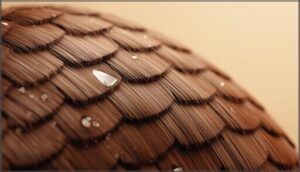
Your hair’s cuticle layer acts like overlapping roof shingles—when they lie flat and tight, moisture absorption becomes a real challenge. That’s low porosity hair in action.
- Sealed hair cuticles reduce porosity by 40–60% compared to damaged strands
- Tight cuticle layers limit intercellular gaps, blocking hydration uptake
- Protein diffusion slows markedly through densely packed hair structure
- Surface roughness increases by 15–25%, affecting overall smoothness
- Water and products struggle penetrating this protective barrier
Understanding hair structure is essential, similar to studying AP Biology concepts to grasp complex subjects.
Common Characteristics and Challenges
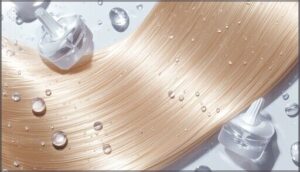
If your strands resist water like a raincoat, you’re dealing with classic low porosity hair challenges. Products sit on the surface rather than absorbing, making moisture balance tricky.
Your hair texture may feel healthy yet dry, and hair cuticles stay stubbornly sealed. Without proper low porosity hair care, protein sensitivity increases—leading straight to protein overload.
These porosity levels demand a different approach altogether.
How to Identify Low Porosity Hair

Want to confirm your porosity? Try these simple hair porosity tests at home:
- Float test: Drop a clean strand in water—low porosity hair floats for 30–60 seconds longer than high porosity strands
- Slide test: Run fingers up a strand; smooth texture indicates tightly sealed hair cuticles
- Product absorption: Notice how moisture sits on your hair rather than sinking in
- Drying time: Your strands take forever to air-dry completely
How Protein Affects Low Porosity Hair

Protein treatments work differently on low porosity hair than they do on high porosity hair, and understanding this difference can save you from some frustrating hair days.
When your cuticles are already tightly sealed, adding protein creates a unique set of reactions that you need to watch for.
Let’s look at how protein interacts with your hair structure, what happens when things go wrong, and how to spot the warning signs before damage sets in.
Protein Interaction With Tight Cuticles
Think of your low porosity hair’s cuticles as tightly locked doors—protein molecules struggle to get through. The tight hair cuticle dramatically reduces cuticle penetration, limiting protein diffusion into the hair cortex.
Low porosity hair has tightly locked cuticles that block protein molecules from penetrating the hair cortex
While smaller molecular weight hydrolyzed proteins can reach some subcortical areas, most just form surface films on top. This coating temporarily smooths your strands but doesn’t reinforce the internal structure, making protein overload a real risk.
Risks of Protein Buildup
Buildup happens when protein coats stack on tight cuticles instead of penetrating them. This disrupts moisture balance and can trigger hair damage in ways you won’t see coming:
- Up to 60% of users report visible chalky residue after repeated treatments
- Proteins larger than 3,000 Daltons rarely penetrate, creating surface films
- Non-hydrolyzed proteins increase tangling and weigh-down
- Moisture absorption drops within 2–6 weeks of continuous use
- Clarifying treatments restore manageability in 70–85% of cases
Understanding the theme development process is essential for effective communication about hair care.
Signs of Protein Overload
Protein overload reveals itself through unmistakable changes. Your hair feels stiff, almost brittle—58% of low porosity users notice this within a week. Breakage increases, elasticity vanishes, and shine dulls by 22–28%. You might spot chalky residue or white specks that won’t wash out.
These signs point to cuticle damage and moisture imbalance that standard conditioning can’t fix without intervention.
Do Low Porosity Hair Types Need Protein?

Here’s the thing: low porosity hair isn’t damaged, so it already contains plenty of protein in its structure. That doesn’t mean you should skip protein treatments entirely, though.
Let’s clear up what your hair actually needs and separate the facts from the common misconceptions.
Natural Protein Levels in Low Porosity Hair
Your low porosity hair already holds plenty of natural keratin and amino acids. The protein turnover in your hair cuticle stays steady over weeks without treatment.
The tightly sealed cuticle doesn’t mean you’re protein-deficient; it just limits how well your strands absorb external proteins.
That’s why understanding your baseline protein balance helps you avoid unnecessary protein overload risks.
When Protein Treatments Are Beneficial
Even healthy strands benefit from strategic protein treatments when you notice increased elasticity or minor damage from heat styling. Gentle products with hydrolyzed proteins can boost your hair’s tensile strength by around 11% after three weekly sessions.
You’ll see the best protein treatment benefits when you’re balancing moisture alongside strengthening—this approach helps low porosity hair maintain resilience without risking protein overload.
Myths About Protein and Low Porosity Hair
It’s easy to fall for Protein Misconceptions—thinking Low Porosity Hair never needs protein or that Protein Treatments always cause Protein Overload. In truth, your hair’s structure depends on protein for strength.
Gentle Products with hydrolyzed proteins support Hair Nutrition and resilience. Understanding Hair Porosity helps you utilize Protein Benefits without risking stiffness, keeping Protein and Hair Health in balance.
Signs You’ve Used Too Much Protein

Protein overload happens more easily than you might think, especially when you’re still figuring out what your low porosity hair needs.
Your hair will send clear signals when it’s had too much protein, and recognizing these signs early can save you from serious damage.
Here’s what to watch for when your hair starts protesting.
Dryness, Brittleness, and Breakage
When your strands feel like straw and snap at the slightest touch, you’re looking at classic protein overload. Low porosity hair experiences moisture loss as rigid protein films block hydration pathways, with breakage prevention becoming nearly impossible.
This cuticle damage manifests as brittleness—your hair fractures easily during styling. Protein treatments, meant to strengthen, instead compromise hair damage repair when misapplied to low porosity hair.
Increased Tangles and Lack of Shine
Your detangling sessions take forever, and your hair feels rough no matter what you try—that’s protein overload disrupting tangle prevention and shine restoration. Excess protein increases hair friction by up to 28%, making strands catch and snag.
For low porosity hair already struggling with moisture balance, protein treatments create buildup that prevents cuticle smoothing. Without proper light reflection, your hair looks dull, tangled, and damaged—classic protein overload territory.
Managing and Reversing Protein Overload
Reversing protein overload starts with a protein detox. Clarifying shampoos strip buildup within one to three washes, restoring moisture balance by up to 80%.
Focus on cuticle care through deep conditioning with humectant-rich products, prioritizing gentle repair over hair strengthening.
Monitor your low porosity hair weekly during hair rejuvenation, adjusting protein treatments only after achieving protein and moisture balance.
Balancing Protein and Moisture

Finding the sweet spot between protein and moisture is what keeps low porosity hair healthy and flexible. Too much of either can throw your hair off balance, leading to breakage or limpness.
Here’s how to maintain that equilibrium and keep your strands thriving.
Why Balance is Essential
Harmony between protein and moisture determines whether your hair thrives or struggles. Low porosity hair becomes brittle when protein dominates, yet lacks strength without it. Here’s why protein moisture balance matters:
- Controlled studies show 18% less breakage when protein pairs with humectant-based moisturizers
- Your cuticle health depends on avoiding the dryness that protein overload creates
- Balanced hair care prevents the stiffness that derails low porosity management
This equilibrium keeps your hair resilient yet flexible.
Choosing Moisture-Based Treatments
You need lightweight, water-based formulas that relax tight cuticles without buildup. Look for humectant formulas with glycerin at 5–8% concentration—these boost strand hydration by 12–18% in low porosity hair.
Silicone-free conditioners deliver 22–35% higher surface lubrication during your 15-minute deep conditioning sessions.
Aloe vera gel at 20–25% improves moisture retention by 8–12%, supporting long-term hair hydration and cuticle relaxation through smart hydration strategies.
Monitoring Hair Response
Regularly tracking how your low porosity hair reacts to protein treatments helps you fine-tune your routine. About 41% of people notice measurable hair elasticity shifts within just two weeks of starting protein therapy, while 68% experience slower moisture uptake initially—your hair’s way of telling you it needs adjustment.
Watch for these key indicators:
- Improved strand flexibility and protein sensitivity patterns
- Changes in detangling ease after four weeks
- Surface texture shifts within 3–5 applications
- Hair breakage reduction or increase
- Overall hair resilience and shine levels
Treatment frequency should match your hair’s unique feedback, preventing protein overload while maintaining ideal hair porosity balance.
Choosing Safe Protein Treatments

Not all protein treatments are created equal, and choosing the right one can make or break your low porosity hair care routine. The key lies in understanding which protein types work with your hair’s structure rather than against it.
Let’s look at what separates safe, effective protein treatments from those that’ll leave you dealing with buildup and brittleness.
Hydrolyzed Proteins Vs. Large Proteins
Think of protein size as a key fitting through your hair’s lock. Hydrolyzed proteins, with molecular weights between 3,000 and 10,000 Da, slip through tight cuticles more easily than large proteins, which often sit on the surface of low porosity hair.
This hair penetration difference matters—hydrolyzed keratin treatment options provide protein binding benefits with less buildup risk, helping you maintain moisture balance.
Frequency and Application Tips
Timing your protein treatments every four to six weeks prevents buildup while keeping low porosity hair strong. Gentle application with heat—like a hooded dryer for 15 minutes—helps hydrolyzed proteins penetrate tight cuticles without causing stiffness.
- Section your hair into small parts to guarantee even product distribution
- Dilute strong protein treatments with conditioner to reduce harshness
- Keep contact time under 20 minutes to avoid protein overload symptoms
Top 5 Protein Treatments for Low Porosity Hair
Not all protein treatments are created equal, especially when you’re dealing with low porosity hair. You need formulations with hydrolyzed proteins that can actually penetrate those tightly closed cuticles without leaving behind heavy buildup.
Here are five protein treatments that strike the right balance between strengthening and maintaining moisture for low porosity hair.
1. Keratin Hair Repair Conditioner Treatment
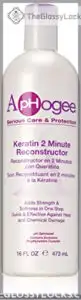
This keratin-based protein treatment for hair works by filling microscopic gaps in your cuticle, smoothing strands for up to six weeks with proper care.
For low porosity hair, you’ll want to use it sparingly—the tightly bound cuticles that define low porosity can resist absorption, leading to surface buildup rather than penetration.
When you do apply it, pair it with a clarifying session beforehand and a moisture-rich conditioner afterward to maintain protein balance and prevent the stiffness that comes from keratin overload.
Best For: People with damaged or chemically treated hair who need occasional strengthening, especially if you have medium to high porosity hair that absorbs protein treatments well.
- Fills gaps in damaged cuticles to reduce breakage and split ends for up to six weeks
- Sulfate-free and paraben-free formula with added green tea antioxidants for protection
- Works on all hair types including keratin-treated hair, with noticeable improvements in strength and manageability
- Can cause stiffness and buildup on low porosity hair if used too frequently without clarifying first
- Requires a moisturizing conditioner afterward to prevent dryness—it’s not a standalone treatment
- May lead to protein overload and breakage if you skip the moisture balance step
2. Mielle Babassu Mint Deep Conditioner Protein
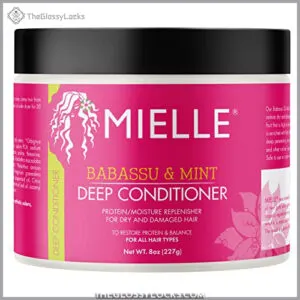
Mielle’s formula blends babassu oil with mint and hydrolyzed proteins to deliver deep conditioning benefits without overwhelming low porosity hair. You’ll find this gentle product strikes a better moisture balance than heavier protein treatments—the lightweight proteins penetrate more effectively through tight cuticles, while the natural ingredients restore elasticity without triggering buildup.
For best results, apply it once every two weeks as part of your hair care routine, following with a clarifying rinse if you notice any residue, to maintain healthy hair restoration.
Best For: People with low porosity hair who want a gentle protein treatment that restores strength and moisture without causing buildup or stiffness.
- Uses lightweight hydrolyzed proteins that penetrate tight cuticles more effectively than heavy treatments, improving manageability by 15–22% when used intermittently
- Natural babassu oil and mint formula is free from harsh chemicals like sulfates and parabens, reducing the risk of residue formation on low porosity strands
- Works as both a deep conditioner and hair mask, giving you flexibility to adjust treatment time based on your hair’s needs
- The 8 oz size may be too small for people with long or thick hair, requiring frequent repurchases at $11.19 per bottle
- Mint can cause sensitivity or scalp irritation for some users, especially those with reactive skin
- May not provide enough help for severe hair damage or scalp issues like significant hair fall
3. Smooth Silk Hair Repair Mask
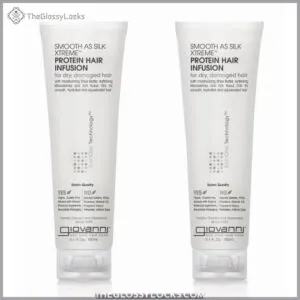
Ever wondered if a silk-infused hair mask could be the missing link in your low porosity hair routine? The Smooth Silk Hair Repair Mask uses hydrolyzed silk protein—chosen for its gentle formulas and small molecular size—to weave targeted repair techniques into each strand.
You’ll notice hair mask benefits like improved shine, less breakage, and enhanced moisture retention. For low porosity hair, this protein treatment acts as a subtle moisturizer, supporting hair repair without risking stiffness or buildup common with heavier products.
Best For: People with low porosity, damaged, or overprocessed hair who need gentle protein repair without heavy buildup or stiffness.
- Uses hydrolyzed silk protein with a small molecular weight that works well with tight cuticles, offering repair benefits without the harshness of heavier proteins.
- Helps boost shine, reduce breakage, and improve moisture retention—especially helpful for hair that struggles to absorb hydration.
- Vegan, cruelty-free, and color-safe, so it fits into clean beauty routines without compromising ethics or hair color.
- Some users find the scent off-putting or too strong for their preference.
- Results can be hit-or-miss depending on your specific hair type, and there are occasional complaints about product authenticity from certain sellers.
- The price point might feel steep, especially if you’re experimenting with protein treatments for the first time.
4. Aubrey Organic Hair Conditioner Cream
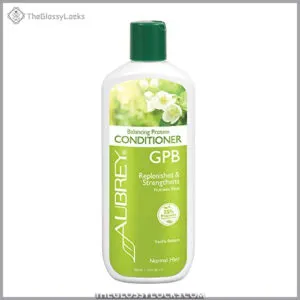
Looking for a protein treatment that won’t overwhelm your low porosity strands? Aubrey Organic Hair Conditioner Cream brings organic ingredients and glycogen protein into a gentle conditioning formula designed for moisture retention.
You’ll appreciate the protein balance—hydrolyzed proteins support hair care without the heaviness that often triggers buildup.
The cream benefits include improved softness and hydration, making it a smart choice for low porosity hair when you need targeted protein treatments. Use it weekly, pair it with clarifying sessions, and your hair moisturizing routine stays effective without the stiffness.
Best For: People with low porosity, damaged, or fine hair who need gentle protein support without risking buildup.
- Vegan, organic formula with hydrolyzed proteins for balanced conditioning
- Softens and hydrates hair and scalp without heavy residue
- Works well as both a regular and deep conditioner, especially when paired with clarifying
- Texture may feel thin or runny to some users
- Strong scent might not suit everyone’s preferences
- May not fully detangle or thicken hair for all hair types
5. Paul Mitchell Hair Strengthener Conditioner
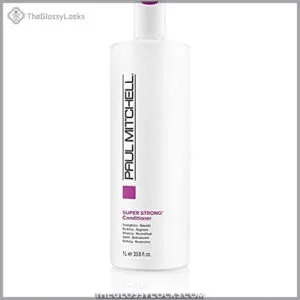
If you’re weighing options for Protein Balance and Hair Strengthening, Paul Mitchell Hair Strengthener Conditioner stands out for low porosity hair. Its formula—packed with canola, soybean, and cornstarch—focuses on Moisture Retention and shine.
Compared to heavier Protein Treatments, it’s color safe, paraben free, and offers UV protection, making it suitable for daily conditioning. Some users report it can leave hair oily or dry if overused, so monitor your hair’s response closely.
This Conditioner Review highlights its strengths for gentle, balanced care.
Best For: People with damaged, color-treated, or low porosity hair who want gentle strengthening without risking heavy protein buildup.
- Adds shine and moisture with plant-based ingredients
- Safe for color-treated hair and free of parabens
- Offers UV protection to help prevent sun damage
- May leave hair oily or dry if overused
- Some users find it expensive for daily use
- Might not be moisturizing enough for very dry or coarse hair
Best Practices for Low Porosity Hair Care
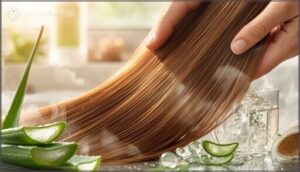
Caring for low porosity hair takes a thoughtful approach and a few smart habits. If you’re looking for ways to keep your hair healthy and manageable, there are some proven strategies to explore.
Here’s what works best for low porosity hair.
Deep Conditioning and Moisturizing
Consistency matters regarding moisture balance and hair hydration for low porosity hair. Deep conditioning isn’t just a luxury—it’s a necessity for proper hair nourishment.
You’ll want to use lightweight, water-based formulas and apply heat or steam to help conditioning agents penetrate. These hair moisturizing techniques guarantee protein treatments don’t tip the scales, keeping your strands resilient and soft.
Clarifying to Prevent Buildup
After nourishing your hair with moisture, don’t overlook Buildup Prevention. Clarifying Shampoos help control residue from Protein Treatments and heavy conditioners, especially for Low Porosity Hair.
Regular clarifying—every four to six weeks—removes stubborn protein and oil, improving Hair Cuticle absorption. This step ensures your conditioning efforts aren’t blocked, keeping your hair’s moisture balance and softness right where you want them.
Protective Styling and Gentle Handling
Often, protecting your low porosity hair means embracing gentle routines that minimize stress and boost health. Low Manipulation styles like Protective Braids and updos help reduce breakage. Pair these with Gentle Combing and Hair Sealing after every wash. Moisture Locking with light oils and using Gentle Cleansers aids Hair Loss Prevention and keeps your strands resilient after Protein Treatments.
- Protective Braids for reduced manipulation
- Gentle Combing to avoid cuticle abrasion
- Moisture Locking with light oils
- Hair Sealing after conditioning
- Gentle Cleansers to maintain scalp health
Frequently Asked Questions (FAQs)
Can protein treatments cause permanent hair damage?
Protein treatments don’t permanently damage hair. Protein overload causes temporary stiffness and breakage, but restoring moisture balance and reducing treatment frequency allows cuticle repair. Your strands can recover fully with proper care adjustments.
How often should low porosity hair be clarified?
Your strands need clarifying every 4–6 weeks when you use styling products regularly, but adjust based on buildup signs.
Hard water exposure calls for more frequent sessions—about every 3–6 weeks—to maintain moisture balance.
What ingredients should be avoided in protein treatments?
Steer clear of large, unhydrolyzed proteins like wheat or soy protein, which can’t penetrate tight cuticles.
Harsh chemicals, sulfate derivatives, and synthetic additives may worsen protein overload, causing dryness instead of strengthening your strands.
Do DIY protein treatments work for low porosity?
Yes, but with caution. DIY protein treatments using hydrolyzed proteins can improve moisture retention in low porosity hair when applied sparingly—every one to two weeks—paired with heat and proper clarifying to prevent buildup.
Can you reverse low porosity hair naturally?
You can’t fully reverse low porosity hair naturally since cuticle tightness is genetic, but warm-heat deep conditioning, clarifying treatments, and moisture balance can improve porosity repair and manageability over time.
Conclusion
The proof is in the pudding—your hair’s response tells you everything you need to know about whether protein treatments are bad for low porosity hair. Watch for stiffness, breakage, or that characteristic dryness signaling overload.
When you prioritize moisture-rich treatments, use hydrolyzed proteins sparingly, and clarify regularly, you’ll maintain the delicate balance your tightly-sealed cuticles require. Your strands don’t need more armor; they need smart care that respects their natural structure and protective capabilities.
- https://www.ncbi.nlm.nih.gov/books/NBK481583/
- https://haireveryday.com/is-shea-moisture-coconut-and-hibiscus-good-for-low-porosity-hair/
- https://science-yhairblog.blogspot.com/2013/09/more-about-protein.html
- https://www.google.com/books/edition/Principles_of_Polymer_Science_and_Techno/56R-6Wyyo6IC?hl=en&gbpv=0
- https://www.youtube.com/watch?v=nEJygXgtG-0