
This site is supported by our readers. We may earn a commission, at no cost to you, if you purchase through links.

Your hair isn’t just rebelling—it’s speaking in a language that’s been decoded for over 5,000 years. Ancient Ayurvedic texts mapped the precise relationship between your body’s three doshas and everything from strand thickness to shedding patterns, long before modern science confirmed that inflammation, stress hormones, and circulation directly govern follicle behavior.
When Vata pushes too hard, you get brittle breaks; when Pitta runs hot, you lose density; when Kapha stagnates, roots suffocate under excess oil.
Restoring that balance isn’t guesswork—it’s a systematic approach that combines herbal oils proven to boost follicular density by 20%, scalp techniques that activate marma points, and dietary shifts that reignite your digestive fire, the engine behind nutrient delivery to every strand.
Table Of Contents
Key Takeaways
- Your hair loss isn’t random—it’s your body signaling that Vata, Pitta, or Kapha doshas are out of balance, with Pitta imbalance driving 45-55% of clinical hair loss cases through scalp inflammation and disrupted follicle cycles.
- Clinical evidence backs ancient wisdom: bhringraj oil increases follicular density by 20% in four months, while daily 4-minute scalp massages can boost hair thickness by 8% over 24 weeks through improved circulation and follicle stimulation.
- Your digestive fire (Agni) is the hidden engine behind hair growth—weak digestion blocks nutrient absorption even when you’re eating well, starving your follicles and triggering shedding that topical treatments alone can’t fix.
- Combining Ayurvedic remedies with modern treatments delivers superior results, with studies showing up to 22% greater density gains when traditional oils like bhringraj are layered with conventional therapies, proving you don’t have to choose between science and ancient practice.
How Dosha Imbalances Affect Hair Growth
Your hair is talking—and its language is rooted in your dosha. When Vata, Pitta, or Kapha fall out of sync, your strands respond with thinning, breakage, or excess oil that conventional products can’t fix.
Here’s how to read the signs, identify your unique hair dosha, and understand what imbalance is actually doing to your hair’s growth cycle.
Identifying Your Hair Dosha (Vata, Pitta, Kapha)
Your hair already knows its dosha—you just need to recognize the signs. Vata hair feels dry and frizzy, breaks easily, and grows in unpredictable patterns. Pitta scalp tends toward oiliness at the roots with fine, soft strands that thin prematurely. Kapha balance shows up as thick, lustrous locks that can turn heavy and greasy.
Understanding your unique Ayurvedic typing unlocks targeted Ayurvedic hair care that actually works. To achieve peak hair growth, it’s crucial to grasp your hair type analysis and follow a tailored care routine.
Signs of Dosha Imbalance in Hair
You’ll notice dosha imbalance through specific scalp conditions and hair fall patterns. When Vata runs high, 60% of cases show dryness and brittle ends—your hair snaps easily. Excess Pitta triggers inflammation in 68% of observations, causing thinning and premature graying. Kapha imbalance brings oily scalp and follicle blockage in 67% of patients.
These dosha indicators signal it’s time to restore balance for ideal scalp health and Ayurvedic hair care. Understanding the role of evidence based approaches can help address hair loss effectively.
Impact of Dosha Imbalance on Hair Health
When your doshas fall out of sync, hair follicle health takes a direct hit. Aggravated Vata and Pitta disrupt nutrient delivery, triggering up to 32% more shedding. The scalp ecosystem suffers as growth phases shorten—anagen duration drops 21% with chronic dosha imbalance.
When doshas fall out of balance, hair follicles suffer—disrupted nutrient flow can trigger 32% more shedding and shorten growth phases by 21%
Here’s what deteriorates:
- Hair regeneration slows dramatically
- Follicles enter prolonged resting phases
- Structural integrity weakens at the root
- Premature graying accelerates
Dosha balancing restores this delicate architecture.
Common Causes of Hair Loss in Ayurveda

In Ayurveda, hair loss isn’t just about what’s happening on your scalp—it’s a signal that something deeper is out of balance. Your digestive fire, stress levels, and even the seasons all play a role in whether your hair thrives or thins.
Let’s look at the three main culprits that disrupt your dosha balance and trigger hair loss.
Poor Nutrition and Digestive Fire
Think of your gut as the engine that powers hair growth—when it sputters, your strands suffer. Weak digestive fire (Agni) blocks nutrient absorption, starving follicles even when you’re eating well. Toxic accumulation and dosha balance disruptions choke circulation to your scalp.
Here’s what your digestion reveals about hair nutrition and wellness:
| Digestive Issue | Impact on Hair |
|---|---|
| Weak Agni | Poor nutrient uptake, thin strands |
| Ama buildup | Follicle obstruction, shedding |
| Irregular eating | Vata aggravation, brittle ends |
| Processed foods | Pitta heat, premature graying |
| Heavy, oily diet | Kapha congestion, scalp buildup |
Ayurvedic diet and lifestyle changes targeting digestive health restore gut balance and reignite hair growth from within.
Stress, Anxiety, and Lifestyle Factors
Constantly racing against deadlines? Your nervous system pays the price, and your hair reveals it first. Chronic stress and anxiety spike Vata and Pitta, weakening roots and accelerating shedding.
Late-night scrolling, irregular sleep, and skipped meals disrupt dosha balance, while stress and hair loss form a vicious cycle.
Mental health matters—mindful living, stress management, and lifestyle changes rebuild scalp health and hair growth from the ground up.
Environmental and Seasonal Influences
During monsoon season, you’re fighting Kapha-driven oiliness and fungal buildup. Come autumn’s dryness, Vata spikes and seasonal hair shedding peaks—sometimes dropping 100+ strands daily.
Environmental toxins, chlorinated water, and relentless UV exposure aggravate all three doshas, weakening circulation and scalp health.
Climate impact is real: humidity control and UV protection aren’t optional when dosha balance and hair growth hang in the balance.
Ayurvedic Remedies for Hair Growth
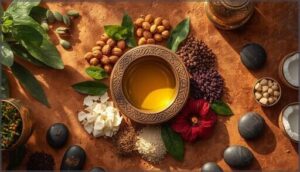
Now that you understand how imbalanced doshas disrupt your hair’s natural vitality, you can reclaim control with time-tested remedies rooted in Ayurvedic wisdom.
These treatments work by nourishing your scalp, strengthening follicles, and restoring balance from within.
Let’s explore the most effective herbal oils, therapeutic masks, massage techniques, and detox therapies that can transform your hair health.
Herbal Oils (Bhringraj, Amla, Brahmi, Hibiscus)
You’ve probably heard about bhringraj benefits and amla oil—but do they actually work? Clinical trials show bhringraj increases follicular density by approximately 20% within four months, while amla-based treatments reduced hair fall scores from 6.2 to 3.4 in controlled studies.
Brahmi extract improves scalp circulation, and hibiscus treatment balances pH while combating dandruff.
These ayurvedic blends aren’t folklore—they’re proven herbal remedies for hair when used consistently through ayurvedic hair oiling.
Ayurvedic Hair Masks and Packs
Want immediate results? Ayurvedic hair masks deliver faster than oils alone. Clinical data shows these herbal pack recipes—using amla, shikakai, and fenugreek—increased hair density by 7.3 hairs/cm² in 75 days.
Ayurvedic mask benefits include reduced shedding (down by 7 strands daily) and improved growth rates (21.76 μm/d).
Apply your DIY hair treatments weekly for 20–30 minutes—these natural hair remedies work.
Scalp Massage Techniques (Shiro Abhyanga)
Scalp massage—Shiro Abhyanga—unlocks your hair follicle potential through mechanical stress and enhanced circulation. Daily 4-minute sessions with Ayurvedic oils like bhringraj or sesame oil increased hair thickness by 8% over 24 weeks.
Use medium pressure in circular motions across your entire scalp, targeting frontal, temporal, and occipital zones. This scalp stimulation delivers massage benefits that support dosha balance and hair health while promoting ideal scalp health.
Panchakarma and Detox Therapies
Think of Panchakarma as your body’s master reset button—biopurification techniques that clear systemic toxins before hair therapies can truly work. These detox methods target heavy metal accumulation and metabolic imbalances that silently sabotage follicles.
Three core Panchakarma therapies support dosha balance and hair health:
- Virechana (therapeutic purgation) reduces inflammation and improves nutrient delivery
- Nasya (nasal oil therapy) directly tackles scalp disorders
- Basti (medicated enemas) eliminates deep-seated toxins
Ayurvedic cleansing readies your system for prime hair regrowth.
Step-by-Step Ayurvedic Hair Care Routine
Building an Ayurvedic hair care routine doesn’t require complicated steps or expensive treatments. Consistency matters more than intensity when it comes to restoring your hair’s natural strength and vitality.
Here’s how to structure your daily and weekly practices to support healthy hair growth from the inside out.
Daily and Weekly Hair Oiling

Traditionally, Ayurvedic hair care practitioners recommend oiling 2–3 times weekly for dry, Vata-dominant hair, while oily scalps need oil application only 1–2 times monthly.
Daily oiling can reduce hair loss by up to 76%, though weekly scalp massage with warm Bhringraj or Amla blends activates marma points effectively.
Leave your oil treatment on for at least 30 minutes—overnight oiling effects include deeper nourishment and improved hair growth.
Natural Cleansers and Conditioners

After oiling your hair, you’ll want sulfate-free herbal shampoos that honor dosha balance. Ayurvedic cleansers with botanical oils preserve your scalp’s natural moisture while removing excess sebum.
For natural hair solutions that truly work:
- Shikakai and Reetha powders maintain pH 5.5 without stripping oils
- Amla-based conditioners strengthen roots with vitamin C
- Hibiscus hair masks add slip and shine between washes
These Ayurvedic hair care essentials support your growth journey without harsh chemicals.
Diet and Lifestyle Adjustments for Hair Growth

What you feed your body matters just as much as what you apply to your scalp. A hearty Ayurvedic diet rich in healthy fats—think ghee, sesame oil, and walnuts—nourishes follicles from within while supporting digestive health and dosha balance.
Prioritize protein from moong dal, iron from leafy greens, and hair supplements like Triphala to strengthen your integrated approach to hair care and nutrition for lasting hair health and wellness.
Managing Stress for Optimal Hair Health

Your nervous system holds the reins to scalp health, so stress reduction isn’t optional—it’s foundational. Mindful meditation, herbal therapies like Ashwagandha, and daily scalp massage calm aggravated Vata while restoring prana flow to follicles.
This integrated approach to hair care, paired with an Ayurvedic diet and consistent Ayurvedic hair growth techniques, creates the inner balance your strands desperately need to thrive.
When to Seek Professional Ayurvedic Help

Sometimes home remedies and self-care routines aren’t enough, especially when hair loss persists despite your best efforts. Knowing when to step beyond DIY solutions can save you months of frustration and protect your hair’s long-term health.
Let’s explore the signs that it’s time to consult an expert, how Ayurveda can work alongside modern medicine, and what to expect from a certified practitioner.
Recognizing Persistent Hair Loss
Sometimes, what looks like temporary shedding is actually a wake-up call from your body. If you’re losing more than 100 hairs daily for over six weeks, especially with visible thinning at your crown or smooth, shiny patches appearing, it’s time for a proper Scalp Examination and Dosha Diagnosis.
Here’s when Persistent Shedding demands attention:
- Hair fall continues despite two months of home remedies and dosha-balancing efforts
- You’ve lost over 25% of your scalp density in under six months
- New bald patches emerge with no follicular openings visible
- Your scalp shows inflammation, excessive oiliness, or chronic dryness alongside ongoing loss
- Brittle strands, premature graying, and scalp irritation persist together for over 12 weeks
These Hair Loss Patterns signal deeper imbalances—often involving aggravated Pitta (in 60% of chronic cases) or multiple doshas working against your hair’s vitality. When self-administered Ayurvedic hair loss treatment fails to spark regrowth, professional assessment becomes non-negotiable for addressing Hair Regrowth Challenges effectively.
Integrating Ayurveda With Conventional Treatments
You don’t have to choose between modern science and Ayurvedic hair growth—the smartest integrative approach to hair loss layers both. When bhringraj oil meets minoxidil in combined treatments, studies show up to 22% greater density gains than drugs alone.
Ayurvedic supplements like ashwagandha reduce stress-driven shedding by 20–30%, making integrative therapies powerful allies in your hair regrowth toolkit without replacing proven medications.
Consulting a Certified Ayurvedic Practitioner
Most certified Ayurvedic practitioners conduct thorough dosha evaluations and scalp assessments before tailoring your hair growth protocol. Certification ensures standardized training, so you’re not gambling with your hair’s future.
Over 599 specialists across major metros offer customized plans combining oils, diet shifts, and stress management. Studies show 32% density gains in 16 weeks under professional guidance.
Frequently Asked Questions (FAQs)
Can Ayurvedic hair treatments prevent premature graying?
Yes, Ayurvedic treatments can slow premature graying through Dosha balance techniques and herbal pigmentation support. Bhringraj oil, Amla supplements, and stress-reducing practices preserve melanin, with studies showing 40–66% improved natural hair color retention.
How long before seeing Ayurvedic hair growth results?
Your scalp’s transformation unfolds in stages—initial improvements in shedding appear within 2 to 4 weeks, while visible density and regrowth usually emerge at 8 to 16 weeks with consistent treatment and dosha-aligned lifestyle practices.
Are Ayurvedic hair oils safe during pregnancy?
Most Ayurvedic hair oils are safe during pregnancy when free from synthetic additives and potent essential oils. Always consult your practitioner, perform patch tests, and choose certified, paraben-free formulations for maximum maternal and fetal safety.
Which dosha type experiences most hair loss?
Pitta imbalance drives the highest prevalence of clinical hair loss—45–55% of Ayurveda cases—showing thinning, scalp heat, and premature greying. Vata shedding follows at 25–35%, while Kapha accounts for 10–20%.
Do Ayurvedic remedies work for genetic baldness?
There’s hope—but temper expectations. Herbal remedies and dosha-balancing therapies can slow hair loss and boost thickness, but genetic baldness demands more than botanicals alone.
Integrating Ayurvedic treatment with proven conventional options yields the strongest results.
Conclusion
Here’s the irony: you’ve been chasing miracle serums while your grandmother’s kitchen held the blueprint all along. Ayurvedic hair growth doesn’t demand flawlessness—it requires presence.
Listen when your scalp whispers dryness, when your strands snap under tension, when your energy flatlines. Those aren’t random symptoms; they’re precision diagnostics.
Balance your doshas, feed your agni, honor the rhythm your follicles have been begging for. Your hair remembers how to thrive—you just stopped speaking its language.
- https://www.ijord.com/index.php/ijord/article/download/2100/1174/11747
- https://pmc.ncbi.nlm.nih.gov/articles/PMC7522433/
- https://www.jpccr.eu/pdf-159373-88549?filename=Effectiveness+of+Dhathri.pdf
- https://www.pravek.com/blogs/healing-with-pravek/traditional-ayurvedic-hair-oil-benefits-key-ingredients
- https://www.futuremarketinsights.com/reports/ayurvedic-products-and-treatment-market