This site is supported by our readers. We may earn a commission, at no cost to you, if you purchase through links.
Your hair’s growth is limited by what reaches your scalp—and most products don’t penetrate deep enough to matter. Baobab oil changes that equation. Extracted from the African baobab tree, this nutrient-dense oil carries omega-3 and omega-6 fatty acids directly into your hair follicles, triggering the kind of nourishment that actually stops breakage and strengthens growth from the root up.
Unlike surface treatments that wash away, baobab oil locks moisture into your hair shaft while calming scalp inflammation that blocks growth in the first place. It works differently—it’s light enough to absorb fully yet rich enough to transform weak, fragile hair into strands that resist damage and grow stronger.
The question isn’t whether baobab oil works for hair growth; it’s how to use it correctly to release its full potential.
Table Of Contents
Key Takeaways
- Baobab oil’s omega-3, omega-6, and omega-9 fatty acids penetrate deep into hair follicles and the scalp to reduce breakage, strengthen strands, and create conditions where hair can actually grow stronger from the root up.
- Consistent scalp massage with baobab oil for 5–10 minutes daily, combined with weekly hot oil treatments or pre-shampoo applications, delivers measurable results within 3–4 months when you stick with it.
- Quality matters—choose cold-pressed, organic baobab oil stored in dark glass below 75°F to preserve the vitamins, antioxidants, and fatty acids that make the oil effective, since unrefined oils degrade faster than refined versions.
- You can customize baobab oil to your routine by mixing it into conditioners, using it as a leave-in treatment on damp hair, or blending it with rosemary essential oil (which matches minoxidil’s hair growth results in clinical trials) for a personalized approach that fits your hair type.
What is Baobab Oil for Hair Growth?
Baobab oil comes from the seeds of Africa’s iconic “Tree of Life,” and it’s been a trusted hair care ingredient for generations. This lightweight oil packs a serious punch of vitamins, fatty acids, and antioxidants that work together to nourish your scalp and strengthen your strands.
To understand how it promotes hair growth, you’ll want to know where it comes from, what’s actually in it, and how people have been using it for centuries.
Origin and Extraction of Baobab Oil
Baobab oil comes from the seeds of the African baobab tree, harvested by rural communities across Senegal, Mali, and beyond. You’re getting a truly natural oil when you choose cold-pressed baobab oil. Here’s how sustainable sourcing works:
- Seed harvesting from wild fruit pods during seasonal collection
- Cold pressing or mechanical extraction, yielding 5-37% oil depending on method
- Careful processing to preserve the oil’s beneficial compounds
This ancient extraction process maintains baobab oil uses for hair and scalp care. The oil’s high quality is due to its organic oil properties, which are carefully preserved during production.
Nutrient Profile and Key Compounds
What makes this oil work so well? Its Fatty Acid Composition packs 30–41% Oleic Acid and 22–27% Linoleic Acid—both Omega-3 Fatty Acids your hair craves.
You’re also getting Vitamin E and other Antioxidants that shield strands from damage. The Mineral Profile includes calcium and magnesium, while Polyphenol Compounds like hydroxytyrosol and Phytosterol Benefits from beta-sitosterol round out this Natural Oil powerhouse.
The oil’s benefits can also be attributed to its high content of skin health boosters.
Traditional and Modern Hair Care Uses
For generations, African communities counted on this oil to soothe sun-dried scalps and lock in moisture. Now you’ll find it in everything from repair shampoos to leave-in treatments that tackle frizz in 75% of curly cases. Here’s how it fits your routine:
- Hot Oil Treatments penetrate cuticles in 30–60 minutes
- Scalp Treatments balance sebum when left on 20–30 minutes
- Hair Masks with honey or avocado restore elasticity
- Natural Conditioners and Hair Serums boost manageability by 40%
Benefits of Baobab Oil for Hair Health
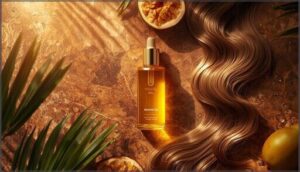
Baobab oil doesn’t just sit on your hair—it works from the scalp down to strengthen, protect, and restore what daily life takes away. Whether you’re battling dryness, breakage, or dullness, this African botanical brings a lineup of benefits backed by its unique fatty acid profile.
Here’s what baobab oil can actually do for your hair and scalp.
Deep Hydration and Moisture Retention
If your hair feels brittle and snaps when you style it, you’re likely missing one thing: deep hydration. Baobab oil’s omega-3, 6, and 9 fatty acids deliver moisture lock that lasts, penetrating the hair shaft to boost hair elasticity and provide dryness relief.
Studies show it reduces transepidermal water loss (p=0.048) while improving moisture retention (p Baobab oil doesn’t sprout new hair overnight, but it creates the ideal conditions for your scalp and follicles to thrive
Here’s how it fosters healthier, stronger hair growth from root to tip.
Nourishing The Scalp and Hair Follicles
Think of your scalp as soil where hair follicles take root—baobab oil delivers essential fatty acids, including 33–37% linoleic acid and 25–35% oleic acid, straight to that foundation.
These nutrients boost oil absorption, improve scalp health and balance, and support natural hair growth by nourishing follicles from the outside in.
The vitamin benefits also help maintain hair and scalp health, strengthening each follicle’s environment.
Improving Hair Fiber Strength and Flexibility
Linoleic and oleic acids coat each strand, boosting Hair Elasticity and reducing friction when you comb—this Hair Fiber Reinforcement cuts down on Hair Breakage and split ends.
Hair Strengthening through Oil Blending Strategies or Scalp Massage Therapy delivers Follicle Nourishment that translates to better Hair Texture Enhancement and overall Hair Vitality, keeping your fibers flexible instead of brittle.
Reducing Scalp Inflammation and Itchiness
When your scalp feels tight or itchy, you’re looking at inflammation that can disrupt healthy hair cycles. Baobab oil’s anti-inflammatory compounds offer Scalp Soothing and Inflammation Reduction by calming irritated tissue, delivering Itch Relief and Anti-Irritation benefits that restore Scalp Comfort.
This Scalp Treatment tackles Scalp Issues at the root, supporting Scalp Health and Hair Growth while addressing Scalp Irritation. Think of it as Anti-Aging protection for your follicles.
Preventing Hair Loss and Breakage
Hair Breakage Prevention starts with fiber flexibility. Baobab oil’s linoleic and oleic acids lubricate each strand, reducing friction when you comb. That flexibility cuts split ends and hair breakage, while antioxidants shield from UV damage.
Combined with scalp health tips that keep follicles hydrated, these oil treatment benefits deliver hair follicle strengthening and natural hair remedies that tackle hair loss at the source.
How to Use Baobab Oil for Hair Growth
Getting the most out of baobab oil comes down to how you apply it and how often you use it. You can work it into your routine in several ways, from direct scalp treatments to mixing it with products you already own.
Here’s a breakdown of the most effective methods to strengthen your hair and support healthy growth.
Scalp Massage Techniques and Frequency
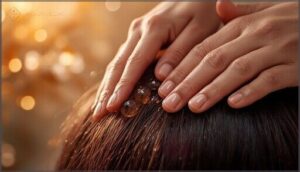
Regularly massaging baobab oil into your scalp can transform your hair growth patterns. Research shows daily scalp stimulation for 5–10 minutes delivers the best frequency benefits—long enough to boost circulation without causing irritation.
- Apply gentle massage pressure using fingertip pads, not nails
- Work in small circular motions from hairline to crown
- Divide your scalp into sections, spending 1–2 minutes per area
- Maintain consistency for at least 3–4 months to see real changes
Pre-Shampoo and Hot Oil Treatments

Once you’ve warmed things up with massage, pre-shampoo routines, and hot oil therapy take your hair care deeper. Warm baobab oil to about 40–45°C—hot enough to feel comforting, but safe for your scalp. Apply it 20–60 minutes before washing to lock in moisture and shield strands from shampoo stress.
This simple step protects your cuticle, cuts down on breakage, and leaves hair softer after every wash. For very dry or textured hair, baobab’s balanced fatty acid profile delivers the intensive moisture you need without weighing strands down. You’ll notice improved shine and easier detangling as oil treatment benefits build up over time—especially when you stick with it every week or two.
| Treatment Type | Application Time | Key Benefit |
|---|---|---|
| PrePoo Treatment | 20–30 minutes | Reduces protein loss during wash |
| Hot Oil Treatment | 1–2 hours | Deep conditioning and elasticity |
| Overnight Mask | 6–8 hours | Maximum moisture penetration |
| Weekly Routine | Once per week | Prevents breakage over time |
| Intensive Repair | Twice per week | Restores damaged, brittle hair |
Mixing Baobab Oil With Conditioners
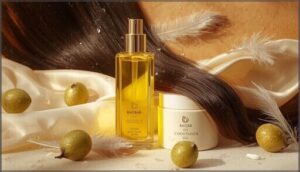
You can blend baobab oil straight into your conditioner for a quick moisture boost—add a few drops or work with oil ratios around 1–5% to avoid heavy buildup.
This turns any basic formula into an emollient blend that strengthens hair, soothes dry scalp, and improves detangling.
It’s a simple conditioner booster that supercharges your routine without extra steps.
Leave-in and Styling Applications
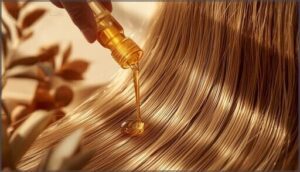
As a leave-in treatment, baobab oil delivers moisture retention and frizz control without weighing your strands down—use a pea-sized amount on damp hair for lightweight styling aid benefits.
- Apply mid-length to ends to smooth the cuticle and lock in shine
- Mix into spray formulas at 3–4% for daily detangling and scalp protection
- Layer before heat styling to shield against environmental damage
- Refresh curls between washes to define texture and combat dryness
DIY Baobab Oil Hair Mask Recipes
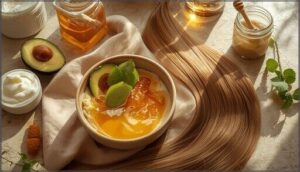
At-home hair treatment recipes let you utilize baobab oil’s conditioning power on your schedule. Mix two tablespoons of baobab oil with ripe avocado, honey, and aloe vera gel for damage repair, or stir baobab powder into yogurt and olive oil for deep hydration.
| Mask Type | Key Ingredients | Primary Benefit |
|---|---|---|
| Hydrating Yogurt Mask | Baobab powder, yogurt, honey, olive oil | Moisture restoration for dry hair |
| Damage-Repair Mask | Baobab oil, avocado, honey, aloe vera | Strengthens brittle, heat-damaged strands |
| Scalp-Soothing Mask | Baobab powder, aloe vera gel, coconut oil | Relieves dryness and irritation |
| Deep-Conditioning Treatment | Pure baobab oil (generous amount) | Reduces breakage, improves manageability |
Apply your chosen DIY hair masks once or twice weekly for 20–30 minutes. Rinse thoroughly with warm water and shampoo to prevent residue build-up while locking in the nourishing benefits.
Tips for Choosing Quality Baobab Oil

Not all baobab oil is created equal, and choosing the right one can make a real difference in your hair growth results. The quality, purity, and storage of the oil you buy will directly affect how well it works for your scalp and strands.
Here’s what you need to know to pick a baobab oil that actually delivers.
Organic Vs. Conventional Baobab Oil
You’re probably wondering whether organic makes a real difference. When you choose organic baobab oil for hair growth, you’re getting a product with tighter regulatory compliance and lower pesticide residues—about five times fewer than conventional options.
Organic certification also ensures sustainable sourcing and cold-pressed extraction without harsh oil refining methods, preserving the nutrients your scalp needs while reducing environmental impact through natural hair care practices.
Storage and Shelf Life Considerations
Your baobab oil can stay effective for 2–3 years, but only if you treat it right. Keep it cool, dark, and sealed to protect those fatty acids your hair growth depends on.
- Store below 75°F in a dark glass bottle away from sunlight
- Refrigerate after opening to slow oxidation and extend shelf life
- Check for rancid smell or color changes as degradation signs
- Seal tightly after each use to minimize oxygen exposure
- Track your purchase date to use within recommended timeframes
Recognizing Pure and Adulterated Oils
Pure baobab oil should appear light yellow to reddish-yellow—anything too pale or opaque signals trouble.
You can spot fakes through oil authentication methods like fatty acid analysis and spectroscopic testing, which detect adulteration markers in natural oils.
Check the density (around 0.87–0.88 g/cm³) and look for omega-3 fatty acids and antioxidants that drive hair growth benefits through quality control standards.
Top 5 Baobab Oil Products for Hair Growth
Now that you know how to spot quality baobab oil, you’re probably wondering which products actually deliver on their promises.
The market’s flooded with options, but not all of them are created equal regarding supporting hair growth.
Here are five standout products that bring real value to your hair care routine.
1. Organic Baobab Skin And Hair Oil
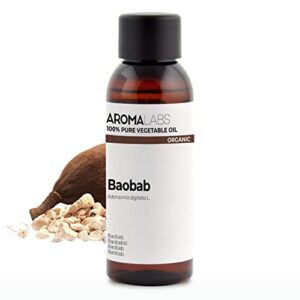
When you’re looking for a multitasker, this 100% cold-pressed Organic Baobab Oil delivers on both skin benefits and hair texture improvements. The unrefined extraction method keeps all those fatty acids and antioxidants intact, which is why it works so well for dry, brittle strands and irritated scalps.
You’ll find it especially useful if you’re dealing with frizz or damage—those natural hair products really shine here. Oil stability tests show it holds up well in formulations, and at 50ml, it’s perfect for testing baobab oil’s hair growth potential without commitment.
Best For: Anyone with dry, frizzy, or damaged hair looking for a clean, organic oil that doubles as a scalp treatment and skin moisturizer.
- Cold-pressed and unrefined so you get the full spectrum of fatty acids, vitamins A, D, E, and antioxidants that actually help reduce breakage and improve hair texture.
- Works across the board—whether you have curly, coily, brittle, or lackluster hair, the omega-rich formula moisturizes without feeling heavy.
- Dual-purpose design means you can use it on your face, body, and hair, making it a space-saver and a budget-friendly multitasker.
- No allergy or interaction info listed, so if you have sensitive skin or scalp you’ll want to patch-test first.
- Instructions are pretty vague—there’s no guidance on how much to use, how often, or whether to rinse it out.
- Shelf life and storage details aren’t provided, which matters since unrefined oils can go rancid faster than refined versions.
2. Pure Baobab Oil For Skin
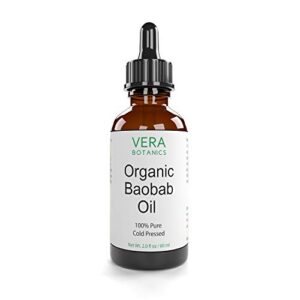
Vera Botanics offers another solid option: their 100% pure, cold-pressed baobab oil comes in a convenient dropper bottle that makes Facial Care applications easy to control. While it’s marketed for Skin Benefits—think Anti Aging effects and Natural Moisturizer properties—the same Oil Extraction process that preserves those vitamins and minerals translates directly to Hair Nutrition.
You can use it to reduce breakage, nourish dry strands, and support healthier Hair Growth. Just keep in mind that some users report mild itchiness, so patch-test if your scalp’s sensitive.
Best For: Anyone looking for a multipurpose natural oil to hydrate dry skin, strengthen brittle hair and nails, and tackle early signs of aging without synthetic additives.
- Cold-pressed and unrefined formula keeps all the vitamins, fatty acids, and antioxidants intact for maximum skin and hair benefits
- Dropper bottle makes it easy to control how much you use, whether you’re targeting your face, cuticles, or split ends
- Clinically shown to improve skin hydration and elasticity, plus it’s gentle enough for daily use on most skin types
- Some people experience itchiness or irritation, so it’s smart to patch-test before going all-in
- The scent isn’t for everyone—reviews are pretty mixed on whether it’s pleasant or off-putting
- Quality can be inconsistent batch to batch, which means your second bottle might feel different from your first
3. Bella Terra Organic Borage Oil
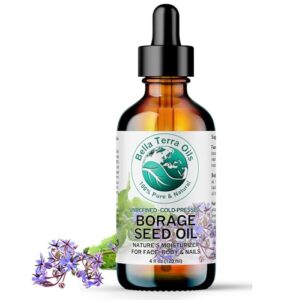
If you want to shake up your Natural Hair Care Routine, Bella Terra Organic Borage Oil offers a twist worth trying. It’s 100% cold-pressed with Organic Certification and loaded with a Fatty Acid Profile rich in GLA and omega-6, both known for Borage Oil Benefits like Scalp Treatment and reducing inflammation.
You can blend it with Baobab Oil or use it solo to boost Hair Nutrition and support Hair Growth. Just be ready for an earthy scent and test it first—some folks notice greasiness before it absorbs, but for Hair Health and Cosmetic Uses, it delivers.
Best For: Anyone looking to add a pure, organic oil to their hair and scalp routine for conditioning, reducing inflammation, and supporting overall hair health with a high-GLA formula.
- Cold-pressed and certified organic with no fillers or synthetic additives, giving you a clean, single-ingredient oil rich in GLA and omega-6 fatty acids
- Works well as a standalone treatment or blended with other oils to deeply condition hair, soften strands, and soothe dry or irritated scalps
- Absorbs relatively quickly for an oil and comes in multiple sizes (2 oz to 16 oz), so you can pick what fits your routine and budget
- Has a strong, earthy smell that some users find off-putting, especially if you’re sensitive to natural oil scents
- Can feel greasy on initial application before it fully absorbs, which might not work for everyone’s texture or preference
- High polyunsaturated content means it oxidizes faster than more stable oils, so you’ll need to store it properly (cool, dark place or fridge) and use it within about 12 months
4. Tahitian Coconut Oil Moisturizer
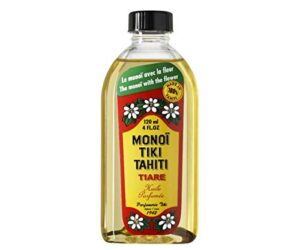
After experimenting with borage, your hair might be ready for something gentler. Tahitian Coconut Oil Moisturizer packs Coconut Oil Benefits that pair beautifully with Baobab Oil—both deliver deep Hair Moisturizing and Scalp Protection without weighing you down.
This blend of Natural Ingredients softens strands, locks in moisture, and promotes Hair Growth when you need a lightweight finish. Try Oil Blending both into your routine for double the Natural Oils power, boosting Hair Health while keeping frizz at bay.
Just remember it solidifies below 68°F, so warm it first.
Best For: Anyone with dry, curly, or coily hair looking for a natural moisturizer that deeply hydrates, reduces frizz, and adds shine—especially if you love tropical scents and don’t mind warming it up when it solidifies.
- Penetrates the hair shaft to prevent protein loss and reduce damage from washing, making hair stronger and less prone to breakage
- Rich in medium-chain fatty acids that lock in moisture and improve curl definition without heavy buildup
- Traditional Tahitian formula with Tiare flower fragrance provides a beautiful scent while softening both hair and skin
- Solidifies below 68°F so you’ll need to warm it before each use, which can be inconvenient
- Pricey compared to regular coconut oil, and some users question whether the value matches the cost
- Should be rinsed out before sun exposure since the oil can intensify UV radiation on your scalp and hair
5. Pure Rosemary Essential Oil Blend
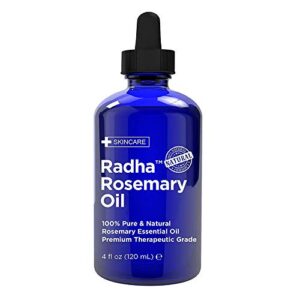
If you want to turbocharge your Baobab Oil routine, adding Pure Rosemary Essential Oil Blend offers proven Rosemary Oil Benefits for Hair Growth. Clinical trials show rosemary matches 2% minoxidil after six months, making it one of the smartest Hair Growth Strategies around.
Mix 6–15 drops per ounce of baobab carrier oil for Essential Oil Blends that enhance Scalp Massage sessions and deliver Aromatherapy Uses alongside Hair Growth Tips.
This Natural Remedies for Hair pairing strengthens follicles, reduces itching, and keeps your Hair Care Tips science‑backed—exactly what rebellious, result‑driven routines demand.
Best For: People who want a clinically backed, natural hair growth boost and don’t mind mixing their own blends or dealing with a strong herbal scent during application.
- Clinical trials show it matches 2% minoxidil for hair growth after six months of use, making it one of the few natural remedies with solid science behind it.
- Causes less scalp itching than minoxidil, and when blended with oils like lavender or castor, it can improve hair thickness, density, and growth rate by 47–57% in 90 days.
- Comes in a UV-protective cobalt blue bottle with a glass dropper, and the 4 oz size gives you plenty of product for months of diluted use at the recommended 2–5% concentration.
- You have to dilute it yourself in a carrier oil, which adds an extra step and requires some trial and error to find the right concentration for your scalp sensitivity.
- The scent is strong and herbal, so it’s not something you’d want to wear right before heading out in public or to work.
- Some users question whether the oil is 100% pure rosemary, and it can cause a tingling sensation on the scalp that might be uncomfortable for people with sensitivity.
Frequently Asked Questions (FAQs)
Is baobab oil suitable for all hair types and textures?
Yes, baobab oil works across all hair types and textures. Its balanced fatty acid profile—roughly 33–37% linoleic acid and 25–35% oleic acid—suits dry, normal, and combination scalps.
Whether you’ve got straight, wavy, curly, or coily hair, it penetrates without weighing things down while sealing moisture effectively.
Can baobab oil be used daily or should frequency be limited?
Baobab oil’s low irritation profile makes daily use safe for most people, but your scalp sensitivity and skin tolerance matter.
Limit frequency to 1–3 times weekly initially, then adjust based on how your hair responds and whether buildup occurs.
Conclusion
Feed your roots, fortify your strands, free your scalp—baobab oil for hair growth does all three when used with intention. This isn’t just another fleeting trend; it’s a time-tested remedy that bridges tradition and science.
When you choose quality oil and apply it with care, you invite lasting strength and resilience into every follicle.
Let your hair reflect the quiet confidence of nourishment done right—growing not just longer, but healthier, strand by strand, root to tip.
- https://us.typology.com/library/utiliser-lhuile-de-baobab-pour-favoriser-la-pousse-des-cheveux-
- https://www.scielo.br/j/rbfar/a/V5m3yXVs6tnF3W4h7LpJjkB/?lang=en
- https://pmc.ncbi.nlm.nih.gov/articles/PMC10180768/
- https://www.healthline.com/health/baobab-oil
- https://www.baobabfoods.com/blog/baobab-oil-benefits/