This site is supported by our readers. We may earn a commission, at no cost to you, if you purchase through links. This content is for general informational and educational purposes only and is not a substitute for professional medical, dermatological, or nutritional advice.
That relentless itch under a two-week beard isn’t a sign you’re doing something wrong. It’s your skin adjusting to new hair, trapped sebum, and sharp regrowth poking into follicles. Dermatologists see this constantly, and most cases trace back to five fixable causes, not some mysterious skin flaw.
The good news: beard itch relief home remedies work fast when matched to the actual cause. Dry skin needs different care than an ingrown hair or early folliculitis.
Below, you’ll find the causes behind the itch, the remedies that calm it, and the daily habits that keep it from coming back.
Table Of Contents
- Key Takeaways
- Common Causes of Beard Itch
- Best Home Remedies for Beard Itch
- Targeted Relief for Irritated Beard Skin
- Daily Beard Care to Prevent Itching
- When Beard Itch Needs Treatment
- Frequently Asked Questions (FAQs)
- What will stop my beard from itching?
- How long does it take for beard itch to go away?
- What does an itchy beard mean?
- What oil is good for itchy beard?
- What does it mean if your beard is itchy?
- Which oil is best for an itchy beard?
- Does coconut oil stop beard itch?
- How do you get rid of a Itchy beard at home?
- What are the best beard home remedies?
- Does apple cider vinegar help a beard itch?
- Conclusion
Key Takeaways
- Beard itch usually comes from one of five fixable causes—sharp regrowth, dry skin, ingrown hairs, seborrheic dermatitis, or bacterial folliculitis—not some mysterious skin flaw.
- Washing with a gentle, pH-balanced shampoo and applying beard oil within two minutes while skin is still damp locks in moisture and calms irritation fast.
- Persistent flaking, spreading redness, or pus-filled bumps past two weeks signal infection or dermatitis and call for a dermatologist rather than more home remedies.
- Consistent daily habits—washing every 1-2 days, drying thoroughly, moisturizing, and cleaning grooming tools—prevent itch from coming back in the first place.
Common Causes of Beard Itch
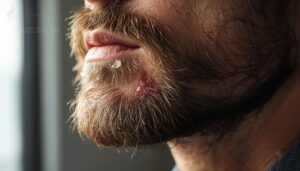
That itch under your beard isn’t random, and it’s rarely just one thing. Your skin, your hair, and even your grooming habits all play a role in triggering it. Here are the five most common culprits behind that nagging itch.
Sometimes the real fix isn’t a new balm but better nutrition, since getting the right vitamins for beard health can calm irritation from the inside out.
Sharp Regrowth After Trimming
Right after a trim, new hairs push through with a sharp, needle-like edge, and that’s what scratches you raw. Cutting against the grain makes it worse.
Trim at a 45-degree angle with sharp, clean tools and a proper guard length, then moisturize within five minutes to keep those edges from piercing your skin.
Dry Skin and Beardruff
Beyond sharp regrowth, dry skin causes its own trouble. Low barrier lipids let water escape fast, sometimes 40% faster, leaving skin flaky and itchy. That flaking is beardruff.
Boost ceramides with a targeted moisturizer, keep indoor humidity near 45%, and apply beard oil or balm right after washing. Exfoliate weekly with aloe vera gel to calm irritation and support real moisture barrier repair.
Ingrown Beard Hairs
Dry skin isn’t the only culprit. Ingrown beard hairs happen when a shaved or trimmed tip curls back into the follicle instead of growing outward. Curly, coarse hair is especially prone to this.
Symptoms include red, tender bumps that itch and sometimes form small pustules, often on the chin, jawline, and neck. Shaving too close, or stretching skin while shaving, raises your risk considerably.
To reduce irritation and prevent ingrown hairs, consider proper shaving techniques.
Seborrheic Dermatitis
Sometimes the itch isn’t about hair at all. Seborrheic dermatitis thrives where sebum runs high, causing greasy scale, ill-defined redness, and stubborn beard dandruff control problems.
Watch for:
- Fine white or yellowish greasy scale-crust
- Redness beneath beard hair
- Flaking tied to Malassezia yeast
- Flares from stress or season
- Chronic, relapsing pattern
Seborrheic dermatitis treatment often starts with antifungal cream and skin barrier repair.
Bacterial Folliculitis
When razor bumps turn red and pus-filled, you’re likely dealing with bacterial folliculitis. Staphylococcus aureus causes 70% of cases, inflaming follicles within 24-48 hours. Risk climbs 3.5 times after hot tub use.
Red, pus-filled razor bumps often signal bacterial folliculitis, with staph behind seven in ten cases
Your dermatologist confirms it via swab culture. Home care: chlorhexidine wash twice daily, warm compresses, and diluted tea tree oil for its antimicrobial properties, supporting skin barrier repair.
Best Home Remedies for Beard Itch
Once you know what’s causing the itch, treating it gets a lot easier. Most cases respond well to simple changes in your washing and moisturizing routine. Here are five remedies worth adding to your regimen right away.
Wash With Gentle Beard Shampoo

Your skin’s acid mantle sits at pH 5.5 to 6.5, so pick a gentle beard shampoo near 5.8.
Rinsing between strokes with warm water pairs well with the broader razor maintenance tips for sensitive skin that help keep irritation at bay long after your beard shampoo rinses clean.
Wash every 1-2 days with lukewarm water, massaging for 30 seconds before rinsing fully. Look for decyl glucoside and 2% aloe vera.
This gentle beard wash preserves moisture, helps with beard hygiene, and delivers real beard itch relief without stripping natural oils.
Apply Beard Oil After Washing
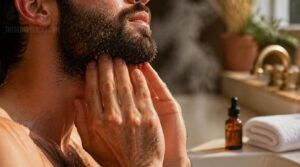
Timing matters more than you’d think. Apply oil within two minutes of washing, while your beard’s still damp and pores stay open.
Warm 2-3 drops between your palms, then massage in for 30 seconds. Choose jojoba or argan as your carrier oil, diluting any tea tree or peppermint to 2%.
This locks in moisture and rebuilds your skin’s barrier fast.
Condition With Beard Balm
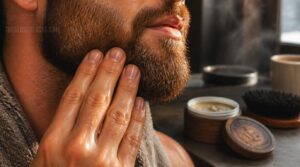
Balm beats oil for lasting relief. Beard balm’s beeswax and shea butter seal moisture 8 hours, cutting friction 22%.
Massage a pea-sized amount into skin, not just hair, for 30 seconds.
Consistency matters most:
- Apply once daily for mild itch
- Twice for severe cases
- Continue 7 days minimum for real hydration gains
Soothe With Aloe Vera
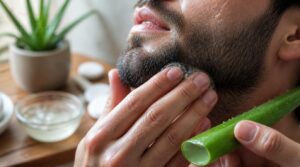
Nothing calms an angry follicle faster than aloe vera gel. Its anti-inflammatory compounds cool skin within minutes, easing redness fast.
Scoop clear gel from a fresh leaf, skipping the yellow latex. Apply directly to itchy patches once daily.
Always patch-test on your inner arm first, waiting 24 hours. This natural remedy helps your skin’s moisture barrier without harsh chemicals.
Use a Colloidal Oatmeal Compress
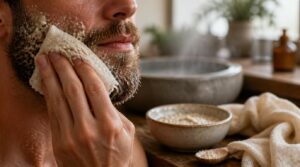
Think oatmeal’s just breakfast? Not for your beard. A colloidal oatmeal compress delivers serious skin soothing and antiinflammatory treatment for flaky, itchy patches.
Mix plain colloidal oatmeal with water into a milky paste. Apply with gauze for up to 15 minutes, 2-3 times weekly.
- Patch-test first
- Use fresh mixture each time
- Avoid broken skin
Rinse after for lasting skin hydration.
Targeted Relief for Irritated Beard Skin
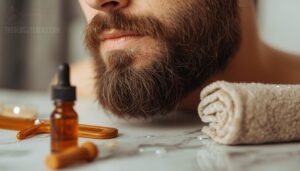
Sometimes gentle washing and moisturizing aren’t enough to calm angry, inflamed skin. Irritated patches, ingrown hairs, and stubborn bumps need more focused treatment. Here are five targeted fixes worth adding to your routine.
Exfoliate Dead Skin Gently
Scrubbing away dead skin unclogs follicles trapped beneath your beard. Use a soft boar bristle brush or bamboo scrub (150-200 grit) once weekly if your beard’s under an inch, twice for longer growth.
Apply a pea-sized amount, massage gently 30 seconds, rinse with lukewarm water. Follow with beard oil. Skip this step during active flare-ups or folliculitis.
Warm-Compress Ingrown Beard Hairs
If exfoliating loosened debris but hairs still won’t surface, heat is your next move. Soak a cotton washcloth in 40°C to 45°C water, test with a thermometer, apply for 5 minutes, twice daily.
Never exceed 45°C or 5 minutes, burns aren’t worth it. Pat dry, then massage jojoba oil into the skin within one minute.
Patch-Test Diluted Tea Tree Oil
Jojoba absorbed, but if itching persists, tea tree oil offers antimicrobial punch, undiluted it burns.
Mix 1 drop tea tree with 10 drops jojoba (10% dilution). Apply 2-3 drops to your forearm, wait 15 minutes, check for redness.
- Dilute properly
- Test forearm first
- Wait 24 hours
- Check for tingling
- Apply to beard patch
No reaction means it’s safe.
Try Diluted Apple Cider Vinegar
Tea tree not doing enough? Apple cider vinegar restores pH balance and fights bacteria on contact.
Mix one part vinegar with three parts distilled water (1.25% acetic acid). Patch-test on your forearm 24 hours first.
Apply once daily via soaked cotton pad, 3-5 minutes, then rinse. Add jojoba oil or aloe for extra soothing.
Avoid Baking Soda and Harsh Scrubs
Before reaching for that box in your pantry, know this: baking soda has a pH near 9, well above your skin’s healthy 4.5 to 5.5 range. It strips the acid mantle fast.
Skip harsh scrubs too. They tear skin and clog follicles.
Try instead:
- Oat flour paste
- Ground coffee
- Honey-sugar mix
These protect skin pH balance without irritation.
Daily Beard Care to Prevent Itching
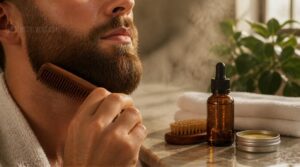
Treating itch is one thing. Stopping it from coming back takes a routine you actually stick to. Here are five daily habits that keep your beard calm and your skin happy.
Wash Every One to Two Days
Wash every 1-2 days with warm water at 100-104°F. This restores pH balance and cuts itch in 78% of users.
Pick a sulfate-free, fragrance-free beard shampoo. In humid summers, wash daily; in winter, stretch to every other day. Sanitize your comb weekly with rubbing alcohol.
Dry Your Beard Thoroughly
Skipping this step is where most itch problems start. Trapped moisture under a beard breeds bacteria and worsens dry skin under beard areas fast.
- Pat with a 200 gsm microfiber towel, moving with hair growth
- Remove roughly 80% of water before any heat
- Finish with a low heat dryer, 15 cm away, two minutes
- Air dry ten minutes for total drying of 5-7 minutes
Moisturize The Skin Daily
Damp skin drinks up hydration fast, so timing matters. Right after washing, apply 2-3 drops of beard oil, ideally 80% jojoba, straight to the skin.
Follow with a pea-sized dab of balm at night. This one-two combo keeps hydration above 70% all day and cuts itch flare-ups noticeably.
Brush and Comb Gently
Think of brushing as therapy, not just styling. Use a boar bristle brush with 30 bristles/cm² in short 2-3 cm strokes, then a comb with 0.8 mm spacing to detangle from the ends upward.
- Softer skin
- Fewer snags
- Less itch
Limit sensitive skin to three sessions weekly. Gentle strokes prevent micro-tears that trigger flare-ups.
Clean Grooming Tools Regularly
Your boar bristle brush and beard comb touch your skin daily, collecting sebum and bacteria that cause flare-ups.
| Tool | Method | Frequency |
|---|---|---|
| Comb | Soak in warm soapy water 5 min | Weekly |
| Brush | Wipe bristles, air dry | Weekly |
| Trimmer | Alcohol spray, 20 sec | Each use |
Clean grooming tools regularly, then store them dry to prevent recontamination.
When Beard Itch Needs Treatment
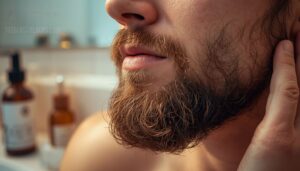
Most beard itch fades within a week or two of consistent care. But some signs mean your skin needs more than oil and patience. Here’s what to watch for, and when it’s time to step up your treatment.
Expected Beard Itch Timeline
Wondering how long this lasts? The acute itch phase peaks at 24-48 hours, easing within 72. Consistent moisturizing cuts itching 50% by day two.
- Day 2: itch drops below a 3/10
- Day 5: hair feels softer
- Day 8: moisture rises 25%
- Day 12: redness fades in 85%
- Day 14: full comfort returns
Past day 14, you’re in chronic itch territory.
Signs of Skin Infection
Past day 14, some symptoms mean more than plain irritation. Watch for warm skin patches, tenderness to touch, or spreading redness.
Firm, swollen bumps filled with pus point to folliculitis, often driven by staph bacteria or malassezia yeast invading irritated or ingrown hairs. Don’t pick at these. They signal infection, not simple itch, and deserve real attention.
Persistent Flaking and Redness
Bumps aside, flaking that won’t quit past two weeks often points to seborrheic dermatitis beard involvement, not dry skin. Look for greasy, yellowish scales and redness covering large patches, worsened by cold air or hot showers.
- Low humidity under 30%
- Nutritional gaps (zinc, omega-3)
- Chronic inflammation from sugar-heavy diets
Track flare-up triggers before assuming natural remedies alone will fix it.
Safe Over-the-Counter Treatments
Tracking triggers helps, but sometimes skin needs direct treatment. Hydrocortisone cream (1%) calms inflamed patches in a week. Zinc pyrithione shampoo grips fungal buildup; salicylic acid exfoliates clogged follicles.
| Treatment | Best For |
|---|---|
| Hydrocortisone 1% | Redness, inflammation |
| Zinc Pyrithione Shampoo | Dandruff, seborrheic flaking |
| Salicylic Acid | Clogged follicles |
Pair with aloe vera gel or colloidal oatmeal lotion for cooling, barrier-restoring relief.
When to See a Dermatologist
Home care has limits. See a dermatologist for persistent rash evaluation, spreading folliculitis, or seborrheic eczema that won’t clear.
Watch for:
- Infection warning signs: pus, fever, spreading redness
- Mole change check: new or evolving spots
- Flaking redness concern: worsening after weeks of care
Severe pain or rapid worsening are urgent care red flags. Don’t wait; yeast overgrowth control and bacterial infection treatment often need prescriptions.
Frequently Asked Questions (FAQs)
What will stop my beard from itching?
Beard itch stops when you stop scratching the surface of the problem, not just your chin. Wash gently, apply beard oil daily, soothe with aloe vera gel, and exfoliate weekly to clear buildup.
How long does it take for beard itch to go away?
Timing depends on the cause. Regrowth itch usually eases in 1 to 4 weeks, dryness improves within days of moisturizing, ingrown hairs settle in days, dermatitis flares linger longer, and folliculitis heals once inflammation resolves.
What does an itchy beard mean?
Your skin is sending a signal. Itchy beard meaning usually points to dryness, sharp regrowth, or trapped bacteria, not just a nuisance. Decoding beard irritation early helps you catch dry skin or pH imbalance before it becomes something more stubborn.
What oil is good for itchy beard?
Reach for jojoba oil first, since it mimics natural sebum. Argan and sweet almond oils soften hair and calm redness, while diluted tea tree oil fights bacteria and coconut oil seals in moisture as a carrier.
What does it mean if your beard is itchy?
Why won’t that itch quit? Identifying beard itch triggers usually points to dry skin, beard dandruff, ingrown hairs, or folliculitis. Understanding beard itch causes helps you catch skin irritation early, whether you’re a new grower or a beard veteran.
Which oil is best for an itchy beard?
For most beards, jojoba oil wins. It mimics your skin’s natural sebum, absorbs fast, and calms flaking without grease. Coconut and argan oils soften hair well but sit heavier, so jojoba stays the safer daily pick for irritated skin.
Does coconut oil stop beard itch?
Yes. Coconut oil’s lauric acid locks in skin moisture and calms inflammation, cutting itch within days. In one trial, 73% of users reported less itching after just a week of daily use.
How do you get rid of a Itchy beard at home?
Taming a fiery beard is like putting out brush fires: wash with gentle shampoo, work in beard oil or balm, dab aloe vera, and skip the scratching, dryness, and buildup that fuel flare-ups.
What are the best beard home remedies?
Combine a gentle shampoo wash with daily beard oil (jojoba works well), an aloe vera layer for cooling relief, a weekly oatmeal compress, and diluted tea tree oil for stubborn, inflamed patches.
Does apple cider vinegar help a beard itch?
Diluted apple cider vinegar restores skin pH balance, using acetic acid’s antimicrobial properties to curb bacteria and sebum buildup.
Mix one part vinegar to three parts water, apply with a cotton pad, and rinse within ten minutes.
Conclusion
Picture your beard as a tiny garden gone rogue: curly hairs digging back into soil that never asked for a fight. That’s the itch, not a curse, just biology doing its clumsy best.
Match the cause to the cure, and most beard itch relief home remedies work within days, not weeks. Skip the harsh scrubs, keep skin hydrated, and let your follicles heal on their own schedule. Calm skin isn’t luck. It’s routine, patience, and knowing when to call a dermatologist.