This site is supported by our readers. We may earn a commission, at no cost to you, if you purchase through links.
Here’s the thing about beeswax—it’s been quietly holding hair in place for centuries, long before silicones and polymers took over the styling aisle. This natural wax, secreted by honeybees to build their hives, contains over 280 compounds, including fatty acids, esters, and vitamins, that work together to coat each strand in a protective, water-repellent layer.
While synthetic ingredients promise instant results, beeswax delivers something different: a breathable barrier that locks in moisture, smooths down frizz, and gives your hair that lived-in hold without the buildup drama.
Whether you’re rocking natural curls, maintaining locs, or just trying to tame flyaways without coating your hair in chemicals, understanding how beeswax interacts with your specific hair type changes everything about how you style and protect your strands.
Table Of Contents
Key Takeaways
- Beeswax creates a breathable, water-repellent barrier on your hair that locks in moisture and smooths frizz without the suffocating buildup you get from silicones—it’s all about those 280+ compounds (especially esters and fatty acids) working together to protect each strand while letting it breathe.
- You need to match your beeswax application to your hair type: curly and coily textures thrive with dime-sized amounts on damp hair (skip the scalp entirely), while fine or straight hair needs rice-grain portions only on ends to avoid that flat, greasy look that kills volume.
- Beeswax won’t magically repair split ends or reverse damage, but it temporarily seals broken tips and cuts friction by up to 30 percent, which means less breakage during styling and more time between trims—think of it as a protective coating that buys your damaged hair some breathing room.
- The biggest mistake people make is over-applying and then panicking when they can’t wash it out—stick to twice-weekly use max, keep it off your roots to prevent clogged follicles, and use oil pre-treatments followed by clarifying shampoo when it’s time to reset your hair.
What is Beeswax and How It Affects Hair
Beeswax isn’t just what bees use to build their homes—it’s a powerhouse ingredient that can transform how your hair looks and feels.
This natural substance has a unique molecular structure that sets it apart from other hair care ingredients, and understanding what makes it tick will help you use it like a pro.
Let’s break down what beeswax actually is, how it works its magic on your strands, and why it behaves differently than other natural options you might’ve in your cabinet.
Natural Composition and Key Nutrients
Beeswax packs over 280 compounds into every golden pellet—you’re working with serious chemistry here. The key players for your hair:
- Esters (70%): Form that protective film you need for moisture lock-in
- Fatty acids (10–16%): Palmitic, oleic, and stearic acids smooth cuticles and boost conditioning
- Vitamin A: Powers moisturizing action at the hair shaft
- Antioxidants: Shield strands from environmental stress and oxidative damage
Beeswax is often used in natural skin care products due to its numerous benefits.
How Beeswax Forms a Protective Barrier
Once you apply it, beeswax’s hydrophobic properties kick in—those waxy esters create film formation right on your hair shaft. This barrier function is all about water repellency, locking moisture in while keeping humidity out.
The secret? Beeswax bonds to your hair’s lipid interface, forming a semi-occlusive shield that stays put between washes. That’s real hair protection and moisturizing power working overtime.
Beeswax also provides similar benefits for skin, offering a natural moisture retention solution.
Differences From Other Natural Hair Ingredients
Unlike the plant waxes and oils crowding your bathroom shelf, beeswax brings unique barrier properties to the table. Here’s how it stacks up in cosmetic formulations:
- Candelilla wax delivers twice the hold but skips the moisturizing humectant activity beeswax provides
- Coconut and argan oils penetrate your hair shaft while beeswax works purely as a surface protector
- Lanolin feels greasier and heavier, though it’s more intensely hydrating for severely dry strands
- Carnauba wax creates glossier shine but spreads less easily through your hair
Vegan alternatives exist, but they don’t replicate beeswax’s exact moisturizing-plus-barrier combo.
Plant-based waxes like candelilla or carnauba come close, though pairing them with nourishing oils—like sweet orange oil for scalp and strand resilience—helps bridge the hydration gap.
Key Benefits of Beeswax for Hair
Now that you know what beeswax is and how it works on your hair, let’s get into the real magic—what it actually does for your strands.
If you’re dealing with thinning spots, pairing beeswax-based products with coverage solutions like hair fibers can give you fuller-looking results while you style.
Beeswax isn’t just a trendy ingredient; it brings seriously practical benefits backed by its unique molecular structure. Here’s what makes it worth adding to your hair care routine.
Moisture Retention and Hydration
Think of your hair shaft like a leaky bucket—no matter how much water you pour in, it keeps escaping. Beeswax flips that script by forming a breathable, hydrophobic barrier that locks moisture inside while managing water retention and hair porosity.
For best results, stick with proper beard grooming and hygiene practices that prioritize clean, natural formulas over synthetic alternatives.
Beeswax transforms your hair from a leaky bucket into a moisture-locked fortress with its breathable, hydrophobic barrier
This moisture balance transforms dry, brittle strands into hydrated, resilient fibers that can actually hold onto the conditioning treatments you’re applying—that’s real hydration, not just temporary shine.
If you’re using beard balm vs beard wax, that moisture foundation means your facial hair can actually absorb and retain the nourishing ingredients instead of just sitting on the surface.
Frizz Control and Smoothing Flyaways
That halo of defiant strands around your crown? Beeswax’s hydrophobic film formation addresses it head-on by coating each fiber and blocking humidity-driven cuticle swelling.
If you prefer a wax-free alternative that still tames flyaways and nourishes your beard, this natural beard balm without beeswax uses plant-based butters to deliver comparable hold and conditioning.
Here’s how frizz reduction and flyaway taming work in real styling products:
- Film-forming esters smooth roughened cuticles for sleeker appearance
- Occlusive barrier limits moisture exchange with humid air
- Medium-to-strong hold physically controls resistant baby hairs
- Strand cohesion increases, making flyaways lay flat
- All-day persistence without the stiffness typical of gels
Wax sticks with beeswax deliver targeted hair smoothing along partings and edges where you need it most.
Sealing Split Ends and Protecting Strands
Beeswax film formation creates a semi-occlusive shield that temporarily seals split ends and reduces friction coefficients by up to 30 percent—meaning less breakage during combing and styling. The waxy coating locks moisture into brittle ends, improving elasticity so strands flex instead of snap.
While it won’t permanently repair damage (only scissors do that), beeswax extends time between trims by camouflaging splits and protecting vulnerable tips from mechanical and environmental stress.
Promoting Scalp Health and Soothing Irritation
Your scalp deserves the same barrier protection as your strands—and beeswax delivers. Its antibacterial and anti-inflammatory properties calm itchy scalp flare-ups, reduce dandruff, and protect hair follicles from environmental irritants.
The same occlusive film that locks in strand moisture also shields your scalp from pollutants and UV damage, creating an environment where scalp health and hair health benefits can actually thrive.
Supporting Hair Growth and Length Retention
You’re not just preventing breakage—you’re actively supporting follicle function. A 2016 trial showed beeswax formulations nearly doubled hair length at 30 days (17.5 mm versus 12.7 mm) and pushed more follicles into the active growth phase.
That’s where beeswax benefits for hair shine: sealing moisture reduces mechanical damage, while scalp conditions improve, creating the ideal environment for sustained hair growth, thickness, and serious length retention.
Using Beeswax for Different Hair Types
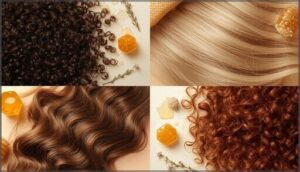
Your hair type changes everything regarding beeswax—what works beautifully for thick, coily strands might weigh down fine hair or create stubborn buildup.
The molecular structure of beeswax (those long-chain esters and fatty acids we talked about) interacts differently depending on your hair’s porosity, texture, and density.
Here’s how to make beeswax work for your specific hair needs without ending up with greasy, gunky regrets.
Best Practices for Curly, Coily, and Textured Hair
Curls and coils thrive when you treat beeswax as your finishing partner, not your opening act. Here’s your curl-friendly game plan for kinky, curly hair and natural hair care:
- Start on damp strands after your leave-in—beeswax seals moisture in, it doesn’t create it, so layer your hydration first for ideal curl definition tips and moisturizing power.
- Use dime-sized amounts per section, warming the product between your palms before smoothing over ends and mid-lengths for frizz control strategies that won’t flatten your volume.
- Skip your scalp entirely—applying beeswax directly to roots clogs follicles and triggers faster oil buildup in dense hair texture.
- Limit sessions to twice weekly to dodge the product buildup prevention nightmare; excessive use transforms this curl ally into a waxy villain requiring clarifying interventions.
Target your driest zones—ends, perimeter edges, flyaways—where beeswax application methods deliver maximum frizz control and hair texture management without the weight. For twist-outs and braid-outs, emulsify thoroughly before distributing to maintain natural movement and prevent localized heaviness that kills definition.
Considerations for Fine and Straight Hair
Your delicate strands need a lighter touch—fine hair care demands precision with beeswax or you’ll sacrifice volume for smoothness.
Use micro-amounts (rice grain-sized) only on ends for frizz control and gentle styling, avoiding roots where low hair porosity traps product.
Straight hair tips emphasize emulsifying thoroughly before application to prevent wax buildup that flattens your hair texture and weighs down any hair growth you’re protecting.
Tips for Damaged, Dry, or Brittle Hair
Compromised strands need beeswax as a final sealer, not your first line of defense—layer it after a deep hair moisturizer to lock moisture balance into the cuticle.
Focus on mid-lengths and ends where hair damage clusters, using fingertip amounts to support breakage control and frizz reduction.
This occlusive barrier aids damage prevention while you tackle hair repair fundamentals—protein treatments, protective styling, and trimming splits that beeswax can’t reverse.
Beeswax for Braids, Twists, and Locs
Protective styles like braids, twists, and locs thrive on beeswax’s hold—it binds sections together, seals moisture into coiled hair texturizing patterns, and tames frizz during braid styling.
The catch? Its tacky grip also traps lint and buildup inside locs, making wax removal tough without clarifying shampoos and oil soaks.
Use fingertip amounts for twist maintenance, keep it off your scalp, and cleanse religiously to dodge loc-rot and traction stress.
How to Apply and Remove Beeswax Properly
Getting beeswax into your hair is the easy part—it’s the getting it out that trips most people up. The trick is knowing how much to use, where to put it, and which removal method won’t leave you scrubbing for days.
Let’s break down the techniques that’ll save you from greasy buildup and give you all the benefits without the hassle.
Application Techniques for Optimal Results
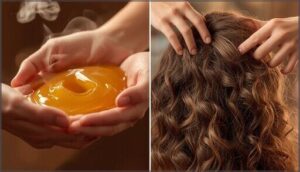
Start by warming a pea-sized amount between your palms until it melts—your body heat transforms solid beeswax into a glossy, spreadable balm.
Work through damp hair in small sections, focusing on mid-lengths and ends rather than roots. For curls and textured styles, scrunch upward to define each piece.
Finish with light smoothing motions to tame flyaways without weighing everything down.
Preventing and Managing Product Buildup
Less is more regarding buildup prevention—use beeswax sparingly, just twice weekly max, and keep it away from your scalp to avoid clogged follicles.
To manage product residue without stripping your strands:
- Alternate beeswax styling with lighter, water-soluble products between uses
- Focus application on lengths and ends only
- Schedule monthly clarifying treatments to reset your hair
This rotation keeps buildup in check while protecting your natural hair care routine.
Safe Removal Methods and Cleansing Routines
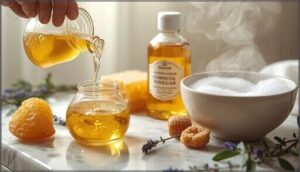
Liberation from sticky beeswax starts with an Oil Pre-Treatment—coconut or mineral oil loosens the waxy grip. Follow with Clarifying Shampoos and Warm Water Rinses for thorough removal, massaging gently to protect your hair’s integrity.
An occasional Acidic Rinse, like diluted apple cider vinegar, restores shine and scalp balance. This gentle cleansing routine keeps your natural hair care game strong.
Top Beeswax Hair Products to Try
Now that you know how to use beeswax without turning your hair into a waxy mess, let’s talk about which products actually deliver.
I’ve rounded up some standout beeswax-based formulas—from pure pellets you can customize yourself to ready-made balms and styling aids that work across different hair needs.
Whether you’re maintaining locs, taming frizz, or crafting your own DIY blends, these picks will help you utilize beeswax’s protective benefits without the guesswork.
1. Organic Yellow Beeswax Pellets
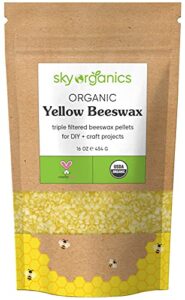
If you’re serious about DIY hair care products, organic yellow beeswax pellets are your blank canvas—think Sky Organics’ USDA certified pellets that melt cleanly at 142–149°F without additives. The pelletized formulation gives you precision control when you’re crafting custom pomades or conditioning balms, letting you dial in exactly 1–2 percent beeswax for moisture-sealing power without the guesswork of shaving blocks.
Organic certification means you’re dodging synthetic pesticides from hive management, and triple-filtered wax extraction delivers that mild, naturally sweet aroma that won’t clash with your essential oils—pure beeswax benefits you can actually measure and trust.
| Best For | DIY enthusiasts and natural beauty makers who want precise control over homemade hair care formulations like pomades, conditioning balms, and styling products. |
|---|---|
| Primary Use | DIY beauty projects |
| Form | Pellets |
| Hair Type | All (DIY) |
| Key Ingredient | Pure beeswax |
| Natural/Organic | USDA Organic |
| Size/Weight | 16 Oz |
| Additional Features |
|
- Triple-filtered, USDA certified organic pellets with no additives give you pure beeswax that melts predictably at 142–149°F for consistent results in every batch
- Pelletized format makes measuring and melting effortless compared to chipping blocks, so you can nail exact percentages for moisture-sealing and styling hold
- Forms a breathable, water-resistant barrier on hair that locks in hydration and adds natural shine without feeling heavy or completely occlusive
- Strong smoky smell when you first open the package can be off-putting, though it typically fades once melted and blended into formulations
- Can turn out brittle or overly hard in finished products if you don’t balance it correctly with softer oils or butters
- Hot wax requires careful handling during melting, and you’ll want to patch test final products since beeswax may not suit every skin or scalp type
2. Bee Naturals Hair Balm
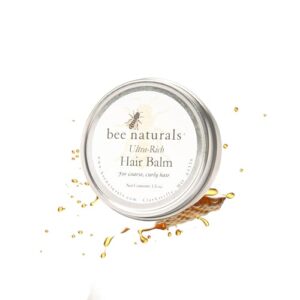
Bee Naturals Ultra Rich Hair Balm blends shea butter, cocoa butter, and beeswax into a silicone-free formula that glides smoothly over coarse, curly strands. Reviewers love how it tames flyaways without that greasy film other natural hair care products leave behind.
The solid balm format makes it TSA-friendly, and application tips stress warming a fingertip-sized amount between palms before smoothing over mid-lengths for frizz control.
Product reviews highlight repeat purchases for shine and definition, though fine-haired folks should start with half that amount to avoid weighing down texture.
| Best For | People with coarse, curly, or frizz-prone hair who want a portable, natural styling balm that adds shine and controls flyaways without silicones. |
|---|---|
| Primary Use | Hair moisturizing/styling |
| Form | Cream |
| Hair Type | Coarse, Curly, Dry |
| Key Ingredient | Shea/Cocoa butter |
| Natural/Organic | Natural ingredients |
| Size/Weight | 1.5 Oz |
| Additional Features |
|
- Solid balm format is travel-friendly and TSA-compliant for on-the-go touch-ups
- Glides smoothly over hair and delivers noticeable shine without feeling greasy when used correctly
- Silicone-free formula with shea butter and cocoa butter nourishes while taming frizz
- Can be too heavy or greasy if you use too much, especially on fine or thin hair
- Pricier than drugstore alternatives at around $14–$23 per container
- Strong scent bothers some users, and it may not work as a standalone product for all hair types
3. Australian Bees Wax Hair Product
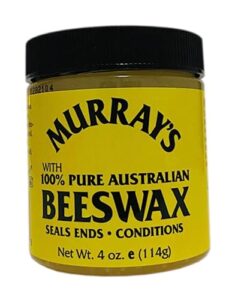
Murray’s 100% Pure Australian Bees Wax delivers a stiff hold that’s soft enough to apply, think of it as your control freak friend who’s secretly easygoing. This petrolatum-and-beeswax blend excels at locking braids, dreadlocks, and twists in place without the all-day crunch of synthetic gels.
You’ll find it balances moisture retention with shape control, though users with fine hair texture should apply sparingly to avoid that greasy-scalp situation.
The 4-ounce tin runs a few dollars at most retailers, making it accessible for protective-style enthusiasts seeking natural hair care products that actually hold up. Just remember—beeswax uses here lean styling-heavy, so pair it with a clarifying shampoo every few washes to prevent buildup.
| Best For | Anyone rocking braids, locs, or twists who needs serious hold without the helmet-head effect—especially if you’re tired of gels that flake or don’t last past lunchtime. |
|---|---|
| Primary Use | Hair styling/holding |
| Form | Wax |
| Hair Type | All |
| Key Ingredient | Australian beeswax |
| Natural/Organic | Natural |
| Size/Weight | 4 fl oz |
| Additional Features |
|
- Strong hold that keeps protective styles locked in place all day without feeling stiff or crunchy
- Affordable at just a few bucks for a 4 oz tin, so you’re not breaking the bank for decent styling control
- Doubles as a moisturizer for hair and scalp, plus you can use it for beard styling or even as lip balm in a pinch
- Contains petroleum jelly despite the “100% pure beeswax” label, which might bug you if you’re looking for truly all-natural ingredients
- Can feel greasy if you use too much, especially on finer hair textures—less is definitely more here
- Builds up over time, so you’ll need a clarifying shampoo every few washes to keep your scalp from getting gunky
4. Forrester Natural Beard Balm Conditioner
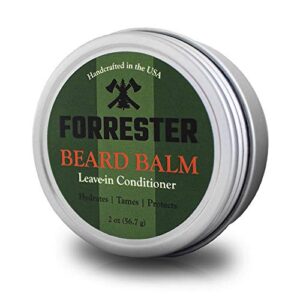
Forrester Natural Beard Balm Conditioner combines beeswax, jojoba oil, and vitamin E for dual-action beard care. You get enough wax hold to shape facial hair without the stiff-helmet effect, plus emollient conditioning that softens coarse strands overnight.
The beeswax content creates a flexible film that tames flyaways while sealing moisture into both hair and the skin beneath your beard, reducing itchiness and flaky patches.
Some users find the fragrance intense, so test a small amount first. At two ounces, it slots neatly into any natural hair routine focused on lightweight control and skin comfort.
| Best For | Guys with coarse or unruly beards who want natural conditioning plus light hold to keep strays in check without a greasy finish. |
|---|---|
| Primary Use | Beard conditioning |
| Form | Balm |
| Hair Type | All (Facial) |
| Key Ingredient | Beeswax/jojoba oil |
| Natural/Organic | Natural |
| Size/Weight | 2.0 Oz |
| Additional Features |
|
- Beeswax and jojoba oil combo softens rough hair while giving enough shape to tame flyaways all day
- Moisturizes the skin under your beard, cutting down on itch and flakes that come with dryness
- Natural ingredient list means no petroleum or synthetic additives if you’re keeping your routine clean
- Fragrance can be pretty strong—might overwhelm you if you prefer subtle or unscented products
- Results vary from person to person, so thickening and strengthening claims won’t hit the same for everyone
- Two-ounce tin runs out faster on longer or denser beards since you need more product per application
5. Professor Fuzzworthy Beard Shampoo Bar
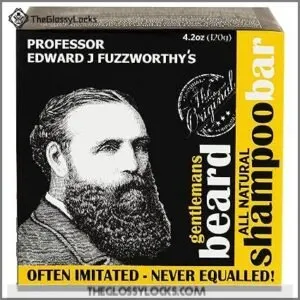
Professor Fuzzworthy Beard Shampoo Bar packs Leatherwood beeswax and Tasmanian honey into a dense, travel-ready format—one 120-gram bar replaces roughly 800 milliliters of liquid shampoo. The beeswax content locks moisture into coarse facial hair while coconut, olive, and castor oils gently cleanse without stripping natural sebum, addressing both beard growth support and scalp comfort.
Users report softer, fluffier texture after two weeks, though the subtle essential-oil scent profile fades quickly post-rinse. If you want natural ingredients and zero-waste beard care with lasting hold, this shampoo bar benefits your routine—just pair it with a separate conditioner for extra hydration.
| Best For | Eco-conscious beardsmen who want a long-lasting, all-natural cleanser that softens coarse facial hair while minimizing plastic waste and synthetic chemicals. |
|---|---|
| Primary Use | Beard washing |
| Form | Bar |
| Hair Type | All beard types |
| Key Ingredient | Leatherwood beeswax |
| Natural/Organic | All-natural |
| Size/Weight | 120gm bar |
| Additional Features |
|
- One 120-gram bar lasts as long as roughly 800 milliliters of liquid shampoo, making it cost-effective and travel-friendly.
- Leatherwood beeswax and Tasmanian honey condition beard hair while coconut, olive, and castor oils cleanse without stripping natural oils.
- Zero-waste solid format with no sulfates, parabens, palm oil, or synthetic fragrances—handmade in Tasmania from certified organic ingredients.
- Subtle essential-oil scent fades quickly after rinsing, which may disappoint users who prefer a long-lasting fragrance.
- Bar may degrade if left in water or humid conditions, requiring careful storage between uses.
- Users with very thick or long beards may need a separate conditioner or balm for added hydration and manageability.
6. Viking Beard Care Set
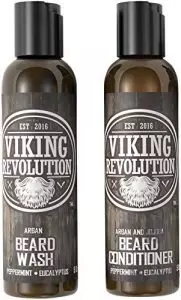
If you’re craving a beard that’s more Viking legend than lumberjack chaos, the Viking Beard Care Set packs everything you need—boar bristle brush, double-sided comb, scissors, and their beeswax-rich balm.
The balm’s blend of beeswax, argan, and jojoba oils delivers hold, moisture, and frizz control, making beard styling less of a battle. Use the unscented oil for hydration, then layer the balm for shaping and shine.
Beard Care Tips: Go light with product to avoid buildup, and enjoy those Grooming Essentials.
| Best For | Guys who want a complete beard grooming routine in one box—especially if you’re tired of a wild, unruly beard and want something that looks intentional without spending an hour in front of the mirror. |
|---|---|
| Primary Use | Beard care kit |
| Form | Liquid |
| Hair Type | Facial |
| Key Ingredient | Argan/jojoba oils |
| Natural/Organic | Natural oils |
| Size/Weight | 5 oz |
| Additional Features |
|
- Complete kit means you’re not hunting down brushes, oils, and balms separately—everything’s in one travel-friendly tin
- Beeswax balm gives you actual hold for styling while the oils keep things soft and moisturized, so you’re covered for both function and comfort
- Unscented oil option is clutch if you’re sensitive to fragrances or just don’t want to smell like a candle shop
- The 5 oz size might feel limiting if you’ve got a massive beard or use product daily—you’ll be reordering sooner than you’d like
- Scent strength on some products can be hit or miss; what’s “refreshing” to one person might be overpowering to another
- If you’ve got sensitive skin or ingredient allergies, you’ll need to double-check the formula since it’s not hypoallergenic across the board
7. Satin Smooth Honey Wax
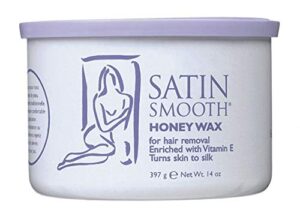
Now, if you’re shopping for a hair removal wax rather than a hair conditioner, Satin Smooth Honey Wax brings beeswax into the depilatory game—creating a pliable film that grips coarse hair without clinging too hard to skin.
Proper wax application means heating to the right temp and testing a patch first to dodge skin irritation, especially if you’re sensitive to beeswax or honey.
It’s biodegradable, dye-free, and surprisingly effective for at-home wax removal on legs, arms, and chest, though you’ll need oil to tackle any sticky residue left behind.
| Best For | People looking for an affordable at-home waxing option that works on coarse hair and large body areas like legs, arms, back, and chest. |
|---|---|
| Primary Use | Hair removal |
| Form | Wax |
| Hair Type | Fine to coarse |
| Key Ingredient | Beeswax/Vitamin E |
| Natural/Organic | Biodegradable |
| Size/Weight | 14 oz |
| Additional Features |
|
- Biodegradable and dye-free formula with vitamin E helps condition skin during hair removal
- Works effectively on all skin types, including sensitive skin, when used properly
- Leaves skin silky smooth and grips hair well without excessive skin adherence
- Requires precise heating and technique—too hot or too cool and it won’t work right
- Leaves behind sticky, oily residue that needs extra oil for cleanup
- Has a learning curve, so first-timers may experience redness or mess if they don’t nail the application
8. GiGi Soft Hair Removal Wax
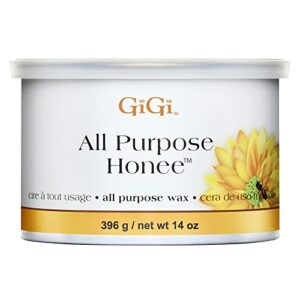
GiGi Soft Hair Removal Wax takes the honey-infused route, blending beeswax with natural resins to grip hair at the root while staying gentle enough for all skin types. You’ll spread it thin on warmed skin, apply a strip, and rip away in one swift motion—hair regrowth stays dormant for weeks.
Soft wax benefits include easier cleanup and less follicle trauma, but waxing precautions still apply: test the temperature, skip broken skin, and follow up with skin aftercare like alcohol-free wipes to calm redness and prevent ingrown hairs.
| Best For | Anyone looking for smooth, long-lasting hair removal at home or in the salon, especially on larger areas like legs and arms. |
|---|---|
| Primary Use | Hair removal |
| Form | Wax |
| Hair Type | All |
| Key Ingredient | Honey-infused wax |
| Natural/Organic | Not specified |
| Size/Weight | Not specified |
| Additional Features |
|
- Honey-infused formula is gentle on all skin types and grabs hair at the root.
- Easy to apply and clean up, with weeks of silky results.
- Cruelty-free and suitable for both coarse and fine hair.
- Not safe for use on broken skin, or for those with phlebitis or diabetes without doctor’s consent.
- Can cause irritation or redness, especially on sensitive skin.
- Needs careful temperature testing to avoid burns.
Frequently Asked Questions (FAQs)
Can beeswax cause hair loss or thinning?
One client panicked after noticing more shedding—turned out beeswax buildup was suffocating follicles.
Here’s the truth: beeswax itself doesn’t cause hair loss, but excessive buildup from overuse blocks your scalp’s pores, potentially triggering hair thinning and damage.
How often should beeswax be reapplied?
Reapplication frequency depends on your hair type and styling needs. Most folks benefit from touching up every 2–3 days, though curly hair may need more frequent applications while fine hair requires longer intervals to prevent buildup.
Is beeswax safe during pregnancy or breastfeeding?
Topical beeswax shows minimal systemic absorption and appears safe during pregnancy and breastfeeding based on cosmetic safety reviews.
However, patch testing helps rule out allergy risks, and cleansing residues before nursing remains smart practice.
Does beeswax work on color-treated or bleached hair?
Beeswax creates a protective film that can help shield color-treated hair from water exposure and fading. However, its resistance to rinsing makes buildup a real concern—especially on bleached, high-porosity strands that trap waxy residues more easily.
Can beeswax attract dirt or environmental pollutants?
While beeswax itself doesn’t chemically attract dirt, its waxy film can trap airborne pollutants and dust particles—especially in urban environments.
Regular cleansing prevents this surface buildup from affecting your hair’s health and appearance.
Conclusion
Beeswax doesn’t demand flawlessness from your hair—it meets you where you’re at, whether that’s coaxing definition into tight coils, sealing moisture into parched ends, or holding locs through another humid commute.
The beeswax benefits for hair aren’t about transformation; they’re about protection, patience, and giving your strands what they’ve been asking for all along.
Start with a rice-grain amount, warm it between your palms, and let centuries of natural chemistry do the rest.