This site is supported by our readers. We may earn a commission, at no cost to you, if you purchase through links.
Your razor glides across your face, and within minutes, you’re staring at red, inflamed skin that stings like you’ve splashed on straight ethanol. That familiar burn isn’t just uncomfortable—it’s a sign of genuine tissue damage: microscopic lacerations, compromised barrier function, and inflammation cascading through the epidermis.
Aftershave balm interrupts this destructive cycle by delivering targeted anti-inflammatory compounds, sealing moisture into traumatized skin, and creating a protective barrier that shields against environmental irritants.
The difference between chronic post-shave irritation and smooth, resilient skin often comes down to those first sixty seconds after you rinse—when your skin’s permeability is at its peak and its defenses are at their weakest.
Table Of Contents
- Key Takeaways
- What Aftershave Balm Does for Your Skin
- How Aftershave Balm Works After Shaving
- Key Ingredients That Make Aftershave Balm Effective
- Aftershave Balm Vs Other Aftershave Types
- Choosing The Right Aftershave Balm
- How to Apply Aftershave Balm Correctly
- Top 3 Aftershave Balms Worth Considering
- Long-Term Skin Benefits of Regular Use
- Common Mistakes to Avoid With Aftershave Balm
- Preventing Razor Burn and Ingrown Hairs
- Frequently Asked Questions (FAQs)
- Conclusion
Key Takeaways
- Aftershave balm interrupts post-shave damage by delivering anti-inflammatory compounds, sealing moisture into traumatized skin, and creating a protective barrier—working most effectively when applied to damp skin within 60 seconds of rinsing.
- The most effective formulas combine ceramides for barrier repair, bisabolol or chamomile for inflammation reduction, and humectants like glycerin that prevent transepidermal water loss by up to 20% within 24 hours.
- Unlike alcohol-based splashes that strip natural oils and worsen irritation, balms restore barrier function without stinging—making them essential for sensitive skin and critical high-risk zones like the neck and jawline.
- Consistent daily use delivers cumulative benefits beyond immediate relief: improved skin texture, reduced razor burn frequency, fewer ingrown hairs, and enhanced protection against environmental oxidative stress.
What Aftershave Balm Does for Your Skin
Your skin takes a beating every time you shave—microscopic nicks, stripped natural oils, and inflamed follicles all demand immediate attention.
That’s why proper bikini line aftercare focuses on soothing irritation and restoring your skin’s protective barrier immediately after you rinse.
Aftershave balm tackles these post-shave stressors through targeted hydration and anti-inflammatory action that goes beyond simple moisturizing.
Understanding how aftershave balm works helps you choose formulas with the right balance of soothing agents and barrier-building ingredients for your skin type.
Here’s what quality balm actually does for your skin after you put down the razor.
If you’re already dealing with redness or bumps, start with proper skin prep before shaving to avoid making irritation worse.
Soothing Irritation and Reducing Redness
Redness after shaving stems from inflammation—your skin’s protest against microtrauma on the epidermal surface. Aftershave balm delivers anti-inflammatory compounds directly to irritated areas, calming the storm within minutes to hours:
Following the right application technique ensures these active ingredients penetrate effectively rather than sitting uselessly on the surface.
- Chamomile and green tea extracts reduce post-shave redness duration in clinical studies
- Soothing agents target inflamed tissue for rapid irritation reduction
- Damp skin application maximizes skin calming and redness relief
- Consistent use lowers baseline inflammation between shaves
- Post-shave soothing happens fast—often within the first hour
Hydrating and Moisturizing Post-Shave Skin
Shaving strips away surface lipids, opening the door to transepidermal water loss—your skin literally bleeds moisture into the air.
Aftershave balm slams that door shut: humectants like glycerin pull hydration inward while occlusives form a protective film, locking in moisture balance.
This dual action prevents the tight, flaky aftermath of poor post-shave care, keeping your complexion supple and comfortable for hours after the blade.
Supporting The Skin’s Natural Repair Process
Your skin doesn’t just sit there after a shave—it kicks into overdrive, scrambling to rebuild the microscopic damage left behind by razor blades scraping across 20,000 cells per square centimeter. Using a skin soothing balm can help alleviate this damage and promote healthier skin.
Aftershave balm accelerates cellular regeneration by delivering natural moisturizers that restore skin pH balance and support barrier repair: these ingredients don’t just hydrate—they create ideal conditions for post-shave recovery, letting your dermis heal faster and stronger.
Creating a Protective Barrier Against Irritants
Beyond repair, aftershave balm creates a protective film that shields freshly shaved skin from environmental irritants—pollution, detergents, and airborne toxins can’t penetrate as easily when occlusives like dimethicone or petrolatum form a breathable barrier.
This moisture-locking layer reduces transepidermal water loss by up to 98 percent while keeping friction low, so your collar won’t aggravate vulnerable neck skin all day.
Using a natural skin soothing balm can provide additional benefits for sensitive skin.
How Aftershave Balm Works After Shaving
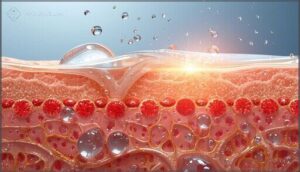
When you smooth aftershave balm onto freshly shaved skin, you’re triggering a cascade of biological responses—hydration locks in, inflammation subsides, and your skin barrier begins to rebuild. The mechanisms behind these effects aren’t magic: they’re rooted in how specific compounds interact with damaged tissue at the cellular level.
Here’s what happens in the minutes and hours after you apply balm to your face.
Your skin absorbs the balm’s soothing ingredients quickly, and applying aftershave to slightly damp skin helps lock in moisture for even better results.
Delivering Anti-Inflammatory Compounds to Damaged Tissue
When razor blades scrape across your face, they don’t just remove hair—they trigger a cascade of inflammatory signals in the damaged tissue below, and that’s where aftershave balm’s targeted anti-inflammatory compounds step in to interrupt the alarm bells your skin is desperately ringing.
Here’s how these soothing agents deliver inflammation reduction:
- Bisabolol and caffeine penetrate the stratum corneum to calm redness and minimize tissue irritation at the cellular level.
- Chamomile extracts provide skin calming effects by modulating inflammatory mediators released during wound healing.
- Anti-redness compounds work within minutes to visibly reduce post-shave flare-ups and discomfort.
Preventing Transepidermal Water Loss
Shaving strips away more than stubble—it compromises the skin’s outermost barrier, allowing precious moisture to escape into the air like steam from a cracked kettle. Aftershave balm acts as the seal your compromised epidermis desperately needs.
Shaving cracks your skin’s moisture barrier wide open—aftershave balm seals it shut before hydration escapes
Quality formulas contain at least two natural emollients that reduce transepidermal water loss by up to 20% within 24 hours. This moisture retention aids skin barrier repair, while hydration strategies lock in water molecules your skin desperately requires to heal.
Calming Razor Burn and Stinging Sensations
That burning sting you feel after dragging a blade across your face? It’s your skin crying out for relief—and aftershave balm answers with precision. Cooling ingredients like menthol mask pain signals, while anti-inflammatory compounds tackle the root cause of razor burn discomfort.
- Bisabolol from chamomile soothes irritated tissue and reduces redness
- Aloe vera calms burning sensations in damaged epidermis
- Witch hazel provides astringent action that eases post-shave stinging
- Humectants like glycerin relieve tightness from shaving-induced dryness
This targeted post-shave care transforms your grooming routine into genuine skin protection.
Restoring The Skin Barrier Function
Your skin’s protective barrier—that invisible shield keeping moisture in and irritants out—takes a beating every time you shave, and aftershave balm rebuilds it with clinical precision. Ceramides and natural emollients repair damaged lipid layers, while humectants restore epidermal health through enhanced moisture retention.
| Barrier Function Component | How Aftershave Balm Restores It |
|---|---|
| Lipid matrix integrity | Ceramides fill intercellular gaps |
| Moisture retention capacity | Glycerin binds water to skin layers |
| pH balance stabilization | Soothing agents normalize skin acidity |
| Protection from irritants | Occlusive ingredients create physical shield |
| Hydration levels | Hyaluronic acid maintains skin hydration |
This targeted skin barrier repair transforms your post-shave routine into therapeutic skin health maintenance—moisturizing and hydrating skin while preventing the inflammation that compromises barrier function after every blade pass.
Key Ingredients That Make Aftershave Balm Effective
Not all aftershave balms are created equal—the difference lies in their active ingredients. The most effective formulas combine targeted compounds that address specific post-shave concerns, from inflammation to moisture loss.
Here’s what you should look for on the ingredient list to guarantee your skin gets the protection and repair it needs.
Aloe Vera for Cooling and Soothing
Aloe vera stands as one of nature’s most potent post-shave allies. Randomized clinical trials confirm that its polysaccharides accelerate healing and reduce redness far better than placebo.
You’ll find immediate cooling effects paired with deep hydration: aloe vera’s acemannan stimulates collagen synthesis while its barrier-enhancing properties lock in moisture, delivering soothing skin relief that transforms irritation into comfort within hours.
Vitamin E for Antioxidant Protection
Think of vitamin E as your skin’s front-line defense against post-shave oxidative stress. This lipid-soluble antioxidant neutralizes free radicals that accelerate aging and inflammation. Dermatologic research shows it inhibits UV-induced damage while reducing prostaglandin E2 levels.
When you apply vitamin E-enriched aftershave balm, you’re delivering measurable anti-inflammatory and skin protection benefits that shield against environmental assault.
Chamomile for Anti-Inflammatory Benefits
Chamomile extracts deliver potent anti-inflammatory effects through bisabolol and flavonoids—compounds that suppress pro-inflammatory cytokines and measurably reduce erythema in irritated skin.
When you choose an aftershave balm with chamomile, you’re harnessing herbal remedies proven to calm razor burn and stinging sensations.
Controlled studies confirm these natural ingredients support faster resolution of skin irritation, making chamomile-based formulas ideal for soothing post-shave discomfort.
Ceramides for Long-Term Moisture Retention
Ceramides make up roughly half of your stratum corneum lipids—the mortar between skin cells that keeps moisture locked in and irritants locked out.
When you apply a ceramide-rich balm after shaving, you’re replenishing these essential barrier lipids: clinical evaluations show measurable improvements in skin hydration and reduced transepidermal water loss up to 24 hours post-application, maintaining moisture retention that fosters long-term skin health.
Bisabolol and Caffeine for Reducing Redness
Bisabolol, a chamomile-derived compound, suppresses pro-inflammatory cytokines. Clinical assessments show it reduces erythema and stinging in sensitive, compromised tissue.
Paired with caffeine, which constricts surface capillaries and diminishes visible redness, these anti-inflammatory agents work synergistically in aftershave balm formulations.
Controlled studies document measurable decreases in post-shave inflammation, faster resolution of razor burn, and improved skin tolerance for individuals prone to irritation.
Aftershave Balm Vs Other Aftershave Types
Not all aftershave products work the same way—and choosing the wrong type can leave your skin feeling tight, stinging, or stripped of moisture. Balms, splashes, and lotions each take a different approach to post-shave care, with varying levels of hydration, alcohol content, and soothing power.
Here’s how aftershave balm stacks up against the alternatives.
Aftershave Balm Vs Aftershave Splash
You’ll notice aftershave splash and aftershave balm take radically different approaches to post-shave care—and your skin barrier repair needs will determine which formula works best. Splashes rely on 30–40 percent alcohol for rapid antiseptic action but strip moisture and sting abraded tissue, while balms deliver emollients and occlusives that restore hydration and support barrier function without the burn.
| Feature | Aftershave Splash | Aftershave Balm |
|---|---|---|
| Primary Base | Alcohol (30–40%+) and water | Emollients, humectants, plant oils |
| Hydration Effect | Increases water loss; dries skin | Reduces moisture loss by up to 20% |
| Sensation | Sharp sting on micro-cuts | Calming, no burn |
| Best For | Oily skin; antiseptic needs | Dry, sensitive, or barrier-impaired skin |
| Finish | Matte, quick-dry | Hydrated, conditioned feel |
Aftershave Balm Vs Aftershave Lotion
Aftershave lotion runs lighter and dries faster than aftershave balm, making it ideal for oily skin—but that alcohol content can leave you tight and stinging. Balm delivers richer hydration and barrier support without the burn, perfect for dry or sensitive complexions seeking genuine post-shave relief and lasting moisture retention.
| Feature | Aftershave Lotion | Aftershave Balm |
|---|---|---|
| Texture | Fluid, quick-absorbing | Thick, cushioning emulsion |
| Hydration | Light moisture | Deep, prolonged hydration |
| Alcohol | Often present; can dry skin | Usually alcohol-free |
| Best For | Oily, acne-prone skin | Dry, sensitive skin types |
| Finish | Non-greasy, cooling | Protective, occlusive layer |
Why Balm is Best for Sensitive Skin
Reactive complexions demand formulas that calm rather than provoke. Aftershave balm skips the alcohol irritants, flooding your skin barrier with emollients and humectants that prevent transepidermal water loss and lock in hydration. You’ll notice fewer flare-ups, less stinging, and genuine soothing properties—everything sensitive skin care requires after shaving.
| Sensitive Skin Need | Why Balm Delivers |
|---|---|
| Reduced irritation | Alcohol-free, fragrance-free gentle formulas |
| Deep moisturizing | Ceramides, shea butter restore barrier function |
| Anti-inflammatory action | Bisabolol, chamomile calm redness instantly |
| Non-comedogenic protection | Won’t clog pores or trigger breakouts |
Choosing The Right Aftershave Balm
Not all aftershave balms work the same way—your skin type determines which formula will actually protect and soothe rather than cause new problems. The wrong balm can clog pores, trigger irritation, or leave your face feeling greasy, while the right one integrates seamlessly into your post-shave routine.
Here’s how to match your skin’s specific needs with the formulation that delivers real results.
Best Formulas for Sensitive Skin
Your skin deserves more than harsh alcohols and synthetic fragrances after each shave. For sensitive skin care, I recommend alcohol-free balms built on three evidence-backed pillars:
- Aloe vera and chamomile — botanical soothing formulas that calm razor burn immediately
- Ceramide complexes — barrier-supporting ingredients that lock moisture in for 24 hours
- Fragrance-free, hypoallergenic bases — gentle products that minimize contact dermatitis risk
These aftershave ingredients transform post-shave irritation into lasting comfort.
Selecting Balms for Oily Skin Types
Your oily complexion requires lightweight, oil-free aftershave balm formulas that hydrate without clogging pores. Opt for non-comedogenic gels containing humectants like glycerin—these ingredients draw water into your stratum corneum while maintaining a breathable, matte finish. Avoid alcohol-based splashes, as they strip natural oils and can trigger compensatory sebum overproduction.
| Feature to Seek | Why It Matters for Oily Skin |
|---|---|
| Oil-free, non-greasy texture | Prevents excess shine and pore blockage |
| Humectant-rich formula (glycerin, panthenol) | Delivers hydration without heaviness |
| Non-comedogenic certification | Reduces acne flare-ups after shaving |
Look for gel-cream textures with squalane or seed extracts—light emollients that mimic sebum without feeling greasy. Fragrance-free, non-comedogenic aftershave balm options effectively control surface shine throughout the day while supporting your skin’s moisture barrier and minimizing post-shave irritation in high-oil zones like your T-zone.
Finding The Right Product for Dry Skin
Your compromised barrier demands rich aftershave balm formulas built on humectants like hyaluronic acid and glycerin—molecules that bind up to 1000 times their weight in water.
Prioritize hydrating formulas with ceramides and shea butter, which seal moisture into your stratum corneum and reduce transepidermal water loss by up to 20% within 24 hours.
Dry skin types thrive on cream-textured, fragrance-free sensitive skin care products combining barrier repair with intense moisturizing ingredients.
Avoiding Alcohol and Harsh Fragrances
Alcohol-based aftershaves strip your freshly shaved skin of natural oils, triggering an inflammatory cascade that undoes every benefit you sought from post-shave care.
Choose alcohol-free, fragrance-free formulas with natural ingredients like chamomile and bisabolol: these gentle formulas deliver soothing, anti-inflammatory benefits without aggravating sensitive skin.
Your natural aftershave balm shouldn’t burn—it should calm skin irritation instantly.
Non-Comedogenic Options to Prevent Clogged Pores
For oily or acne-prone skin, you need a non-comedogenic aftershave balm formulated to prevent clogged pores and comedone formation. These lightweight gels or balms—built with olive squalane, witch hazel, and panthenol—deliver oil regulation and skin hydration without blocking follicles.
Non-comedogenic labeling indicates pore minimization and skin clarification, helping prevent infections while protecting sensitive skin from post-shave breakouts.
How to Apply Aftershave Balm Correctly
Applying aftershave balm isn’t complicated, but timing and technique make a measurable difference in how well your skin absorbs the active ingredients. The goal is to boost hydration while ensuring anti-inflammatory compounds reach the areas that need them most.
Here’s how to apply aftershave balm for best post-shave recovery.
Applying to Damp Skin Vs Dry Skin
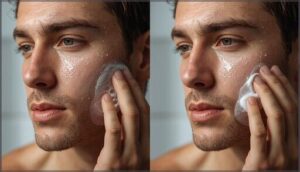
Timing matters: apply your aftershave balm while your face is still damp from rinsing—this simple shift dramatically improves skin hydration and moisture retention.
Damp skin benefits include faster absorption rates and better post-shave comfort, as residual water helps moisturizing ingredients penetrate deeper into the epidermis.
The hydrating actives bond with surface moisture, soothing skin irritation more effectively than delayed application to completely dry tissue.
Using The Right Amount of Product
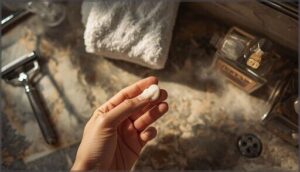
You don’t need a palmful—a dime-sized amount of aftershave balm is usually all it takes to hydrate your entire shaved area without leaving greasy residue or wasting product. Excess balm won’t improve skin saturation or moisture levels: your epidermis can only absorb what it needs at ideal application timing, and overloading impairs balm absorption while potentially triggering breakouts or clogged pores.
Smart product dosage delivers maximum post-shave relief:
- Too little balm leaves dry patches vulnerable to skin irritation and discomfort
- Proper amounts guarantee even hydrating coverage across all shaved zones
- Overuse creates a suffocating film that prevents natural moisturizing processes
- Balanced application maximizes anti-inflammatory benefits without waste
Proper Massage Techniques for Better Absorption
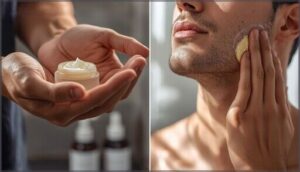
Warming the balm between your palms before application isn’t just ritual—it activates the emollients and prepares your skin for maximum penetration of those anti-inflammatory compounds. Use gentle pressure with upward circular motions: this technique boosts absorption rates by increasing skin temperature and microcirculation. Massage for 30–45 seconds—proper massage duration ensures hydrating, soothing ingredients reach deeper dermal layers where moisturizing benefits matter most.
| Technique | Mechanism | Skin Care Benefit |
|---|---|---|
| Circular motions | Improves microcirculation | Enhanced aftershave balm absorption |
| Gentle pressure | Prevents tissue trauma | Maintains soothing effect |
| Upward strokes | Aids lymphatic drainage | Reduces post-shave puffiness |
| 30–45 sec duration | Optimizes ingredient penetration | Maximum hydrating action |
| Palm warming | Raises skin temperature | Activates moisturizing emollients |
Focusing on High-Irritation Areas Like Neck and Jawline
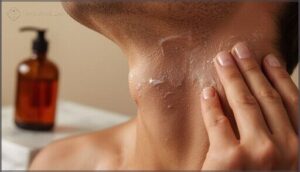
The anterior neck and jawline take the hardest hit during shaving—follicle density and oblique hair angles here triple your risk of razor burn and ingrown hairs compared to cheek skin.
That’s why targeted aftershave balm application matters: massage extra product into these high-irritation zones for 15–20 seconds to deliver soothing anti-inflammatory compounds exactly where post-shave relief and jawline hydration are needed most.
Top 3 Aftershave Balms Worth Considering
Now that you understand how to choose and apply aftershave balm, let’s look at three specific products that deliver on the science we’ve discussed.
Each option below brings proven ingredients to your post-shave routine—whether you’re dealing with sensitivity, razor burn, or everyday dryness.
These balms represent different formulation approaches, so you can find one that matches your skin’s particular needs.
1. Nivea Men Sensitive Post Shave Balm
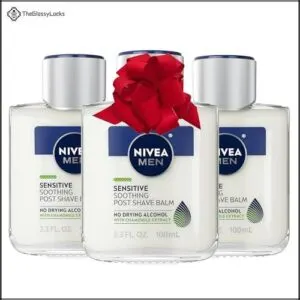
NIVEA MEN Sensitive Post Shave Balm delivers evidence-based Skin Barrier Repair through a dermatologically tested, alcohol-free formula, offering genuine Post Shave Comfort for men with reactive complexions.
This aftershave balm features vitamin E, pro-vitamin B5, and chamomile extract: three active ingredients that address burning, micro-cuts, dryness, tightness, and stubble itch simultaneously. The non-comedogenic composition won’t clog your pores while providing long-lasting hydration.
Dermatologists from Schweiger Dermatology Group recommend it specifically for its high antioxidant content, making this an accessible yet clinically sound choice for your Gentle Skincare Routine and daily Sensitive Skin Care needs.
| Best For | Men with sensitive or reactive skin who need gentle, fast-absorbing post-shave relief that won’t clog pores or leave greasy residue. |
|---|---|
| Formula Type | Alcohol-free |
| Skin Type | Sensitive skin |
| Size | 3.3 Fl Oz |
| Key Ingredients | Vitamin E, Chamomile |
| Texture | Non-greasy |
| Primary Benefit | Soothes irritation |
| Additional Features |
|
- Dermatologist-recommended formula with vitamin E, pro-vitamin B5, and chamomile that actually soothes burning and reduces redness after shaving
- Alcohol-free and non-comedogenic, so it hydrates without irritating sensitive skin or causing breakouts
- Great value in a 3-pack format, especially considering it’s clinically tested and performs like higher-end options
- Bottle design can dispense too much product at once, leading to waste
- No travel-size or pump bottle option available for easier portioning
- Light fragrance might not appeal to everyone, though it’s formulated to minimize allergic reactions
2. Jack Black Post Shave Cooling Gel
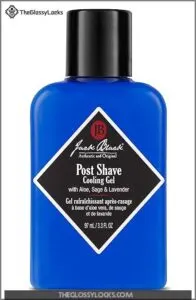
Jack Black Post Shave Cooling Gel combines botanical extracts—aloe, chamomile, witch hazel at 1%—with allantoin and sodium hyaluronate to deliver post-shave relief without the sting of alcohol-based aftershaves. This fragrance-free gel suits sensitive and oily skin types, absorbing quickly while providing cooling effects that calm razor burn and reduce redness.
The lightweight formula doubles as a non-greasy moisturizer, preventing transepidermal water loss through humectant-rich gel ingredients.
Clinical observations show witch hazel’s mild astringent properties discourage bacterial colonization in micro-cuts, making this a science-backed addition to your aftershave balm rotation for complete skin care.
| Best For | People with sensitive or oily skin who want a lightweight, alcohol-free aftershave that soothes razor burn and doubles as a quick-absorbing moisturizer. |
|---|---|
| Formula Type | Alcohol-free |
| Skin Type | All skin types |
| Size | 3.3 Fl Oz |
| Key Ingredients | Sage, Allantoin |
| Texture | Lightweight gel |
| Primary Benefit | Relieves razor burn |
| Additional Features |
|
- Alcohol-free and fragrance-free formula prevents stinging and irritation, making it ideal for sensitive skin or anyone prone to post-shave redness
- Contains botanical ingredients like aloe, chamomile, and witch hazel that calm irritation, fight bacteria in minor nicks, and provide cooling relief
- Lightweight gel texture absorbs quickly without leaving a greasy residue, so you can get on with your day right after applying
- Priced at $23 for 3.3 oz, which some users feel is expensive compared to simpler alternatives like standalone witch hazel or aloe products
- Can leave skin feeling slightly sticky or tacky for a few minutes after application, depending on how much you use
- The small bottle size may not last long if you’re using it daily, especially given the higher price point
3. Baxter After Shave Balm For Men
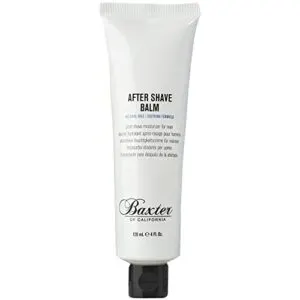
Baxter After Shave Balm delivers alcohol-free Post Shave Care through a lightweight cream-gel that combines glycerin, aloe barbadensis, and allantoin—three ingredients proven to reduce transepidermal water loss while soothing post-shave inflammation.
This Mens Grooming staple provides PostShave Relief via menthol’s cooling effect and benzophenone-4 UV filtration, offering dual Skin Protection against razor burn and environmental damage.
The non-greasy formula absorbs rapidly, making it ideal for daily shavers seeking Skin Hydration without clogged pores—a science-backed approach to Mens Skin Care that justifies its premium positioning in Aftershave Balm recommendations and earns positive marks in any thorough Baxter Balm Review for consistent Aftershave Benefits.
| Best For | Daily shavers with sensitive skin who need alcohol-free relief from razor burn and want to prevent ingrown hairs without a greasy finish. |
|---|---|
| Formula Type | Alcohol-free |
| Skin Type | Sensitive skin |
| Size | 4 Fl Oz |
| Key Ingredients | Aloe Vera, Allantoin |
| Texture | Non-greasy |
| Primary Benefit | Prevents ingrown hairs |
| Additional Features |
|
- Cooling aloe and menthol combo soothes irritation immediately while glycerin keeps skin hydrated for hours after shaving
- Lightweight gel texture absorbs fast and won’t clog pores or leave an oily residue on your face
- Works for all skin types and includes UV protection to guard against sun damage throughout the day
- $20 price tag is steep compared to drugstore aftershaves, especially with only 4 oz in the tube
- Fragrance ingredients like linalool and limonene might irritate people with scent sensitivities
- Small bottle size means you’ll need to restock often if you shave daily
Long-Term Skin Benefits of Regular Use

Your skin doesn’t forget what you do to it every day—and that includes your post-shave routine. When you apply aftershave balm consistently, you’re not just addressing immediate irritation; you’re investing in measurable improvements that accumulate over weeks and months.
Here’s what regular use can deliver for your skin’s long-term health.
Improved Skin Texture Over Time
Consistent aftershave balm use—spanning weeks to months—creates measurable improvements in how your skin feels and looks: smoother, softer, less prone to roughness.
The sustained moisturizing action maintains elevated hydration levels that support cellular regeneration: your epidermis turns over more efficiently, shedding damaged cells while fresh layers emerge.
This texture enhancement stems from steady soothing and skin renewal—a gentle collagen boost that refines overall skin texture gradually.
Reduced Roughness and Flaking
Flaking and rough patches vanish when your skin barrier stops leaking moisture—aftershave balm seals those gaps, restoring smoothness you can feel within days.
Regular moisturizing and soothing action drives roughness reduction through three pathways:
- Lipid replenishment fortifies the skin barrier against dry skin triggers
- Gentle exfoliation from sustained hydration loosens dead cells naturally
- Post shave care prevents the inflammatory flaking cycle from restarting
Enhanced Protection Against Environmental Stress
Your freshly shaved skin faces a barrage of pollution, UV rays, and free radicals every day—but antioxidant-rich balms create a defensive shield that neutralizes oxidative damage before it degrades collagen or triggers inflammation.
This environmental shield fortifies your skin barrier against oxidative stress while anti-inflammatory compounds modulate your inflammation response.
Consistent moisturizing locks in moisture retention—essential armor for skin health and wellness in harsh conditions.
Fewer Micro-Irritation Flare-Ups With Daily Application
Daily hydration from post-shave care doesn’t just feel good—it measurably reduces micro-irritation over time. Regular aftershave balm use strengthens your skin barrier and cuts down razor burn flare-ups through inflammation reduction and moisturizing:
- Fewer redness episodes with consistent application
- Lower rates of dryness-induced skin irritation
- Improved moisture balance preventing reactivity
- Enhanced prevention of post-shave discomfort
Common Mistakes to Avoid With Aftershave Balm

Even the best aftershave balm won’t deliver results if you’re applying it incorrectly or choosing the wrong formula for your skin. Many men unknowingly sabotage their post-shave routine with habits that increase irritation rather than reduce it.
Here are four common mistakes that compromise your skin’s recovery after shaving—and how to avoid them.
Applying Too Much Product
Overloading your skin with aftershave balm—a surprisingly common mistake—wastes product and can actually trap irritants against freshly shaved tissue instead of helping it heal.
Your skin has a saturation point: applying excess moisture doesn’t improve balm absorption—it leaves greasy residue that interferes with skin barrier restoration and proper post-shave care.
A dime-sized amount prevents product overuse while still delivering complete moisturizing benefits without irritation.
Using Balm on Completely Dry Skin
Waiting until skin is completely dry before applying aftershave balm—one of the most overlooked post-shave care mistakes—reduces hydration gains and leaves your skin barrier struggling to retain moisture.
Clinical data shows that balm application tips emphasize slightly damp skin: residual water seals in moisture, preventing transepidermal water loss by up to 20% compared with dry skin application, maximizing aftershave balm benefits for barrier repair.
Choosing Formulas With Irritating Alcohol Content
Picking an alcohol-based aftershave loaded with ethanol or isopropyl alcohol—ingredients that strip intercellular lipids and spike transepidermal water loss—triggers skin irritation, burning, and barrier breakdown that undermines every aftershave balm benefit you’re chasing.
Cosmetic regulations require INCI disclosure, so scan labels for “alcohol denat” near the top: choose alcohol-free formulas instead to sidestep fragrance sensitivity, inflammation, and compromised ingredient safety, especially after shaving when your barrier is already damaged.
Skipping Aftershave Balm in Your Routine
Omitting aftershave balm after shaving leaves your skin vulnerable to increased dryness, heightened irritation, and compromised barrier repair—setting the stage for persistent razor burn and recurring razor bumps.
Without daily moisturizing and targeted post-shave care, you forfeit the anti-inflammatory compounds and emollients that support skin barrier repair, reduce skin damage, and prevent the micro-lesions that fuel ingrown hairs.
Preventing Razor Burn and Ingrown Hairs

Razor burn and ingrown hairs plague most people who shave regularly—but aftershave balm tackles both problems through targeted skin protection. The balm’s anti-inflammatory compounds calm the irritation that leads to razor burn, while its hydrating ingredients prevent the dryness that encourages ingrown hairs.
Here’s how aftershave balm reduces these common post-shave issues.
How Aftershave Balm Reduces Razor Burn Risk
Aftershave balm addresses razor burn by flooding your stratum corneum with hydrating emollients that repair barrier function within an hour, while anti-inflammatory compounds like bisabolol and caffeine calm erythema and reduce stinging.
Here’s how this post-shave care works:
- Restores skin barrier repair by delivering ceramides and glycerin
- Prevents transepidermal water loss that worsens irritation
- Delivers razor burn relief through cooling aloe and chamomile
- Buffers high-risk zones like your neck against friction-induced inflammation
Anti-Inflammatory Properties That Combat Ingrown Hairs
Tea tree oil and azelaic acid lower inflammation that traps hairs beneath your follicular opening—this ingrown hair prevention mechanism relies on anti-inflammatory compounds reducing keratinization abnormalities and pore blockage.
Niacinamide and allantoin calm micro-inflammation around shaved follicles, while green tea polyphenols offer antioxidant protection that minimizes redness reduction methods’ need.
This targeted post-shave skin care approach decreases your susceptibility to painful ingrown hair treatment scenarios after routine shaving.
Keeping Skin Hydrated to Minimize Post-Shave Issues
Your skin barrier depends on ideal moisture levels—hydration benefits extend far beyond immediate razor relief: well-hydrated stratum corneum resists shaving-induced micro-trauma that triggers skin irritation and ingrown hair formation.
Aftershave balm functions as both moisturizer and protective post shave care, delivering humectants that hydrate deeply while emollients prevent transepidermal water loss throughout your day.
Frequently Asked Questions (FAQs)
Can aftershave balm replace regular facial moisturizer?
For some men, balm ingredients deliver enough hydration to replace moisturizer—but skin type matters. Dry complexions and harsh climates often demand separate moisturizer, while oilier faces may find balm sufficient for post-shave care.
How long does aftershave balm take to absorb?
Most aftershave balms absorb within one to five minutes on normal skin.
Application techniques, product viscosity, ambient conditions, and skin types all influence absorption rates—damp skin speeds uptake, while heavier formulas take longer.
Should I use aftershave balm after electric shaving?
Yes—electric razors still disrupt your skin barrier and cause micro-irritations. Aftershave balm locks in moisture, delivers anti-inflammatory compounds like bisabolol, and prevents transepidermal water loss for lasting shaving comfort.
Can women use mens aftershave balm products?
Balm formulations are gender neutral—ingredients like ceramides, bisabolol, and glycerin work identically across all skin types. Choose products by sensitivity and hydration needs, not product labeling targeting specific genders.
Does aftershave balm expire or lose effectiveness?
Formulations degrade over time—usually 12 to 36 months unopened. Once you open the jar, preservatives weaken, antioxidants oxidize, and skin-soothing compounds lose potency, compromising post-shave care and irritation prevention.
Conclusion
Your skin’s vulnerability peaks precisely when you need protection most—right after shaving. The benefits of using aftershave balm center on this critical window: delivering anti-inflammatory compounds, sealing moisture, and rebuilding barrier function before irreversible damage sets in.
Choose formulas with ceramides, bisabolol, and vitamin E; avoid alcohol-based splashes that worsen trauma. Apply to damp skin within sixty seconds of rinsing.
That single habit transforms chronic irritation into lasting resilience—your skin’s recovery depends on it.
- https://www.bcm.edu/people/view/kim-chang/bb99d156-e9e4-11e4-8d53-005056b104be
- https://my.clevelandclinic.org/health/diseases/17413-rashes-red-skin
- https://aglab.ars.usda.gov/explore-learn/witch-hazel-not-just-grandma-anymore
- https://www.pennmedicine.org/for-patients-and-visitors/patient-information/conditions-treated-a-to-z/folliculitis
- https://pmc.ncbi.nlm.nih.gov/articles/PMC5849435/