This site is supported by our readers. We may earn a commission, at no cost to you, if you purchase through links. This content is for general informational and educational purposes only and is not a substitute for professional medical, dermatological, or nutritional advice.

Most people assume shaving is shaving—grab whatever’s on the shelf, lather up, and get it done.
Then they discover safety razors and realize they’ve been overpaying for plastic cartridges that tug more than they cut.
A double‑edge blade costs under fifty cents, lasts a week, and delivers a closer shave than most cartridges twice its price.
The catch? There’s a short learning curve, and picking the wrong razor as a beginner makes that curve steeper than it needs to be.
The right starting razor feels balanced in your hand, forgives imperfect angles, and builds your confidence stroke by stroke—these eight picks do exactly that.
Table Of Contents
- Key Takeaways
- Safety Razors Explained
- Choosing Right Safety Razor
- Safety Razor Types
- 8 Best Safety Razors
- 1. Vikings Blade Double Edge Safety Razor
- 2. Weishi Safety Razor Butterfly Open Long Handle
- 3. Rockwell 2C Razor 5 Blade Shaving Set
- 4. Merkur Futur Adjustable Safety Razor
- 5. Parker 99R Chrome Butterfly Razor
- 6. Bevel Safety Razor for Coarse Hair
- 7. Edwin Jagger DE89LBLAMZ Safety Razor
- 8. Muhle R41 Double Edge Safety Razor
- Benefits of Safety Razors
- Beginner Friendly Tips
- Frequently Asked Questions (FAQs)
- Is a safety razor a good choice for beginners?
- How to choose the best safety razor if you only wanted one?
- Which Parker razor is best for beginners?
- What is the best razor for beginners?
- Is a safety razor good for beginners?
- Do dermatologists recommend safety razors?
- Are safety razors better for pubic hair?
- What is the best razor for a beginner?
- Why is the Merkur 34c so popular?
- What to know before buying a safety razor?
- Conclusion
Key Takeaways
- double-edge blade costs under $0.50 and outlasts most plastic cartridges, making safety razors the smarter long-term investment for your wallet and the planet.
- Beginners do best starting with a closed-comb razor—like the Merkur 34C or Parker 99R—because the forgiving blade gap lets you build confidence without nicking yourself every morning.
- skin type and hair texture matter more than most people expect, so matching the razor’s aggressiveness to your face (sensitive skin = mild gap, coarse hair = open comb) is the difference between a smooth shave and a rough one.
- Technique beats gear every time—hold the blade at 30 degrees, use short strokes, let the weight of the razor do the work, and you’ll nail a clean shave within one to three weeks.
Safety Razors Explained

Safety razors have been around longer than most people realize, and there’s a good reason they’ve never gone away.
Their staying power comes down to one thing: a genuinely better shave, which these safety razor tips for a closer, irritation-free shave explain better than most.
They’re simple, affordable, and surprisingly easy to get the hang of once you understand the basics. Here’s what you need to know before picking up your first one.
History of Safety Razors
Safety razors have a surprisingly long history. Back in 1762, Jean‑Jacques Perret created the Perret Guard — a wooden‑shielded blade inspired by a carpenter’s plane.
Then came the Kampfe Star in the 1880s, followed by King C. Gillette’s notable patent in 1904. His replaceable‑blade system changed everything.
From closed comb designs to adjustable evolution models, today’s best safety razors for beginners carry centuries of smart engineering. Modern models often feature die‑cast zinc construction for durability.
Benefits of Using Safety Razors
Once you understand where these razors came from, it’s easy to see why so many people still swear by them. A safety razor delivers real Skin Irritation Reduction — one blade, one clean pass, no Razor Burn from dragging a cartridge stack across your face. The benefits go well beyond comfort:
- Long Term Savings: Replacement blades cost under $0.50 each, versus several dollars for cartridges
- Reduced Plastic Waste: A Durable Metal Build means you’re tossing a small steel blade, not an entire plastic head
- Improved Shave Control: The razor’s weight guides your hand, making Wet Shaving Techniques easier to learn
Shaving Safety and smart Razor Maintenance Tips keep your investment performing for years.
significant plastic waste reduction is another key advantage of using a safety razor.
How Safety Razors Work
Think of a safety razor like a guided system — the mechanics do most of the work for you.
The blade clamping locks your double edge razor blade flat, eliminating flex mid‑stroke. The guard bar stretches skin so the blade shears hair cleanly. Handle weight (50–100 g) lets gravity do the pressing.
| Component | What It Does |
|---|---|
| Blade Gap | Controls razor aggressiveness |
| Shaving Angle | Ideal at 30–45 degrees |
| Guard Bar | Protects skin, limits cut depth |
| Handle Weight | Guides pressure naturally |
Master shave technique, and blade gap and razor maintenance handle the rest.
Choosing Right Safety Razor
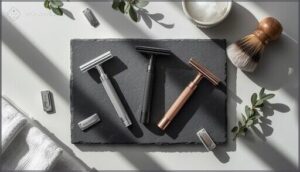
Picking the right safety razor isn’t complicated, but a few key factors can make or break your experience.
Your skin type, hair texture, and how a handle feels in your hand all play a bigger role than most beginners expect.
Here’s what to think about before you buy.
Factors to Consider
A few key factors separate a great first razor from a frustrating one. Start with blade aggressiveness — beginners do best with mild razors that forgive imperfect angles.
Weight balance matters too; heavier razors around 80–100 grams let gravity do the work, so you’re not pressing too hard.
Consider material durability, price range, and blade compatibility before buying. Sticking to standard DE blades keeps razor blade selection simple and affordable.
Skin Type and Hair Texture
Your skin type and hair texture quietly shape every shave you take. Matching your safety razor to your personal profile makes a real difference, especially for beginners.
- Sensitive Skin Care: Use mild blade exposure and shave with the grain to avoid redness and razor burn.
- Oily Skin Prep: Wash thoroughly beforehand; a single sharp blade reduces tugging and bacterial drag.
- Dry Mature Guidance: Choose low blade exposure and a rich cream for smoother glide.
- Fine Sparse Hair: A moderate, forgiving razor manages fine hair cleanly in one or two passes.
- Coarse Dense Hair: Sharp blades paired with a slightly more efficient razor cut through thick stubble without scraping.
Handle Length and Grip Preferences
Grip length shapes how much control you actually feel stroke by stroke.
Short grip benefits are real — a 2.5 to 3-inch grip lets your fingers steer precisely around your jawline and chin.
Longer grips, around 3.5 to 4 inches, work better for legs or larger areas.
Knurling texture on stainless steel keeps things steady when your hands are slick with soap.
Weight balance and diameter comfort matter too — a grip sitting near 1.15 cm wide gives beginners a relaxed, confident hold.
Safety Razor Types
Not all safety razors are built the same, and the type you pick will shape your whole shaving experience. The three main designs each suit a different skill level and skin needs.
Here’s a quick breakdown to help you figure out which style fits you best.
Closed Comb Razors
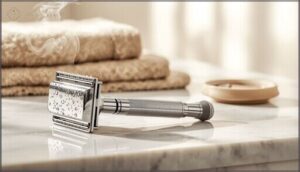
Closed comb razors are probably the best safety razors for beginners, and there’s a good reason they’re so popular. The design uses a flat bar that stretches your skin taut, allowing gentle skin contact while keeping blade exposure minimal. That flat bar mechanic is basically a built‑in beginner safety feature — fewer nicks, less drama.
They’re ideal for sensitive skin, daily shavers, and anyone still building confidence with their technique. Here’s what makes closed comb designs worth starting with:
- Reduced nicks thanks to smaller blade exposure
- Smooth, consistent shaving tips for beginners feel natural quickly
- Flat bar mechanics guide each stroke safely
- Closed comb design prevents over‑aggressive cuts
- Genuinely ideal for sensitive skin that reacts easily
Open Comb Razors

Open comb razors aren’t for everyone — but if you’ve got coarse hair or multi‑day growth, they’re worth knowing about.
The teeth channel lather and lift stubble directly to the blade, which means higher blade exposure and a closer result in fewer passes.
That steady technique demands, so most shaving tips for beginners recommend starting with a closed comb first.
| Feature | Open Comb | Closed Comb |
|---|---|---|
| Blade Exposure | High | Low |
| Best For | Coarse hair handling | Sensitive skin |
| Lather Channeling | Excellent | Moderate |
| Multi‑day Growth | Manages easily | Struggles |
| Beginner Friendly | Less so | Yes |
Adjustable Razors

Think of adjustable razors as the dial-your-own-adventure of shaving kit essentials. You tweak the gap settings — from a mild 0.9 mm up to an aggressive 1.9 mm — to match your beard and skin on any given day.
That dial mechanism gives beginners real precision tuning without buying multiple razors. The Parker Adjustable Injector is one solid example of user customization done right.
8 Best Safety Razors
Finding the right safety razor as a beginner doesn’t have to be overwhelming.
Each pick on this list was chosen with ease of use, comfort, and value in mind. Here’s a closer look at the eight best options worth your attention.
1. Vikings Blade Double Edge Safety Razor
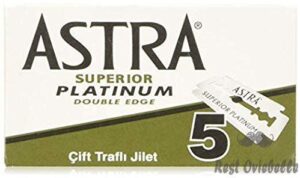
If you want a razor that feels serious without being intimidating, Vikings Blade Double Edge is worth a close look.
Its butterfly twist-to-open head makes blade swaps quick and foolproof — no fumbling with loose parts. The weighted metal handle sits comfortably in your hand, heavy enough to do the work without extra pressure from you.
The mild-to-moderate blade gap cuts cleanly while staying forgiving on skin, which is exactly what you need when you’re still dialing in your angle and technique.
Five platinum-coated Swedish steel blades come included to get you started.
| Best For | Beginners and experienced wet shavers who want a smooth, comfortable shave with good value for the money. |
|---|---|
| Handle Material | Weighted metal |
| Blade Type | Double edge |
| Blade Coating | Platinum-coated |
| Skill Level | Beginner-friendly |
| Blades Included | 5 blades |
| Skin Suitability | Sensitive skin |
| Additional Features |
|
- Platinum-coated steel blades glide smoothly and work well on sensitive skin and coarse hair
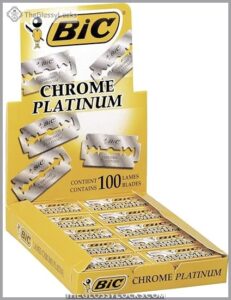
- Comes in a pack of 100, so you’re stocked up for a long time at a solid price per blade
- Compatible with all standard double edge razors, including the Vikings Blade safety razor
- Blades can dull after just 3–5 uses, so you’ll be swapping them out pretty often
- Not a good fit for anyone with a nickel allergy
- Occasional quality control issues mean you might run into a defective blade here and there
2. Weishi Safety Razor Butterfly Open Long Handle
Not every beginner needs to spend a lot to get started right. The Weishi Butterfly Open Long Handle is a solid proof of that.
Its twist-to-open butterfly mechanism lets you swap blades in seconds — no loose caps, no dropped parts. The long handle, roughly 4.3–4.5 inches, gives you better reach on your neck and jaw, and it’s thick enough to feel secure without being clunky. The brass core adds just enough weight to guide each stroke steadily.
The closed-comb head keeps things mild and forgiving, which matters when your technique is still coming together. For the price, it’s a genuinely smart starting point.
| Best For | Beginners who want a forgiving, easy-to-use safety razor without spending much. |
|---|---|
| Handle Material | Brass core |
| Blade Type | Double edge |
| Blade Coating | Standard |
| Skill Level | Beginner |
| Blades Included | Unspecified |
| Skin Suitability | General use |
| Additional Features |
|
- Butterfly open mechanism makes blade changes quick and hassle-free
- Long handle gives great control and reach, especially around the neck and jaw
- Mild closed-comb head is gentle enough for those still building their technique
- Some blades in the pack may have quality control issues, arriving blunt or uneven
- May cause skin irritation for certain users depending on skin type and technique
- Requires proper shaving form to get the most out of each blade’s lifespan
3. Rockwell 2C Razor 5 Blade Shaving Set
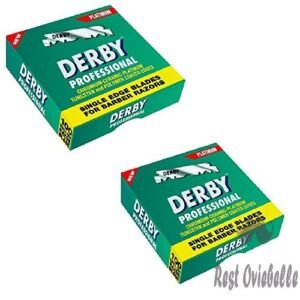
The Rockwell 2C takes a smarter approach to beginner shaving. Its reversible base plate gives you two settings — R1 for sensitive skin and lighter growth, R3 for everyday use — so you can dial in your comfort level as your technique improves.
The chromed zinc alloy construction feels noticeably solid in hand, and the deep-knurled handle stays grippy even when wet.
At roughly 95–100 grams, it’s heavy enough to let the razor do the work, which is exactly what new shavers need.
The included Swedish stainless steel blades are a practical bonus to get you started right away.
| Best For | Beginners who want a forgiving, budget-friendly blade that works with any straight or shavette-style razor. |
|---|---|
| Handle Material | Chromed zinc alloy |
| Blade Type | Double edge |
| Blade Coating | Swedish stainless |
| Skill Level | Beginner |
| Blades Included | Included |
| Skin Suitability | Sensitive skin |
| Additional Features |
|
- Stainless steel construction means they’re durable and hold up across multiple shaves
- Less aggressive edge makes them great for lining up haircuts and learning proper technique
- 200 blades across two packs gives you a very low cost per shave
- Not sharp enough for thick or coarse beard hair — you may burn through blades faster
- Shavers used to brands like Astra or Gillette Perma-sharp might find these underwhelming
- Quality consistency has reportedly slipped over time, so results can vary
4. Merkur Futur Adjustable Safety Razor
If you’re ready to invest in a razor you won’t outgrow, the Merkur Futur is worth serious consideration.
Built in Solingen, Germany from brass with a chrome finish, it’s solid without feeling clunky — around 135 grams, which is substantial but manageable.
The real draw is the six-setting dial that adjusts blade exposure from mild to aggressive, with micro‑steps in between. That means you can start gently on setting 1 and work up as your confidence builds.
The smooth handle rewards good technique, so it grows with you as your shaving skills sharpen.
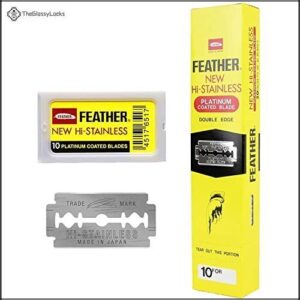
| Best For | Shavers who want a long-lasting, budget-friendly blade that works well with adjustable razors like the Merkur Futur and can handle thick or coarse beard hair. |
|---|---|
| Handle Material | Brass with chrome |
| Blade Type | Double edge |
| Blade Coating | Platinum-coated |
| Skill Level | Beginner to advanced |
| Blades Included | 200 blades |
| Skin Suitability | Normal to tough |
| Additional Features |
|
- Platinum-coated stainless steel gives you a seriously close, smooth shave with minimal tugging
- At around $0.22 per blade, you’re getting great value — 200 blades go a long way
- Fits most double edge razors, so you’re not locked into one setup
- Very sharp edge can be unforgiving for beginners or anyone with sensitive skin
- Blades only last 2–5 shaves, so you’ll be swapping them out pretty regularly
- You’ll want a solid pre-shave routine — skipping prep oil or aftershave increases the chance of irritation
5. Parker 99R Chrome Butterfly Razor
 View On Amazon
The Parker 99R takes a different approach from the Futur’s adjustable dial — instead of tuning aggressiveness, it keeps things simple with a fixed, mild-to-medium feel that suits most beginners well.
The brass frame with chrome plating feels genuinely solid in hand, around 4.0 oz, so the weight does most of the work for you.
Its butterfly mechanism lets you twist the bottom knob to pop the doors open and drop in a blade without touching the edge.
The spiral-knurled handle grips well even with soapy hands.
| Best For | Beginners who want a straightforward, no-fuss safety razor that’s forgiving on the skin and easy to load. |
|---|---|
| Handle Material | Brass with chrome |
| Blade Type | Double edge |
| Blade Coating | Standard |
| Skill Level | Beginner |
| Blades Included | Unspecified |
| Skin Suitability | General use |
| Additional Features |
|
- The butterfly opening makes blade changes quick and painless — no touching the edge at all.
- Solid brass frame with chrome plating feels substantial without being too heavy, so the razor guides itself.
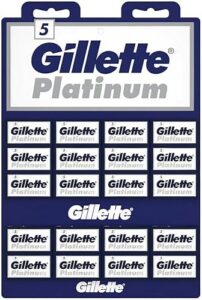
- Works great with budget-friendly blades like the Gillette Platinum 100-pack, keeping long-term costs low.
- Fixed mild-to-medium aggression means experienced shavers who want more control might find it limiting.
- Chrome plating can wear over time, especially with hard water or improper drying.
- Butterfly mechanisms have more moving parts than two-piece razors, so there’s slightly more to maintain.
6. Bevel Safety Razor for Coarse Hair
If coarse hair and razor bumps have been your biggest shaving frustrations, the Bevel Safety Razor was built with you in mind. Its brass-weighted handle — totaling about 88.65 grams — lets gravity do the heavy lifting, so you’re not pressing down and causing irritation.
The single double-edge blade cuts cleanly at a 30-degree angle without dragging through thick, curly hair. At $49.95 with 10 blades included, it’s a practical pick that pays for itself quickly while keeping your skin noticeably calmer after every shave.
| Best For | Anyone dealing with coarse, curly hair and razor bumps who wants a clean, close shave without the irritation that comes with cheaper, drag-prone blades. |
|---|---|
| Handle Material | Brass-weighted |
| Blade Type | Double edge |
| Blade Coating | Platinum & Teflon |
| Skill Level | Beginner |
| Blades Included | 10 blades |
| Skin Suitability | Coarse & curly hair |
| Additional Features |
|
- High-quality stainless steel with platinum and Teflon coatings means the blade glides smoothly, so you get a close shave with fewer nicks
- Works with any standard DE razor, including adjustable ones — great if you already have a setup you love
- 30 blades across three packs gives you solid value, especially since each blade holds up through multiple shaves
- May not be the best fit for sensitive skin, since some users report irritation
- Pricier than a lot of competing blade brands, which adds up over time
- Batch consistency can be hit or miss, so performance isn’t always perfectly predictable
7. Edwin Jagger DE89LBLAMZ Safety Razor
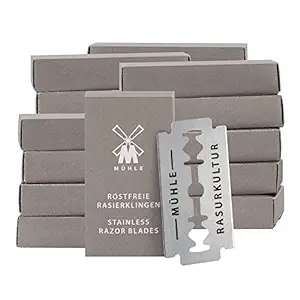
The Edwin Jagger DE89LBLAMZ is the kind of razor that quietly earns a permanent spot on your bathroom shelf.
Built from solid brass with triple chrome plating, it resists scratches and corrosion even with daily use.
The closed comb head has a 0.71 mm blade gap — mild enough to forgive beginner mistakes, sharp enough for a genuinely close shave.
At 68 grams and 93 mm long, it feels balanced in your hand without tipping forward.
It comes with a Feather blade included, so you’re ready to go right out of the box.
Sheffield craftsmanship at a price that makes sense.
| Best For | Anyone looking to ditch disposable razors for good — especially beginners and people with sensitive skin who want a gentle, close shave without the plastic waste. |
|---|---|
| Handle Material | Solid brass |
| Blade Type | Double edge |
| Blade Coating | Standard stainless |
| Skill Level | Beginner |
| Blades Included | 1 Feather blade |
| Skin Suitability | Sensitive skin |
| Additional Features |
|
- High-quality stainless steel blades that actually outperform most standard options
- Works with all safety razors, so you’re not locked into one brand
- 200 blades in a pack makes it seriously cost-effective over time
- Upfront cost is higher than your average drugstore blades
- Takes some practice — wrong technique and you risk nicks
- How long each blade lasts really depends on how you use and store them
8. Muhle R41 Double Edge Safety Razor
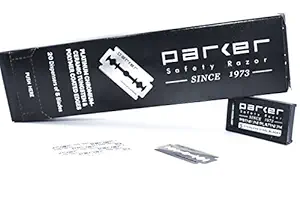
The Muhle R41 isn’t a razor you ease into — it’s one you earn.
With an open comb head, a blade gap of roughly 0.10 mm, and blade exposure around 0.15 mm, it cuts through thick, coarse hair in fewer passes than most razors will manage.
The chrome-plated die-cast head and brass core handle feel solid and well‑balanced at 64 grams. That knurled grip keeps things steady even with wet hands.
But here’s the honest truth: this razor rewards precise technique and punishes rushing. If you’re still building confidence with a safety razor, practice first — then graduate to the R41.
| Best For | Experienced wet shavers and barbers who want a close, efficient shave and have the technique to handle an aggressive razor. |
|---|---|
| Handle Material | Stainless steel |
| Blade Type | Double edge |
| Blade Coating | Platinum-tungsten-chromium |
| Skill Level | All levels |
| Blades Included | 100 blades |
| Skin Suitability | All skin types |
| Additional Features |
|
- Triple-layer platinum-tungsten-chromium coating means each blade stays sharp longer and glides smoothly with less tugging
- 100-blade bulk pack offers great value and keeps you stocked for months
- Works with any standard double edge safety razor, so you’re not locked into one handle
- Some users find these blades less sharp than alternatives like the Muhle R41’s preferred blades, which could mean more passes for coarse hair
- Bulk packaging means you’re committed upfront before knowing if the blade suits your skin
- May not satisfy shavers who prefer an ultra-aggressive edge for very thick or coarse hair
Benefits of Safety Razors
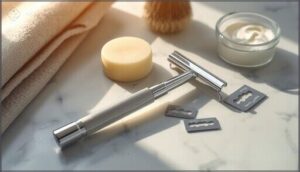
Switching to a safety razor isn’t just about the shave — it changes the whole experience.
Once you understand what you’re actually getting, it’s hard to go back to disposables. Here’s why so many beginners make the switch and never look back.
Smoother Shave Experience
A safety razor genuinely rewards good technique with noticeably smoother results. Five things that make the biggest difference:
- Blade Sharpness — a fresh blade glides, a dull one drags
- Angle Control — hold around 30 degrees for a clean cut
- Pressure Management — let the razor’s weight do the work
- Lather Consistency — thick, wet lather keeps the blade gliding
- Stroke Length — short strokes beat long sweeps every time
Gentler on Skin and Reduced Irritation
Your skin takes a hit with multi‑blade cartridges — each pass yanks hairs below the surface, setting up ingrown hairs and razor burn.
A single‑blade safety razor cuts cleanly at skin level, so there’s far less friction and irritation. Closed‑comb comfort, low blade exposure, and sensitive‑skin blades make wet shaving genuinely kinder for beginners.
| Factor | Cartridge Razor | Safety Razor |
|---|---|---|
| Blade passes per stroke | 3–5 blades | 1 blade |
| Ingrown hair risk | High | Low |
| Razor burn likelihood | Common | Minimal |
| Pre‑shave oil benefit | Moderate | Significant |
| Post‑shave balm needed | Often | Rarely |
Environmentally Friendly and Cost-Effective
Switching to a safety razor isn’t just better for your wallet — it’s better for the planet. Double‑edge replaceable blades cost as little as $0.30 each, keeping low‑cost maintenance realistic for beginners long‑term.
Switching to a safety razor saves money and the planet, with blades as low as $0.30 each
- Plastic Reduction: One metal razor replaces hundreds of disposable cartridges over its lifetime
- Metal Recycling: Steel blades and brass grips are fully recyclable — zero landfill guilt
- Blade Longevity: Proper razor blade maintenance extends each blade to 5–10 shaves easily
Beginner Friendly Tips

Getting your technique right makes all the difference when you’re just starting out with a safety razor.
few simple habits — how you prep your skin, what you lather up with, and how you move the blade — can take your shave from rough to really smooth.
Here’s what to focus on first.
Proper Skin Preparation Tips
Preparing well is half the battle in wet shaving.
Start with a warm water rinse or hot towel softening for 2–5 minutes to open pores and soften hair. Gentle exfoliation lifts dead skin and reduces razor bumps. Finish with 3–4 drops of pre‑shave oil massaged into damp skin.
| Prep Step | Why It Matters |
|---|---|
| Warm water rinse | Opens pores, softens hair |
| Hot towel softening | Relaxes follicles, reduces nicks |
| Gentle exfoliation | Clears debris, prevents ingrown hairs |
| Pre-shave oil | Creates a friction‑reducing barrier |
| Grain mapping | Guides blade direction, cuts irritation |
Using Shaving Cream or Soap
Once your skin is prepped and warm, a good lather does the heavy lifting. Lather thickness matters more than most beginners expect — aim for something like yogurt, not shaving foam from a can. That dense cushion gives your blade a slick glide over stubble without tugging.
- Match your product to your water: Hard water breaks down soap lather fast, so shaving cream manages wet shaving in those conditions better.
- Load your brush right: Synthetic brushes need less product; badger brushes hold more water, so shake out the excess before brush loading begins.
- Add water gradually: A little at a time builds post‑shave moisture protection into the lather itself — glossy and slick beats big and bubbly every time.
Mastering Short Strokes and Passes
Once your lather is ready, let the razor do the talking. Keep strokes short — around 1 to 2 inches — and hold the blade at a steady 30-degree angle.
Start with the grain on your first pass, then go across for your second. Rinse every few strokes to keep the blade clear. Light pressure, consistent angle, and proper pass sequencing are what turn shaving for beginners into a genuinely smooth routine.
Frequently Asked Questions (FAQs)
Is a safety razor a good choice for beginners?
Yes — a safety razor is a solid pick for beginners.
Pairing it with the right tools makes all the difference — check out this guide to the best shaving brushes for beginners to get a cleaner, closer lather every time.
Expect a short learning curve, real cost savings on blades, and noticeably less irritation once you nail the angle and light pressure.
How to choose the best safety razor if you only wanted one?
If you could only pick one, the Merkur 34C wins without argument.
Its closed comb, brass build, and neutral blade gap make it forgiving enough for beginners yet precise enough to keep forever.
Which Parker razor is best for beginners?
The Parker 99R is your best starting point — its twist-to-open butterfly mechanism makes blade changes simple, the brass construction feels balanced in hand, and it delivers a consistently mild, forgiving shave every time.
What is the best razor for beginners?
The Merkur 34C is your best starting point. Its 76-gram weight balance, textured grip, and mild blade gap make wet shaving feel manageable from day one — no guesswork, no regrets.
Is a safety razor good for beginners?
A safety razor is absolutely worth it for beginners.
Expect a 1–3 week learning curve, but once you nail light blade pressure and the right angle, you’ll get a closer, gentler shave every time.
Do dermatologists recommend safety razors?
Yes, many dermatologists do recommend safety razors, especially for sensitive skin or razor bump concerns.
A single blade reduces friction, cuts hair at skin level, and — with proper technique — causes far less irritation than multi-blade cartridges.
Are safety razors better for pubic hair?
For sensitive pubic grooming, a single sharp blade beats multi‑blade cartridges every time.
Fewer passes mean less irritation, fewer ingrown hairs, and cleaner results — just go slow and keep your angle around 30 degrees.
What is the best razor for a beginner?
Starting out, the Merkur 34C is hard to beat — its mild blade gap, balanced 5g handle weight, and forgiving closed comb make wet shaving approachable without overwhelming beginners.
Why is the Merkur 34c so popular?
The Merkur 34C has earned its reputation through a simple formula: mild performance, compact size, knurled grip, and brass durability — all at a price that makes it an easy first double edge safety razor for beginners.
What to know before buying a safety razor?
Before buying a safety razor, understand blade exposure levels, material durability, and price per blade. Beginners do best starting mild, mastering short strokes, and building confidence before upgrading.
Conclusion
first safety razor as a key—the right one unlocks a whole different relationship with your morning routine. best safety razor for beginners isn’t the most expensive or the most aggressive; it’s the one that fits your hand, respects your skin, and makes you want to shave again tomorrow.
forgiving geometry, learn your angle, and within a few weeks, that plastic cartridge will feel like a distant, overpriced memory.