This site is supported by our readers. We may earn a commission, at no cost to you, if you purchase through links. This content is for general informational and educational purposes only and is not a substitute for professional medical, dermatological, or nutritional advice.

Cartridge razors cost you more than you think. Over a year, most men spend $150 to $200 just on replacement heads—and the shave still isn’t that close.
The MicroTouch One made a bold promise when it hit late-night TV: a metal razor for around $20 that delivers a cleaner cut and costs pennies per blade. That kind of claim deserves scrutiny.
This MicroTouch One razor review breaks down the build quality, shaving performance, and real-world value so you know exactly what you’re buying before you spend a dollar.
Table Of Contents
- Key Takeaways
- MicroTouch One Razor: What You Get in The Box
- MicroTouch One Design and Construction Breakdown
- Shaving Performance: How Well Does It Actually Work?
- Proper Technique for Getting The Best Shave
- MicroTouch One Price, Value, and Who It is For
- Frequently Asked Questions (FAQs)
- Is MicroTouch good?
- What’s the best razor to shave your pubic hair?
- Are one blade razors actually better?
- Are one-blade razors actually better?
- How long does one safety razor blade last?
- Are single blade razors better for pubic hair?
- What is the best single blade razor?
- What is a micro touch one razor?
- What is the difference between a 4-blade and a Microtouch head shaver?
- What is the cost of Micro Touch One?
- Conclusion
Key Takeaways
- The MicroTouch One costs around $22 and comes with a stand, travel case, and five blades — making it one of the better out-of-the-box values in the safety razor space.
- Its mild blade exposure and fixed 30–45 degree angle make it forgiving for beginners, though it demands more passes on longer growth and clogs quickly without frequent rinsing.
- Switching from cartridges to this razor can cut your annual shaving costs dramatically, since double-edge blades run just 10–30 cents each versus 50–75 cents for cartridge heads.
- Technique matters more than the razor itself here — proper angle, light pressure, and re-lathering between passes are what separate a smooth shave from a frustrating one.
MicroTouch One Razor: What You Get in The Box
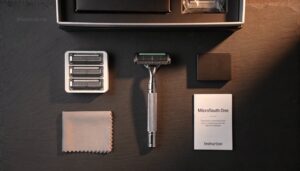
Before anything else, let’s talk about what’s actually in the box. MicroTouch One comes with more than just the razor itself, and knowing what’s included helps you decide if it’s worth the price tag.
If you’re curious how it stacks up against a similar option, these MicroTouch Solo reviews give you a solid baseline for comparison.
Here’s a breakdown of everything you get.
Razor, Stand, Travel Case, and Blades Included
When you open the box, everything you need is already there.
The MicroTouch One razor review starts strong on value — you get the razor itself, a metal razor stand with solid stand stability, a compact travel case built for portability features, and five blades to start.
It’s a clean, no-guesswork kit that works well for beginners and travelers alike.
Chrome-Plated Brass Body and Build Quality
The razor itself feels reassuringly solid in your hand. That’s the brass core doing its job — it gives the MicroTouch One razor real heft without bulk.
The chrome plated finish isn’t cosmetic fluff either. Controlled plating thickness improves hardness rating and corrosion resistance, so bathroom humidity won’t dull or pit it.
Surface finish uniformity stays consistent across every curve, and tight manufacturing tolerances mean nothing rattles or shifts.
Butterfly Opening Mechanism Explained
That solid brass feel carries right into how the MicroTouch One razor’s review-worthy feature really shines: butterfly head.
Twist the handle, and the doors hinge open — clean disc rotation angle, no fiddling with loose parts. The twist-to-open mechanism uses simple torque transfer to pull the blade guard design apart, letting blade insertion take seconds.
- Seal seat contact holds the blade flat and rattle-free
- Actuator lever design means one motion opens and closes everything
- basic lubrication routine on the hinge keeps it smooth long-term
How It Compares to The Van Der Hagen Safety Razor
Both razors share a butterfly opening and standard double-edge blade compatibility, but the differences matter.
The Van der Hagen uses brass construction — heavier, more durable long-term. The MicroTouch One leans on zinc alloy with a polished aesthetic design.
User feedback points to similar ease of cleaning, though handle length and manufacturing origin differ.
For travelers, the MicroTouch One’s included case tips the scale.
MicroTouch One Design and Construction Breakdown
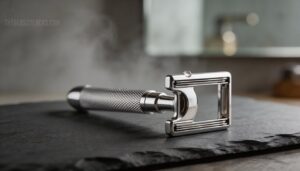
The MicroTouch One looks the part — chrome finish, metal build, no plastic in sight. But how it’s actually put together tells you a lot about what you’re getting for the price.
The build quality holds up well in practice — and if you’re weighing whether it’s worth the switch, wet shaving tips for smoother, closer skin walk through exactly what to expect from a razor built to last.
Here’s a closer look at the design details that matter most.
Single-Blade Double-Edge Safety Razor Architecture
The MicroTouch One is built around classic double edge safety razor architecture — one blade, two usable edges, and a fixed angle geometry that takes the guesswork out of cutting depth. The blade clamp mechanics secure the blade between two head plates, eliminating wobble.
A safety guard design limits blade exposure just enough to protect skin, while open comb vs safety bar design affects how hair feeds into the cut.
Knurled Handle Grip and Weight Feel
Pick up the MicroTouch One, and the knurled handle immediately tells you something. The textured grooves deliver solid Grip Texture Feedback — your fingers stay locked in place even with soapy, wet hands. That Moisture-Resistant Grip matters more than you’d think mid-shave.
The solid brass body gives it real Weight Distribution Balance, and the razor weight balance keeps Ergonomic Pressure Control natural. Knurl Wear Longevity holds up well over time.
Blade Insertion via Twist-Handle System
Changing a blade here is genuinely simple. You twist the bottom of the handle, and the butterfly head opens right up — that’s the twist-to-open mechanism doing its job.
Blade alignment guides keep everything seated straight, so there’s no guesswork. You’ll feel a distinct interlock safety click when the blade is locked.
One-handed blade change, blade seating feedback included. No fumbling, no second-guessing.
Blade Exposure Level and Shaving Aggressiveness
The MicroTouch One razor review wouldn’t be complete without talking blade exposure — and here, it leans mild. The blade gap is narrow, guard span tight, keeping skin interaction gentle. That’s good news for beginners.
Aggressiveness tuning is fixed, so you can’t adjust it, but the low blade exposure control means fewer nicks. It’s not an aggressive safety razor — and that’s the point.
The importance of blade exposure influences aggressiveness is highlighted in razor geometry guides.
Shaving Performance: How Well Does It Actually Work?
Design and marketing can only take a razor so far — what actually matters is how it performs on your face.
The MicroTouch One has a few real strengths, but it also has some limitations worth knowing before you commit.
Here’s a closer look at how it holds up across four key performance areas.
First-Pass Results on Short Vs. Long Growth
Short growth efficiency is where the MicroTouch One razor genuinely earns its keep. Keep your stubble short, and blade drag reduction is noticeable — fewer strokes, less friction, cleaner results. Let it grow out, and long growth irritation becomes a real factor.
Long beard shaving demands more passes and careful angle control. Your technique matters more than the razor itself.
Handling Razor Clogging and Hair Buildup
Clogging is where long hair really tests this razor. Hair gets wedged between the blade and the guard fast — especially past a week’s growth. The blade gap design is tight, and there are no integrated rinse holes to flush buildup quickly.
Your fix: rinse every two to three strokes, use a soft brush cleaning pass after shaving, and don’t skip post-shave drying. Hard water impact makes mineral buildup worse over time.
Performance Around The Jawline, Chin, and Upper Lip
These three zones demand your full attention. The MicroTouch One razor review community consistently flags the jawline, chin, and upper lip as the trickiest spots — and for good reason.
- Jawline Edge Control requires a steady 30–45-degree angle; no pivoting head means you guide it manually
- Chin Skin Tension is naturally tight, so light pressure prevents blade drag across that rigid surface
- Upper Lip Mobility makes the skin shift unexpectedly — stretch it gently before each stroke
- Hair Direction Mapping matters here; reverse grain strokes clean up what the first pass misses
- Blade Glide Variation signals when your angle drifts — that slight tug tells you to adjust immediately
Its blade exposure control rewards patience over pressure.
How It Stacks Up Against The Merkur 180
Once you’ve conquered those tricky spots, you’ll want to know how the Microtouch One razor holds up against a real competitor.
| Feature | Microtouch One | Merkur 180 Safety Razor |
|---|---|---|
| Handle Length Reach | Shorter | 98mm long handle |
| Blade Edge Sharpness | Mild-moderate | Mild, forgiving |
| Maintenance Corrosion Resistance | Chrome-plated brass | Chrome-plated brass |
Both share solid Blade Brand Compatibility for wet shaving — but the Merkur costs $35 with no stand included.
Proper Technique for Getting The Best Shave
The MicroTouch One can deliver a genuinely smooth shave — but only if your technique is solid. A good razor won’t save you from bad habits, and a few small adjustments make a bigger difference than you’d expect.
Here’s what actually matters before and during your shave.
Pre-Shave Skin Prep and Moisturizing Steps

Before you even pick up the razor, your skin needs a moment. If you didn’t shower, press a warm towel against your face for a minute or two — it softens the hair and relaxes the skin.
Follow that with gentle exfoliation before shaving, then apply a moisturizer buffer or pre-shave oil. Hydration timing matters: keep skin damp, not dry, so the lather application actually sticks.
Choosing The Right Shaving Cream or Soap

Once skin is prepped and damp, what you lather up with matters more than most people expect. For the MicroTouch One razor, skip canned gel — it dries fast and offers thin protection.
shaving cream or shaving soap with strong emollient content gives you the cushion that a single blade needs. Sensitive skin formulas with aloe or glycerin work especially well.
Hard water compatibility is worth checking too, since mineral-heavy tap water can collapse your lather consistency mid-shave.
Holding The Razor at The Correct Angle and Pressure

Think of it as a handshake, not a push. Hold the MicroTouch One at an angle of between 30 and 45 degrees, letting weight take care of the actual work.
Light grip pressure is everything here — wrist lock technique keeps your stroke steady while skin tension control flattens the shave path. Angle consistency matters more than speed.
Let the razor kiss the hair, not fight it. Following the correct razor angle helps reduce irritation.
Multi-Pass Shaving and Re-Lathering Between Passes

One pass rarely finishes the job. With the MicroTouch One, two or three shaving passes — re-lathering between each — give you noticeably closer results.
Lather reapplication timing matters: aim for 15 to 30 seconds per pass. Water balance adjustment keeps your lather slick, not soupy. Fresh lather maintains skin hydration, helps blade glide enhancement, and lets light pressure do the work without drag.
MicroTouch One Price, Value, and Who It is For
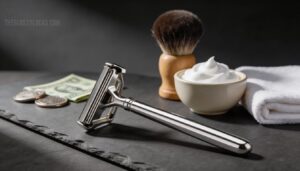
The MicroTouch One sits at a price point that makes it easy to say yes — but is it actually worth your money long-term? That depends on a few things: what you’re comparing it to, how often you shave, and what you value in a razor.
Here’s a closer look at the numbers, the savings, and whether this razor is the right fit for you.
Cost Comparison With Competing Safety Razors
The MicroTouch One Razor sits at roughly $22 at Target — fair for what’s included. Here’s how it stacks up against comparable safety razors:
- MicroTouch One – $22, includes stand and blades
- Merkur 180 – $35, no stand included
- Parker 82R – ~$30, travel-friendly build
- Rockwell T2 – ~$40, all-metal, plastic-free
- Muhle R41 – $50+, aggressive exposure, premium finish
Blade price variability matters too. Initial purchase cost is just one part of the cost analysis of starter shaving kits — bulk purchase discounts on double-edge blades keep the price point competitive long-term.
Long-Term Blade Savings Vs. Cartridge Razors
The numbers tell a clear story.
Safety razor blades run 10 to 30 cents each — cartridge replacements cost 50 to 75 cents, and you’re swapping them out far more often. That blade price trajectory stays stable over time, while cartridge replacement frequency drives costs into the hundreds annually.
Safety razor blades cost pennies; cartridge habits cost hundreds
With the MicroTouch One razor, your long-term savings ratio compounds quietly but meaningfully.
Environmental Benefits of Switching to a Safety Razor
Every disposable razor you toss adds to a staggering 163 million American users’ worth of plastic waste annually. The MicroTouch One razor flips that equation through real environmental advantages built into its design:
- Reduced Plastic Waste — metal handle lasts years; only the blade gets replaced
- Long-Lasting Materials — chrome-plated brass resists corrosion and wear
- Blade Recycling — stainless steel blades go into standard metal recycling streams
- Minimal Packaging — blade packs are compact, lightweight, low-waste
- Travel Efficiency — one durable case replaces stacks of disposables on every trip
The sustainability of reusable grooming tools like this is quiet but cumulative.
Best Candidates: Beginners, Budget Shavers, and Travelers
Not everyone needs a $50 razor to get a clean shave.
The MicroTouch One fits three types of shavers well: beginners tackling the beginner learning curve with a forgiving blade exposure, budget shoppers who want a budget blade choice without sacrificing quality, and travelers who value travel shave convenience, compact portability, and easy blade replacement.
The included travel case makes it a practical, no-fuss travel shaving accessory.
Frequently Asked Questions (FAQs)
Is MicroTouch good?
solid pick for the price.
MicroTouch One safety razor delivers reliable performance, decent blade longevity, and surprising maintenance ease — making it a beginner-friendly entry into traditional wet shaving.
What’s the best razor to shave your pubic hair?
For sensitive skin down there, a safety razor beats cartridges. The MicroTouch One razor’s mild blade exposure and wet shaving technique minimize irritation.
Match blade sharpness to hair coarseness, and always follow with post-shave care.
Are one blade razors actually better?
Fewer blades, fewer problems? Often, yes.
A single blade cuts hair cleanly without repeated tugging, which lowers skin irritation.
The learning curve is real, but blade lifespan and user satisfaction tend to reward the effort.
Are one-blade razors actually better?
Single blade razors cut cleaner and cause less skin irritation than multi-blade cartridges. With proper technique and consistent razor maintenance, one blade often outperforms the rest.
How long does one safety razor blade last?
Most safety razor blades last 5 to 7 shaves. Coarser hair and hard pressure shorten that. Rinse after each pass, store blades dry, and you’ll stretch every blade further.
Are single blade razors better for pubic hair?
One blade can be infinitely gentler down there than a cartridge.
For pubic hair, single blade efficiency shines — less blade aggressiveness means fewer shaving irritations, better ingrown hair prevention, and real moisture retention where sensitive skin safety matters most.
What is the best single blade razor?
The MicroTouch One razor stands out for blade brand compatibility, consistent edge sharpness, and low skin irritation potential.
Its cost-effective grooming appeal, solid blade durability, and reliable blade sharpness make it a smart pick.
What is a micro touch one razor?
Crafted for classic, close shaves, the Micro Touch One safety razor is a chrome-plated, brass-bodied double-edge razor built for beginners seeking a clean, affordable alternative to disposable cartridge systems.
What is the difference between a 4-blade and a Microtouch head shaver?
A 4-blade cartridge shaver offers less coverage area and blade flexibility than the MicroTouch head shaver, which uses five floating blades. The MicroTouch also runs cordless, so battery life and noise level matter more.
User learning curve differs.
What is the cost of Micro Touch One?
Like a diner menu price, the MicroTouch One’s retail price looks simple until you add shipping fees. Direct orders run $99, but standard shipping adds $99 — bringing your total to around $
Conclusion
Let’s face it: smooth skin doesn’t have to break the bank. The MicroTouch One razor review shows this affordable option delivers on its promise of a close shave without the hefty price tag.
With its durable build and low-cost blades, it’s a smart choice for those seeking a reliable shaving experience. In this microtouch one razor review, it’s clear that upgrading to this safety razor can save you money and hassle in the long run, every day.