This site is supported by our readers. We may earn a commission, at no cost to you, if you purchase through links. This content is for general informational and educational purposes only and is not a substitute for professional medical, dermatological, or nutritional advice.
You scratch your scalp through your shirt sleeve in a meeting, then find white flakes dusting your shoulders an hour later.
Scalp psoriasis doesn’t just itch, it builds thick, stubborn plaques that regular shampoo slides right past. The problem isn’t hygiene, it’s an immune system pushing skin cells to multiply up to ten times faster than they should.
The right bottle can change that. The best shampoo for psoriasis contains ingredients like salicylic acid or coal tar that dissolve scale and calm the flare underneath.
Below, you’ll find ten dermatologist-approved picks matched to your symptoms, hair type, and budget.
Table Of Contents
- Key Takeaways
- Scalp Psoriasis Symptoms, Causes, and Flare-Up Triggers
- Active Ingredients That Actually Treat Scalp Psoriasis
- How to Choose The Right Psoriasis Shampoo for Your Scalp
- Top 10 Best Shampoos for Psoriasis
- 1. Salicylic Acid Psoriasis Scalp Shampoo
- 2. Neutrogena Anti Dandruff Shampoo Treatment
- 3. Salicylic Acid Dandruff Shampoo Treatment
- 4. Sphagnum Natural Psoriasis Relief Shampoo
- 5. Nizoral Anti Dandruff Shampoo Solution
- 6. Medicated Psoriasis Shampoo Conditioner Treatment
- 7. Biolage Anti Dandruff Shampoo Treatment
- 8. Selsun Blue Anti Dandruff Shampoo
- 9. Natural Psoriasis Scalp Care Shampoo
- 10. Salicylic Acid Dandruff Relief Shampoo
- How to Use Psoriasis Shampoo for Best Results
- Frequently Asked Questions (FAQs)
- What organ is linked to psoriasis?
- What clears up psoriasis on the scalp?
- What should I wash my hair with if I have psoriasis?
- Which shampoo should I use for psoriasis?
- Can psoriasis shampoo be used on color-treated hair?
- How often should I wash hair with psoriasis?
- Are psoriasis shampoos safe during pregnancy or breastfeeding?
- Can children use psoriasis shampoo safely?
- Does health insurance cover prescription psoriasis shampoos?
- Can psoriasis shampoo be used on children?
- Conclusion
Key Takeaways
- Shampoos manage scalp psoriasis symptoms, not the root cause—they work best as a prep step paired with prescription topicals like corticosteroids for deeper inflammation.
- Match the active ingredient to your main problem: salicylic acid (up to 3% OTC) dissolves thick scale, coal tar slows runaway skin-cell growth, and ketoconazole or zinc pyrithione tackle yeast-driven flaking.
- Proper technique matters as much as the bottle: massage directly onto plaques, leave it on for the label’s full contact time (usually 3–5 minutes), and stick to 2–3 washes per week to avoid drying or irritation.
- Skip fragrance, menthol, and drying alcohols if your scalp is sensitive, patch-test new products, and see a dermatologist if plaques spread, thicken, or your shampoo stops working.
Scalp Psoriasis Symptoms, Causes, and Flare-Up Triggers
Scalp psoriasis can feel confusing when you’re not sure what’s driving it. Understanding your symptoms, causes, and triggers gives you a real foundation for choosing the right treatment. Here’s what you need to know.
A gentle routine of scalp exfoliation for dandruff control can also help clear away flakes and buildup before they worsen.
Common Scalp Symptoms
While no two cases look identical, scalp psoriasis shares five telltale signs:
- Persistent itching that worsens during flares
- Flaking and scaling from thick, adherent plaques
- Redness and tenderness beneath scaling patches
- Bleeding when scratching breaks the skin
- Spread beyond the hairline to the forehead or ears
Plaques are thicker than standard dandruff, and the itching and burning can feel relentless.
Underlying Immune Causes
Those symptoms aren’t just surface irritation. Scalp psoriasis is rooted in a misfiring immune response that pushes skin cells to turn over far faster than normal, building the thick plaques you see.
The IL-23/Th17 pathway fuels this chronic cycle, sustaining inflammation and driving keratinocytes into overdrive. Genetics set the stage, but your immune system keeps the fire burning.
Typical Flare-Up Triggers
Since that immune fire is always smoldering, certain sparks set it off. Stress-induced psoriasis is well documented, and poor sleep makes it worse. Alcohol and psoriasis triggers go hand in hand, as do smoking and skin inflammation. Infections, tight hats, harsh shampoos, and stopped medications can all ignite plaques.
For flare-up prevention, track your triggers and try scalp sensitivity testing with new products.
Signs Of Worsening
Itching that climbs in intensity is your first clue. Watch for plaques spreading to new spots, borders blurring as lesions merge, and scaling that thickens or starts crusting. Flakes suddenly everywhere? That tracks with a flare. Redness creeping toward your hairline or ears matters too. And if your shampoo stops working, that’s inadequate control, not failure on your part.
Active Ingredients That Actually Treat Scalp Psoriasis
Shampoos can’t cure psoriasis, but the right active ingredients can thin plaques and calm inflammation. Salicylic acid (1–6%) is your scale-buster: it dissolves thick crust so other treatments reach the skin. Coal tar slows the runaway skin-cell growth driving plaques and eases itch, though it has that classic tar smell.
Ketoconazole and zinc pyrithione earn their spot when seborrheic dermatitis overlaps with your psoriasis, since yeast on the scalp can fuel flaking. Selenium sulfide works similarly, reducing scale and itching with antifungal and anti-inflammatory action.
Here’s the catch: shampoos treat the surface, not the deeper inflammation. For moderate to severe plaques, pair your shampoo with prescription topicals like corticosteroids or calcipotriol. Think of shampoo as the groundwork crew, not the whole build.
Shampoos only prep the surface—pair them with prescription topicals like corticosteroids to treat deeper inflammation
How to Choose The Right Psoriasis Shampoo for Your Scalp
So you know what’s in the bottle, but which shampoo actually fits your scalp? The right pick depends on your symptoms, hair type, and trigger list, not just the loudest claim on the label. Here’s a quick framework to help you choose with confidence.
Compare Active Ingredients
Here’s the truth: not all active ingredients fight the same battle. Salicylic acid breaks down thick scales first, so other treatments can reach your skin. Coal tar and steroids calm inflammation underneath. Ketoconazole, zinc pyrithione, and selenium sulfide target yeast that worsens flaking in mixed conditions. Pick your dominant problem, scale, inflammation, or microbes, and match the ingredient to it.
Match Symptoms And Severity
Here’s a number worth knowing: studies suggest up to 80% of people with plaque psoriasis develop scalp involvement, yet many grab the wrong bottle.
That’s why checking honest ingrown hair prevention product reviews before buying can save your scalp from a lot of unnecessary irritation.
Why? Because matching matters. Thick, greasy scale calls for salicylic acid to loosen buildup first. Red, tender patches do better with gentler formulas like ketoconazole or coal tar.
Ask yourself: is my scalp flaky, inflamed, or both? A dermatologist recommended approach treats what you actually see, not what the label promises.
Consider Hair Type
A patient once told me her medicated shampoo worked "great" but her plaques never budged. Turns out her thick coils were catching every drop before it reached her scalp. That’s why hair type compatibility matters.
Fine hair does better with a sulfate free, lightweight wash; coarse or curly hair needs direct scalp application at part lines. If you condition, keep it off the scalp, and choose a moisturizing scalp shampoo that’s fragrance free if you’re irritation-prone.
Avoid Potential Irritants
Here’s the twist: an "anti-dandruff" label doesn’t guarantee a gentle formula. Scan the ingredient list for fragrance, menthol, and drying alcohols, all common troublemakers on inflamed skin. If your scalp stings after washing, that’s your cue.
Look for fragrancefree, sulfatefree options, and consider preservativefree or alcoholfree formulas if you have sensitive scalp care needs.
Review Safety Precautions
Here’s the thing: a shampoo can be dermatologist recommended and still wrong for you. Before you lather up, run this quick safety check:
- Patch test behind your ear for two days
- Skip fragrance and choose fragrance free, sulfate free formulas
- Never stack multiple medicated OTC products
- Rinse eyes immediately if contact occurs
- Stop if burning, spreading redness, or tenderness appears
Top 10 Best Shampoos for Psoriasis
You’ve matched your symptoms, checked your hair type, and skipped the irritants. Now comes the fun part: finding a shampoo that actually works. Here are our top 10 picks, each chosen with a dermatologist’s eye for ingredients, gentleness, and real-world results.
1. Salicylic Acid Psoriasis Scalp Shampoo
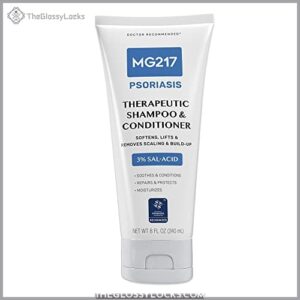
When thick scale builds up on your scalp, it can block treatment from reaching inflamed skin underneath. That’s where 3% salicylic acid earns its top billing. This keratolytic loosens the glue holding scaly keratin together, so plaques shed more easily and your other actives penetrate better.
MG217’s version pairs that acid with a built-in conditioner, plus chamomile extract and panthenol to soothe irritation. You get 8 ounces in one bottle, and it targets scaling from psoriasis alongside dandruff and seborrheic dermatitis itching.
A few honest caveats: some users find it drying, lathering can take extra product, and feedback on long-term value is mixed. If your scalp is cracked or broken, check with your dermatologist first, since compromised skin absorbs more and stings easily.
| Best For | People with scalp psoriasis, seborrheic dermatitis, or stubborn dandruff who want a single shampoo-and-conditioner step to loosen scaling and calm itching. |
|---|---|
| Active Ingredient | 3% Salicylic Acid |
| Target Conditions | Psoriasis, Dandruff, Seborrheic Dermatitis |
| Scalp Soothing | Chamomile, Panthenol |
| Recommended Frequency | Regular Use |
| Hair Conditioning | Built-In Conditioner |
| Drying Risk | Can Dry Scalp |
| Additional Features |
|
- 3% salicylic acid helps break down and remove thick scalp scaling and build-up
- Built-in conditioner with chamomile extract and panthenol soothes the scalp
- Addresses multiple conditions at once, including psoriasis, dandruff, and dry, itchy scalp
- May cause scalp dryness in some users
- Lathering can be weak, requiring more product per wash
- Feedback on value for money and long-term effectiveness is mixed
2. Neutrogena Anti Dandruff Shampoo Treatment

If MG217’s formula felt a bit heavy, Neutrogena’s T/Sal takes a lighter approach with 2.5% salicylic acid, still enough to soften stubborn scale without the weight. You’ll get a cooling peppermint sensation, which some scalps love and sensitive ones find intense. The fragrance can also read strong, so keep that in mind if your skin flares easily.
Use it three times weekly, massaging directly onto plaques so the acid makes real contact. Expect visible lifting within a few weeks, though it may feel drying on hair ends, so follow with conditioner on lengths only. It’s fragrance-forward rather than fragrance-free, and that cooling hit is part of its charm, but patch-test first if your scalp is cracked or raw.
| Best For | People with stubborn, flaky scalp buildup who want a lighter, clinically proven salicylic acid treatment and don’t mind a strong peppermint fragrance. |
|---|---|
| Active Ingredient | 2.5% Salicylic Acid |
| Target Conditions | Dandruff, Flaky Scalp |
| Scalp Soothing | Peppermint Cooling |
| Recommended Frequency | Three Times Weekly |
| Hair Conditioning | Conditioner Needed |
| Drying Risk | Drying On Ends |
| Additional Features |
|
- Contains 2.5% salicylic acid that softens and lifts stubborn scale without weighing hair down
- Clinically proven to control itchy, flaky scalp and helps prevent dandruff from returning
- Starts working from the first use and keeps working after rinsing, with a cooling peppermint sensation
- Can feel drying on hair ends unless you follow with conditioner
- The cooling sensation may be too intense for sensitive or raw scalps
- The strong fragrance may bother users who prefer fragrance-free products
3. Salicylic Acid Dandruff Shampoo Treatment
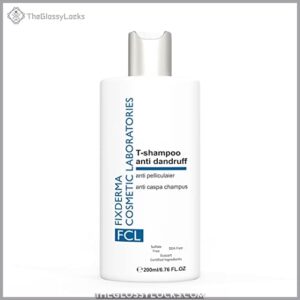
Prefer something gentler than Neutrogena’s cooling tingle? This salicylic acid dandruff shampoo takes a softer route to the same goal. It uses salicylic acid as a keratolytic, loosening the bonds between dead skin cells so plaque scale lifts and rinses away instead of piling up.
Because it’s a rinse-off formula, contact time does the heavy lifting. Massage the lather onto plaques, not just your hair, and let it sit three to five minutes before rinsing. Use it two to three times weekly.
Fair warning: salicylic acid can sting an already inflamed scalp, so skip it during raw flares. It targets scale, not the root cause, so pair it with your other treatments.
| Best For | People dealing with dandruff, scalp psoriasis, or seborrheic dermatitis who want a gentler, non-medicated-feeling alternative to stronger treatments. |
|---|---|
| Active Ingredient | Salicylic Acid |
| Target Conditions | Dandruff, Psoriasis, Seborrheic Dermatitis |
| Scalp Soothing | Tea Tree Oil |
| Recommended Frequency | Two-Three Times Weekly |
| Hair Conditioning | May Dry Hair |
| Drying Risk | Can Dry Hair |
| Additional Features |
|
- Combines salicylic acid, sodium shale oil sulfonate, and tea tree oil to target scale buildup, itching, and irritation from multiple angles
- Formulated for long-term use two to three times a week without harsh side effects for most users
- Works as a keratolytic, lifting and rinsing away dead skin cells rather than just masking symptoms
- Can dry out hair with regular use, which may be a concern for people who already have dry or damaged strands
- Some users notice a faint industrial odor, which can make the experience less pleasant
- Results vary from person to person, so it may not work equally well for everyone
4. Sphagnum Natural Psoriasis Relief Shampoo
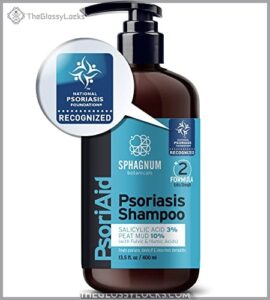
If the salicylic acid shampoo above feels too clinical, this one leans botanical. Sphagnum Natural Psoriasis Relief Shampoo pairs 3% salicylic acid with peat mud to target scale while calming irritation through plant-derived ingredients.
The dark color surprises most people, but the formula lathers better than you’d expect and leaves a light, natural scent rather than the coal tar smell that turns many people off medicated options. Argan oil and panthenol help keep your hair noticeably soft after each wash.
Results can vary, though. Some users see no improvement, and it’s not a long-term fix for everyone. Twice-weekly use with a three-to-five-minute dwell time gives you the best shot at seeing a difference.
| Best For | People bothered by the clinical feel of standard medicated shampoos who want a more natural approach to managing scalp psoriasis. |
|---|---|
| Active Ingredient | 3% Salicylic Acid |
| Target Conditions | Psoriasis, Scalp Irritation |
| Scalp Soothing | Peat Mud |
| Recommended Frequency | Twice Weekly |
| Hair Conditioning | Argan Oil, Panthenol |
| Drying Risk | Can Dry Hair |
| Additional Features |
|
- Combines 3% salicylic acid with peat mud to tackle scale and soothe irritation at the same time
- Lathers well and leaves a light, pleasant scent instead of the harsh coal tar smell common in medicated options
- Argan oil and panthenol keep hair feeling soft after each wash
- Can dry out hair for some users
- Results vary widely, and some users see no improvement at all
- Not a reliable long-term solution for everyone
5. Nizoral Anti Dandruff Shampoo Solution
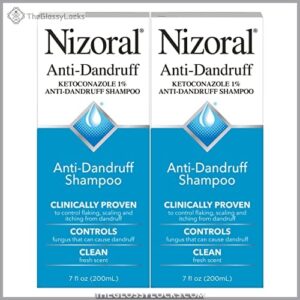
Ketoconazole 1% is what separates Nizoral from a standard dandruff shampoo. It’s a clinically proven antifungal that directly targets scalp yeast, which frequently coexists with psoriasis and can greatly increase flaking, scaling, and itch.
That distinction matters: ketoconazole’s psoriasis benefit is indirect. Psoriasis is primarily immune-driven rather than fungal, so Nizoral does its best work when yeast overgrowth is actively piling onto your symptoms. It won’t replace a psoriasis-specific treatment, but it can lift real pressure off an inflamed scalp and reduce the itch-scratch cycle.
Aim for twice-per-week use as recommended. It’s gentle enough for color-treated and chemically processed hair, which is a practical plus. Watch for dryness, though, which some users notice over time.
| Best For | People with dandruff driven or worsened by scalp yeast, particularly those dealing with psoriasis flare-ups who want to reduce fungal buildup without irritating color-treated or chemically processed hair. |
|---|---|
| Active Ingredient | 1% Ketoconazole |
| Target Conditions | Dandruff, Scalp Yeast |
| Scalp Soothing | Gentle Formula |
| Recommended Frequency | Twice Weekly |
| Hair Conditioning | Color-Safe |
| Drying Risk | Can Cause Dryness |
| Additional Features |
|
- Contains ketoconazole 1%, a clinically proven antifungal that targets the scalp yeast commonly responsible for flaking, scaling, and itch
- Safe for color-treated, chemically processed, and gray hair, making it broadly usable without worrying about damage
- Only requires twice-weekly use to maintain results, keeping the routine simple
- Can cause dryness over time, so those with already dry scalps may need to adjust usage or pair it with a conditioner
- Pricier than most over-the-counter dandruff shampoos, which can be a drawback for long-term maintenance
- Addresses fungal contributors to scalp issues rather than psoriasis itself, so it works best as a complement to other treatments rather than a standalone solution
6. Medicated Psoriasis Shampoo Conditioner Treatment
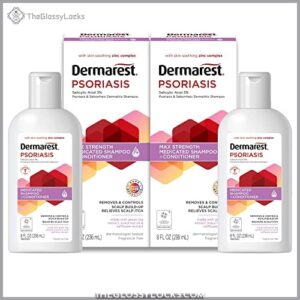
Dermarest’s medicated shampoo-conditioner clears scale and conditions your scalp in a single step, which is something most OTC options don’t offer. The 3% salicylic acid loosens and lifts stubborn buildup, while the zinc complex helps reduce inflammation and flaking. Its conditioner base keeps those actives in contact with your scalp longer than a standard rinse-off formula, giving them more time to work.
It’s fragrance-free, dermatologist tested, and recognized by the National Psoriasis Foundation, so it checks all the boxes. Use it two to three times a week and let it sit for three to five minutes before rinsing. Overdoing it can cause dryness, so stick to the label and keep it away from your eyes.
| Best For | People with scalp psoriasis or stubborn flaking who want a medicated treatment that also conditions in one step. |
|---|---|
| Active Ingredient | 3% Salicylic Acid |
| Target Conditions | Psoriasis, Flaking |
| Scalp Soothing | Zinc Complex |
| Recommended Frequency | Two-Three Times Weekly |
| Hair Conditioning | Conditioner Base |
| Drying Risk | Overuse Dries |
| Additional Features |
|
- Combines 3% salicylic acid and a zinc complex to lift buildup while reducing inflammation and flaking
- Conditioner base keeps active ingredients on the scalp longer for better results
- Fragrance-free, dermatologist tested, and recognized by the National Psoriasis Foundation
- Must be left on for three to five minutes, which takes longer than a standard shampoo
- Overuse can dry out hair and scalp
- Results vary, and some users report continued flaking or irritation
7. Biolage Anti Dandruff Shampoo Treatment
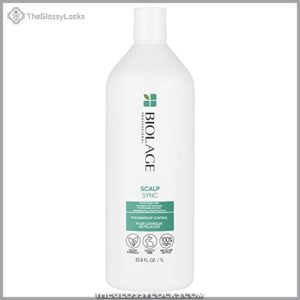
Picture your scalp finally quiet: no tight, itchy patches, no snowfall on your shoulders when you brush. That’s the promise behind Biolage Anti Dandruff Shampoo Treatment, and honestly, the numbers back it up. It holds a 4.8 rating from over 4,000 users, with 84% reporting less flaking within two weeks.
Its 1% zinc pyrithione targets the fungus driving flare-ups, while glycolic acid gently lifts buildup and peppermint delivers a cooling, itch-calming sensation. The fermented tea mix adds antioxidant soothing, and it’s paraben-free and silicone-free, so it won’t strip color-treated or dry hair.
Massage it in, leave it for one to three minutes, then rinse. Yes, it’s $45, and some find it slightly drying, but pairing it with a deep conditioner makes it worth it.
| Best For | Anyone with dandruff, flaking, or an itchy, irritated scalp—including oily, dry, or color-treated hair—who wants a medicated treatment that still feels gentle. |
|---|---|
| Active Ingredient | 1% Zinc Pyrithione |
| Target Conditions | Dandruff, Itchy Scalp |
| Scalp Soothing | Peppermint, Fermented Tea |
| Recommended Frequency | Regular Use |
| Hair Conditioning | Color-Safe, Silicone-Free |
| Drying Risk | Slightly Drying |
| Additional Features |
|
- Contains 1% zinc pyrithione to effectively target dandruff and control visible flakes
- Glycolic acid gently exfoliates scalp buildup without stripping natural oils or color
- High user satisfaction, with 84% reporting less flaking within two weeks
- Priced at $45, which some reviewers consider expensive for the bottle size
- May feel slightly drying, requiring a deep conditioner alongside it
- Some users report hair becoming oily again within a day of use
8. Selsun Blue Anti Dandruff Shampoo
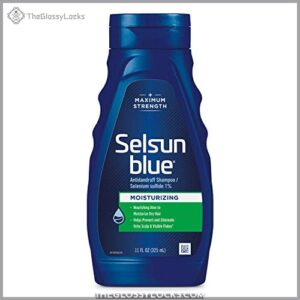
Imagine running a comb through your hair and watching a fine snow of flakes drift onto your shoulders. That’s the frustration Selsun Blue aims to end. Its 1% selenium sulfide formula works by calming the yeast activity and surface buildup that drive flaking, which can also soften psoriasis scale on the scalp. You won’t find SLS, parabens, phosphates, or phthalates here, and added aloe helps offset the dryness selenium sulfide sometimes causes.
Massage it into your scalp, let it sit a few minutes, then rinse thoroughly. Keep it away from your eyes. If burning or worsening redness shows up, stop and check with your dermatologist.
| Best For | People dealing with dandruff-related itching and flaking who want a medicated selenium sulfide shampoo without SLS, parabens, phosphates, or phthalates. |
|---|---|
| Active Ingredient | 1% Selenium Sulfide |
| Target Conditions | Dandruff, Flaking |
| Scalp Soothing | Aloe Vera |
| Recommended Frequency | Regular Use |
| Hair Conditioning | Aloe Moisture |
| Drying Risk | May Dry Hair |
| Additional Features |
|
- Contains 1% selenium sulfide to help prevent and eliminate dandruff flakes and itching
- Formulated without SLS, parabens, phosphates, and phthalates
- Includes nourishing aloe to moisturize the scalp and offset dryness
- Scent receives mixed reviews from users
- May have drying effects on some hair types
- Relief is specific to dandruff, not other scalp conditions
9. Natural Psoriasis Scalp Care Shampoo
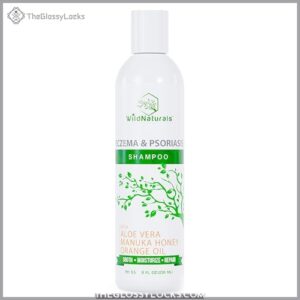
Want relief without the medicated sting? Natural Psoriasis Scalp Care Shampoo takes the gentle route, swapping coal tar and salicylic acid for Manuka honey, aloe vera, and Australian Cehami extracts. Its pH-balanced 5.5 formula skips steroids, sulfates, parabens, and artificial fragrance, so it’s safe enough for kids and babies with sensitive scalps.
Here’s the honest trade-off: this is a soother, not a scale-buster. If your plaques are thick and stubborn, you’ll still need a keratolytic partner. Users also report inconsistent lathering and flat hair afterward, and results for dry scalp run mixed.
| Best For | People with mild scalp itching and light flaking from psoriasis or eczema who want a gentle, non-medicated shampoo safe for sensitive scalps, including children and babies. |
|---|---|
| Active Ingredient | Manuka Honey |
| Target Conditions | Psoriasis, Eczema |
| Scalp Soothing | Aloe Vera, Cehami |
| Recommended Frequency | Regular Use |
| Hair Conditioning | May Flatten Hair |
| Drying Risk | Low Risk |
| Additional Features |
|
- Soothes itching and reduces flaking with natural ingredients like Manuka honey, aloe vera, and Australian Cehami extracts
- PH-balanced at 5.5 and free of steroids, sulfates, parabens, dyes, and artificial fragrances
- Cruelty-free, hypoallergenic, and safe for kids and babies with sensitive scalps
- Not strong enough for thick, stubborn plaques, so it may need a keratolytic partner
- Mixed feedback on lathering, with some users reporting little to no lather
- Some users find hair feels flat afterward, and results for dry scalp are inconsistent
10. Salicylic Acid Dandruff Relief Shampoo
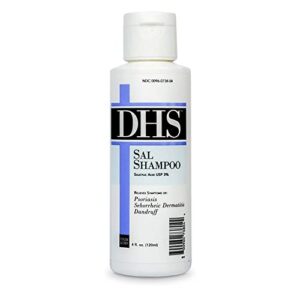
Here’s the thing about stubborn scale: it blocks everything else you apply. This little shampoo experiences that first. Its 3% salicylic acid is the maximum OTC strength, working as a keratolytic to dissolve the keratin bonds holding thick, flaky plaques together. That means less buildup, less itching, and better penetration for any prescription treatments you layer on top.
It’s fragrance-free, so sensitive scalps get a break too. Massage it into wet hair, leave it for up to five minutes, rinse, and follow with conditioner since exfoliation can dry your hair. Use it two to three times weekly during flares. One caveat: the 0.8-ounce bottle runs small, and some users notice frizz.
| Best For | People with stubborn scalp buildup, dandruff, or conditions like seborrheic dermatitis and psoriasis who want a fragrance-free exfoliating shampoo to use alongside other treatments. |
|---|---|
| Active Ingredient | 3% Salicylic Acid |
| Target Conditions | Psoriasis, Dandruff, Eczema |
| Scalp Soothing | Fragrance-Free |
| Recommended Frequency | Regular Use |
| Hair Conditioning | May Cause Frizz |
| Drying Risk | May Cause Dryness |
| Additional Features |
|
- Contains 3% salicylic acid, the maximum OTC strength, to dissolve flaky plaques and reduce buildup
- Fragrance-free formula makes it suitable for sensitive scalps and allergies
- Dermatologist-recommended and clinically proven to help prevent flake recurrence
- May cause dryness or frizz in some users’ hair
- Mixed reports on how well it relieves scalp irritation and itchiness
- The small 0.8-ounce bottle may feel like poor value for the price
How to Use Psoriasis Shampoo for Best Results
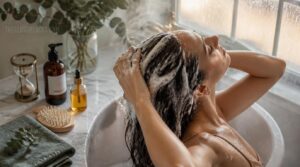
A great bottle only works if you know how to use it right, so here’s your game plan:
- Lather the scalp, not just the hair. Section your hair and massage directly onto plaques.
- Respect the contact time. Leave it on for the label’s specified minutes; that’s where medicated shampoo efficacy comes from.
- Scrub the scale gently. Focus on thick flakes so keratolytics can loosen them for real flake reduction.
- Rinse thoroughly. Leftover residue irritates skin and undoes your progress.
- Moisturize after. A lightweight scalp oil helps scalp hydration between washes.
Stick to the labeled frequency. More isn’t better with strong actives, and overuse can trigger burning or stinging. Skip broken skin, and if redness or swelling shows up, stop and call your dermatologist.
Frequently Asked Questions (FAQs)
What organ is linked to psoriasis?
Psoriasis is linked to your skin, the organ where immune system inflammation triggers rapid cell growth. Severe cases can involve your cardiovascular system and metabolism, but a dermatologist considers skin the primary organ involved.
What clears up psoriasis on the scalp?
What clears up scalp psoriasis? Take Maria: thick plaques for years, gone in six weeks. The fix: keratolytic agents like salicylic acid, coal tar, or ketoconazole, applied consistently with proper dwell time.
What should I wash my hair with if I have psoriasis?
Start with an over the counter psoriasis shampoo containing salicylic acid or coal tar, like Neutrogena T/Sal or T/Gel. For stubborn plaques, a medicated shampoo for psoriasis with ketoconazole, such as Nizoral, works well.
Scalp psoriasis affects about half of the 5 million Americans with psoriasis, so recognizing the symptoms of scalp psoriasis can help you choose the right treatment.
Which shampoo should I use for psoriasis?
Which shampoo should I use for psoriasis? Match it to your scalp. For thick scale, pick salicylic acid. For red, itchy flaking, try ketoconazole (Nizoral). Coal tar suits stubborn plaques. Ask a dermatologist if it worsens.
Can psoriasis shampoo be used on color-treated hair?
Yes, with care. Skip coal tar, which can darken or dull color, and choose a fragrance-free formula with sulfate-free cleansing. Salicylic acid and ketoconazole treat your scalp; gentle conditioning protects your color.
How often should I wash hair with psoriasis?
How often should you wash hair with scalp psoriasis? Use your medicated shampoo every 2 to 3 days. During flare-ups, daily washing boosts scalp exfoliation, but scale back once inflammation calms, supporting flareup prevention without irritation.
Are psoriasis shampoos safe during pregnancy or breastfeeding?
Are psoriasis shampoos safe during pregnancy or breastfeeding? Think of your scalp as a gate: ingredients pass through.
Most psoriasis shampoos are pregnancy safe in small doses, but coal tar and high-strength salicylic acid aren’t breastfeeding safe.
Ask a dermatologist recommended OTC medicated shampoo question first.
Can children use psoriasis shampoo safely?
Yes, children can use psoriasis shampoo safely, but age matters. Coal tar and salicylic acid formulas generally suit kids over two. For pediatric scalp care, follow contact times closely and check with your dermatologist first.
Does health insurance cover prescription psoriasis shampoos?
Does health insurance cover prescription psoriasis shampoos? Usually, yes. About 89% of psoriasis patients have coverage, but plans vary. Medicare Part D and private formularies may cover dermatologist-recommended options like clobetasol when your provider documents medical necessity.
Can psoriasis shampoo be used on children?
Can psoriasis shampoo be used on children? Yes, with care. Pediatric psoriasis often responds well to gentler medicated shampoo options, like mild salicylic acid.
Check age labels, shorten contact time, rinse well, and consult a dermatologist-recommended clinician about stronger actives.
Conclusion
Roughly half of everyone with psoriasis will see it show up on their scalp at some point, so if you’re fighting flakes, you’re in big company.
The right best shampoo for psoriasis won’t cure you, but it can loosen scale, quiet the itch, and make flares far more livable. Start with salicylic acid or coal tar, give it four weeks of consistent use, and call your dermatologist if your scalp isn’t cooperating.