This site is supported by our readers. We may earn a commission, at no cost to you, if you purchase through links. This content is for general informational and educational purposes only and is not a substitute for professional medical, dermatological, or nutritional advice.
Short hair doesn’t mean small amounts of conditioner. A two-inch TWA can have as much total strand surface as six inches of looser texture, which is why guessing leaves you with dry patches one day and waxy buildup the next.
The right answer to how much conditioner do I use for short African American hair depends on your density, porosity, and product formula, not the length on the ruler. Get it wrong, and you’ll see breakage, limp curls, or product sitting on top of your strands.
Here, you’ll get exact measurements, section-by-section application steps, and a schedule that keeps your coils soft without overload.
Table Of Contents
- Key Takeaways
- How Much Conditioner Should You Use for Short African American Hair?
- How to Apply Conditioner Evenly to Short Afro-Textured Hair
- How to Adjust Conditioner Amount by Porosity, Density, and Formula
- How Often Should You Condition Short African American Hair?
- How to Prevent Buildup and Over-Conditioning on Short Black Hair
- Frequently Asked Questions (FAQs)
- How much conditioner should I use if I have short hair?
- How to care for short black hair?
- What is the 3 rule for short hair?
- How often should a black person condition their hair?
- Can I mix different conditioners together safely?
- Does water temperature affect conditioner absorption rates?
- Should I condition before or after shampooing?
- How long should conditioner sit on hair?
- Can conditioner expire or lose its effectiveness?
- Can I use conditioner on my scalp?
- Conclusion
Key Takeaways
- The right conditioner amount depends on your hair’s density, porosity, and product formula—not length—so start with a dime-sized amount (quarter-sized for dense hair) and adjust based on how your ends feel.
- Apply conditioner in four sections using raking motions, finger-squeezing, and a wide-tooth comb to ensure dense, coily textures get full root-to-end coverage.
- Condition every time you wash (every 7–10 days for coily textures), use deep conditioner every 2–3 weeks, and add leave-in on wash days or midweek refreshes.
- Watch for buildup signs like waxy, limp, or coated strands; when they appear, clarify with a clarifying shampoo every 2–4 weeks and rinse with lukewarm-to-cool water.
How Much Conditioner Should You Use for Short African American Hair?
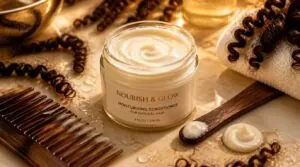
How much you use depends on coverage, not milliliters. Short African American hair still needs full saturation from root to ends, so don’t assume short automatically means minimal product.
This guide to the best leave-in conditioner for shine breaks down exactly how much product each hair length and texture actually needs.
Start with a dime-sized amount and check your work. If your ends look dry or feel rough after raking through, add more. For thicker, denser textures where strands are packed tightly together, a quarter-sized portion often makes more sense. A pea-sized amount is rarely enough unless your hair is very close-cropped with low density.
Your hair porosity types also guide the amount. High-porosity hair absorbs product quickly, so it usually needs a bit more. Low-porosity hair needs less upfront to avoid slick residue sitting on the strand.
How to Apply Conditioner Evenly to Short Afro-Textured Hair
Getting the right amount is step one. Getting it distributed evenly is step two, and it’s where most people with short African American hair struggle.
Dense, coily and kinky textures pack strands tightly together. Surface rubbing won’t get conditioner into those inner layers.
Divide your hair into four sections first. Then work through each one before moving on.
Follow this sequence:
- Wet hair until it’s fully saturated so product can glide.
- Apply conditioner to one section at a time.
- Use the raking technique, pulling with fingertips from roots to ends.
- Finger-squeeze curls to push product into tighter coils.
- Comb through with a wide-tooth comb for strand-by-strand coverage.
Distributing product evenly through Afrotextured hair is active work.
Using a wide-tooth comb alongside the deep conditioning routine for porous hair helps every strand absorb moisture evenly.
How to Adjust Conditioner Amount by Porosity, Density, and Formula
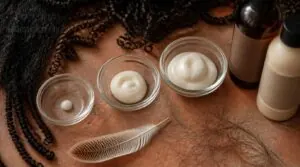
There’s no single right amount of conditioner for everyone. Your hair’s porosity, density, and product type all change the equation. Here’s how to adjust your portion for each one.
Porosity and Moisture Needs
Picture water beading on a fresh-cut sponge. That’s your hair deciding how much moisture it keeps.
The trick is pairing that hydration with a seal—these hair moisturizing techniques show you how to lock moisture in for good.
Hair porosity controls product absorption. High porosity drinks fast and dries fast. Low porosity resists, so wet hair thoroughly first.
| Porosity | Your Move |
|---|---|
| High | Condition often, rinse quick |
| Low | Saturate, extend contact time |
| Mixed | Target the ends |
| Relaxed | Add extra slip |
Moisture retention follows wetting, not amount.
Density and Strand Thickness
Porosity tells you how much moisture your hair keeps. Density and strand thickness tell you how much conditioner it takes to get there.
Short African American hair can still pack serious hair density. Thick coarse high-density hair needs more product than length suggests, because total surface area, not inches, drives coverage.
Rake conditioner through in sections. If you feel dry spots between clumps, you’re under-applying. Finer hair texture? Same coverage, smaller amount, or you’ll trade hair strand strength for stringy, coated strands.
Rinse-Out, Leave-In, and Deep Treatments
Product type changes your portion size. Rinse-out conditioner needs enough to coat every section evenly, so you avoid dry patches after rinsing. Leave-in conditioner starts pea-size, then you add only if strands feel dry. Deep conditioner should cling to your mids and ends in a thicker layer. Adjust each amount using your hair porosity test results.
How Often Should You Condition Short African American Hair?
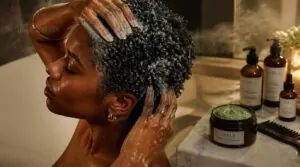
Always condition every time you wash. Short African American hair loses moisture fast, so your hair washing frequency and conditioning should stay linked. Shampoo lifts the cuticle; rinseout conditioner seals it back down. Skip it, and you invite dryness and breakage.
Condition every wash—shampoo lifts the cuticle, and skipping conditioner leaves short African American hair open to dryness and breakage
For coarser or coily textures, stretch your washes to every 7–10 days if you like, but condition on each wash day. Between washes, a light leavein conditioner keeps strands soft without a full session.
Your routine should look something like this:
- Rinse-out conditioner at every wash, 2–5 minutes.
- Deep conditioner every 2–3 weeks for moisture or repair.
- Leave-in conditioner on wash days or midweek refreshes.
Listen to your hair. If it feels dry, condition more often. If it feels heavy, scale back.
How to Prevent Buildup and Over-Conditioning on Short Black Hair

Your short African American hair can turn from soft cotton to a slick, coated scarf almost overnight. That’s product buildup talking. Watch for these overconditioning signs:
- Hair feels waxy or stringy even after rinsing.
- Curls fall limp instead of springing back.
- Your scalp feels coated a day after washing.
- Fresh conditioner seems to "sit" on top instead of absorbing.
If you notice these, stop adding layers and clarify. Use a clarifying shampoo once every two to four weeks, or when hair re-coats within days of washing. Skip stacking leave-ins and creams on freshly conditioned hair. Rinse with lukewarm-to-cool water until strands squeak slightly. Smart hair texture management means knowing when less is more. Trust that.
Frequently Asked Questions (FAQs)
How much conditioner should I use if I have short hair?
How much conditioner should I use if I have short hair? Start with a quartersized dab, maybe less. Saturate each strand, then rinse. Gritty spots mean add more; waxy slickness means you’ve used too much.
How to care for short black hair?
Caring for short black hair means working in sections, moisturizing mid-lengths and ends first, and keeping hydration consistent. Use a dimesized amount of leave-in, condition every wash day, and clarify when product buildup dulls your curls.
What is the 3 rule for short hair?
The 3 rule for short African American hair means splitting your hair into three sections and applying a small dab of conditioner to each. Use a dimesized amount total, spread evenly, and moisturize and detangle per section.
How often should a black person condition their hair?
How often should a black person condition their hair? With each wash, usually 2–3 times per week. Short African American hair dries fast, so consistent conditioning beats big amounts. Add a deep conditioner weekly if you have high porosity hair.
Can I mix different conditioners together safely?
Yes, you can mix conditioners in your palm right before conditioner application. Don’t pre-mix in bottles. Different formulas can clash, disrupting hair moisture balance and preservatives. Patch test new combinations first.
Does water temperature affect conditioner absorption rates?
Does water temperature affect conditioner absorption rates? It does. Warm water softens hair and helps conditioner dilution spread evenly, boosting product absorption. Finish with cool water to lock in hair hydration and cut residue.
Should I condition before or after shampooing?
Condition after you shampoo, always. Clean hair absorbs conditioner better, so moisture actually gets in. Shampoo first, then condition on damp strands. If frizz haunts you, try reverse washing occasionally, but post-cleanse conditioning delivers better hydration and manageability.
How long should conditioner sit on hair?
Rinse-out conditioner needs 2–5 minutes. Deep conditioner sits longer, 10–30 minutes, ideally with gentle heat for better moisture. Fine hair? Stay at the low end so your hair moisture balance stays light, not weighed down.
Can conditioner expire or lose its effectiveness?
Think of conditioner like fresh fruit: it ripens, then spoils. Can conditioner expire or lose its effectiveness? Absolutely. Most last 12 to 24 months. Toss yours if you notice odd smells, separation, or texture changes.
Can I use conditioner on my scalp?
Can I use conditioner on my scalp? Only lightly. Let rinse-over contact happen, but skip direct application. Your scalp moisturization comes from cleansing, not conditioner. Heavy residue stings, itches, and disrupts scalp health.
Conclusion
Picture your coils soaked, slick, and shining under the shower stream, every strand coated from root to tip. That’s what happens when you stop guessing and start measuring.
Your answer to how much conditioner do I use for short African American hair lives in your density, porosity, and formula, not the mirror. Start with a nickel-sized dab, adjust from there, and trust what your hair tells you.
Consistent conditioning turns short hair into your easiest win.