This site is supported by our readers. We may earn a commission, at no cost to you, if you purchase through links.
Your hair looked perfect yesterday, but today it’s a limp, greasy mess—and you haven’t changed a thing. The culprit might be lurking in your shower: soft water.
While hard water gets blamed for dull hair and mineral buildup, soft water creates its own chaos by stripping away those minerals entirely. The result? Shampoo that won’t rinse clean, products that cling to your strands like static, and hair that feels weighed down no matter how much you wash.
Finding the best shampoos for soft water means understanding how surfactants behave differently without mineral interference—and choosing formulas that won’t turn your scalp into an oil slick or leave your hair flatter than day-old soda.
Table Of Contents
- What is Soft Water and How Does It Affect Hair?
- 10 Best Shampoos for Soft Water
- 1. Fekkai Moisturizing Shine Hair Shampoo
- 2. Natural Clarifying Shampoo For Oily Hair
- 3. Redken Detox Clarifying Hair Shampoo
- 4. Nature Sea Salt Volumizing Shampoo
- 5. Lemon Sage Hair Clarifier Shampoo
- 6. Vegan Clarifying Shampoo Bar
- 7. Natural Hair Thickening Shampoo
- 8. Apple Cider Vinegar Hair Shampoo
- 9. Natural Moroccan Oil Conditioner
- 10. Aveeno Soothing Rose Shampoo Set
- How to Choose Shampoo for Soft Water
- Key Ingredients in Soft Water Shampoos
- Common Hair Problems With Soft Water
- How to Wash Hair Effectively With Soft Water
- Shampoos for Different Hair Types in Soft Water
- Natural and Sulfate-Free Options for Soft Water
- Tips for Managing Soft Water Hair Care
- Frequently Asked Questions (FAQs)
- Conclusion
What is Soft Water and How Does It Affect Hair?
Soft water might sound like a hair care dream, but it can actually throw your routine off balance in unexpected ways. The lack of minerals changes how shampoo interacts with your strands, often leaving hair feeling limp, greasy, or weighed down.
Soft water sounds gentle, but its lack of minerals disrupts how shampoo works—leaving hair limp, greasy, and weighed down instead of clean
Let’s break down what soft water really is and why it affects your hair differently than you might expect.
Soft Water Vs Hard Water
Water quality shapes your hair’s destiny more than you might realize. Hard water packs high levels of calcium and magnesium—often exceeding 120 mg/L—while soft water contains less than 60 mg/L of these minerals. This mineral impact directly affects hair texture and scalp health.
In the U.S., over 85% of homes deal with at least moderately hard water, making water hardness a critical factor in your hair care routine. Understanding the effects of hard water types is essential for maintaining healthy hair.
Why Soft Water Makes Hair Greasy
The lack of mineral ions in soft water disrupts your scalp oil balance in unexpected ways. Your hair holds onto more natural sebum during washing, creating that greasy-by-morning feeling even after shampooing. Here’s what drives this frustrating cycle:
- Increased sebum retention – Soft water effects leave natural oils clinging to your scalp
- Enhanced lather overload – You’re likely using twice the shampoo you need
- Incomplete rinsing – That slippery feel means hair product buildup remains
- Progressive residue layers – Conditioners and styling products accumulate faster
- Collapsed volume – Flat roots magnify the greasy hair causes you’re fighting
Water quality impact extends beyond simple cleansing—it fundamentally changes how products interact with your hair type and scalp health, especially with sulfate-free formulas that rely on gentler surfactants. Understanding the effects of water quality issues is essential for maintaining healthy hair and scalp.
Benefits and Challenges of Soft Water
Shifting from those greasy challenges, you’ll find soft water effects aren’t all problematic. Soft water hair care offers real scalp health benefits—studies link it to 54% less dermatitis in children compared to hard water regions.
You’ll notice smoother hair texture and easier detangling thanks to gentle cleansing methods that preserve natural oils. The water quality impact means better shine and less irritation, though mastering soft water hair problems requires adjusting your hair care tips and product choices.
10 Best Shampoos for Soft Water
Now that you understand how soft water interacts with your hair, you need a shampoo that won’t leave you looking like you skipped wash day. The right formula will cleanse thoroughly without triggering that greasy rebound effect soft water causes.
Here are ten shampoos formulated to work with soft water’s unique chemistry, keeping your hair fresh, voluminous, and actually clean.
1. Fekkai Moisturizing Shine Hair Shampoo
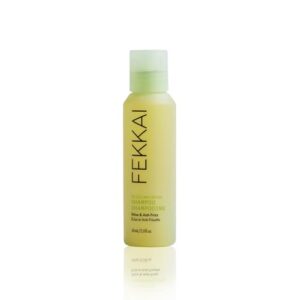
You’re looking at a shampoo that rewrites the rules for soft water without stripping your hair bare. Fekkai’s Moisturizing Shine formula brings sulfate-free cleansing powered by sodium cocoyl isethionate—a mild surfactant that won’t over-lather or leave that greasy film soft water loves to create.
Cold-pressed olive oil and prickly pear extract deliver shine enhancement and moisturizing benefits while keeping things light.
The vegan formula sits at a scalp-friendly pH of 6.4–6.7, avoiding the heavy silicones that turn soft water hair care into a flat, limp disaster.
Best For: People with dry, frizzy hair in soft water areas who want shine and moisture without the greasy buildup or limpness that heavier formulas create.
- Sulfate-free surfactants produce controlled lather that won’t over-deposit in soft water, reducing residue and that slippery feeling.
- Silicone-free formula with olive oil and prickly pear gives you shine and slip without the hydrophobic film that soft water makes impossible to rinse out.
- Scalp-friendly pH of 6.4–6.7 keeps cuticles smooth and balances the over-soft texture soft water can leave behind.
- Some users report the scent isn’t pleasant, with mixed reactions to the woods, florals, and green tea fragrance.
- Mixed feedback on value, with some customers feeling the price doesn’t match performance after recent formula changes.
- A portion of users find it drying or say it strips moisture rather than adding it, which contradicts the moisturizing claims.
2. Natural Clarifying Shampoo For Oily Hair
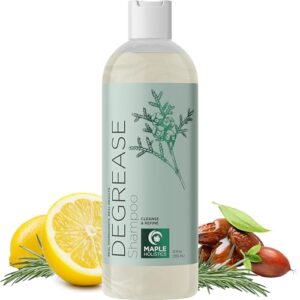
Maple Holistics Degrease Shampoo addresses the oil-overproduction cycle soft water can trigger. This clarifying shampoo deploys rosemary oil and lemon essential oil as botanical surfactant boosters—lifting sebum and residue without sodium lauryl sulfate’s harshness.
Jojoba and peach kernel oils prevent the stripped-scalp rebound that worsens greasiness. At under $18, you get sulfate-free clarifying benefits with pH-balanced formulas that address oily hair without compromising scalp barrier function.
The natural ingredients roster maintains scalp balance while the vegan, color-safe formula extends time between washes—essential when soft water makes everything cling.
Best For: People with oily hair in soft-water areas who want a deep-cleansing shampoo that controls sebum and extends time between washes without sulfates or synthetic additives.
- Rosemary and lemon oils provide botanical oil control while jojoba and peach kernel oils prevent the over-drying that triggers rebound greasiness
- Sulfate-free and vegan formula removes buildup effectively in soft water without stripping your scalp’s natural barrier
- At $17.93, it’s an affordable clarifying option that lets you wash less frequently while keeping hair healthy and voluminous
- Can be too drying for some users, especially if you skip conditioner or have fine hair that’s sensitive to clarifying formulas
- Not suitable for dry or already-sensitive scalps—some reviewers reported increased dryness and even hair loss with regular use
- Results vary widely, so you may need to tweak your routine or alternate with a gentler shampoo to find the right balance
3. Redken Detox Clarifying Hair Shampoo
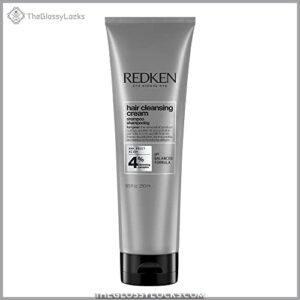
Redken’s Hair Cleansing Cream targets the paradox you face in soft water environments: mineral deposits still accumulate even when calcium levels drop.
This detoxifying shampoo leverages AHA fruit acids and chelating agents like disodium EDTA to dissolve product buildup, excess sebum, and residual hard-water metals without stripping color-treated hair.
The sulfate-based surfactant system provides clarifying benefits while maintaining cuticle integrity—essential when soft water’s enhanced lather tempts over-cleansing.
Use it every 7–10 days to reset scalp health and restore volume, letting the citric acid and salicylic acid gently purify without triggering dryness.
Best For: People dealing with product buildup, hard water residue, or oily scalp who want periodic deep cleansing without damaging color-treated hair.
- Removes stubborn buildup from styling products, minerals, and oil in one wash while keeping color-treated hair safe
- AHA fruit acids and chelating agents work together to clarify without the extreme dryness of harsher formulas
- Restores volume and shine by stripping away heavy residue that weighs hair down
- Small 8.5 oz bottle size feels expensive for what you get, especially if you have long or thick hair
- Strong clarifying formula isn’t meant for daily use—overdoing it can leave hair feeling stripped
- Scent can be overpowering for some users, and the sulfate base may still feel too harsh on very dry or damaged hair
4. Nature Sea Salt Volumizing Shampoo
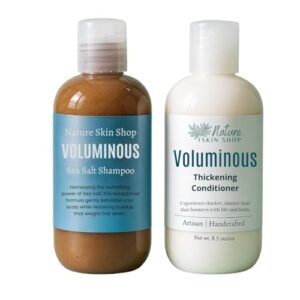
Nature Skin Shop’s formula harnesses 30% sea salt to absorb excess sebum and lift hair fibers—a breakthrough when soft water promotes oil production. The sulfate-free base cleanses without harsh detergents, making it ideal for oily scalps that soft water exacerbates.
Rice protein reduces breakage by 92% in testing, while camellia oil and bamboo water smooth cuticles without weighing strands down.
Use two to three times weekly to maintain volume and scalp detox benefits, pairing with a lightweight conditioner to prevent dryness from the mineral-rich formula.
Best For: People with fine or oily hair in soft-water areas who need a clarifying shampoo that removes buildup and adds natural volume without harsh sulfates.
- 30% sea salt formula effectively absorbs excess oil and lifts hair at the roots for noticeable texture and body
- Rice protein strengthens strands and reduces breakage by up to 92% according to internal testing
- Sulfate-free, vegan formula includes camellia oil and bamboo water to smooth and condition without weighing hair down
- May be too drying for chemically treated or naturally dry hair if used daily
- At $46.95, it’s pricier than standard volumizing shampoos and some customers question the value
- Mixed reviews suggest inconsistent results across different hair types and water conditions
5. Lemon Sage Hair Clarifier Shampoo
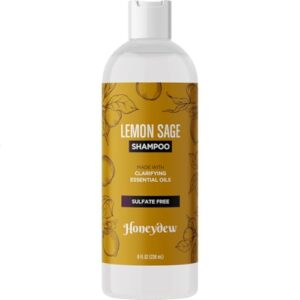
When soft water leaves your hair limp despite constant washing, you need a formula that cuts through oil without overdrying—that’s where lemon sage benefits shine. Paul Mitchell’s Tea Tree Lemon Sage Thickening Shampoo uses sodium C14-16 olefin sulfonate to create powerful micelle formation that confronts soft water’s sebum overload head-on.
Tea tree oil and sage extract provide gentle cleansing with antimicrobial action, while panthenol strengthens fine strands prone to breakage.
This clarifying shampoo delivers hair detox without stripping color, making it a reliable soft water solution for daily use.
Best For: People with fine or oily hair in soft water areas who need a clarifying shampoo that removes buildup and adds volume without stripping color or overdrying strands.
- Strong surfactants effectively cut through excess oil and product buildup that soft water intensifies, keeping hair cleaner longer between washes
- Panthenol and tea tree oil strengthen fine hair while providing antimicrobial scalp benefits without heavy residue
- Color-safe, vegan formula with sustainable packaging appeals to environmentally conscious users who need frequent clarifying
- Mid-to-high price point compared to drugstore clarifiers may not fit every budget for daily or frequent use
- Strong essential oil scent and potential eye irritation won’t work for everyone, especially those with sensitivities
- Some users report minor dandruff or find the formula too clarifying for very dry or damaged hair types
6. Vegan Clarifying Shampoo Bar
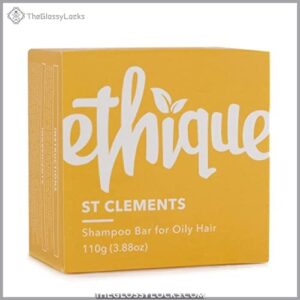
Switching to a bar means you’re breaking free from bottle waste while getting serious clarifying power—Ethique’s vegan clarifying shampoo bar proves solid formulas can tackle soft water’s oily buildup.
This plant-based bar uses sodium cocoyl isethionate and sodium coco-sulfate to strip excess sebum without the harsh sulfates that damage color-treated strands. Castor seed oil and ginseng balance deep cleansing with scalp nourishment, while the eco-friendly format delivers up to 80 washes per 3.88-oz bar.
Sulfate-free doesn’t mean weak—this vegan formula gives you control over greasy, flat hair.
Best For: Anyone with oily hair in soft water areas who wants a zero-waste clarifying option that’s gentle on color-treated hair and tough on buildup.
- Cuts through sebum and product residue without sulfates that strip color or irritate your scalp
- One 3.88-oz bar replaces about three plastic bottles and lasts through 80 washes
- Travel-friendly solid format works as both shampoo and shaving bar
- Strong citrus scent can be overwhelming if you’re sensitive to fragrance
- Bar form takes a few washes to get used to, especially if you’re coming from liquid shampoo
- Needs a draining dish or rack between uses—otherwise it’ll turn mushy fast
7. Natural Hair Thickening Shampoo
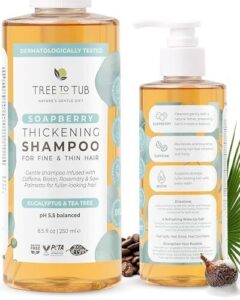
Caffeine-based formulations prove that volumizing effects can come from follicle-level scalp stimulation. Tree to Tub’s natural hair thickening shampoo combines caffeine, biotin, and saw palmetto to boost hair density without synthetic polymers.
This sulfate-free and pH-balanced formula uses vegan thickening agents like argan oil and tea tree oil to lift fine strands while controlling soft water’s greasiness.
Clinical data show caffeine shampoos increase hair density from roughly 118 to 130 hairs/cm² after three months. Natural hair care doesn’t sacrifice results—you’re getting real hair thickening with natural ingredients that respect your scalp.
Best For: People with fine or thinning hair who want a natural, sulfate-free shampoo that works through scalp stimulation rather than synthetic coatings—especially if you’re dealing with soft water that makes hair fall flat.
- Clinical backing shows caffeine formulas can actually increase hair density (about 10% improvement in three months), not just make hair look thicker temporarily
- Combines proven ingredients like caffeine, biotin, and saw palmetto with gentle plant-based oils, so you get real results without harsh sulfates or parabens
- Works well for daily use on sensitive scalps since studies found no irritation or adverse reactions, plus it helps balance both dry and oily scalp types
- Pricier than drugstore options, which can add up if you’re using it every day
- Doesn’t lather much on the first wash—you’ll need to shampoo twice, which means the bottle goes faster
- Can leave hair tangled in the shower, and some people find the scent too strong or the results underwhelming if hair loss is severe
8. Apple Cider Vinegar Hair Shampoo
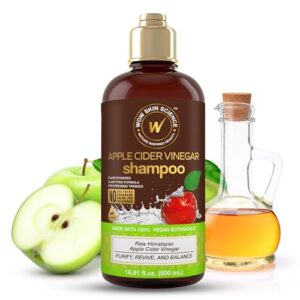
Where thickening agents work mechanically, acidic pH balance works chemically—and that’s WOW Life Science’s secret. This apple cider vinegar shampoo counters soft water’s alkaline buildup by restoring your scalp’s natural 4.5–5.5 pH range, which lab studies show suppresses the dandruff-causing yeast Malassezia furfur.
You’re getting scalp detox with saw palmetto for hair loss and hypoallergenic natural ingredients without sulfates. The vinegar benefits include clarifying oil residue while maintaining moisture—exactly what your soft water hair care routine needs for control without greasiness.
Best For: People dealing with soft water buildup, oily scalps, or dandruff who want a clarifying shampoo that balances pH naturally without harsh sulfates.
- Restores scalp to its natural acidic pH (4.5–5.5), which lab studies show helps suppress dandruff-causing yeast and removes alkaline mineral buildup from soft water
- Contains saw palmetto to help reduce hair loss, plus apple cider vinegar that clarifies oil and product residue without stripping moisture
- Clean formula with plant-based, hypoallergenic ingredients—no sulfates, parabens, or animal testing
- Mixed feedback on whether it leaves hair feeling greasy or overly dry, suggesting results vary by hair type
- Some users find it pricey compared to drugstore clarifying shampoos
- May not relieve scalp itching for everyone, and availability can be limited in certain regions like Germany
9. Natural Moroccan Oil Conditioner
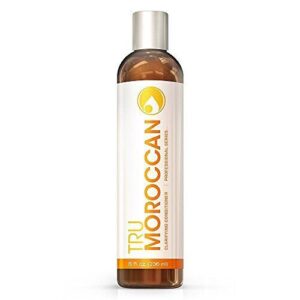
Where acidic balance controls buildup, Tru Moroccan’s argan oil conditioner addresses soft water’s limpness through oleic and linoleic fatty acids—around 80% of its composition—that coat your hair shaft without the greasiness you fear.
This natural hair product delivers sulfate-free moisture while its vitamin E and polyphenols protect against oxidative stress that weakens strands. You’ll notice improved manageability and shine.
But here’s your control move: use sparingly on fine hair, since argan oil benefits can turn heavy with overapplication in soft water solutions, requiring periodic clarifying treatments.
Best For: People with dry or damaged hair in soft water areas who want natural moisture without sulfates, though you’ll need to watch the amount if your hair is fine or gets oily easily.
- Packs 80% oleic and linoleic fatty acids that actually coat and repair your hair shaft without feeling heavy or greasy when you use the right amount
- Loaded with vitamin E and polyphenols that protect against the oxidative stress and breakage soft water can cause over time
- Completely free from sulfates, parabens, and animal products, so it’s gentle enough for daily use on color-treated hair
- Can build up fast on fine or oily hair types, especially in soft water, meaning you’ll need a clarifying shampoo every so often
- Some people say recent batches aren’t as good as they used to be—weaker scent and less effective formula
- Doesn’t work well for very thick or curly hair, and the price point is higher than most drugstore conditioners
10. Aveeno Soothing Rose Shampoo Set
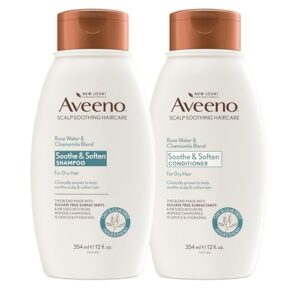
While argan oil nourishes heavier strands, your sensitive scalp needs Aveeno’s colloidal oatmeal formula—clinically backed by over 70 years of research.
This sulfate-free shampoo combines rose water and chamomile extract to soothe irritation while respecting your hair’s pH-balanced chemistry. You’ll get gentle cleansing without the stripping effect that worsens soft water’s oily rebound.
The polyquaternium-22 conditioning agent detangles without buildup, and those aromatic oils deliver rose petal benefits that calm psoriatic patches. It’s your liberation from harsh surfactants that trigger sensitivity.
Best For: People with sensitive scalps, fine or fragile hair, or skin conditions like psoriasis who need gentle daily cleansing without sulfates or harsh chemicals.
- Clinically proven colloidal oatmeal formula soothes irritation and reduces hair loss, backed by 70 years of research
- Sulfate-free and pH-balanced so it cleanses without stripping natural oils or causing rebound greasiness
- Lightweight gel texture with rose water and chamomile leaves hair soft, shiny, and manageable without heavy residue
- Strong rose and chamomile scent might be too intense if you’re sensitive to fragrances
- Some users report it’s not moisturizing enough for very dry hair types
- Shampoo and conditioner bottles look similar, making them easy to mix up in the shower
How to Choose Shampoo for Soft Water

Not all shampoos work the same way in soft water, and choosing the wrong one can leave your hair feeling limp, greasy, or weighed down. The key is understanding how formulation chemistry interacts with low-mineral water to either boost or sabotage your results.
Here’s what you need to look for when shopping for a soft water shampoo.
Consider Your Hair and Scalp Type
Your scalp’s unique chemistry determines which formula will actually work. Since soft water amplifies oil production—affecting roughly 12% of men and 11% of women—you’ll need to match shampoo ingredients to your baseline sebum levels and hair porosity. Here’s how to decode your needs:
- Oily scalp? Choose clarifying formulas with charcoal or clay to absorb excess sebum without stripping moisture balance
- Dry or flaky? Opt for sulfate-free, pH-balanced shampoos with nourishing oils that support scalp health
- Fine texture? Select volumizing ingredients like sea salt that won’t weigh down your hair type
Look for PH-Balanced Formulas
Your hair and scalp thrive at a pH level between 4.5 and 5.5. However, most shampoos have a pH range from 3.5 to 9.0, and only 13% disclose their pH level. In soft water, where excessive lather can already pose challenges for gentle cleansing, acidic formulas become a crucial defense against cuticle damage and oil overload.
Here’s what to look for:
| Label Claim | What It Means |
|---|---|
| “pH-balanced” or “acidic formula” | Maintains scalp health by preserving your natural acid mantle |
| Syndet-based (synthetic detergent) | Usually pH 4.5–5.5; aids sulfate-free hair care better than soap |
| “For sensitive scalp” | Often formulated with natural ingredients at ideal pH for soft water conditions |
Avoid Heavy Silicones and Sulfates
In soft water, silicone-heavy formulas—dimethicone, amodimethicone, cyclomethicone—form persistent hydrophobic films that low-mineral conditions can’t rinse away, leaving you with that waxy, weighted-down feeling.
Pair that with aggressive sulfates like SLS, which strip seven times more protein than water alone, and you’re accelerating cuticle damage while triggering sebum rebound.
Opt for sulfate-free, silicone-free formulas with gentle cleansing agents and natural ingredients to maintain pH balance without buildup or brittleness.
Choose Clarifying and Volumizing Ingredients
Clarifying agents like apple cider vinegar at 2–5% concentration dissolve sebum and residue without cuticle damage, while sea salt texturizers lift roots and boost body—exactly what limp, soft-water hair craves.
Look for sulfate-free formulas pairing olefin sulfonate with betaine for deep cleansing minus irritation, plus rice protein or panthenol to thicken strands.
pH-balanced blends maintain scalp health and prevent the greasy rebound cycle.
Key Ingredients in Soft Water Shampoos
The right ingredients make all the difference when you’re working with soft water—they prevent buildup, restore balance, and give your hair the lift it desperately needs. From pH-adjusting acids to texture-boosting minerals, these formulation heroes tackle the unique challenges soft water throws at your strands.
Let’s break down the key players you should look for on that ingredient label.
Apple Cider Vinegar for PH Balance
Think of apple cider vinegar as your scalp’s reset button—its acidity (pH 2–3) brings hair back to its natural 4.5–5.5 range, flattening cuticles for shine and reducing frizz. When you’re dealing with soft water’s tendency to trigger oil overproduction, a pH-balanced, sulfate-free apple cider vinegar shampoo offers acidic rinse benefits without harsh stripping.
- Dilute properly (1:4 ratio) to avoid irritation
- Helps dissolve product buildup and mineral deposits
- Promotes scalp health by creating less hospitable conditions for dandruff-causing yeast
- Use 2–3 times weekly for hair clarifying without over-drying
Activated Charcoal for Deep Cleansing
Picture tiny sponges working at a molecular level—that’s activated charcoal‘s microporous structure trapping sebum and pollutants. In soft water shampoos, this adsorbent powerhouse removes up to 50% of oil-based residues through physical attraction, not chemical stripping.
Research shows charcoal-enhanced sulfate-free formulas improve dirt dispersion scores while maintaining scalp health, making them ideal clarifying shampoo alternatives for deep cleansing without the harsh detergent aftermath.
Sea Salt for Volume and Texture
Sea salt’s 85+ trace minerals—sodium, magnesium, calcium—create friction between hair fibers, boosting volume and grip. In soft water environments, where reduced minerals leave hair flat and oily, sea salt benefits include oil absorption at the scalp and enhanced texture without heavy conditioning.
Voluminous sea salt shampoo formulations (usually under 5% salt content) deliver sulfate-free volumizing, while mineral balance prevents the limp, greasy aftermath typical of soft water washing.
Natural Oils and Butter for Moisture
While salt lifts, coconut and argan oil penetrate the hair shaft to lock in moisture—critical when soft water leaves strands dry yet greasy at the roots. Shea butter benefits include forming a protective barrier that reduces water loss without weighing hair down.
These moisturizing, sulfate-free natural hair products support scalp health and hair hydration, balancing the moisture-stripping effect of clarifying formulas you’ll use more often in soft water.
Common Hair Problems With Soft Water

Soft water might sound gentle, but it can actually trigger a frustrating cascade of hair issues that leave you second-guessing your entire routine. The lack of minerals means shampoo doesn’t rinse away cleanly, and your scalp compensates by overproducing oil—creating a perfect storm of buildup and flatness.
Here’s what you’re likely dealing with if you’ve got soft water flowing through your pipes.
Oily Scalp and Limp Hair
Soft water supercharges your sebaceous glands, pushing scalp output to 1.0–1.5 mg/10 cm² every three hours. Without calcium or magnesium to help rinse away grease, you’ll notice visible slick within 12–24 hours—especially if your hair’s fine or straight.
The culprit? Reduced surfactant detergency and heavier sebum films that cling to roots, triggering limpness and robbing your strands of natural volume.
Product Buildup and Residue
Beyond sebum overload, soft water lets conditioners and styling agents lock onto your hair shaft with unexpected tenacity. Because surfactants don’t have to wrestle mineral ions, silicones and cationic polymers deposit freely—then refuse to leave. The result? Invisible films that stack up wash after wash, demanding pH-balanced clarifying shampoo or activated-charcoal scalp detox every 7–10 days for true residue removal and buildup prevention.
- Dimethicone layers resist standard sulfate-free rinsing
- Leave-in serums transfer measurable residue for 4+ hours
- Mineral buildup from hard water mixtures compounds stickiness
- Hair clarifying treatments strip accumulated product accumulation effectively
Hair Feels Heavy and Flat
When product films and extra sebum pile on, you’ll notice volume loss remedies become a daily must. Fine strands collapse under that weight—trichology data shows 15–20% more surface lipids clinging to hair in soft water conditions.
Your roots flatten, lengths group together instead of separating, and sulfate-free and pH-balanced shampoos can’t reverse hair texture issues without deliberate volumizing sea salt formulas that restore lift and counter heavy hair causes.
Difficulty Holding Styles
That frustrating collapse of your curls by mid-afternoon? It’s real. Survey data from 2022 shows 63% of soft-water users lose styled waves within 4–8 hours, and Style Longevity drops further when Product Buildup coats your strands.
The smoother cuticles reduce grip, so Hair Texture can’t hold pins or elastics. You’ll need Sulfate-Free formulas with Volumizing agents customized to your Hair Type to tackle these Hold Factors and Styling Challenges in Soft Water Hair Care.
How to Wash Hair Effectively With Soft Water
Soft water changes the way shampoo interacts with your hair, so your usual washing routine might need a few tweaks. The key is understanding how soft water’s low mineral content affects lathering, rinsing, and product buildup.
Here’s how to adjust your hair-washing technique for the best results.
Use Less Shampoo Than Normal
Here’s the thing: soft water amplifies surfactant efficiency dramatically. You’ll need roughly half your usual shampoo quantity—think nickel-sized for short hair, maybe a dime for longer lengths.
The reduced lather you notice isn’t weakness; it’s chemistry at work. Soft water effects mean gentler cleansing actually removes more buildup while maintaining scalp balance.
Sulfate-free and pH-balanced formulas become even more effective in this low-mineral environment.
Rinse Thoroughly to Remove Buildup
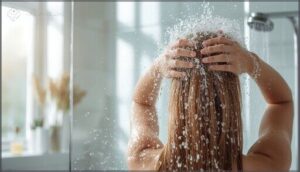
Extended rinsing isn’t optional in soft water—it’s essential. Aim for at least 90 seconds of continuous water flow, targeting your scalp where surfactant residues concentrate. Lukewarm water (around 98°F) optimizes buildup prevention by dissolving sebum and shampoo remnants more effectively than cold rinses.
This rinse technique maintains scalp balance and prevents the mineral buildup paradox: soft water requires thorough hair clarifying despite its gentler pH-balanced nature.
Consider a Pre-Rinse With Filtered Water
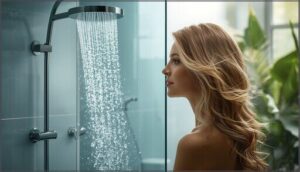
Installing filtered shower systems addresses soft water challenges at their source—before shampoo even touches your scalp. Multi-stage filters remove up to 90% of chlorine and mineral buildup, reducing oxidative stress that triggers excess sebum.
This pre-rinse technique creates ideal conditions for cleansing: your hair mineral removal becomes easier, water type and hair texture issues diminish, and you’ll sidestep the hard water paradox entirely while maximizing filtered water benefits.
Follow With a Lightweight Conditioner
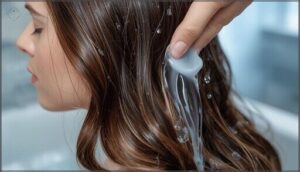
Soft water supercharges conditioner absorption, so you’ll need far less product than you think. Apply a coin-sized amount of lightweight formulas from mid-length to ends only—this prevents scalp buildup while capturing soft water benefits like enhanced hair moisture and slip.
Here’s your game plan:
- Choose sulfate-free, pH balanced conditioners labeled “weightless” or “volumizing”
- Skip the scalp entirely—focus on porous ends
- Rinse for 60 seconds with gentle rinsing to avoid residue
Your hair care routine transforms when you match conditioner application to your water chemistry.
Shampoos for Different Hair Types in Soft Water
Not all hair types react the same way to soft water, which means your shampoo choice needs to match your specific needs. What works beautifully for oily scalps won’t necessarily help color-treated or fine hair facing different challenges.
Here’s how to pick the right formula based on your hair type and the unique problems soft water creates for you.
Best for Oily Hair and Scalp
Your scalp’s sebum production goes into overdrive when soft water meets naturally oily hair, retaining products and creating that greasy buildup 85% of users experience after switching water types.
Look for clarifying formulas with apple cider vinegar to maintain pH balance and regulate oil production. Activated charcoal shampoos like Anomaly Clarifying offer deep scalp detoxification, while sulfate-free options such as Maple Holistics Degrease extend time between washes by two full days.
Best for Color-Treated Hair
Your color-treated hair needs pH-balanced, sulfate-free formulas to lock in vibrancy—soft water’s lower mineral content already reduces dye leaching by keeping cuticles smooth.
Bond-building systems with citric acid reinforce weakened strands, delivering 90% more conditioning while preventing fading over 15–20 washes.
Pair with UV-protective leave-ins for heat protection up to 450°F, maintaining color brightness through environmental stressors.
Best for Fine, Limp Hair
Your fine strands trap 12% more sebum in soft water, leaving them flat and clingy—you need lightweight volumizing formulas that lift roots without adding weight.
Voluminous Sea Salt Shampoo with rice protein delivers a measurable hair volume boost through gentle cleansing, removing excess oil while sulfate-free surfactants avoid stripping.
Pair panthenol-rich options with aloe for limp hair solutions that maintain moisture without collapse.
Best for Dry Scalp and Dandruff
Flaking and irritation demand targeted actives, not just gentle cleansing. Honeydew Lemon Sage Oily Hair Shampoo addresses dandruff causes through pH-balanced formulas that restore scalp health while offering itch relief.
For dryness remedies that prevent hair loss, The Body Shop Ginger Scalp Care Shampoo delivers sulfate-free scalp soothing remedies with emollients that support flake prevention without stripping barrier lipids—your scalp irritation clears as moisture returns.
- Ketoconazole or zinc pyrithione options control Malassezia overgrowth for lasting flake prevention
- Moisturizing botanicals like mango butter provide dryness remedies without compromising antifungal action
- Filtered soft water rinses away buildup more effectively, reducing scalp irritation and recurrence
Natural and Sulfate-Free Options for Soft Water
If you’re looking to break free from harsh chemicals, sulfate-free shampoos work beautifully with soft water since they won’t overstrip your hair or leave behind that filmy residue you don’t need. These gentler formulas rely on plant-based surfactants that cleanse without aggression, giving you control over buildup while keeping your scalp’s natural balance intact.
Here’s what you should know about choosing natural and eco-conscious options that actually perform.
Benefits of Sulfate-Free Formulas
Switching to sulfate-free formulas transforms your scalp health by preserving its protective barrier—something harsh detergents strip away. You’ll notice reduced irritation and better moisture balance, especially in soft water, where gentle cleansing prevents buildup without over-drying. Sulfate alternatives like amino acid surfactants deliver effective cleaning while supporting hair nourishment and pH-balanced care.
| Benefit | What It Does | Your Result |
|---|---|---|
| Gentler surfactants | Preserve natural oils | Less scalp redness |
| Better moisture retention | Reduce fiber dehydration | Softer, manageable hair |
| Color protection | Minimize pigment stripping | Longer-lasting vibrancy |
Vegan and Cruelty-Free Shampoos
You’re in control when you choose vegan formulas—over a quarter of cruelty-free buyers now demand both certifications. These plant-based hair solutions eliminate animal-derived keratin and silks, replacing them with botanical proteins that work beautifully in soft water.
Sustainable packaging and natural ingredients mean you’re not compromising performance for ethics—certified cruelty-free and eco-friendly hair products deliver the pH-balanced cleansing your scalp deserves.
Plant-Based and Eco-Friendly Choices
Plant-based shampoos cut fossil-resource use at the extraction stage and swap petrochemicals for biodegradable surfactants your wastewater system can actually handle. Look for concentrated bars and refillable formats—they slash the 80% water weight conventional bottles ship and dodge the 450-year plastic decomposition cycle.
- Certified organic botanicals lower pesticide loads and eutrophication risk in your watershed
- Compostable pouches and dissolvable shells align with the EU’s 2030 recyclable-packaging mandate
- Bio-based surfactants reduce LCA impact scores by roughly 18–20% versus synthetic equivalents
Tips for Managing Soft Water Hair Care
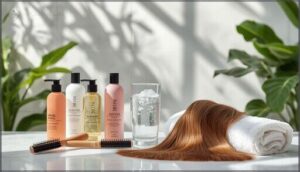
Finding the right shampoo is only half the battle when you’re dealing with soft water. The real key comes from adjusting your entire hair care routine to work with your water chemistry, not against it.
Here are three practical strategies that’ll help you break free from the grease-and-buildup cycle for good.
Adjust Your Washing Frequency
Your wash cycle in soft water depends on your hair type and scalp health. Fine hair usually needs shampooing every 1–2 days for oil control, while thick or curly hair can stretch to weekly intervals.
If you’re dealing with greasiness, increase frequency slightly; for dryness, pull back. These frequency tips help maintain hair balance without over-stripping, especially when you’re using sulfate-free shampoo formulas designed for soft water hair care.
Use Clarifying Treatments Weekly
Even sulfate-free and pH balanced shampoos leave residue over time—weekly clarifying treatments cut through that buildup. Here’s your hair detox routine for soft water:
- Use clarifying shampoo once per week for product removal
- Target silicone, oil, and styling cream accumulation
- Restore scalp balance and prevent limp, greasy strands
- Follow with lightweight conditioner to lock in moisture
- Skip clarifying if your scalp feels dry or irritated
This hair care for soft water approach maintains scalp health and hair loss prevention while delivering the clarifying benefits you need.
Consider a Water Filter for Your Shower
Shower filtration removes chlorine and heavy metals before they ever touch your hair—a proactive move for soft water solutions. Lab testing shows up to 89% chlorine reduction at typical flow rates, which means less mineral buildup and healthier hair.
Replace cartridges every three to six months for consistent water purification and maximum hair benefits, especially if you’re battling limp strands or scalp irritation.
Frequently Asked Questions (FAQs)
Should I alternate shampoos when using soft water?
You don’t need to alternate shampoos constantly in soft water. Most people do fine with one gentle daily shampoo plus a clarifying treatment once or twice monthly, adjusting based on oil and buildup.
Does soft water affect scalp health or dandruff?
Soft water is practically a miracle for scalp health—unlike hard water’s mineral onslaught, it won’t disrupt your scalp barrier or trigger irritation.
For dandruff sufferers, softer water quality means less follicle stress and better sebum regulation overall.
Can children use soft water shampoos safely?
Yes, children can use soft water shampoos safely when you choose pediatric shampoo with gentle formulas.
Prioritize sulfate-free, pH balanced options featuring safe ingredients for child skin care, minimizing soft water risks while ensuring effective hair care.
How long until I see results from switching shampoos?
Think of switching shampoos as recalibrating your scalp’s chemistry—most notice changes in oiliness within one to two weeks.
The adjustment period for scalp rebalance and product buildup removal usually spans two to four weeks before you’ll see consistent improvements in volume and manageability with sulfate-free, pH-balanced formulas designed for soft water hair care.
Conclusion
Think of your hair as a garden—soft water is the rain, sometimes nourishing, sometimes overwhelming. The best shampoos for soft water act as your careful gardener, balancing moisture and cleansing, so roots thrive and leaves don’t droop.
With the right formula, you reclaim control over texture, volume, and shine, no longer hostage to unpredictable water chemistry. Each wash becomes a deliberate act, restoring vitality and letting your hair reflect the care and intention you bring to every day.
- https://www.learnskin.com/articles/how-hard-and-soft-water-affects-the-skin-and-hair/
- https://culliganla.com/blog/soft-water-and-hair-loss/
- https://satthwa.com/blogs/hair-care/sulfate-free-vs-regular-shampoo-does-it-make-a-difference
- https://www.clinikally.com/blogs/news/understanding-the-benefits-of-disodium-edta-in-hair-care
- https://www.ijariit.com/manuscripts/v7i6/V7I6-1423.pdf