
This site is supported by our readers. We may earn a commission, at no cost to you, if you purchase through links.
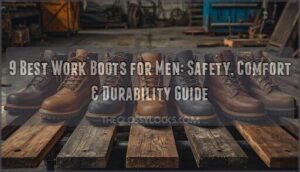
Your feet take a beating on the job. Every step on concrete floors, every climb up a ladder, every hour standing in place adds up. The wrong boots turn a long shift into an endurance test—sore arches, blistered heels, and feet that ache before lunch.
The best work boots for men do the opposite. They protect you from hazards while keeping your feet comfortable enough to focus on the work, not the pain.
Finding that balance between safety and comfort isn’t guesswork. It comes down to understanding what features matter for your specific job and how different materials, designs, and technologies perform when you’re actually wearing them for eight hours or more.
Table Of Contents
- Key Takeaways
- Top 9 Best Work Boots for Men
- 1. Men’s Leather Work Boots
- 2. Thorogood Steel Toe Work Boots
- 3. Under Armour Tactical Boots Men
- 4. Waterproof Insulated Snow Boots Men
- 5. Waterproof Work Boots For Men
- 6. Timberland Pro Waterproof Work Boots
- 7. Blundstone Rustic Brown Chelsea Boots
- 8. Cat Steel Toe Work Boots
- 9. Waterproof Brown Snow Boots
- How to Choose Work Boots for Men
- Essential Work Boot Safety Features
- What Makes Work Boots Comfortable
- Work Boot Materials and Durability
- Frequently Asked Questions (FAQs)
- How long does it take to break in your boots?
- What are the most comfortable work boots to wear?
- How do you maintain your work boots?
- What are the best steel toe work boots?
- How long does a pair of work boots last?
- How often should work boots be replaced?
- Can work boots be resoled or repaired?
- Whats the difference between water-resistant and waterproof?
- Do work boots require special cleaning methods?
- Are expensive work boots worth the investment?
- Conclusion
Key Takeaways
- Your work boots need to match your specific job hazards first—steel or composite toes for impact protection, slip-resistant outsoles for wet surfaces, and electrical hazard ratings if you’re near live circuits.
- Comfort comes from proper fit fundamentals like 10-20mm toe clearance and heel security, combined with shock-absorbing midsoles that cut pressure by up to 65% during long shifts.
- Full-grain leather boots typically last 12-24 months under hard use compared to 6-12 months for synthetic materials, making them a better long-term investment despite higher upfront costs.
- Goodyear welt construction lets you resole boots multiple times over several years, while cemented boots rarely survive repair attempts and need complete replacement.
Top 9 Best Work Boots for Men
You need boots that won’t quit when the job gets tough. The right pair protects your feet, keeps you comfortable through long shifts, and holds up to whatever your work throws at them.
Here are nine solid options that deliver on safety, durability, and all-day wearability.
1. Men’s Leather Work Boots

Leather boots remain the benchmark when you’re serious about durability and foot health. Full-grain leather uppers mold to your feet over time, creating that tailored fit you won’t get from synthetics.
They breathe naturally, keeping your feet cooler during long shifts while providing the toughness needed for demanding work environments.
Yes, leather care and boot maintenance take effort—regular conditioning extends their life—but that investment pays off. You’re looking at work boot comfort that improves with age, not deteriorates, making leather the smart choice for lasting work safety.
Best For: Workers in construction, landscaping, or manual labor who need durable, breathable boots that mold to their feet over time and can handle daily wear in demanding environments.
- Full-grain leather provides exceptional durability and naturally breathes better than synthetic materials, keeping feet comfortable during long shifts
- Boots mold to your foot shape over time for a personalized fit, with wide rubber soles offering excellent arch support and stability
- Strong value proposition with removable insoles for custom orthotics and reinforced stitching that holds up to rugged use
- Not waterproof out of the box and requires regular conditioning and maintenance with leather oil to preserve performance
- Mixed durability feedback with some users reporting sole separation and quality control issues like failing laces
- Heavier than synthetic alternatives with a longer break-in period before achieving optimal comfort
2. Thorogood Steel Toe Work Boots
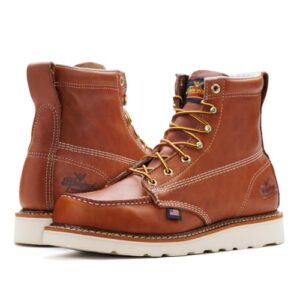
Thorogood American Heritage steel toe boots deliver protection that meets ASTM F2413-18 standards—75 foot-pounds of impact resistance with compression ratings up to 2,500 pounds. Goodyear welt construction allows resoling, extending boot durability well beyond typical work footwear.
The MAXWear Wedge outsole passes ASTM F3445-21 slip-resistance testing on contaminated surfaces, while electrical hazard protection guards against 18,000 volts.
Made in the USA with oil-tanned leather and removable Poron insoles, these occupational footwear options balance toe capsules’ protective strength with genuine work comfort during long shifts.
Best For: Skilled tradespeople in construction, electrical work, and manufacturing who need ASTM-certified steel toe protection with long-term durability and slip resistance across contaminated work surfaces.
- Goodyear welt construction allows for resoling instead of full replacement, extending the boot’s service life significantly beyond glued alternatives
- Meets multiple ASTM standards including F2413-18 for impact/compression, F3445-21 for slip resistance, and EH rating for electrical hazard protection up to 18,000 volts
- Made in the USA with oil-tanned leather and removable Poron comfort insoles that provide shock absorption during extended shifts
- Some customers report the toe box runs narrow, which may require sizing up or selecting wide width options for proper fit
- Mixed durability feedback with occasional reports of sole separation, despite the Goodyear welt construction
- Not waterproof in standard configurations, limiting effectiveness in wet outdoor environments unless a waterproof membrane option is selected
3. Under Armour Tactical Boots Men

Under Armour’s tactical boots for men shift priorities toward speed and weight reduction without sacrificing occupational footwear standards. The Radiant Protect model weighs 25.9 ounces per boot yet meets ASTM F2413-18 1/75 C/75 EH ratings—composite toe protection with electrical hazard resistance up to 600 volts.
You’ll find an 8-inch ankle support system, slip-resistant outsoles certified to ASTM F3445-21, and synthetic leather uppers reinforced with 900-denier nylon. Tactical boot sizing runs true, while medial zippers and heel pull loops deliver quick on-off capability between shifts.
Boot durability holds through demanding work environments.
Best For: Military personnel, law enforcement officers, and outdoor workers who need lightweight tactical boots with certified safety protection for long shifts on varied terrain.
- Meets ASTM safety standards with composite toe protection and electrical hazard resistance while staying lighter than traditional steel-toe boots
- Side zipper and pull loops make it easy to get boots on and off quickly between shifts or tasks
- Slip-resistant outsoles certified to ASTM F3445-21 provide reliable traction on wet and oily surfaces
- Some users report the heel portion and soles wear out faster than expected with heavy use
- Not fully waterproof, only water-resistant, so they may not hold up in prolonged wet conditions
- May require a break-in period before reaching full comfort for all-day wear
4. Waterproof Insulated Snow Boots Men
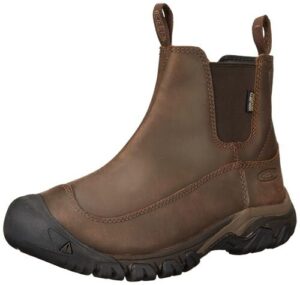
When temperatures drop below freezing and snow covers your jobsite, you need boots built for extreme conditions. Waterproof insulated snow boots for men combine 200g to 1,000g synthetic insulation with rubber shells and waterproof membranes—keeping your feet functional down to -40°F.
Look for ASTM-rated safety toes paired with cold-resistant rubber outsoles that stay flexible on ice. Deep lugs and Arctic rubber compounds deliver traction where standard work boots fail.
These boots protect against both crushing hazards and hypothermia during long winter shifts outdoors.
Best For: Workers in construction, utilities, and outdoor trades who spend extended shifts on snow-covered or icy jobsites in subfreezing temperatures and need both safety protection and cold-weather performance.
- Temperature ratings down to -40°F (or lower in specialized models) with 200g to 1,000g insulation keep feet warm during long winter shifts
- Waterproof construction with rubber shells and sealed membranes protects against snow, slush, and standing water throughout the workday
- ASTM-rated safety toes and electrical hazard protection meet jobsite requirements while cold-resistant rubber outsoles maintain flexibility and traction on ice
- Heavier and bulkier than standard work boots, which can cause fatigue during extended wear or when climbing ladders
- Higher insulation levels may cause overheating and sweating during moderate activity or in temperatures above freezing
- Premium models with advanced insulation and safety features typically cost significantly more than basic work boots, often exceeding $150-200
5. Waterproof Work Boots For Men
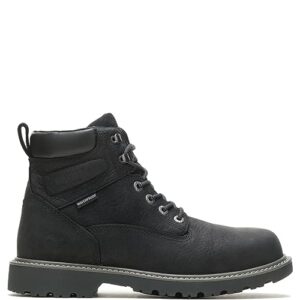
You’ll face wet jobsites every season—from spring mud to winter slush—so waterproof work boots become non-negotiable gear. Waterproof membranes like Gore-Tex block liquid while breathable linings release foot moisture, preventing that clammy feeling during ten-hour shifts.
Look for full-grain leather uppers sealed to the membrane and slip-resistant outsoles rated at 0.4 coefficient on wet surfaces. Proper boot maintenance extends waterproof protection—clean debris off regularly and reapply treatment to seams.
These waterproof technologies deliver reliable foot protection whether you’re standing in puddles or walking through downpours all day.
Best For: Construction workers, landscapers, and outdoor tradespeople who spend long hours in wet conditions and need boots that keep feet dry without sacrificing breathability or traction.
- Gore-Tex membranes block water completely while letting sweat vapor escape, so your feet stay dry from both outside moisture and internal perspiration during full shifts
- Slip-resistant outsoles with 0.4 coefficient ratings give you reliable grip on wet floors and muddy ground, reducing fall risk on slippery jobsites
- Full-grain leather uppers bonded to waterproof membranes offer durability against abrasion and punctures while maintaining the water seal over months of heavy use
- Some models show durability issues with reports of boots falling apart within three months, suggesting quality varies significantly between brands
- Waterproofing isn’t always perfect—certain boots leak despite membrane technology, especially after extended wear or if seams aren’t properly maintained
- These boots tend to run heavy at around 1.9 pounds per boot, which can cause fatigue if you’re constantly moving or climbing throughout your workday
6. Timberland Pro Waterproof Work Boots

Timberland PRO waterproof boots combine seam-sealed construction with proprietary membranes that keep your feet dry through eight-hour shifts in puddles and rain. You’ll get steel or composite safety toes meeting ASTM F2413 standards, plus electrical hazard protection for live circuit environments.
The Active Anti-Fatigue Technology footbed absorbs shock during long days on concrete, backed by a 30-day comfort guarantee.
Full-grain leather uppers resist water penetration throughout the boot’s lifespan—usually one to two years under daily jobsite conditions—while slip-resistant outsoles maintain traction on wet surfaces.
Best For: Construction workers, tradespeople, and outdoor professionals who need all-day comfort and reliable waterproof protection in wet, demanding work environments.
- Proven waterproofing that keeps feet dry through full shifts in puddles and rain, with treated leather that resists water penetration for the life of the boot
- Anti-Fatigue Technology footbed delivers shock absorption and energy return during long hours on concrete, backed by a 30-day comfort guarantee
- Safety certifications including ASTM-compliant steel or composite toes and electrical hazard protection for hazardous work environments
- Durability feedback is mixed, with some users reporting the boots last only one to two years under daily use before needing replacement
- Weight can be an issue for some wearers, though opinions vary on whether they feel heavy or surprisingly light
- Sizing inconsistency means you may need to try different sizes, and some users find they need to replace insoles or break them in for optimal comfort
7. Blundstone Rustic Brown Chelsea Boots
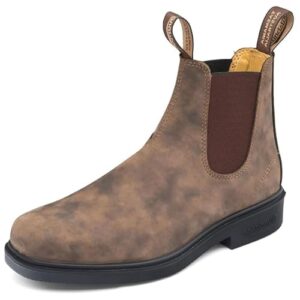
Blundstone’s 585 Rustic Brown Chelsea boots deliver workplace foot protection without the bulk of traditional steel-toe designs. The SPS Max Comfort system absorbs up to 90% of heel-strike impact, while the pull-on Chelsea style shaves seconds off your morning routine.
You’ll get premium water-resistant leather that’s 1.8mm thick, paired with TPU outsoles resistant to oils and acids—ideal if you’re moving through service or light industrial environments.
That rustic finish hides scuffs naturally, so your mens boots maintain their look through daily wear. It’s where boot durability and comfort meet work boot trends favoring lighter, adaptable footwear.
Best For: Workers in service or light industrial settings who need oil-resistant, cushioned boots that transition easily from job sites to casual wear without looking overly rugged.
- SPS Max Comfort system with XRD technology absorbs up to 90% of heel-strike impact, reducing foot fatigue during long shifts on hard surfaces.
- TPU outsoles resist oils, acids, and heat up to 284°F, making them practical for food service, warehouses, and outdoor work environments.
- Rustic brown leather naturally camouflages scuffs and wear marks, so the boots maintain a clean appearance even after months of heavy use.
- Initial break-in period can be uncomfortable, and some users report the boots feel tight or difficult to slip on until the leather softens.
- Sizing runs inconsistent—AU sizes are stamped on the sole, which can confuse buyers used to US or UK measurements.
- No steel toe protection limits use in jobs requiring OSHA-certified safety footwear or environments with falling object hazards.
8. Cat Steel Toe Work Boots

Caterpillar’s Second Shift steel toe work boots meet ASTM F2413-18 standards, offering 75-foot-pound impact resistance and 2,500 pounds of compression protection. This ensures your toe protection holds up when heavy materials roll or drop.
You’ll get full-grain leather uppers paired with oil-resistant T1260 rubber outsoles for reliable work safety on slick surfaces. The removable EVA sock liner and nylon shank balance foot comfort with stability during long shifts.
At around $70, these boots deliver occupational safety credentials and boot durability without the premium price tag other safety toe options demand.
Best For: Workers in construction, manufacturing, or industrial settings who need reliable toe protection and slip resistance without spending over $100.
- ASTM F2413-18 certified steel toe handles serious impacts and compression up to 2,500 pounds
- Oil-resistant rubber outsole grips well on slick jobsite surfaces
- Affordable at around $70 while still meeting occupational safety standards
- Some users report durability issues with boots breaking down faster than expected
- Leather scuffs easily and may need extra care to maintain appearance
- Break-in period can be uncomfortable, with initial stiffness around the heel and ankle
9. Waterproof Brown Snow Boots
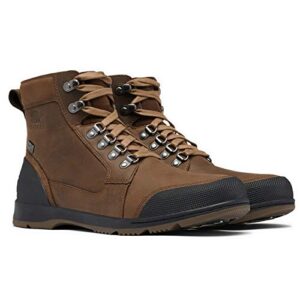
When winter weather hits your jobsite, you need boots that won’t quit. Waterproof snow boots with sealed leather uppers and rubber soles keep slush out, while 200-400g insulation maintains warmth down to around 20°F during active work. Look for breathable membranes that prevent sweat buildup and lug outsoles designed for ice grip.
Brown leather care matters—road salt damages untreated uppers fast. Comfort features like cushioned insoles reduce fatigue during long cold shifts. Quality winter traction systems make the difference between staying upright and hitting the deck on packed snow.
Best For: Workers and outdoor enthusiasts who need reliable waterproof protection and warmth in snow, slush, and freezing temperatures without sacrificing mobility on the job or trail.
- Sealed seams and rubber soles keep feet dry in deep snow and slush, with 200-400g insulation providing solid warmth down to 20°F during active work.
- Lug outsoles deliver dependable traction on ice and packed snow, reducing slip risk on jobsites and winter walks.
- Brown leather styling works across settings—from construction sites to casual wear—while breathable membranes prevent sweat buildup during high-activity tasks.
- Some users report waterproofing fails after moderate use, with durability concerns including tears and material breakdown within months.
- Fit runs narrow in the toe box, which can feel cramped for wider feet or when wearing thick winter socks.
- Brown leather requires regular maintenance since road salt and winter chemicals damage untreated uppers quickly.
How to Choose Work Boots for Men
Picking the right work boots isn’t something you want to get wrong. The boots you choose need to match your job’s demands while keeping your feet protected and comfortable through long shifts.
Here’s what you need to focus on to find boots that’ll actually work for you.
Determine Your Work Environment and Needs
Your job site tells you everything you need to know about which boots to wear. Construction workers face falling objects and debris, so impact protection matters most. If you’re in maintenance or electrical work, you need boots that guard against live circuits. Outdoor workers battle wet ground and uneven surfaces daily. Service industry roles demand slip resistance on smooth floors.
Match your boots to your actual workplace hazards, environmental factors, and surface conditions—not what looks tough. For workers in wet environments, choosing boots with waterproof features is essential for comfort and safety.
Select The Right Safety Features
Once you’ve mapped your hazards, pick boots that actually protect you. Steel toe or composite safety toe caps meet ASTM F2413 standards, resisting impacts up to 75 foot-pounds and compression loads around 2,500 pounds.
Need electrical hazard protection? Look for EH-rated boots tested to 600 volts. Slip-resistant soles cut claims by 67% in one large study. Puncture-resistant midsoles stop sharp objects cold, withstanding 270 pounds of force.
For maximum safety, consider investing in boots with electrical hazard protection.
Choose Quality Materials and Construction
Safety features mean nothing if your boots fall apart in six months. Quality materials and construction methods determine whether you’ll replace these next year or five years from now. Focus on four durability features:
- Full-grain leather uppers last 3–5 years versus 1–3 for corrected leather
- Goodyear-welted soles allow multiple resoles, extending life to a decade
- Premium rubber compounds resist abrasion on concrete and gravel
- Tight stitch quality prevents seam failure in high-flex zones
Ensure Proper Size and Fit
Even premium materials fail you if the boot doesn’t match your foot. Start with proper foot measurement—length and width both matter. About 69% of workers wear incorrectly sized boots, leading to ankle pain and pressure injuries.
Check heel fit (slight slip is normal), confirm your toes wiggle freely in the toe box, and verify ankle support aligns with your arch for lasting workplace comfort.
Consider Waterproofing and Insulation Options
Waterproofing depends on your exposure level. Waterproof membranes with microscopic pores block liquid while releasing sweat vapor—critical for breathability during long shifts. Treated leather uppers resist splashes but won’t survive standing water.
For insulation, match grams to temperature: 200g manages mild cold with activity, 400g suits moderate winter work, while 600g+ protects in freezing conditions. Your rubber sole and moisture management keep feet dry when thermal regulation matters most.
Essential Work Boot Safety Features
Your work boots need to do more than look the part—they’re the barrier between you and serious injury. The right safety features can mean the difference between walking away from an accident and heading to the emergency room.
Let’s break down the essential protections you should look for when choosing boots that’ll actually keep you safe on the job.
Steel Toe Vs Composite Toe Protection
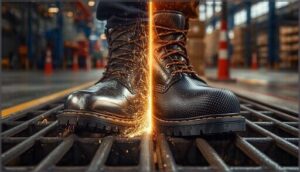
You’ll face a critical choice when selecting safety toe protection for your work boots. Both steel and composite toes meet identical ASTM F2413 standards—75 foot-pounds of impact resistance and 2,500 pounds of compression protection—but they differ markedly in performance characteristics that affect your daily comfort and safety.
- Weight factors: Composite toes weigh 30-50% less than steel, reducing fatigue during long shifts
- Thermal conductivity: Steel conducts extreme heat and cold, while composite materials insulate your feet effectively
- Electrical hazard protection: Composite toes offer enhanced non-conductive properties for working around live circuits
- Security clearance: Composite passes through metal detectors without triggering alarms at job sites
- Material durability: Steel resists repeated heavy compression better, though composite eliminates rust concerns entirely
Slip-Resistant Outsoles for Different Surfaces

When your boots meet wet concrete, oily steel, or icy loading docks, tread design becomes your first line of defense against falls. Modern slip-resistant soles use hybrid rubber compounds that achieve coefficients of friction above 0.44 on contaminated surfaces—well beyond the 0.30 threshold where slip risk drops markedly.
| Surface Type | Recommended Tread Feature |
|---|---|
| Wet stainless steel | Rough-surface asperities that break fluid films |
| Oily floors | Deep grooves channeling contaminants away |
| Ice and snow | Maximum tread surface area for contact |
| Contaminated tile | Hybrid rubber blocks combining textures |
Your outsole’s surface area matters more than groove patterns for industrial safety—studies show it contributes 15% of friction performance on slippery surfaces. Steel toe work boots with worn treads lose effectiveness fast; available friction can plummet to 0.03 on glossy floors with oil contamination.
You’ll want boots meeting both ceramic-tile and steel-plate slip tests, and you should replace them before tread depth becomes shallow enough to compromise your protection.
Electrical Hazard Protection Standards

When you step near live circuits, your boots become critical insulation. EH-rated occupational footwear standards require boots to withstand 18,000 volts for one minute with negligible leakage—that’s genuine electrical hazard protection.
ASTM F2413 testing methods verify this shock resistance under controlled conditions, and OSHA accepts this rating for workplace electrical safety.
Steel toe boots often combine impact protection with EH certification, giving you layered defense against multiple hazards.
Puncture-Resistant Midsoles

Sharp objects underfoot—nails, glass, metal shards—demand a barrier between you and disaster. Puncture resistance comes from steel plate or composite midsoles embedded inside your boot, meeting ASTM rating requirements of 270 pounds minimum force.
Steel toe boots often pair this with safety toe caps for complete foot protection, while composite toes offer lighter workplace protection without compromising your defense against piercing hazards or electrical hazard risks.
Heat and Cold Resistance
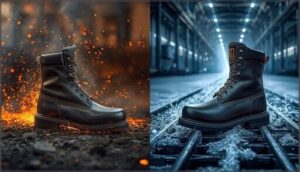
Extreme temperatures—whether welding sparks or freezer shifts—test your footwear’s limits. Heat-resistant outsoles with HRO ratings withstand 300°C contact for short exposures, protecting you from molten metal or scorching asphalt.
For cold protection, insulated boots with 400–600g thermal insulation keep feet warm down to -40°F, preventing frostbite. Waterproof construction paired with breathable materials ensures temperature regulation without trapping sweat.
Steel toe durability and proper boot maintenance extend this footwear protection across seasons.
What Makes Work Boots Comfortable
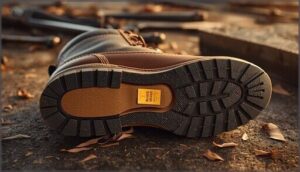
You can’t do your job well if your feet hurt after a few hours. Comfort isn’t just a nice-to-have feature—it’s what keeps you productive and safe throughout your entire shift.
Comfort isn’t a luxury in work boots—it’s what keeps you productive and safe through every shift
Let’s break down the key elements that separate boots you’ll want to wear from ones that’ll make you miserable.
Proper Size and Fit Fundamentals
You can’t protect yourself with boots that don’t fit right—poor work boot selection puts you at serious risk. Most workers wear footwear that doesn’t match their foot measurement, leading to pain and injury.
Here’s what proper boot sizing demands:
- Toe clearance of 10–20 mm beyond your longest toe for safe movement
- Heel fit that stays secure without lifting during walking tests
- Ankle support from closure systems that adjust to your foot volume
- Width matching using circumference measurements, not just length
- Measure at shift-end when natural swelling peaks for comfortable boots
Get these fundamentals right, and you’ve got durable boots that support foot health and wellness while maintaining boot durability and maintenance over the long haul.
Cushioning and Shock Absorption Technology
Fit alone won’t save your feet from fatigue—you need real shock absorption. Midsole materials like EVA or polyurethane cushioning systems cut heel and forefoot pressure by up to 65%, protecting you through long shifts.
Energy return in quality boot technology keeps you moving efficiently, while footwear ergonomics redistribute impact forces across your entire foot.
Comfortable boots with sophisticated cushioning transform grueling days into manageable ones.
Breathable Materials for Temperature Control
Cushioning won’t help if your boots trap heat and sweat. Breathable materials with high air permeability—like mesh panels and moisture-wicking linings—cut internal humidity by 11% and improve thermal regulation during warm shifts.
Waterproof membranes allow sweat vapor to escape while blocking rain, so your feet stay dry without overheating. Leather uppers paired with ventilated footwear technology deliver the heat dissipation you need for all-day comfort.
Arch Support and Stability Features
Temperature control only goes so far—real comfort needs Arch Support to keep your Foot Stability locked in during long shifts. Proper Midsole Design redistributes pressure across your entire sole, cutting hotspots under the forefoot and boosting Ankle Stability when you’re moving on uneven ground.
Look for boots with:
- Built-in Ergonomic Design that shifts load away from high-stress zones
- Heel Geometry optimized for stable forward motion
- Shock-absorbing insoles for maximum Comfort and Support
- Ankle Protection through supportive collars and structured uppers
- Removable footbeds compatible with custom Orthotics
Break-in Period and Long-Term Comfort
Even top-rated Comfortable Work Boots with exceptional Cushioning and Shock Absorption need one to two weeks of gradual Boot Break-in before they hit peak Comfort and Support. Leather models start stiff—wear them a few hours daily to let the Ergonomic Design mold to your foot without triggering blisters.
That measured approach protects Foot Health, cuts Injury Prevention risks, and sets you up for stable Comfort Metrics and predictable Wear Patterns over the long haul.
Work Boot Materials and Durability

The materials in your work boots determine how long they’ll last and how well they’ll hold up under real work conditions. Different materials serve different purposes—some prioritize protection, others focus on weight or weather resistance.
Here’s what you need to know about the most common work boot materials and how they perform over time.
Full-Grain Leather Vs Synthetic Materials
When you’re standing at the crossroads between leather and synthetic, you’re choosing more than boot materials—you’re choosing how long your investment lasts. Here’s what separates them:
- Leather Durability: Full-grain leather uppers commonly deliver 12 to 24 months of hard use, while synthetics usually last 6 to 12 months in similar conditions.
- Material Comparison: Leather resists punctures, abrasions, and impacts better than most synthetic alternatives across occupational settings.
- Break-In Period: Leather molds to your foot over time, while synthetics stay flexible from day one but don’t adapt.
- Waterproof Performance: Leather upper boots offer natural water resistance when treated; synthetics dry faster but trap more heat.
- Steel Toe Protection: Both meet safety standards, though leather maintains protective performance longer under repeated stress.
Work boot reviews consistently show leather costs more upfront but reduces replacement frequency. Synthetics win on initial price and easy maintenance—just soap and water—but wear down faster under heavy abrasion and UV exposure.
For longevity testing in rugged construction environments, leather upper boots with quality steel toe protection outperform synthetic alternatives year after year.
Rubber Outsoles for Traction and Longevity
Your boot’s grip comes down to rubber compounds and tread patterns working together. Vulcanized rubber outsoles resist oil and fuel degradation while maintaining slip resistance on wet surfaces—some formulations boost friction coefficients by over 50% compared to basic rubber.
Deep lugs channel fluids away from contact points, improving traction performance.
In construction settings, quality outsoles last 3 to 12 months before tread wear compromises steel toe protection and durable footwear options.
Waterproof Membrane Technologies
Modern waterproof membranes like Gore-Tex pack 9 billion microscopic pores per square inch into your construction boots—each pore is 20,000 times smaller than a water droplet but 700 times larger than sweat vapor. This pore structure lets moisture transport outward while keeping you bone-dry:
- Membranes pass breathability tests at six times minimum standards
- Gore-Tex steel toe footwear survives 300,000 flex cycles underwater
- Hydrophobic barriers maintain water resistance through sealed seams
- Vapor transmission rates prevent that clammy feeling during shifts
Insulation Materials for Cold Weather
When temperatures drop below freezing, your thermal insulation becomes the frontline defense against frost protection failures. Thinsulate microfiber layers—200 g for mild cold around 30–40°F, 600 g for brutal 0–20°F shifts—trap warmth without adding bulk. PrimaLoft synthetic fills resist moisture while staying breathable.
Wool linings shine in deep-snow chaos. Aerogel systems wrap your entire foot at −40°C, proving cold weather work boots can stay waterproof, cushioning-rich, and surprisingly nimble.
Composite Materials for Lightweight Protection
You want steel-toe protection without hauling extra weight around all day. Composite toe caps—built from Kevlar, carbon fiber, or fiberglass polymers—deliver the same ASTM F2413 impact resistance as steel but shave several ounces off each boot.
That difference fights fatigue over twelve-hour shifts. Bonus: composite materials block heat and cold transfer, doubling as thermal insulation while keeping your personal protective equipment metal-detector friendly in sensitive work zones.
Frequently Asked Questions (FAQs)
How long does it take to break in your boots?
Don’t let stiff leather slow you down—most work boots need two to three weeks of daily wear for proper break-in. Steel toe models take longer than composite designs, but cushioning and breathable materials help speed foot conformity.
What are the most comfortable work boots to wear?
Comfortable work boots balance lightweight design with shock-absorbing cushioning and proper arch support.
Look for boots rated above 5 stars by thousands of users—these usually feature dual footbeds, breathable materials, and anatomically contoured insoles.
How do you maintain your work boots?
Proper preservation practices prolong performance. Brush off debris daily, condition leather monthly, and dry boots thoroughly between shifts.
Waterproof every three months, rotate pairs when possible, and store in cool, dry spaces away from direct heat to maintain steel toe protection and comfortable footwear integrity.
What are the best steel toe work boots?
Steel toe work boots that meet ASTM F2413 standards deliver proven foot protection against 75-pound impacts and up to 2,500 pounds of compression.
Top performers include Thorogood, Timberland Pro, and CAT Footwear for industrial hazards.
How long does a pair of work boots last?
There’s no one-size-fits-all answer—boot lifespan factors like your work environment and wear patterns determine durability.
Most industrial footwear lasts 6 to 12 months, though quality workplace safety boots with proper care extend further.
How often should work boots be replaced?
You should replace your work boots every 6 to 12 months with heavy daily use, or sooner if you notice worn tread, cracked soles, damaged steel toe caps, or compromised waterproofing affecting workplace safety.
Can work boots be resoled or repaired?
Your boots can outlast your job if you choose the right construction. Goodyear welt and stitchdown designs allow repeated sole replacement—usually every two to five years—while cemented boots rarely survive repair attempts economically.
Whats the difference between water-resistant and waterproof?
Water-resistant work boots repel light moisture but eventually let water through, while waterproof boots use membrane materials and seal technology to block liquid completely.
They pass hydrostatic pressure testing that confirms no moisture penetrates the footwear’s interior.
Do work boots require special cleaning methods?
Yes—your work boots need material-specific cleaning products to maintain breathability, cushioning, and water resistance.
Leather care requires dedicated cleaners and monthly conditioning, while salt removal prevents corrosion and keeps comfortable boots performing longer.
Are expensive work boots worth the investment?
Premium materials and steel toe construction deliver exceptional boot longevity—often three to five years versus six months for budget footwear.
That investment value translates to better worker safety, reduced replacement costs, and enhanced comfort in demanding industrial shoe applications.
Conclusion
Your feet don’t get a second chance when something goes wrong. That’s why choosing the best work boots for men isn’t about settling for “good enough”—it’s about matching protection to risk and comfort to reality.
The right pair keeps you safe without making you suffer for it. Trust the features that matter for your job, ignore the marketing noise, and your boots will carry you through thousands of shifts ahead.
- https://market.us/report/work-boots-market/
- https://www.credenceresearch.com/report/work-boots-market
- https://www.coherentmarketinsights.com/industry-reports/work-boots-market
- https://www.ironpros.com/workwear/article/22908340/do-you-need-an-astm-f2413-rated-work-boot-for-construction
- https://www.arbill.com/safety-topics/the-top-foot-injuries-in-the-workplace-how-proper-protective-footwear-prevents-lost-workdays/